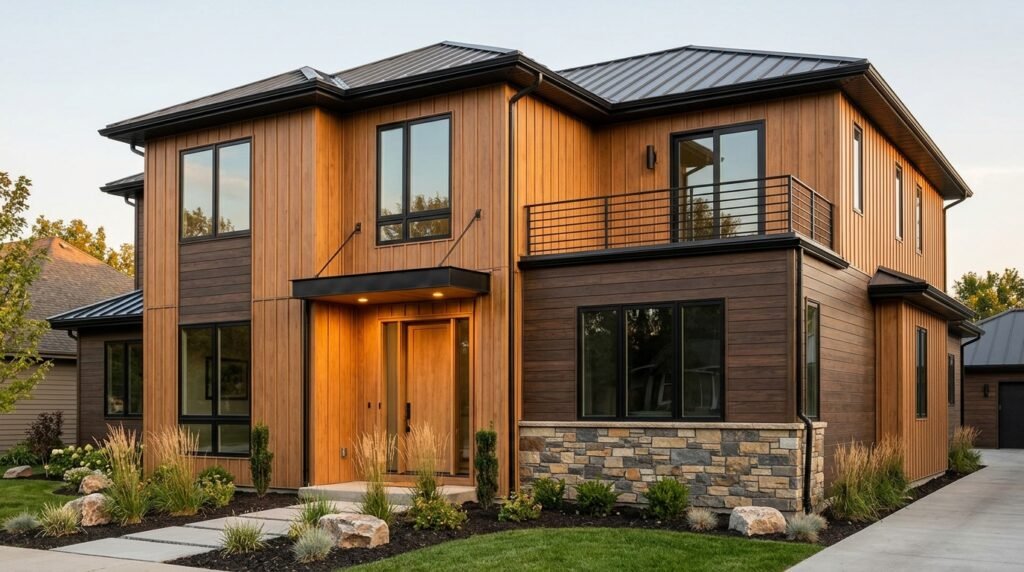
Metal siding that looks like wood gives buildings the warm appearance of natural timber without requiring the same level of maintenance. It is available in several colors, textures, and panel styles. Some products use printed wood-grain finishes, while others use embossed textures or decorative coatings. These options can suit modern homes, traditional houses, cabins, garages, and commercial buildings. However, the appearance is only one part of the decision. Material type, finish quality, installation, weather exposure, and total project cost also matter. This guide explains how wood-look metal siding works, what styles are available, how steel compares with aluminum, and what to consider before choosing it for your property.
What Is Wood-Look Metal Siding?
Wood-look metal siding is an exterior wall covering made from metal panels designed to resemble natural wood. Most products use steel or aluminum as the base material. Their surfaces are finished with wood-inspired colors, patterns, and textures. Some panels have embossed grain, while others use printed designs that reproduce the appearance of timber. The goal is to create a natural-looking exterior without using solid wood boards. This material is available in horizontal, vertical, plank, and board-and-batten styles. The exact appearance depends on the manufacturer’s finish and panel design. Metal siding that looks like wood can be used across an entire exterior or as an accent around entrances, porches, and selected walls. It does not have the same natural texture as real timber, but a well-designed finish can create a convincing wood-inspired appearance. Sheffield Metals+2
How Does Metal Siding Get Its Wood Appearance?
Manufacturers use different finishing methods to create a wood-like surface on metal panels. One common method is embossing, which adds a raised grain pattern to the metal. Another method uses printed designs to reproduce wood colors, knots, lines, and natural variations. Some products use digital printing or sublimation processes to transfer decorative patterns onto a coated metal surface. The result depends on the printing quality, protective coating, and base material. A realistic pattern should include natural-looking color changes rather than one flat brown shade. Panel texture also affects how the surface looks in daylight and from different viewing distances. Before choosing a product, examine a full-size sample instead of relying only on a small color card. A larger sample helps you judge the grain, texture, and pattern repetition more accurately.
Main Types of Metal Siding That Looks Like Wood
Wood-look metal siding is available in several panel designs. Horizontal lap panels create the appearance of traditional wooden boards. Vertical panels give buildings a taller and more structured appearance. Board-and-batten designs use raised strips or raised panel details to create a familiar farmhouse style. Some manufacturers also offer log-style profiles for cabin-inspired buildings. Other options include plank systems and architectural panels with clean, modern lines. Each style creates a different visual effect, so the right choice depends on the building’s design. Horizontal siding often suits traditional homes, while vertical panels can work well on modern exteriors and accent walls. Board-and-batten is useful when you want a stronger pattern with visible vertical lines. Compare the panel dimensions, depth, and trim details before making a final decision. metalroofingsupply.org+2
Horizontal Wood-Look Metal Siding
Horizontal panels are designed to resemble wooden lap siding. They run from one side of the wall to the other and create long, even lines. This style is suitable for traditional homes, cottages, garages, and many contemporary properties. It can make a building look wider because the panels draw the eye across the exterior. Some products have a smooth surface, while others include embossed wood-grain details. The final appearance depends on the panel width, overlap, finish, and trim. Wider panels can create a simpler exterior, while smaller profiles may look closer to traditional timber boards. When selecting horizontal metal siding that looks like wood, check how the joints and corners will appear after installation. Consistent spacing and neat trim help create a finished appearance.
Vertical Wood-Look Metal Siding
Vertical siding uses panels that run from the bottom of the wall toward the roofline. This arrangement creates a taller visual effect and gives the exterior a clean appearance. It is often used on modern homes, farmhouses, garages, and commercial buildings. Vertical metal panels can also be combined with horizontal siding to create contrast. For example, a home may use horizontal panels across the main walls and vertical panels around the entrance or upper gable. Wood-grain finishes can make this design feel warmer than plain metal. Before choosing vertical panels, consider the building’s proportions and window placement. The direction of the panels can affect how the entire exterior looks. Professional installation is important because alignment errors may become noticeable across long wall sections.
Board-and-Batten Metal Siding
Board-and-batten is a popular style for buildings with farmhouse or rustic designs. Traditional board-and-batten siding uses wide boards with narrow strips covering the joints. Metal versions recreate this appearance through formed panels or raised battens. Some systems use concealed fasteners, while others use exposed fastening methods. The exact construction varies by product. This style creates strong vertical lines and can give a building a more detailed exterior. It is often available in wood-inspired colors, including cedar, walnut, brown, and weathered gray. Metal siding that looks like wood in a board-and-batten design can work well on full walls or selected architectural sections. Review the panel depth, batten width, and corner details to make sure the finished design matches your expectations. Construction Metal Products+1
Steel vs. Aluminum Wood-Look Siding
Steel and aluminum are two common materials used for wood-look metal siding. They have different properties, so the better option depends on the building location and project requirements. Steel is generally stronger and more resistant to everyday denting than thinner aluminum panels. However, damaged steel coatings can expose the metal underneath and create a corrosion risk. Aluminum does not rust like steel, but it can dent more easily and may show oxidation or finish damage over time. Both materials need suitable coatings and correct installation. Their weight, panel thickness, fastening systems, and available finishes can also differ. Do not select a product based only on the word metal. Ask the supplier for the exact base material, thickness or gauge, coating details, and maintenance instructions. Siding Spot+2
Best Wood-Grain Colors and Finishes
Color has a major effect on the final appearance of an exterior. Common wood-inspired finishes include cedar, oak, walnut, barnwood, and weathered gray. Dark brown shades can create a rich and traditional look. Light oak and natural cedar tones can make a building feel brighter. Gray wood finishes suit modern designs and work well with black window frames or neutral trim. Some products also offer aged or distressed appearances. When selecting metal siding that looks like wood, compare the color with the roof, windows, doors, stonework, and surrounding landscape. Do not judge a finish under only one type of lighting. Outdoor daylight can make colors appear different from indoor showroom lighting. If possible, view a physical sample outside and compare it with the other exterior materials before ordering.
Benefits of Wood-Look Metal Siding
One major benefit is reduced exposure to common wood-related problems. Metal does not rot like natural timber, and it is not a food source for termites. It also does not split or warp in the same way as solid wood boards. Many factory-finished products are designed to retain their color and surface protection for extended periods. Metal panels can also provide a consistent appearance across large wall areas. Maintenance is generally focused on cleaning and checking for damage rather than routine staining. However, no exterior material is completely maintenance-free. Metal can still be scratched, dented, or affected by poor installation. The quality of the finish and the building’s exposure to weather both matter. A suitable product can reduce routine upkeep, but it still needs periodic inspection and care.
Does Metal Siding Look Like Real Wood?
The appearance depends on the product’s texture, print quality, panel shape, and installation. Basic embossed finishes may look more like painted metal with a subtle grain pattern. Higher-detail printed finishes can reproduce knots, grain lines, and color variations. Panel depth also matters because real wood boards create shadows along their edges. A flat metal sheet may not produce the same visual effect as a shaped plank or board-and-batten panel. Repeated patterns can also make an artificial finish easier to notice. For a more natural result, look for realistic color variation and ask how often the grain pattern repeats. Metal siding that looks like wood can be convincing from normal viewing distances, but it will not have exactly the same surface feel or unique grain as real timber.
Metal Siding vs. Real Wood Siding
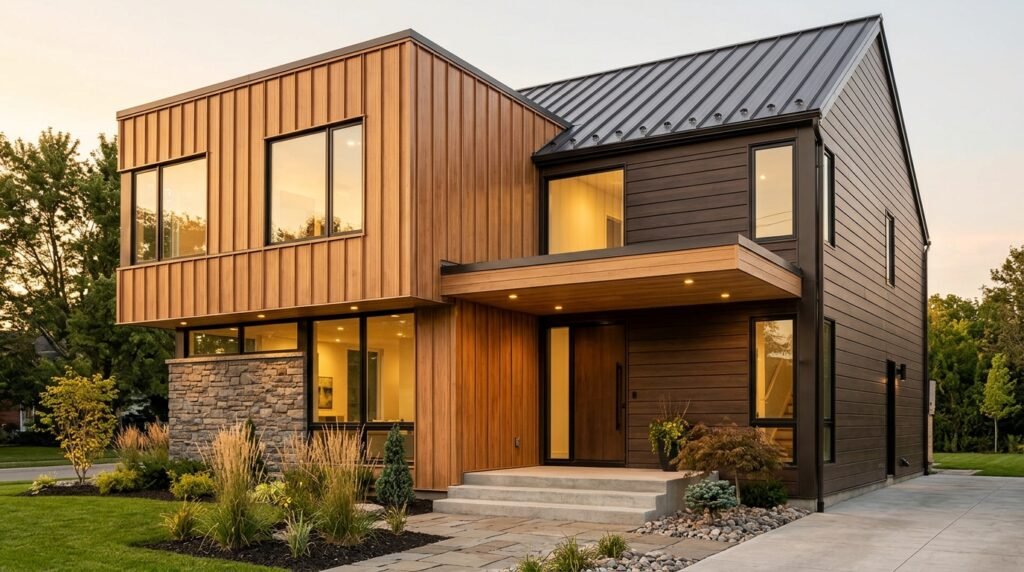
Natural wood has an authentic appearance that manufactured finishes cannot fully reproduce. Each board can have its own grain, knots, and natural color variation. However, real wood usually needs more ongoing care. Depending on the species, climate, and finish, it may require painting, staining, sealing, or replacement of damaged sections. It can also be affected by moisture, insects, and decay. Metal siding offers a different balance. It provides a manufactured wood-inspired appearance with less concern about rot and insect damage. Its main risks include dents, scratches, corrosion on exposed steel, and possible finish deterioration. The right choice depends on whether natural material authenticity or lower routine maintenance matters more to the property owner. Sheffield Metals+1
Metal Siding vs. Vinyl Siding
Vinyl siding is a common choice because it is widely available and usually requires little routine maintenance. It comes in many colors and profiles, including designs that imitate wood grain. Metal siding offers a different feel and may provide a more rigid panel system, depending on its thickness and construction. Steel is generally more resistant to denting than thin aluminum, although both can be damaged by strong impacts. Vinyl can crack under certain conditions and may expand or contract with temperature changes. The price of either option depends on product quality, installation, and the condition of the existing wall. If appearance is your main concern, compare full-size samples of both materials. If durability is more important, review the product specifications rather than relying on general material claims.
Metal Siding vs. Fiber Cement
Fiber cement siding is made from cement-based material reinforced with fibers. It is available in plank, panel, and board-and-batten styles. Some products are designed to resemble painted wood. Metal siding is lighter than many fiber cement systems, although actual weight depends on the product. Fiber cement can require repainting or finish maintenance according to its manufacturer’s instructions. Metal usually needs cleaning and inspection, with repairs when coatings or panels are damaged. Both materials require correct installation and suitable moisture management behind the exterior. Their performance also depends on local weather conditions and product specifications. Compare the complete wall system, not just the visible surface. Ask about cutting requirements, fasteners, flashing, finish warranties, and repair procedures before choosing either material.
How Much Does Wood-Look Metal Siding Cost?
The total cost depends on the metal type, panel design, finish, project size, and installation requirements. Steel and aluminum products can have different material prices. Specialty wood-grain finishes may also cost more than basic painted panels. The shape of the building can affect labor costs because corners, windows, doors, gables, and other details require additional work. Removing old siding, repairing the wall, adding weather barriers, and installing new trim can increase the project budget. Metal siding that looks like wood should therefore be priced as a complete installation rather than by panel cost alone. Ask contractors to separate material, labor, preparation, trim, flashing, waste, and disposal costs. Get more than one written quote so you can compare the same scope of work.
Factors That Affect Installation Cost
Several project details can change the final installation price. A simple rectangular building may require less cutting and trim work than a house with many corners and roofline changes. Tall walls may need additional equipment and labor. Existing siding may also need to be removed before new panels can be installed. If the wall has damaged sheathing or moisture problems, those issues should be repaired first. Custom colors, special panel lengths, and decorative details may increase material costs or lead times. The contractor’s experience with the chosen system can also affect labor pricing. Before approving a quote, confirm which preparation tasks are included. A low quote may leave out important items that later appear as extra charges.
Is Metal Siding Worth the Investment?
Metal siding can be worth considering when you want a wood-inspired exterior with lower routine maintenance than natural timber. It may also suit buildings where rot and insect damage are important concerns. However, the initial project cost can be higher than some basic siding options. The value depends on how long you plan to keep the building, the quality of the product, and the local climate. A cheaper panel may not provide the finish or impact resistance you need. A premium finish may also be unnecessary for a small outbuilding with limited visibility. Compare the expected maintenance, repair options, warranty terms, and installed price. A suitable product should meet the building’s practical needs as well as its design goals.
How to Choose the Right Wood-Look Metal Siding
Start by deciding which appearance you want. Horizontal lap panels, vertical planks, and board-and-batten systems create different architectural effects. Next, compare steel and aluminum based on the building’s location and exposure to impact or salty air. Review the finish and ask for physical samples. Check the panel thickness, coating type, fastening system, and available trim. Also confirm whether the product is intended for exterior wall use. Some decorative metal products are designed for soffits or accent areas rather than complete exterior wall systems. Metal siding that looks like wood should come with clear installation instructions and product documentation. Ask the supplier to explain the warranty and any exclusions before placing an order.
Check the Finish and Coating
The finish protects the metal surface and creates the visible wood appearance. A coating may be designed to resist fading, chalking, scratching, and weather exposure, but performance varies. Do not assume every wood-grain finish offers the same level of protection. Ask whether the product uses a factory-applied coating and request the technical information. Check how the manufacturer defines finish failure and what conditions are excluded from its warranty. Also ask how to repair scratches or damaged areas. Steel panels need particular attention where the protective coating has been cut or damaged. A suitable finish can help maintain the appearance of the exterior, but it cannot compensate for poor installation or unsuitable exposure conditions.
Understand the Warranty
A warranty can help explain what the manufacturer stands behind, but it should never be judged by its length alone. Some warranties cover the metal substrate, while others cover paint or finish performance. These are not always the same promise. Review the coverage period, exclusions, transfer conditions, and maintenance requirements. Ask whether labor is included or whether the warranty only covers replacement material. Also check whether coastal locations, industrial environments, or certain installation methods affect coverage. If the product is installed by a contractor, confirm who handles warranty claims. Keep the product documentation and installation records after the project is complete. Clear warranty terms are more useful than a large number printed in an advertisement. Construction Metal Products+2
Installation Preparation
A successful installation begins before the metal panels reach the wall. The installer should inspect the existing structure and identify damaged sheathing, moisture issues, or uneven surfaces. The wall may need a suitable weather-resistive barrier and flashing details. Windows, doors, roof edges, and wall openings require careful planning because these areas can allow water to enter if they are poorly detailed. The contractor should also confirm the panel layout and fastening requirements. Some systems use exposed fasteners, while others use concealed clips or interlocking edges. Each product has its own installation instructions. Metal siding that looks like wood should not be installed using assumptions based on another brand or panel style. Follow the manufacturer’s approved details.
Why Proper Flashing and Water Management Matter
Siding is not the only layer that protects a building from moisture. Water can enter around windows, doors, roof intersections, and other openings if the wall is not detailed correctly. Flashing helps direct water away from vulnerable areas. A weather-resistive barrier provides another layer of protection behind the exterior cladding. The exact wall assembly depends on the building design, local requirements, and product instructions. Do not assume that metal panels alone make a wall waterproof. The contractor should explain how water will drain and how openings will be sealed. Good moisture management helps protect the structure behind the siding and reduces the risk of hidden damage.
Can Metal Siding Be Installed Over Existing Siding?
In some projects, new siding may be installed over an existing exterior surface. However, this is not suitable for every building. The existing wall must be inspected for moisture, decay, structural damage, and uneven areas. Adding another layer can hide problems instead of solving them. It can also affect window and door trim, wall dimensions, and flashing details. Local building rules and the manufacturer’s instructions may limit this approach. Before choosing an overlay installation, ask a qualified contractor to inspect the wall. Removing the old siding may be the better option when the existing material is damaged or when the wall needs repairs. fs.usda.gov+1
Maintenance and Cleaning
Metal siding generally needs less routine care than natural wood, but it should still be cleaned and inspected. Dirt, dust, leaves, and other surface deposits can affect the appearance over time. Follow the manufacturer’s cleaning instructions and use products approved for the finish. A soft cloth or suitable brush may be enough for ordinary dirt. Avoid abrasive tools or harsh chemicals unless the manufacturer specifically allows them. High-pressure washing can damage some siding systems or force water behind the panels. Inspect the exterior for loose trim, damaged fasteners, scratches, and dents. Metal siding that looks like wood can maintain its appearance for longer when small problems are identified early. fs.usda.gov+1
How to Prevent Scratches and Rust
Scratches should be handled according to the manufacturer’s repair instructions. On steel, damaged protective coatings can expose the underlying metal and increase the risk of corrosion. Clean and repair the affected area using the recommended products. Do not apply an ordinary paint without checking whether it is compatible with the factory finish. Aluminum does not rust like steel, but its surface can still suffer from oxidation or coating damage. Avoid dragging ladders, tools, or outdoor equipment against the panels. During landscaping and other exterior work, protect the siding from impact. Small repairs may help prevent a minor surface issue from becoming a larger problem.
Is Wood-Look Metal Siding Suitable for Coastal Areas?
Coastal locations expose exterior materials to salt carried by air and moisture. These conditions can increase corrosion risks for some metals and finishes. The correct choice depends on the metal type, coating, fasteners, and distance from the shoreline. Aluminum may be worth considering where corrosion resistance is a priority, but it still needs a suitable finish and maintenance. Steel products may also be suitable when they are specifically designed and approved for the exposure conditions. Ask the manufacturer for written coastal-use guidance. Check whether the warranty changes for marine environments. Metal siding that looks like wood should not be selected for a coastal building based on appearance alone. fs.usda.gov+1
Does Metal Siding Handle Heat and Cold?
Metal responds to temperature changes, so the siding system must allow for movement as specified by the manufacturer. Correct fastening and panel spacing help prevent problems related to expansion and contraction. Metal also transfers heat more readily than many insulated wall materials. The siding itself should not be treated as a complete insulation system. The wall’s insulation, air barrier, ventilation, and overall construction determine much of its thermal performance. If energy efficiency is a priority, discuss the complete wall assembly with the contractor. Ask whether the selected panels are compatible with any insulation or furring system being considered.
Can Metal Siding Be Used for Accent Walls?
Yes. Wood-look metal panels can be used on selected sections of a building instead of covering every exterior wall. Common accent areas include entryways, porch walls, gables, garages, and outdoor living spaces. A wood-inspired finish can add warmth to a building with stone, brick, glass, or painted surfaces. Using one material as an accent can also help control the overall project budget. Choose a finish that works with the main exterior color and roof. Check that the selected product is approved for the intended location. Some panel systems are designed for specific applications, so confirm whether they can be used on exterior walls, soffits, or ceilings.
Common Problems to Watch For
Most problems with metal siding are related to product selection, installation, exposure, or damage. Thin panels may show dents more easily. Poor fastening can cause movement, noise, or visible alignment problems. Scratched steel can develop corrosion if the protective coating is not repaired. Incorrect flashing can allow moisture to reach the wall behind the siding. Repeated grain patterns may also reduce the natural appearance of printed finishes. These issues can often be reduced through careful planning and correct installation. Before the work begins, review the product instructions and ask the contractor how they will handle corners, joints, openings, and panel movement. A clear installation plan can prevent many avoidable problems.
Questions to Ask a Siding Contractor
Before hiring an installer, ask about their experience with the exact metal siding system you have selected. Confirm whether they have installed the same panel profile and finish before. Ask who will inspect the wall and repair any hidden damage. Request details about flashing, weather barriers, fasteners, and trim. The quote should explain which materials and labor tasks are included. Also ask how the panels will be cut and how exposed edges will be protected. Confirm who is responsible for cleanup and disposal. Finally, ask for the manufacturer’s installation documents and warranty information. A contractor who can explain these details clearly is easier to evaluate than someone who only promises a good-looking result.
Is Metal Siding That Looks Like Wood Right for Your Home?
This material can be a good option if you like the appearance of wood but want to avoid some of the maintenance associated with natural timber. It offers several design choices and can suit traditional, modern, rustic, and farmhouse-style buildings. However, it is not the right solution for every property. The finish may look less natural up close than real wood, and metal panels can dent or suffer coating damage. The best choice depends on your budget, climate, design preferences, and willingness to maintain the exterior. Compare real samples, review product documentation, and get detailed installation quotes. A careful decision will help you choose a siding system that fits both the appearance and practical needs of your building.
Frequently Asked Questions
1. What is wood-look metal siding? It is steel or aluminum siding finished to resemble natural wood.
2. Is metal siding better than real wood? It usually needs less routine maintenance, but it does not have the exact look and texture of real wood.
3. Does wood-look metal siding rust? Steel can rust if its protective coating is damaged. Aluminum does not rust like steel.
4. Can metal siding look realistic? Yes. Some finishes reproduce wood grain, knots, and natural color variations.
5. Is metal siding expensive? The price depends on the material, finish, panel style, and installation work.
6. How do you clean metal siding? Follow the manufacturer’s instructions and use suitable cleaning products with non-abrasive tools.
Conclusion
Wood-inspired metal siding offers a practical way to create a warm exterior without using natural timber. It is available in several profiles, colors, and finishes, including horizontal panels, vertical designs, and board-and-batten styles. Steel and aluminum each have advantages and limitations, so the right material depends on the building and its environment. Finish quality, installation details, moisture management, and warranty coverage are also important. Before choosing metal siding that looks like wood, compare physical samples and review the manufacturer’s instructions. Get detailed quotes from experienced contractors and make sure the complete wall system is suitable for your property. A well-selected product and careful installation can help create an attractive exterior with manageable maintenance.