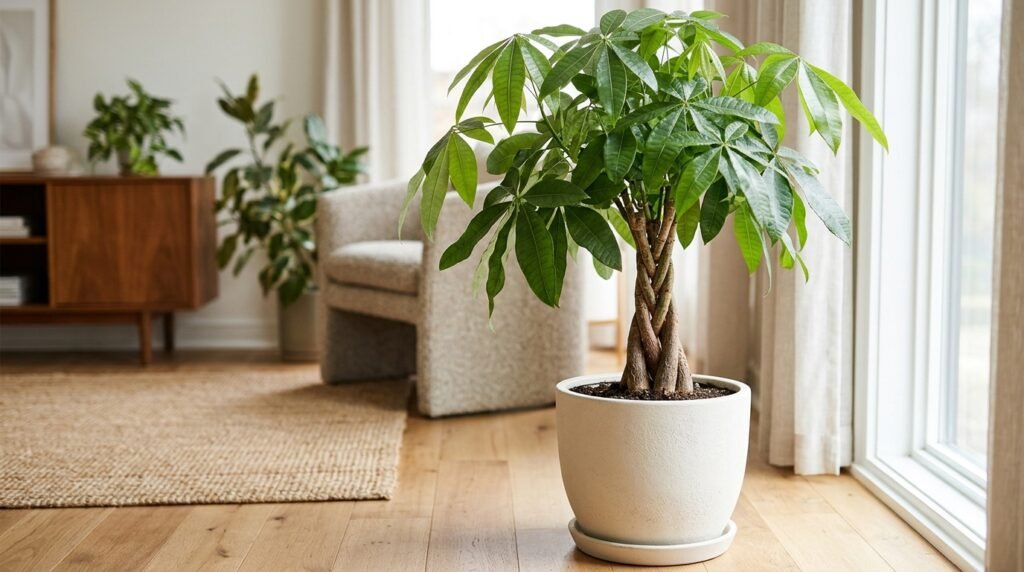
Knowing how often to water money tree plants is essential for keeping their leaves green and roots healthy. Money trees (Pachira aquatica) enjoy moderate moisture, but their roots should never sit in soggy soil. For most indoor plants, a useful starting point is to check the top 1–2 inches of soil and water when that layer feels dry. This may happen every week or less often, depending on light, temperature, pot size, soil, and season. A fixed weekly schedule is not reliable for every home. A plant near a bright window may use water faster than one in a cooler, dim room. The potting mix also makes a difference. Soil that drains well needs a different watering routine from dense soil that stays wet. The best approach is to check the soil, water thoroughly, and let excess water drain away. This article explains how to judge moisture, adjust watering through the year, recognize common problems, and build a routine that suits your plant.
How Often Should You Water a Money Tree?
Most indoor money trees need watering when the top 1–2 inches of potting mix feel dry. In many homes, this may mean watering roughly every one to two weeks, but the interval can be shorter or longer. The New York Botanical Garden recommends watering thoroughly and allowing the soil to nearly dry between waterings without letting the roots become completely dry. It also stresses the need for a pot with drainage and the removal of water left in the saucer. NYBG Mertz Library Reference+1 This is more useful than following a strict calendar. Check the soil before adding water, even if the plant was watered seven days ago. If the surface is still damp, wait and check again later. If the upper layer is dry, examine the soil slightly deeper before deciding. A small plant in a warm, bright room may dry faster than a large plant in a cool corner. A breathable potting mix also dries differently from a dense mix. The right answer to how often to water money tree plants therefore depends on the conditions around each individual plant.
Check the Soil Before Watering
The easiest way to judge watering needs is to feel the potting mix. Push a clean finger about 1–2 inches into the soil near the edge of the pot. If the mix feels damp or cool, wait before watering. If the upper layer feels dry, check slightly deeper to understand how much moisture remains. The surface can dry while the lower soil is still wet. This matters because adding more water to already saturated soil can reduce the air available around the roots. For larger pots, a wooden skewer can help. Insert it carefully into the soil, leave it briefly, and pull it out. Dark, damp soil sticking to the skewer suggests that moisture remains. A dry skewer with little soil attached suggests the mix may need water. A moisture meter can also help, but its readings should not replace observation. Different soil mixes and meter types can affect the result. Check more than one area if the pot is large. Once you understand how quickly the soil dries, it becomes easier to estimate how often to water money tree plants in your home.
How to Water a Money Tree Correctly
Water thoroughly rather than giving the plant a small splash every day. Pour water slowly over the surface of the potting mix until it begins to flow through the drainage holes. This helps moisten the root area more evenly. Allow the pot to drain fully before returning it to its decorative cover or saucer. Empty any collected water so the roots do not remain in standing moisture. The New York Botanical Garden recommends moistening the potting mix thoroughly, checking the runoff after about 15 minutes, and removing leftover water. NYBG Mertz Library Reference+1 Avoid pouring water directly onto the braided trunk or leaving water trapped around its base. If the soil has become very dry and water runs straight down the sides, apply water slowly in several passes. This gives the mix time to absorb moisture. Do not force large amounts of water into a pot that has blocked drainage holes. Check the holes and remove any obstruction if it is safe to do so. A proper watering session should leave the soil evenly moist, not flooded. The aim is to hydrate the roots while allowing extra water to escape.
Why Money Trees Should Not Stay in Wet Soil
Money trees need moisture, but constant wetness can harm their roots. Roots need both water and air to function properly. When soil remains saturated for long periods, air spaces become filled with water. This can stress the roots and encourage root decay. A plant may then develop yellow leaves, soft stems, or a general decline in health. These signs are not proof of overwatering on their own, but they deserve attention. The North Carolina State Extension Plant Toolbox notes that money trees prefer moist, well-drained potting mix and do not tolerate standing water. North Carolina Extension Gardener Plant Toolbox A pot without drainage holes creates an extra risk because excess water has nowhere to escape. Decorative containers can also hide water at the bottom. If a plant sits inside a cover pot, remove the inner pot after watering and let it drain. Do not assume that a wetland origin means an indoor money tree should grow in flooded soil. Its natural habitat and the conditions inside a small houseplant pot are very different. Good drainage is just as important as the amount of water added.
Factors That Change Watering Frequency
There is no single watering interval that works for every money tree. Several conditions affect how quickly the potting mix loses moisture. Light is one of the main factors. A plant receiving bright, indirect light may grow more actively and use water faster than one kept in a dim location. Temperature also matters because warm conditions can increase water loss from the soil and leaves. Humidity affects how quickly moisture leaves the plant and its surroundings. Pot size is another important factor. A small plant in a large pot may have more soil than its roots can use, which can keep the mix wet for too long. Material also makes a difference. Unglazed terracotta allows moisture to escape through its sides, while plastic and glazed ceramic containers retain moisture for longer. Soil structure affects drainage as well. A loose, well-aerated mix usually dries more evenly than compacted soil. When deciding how often to water money tree plants, consider all these conditions together rather than blaming one factor.
Watering Money Trees During Spring and Summer
Spring and summer often bring stronger growth when a money tree receives suitable warmth and light. During this period, the plant may use water more quickly than it does during slower growth periods. Check the soil regularly instead of automatically increasing the amount of water. If the top layer dries sooner, water when the plant meets its normal moisture conditions. A sunny room may cause the pot to dry faster, while a shaded room may keep it damp for longer. Keep the plant away from intense direct sunlight, which can scorch its leaves. The New York Botanical Garden recommends bright, filtered light and protection from strong direct sun. libguides.nybg.org+1 If the plant is moved outdoors during warm weather, monitor the pot more closely. Outdoor wind, heat, and brighter light can change drying speed. Place it in a sheltered area with suitable filtered light and protect it from heavy rain. Do not leave it in a spot where water collects around the container. Seasonal growth can change watering needs, but the soil should still guide each watering decision.
How Often to Water a Money Tree in Winter
Money trees often need less frequent watering during winter because indoor light levels and growth may decrease. However, the exact change depends on the home. A plant near a heater may dry faster because warm air can reduce humidity and increase moisture loss. Another plant in a cool, dim room may stay wet for much longer. Continue checking the soil instead of following the summer routine. The New York Botanical Garden explains that winter soil drying can change with indoor conditions and shorter daylight hours. It recommends adjusting watering to match the actual drying rate. NYBG Mertz Library Reference+1 Avoid watering simply because a certain number of days has passed. Also avoid allowing the root area to become completely dry for a long period. If the soil remains damp, wait. If the upper layer has dried and the deeper mix is approaching dryness, water thoroughly and let the pot drain. Keep the plant away from cold drafts, air-conditioning outlets, and direct heat sources. Stable conditions make it easier to maintain a consistent routine.
Does Pot Size Affect How Much Water a Money Tree Needs?
Pot size has a strong effect on soil moisture. A small pot usually contains less growing mix and may dry faster. A large pot holds more soil, so the center and lower areas can remain damp long after the surface looks dry. This can create a problem when a small root system sits in an oversized container. The plant may not use the available water quickly enough. Maryland Extension guidance for money trees warns that an excessively large pot can hold too much moisture and contribute to root problems. Ask Extension Choose a container that gives the roots suitable room without surrounding them with an unnecessarily large volume of wet soil. Make sure the pot has open drainage holes. When repotting, move up gradually rather than choosing a much larger container without a reason. Check the moisture near the center of the root area, especially in deep pots. Do not judge the whole pot by the dry surface alone. Understanding the relationship between pot size and soil moisture helps determine how often to water money tree plants without creating a soggy root environment.
Which Soil Is Best for Money Tree Watering?
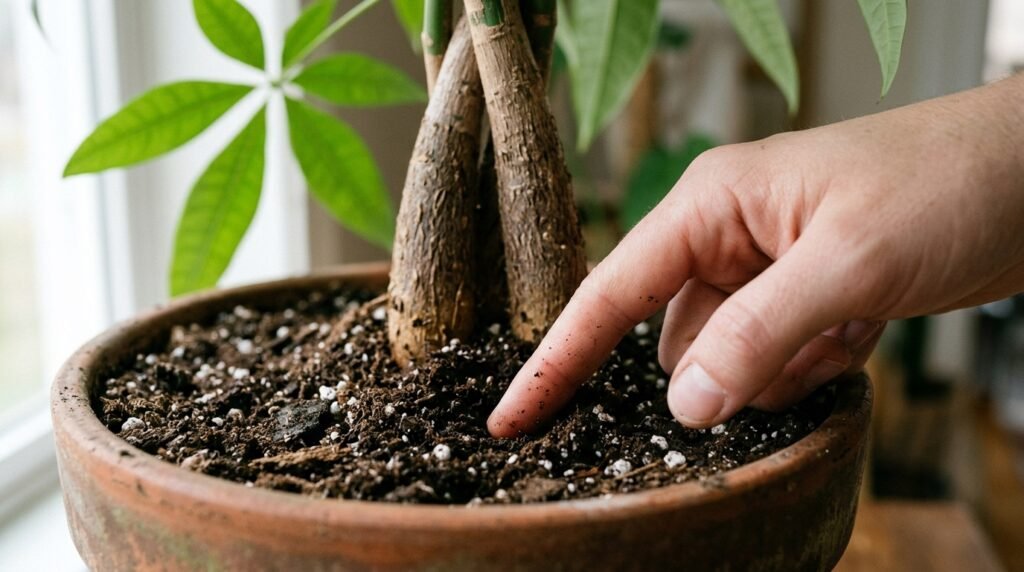
Money trees grow best in a potting mix that holds some moisture but drains well. The mix should not become hard, compacted, or waterlogged after watering. A suitable indoor plant mix with materials that improve air spaces can help balance moisture and drainage. Perlite is often used to improve the structure of potting mixes, while organic ingredients can help retain some water. The exact blend depends on the product and the growing conditions. North Carolina State Extension lists peat moss, perlite, loam, and sand among suitable components for a moist, well-drained mix. North Carolina Extension Gardener Plant Toolbox Avoid using heavy garden soil in a houseplant container because it may compact and drain poorly. If water takes a long time to pass through the pot, the mix may be too dense or the drainage holes may be blocked. If water runs through immediately while the soil remains dry, the mix may have become difficult to rehydrate. Check the soil condition before changing the watering schedule. Sometimes the real issue is the potting mix, not the amount of water.
Signs Your Money Tree Needs Water
A money tree may show several signs when its soil becomes too dry. Leaves can lose firmness, curl, or develop dry, brittle edges. The soil will usually feel dry beneath the surface as well. A plant that has remained dry for too long may begin to droop or lose leaves. However, leaf symptoms can have several causes, so always check the soil before watering. The New York Botanical Garden notes that crispy, curling, and falling leaves may relate to low humidity, inadequate light, or inconsistent watering. libguides.nybg.org This means dry-looking leaves do not automatically prove that the plant needs more water. If the soil is already wet, adding water can make the problem worse. Look at the whole plant and consider recent changes in light, temperature, and location. If the soil is dry and the plant looks limp, water thoroughly and allow excess water to drain. Then observe whether the plant begins to recover. Avoid repeatedly watering it in small amounts just because the leaves still look weak.
Signs You Are Overwatering a Money Tree
Overwatering is a common problem for indoor money trees. Yellow leaves, soft stems, persistent wet soil, and an unpleasant smell from the pot can indicate trouble. Some leaves may fall even when the plant has not become dry. The roots may also become damaged when the mix stays saturated. Maryland Extension explains that yellow leaves without wilting can indicate overwatering and recommends checking soil moisture and drainage. Ask Extension However, yellowing can also result from low light, environmental changes, or other plant stress. Check whether the pot drains properly and whether water remains in the saucer. If the soil is constantly wet, stop adding water until the mix has dried to a suitable level. If the plant continues to decline, inspect the roots if this can be done without causing unnecessary damage. Healthy roots should not be soft and decaying. Remove severely damaged roots with clean tools and repot only when necessary, using a suitable fresh mix and a pot with drainage. Do not treat every yellow leaf by changing several care conditions at once.
What to Do If the Soil Stays Wet for Too Long
Soil that remains wet for many days needs closer attention. First, check whether the pot has drainage holes and whether they are blocked. Remove standing water from the saucer or decorative cover. Next, consider the soil structure. A dense mix can hold more water than the roots can use, especially in a large pot or low-light room. Check whether the container is much larger than the root system. If the plant is healthy and the soil is slowly drying, avoid disturbing it unnecessarily. Give it suitable indirect light and allow the mix to lose excess moisture. If the soil smells sour, the stems soften, or the plant continues to decline, root damage may be developing. In that case, inspect the root system and consider repotting into fresh, well-drained mix. Avoid placing the plant near a heater to force the soil to dry. Sudden heat can stress the foliage without solving poor drainage. Correct the reason the soil stays wet rather than relying on a temporary fix.
How Humidity and Temperature Affect Money Tree Watering
Money trees are tropical plants that prefer warm conditions and moderate humidity. Indoor air can become dry, especially when heating or air conditioning runs for long periods. Low humidity may cause leaf edges to become dry or crispy, even when the soil moisture is suitable. Adding water to the soil will not always solve this problem. The New York Botanical Garden describes a moderately humid environment as helpful and suggests a pebble tray as one possible way to increase local humidity. libguides.nybg.org+1 A room humidifier can also help raise humidity around the plant. Keep the pot above the water level if using a pebble tray, so its base does not sit in water. Temperature changes can affect watering too. Warm conditions may speed up drying, while cooler rooms often slow it down. Avoid placing the plant directly beside an air-conditioning vent, heater, or drafty doorway. Stable conditions make soil moisture easier to manage. Remember that humidity and soil moisture are related but separate parts of plant care.
Should You Mist a Money Tree?
Misting is not necessary for keeping a money tree properly watered. A quick spray may temporarily wet the leaves, but it does not replace watering the root area or provide a reliable way to maintain room humidity. If the indoor air is very dry, a humidifier is usually a more consistent option. A pebble tray may also help create a small area of added moisture around the plant. Keep the bottom of the pot above the water rather than allowing it to sit in the tray. Avoid misting so often that water remains trapped around the leaves or trunk. Good airflow is useful, especially in rooms with limited ventilation. If the leaves develop brown tips, check several possible causes before assuming humidity is the only issue. Soil moisture, light, temperature, and root health can all affect leaf condition. A plant with wet soil and crispy leaves may be suffering from root stress rather than a simple lack of water. Focus on the full growing environment instead of relying on misting alone.
Can You Use Tap Water for a Money Tree?
Many indoor money trees can be watered with ordinary household tap water, but water quality varies by location. Some supplies contain higher levels of dissolved minerals, while others may be treated with chemicals. If a plant develops repeated leaf-tip damage or a white mineral crust on the soil, water quality may be worth investigating. These signs can also have other causes, including fertilizer buildup and dry air. Use room-temperature water rather than very cold water. If local tap water is unusually hard or has a strong chemical smell, filtered or another suitable water source may be worth considering. Avoid assuming that expensive bottled water is necessary. Consistent watering and good drainage usually matter more than using a special type of water. If switching water sources, observe the plant over time rather than expecting an immediate change. Do not use softened water if the softening process adds sodium, unless a plant-care professional confirms it is suitable. When in doubt, consider the local water quality and the plant’s response.
How to Water a Newly Purchased Money Tree
A newly purchased money tree may need a short adjustment period after coming home. Nurseries and garden stores can use different potting mixes, containers, and watering routines. The plant may also experience changes in light, temperature, and humidity during transport. Before watering, check the soil rather than assuming it is dry. Some store-bought plants arrive with damp soil or sit inside decorative containers that hide excess water. Remove the inner pot if needed and check whether water is trapped underneath. Place the plant in bright, indirect light and avoid moving it repeatedly during the adjustment period. The New York Botanical Garden notes that money trees can react to changes in location and root disturbance by dropping leaves. libguides.nybg.org+1 Wait until the upper soil layer dries before watering again. Do not repot immediately unless the container has no drainage, the soil is unsuitable, or there is another clear problem. Give the plant time to adjust before making several changes to its care.
How to Water a Repotted Money Tree
Repotting changes the amount and structure of soil around the roots. A fresh mix may hold water differently from the old one, so the previous watering routine may no longer work. Use a container with drainage holes and avoid moving into a pot that is far larger than necessary. After repotting, follow the moisture needs of the new mix and the condition of the roots. Do not keep adding water because the plant looks stressed. Some leaf drop can happen after root disturbance, and extra watering will not necessarily prevent it. The New York Botanical Garden advises handling money tree roots carefully during repotting because the plant can respond poorly to excessive root disturbance. libguides.nybg.org Check the soil with a finger or suitable moisture tool before each watering. If the new mix is already damp, wait until the upper layer begins to dry. If the roots were damaged during repotting, be especially careful not to leave them in saturated soil. Allow the plant to settle in a stable position with suitable indirect light.
Common Money Tree Watering Mistakes
Several habits can make money tree care harder than it needs to be. Watering every Sunday without checking the soil can lead to overwatering when the mix is still damp. Giving tiny amounts of water every day may wet only the surface and leave deeper roots dry. Using a pot without drainage can trap excess moisture. Leaving the inner pot standing in a full decorative container creates a similar problem. Another mistake is choosing a very large pot because the plant is expected to grow. Extra soil can remain wet longer than the roots can use it. Some people also assume that drooping leaves always mean the plant needs water. In reality, root damage from excessive moisture can also cause drooping. Avoid changing the watering routine, light, soil, and location all at once. Make one correction at a time and watch the plant’s response. A simple record of watering dates and soil checks can reveal patterns. The goal is not to water more often or less often by habit. It is to provide enough moisture while allowing the root zone to receive air.
Create a Simple Money Tree Watering Routine
A simple routine makes plant care easier without turning watering into a fixed weekly task. Choose one day each week to inspect the soil, but only water when the plant needs it. Check the upper 1–2 inches with a finger and examine the deeper mix if the pot is large. If the soil is still damp, wait a few days and check again. When it is ready, water slowly until excess water drains from the bottom. Empty the saucer or cover pot after drainage. Note the date and how long the soil takes to dry. Over several weeks, this record can help you understand how the plant responds to your room, pot, and soil. Recheck the routine when seasons change or when you move the plant. If the plant grows larger, its water use may change too. Do not copy another plant owner’s schedule without considering different conditions. A reliable routine combines regular observation with flexible watering. This is the safest way to decide how often to water money tree plants over the long term.
Frequently Asked Questions
How often to water money tree plants indoors?
Most indoor money trees should be watered when the top 1–2 inches of soil feel dry. This may happen every one to two weeks in many homes, but light, temperature, humidity, pot size, and soil drainage can change the timing. Always check the soil before watering.
Can I water my money tree once a week?
Weekly watering may suit some plants, but it is not right for every home. If the soil is still damp, wait before watering again. A fixed weekly routine can cause root problems when the potting mix dries slowly.
Should a money tree soil be completely dry before watering?
No. Allow the upper layer to dry, but do not leave the entire root area completely dry for long periods. Water when the upper 1–2 inches feel dry and the deeper mix is approaching dryness.
Why are my money tree leaves turning yellow?
Yellow leaves can result from overwatering, poor drainage, low light, or changes in the growing environment. Check the soil first. If it remains wet, review the drainage and watering routine before adding more water.
Do money trees need less water in winter?
They often need less frequent watering during winter because growth and light levels may decrease. However, a warm room or dry indoor air can change the drying rate. Check the soil rather than following a fixed winter schedule.
Can a money tree recover from overwatering?
A money tree may recover if the problem is caught early and the roots remain healthy. Remove standing water, allow the soil to dry appropriately, and correct poor drainage. If roots have become soft or decayed, careful root inspection and repotting may be needed.
Conclusion
The best way to decide how often to water money tree plants is to check the soil rather than follow a strict calendar. Most indoor plants need water when the upper 1–2 inches of potting mix feel dry, but their exact needs depend on light, temperature, pot size, humidity, and soil structure. Water thoroughly, allow excess moisture to drain, and never leave the pot sitting in collected water. Adjust the routine as seasons and growing conditions change. If leaves turn yellow or become crispy, investigate the soil and environment before adding more water. A suitable pot, well-drained mix, and regular soil checks can prevent many common watering problems. With a little observation, it becomes easier to keep the roots healthy and support steady growth.