A wrap around porch can make a home feel more welcoming while creating useful outdoor space on several sides of the house. It usually extends along two or more exterior walls, often connecting the front entrance with a side yard or backyard. This layout offers room for seating, dining, plants, outdoor lighting, and relaxing areas without making the porch feel like a separate addition. The most successful wrap around porch ideas balance appearance with everyday use. The home’s architecture, available space, weather, privacy, and maintenance needs all affect the design. Some porches suit simple rocking chairs and flower containers, while others have room for an outdoor dining table, a swing, or separate seating zones. The key is to plan the space around how people will use it rather than filling every corner with furniture. From traditional farmhouse styles to modern outdoor spaces, the following ideas explain how to choose a layout, select materials, improve comfort, and avoid common design mistakes.
Choose a Wraparound Layout That Fits Your Home
The shape of the porch should follow the home’s structure, not the other way around. A traditional wraparound porch often runs across the front of the house and continues along one side. Some designs extend around both sides and create a wide outdoor area across several walls. Before choosing a layout, look at the doors, windows, roofline, yard, and paths people already use. A porch should make movement around the house easier. It should not block windows or make an entrance difficult to reach. For a smaller property, a narrow front porch that widens near one corner can provide useful seating without taking over the yard. Larger homes may have enough room for a continuous walkway and separate seating areas. Pay attention to the corners because they connect different sides of the porch. A poorly planned corner can become difficult to furnish. A wider corner can instead hold two chairs, a small table, or a decorative planter. The best wrap around porch ideas begin with a clear floor plan that shows how each section will work.
Create a Classic Southern-Style Porch
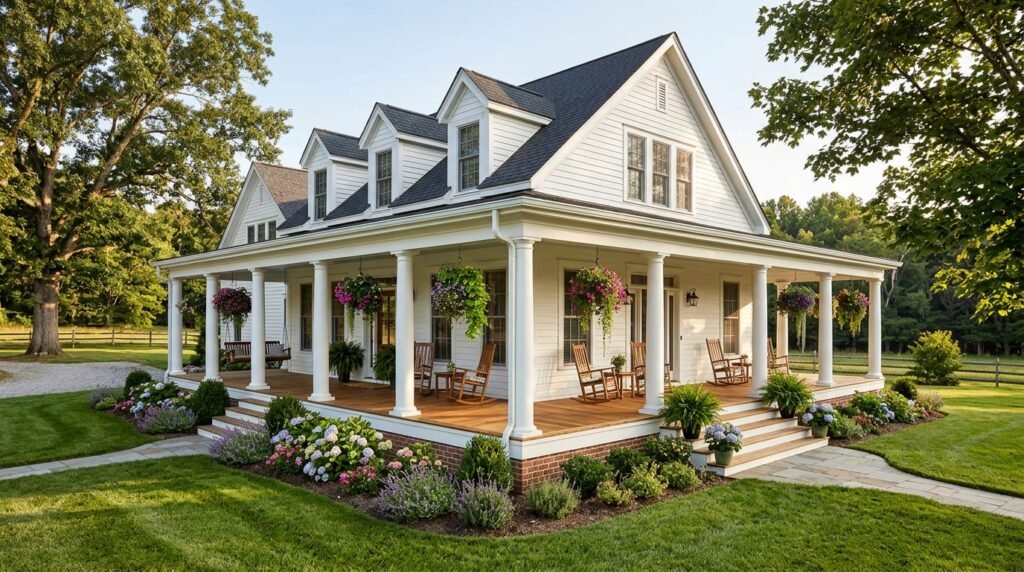
A classic Southern-style porch creates a relaxed appearance through simple architectural details and comfortable furniture. White columns, painted railings, wooden floors, and a wide roof overhang are common features of this look. Rocking chairs can line the front section, while a porch swing creates a comfortable focal point near one corner. Soft neutral colors work well with traditional home exteriors, especially white, cream, light gray, and natural wood tones. Ceiling fans can also help move air through a covered porch in warm weather. Choose furniture that suits the available floor space instead of placing chairs too close together. A small side table between two rocking chairs provides a practical place for drinks or books. Traditional porch details should also match the home’s architecture. Large decorative columns may look out of place on a small cottage, while simple square posts may suit it better. The aim is a welcoming outdoor space that feels connected to the house rather than an unrelated decorative feature.
Use a Farmhouse Design With Natural Materials
Farmhouse porches often combine simple shapes, natural textures, and comfortable seating. A wooden porch floor, straightforward columns, dark metal lighting, and neutral furniture can create this appearance without excessive decoration. A wooden bench works well near the entrance because it provides seating without taking up as much room as a large sofa. Woven baskets, outdoor cushions, and large planters can add warmth. For a modern farmhouse look, combine a light exterior with darker window frames or carefully chosen black details. Avoid adding too many rustic decorations because they can make the porch look crowded. Wood also needs suitable protection from outdoor conditions. Rain, sunlight, and changes in humidity can affect its appearance and condition. The USDA Forest Products Laboratory explains that moisture changes influence wood properties and performance, so material selection and protection matter. Forest Service R&D+1 Choose exterior-rated wood and finishes suitable for the specific product. These wrap around porch ideas work especially well when the house already has farmhouse or country-style features.
Add a Modern Porch With Clean Lines
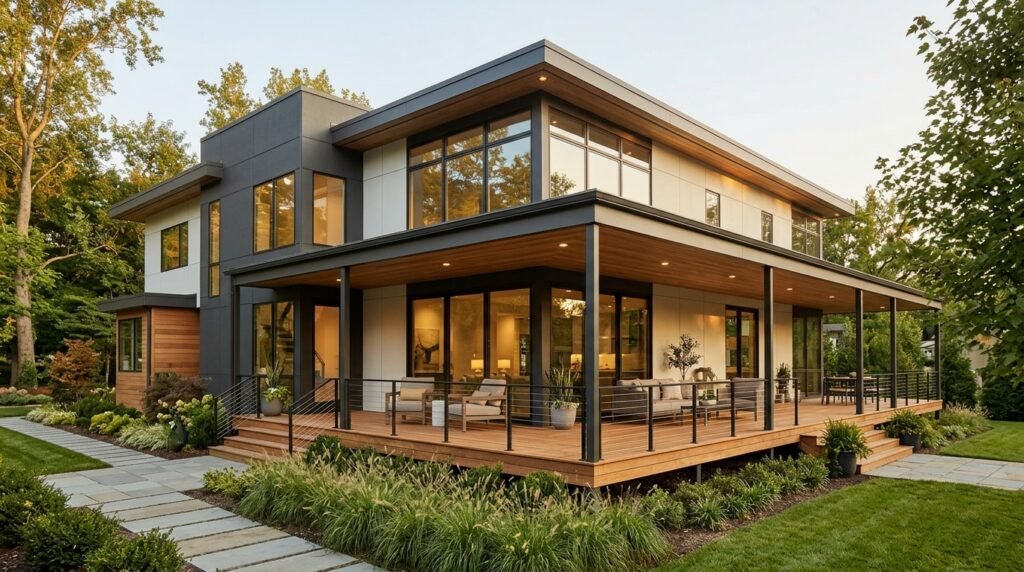
A modern wraparound porch can look attractive without decorative columns or complicated details. Straight rooflines, simple posts, uncluttered railings, and a limited color palette help create a clean appearance. Consider combining a light exterior with charcoal, black, or natural wood accents. Metal furniture with weather-resistant cushions can suit this style. A simple outdoor sofa, two lounge chairs, and a low table may be enough for a comfortable seating area. Keep the walking route open and avoid placing decorative objects along every edge. Large windows or glass doors can strengthen the connection between indoor and outdoor spaces. If the porch has a wide opening, choose furniture that does not interrupt the view. Lighting should follow the same simple approach. Wall lights with clean shapes or understated ceiling fixtures can provide useful illumination without becoming the main feature. Modern designs are particularly useful when homeowners want a porch that looks current but remains easy to maintain. The strongest result comes from matching the porch proportions to the house rather than copying a design from a much larger property.
Turn One Corner Into a Comfortable Seating Area
Corner seating is one of the most useful ways to make a wraparound porch feel complete. Instead of placing furniture in a long line, use one corner as a small outdoor living room. Two chairs arranged at an angle can encourage conversation, while a compact outdoor sofa can provide more seating where space allows. Add a small table within easy reach and leave enough room for people to walk past. A corner near the garden may be ideal for morning coffee, while a sheltered area near the front entrance may work better for casual conversations. Measure the furniture before buying it. A chair that looks small in a showroom can take up considerable space once its arms and cushions are included. Also consider how doors open and how people move between porch sections. These wrap around porch ideas are especially useful for homes with long, narrow porches. They create a clear purpose for an otherwise unused corner without requiring a major construction change.
Add a Porch Swing or Hanging Daybed
A porch swing can become the most recognizable feature of an outdoor sitting area. It provides a comfortable place to read, relax, or enjoy the garden. Traditional wooden swings suit farmhouse and cottage homes, while simple metal or woven designs can work with modern exteriors. A hanging daybed offers a larger lounging surface, but it needs more space and stronger support planning. Before installing any suspended furniture, check the structure above it. The swing must connect to a suitable structural support, not just decorative ceiling boards or thin trim. A qualified professional can assess the framing and select suitable hardware when the support is uncertain. Follow the swing and hardware manufacturer’s installation instructions, including weight limits and required clearances. Allow enough room for the swing to move without striking columns, walls, railings, or nearby furniture. If the porch is too small for a suspended seat, a freestanding porch swing may be a more practical option. These wrap around porch ideas add movement and comfort while keeping the rest of the layout flexible.
Design a Small Outdoor Dining Space
A wraparound porch does not need to be wide everywhere to support outdoor dining. One wider section can hold a small table and chairs while the remaining sections stay open for walking and other activities. Round tables are often useful in compact areas because they have no sharp corners and allow flexible seating. A rectangular table may work better for a larger family or a long porch. Choose chairs that can slide under the table when not in use. Keep the dining area close to a kitchen or outdoor serving point if possible. This reduces the need to carry food across the entire porch. Consider shade as well, especially if the dining area receives direct afternoon sunlight. A roof extension may provide permanent protection, while a suitable outdoor umbrella can offer flexible shade where the structure allows it. Make sure an umbrella is secured properly and cannot become unstable in strong wind. Leave a clear route between the dining furniture and the nearest door. A practical dining zone makes the porch useful for everyday meals rather than occasional decoration.
Use Plants to Connect the Porch With the Garden
Plants can soften the hard lines of columns, railings, steps, and exterior walls. Large containers near the corners can create a natural frame, while smaller pots can add color beside seating areas. Choose plants according to local climate, sunlight, water needs, and the amount of care available. A covered porch may receive bright indirect light but little direct sun. An uncovered section may have very different growing conditions. Check the light at different times of the day before buying plants. Place larger pots where they will not block entrances or reduce walking space. Hanging baskets can add greenery above eye level, but their hooks and supports must be suitable for the weight of the containers when wet. Avoid placing heavy pots on weak railings or unsupported ledges. If the porch has a garden-facing side, use matching planters to create a visual connection between the two spaces. Climbing plants can also soften a suitable trellis, but they should not damage siding, block drainage, or cover ventilation openings. A few well-placed plants usually look better than filling every available surface.
Choose Porch Flooring That Suits Outdoor Conditions
Porch flooring affects comfort, appearance, cleaning, and long-term maintenance. Common choices include exterior-rated wood, composite decking, concrete, and suitable outdoor tiles. Each material has different strengths, costs, and installation needs. Wood offers a familiar natural appearance and can be repaired or refinished, depending on its condition. However, it needs protection from moisture and weather exposure. Composite boards can reduce some routine finishing work, but the specific product still needs correct installation and cleaning. Concrete offers a solid surface and can suit contemporary homes, while outdoor-rated tile can provide many colors and patterns. Tile must be suitable for exterior use and local temperature conditions. Its surface should also provide suitable slip resistance when wet. Do not select flooring based on appearance alone. Consider drainage, surface temperature, expansion requirements, structural support, and the transition between indoor and outdoor floors. The USDA notes that outdoor wood faces weather-related stress and can develop cracking, raised grain, and mildew without suitable care. Forest Service R&D+1 Good wrap around porch ideas account for these practical details before the flooring is installed.
Select Railings That Match the Architecture
Railings provide a visual boundary and may also be a required safety feature. Their design can change the entire appearance of a porch. Traditional wooden balusters suit many farmhouse and classic homes. Metal railings can create a lighter, more contemporary look, while cable systems offer a less obstructed view when designed and installed correctly. Glass panels can also preserve views, but they need appropriate structural support and regular cleaning. Choose a railing that works with the home’s columns, exterior trim, and roof details. Avoid mixing several unrelated railing styles around different sides of the same porch. Safety requirements depend on the porch height, building type, and local adopted code. For example, the 2021 International Residential Code includes requirements for guards on certain open-sided walking surfaces and limits on openings. However, the applicable rules can differ by location and code edition. 2021 INTERNATIONAL RESIDENTIAL CODE (IRC) Before replacing or building a railing, check with the local building department. Do not assume a decorative railing is safe simply because it looks sturdy. Correct posts, connections, spacing, and installation matter as much as appearance.
Improve Comfort With Roof Coverage and Shade
A covered porch provides protection from direct sun and some rain, making outdoor space easier to use. The roof design should match the existing house and handle local weather conditions. A continuous roof can create a unified appearance around the front and side walls. A partial roof may be more suitable when the porch connects to different roof sections or when some areas need more sunlight. Overhangs can help protect doors, windows, and furniture, but they must be designed with proper drainage and structural support. In hot climates, shade can make a significant difference to comfort. Ceiling fans may help circulate air where suitable electrical installation is available. In rainy or humid areas, good airflow and drainage are especially important. Avoid adding temporary fabric covers without checking their wind rating and attachment requirements. A shade solution that works in calm weather may not be suitable during storms. If the existing roof does not cover the full porch, consider whether a pergola or other open structure would meet the actual need. A pergola provides filtered shade rather than the same weather protection as a solid roof.
Create a Warm Look With Outdoor Lighting
Lighting makes a porch more useful after sunset and helps define separate areas. Wall-mounted fixtures near doors can provide practical light for entering and leaving the house. Ceiling lights can illuminate covered seating areas, while low-level fixtures may help make steps and changes in level easier to see. Decorative string lights can create a relaxed atmosphere, but they should not replace proper safety lighting. Select fixtures and electrical components rated for their exposure to rain and outdoor conditions. Covered areas may still experience moisture, wind-driven rain, and humidity. Use a qualified electrician for new wiring, outlets, switches, and permanent lighting installation. Avoid loose cables across walking routes. Consider the color and brightness of the light as well. Very bright fixtures can create glare, while poorly placed lights can leave dark areas around stairs. A balanced lighting plan should support movement, reading, dining, and relaxing without making the porch feel harsh. These wrap around porch ideas work best when lighting is planned with furniture placement rather than added as an afterthought.
Add Privacy Without Making the Porch Feel Closed
A porch can feel exposed when it faces a busy street or sits close to neighboring homes. Privacy can be improved through thoughtful furniture placement, outdoor curtains, planters, screens, and suitable landscaping. Curtains can create a softer appearance on a covered porch and can be opened when more light or airflow is wanted. Select fabrics made for outdoor use and follow the care instructions. Wooden or metal privacy screens may work well along one side, especially near a dining or conversation area. Tall planters can also provide a partial visual barrier without creating a solid wall. Keep the design open enough to preserve airflow and natural light. Before installing fixed screens, check how they affect wind exposure and structural loads. A porch enclosure can change the way the building handles moisture and ventilation. If the aim is only to reduce direct views, a few carefully placed elements may be more effective than enclosing the entire porch. The right solution depends on the direction of neighboring windows, street activity, sun exposure, and the level of privacy needed.
Use Color to Give the Porch a Finished Appearance
Color can connect the porch to the home’s exterior and create a consistent design. White and cream are common choices for traditional trim because they create a clean contrast with many siding colors. Gray, beige, and muted green can produce a softer appearance. Dark railings or window frames can add contrast to a lighter exterior. Natural wood tones can bring warmth to modern and farmhouse designs. The porch floor does not always need to match the house exactly. It should complement the exterior and furniture instead. Use a small color palette to avoid a scattered appearance. For example, choose one main color, one supporting neutral, and a limited accent color for cushions or planters. Exterior paint and stain must be suitable for the surface and exposure. Check product instructions for preparation, application conditions, drying time, and maintenance. Old painted surfaces may need special care before sanding or scraping. A fresh color scheme can improve an existing porch, but paint should never be used to hide damaged wood, loose railings, or moisture problems.
Make a Narrow Porch Feel Larger
A narrow porch can still feel comfortable when furniture and accessories are selected carefully. Start by protecting the main walking route. Avoid large sofas, deep chairs, and oversized tables if they leave little room to pass. Slim benches, folding chairs, and compact side tables can provide useful seating without crowding the floor. Place furniture against the house or along the outer edge where appropriate, while keeping doors and windows accessible. Light colors can make a space feel visually open, but the layout matters more than color alone. Use vertical space for wall planters or suitable hanging decorations instead of filling the floor with small objects. A consistent floor finish can also help the porch look connected from one side to another. If the porch turns around a corner, keep the corner open or use one compact feature to mark the change in direction. Do not place a large decorative pot at a point where people naturally turn. Some of the most practical wrap around porch ideas are simple solutions that remove obstacles rather than adding more furniture.
Plan for Weather, Drainage, and Long-Term Maintenance
A porch must handle outdoor conditions throughout the year. Rainwater should move away from the house rather than collect near the foundation or under the floor. Roof gutters, downspouts, surface slopes, flashing, and drainage paths all play a role. Check that water does not run toward doors or collect around support posts. Wood components need regular inspection for soft spots, cracks, peeling finishes, and signs of insect activity. Metal parts should be checked for corrosion, loose fasteners, and damaged coatings. Composite products also need cleaning and inspection according to their manufacturer’s instructions. Remove leaves and dirt from corners because trapped debris can hold moisture. Look beneath the porch when access is safe, especially after heavy rain. The National Park Service explains that moisture-related decay and insect damage are common problems in historic wood porches. It recommends careful assessment and suitable repairs rather than neglecting deteriorating components. National Park Service+1 A maintenance routine can help identify small issues before they become major repairs. These wrap around porch ideas should include a plan for keeping the structure sound, not just making it attractive.
Give an Older Porch a Careful Update
An older porch may need repairs before it needs a new design. Start by checking the floor, columns, posts, stairs, railings, roof connections, and areas where water may enter. Look for movement, soft wood, loose joints, cracks, and visible signs of rot. Do not cover damaged areas with new boards or decorative panels. The underlying problem needs to be understood first. If the house is historic, its original porch details may be an important part of its character. The National Park Service recommends careful repair and preservation of significant porch features where possible. National Park Service+1 Replacing every column or railing with a modern style can change the appearance of the whole building. Try to identify the original materials and proportions before making major changes. If the home was built before 1978 in the United States, take care when disturbing old paint. The Environmental Protection Agency warns that renovation work can create dangerous lead dust in homes with lead-based paint. Paid renovation contractors covered by the applicable rule must use the required lead-safe practices. US EPA+1 For structural damage or uncertain paint conditions, seek qualified help before starting work.
Set a Realistic Budget Before Building or Renovating
The cost of a wraparound porch depends on its size, height, design, materials, roof coverage, foundation, stairs, railings, and local labor rates. A cosmetic update to an existing porch is very different from building a new structure around several sides of a house. Painting, replacing cushions, adding planters, and changing light fixtures may be manageable improvements. Replacing structural supports, extending a roof, building new foundations, or changing stairs requires more planning and professional work. Before requesting estimates, prepare a clear description of the project. Include the approximate dimensions, preferred materials, roof coverage, railing design, steps, and electrical work. Ask contractors to explain what is included in each estimate. Confirm whether permits, inspections, material disposal, and finishing work are included. Avoid choosing a contractor based only on the lowest price. A quote that excludes drainage, flashing, structural connections, or required safety features may lead to additional costs later. It is also sensible to keep a reserve for unexpected repairs, especially when an older porch is involved. A clear budget helps separate essential structural work from optional decorations and furniture.
Mistakes to Avoid When Designing a Wraparound Porch
One common mistake is choosing furniture before measuring the available space. Large chairs and tables can quickly block the route between doors and porch sections. Another problem is focusing on appearance while ignoring drainage, support, and weather exposure. A beautiful floor will not remain in good condition if water collects beneath it. Poor lighting can also make stairs and entrances difficult to use after dark. Avoid selecting materials without checking whether they are made for outdoor conditions. Interior rugs, untreated furniture, and unsuitable fabrics may deteriorate quickly when exposed to moisture and sunlight. Do not install a swing or heavy hanging planter without checking its support. Avoid copying a porch design that does not match the home’s proportions. A huge porch with oversized columns may overwhelm a small house, while a narrow roof extension may look out of place on a large exterior. Another mistake is adding too many decorative items. Plants, lanterns, signs, cushions, and accessories should support the design rather than compete with one another. A successful porch has enough open space to move, sit, and enjoy the outdoors comfortably.
How to Plan Your Porch Before Starting the Project
Begin with a simple drawing of the house and mark the sections where the porch will run. Add doors, windows, stairs, existing rooflines, and the direction of the garden or driveway. Measure the available area and note where people need to walk. Next, decide how each section will be used. One area may be for dining, another for relaxing, and a corner for plants or a swing. Select the main materials after considering weather exposure and maintenance needs. Then review the structure, drainage, foundations, and safety requirements with an appropriate building professional. Check local planning rules and permit requirements before construction. If the porch is already built, inspect its condition before adding new flooring or furniture. Prepare a list of essential work and optional improvements. This makes it easier to manage the budget and avoid unnecessary purchases. Good wrap around porch ideas are not simply attractive pictures or furniture arrangements. They are practical plans that connect the house, outdoor space, and daily routines in a safe and comfortable way.
Frequently Asked Questions
1. What are the most popular wrap around porch ideas?
Popular choices include traditional rocking chairs, farmhouse-style columns, porch swings, outdoor dining areas, corner seating, potted plants, and warm lighting. The best option depends on the home’s architecture, available space, and local weather.
2. How wide should a wraparound porch be?
There is no single width that works for every home. The required space depends on whether the porch is mainly a walkway or also needs to hold chairs, tables, and other furniture. Measure the furniture and walking routes before deciding on the final dimensions.
3. Can you add a wraparound porch to an existing house?
Yes, an existing house may be suitable for a wraparound porch, but the design needs to account for foundations, structural connections, roof support, drainage, and local building rules. A qualified builder or structural professional can assess the property before construction begins.
4. What is the best flooring for a wraparound porch?
There is no universal best material. Exterior-rated wood offers a natural appearance, composite decking can reduce some finishing work, and concrete provides a solid surface. Outdoor-rated tile is another option when the product and installation suit local conditions.
5. How can I decorate a small wraparound porch?
Use compact seating, slim tables, a few planters, and suitable wall lighting. Keep entrances and walking routes clear. A simple color scheme and carefully selected furniture can make a small porch feel more organized without overcrowding it.
6. Are wrap around porch ideas suitable for modern homes?
Yes. Modern homes can use clean-lined railings, simple columns, neutral colors, metal furniture, and understated lighting. The porch should follow the home’s roofline, exterior materials, and proportions to create a consistent appearance.
Conclusion
A well-planned wraparound porch can add useful outdoor living space and improve the connection between a home and its surroundings. The best design depends on the home’s size, architectural style, weather, and the way the space will be used. Rocking chairs, dining areas, plants, swings, modern railings, and outdoor lighting can all contribute to a welcoming result. However, furniture and decoration should come after decisions about structure, drainage, flooring, and safety. Start by measuring the available space and deciding what each section needs to do. Then choose materials and details that suit the house and the local climate. With thoughtful planning and regular care, wrap around porch ideas can become a practical part of everyday home life rather than an outdoor feature that only looks attractive.