
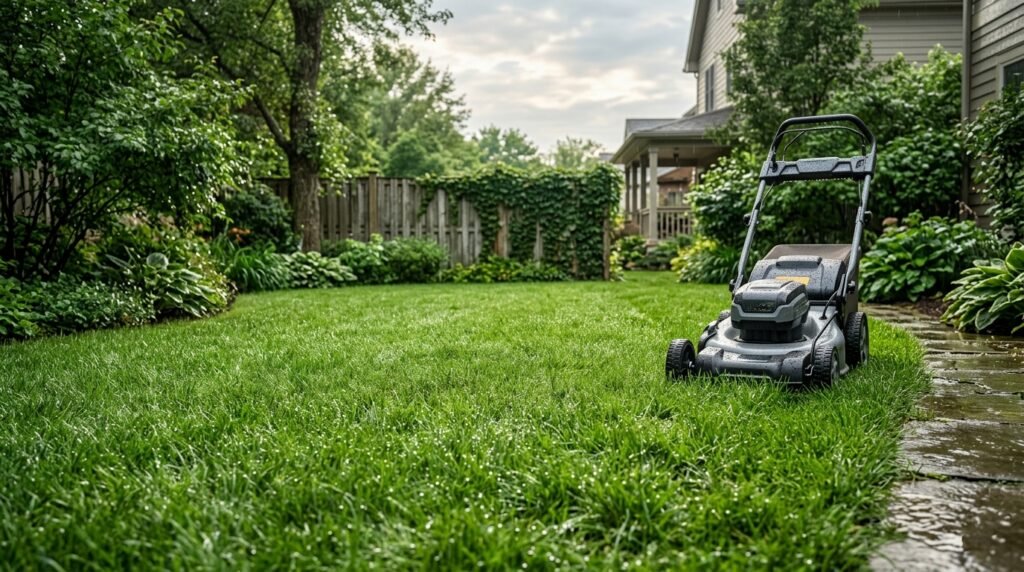
Can you mow lawn wet? Technically, a lawn mower can cut damp grass, but mowing a wet lawn is usually not recommended. Wet grass sticks to mower blades, forms heavy clumps, and can leave an uneven finish. More importantly, wet soil is easier to compact, and slippery ground can make mowing unsafe. The best choice is to wait until the grass and soil have dried enough to support clean cutting and safe movement. However, light morning dew is different from a lawn soaked by heavy rain. The type of mower, grass length, ground condition, slope, and weather all affect the decision. This guide explains when mowing is too risky, how long to wait after rain, what happens if you cut damp grass, and what to do when the lawn has become overgrown.
Can You Mow Lawn Wet?
You can sometimes mow slightly damp grass, but it is better to wait until the lawn is dry. The main concern is not simply whether the mower can cut through wet blades. It is whether the ground is firm, the mower can operate safely, and the grass can be cut without creating a mess. A lawn covered with light dew may be manageable once the surface moisture begins to disappear. A lawn soaked by rain is a different situation. Wet soil can become soft under the mower’s wheels, which may leave ruts or compact the ground. Wet clippings can also stick beneath the mower deck and collect in thick piles. These problems can affect the lawn’s appearance and future growth. University of Minnesota Extension advises delaying mowing when grass is wet because dry grass is less likely to clog the mower and provides better footing.
Why Mowing Wet Grass Is Usually a Bad Idea
Wet grass behaves differently from dry grass during cutting. Water makes the blades heavier and more likely to stick together. This can affect how evenly the mower cuts and where the clippings fall. The soil may also be softer after rain, especially in areas with poor drainage or heavy clay. As a result, the mower can leave marks that remain visible after the lawn dries. There are several reasons to postpone mowing when conditions are wet, and some are more serious than others.
Wet Grass Produces an Uneven Cut
Grass blades often bend and lie flat when covered in moisture. A mower may pass over some blades without cutting them at the same height as the upright grass. The result can be a patchy lawn with uneven sections and missed strips. Wet clippings may also stick to the blade or mower deck, affecting how grass moves through the cutting area. This problem is more noticeable when the grass is long or thick. A clean cut is easier to achieve when the blades are dry and standing upright.
Wet Clippings Form Heavy Clumps
Dry grass clippings usually spread more easily across the lawn. Wet clippings tend to stick together and form dense clumps. These piles can sit on top of the grass instead of falling between the blades. Large clumps may block sunlight and reduce airflow around the turf. They can also make the lawn look messy and leave visible patches. If clippings collect heavily, they should be removed or spread out after the lawn is safe to walk on.
Wet Soil Can Become Compacted
Soil contains small spaces that allow air and water to move around grass roots. When wet soil is pressed by heavy mower wheels, these spaces can become smaller. This is called soil compaction. Compacted soil can make it harder for roots to grow and can reduce the movement of air and water. Repeated mower passes over soft ground may also leave tracks or ruts. The risk is greater with heavy riding mowers and on lawns that drain slowly.
Slippery Conditions Increase the Risk of Accidents
Wet grass can make it harder to keep a stable footing. This is especially concerning on slopes, uneven ground, and areas near retaining walls or drainage channels. A person pushing a mower may slip while trying to control its direction. Riding mowers can also lose traction on wet or muddy ground. Slipping near a moving blade can cause severe injuries. The Canadian Centre for Occupational Health and Safety advises against mowing wet grass because it creates a slipping hazard and can clog the mower. CCOHS If you cannot walk across the lawn without slipping, do not operate a mower there.
Wet Grass Can Spread Lawn Disease
Some lawn diseases spread through spores or other plant material. Moving a mower through infected, wet grass can transfer disease-causing material to other areas. Moist conditions can also support the development of certain turf diseases. This does not mean every damp lawn will become diseased after mowing. The risk depends on the presence of a pathogen, grass condition, and environmental conditions. The University of Florida recommends avoiding mowing wet grass because it can spread water-borne pathogens. If the lawn already has suspicious spots or damaged patches, avoid mowing while it is wet and clean equipment after working in affected areas.
How Wet Is Too Wet to Mow?
There is no single moisture level that applies to every lawn. A small amount of dew on the grass tips is different from waterlogged soil after a storm. The most useful test is to check both the grass and the ground. Walk across a small area using normal shoes. If your shoes become soaked, the blades may still be too wet for a clean cut. Press a foot gently into the soil. If the ground feels soft, leaves a deep footprint, or releases water, postpone mowing. Look for puddles, muddy patches, and areas where mower wheels might sink. Also consider the lawn’s slope and the weight of the mower. A flat lawn with firm soil may dry sooner than a shaded lawn with poor drainage. Do not judge only by the surface appearance. Grass can look dry at the tips while the soil underneath remains saturated. When deciding can you mow lawn wet, the condition of the soil is just as important as the moisture on the blades.
How Long Should You Wait After Rain Before Mowing?
The waiting time depends on rainfall, sunlight, temperature, wind, shade, soil type, and drainage. A light shower may leave a lawn ready sooner than several hours of heavy rain. A shaded garden or a lawn with compacted clay soil may remain wet much longer. There is no reliable rule that every lawn will be ready after a fixed number of hours. Some mower guidance may suggest waiting until the grass is dry, while lawn conditions determine how long that takes. Husqvarna discusses waiting after rainfall but also explains that drying time changes with local weather and lawn conditions.
After Light Rain
After a short shower, inspect the grass and soil before mowing. If the blades are no longer wet to the touch and the ground feels firm, mowing may be possible. Check shaded corners because they often dry more slowly than open areas. Avoid starting immediately just because the sun has returned. The surface can dry before the soil has recovered.
After Heavy Rain
Heavy rain usually requires a longer delay. Water may collect in low spots and soak the soil below the grass. Wait until puddles disappear and the ground can support normal walking without sinking or leaving deep marks. If the lawn remains soft, give it more time even when the grass blades appear dry.
After Morning Dew
Morning dew is often lighter than rainfall, but it can still make grass slippery and cause clippings to stick. Sunlight and airflow may dry exposed areas as the morning progresses. Shaded sections may remain damp. If the lawn is small, check several spots rather than assuming the entire surface has dried at the same time.
Can You Mow Wet Grass With Different Types of Mowers?
Mower design affects how it handles damp clippings, but no mower removes the risks created by slippery ground or saturated soil. A powerful machine may cut through damp grass more easily than a small mower. That does not mean it is safe to use on muddy ground. Always follow the owner’s manual, especially for electric and battery-powered equipment. Some manufacturers advise against operating their machines in wet conditions.
Gas-Powered Lawn Mowers
A gas-powered mower does not have a trailing power cord, but wet conditions can still create problems. Damp grass may collect under the deck and block the discharge area. Heavy clippings can make the engine work harder and reduce cutting quality. Wet ground can also cause the wheels to slip or sink. Do not assume that a gas engine makes mowing after rain safe. Check the mower instructions and postpone the job if the soil is soft.
Corded Electric Lawn Mowers
A corded electric mower needs extra caution around moisture. Electricity and water can create a serious shock hazard, especially if cords, plugs, connectors, or equipment are damaged. Do not use a corded mower in wet conditions unless the manufacturer’s instructions specifically allow the conditions involved. Never use a damaged extension cord or leave electrical connections exposed to moisture. A ground-fault protection device is an important safety measure where required, but it does not make unsafe wet-weather operation acceptable. If rain is falling or the lawn is soaked, wait.
Battery-Powered Lawn Mowers
Battery-powered mowers avoid a trailing electrical cord, but they are not automatically waterproof. Water may affect electrical parts, battery connections, or controls if the equipment is not designed for wet use. Check the manual for the permitted operating conditions. Do not remove the battery or handle electrical components with wet hands. If the mower has been exposed to water beyond the manufacturer’s limits, stop using it and follow the maker’s inspection guidance.
Riding Lawn Mowers and Garden Tractors
Riding mowers are heavier than most walk-behind machines. Their weight can press into wet soil and leave deep tracks. They may also lose traction on slopes or soft ground. Avoid turning sharply on damp turf because the tires can tear the grass. If the lawn is waterlogged, postpone mowing rather than trying to finish quickly. A larger mower does not make saturated soil stronger.
Robotic Lawn Mowers
Robotic mowers vary in their weather resistance and operating rules. Some models have rain sensors or instructions about wet grass, while others may have limits on wet or slippery surfaces. Read the model-specific manual rather than assuming all robotic mowers can operate during rain. Also consider whether the lawn is soft enough for the wheels to leave marks. Automatic operation does not remove the need to protect the turf and equipment.
What Happens If You Mow a Wet Lawn?
The result depends on how wet the lawn is, how long the grass has grown, and the mower used. Lightly damp grass may show only minor clumping or an uneven finish. A saturated lawn can suffer more visible damage. You may notice tracks, torn grass, blocked mower parts, or piles of wet clippings. Some problems appear immediately, while others become clear after the grass dries. The most important step is to stop if the mower begins leaving ruts, struggling, or producing large clumps. Continuing across the same area can make the damage worse. If the lawn has active disease, mowing can also move infected material around the property. Avoid treating every brown patch as a disease, however. Poor cutting, compaction, drought, pests, and other conditions can cause similar symptoms. Inspect the lawn after it dries before deciding what repair is needed.
How to Mow Slightly Damp Grass If You Cannot Wait
Waiting for dry conditions is the safest general choice. Sometimes, however, a lawn must be cut before a planned event or before grass becomes excessively tall. If the grass is only slightly damp and the soil is firm, first check whether the mower’s manual permits operation in those conditions. Do not mow during rain, on slippery slopes, or across saturated soil. Keep people and pets away from the work area. Remove stones, sticks, toys, and other objects that could become dangerous projectiles. Wear sturdy footwear with good grip and use the mower’s safety features as designed. Work slowly, avoid sudden turns, and stop if the mower clogs or the ground begins to rut. Raise the cutting height if the grass is long, and avoid removing too much leaf at once. The University of Florida and NC State Extension recommend following the one-third mowing rule to reduce stress on turf.
How to Prevent Wet Grass From Clogging a Lawn Mower
Wet clippings stick to mower parts because moisture makes the cut material heavier and more likely to collect. A clean mower with a sharp blade can help produce a better cut in normal conditions, but maintenance does not make saturated grass suitable for mowing. Check the blade before the season and replace or sharpen it according to the manufacturer’s instructions. Keep the discharge chute, grass bag, and deck in good condition. Do not remove guards or safety shields to make clippings move more freely. If the mower begins to clog, stop the engine or motor and make the machine safe before inspection. For a gasoline mower, follow the manual’s instructions for stopping and preventing accidental starting. For an electric mower, disconnect the power source as directed. Never use your hand to pull wet grass from around a blade. Use an appropriate tool only after the machine is fully disabled. Clean the deck after the job if the manual allows it, and dry the machine before storage. Avoid spraying water into electrical parts, bearings, or engine openings.
What to Do With Wet Grass Clippings
Wet clippings can form thick piles that cover the lawn. Small, evenly spread clippings may break down naturally, but heavy clumps should not be left sitting in one place. Once the lawn is firm enough to walk on without causing damage, use a rake to spread or remove large piles. If the clippings contain diseased grass, collect them rather than spreading them across healthy areas. Follow local guidance for disposal or composting. Do not put large wet clumps into a compost pile without considering airflow and moisture balance. Dense material can become compacted and slow proper decomposition. Keep clippings off driveways, paths, and paved areas because they can become slippery. If the mower bag becomes heavy with wet material, stop safely and empty it according to the equipment instructions. Do not keep operating a mower with a blocked discharge system.
How to Mow Overgrown Grass After Several Rainy Days
Repeated rain can make it difficult to keep a lawn on its normal schedule. The grass may become much taller before the soil is dry enough to support mowing. Cutting it very short in one session can stress the turf and leave an uneven appearance. Wait until the ground is firm, then raise the mower’s cutting height for the first pass. Remove no more than one-third of the grass blade at a time. If the lawn is far above its normal height, reduce it gradually over several mowing sessions. Allow the grass to recover between cuts and follow the recommended height for the grass species. Do not lower the deck sharply just to finish the job in one pass. NC State Extension recommends raising the cutting height after prolonged rainy periods and returning gradually to the usual height.
Does Mowing Wet Grass Damage the Lawn Permanently?
Not every wet mowing session causes permanent damage. A single pass over slightly damp grass on firm ground may leave little lasting effect. Damage becomes more likely when the soil is saturated, the mower is heavy, or the lawn is cut too short. Wheel ruts can remain after the surface dries, while compaction may affect drainage and root growth. Heavy clippings can also smother small patches if they remain in dense piles. Disease risk depends on whether a pathogen is present and whether conditions support its spread. If the lawn looks uneven after mowing, allow it to dry before assessing the result. Remove large clumps and avoid repeated traffic over soft areas. If the ground has become compacted, consider whether aeration is appropriate once the soil is in a suitable condition. Do not aerate waterlogged soil. If damage is widespread or drainage remains poor, a lawn-care professional or local extension service can help identify the cause.
Best Time of Day to Mow a Lawn
The best time to mow is generally when the grass is dry and the lawn can be cut safely. Mid-morning, after dew has dried, is often a practical choice. Late afternoon may also work if the grass has dried and enough daylight remains. Avoid mowing when the grass is wet from dew, rain, or irrigation. Very hot conditions can also make lawn work uncomfortable and may stress the person operating the mower. Local climate matters, so the ideal time can vary. In humid or shaded gardens, dew may remain for much of the morning. In dry, sunny conditions, the lawn may become ready sooner. Check the actual condition rather than relying only on the clock. If the grass is still damp, wait until it dries.
How to Keep a Lawn From Staying Wet Too Long
A lawn that remains wet long after rainfall may have a drainage, shade, or soil problem. Start by checking where water collects. Low spots may need grading or another drainage solution. Downspouts should direct roof water away from areas where it repeatedly pools. Avoid unnecessary irrigation, especially when rain has already supplied enough moisture. Compacted soil may also drain poorly, but do not attempt repairs while it is saturated. Once conditions are suitable, a lawn-care professional can assess whether aeration or other soil improvements may help. Dense shade can slow drying because less sunlight reaches the grass. Trimming suitable plants or improving airflow may help, but do not remove trees without considering their value and the needs of the landscape. If water consistently collects in one area, investigate the cause instead of repeatedly mowing around it. Better drainage makes routine lawn care easier and reduces the time the ground remains vulnerable to damage.
Common Mistakes to Avoid When Mowing Damp Grass
One mistake is assuming that a few hours of sunshine always make the lawn ready. The grass surface may dry while the soil remains soft. Another mistake is using a riding mower because it seems powerful enough to handle wet growth. Its weight may cause more soil damage than a smaller machine. Cutting too low is also a problem, especially when the lawn has grown tall during rainy weather. Removing too much leaf at once can stress the grass. Some people also try to clear a clogged mower while the blade is still connected to its power source. This creates a serious injury risk. Never put hands near the blade until the mower is fully stopped and made safe according to its manual. Avoid mowing on steep wet slopes, turning sharply on soft ground, and leaving thick piles of wet clippings. Finally, do not assume that a moisture-resistant mower feature means the machine is approved for use in rain. Follow the exact instructions for the model.
Frequently Asked Questions
Can you mow lawn wet if it only has morning dew?
It may be possible if the dew is light, the ground is firm, and the mower’s instructions allow the conditions. However, waiting until the grass dries usually gives a cleaner cut and better footing. Shaded areas may stay wet after open parts of the lawn have dried.
How long after rain should I wait to mow?
There is no fixed waiting period for every lawn. Light rain may dry quickly in warm, sunny, breezy weather. Heavy rain, shade, cool temperatures, and poor drainage can extend the drying time. Check the grass and soil before starting rather than relying only on the number of hours.
Can you mow wet grass with an electric mower?
Do not assume an electric mower is safe to use on wet grass. Corded models create an electrical hazard if power connections or equipment become wet. Battery models also have moisture limits. Follow the owner’s manual and avoid mowing during rain or on a soaked lawn.
Will mowing wet grass ruin a lawn mower?
One session does not automatically ruin a mower, but wet clippings can collect under the deck and block discharge areas. Repeated use in unsuitable conditions may increase cleaning needs and strain the machine. Follow maintenance instructions and never clear a blade area before making the mower safe.
Should I bag wet grass clippings?
Wet clippings can become heavy and clog the mower or bag. If the lawn is only slightly damp and the mower manual permits operation, check the bag often and stop if the chute blocks. Avoid leaving thick piles on the lawn. Remove or spread clumps once the ground is firm enough.
Is it better to mow wet grass high or wait until it dries?
Waiting until the grass and soil dry is usually better. If the grass is only slightly damp, the ground is firm, and mowing cannot be delayed, a higher cutting setting may reduce stress. Never use a higher setting as a reason to mow saturated ground or operate equipment in unsafe conditions.
The Best Approach Is to Wait for Dry Conditions
So, can you mow lawn wet? In some light, damp conditions it may be possible, but it is rarely the best choice. Wet grass can clog the mower, create clumps, and produce an uneven finish. Soft soil can also become compacted or develop wheel ruts, while slippery ground increases the chance of an accident. Wait until the grass has dried and the soil feels firm. After heavy rain, give the lawn extra time and check shaded or low areas separately. If rainy weather has allowed the grass to grow too tall, raise the cutting height and reduce it gradually over several sessions. Always follow the mower’s manual, especially when using electric equipment. A short delay is usually better than risking damage to the lawn, the machine, or the person mowing it.