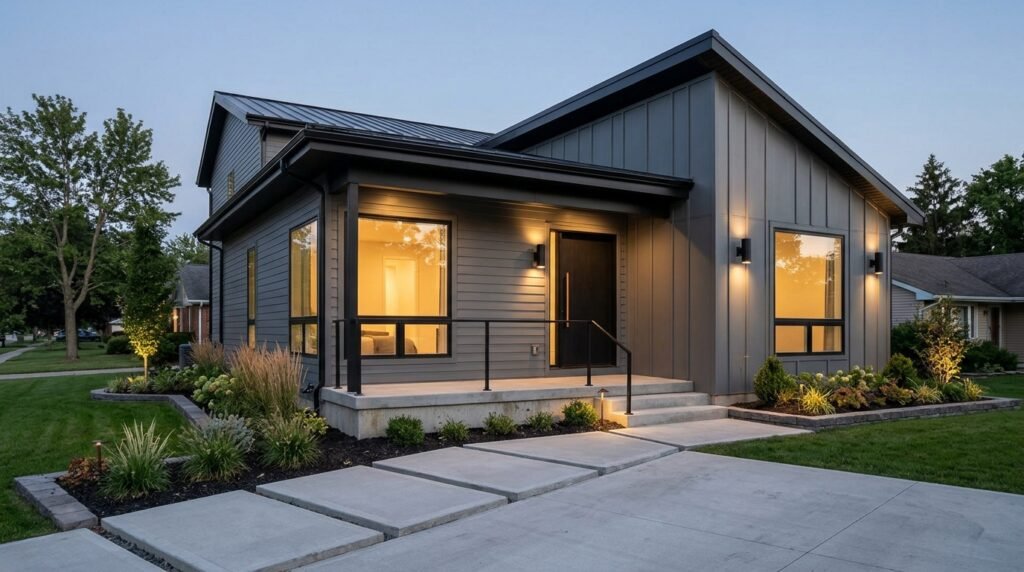
A grey house with black trim creates a balanced exterior that feels modern, elegant, and timeless. Grey provides a calm background, while black adds contrast around windows, doors, rooflines, and other architectural details. This combination works with many home styles, including modern farmhouses, traditional houses, contemporary properties, and simple suburban homes. However, the final appearance depends on the shade of grey, the type of black finish, exterior materials, roof color, and natural lighting. A light grey exterior can create a bright and welcoming appearance, while charcoal grey produces a deeper and more dramatic effect. The right combination can also make architectural features stand out without adding too many colors. This article explores different grey shades, black trim options, exterior combinations, front door colors, landscaping ideas, paint preparation, maintenance, and common mistakes. It also explains how to choose a combination that suits the home’s architecture, surroundings, and climate.
Why Grey Houses With Black Trim Are So Popular
The appeal of a grey exterior with black details comes from its simple color contrast. Grey sits between white and black, so it provides a flexible background for darker architectural features. Black trim creates clear visual edges around windows, doors, fascia boards, and other exterior elements. Together, these colors can make a house look more defined without requiring complicated decoration. Another reason homeowners choose this combination is its flexibility. Light grey can create a soft and welcoming appearance, while medium grey offers a balanced look. Dark charcoal gives the property a stronger and more dramatic character. Black can also connect different exterior elements, such as window frames, roof edges, gutters, and outdoor lighting. The combination suits both simple and detailed architecture when the colors are selected carefully. A grey house with black trim does not need expensive materials or unusual architectural features to look attractive. Good proportions, clean finishes, and a suitable surrounding landscape often make a greater difference than decorative additions. The important part is choosing shades that work together rather than selecting grey and black without considering their undertones.
Choosing the Right Shade of Grey for Your Exterior
Grey is not a single color. It includes pale silver shades, warm greige tones, medium neutral greys, blue-grey finishes, and deep charcoal colors. Each creates a different appearance when paired with black trim. The best choice depends on the home’s size, architectural style, roof, surrounding environment, and amount of sunlight. Before choosing exterior paint, compare samples under natural light and against the materials that will remain unchanged.
Light Grey for a Bright and Welcoming Appearance
Light grey is a useful choice for homeowners who want a clean exterior without using pure white. It reflects more light visually and can make smaller houses appear open and fresh. Black window frames, gutters, and fascia boards provide contrast without making the entire exterior look dark. Light grey also works well with white porch ceilings, natural wood doors, stone details, and simple landscaping. However, very pale grey can look almost white in strong sunlight. It may also show dirt differently depending on the finish and surrounding conditions. Test a sample on more than one side of the house before deciding.
Medium Grey for a Balanced Exterior
Medium grey offers a middle ground between pale and dark colors. It provides enough depth to make black details noticeable while keeping the overall appearance calm. This shade can work particularly well on homes with visible rooflines, larger windows, or traditional architectural details. It also gives homeowners room to introduce another accent color through the front door or porch furniture. A neutral medium grey is often easier to coordinate with existing materials than a strongly blue or green shade. Check the sample beside the roof, stonework, and permanent paving before purchasing the full paint quantity.
Charcoal Grey for a Dramatic Look
Charcoal grey creates a bold exterior with a strong architectural appearance. When paired with black trim, it produces a low-contrast combination because both colors are dark. This can make a home look sophisticated, especially when the design includes lighter stone, natural wood, glass, or warm outdoor lighting. However, charcoal may absorb more solar energy than lighter exterior colors. Dark surfaces can also experience greater temperature changes in direct sunlight. The suitability of a dark finish depends on the wall or siding material, coating system, exposure, and manufacturer guidance. A grey house with black trim in charcoal shades should be planned carefully, especially where exterior siding or trim has specific color restrictions.
Warm Grey for a Softer Appearance
Warm grey contains subtle beige, brown, or taupe undertones. It can make an exterior feel more inviting than a cooler grey. Black trim gives warm grey a clear outline while allowing wooden doors, natural stone, and warm landscaping colors to fit comfortably. This combination can suit traditional houses, cottages, and modern farmhouse designs. Warm grey is particularly useful when the roof or surrounding landscape contains brown or earthy colors. Before choosing it, compare the paint sample with existing brick, stone, and concrete because these materials can influence how the color appears.
Blue-Grey for a Cooler Exterior
Blue-grey has a cool undertone that can create a crisp and contemporary appearance. Black trim gives it a strong outline, while white accents can make the design feel brighter. This combination works well with simple architecture, large windows, and clean exterior lines. Blue-grey can look more blue in certain lighting conditions, so it should not be selected from a small digital image alone. Test the color outside during different parts of the day. A shade that looks neutral in a paint store may appear noticeably cooler on a large exterior wall.
Different Ways to Use Black Trim on a Grey House
Black trim does not have to cover every exterior feature. Its placement affects how the house looks from the street. Some homes benefit from black window frames alone, while others look more balanced with matching fascia, gutters, doors, and porch details. The aim is to create a clear visual connection between selected architectural elements.
Black Window Frames
Black window frames are among the most recognizable features of this exterior combination. They create a defined border around the glass and can make the windows appear more prominent. They work especially well with light and medium grey siding. If replacing windows is not part of the project, check whether the existing frames can be painted safely. Some vinyl and composite products have specific color and coating restrictions. Always follow the window manufacturer’s instructions before applying a darker finish.
Black Fascia and Soffits
Fascia boards run along the roof edge, while soffits cover the underside of roof overhangs. Black fascia can create a strong line between the walls and roof. It may also connect the roof color with black window frames. Soffits can be treated differently depending on the house design. A black soffit may create a continuous dark edge, while a lighter soffit can keep the porch and roof overhang brighter. Consider the roof’s shape and the amount of visible overhang before choosing the finish.
Black Gutters and Downspouts
Black gutters can look neat against grey walls and may connect naturally with dark roof materials. Downspouts can also be painted or selected in a matching finish where the product allows it. Their placement matters because long vertical lines can become noticeable on large wall surfaces. Keep the gutter system functional rather than choosing a color that makes maintenance difficult. Check that the coating is suitable for the gutter material and local weather conditions.
Black Exterior Doors and Shutters
A black front door can create a strong entrance and connect with the window frames. Black shutters can also add character to homes with suitable window proportions. However, shutters should fit the scale and style of the windows. Decorative shutters that are too small or poorly positioned can make the exterior look less balanced. On a simple modern house, black doors and window frames may be enough. Traditional homes can sometimes support additional shutters and decorative trim.
Grey House With Black Trim Exterior Color Combinations
The main wall color is only one part of the exterior design. Roofs, doors, porch ceilings, stonework, garage doors, and landscaping all influence the finished result. A coordinated palette helps these elements look connected instead of competing for attention.
Light Grey, Black, and White
This is a classic combination for a bright exterior. Light grey siding creates the main background, black frames define the architectural details, and white can be used for porch ceilings or selected decorative elements. The contrast is clear without requiring strong accent colors. It works particularly well with simple rooflines and homes that receive plenty of natural light. Avoid using too much white trim if the goal is a clean modern appearance. A few carefully selected white details can be more effective than outlining every feature.
Grey, Black, and Natural Wood
Natural wood adds warmth to a grey and black exterior. A wooden front door, porch ceiling, garage door, or decorative panel can soften the darker details. This combination works well for modern farmhouses and contemporary homes. The wood tone should relate to other outdoor materials, such as decking or porch furniture. Exterior wood also needs suitable protection and regular care according to its finish and exposure. Choose materials designed for outdoor use rather than assuming an interior wood finish will withstand rain and sunlight.
Grey, Black, and Stone
Stone can add texture and depth to a grey exterior. Light natural stone provides contrast, while darker stone can create a more dramatic appearance. It can be used around the entrance, foundation, porch columns, or selected wall sections. The stone’s undertone should work with the grey paint. Warm stone generally pairs more comfortably with warm grey, while cooler stone may suit blue-grey or neutral shades. Avoid introducing several unrelated stone colors because they can make the exterior feel visually busy.
Grey, Black, and White Brick
White brick can introduce a softer contrast to grey siding and black frames. This approach can work on houses that combine different exterior materials. For example, the main upper walls might use grey siding while the lower section uses painted or naturally light brick. The transition between materials should follow the architecture rather than creating an arbitrary division. Check whether existing brick should be painted at all. Painting masonry changes its appearance and can affect future maintenance.
Grey, Black, and Earthy Green
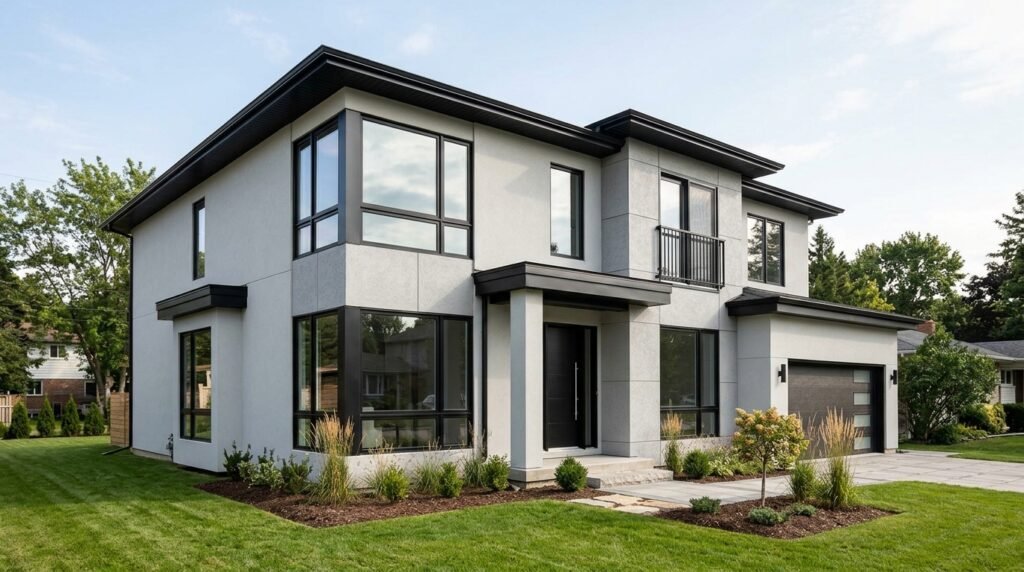
Muted green landscaping can make a grey and black house feel more connected to its surroundings. Plants, shrubs, and small trees add natural color without changing the main exterior palette. Olive, sage, and deep green tones can work particularly well with warm grey and charcoal. The plants should be selected according to local climate, available sunlight, soil, and water needs. Keep shrubs away from exterior surfaces where they could trap moisture or block access for inspection and cleaning.
Modern Grey House With Black Trim Designs
Modern homes often use simple shapes, large windows, flat or low-pitched rooflines, and limited decorative details. Grey walls and black frames can support this architecture by emphasizing clean edges and strong proportions. A modern grey exterior may use smooth wall finishes, metal details, dark garage doors, and minimal landscaping. The best results usually come from controlling the number of materials. For example, a house with grey walls, black windows, a wooden entrance, and simple concrete paving already has several useful visual elements. Adding multiple stone patterns, bright accent colors, and decorative shutters may weaken the overall design. On modern properties, consistent lines matter. Aligning window frames, exterior lights, and entrance details can make the house look more organized. Lighting should also be planned to highlight entrances and walking areas without creating excessive glare. A grey house with black trim can look especially effective on a modern design when the trim follows the building’s actual structure instead of being added randomly.
Modern Farmhouse Style With Grey and Black Exterior Details
Modern farmhouse design combines familiar residential shapes with cleaner finishes and simpler decoration. Grey siding, black window frames, a dark roof, and a welcoming entrance are common visual choices for this style. Some houses also include white porch details, natural timber beams, board-and-batten siding, or stone around the entrance. A light or medium grey wall color can prevent the exterior from becoming too dark. Black windows and roof edges provide definition, while wood introduces warmth. A front porch can become an important feature through suitable lighting, comfortable seating, and a clear entrance path. However, farmhouse details should match the building’s proportions. Adding shutters, oversized decorative brackets, or unnecessary beams to a simple house may look forced. Choose only the elements that suit the original architecture. The result should feel like one complete design rather than a collection of unrelated trends.
Choosing a Front Door Color That Complements Grey and Black
The front door is one of the most visible features of a home’s exterior. It can either continue the main palette or introduce a carefully chosen accent color. Black creates a coordinated appearance when the windows and other trim are also black. White offers a brighter and simpler entrance. Natural wood adds warmth and can soften a cool grey exterior. Muted green can create a natural connection with landscaping, while navy blue provides a deeper accent without introducing a very bright color. Burgundy may suit some traditional houses with warm grey walls and classic architectural details. Before selecting a color, consider the roof, paving, outdoor lighting, and nearby landscape. Also check the door material and existing finish. A wooden door may require a different preparation and coating system from a metal or fiberglass door. The finish should be suitable for exterior exposure and the manufacturer’s care instructions.
Selecting the Right Roof Color
The roof occupies a large part of many house exteriors, so its color can change the appearance of grey walls and black details. A black or deep charcoal roof can connect naturally with black trim and create a consistent modern appearance. Medium grey roofing offers a softer transition between the wall color and darker window frames. Brown or weathered wood-look roofing can add warmth, especially when the exterior includes natural wood or warm stone. Metal roofing can introduce a clean appearance, but its finish and material should suit the architectural style. Existing roofs should be considered before repainting or replacing exterior walls. A grey shade that looks attractive on a sample card may clash with a roof’s undertone. Check the palette outdoors and from different viewing angles. Roofing materials also have their own maintenance and performance requirements, so color should not be the only selection factor.
Exterior Materials That Work With Grey and Black
The same paint colors can look different on different surfaces. Smooth siding creates a more uniform appearance, while textured materials introduce shadows and depth. Common exterior materials include wood, fiber cement, vinyl, brick, stone, stucco, and metal. Each has different preparation, installation, and maintenance needs. Wood siding can provide a natural texture, but exposed areas need suitable protection. Fiber cement can support a range of exterior finishes, subject to its product instructions. Vinyl siding may have limits on which darker colors are suitable because of heat absorption. Brick and masonry require coatings designed for the surface and its moisture conditions. Metal elements need suitable preparation and coatings to address corrosion and adhesion. When planning a grey house with black trim, select finishes for each material rather than assuming one exterior paint will work on every surface. The substrate manufacturer’s recommendations should guide color selection, primer, and coating compatibility.
How Lighting Changes the Appearance of Grey Exterior Paint
Natural light can change how grey paint looks throughout the day. Morning sunlight may make some shades appear warmer, while shaded walls can look cooler or darker. Strong afternoon sunlight can make pale grey appear almost white. The direction of the house also matters because different walls receive different amounts of direct sunlight. This is why choosing exterior paint from a small indoor sample can lead to disappointment. Place sample boards or painted test areas on different sides of the property. Compare them in bright sunlight, shade, and overcast conditions. Look at the samples from the street as well as close to the wall. Black trim can also appear different depending on its finish. Glossy black reflects more light and may show surface imperfections, while a matte or low-sheen finish creates a softer appearance. A consistent finish across windows, doors, and other painted trim can help the exterior look organized. However, the coating must still suit the material and exposure conditions.
Landscaping Ideas for a Grey House With Black Trim
Landscaping can make a grey and black exterior feel more welcoming. Without plants or outdoor features, a house with strong dark trim may look slightly severe. Greenery introduces a natural contrast and adds visual interest around the entrance and foundation. Start with the overall shape of the property. Small houses may benefit from low plants, simple garden beds, and an uncluttered entrance. Larger properties can use a combination of shrubs, trees, pathways, and lawn areas. Choose plant colors that complement the exterior instead of competing with it. Green foliage usually works well with neutral grey, while seasonal flowers can introduce small amounts of additional color. Light-colored gravel or paving can also create contrast near dark exterior details. Avoid planting large shrubs directly against siding because restricted airflow and trapped moisture can create maintenance problems. Leave enough room to inspect walls, windows, and drainage areas. Landscaping should improve the property’s appearance without blocking access or creating unnecessary upkeep.
Front Porch and Outdoor Lighting Ideas
A front porch can connect the exterior color scheme with the home’s entrance. Black outdoor lights can match window frames, door hardware, and other dark details. Simple wall lanterns may suit traditional homes, while clean geometric fixtures can work with modern architecture. The fixture’s size should match the entrance. A very small light can look lost beside a large doorway, while an oversized fixture may dominate a narrow porch. Consider the purpose of each light. Entrance lighting should help people identify steps, locks, and doorways. Pathway lighting should make walking areas easier to see. Decorative lighting can highlight selected architectural features. Choose outdoor-rated fixtures suitable for the location and local weather exposure. Electrical connections should be installed safely by a qualified professional when required. Warm-colored lighting can create a welcoming atmosphere, but the final effect should be checked against the grey wall color and black finishes. Avoid placing too many fixtures along one wall because excessive lighting can make the entrance look crowded.
How to Make a Small Grey House Look More Spacious
A smaller property can benefit from a carefully planned exterior palette. Light grey walls can create a bright appearance, while black trim adds structure around the windows and doors. The key is controlling how much dark color appears across the front elevation. If the roof, garage door, windows, gutters, and entrance are all black, the overall exterior may feel heavier. A lighter garage door or natural wood entrance can break up the dark areas. Window placement also influences the appearance. Clean frames and suitable proportions can make the facade look more organized. Avoid adding too many decorative materials to a compact exterior. A simple combination of grey siding, black window frames, a neat entrance, and a few plants may be more effective than several competing finishes. Keep pathways clear and use landscaping that fits the available space. A grey house with black trim can look balanced even when the building is small, provided the darker details are used with care.
How to Prepare a House Before Exterior Painting
Good preparation is essential for a lasting exterior paint finish. Paint should not be applied over loose coatings, dirt, moisture, or damaged surfaces. Start by inspecting the walls, trim, windows, and other areas that will be painted. Look for peeling paint, cracks, rust, mildew, damaged wood, and signs of water entry. Clean the surfaces using a method suitable for the material. Allow them to dry fully before continuing. Remove loose paint carefully, repair damaged areas, and sand suitable surfaces where needed. Bare materials may require a compatible primer. Caulking can help seal appropriate joints, but it should not block drainage openings or cover areas designed to remain open. Test the selected paint on a small prepared area to check appearance and compatibility. Sherwin-Williams recommends working with clean, sound, dry surfaces and testing paint before covering the full exterior. It also warns that old paint removal may create hazardous lead dust in older buildings. Appropriate precautions and local guidance are necessary when lead-based paint may be present. Sherwin-Williams+1
What Tools and Materials Are Needed for Exterior Painting?
The required supplies depend on the size of the house, surface condition, and painting method. Common preparation supplies include cleaning materials, protective sheets, painter’s tape, suitable scrapers, sanding equipment, patching materials, and exterior-grade caulk where appropriate. Painting tools may include brushes, rollers, extension poles, paint trays, and suitable spray equipment. A stable ladder or professional access equipment may also be needed. The paint itself should be designed for the specific exterior surface. Wood, masonry, metal, and vinyl may need different primers or coatings. Read the product label and technical instructions before purchasing supplies. Do not assume that interior paint, general-purpose primer, or ordinary sealant will perform properly outdoors. Protective gloves, eye protection, suitable clothing, and respiratory protection may be required depending on the product and preparation work. Keep the work area clear and protect plants, paving, outdoor furniture, and nearby vehicles. For high walls, steep roof edges, or difficult access, hiring a professional painter may be safer than working from an unstable ladder.
Best Time to Paint a Grey and Black House Exterior
Exterior painting should take place when the surface and weather conditions meet the paint manufacturer’s requirements. Dry weather, suitable temperatures, and manageable humidity help paint adhere and cure correctly. Rain, fog, dew, and very hot conditions can affect the result. The correct temperature range varies between products, so the instructions on the selected paint should always take priority. In Pakistan, exterior projects need particular attention to seasonal weather. Dulux Pakistan advises avoiding the monsoon period because high humidity and rain can affect exterior painting. Peak summer heat can also cause paint to dry too quickly. Dry, milder periods are generally more suitable, provided the actual surface and forecast meet product requirements. Dulux Pakistan+1 Do not rely only on the weather at the moment of application. Check expected rain, nighttime temperatures, humidity, and drying conditions. A wall that looks dry may still hold moisture, particularly after heavy rainfall. Allow sufficient drying time between coats as directed by the manufacturer.
Important Considerations When Using Dark Exterior Paint
Black trim adds contrast, but dark colors require more attention than some lighter finishes. Dark surfaces generally absorb more solar energy than lighter ones. This can increase surface temperatures and contribute to expansion, contraction, and stress on certain materials. The actual effect depends on the product, color formulation, material, orientation, and amount of sunlight. Light Reflectance Value, or LRV, is a useful measurement when selecting exterior colors. It describes how much visible light a color reflects. Higher values indicate greater reflection, while lower values indicate less. Some siding and trim manufacturers set limits for acceptable paint colors or require approved color formulations. These rules matter particularly for vinyl and other heat-sensitive products. Sherwin-Williams warns against painting vinyl siding with a color darker than its original finish unless the product system specifically allows it. AZEK also provides product-specific color guidance because dark finishes can increase heat-related movement in exterior materials. Sherwin-Williams+2 Before selecting black paint for large surfaces, check the substrate manufacturer’s approved color range. It may be safer to use black only on suitable trim rather than covering heat-sensitive siding with a very dark finish.
Common Mistakes to Avoid With Grey and Black Exteriors
A beautiful exterior palette can lose its appeal when the colors or materials are poorly planned. One common mistake is choosing a grey shade without checking its undertone. A blue-grey wall may look unusual beside warm brown roofing or yellow-toned stone. Another mistake is using too much black. Dark walls, black windows, black doors, black gutters, and dark roofing can make a smaller property look visually heavy. Choosing a black finish that does not suit the material can also cause problems. Some vinyl and composite products have strict color requirements. Painting without proper preparation is another costly error. Dirt, peeling coatings, moisture, and untreated surface damage can affect adhesion and appearance. Homeowners may also forget to test the paint outside. Small samples viewed indoors do not always represent how the color will look across a large wall. Finally, avoid choosing every exterior detail separately. The roof, front door, garage door, paving, and landscaping should work as one visual scheme. A simple plan made before purchasing materials can prevent unnecessary changes and wasted money.
How to Maintain Grey Siding and Black Exterior Trim
Exterior maintenance helps preserve the appearance of painted surfaces and makes it easier to identify developing problems. Inspect the walls and trim periodically, especially after severe weather. Look for peeling paint, cracked sealant, damaged wood, rust, mildew, and blocked drainage areas. Clean exterior surfaces using a method suitable for their materials and finishes. Avoid aggressive pressure washing that could damage siding, force water behind joints, or remove sound paint. Pay attention to shaded and damp areas where dirt and organic growth may collect. Black trim may show dust, water marks, and pollen more clearly than expected, depending on its sheen and location. Clean it according to the coating manufacturer’s instructions. Check around windows and doors for failed sealant, but do not seal drainage paths. Wooden elements may need additional care because sunlight and moisture can affect their finish. If paint begins peeling, identify the cause before repainting. Simply covering a damaged area may hide a problem temporarily without fixing the underlying moisture or adhesion issue.
Is a Grey House With Black Trim a Good Choice for Every Home?
This color combination can suit many properties, but it is not automatically the right option for every house. Architectural style, surrounding buildings, roof materials, local weather, and personal preferences all matter. A modern property with large windows may look particularly effective with light grey walls and black frames. A traditional house may benefit from warmer grey, restrained black shutters, and a wooden entrance. A home surrounded by trees might look better with warm grey than with a very cool blue-grey shade. Some neighborhoods also have exterior color rules or homeowners’ association requirements. Check any applicable restrictions before starting a project. Existing siding may have color limitations, and certain materials may need specialist coatings. The cost of changing windows, replacing trim, or repainting large surfaces should also be considered. If the house already has a roof or stone finish that cannot be replaced, select grey and black shades around those fixed elements. The strongest design is one that suits the property rather than forcing a popular color combination onto an unsuitable building.
Frequently Asked Questions
1. What is the best shade of grey for a house with black trim?
Light grey, medium grey, and charcoal are popular choices. Light grey creates a bright appearance, medium grey offers balanced contrast, and charcoal produces a darker, more dramatic exterior. The best shade depends on the roof, natural lighting, and surrounding materials.
2. Does a grey house with black trim look modern?
Yes. This combination is widely suited to modern architecture because black frames create clean outlines against grey walls. Simple landscaping, contemporary lighting, and natural wood accents can make the design feel even more cohesive.
3. What color front door goes with grey siding and black trim?
Black, natural wood, white, navy blue, and muted green can all work. Natural wood adds warmth, while black creates a coordinated appearance. Choose a shade that complements the roof and other exterior materials.
4. Does black exterior trim fade in sunlight?
Black exterior finishes can experience fading and other weather-related changes over time. Direct sunlight, coating quality, surface preparation, and maintenance influence their appearance. Choose an exterior coating designed for the material and follow its maintenance instructions.
5. Can I use black trim on vinyl siding?
It depends on the vinyl product and its approved color requirements. Dark finishes can increase heat absorption and may cause some vinyl products to warp. Check the manufacturer’s approved color range before painting or replacing the trim.
6. Is a grey house with black trim difficult to maintain?
Not necessarily. Both colors can remain attractive with suitable exterior coatings and regular cleaning. Black trim may show dust and water marks, while grey siding can show dirt depending on its shade. Periodic inspections help identify peeling paint, moisture, and other problems early.
Conclusion
A grey house with black trim offers a versatile exterior design that combines neutral color with strong architectural contrast. The right result depends on choosing a suitable grey shade, placing black details carefully, and coordinating the roof, front door, windows, and landscaping. Light grey creates a fresh appearance, medium grey offers balance, and charcoal provides a dramatic finish. Material compatibility is equally important, especially when using dark paint on vinyl or other heat-sensitive surfaces. Before starting a project, test paint samples outdoors, inspect the existing surfaces, and check manufacturer instructions. A well-planned grey and black exterior does not need excessive decoration. Thoughtful color choices, suitable materials, and regular maintenance can create a home that looks attractive and remains practical over time.