
Few residential styles feel as connected to both the past and present as mid century modern homes. Their low rooflines, large windows, open rooms, and close connection with nature still look fresh decades later. The style became especially important during America’s postwar building era, when architects and builders were exploring simpler forms and new ways of living. Modernism emphasized function, materials, efficient space, and less ornament. California modernism also helped bring open plans and indoor-outdoor living to ordinary middle-class housing. Today, these houses attract buyers who appreciate natural light, simple architecture, warm wood, and flexible living areas. Yet owning one involves more than finding vintage furniture and painting a front door orange. Older windows, flat or low-slope roofs, electrical systems, insulation, drainage, and previous renovations all deserve attention. This guide explains the architecture, interiors, landscaping, renovation choices, and practical issues that matter when living in or buying one.
What Are Mid Century Modern Homes?
Mid century modern homes are houses influenced by the broader Modernist movement during the middle decades of the twentieth century. There is no single design that defines every example. Regional climate, architects, builders, materials, and budgets created many variations. Still, these houses often share recognizable ideas. They favor clean forms, practical layouts, limited ornament, natural materials, and strong connections between interior and exterior spaces. The National Trust describes Modernism more broadly as emphasizing form rather than ornament, materials and structure, and rational use of space. In residential design, those ideas often became low horizontal houses with generous glass, open social areas, simple structural systems, and direct access to gardens or patios. Some examples are architect-designed landmarks. Others are modest subdivision houses. A house does not need to be large, expensive, or famous to show meaningful mid-century modern influence.
The History Behind Mid-Century Modern Residential Design
The popularity of modern residential architecture cannot be separated from changes following World War II. America faced major housing needs, while construction methods and mass production were changing. Prefabrication had become more accepted, and developers were looking for efficient ways to build homes in growing suburbs. National Park Service material on postwar residential design notes that the 1950s combined housing demand, government support, prefabrication, and new development patterns. Modern architecture offered another idea of domestic life. Rooms could be less formal. Family spaces could become more open. Large windows could connect living areas with gardens. Materials could be expressed rather than hidden beneath heavy decoration. Mid century modern homes developed within this wider shift toward practical, informal living. They also reflected regional differences, especially in places where climate made patios, courtyards, and large glazed openings particularly useful.
Key Features of Mid Century Modern Homes
Although individual houses vary, several architectural features appear repeatedly. Low or flat rooflines are common, along with strong horizontal proportions. Roof overhangs may extend beyond the walls and help shade glass. Large windows and sliding doors bring daylight into living areas. Open or semi-open plans reduce barriers between major social spaces. Post-and-beam construction appears in many well-known examples and can allow wider openings and more flexible walls. California Modernism, for example, emphasized modest scale, informal open plans, natural wood, indoor-outdoor relationships, and post-and-beam structures. Other mid century modern homes may use split levels, clerestory windows, exposed beams, brick, stone, concrete block, or wood siding. These features should be read together rather than treated as a checklist. A ranch house can share some modern characteristics without being a pure Modernist design, and regional versions may look noticeably different.
Low Rooflines and Strong Horizontal Forms
One of the easiest ways to recognize this architecture is by looking at its overall shape. Many houses appear long and close to the ground. Roofs may be flat, gently sloped, or arranged in simple geometric planes. Deep eaves can strengthen the horizontal appearance while providing shade. This was a major visual departure from many older residential styles that relied on steep roofs and decorative facades. Historic examples also demonstrate that long, low rooflines became strongly associated with postwar Modernism. When renovating mid century modern homes, the roof shape deserves special respect because it strongly affects the building’s character. Adding oversized decorative gables or unrelated roof details can change the proportions dramatically. However, appearance should never come before performance. Low-slope roofs need suitable materials, sound flashing, proper drainage, and regular inspection. A roof can look historically appropriate while still being carefully upgraded for modern weather protection.
Large Windows and Natural Light
Glass is one of the defining materials of many mid-century houses. Large fixed windows, sliding glass doors, clerestory windows, and glazed walls helped create brighter rooms and stronger visual links with outdoor areas. Oversized windows were a clear departure from older ideas that treated the interior and exterior as more separate environments. In mid century modern homes, window placement often does more than provide a view. High clerestory windows can bring daylight into a room while preserving privacy. Floor-to-ceiling glazing may frame a garden like artwork. Sliding doors can extend a living room onto a patio. Original glazing, however, may perform differently from modern high-efficiency windows. Owners considering replacement should balance comfort, energy performance, appearance, frame proportions, and historic value. Where preservation matters, consulting an architect, preservation specialist, or qualified window professional can help avoid changes that unintentionally erase the home’s original rhythm.
Open Floor Plans and Flexible Living
Modern houses challenged the idea that every activity required a separate formal room. Living and dining areas often became more connected, while kitchens gradually related more closely to family spaces. This created layouts better suited to informal daily life and entertaining. The change was not identical in every house, and some original plans remain more divided than today’s open-concept interiors. Still, efficient use of space and open forms were important parts of postwar residential thinking. The best mid century modern homes feel open without feeling empty. Furniture, fireplaces, built-in cabinetry, ceiling changes, and flooring can define zones without full-height walls. During renovation, removing every interior partition is not always an improvement. Some walls may be structural, contain utilities, provide storage, or create useful privacy. Before changing the plan, understand why each element exists and how the house originally organized movement.
Indoor-Outdoor Living Is Central to the Style
Perhaps the most appealing feature is the relationship between the house and its landscape. Patios, courtyards, gardens, large windows, and sliding doors make outdoor areas feel like extensions of the interior. In California, this relationship became especially influential. National Register documentation for Eichler-related architecture describes informal open plans, natural wood, post-and-beam construction, and indoor-outdoor connections as important parts of California Modernism. For mid century modern homes, landscaping therefore deserves as much thought as furniture. A living room facing an attractive courtyard feels very different from the same room facing an unplanned fence. Keep key views open. Use plants to create privacy without blocking every window. Patios should connect logically with doors and interior gathering areas. Outdoor lighting can extend usability after sunset. The goal is not simply to install more glass. It is to create a meaningful relationship between interior space, daylight, views, and landscape.
Materials That Give These Houses Their Character
Natural and industrial materials often appear side by side. Wood ceilings may sit above brick fireplaces. Glass can meet concrete, stone, steel, or wood framing. Exterior siding may emphasize horizontal lines. Interior paneling and built-ins can make wood a major visual feature. Modernism placed unusual importance on letting materials and structure contribute to the design rather than hiding everything behind ornament. This material honesty helps mid century modern homes feel warm even when their shapes are simple. Renovation becomes more convincing when owners work with that existing material language. Instead of covering every brick wall or painting every wood surface, first assess its condition and role in the design. Some original materials may be worth repairing. Others may be damaged or unsuitable for continued use. A careful evaluation helps distinguish meaningful architectural fabric from later additions that simply happen to be old.
Mid-Century Modern Exterior Design
A successful exterior usually feels simple rather than decorative. The roof, windows, entry, garage, and landscape create most of the visual interest. Common exterior materials include wood siding, brick, stone, stucco, concrete block, and large areas of glass. Front elevations may be more private than rear elevations, especially when major living spaces face a garden. Carports and attached garages can also form an important part of the composition. When updating mid century modern homes, avoid adding decorative shutters, ornate trim, or traditional columns simply to make the facade look more detailed. Those additions can conflict with the original architectural logic. Instead, focus on repairing materials, improving lighting, choosing suitable colors, maintaining clear geometry, and restoring landscape relationships. If the house has historic significance or lies within a regulated historic district, check local requirements before changing windows, siding, roofs, or other major exterior features.
Choosing Exterior Colors
Color can refresh a house without changing its architecture. Warm white, charcoal, muted green, earthy brown, gray, and natural wood tones can work well with many mid-century materials. Some homes also suit stronger accent colors on a front door or selected architectural element. The right palette depends on the original materials, climate, neighborhood, and period character. Avoid assuming that every house from the era should use the same orange, avocado, or turquoise combination. Those colors can be fun, but they are not universal rules. For mid century modern homes, it is often better to let brick, stone, or wood provide part of the palette. Then choose paint colors that support those materials. Test samples outdoors because sunlight changes color dramatically. Also check whether previously painted surfaces can be safely prepared, especially when dealing with older coatings that may require special handling.
Interior Design for Mid Century Modern Homes
The strongest interiors usually respect the architecture instead of turning the house into a themed showroom. Start with the building itself. Notice ceiling lines, beams, windows, fireplaces, flooring, and built-in storage. Let those elements guide furniture placement. Low-profile sofas and chairs often complement horizontal architecture, but every item does not need to be a vintage collectible. Contemporary furniture with simple proportions can work beautifully beside original features. In mid century modern homes, leave enough open space for circulation and views. Use rugs to define seating areas without hiding every inch of flooring. Keep window treatments simple when privacy and light allow. Add color through artwork, upholstery, ceramics, or a few accent pieces. The goal is not to recreate a movie set from 1960. A good interior can respect the home’s period while supporting modern routines, technology, comfort, and personal taste.
Mid-Century Modern Kitchens
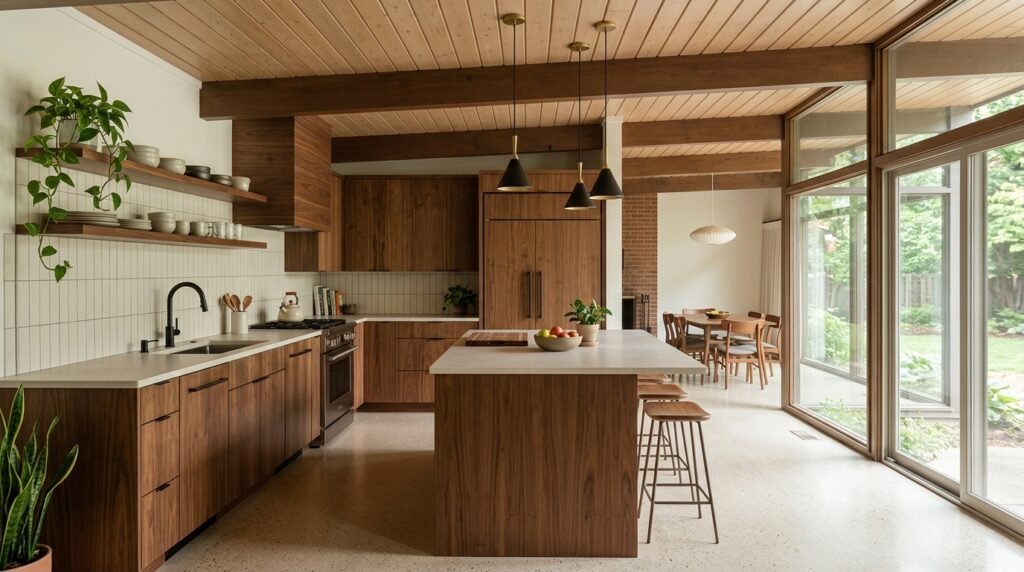
Original mid-century kitchens were designed around the needs and technology of their own time. Some remain charming and functional. Others need major updates after decades of wear. When renovating, preserve the home’s overall simplicity while improving storage, lighting, appliances, work surfaces, and safety. Flat-panel cabinets often suit the architecture because they create clean lines. Wood cabinetry can add warmth, while restrained colors can provide contrast. Avoid assuming that an open kitchen is always necessary. Some mid century modern homes were designed with partial separation, and removing walls can change both structure and spatial character. Before demolition, investigate load paths, plumbing, electrical wiring, ventilation, and original details. New materials do not have to imitate vintage products exactly. A modern kitchen can fit the house when its proportions, cabinet lines, colors, and material choices relate naturally to the surrounding architecture.
Bathrooms Can Be Updated Without Losing Character
Bathrooms often present a difficult choice between preservation and modernization. Original tile, cabinetry, fixtures, or unusual colors may have design value, but age can also bring leaks, damaged surfaces, failing plumbing, and poor ventilation. Begin with condition rather than appearance. If original materials remain sound, consider whether they can be cleaned, repaired, or incorporated into the new design. If replacement is necessary, simple shapes and restrained finishes often work better than ornate traditional details. Mid century modern homes usually benefit from bathrooms that feel clean and geometric. Wood vanities, simple tile grids, frameless or lightly framed glass, and straightforward lighting can complement the architecture. Waterproofing and ventilation are more important than achieving a perfect period look. Any renovation involving plumbing, electrical systems, or structural changes should follow applicable codes and use qualified professionals where required.
Furniture That Works With the Architecture
Furniture should support the room’s proportions. Low sofas, slim-legged chairs, simple coffee tables, sideboards, and sculptural lighting often work well because they preserve sightlines. Wood, leather, woven fabrics, glass, and metal can complement common architectural materials. However, filling a house with famous reproduction pieces is not required. Mixing vintage and contemporary furniture often creates a more comfortable result. In mid century modern homes, furniture placement is especially important near large windows and doors. Avoid blocking important views or creating barriers between indoor and outdoor spaces. Consider how people actually move through the room. A beautiful chair sitting in the main path to the patio will quickly become annoying. Choose fewer pieces with appropriate scale rather than filling every corner. This lets both the architecture and furniture have enough visual space.
Lighting for a Mid-Century Modern Interior
Lighting can add character without requiring major construction. Globe pendants, simple sconces, sculptural floor lamps, and clean-lined table lamps can suit the period, but they should also provide useful light. Build layers rather than relying on one dramatic fixture. General lighting helps with everyday movement. Task lighting supports reading, cooking, or working. Accent lighting can highlight artwork, wood walls, or architectural details. Daylight remains especially important because many mid century modern homes were designed around generous glazing. At night, warmer light can help wood, brick, and natural materials retain their inviting appearance. When replacing original electrical fixtures, remember that older wiring may require inspection. Do not assume a vintage fixture or existing electrical box can safely support a new installation. A licensed electrician can evaluate wiring, grounding, loads, and fixture compatibility where necessary.
Landscaping Around Mid Century Modern Homes
Landscape design should reinforce the architecture instead of hiding it. Begin by identifying important views from inside. A large living-room window deserves something pleasant to look at. Use planting beds, small trees, grasses, groundcovers, and hardscape to create layers. Keep mature plants that contribute shade and character when they are healthy and appropriately placed. Remove or prune vegetation that damages the building, blocks drainage, or completely hides key architectural features. The outdoor spaces of mid century modern homes often work best when patios and paths use clear geometric forms. However, the planting itself can be softer and more natural. Choose species suited to local climate, soil, water availability, and maintenance needs rather than copying a Palm Springs garden in a completely different environment. Good landscape design should connect architecture with its actual region.
Renovating Without Erasing the Original Design
Renovation should begin with observation. Identify what appears original, what has been altered, and which features give the house its identity. Photograph existing conditions before work begins. If possible, look for old plans, permits, photographs, or information about the architect and builder. The National Trust recommends learning about recent-past resources and finding appropriate replacement materials when preserving mid-century buildings. For mid century modern homes, thoughtful renovation often means repairing before replacing and making new work compatible without pretending it is original. Preserve important proportions, rooflines, window rhythms, exposed structural features, and significant materials when feasible. At the same time, safety and building performance matter. Electrical hazards, leaks, structural problems, and moisture damage should not remain simply because they are old. Preservation works best when historic character and responsible building care support each other.
Energy Efficiency and Comfort Upgrades
Large windows and lightweight construction can create comfort challenges in some older houses. Depending on location and original construction, owners may encounter heat gain, heat loss, air leakage, or limited insulation. Start with an energy assessment rather than replacing visible architectural features immediately. Air sealing, attic or roof improvements, HVAC maintenance, shading, suitable window treatments, and carefully planned insulation may offer meaningful gains. Some mid century modern homes can also benefit from upgraded glazing, but replacement windows should be evaluated for both performance and architectural impact. Thick frames or altered divisions can change the appearance significantly. Moisture behavior must also be considered when adding insulation to older assemblies. A building professional familiar with the climate and construction type can help avoid trapping moisture or creating condensation problems. Energy upgrades are most successful when the house becomes more comfortable without losing the features that make it distinctive.
Common Maintenance Issues to Watch
Age matters even when a house has been carefully maintained. Roof membranes, flashing, sealants, plumbing, electrical equipment, drainage systems, windows, and exterior finishes all have service lives. Flat and low-slope roofs deserve particular attention because small drainage or flashing failures can allow water into concealed areas. Large glazed openings should be checked for failed seals, damaged frames, corrosion, or wood decay. Exterior wood needs protection appropriate to its species and finish. Before disturbing older paint, flooring, insulation, adhesives, or other materials, consider whether hazardous substances may be present. Depending on the age and location, professional testing may be appropriate before demolition or sanding. Owners of mid century modern homes should also watch for changes made by previous renovations. A newer surface can hide older moisture, wiring, or structural problems. A thorough inspection is more valuable than assuming a renovated house is problem-free.
What to Know Before Buying a Mid-Century Modern House
Buying an older design-focused house requires more than checking whether you like the floor plan. Hire an experienced home inspector and consider specialists when the property has unusual construction or visible concerns. Ask about roof age, drainage, electrical service, plumbing, HVAC equipment, foundation movement, windows, insulation, and previous additions. Review permits where records are available. For mid century modern homes, it is also useful to identify which architectural features remain original. Extensive remodeling is not automatically bad, but poorly planned changes can reduce both function and character. Check whether the property has historic designation or lies within a historic district because that may affect future exterior work. The National Trust also notes that buying historic property can involve preservation rules, inspections, financing considerations, and local regulations. Understand these issues before planning major alterations.
Mid-Century Modern vs. Ranch Homes
These categories overlap, which can make identification confusing. Both can be low, horizontal, and connected to postwar suburban growth. Ranch houses became extremely widespread and often borrowed ideas associated with modern architecture. National Park Service research describes Modern and Ranch forms as coexisting, with Ranch designs sharing characteristics and attitudes with Modernism while becoming easier to reproduce at scale. Mid century modern homes tend to express Modernist ideas more strongly through asymmetry, large areas of glass, structural expression, open planning, geometric forms, and deliberate indoor-outdoor connections. Ranch houses often use long single-story plans and informal living but may have more conventional roofs, windows, and exterior details. There is no reason every house must fit neatly into one label. Understanding the specific building—its plan, materials, construction, architect, and regional context—is more useful than forcing it into a category.
Eichler Homes and California Modernism
Joseph Eichler is closely connected with the popular image of postwar California residential Modernism. His developments helped bring architect-designed modern ideas to a broader middle-class market. National Register documentation describes Eichler’s work as consistently modern and notes the use of informal open plans, indoor-outdoor relationships, post-and-beam construction, natural wood, and standardized components. These houses helped make features such as atriums, broad glazing, and open living areas recognizable parts of the California modern vocabulary. Still, not all mid century modern homes are Eichlers, and not every modern California house should be described that way. Architects and builders across the United States created their own interpretations. A. Quincy Jones, for example, worked on cost-effective postwar housing that emphasized efficient layouts and access to outdoor spaces. Knowing the actual architect or builder provides more useful historical context than applying a famous name loosely.
Common Renovation Mistakes
One of the biggest mistakes is stripping away character in the name of making the house “current.” Painting every natural wood surface white, replacing slender windows with bulky units, covering original masonry, or adding decorative traditional trim can weaken the design. Another mistake is chasing a retro theme too aggressively. A home does not need orange appliances, starburst decorations, and vintage furniture in every room. Mid century modern homes are usually strongest when their architecture remains the focus. Owners should also avoid starting cosmetic work before addressing roofs, drainage, wiring, plumbing, structure, and moisture. Finally, do not assume an original feature must always remain untouched. Damaged or unsafe materials sometimes need replacement. The goal is informed change. Understand what makes the house significant, repair what can reasonably be saved, and make necessary upgrades in a way that respects scale, proportion, materials, and function.
How to Give a Newer House a Mid-Century Modern Feel
You can borrow ideas from the style even if your house was built much later. Start with principles rather than imitation. Simplify unnecessary visual clutter. Use warm wood, clean-lined furniture, restrained geometric forms, and a controlled palette. Improve the connection with outdoor space through furniture placement, window treatments, and landscaping. Choose lighting with simple sculptural shapes. Low-profile furniture can strengthen horizontal lines in rooms where the proportions support it. Rather than trying to turn a conventional house into one of the original mid century modern homes, respect the building you already have. Adding fake exposed beams, inappropriate roof changes, or oversized areas of glass can become expensive and unconvincing. Interior furnishings, materials, color, and landscape are usually safer ways to reference the style. Good design takes inspiration from an era without pretending the building has a history it does not.
Why Mid-Century Modern Design Still Feels Relevant
The continuing appeal of this architecture is not difficult to understand. Many ideas that mattered in the postwar period still match present-day preferences: natural light, efficient layouts, flexible social spaces, smaller footprints, simple materials, and easy access to gardens. A preserved 1952 Modernist house in Tucson, for example, has been highlighted for qualities that align with current interest in sustainability and small-space living. At the same time, the style is more than a collection of fashionable furniture. Mid century modern homes represent a period when architects and builders were actively rethinking how ordinary people could live. That experimentation produced both celebrated landmarks and modest neighborhood houses. Their best ideas remain useful because they address basic human needs: daylight, comfort, connection, efficient movement, and enjoyable outdoor space. Those qualities can remain valuable even when tastes in paint and furniture change.
Frequently Asked Questions
What are mid century modern homes?
Mid century modern homes are residences influenced by Modernist design during the middle decades of the twentieth century. Common traits include simple geometric forms, low rooflines, large windows, open or efficient floor plans, natural materials, limited ornament, and close relationships with outdoor spaces. Not every house includes all of these features, and regional versions can differ considerably.
What years are considered mid-century modern?
There is no universally fixed start and end date for every building described as mid-century modern. In the United States, discussion commonly centers on architecture from the postwar decades, though Modernism began flourishing earlier. The National Trust notes that the modern movement in American architecture flourished beginning in the 1930s and continued influencing everyday design later in the century.
Are mid-century modern houses expensive to maintain?
Maintenance cost depends on the individual property, location, condition, construction, and previous upgrades. Older roofs, glazing, plumbing, wiring, HVAC equipment, or damaged wood can require significant work. A carefully maintained house may need far less immediate repair. Buyers should rely on inspections and actual estimates rather than assuming the architectural style alone determines maintenance cost.
Can you renovate a mid-century modern house?
Yes. Thoughtful renovations can improve kitchens, bathrooms, comfort, energy performance, storage, and building systems while preserving architectural character. Start by identifying important original features. Address structural, moisture, electrical, plumbing, and roof issues before cosmetic work. When major historic features are involved, advice from professionals familiar with modernist or historic buildings can be valuable.
What colors work well with mid-century modern architecture?
Earthy neutrals, warm whites, charcoal, muted greens, browns, natural wood, and selected stronger accent colors can all work. The existing brick, stone, wood, and landscape should guide the palette. There is no requirement to use stereotypical orange, mustard, or avocado. A restrained palette often allows the building’s materials and geometry to remain the main focus.
Are mid century modern homes the same as ranch houses?
No, although the styles can overlap. Both became important in postwar residential development and may use low horizontal forms and informal layouts. Ranch houses were reproduced widely and borrowed several modern ideas. Mid-century Modernist houses often express Modernism more clearly through glazing, asymmetry, structural simplicity, open planning, and stronger indoor-outdoor relationships.
Conclusion
The lasting appeal of mid century modern homes comes from more than nostalgia. At their best, these houses combine simple forms with thoughtful everyday living. Large windows bring in daylight. Open social spaces support informal life. Patios and courtyards connect rooms with nature. Wood, brick, stone, glass, and other honest materials add warmth without heavy decoration. Yet owning one also requires informed care. Older roofs, windows, wiring, plumbing, insulation, and drainage deserve careful evaluation. Renovations should improve safety and comfort without automatically erasing the features that make the architecture special. Before changing a significant element, understand its purpose, condition, and relationship to the whole building. Whether you are buying, restoring, decorating, or simply learning about the style, focus on its underlying principles rather than surface trends. Good mid-century design was built around light, function, materials, landscape, and human use. Those ideas are why it continues to feel relevant today.