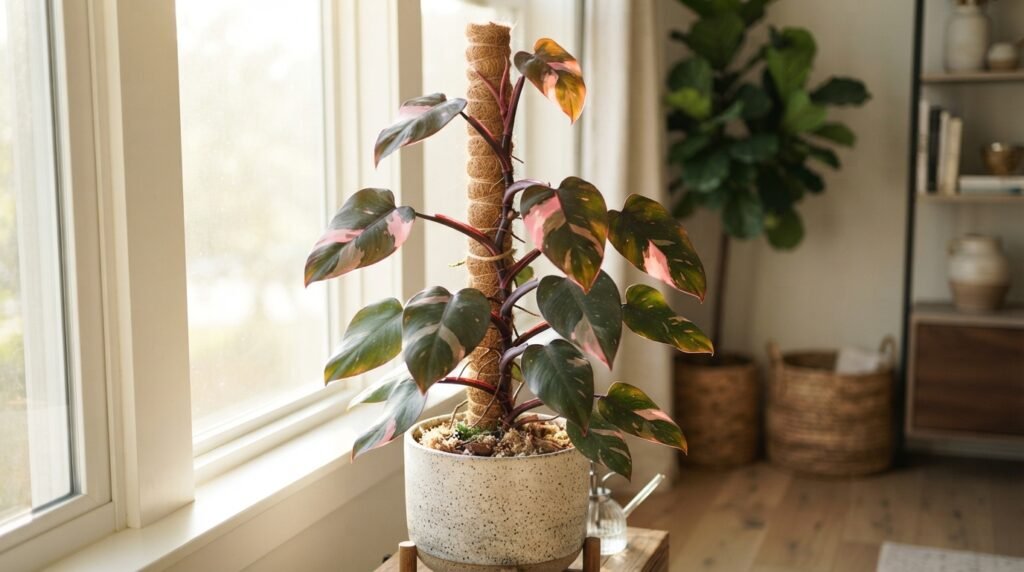
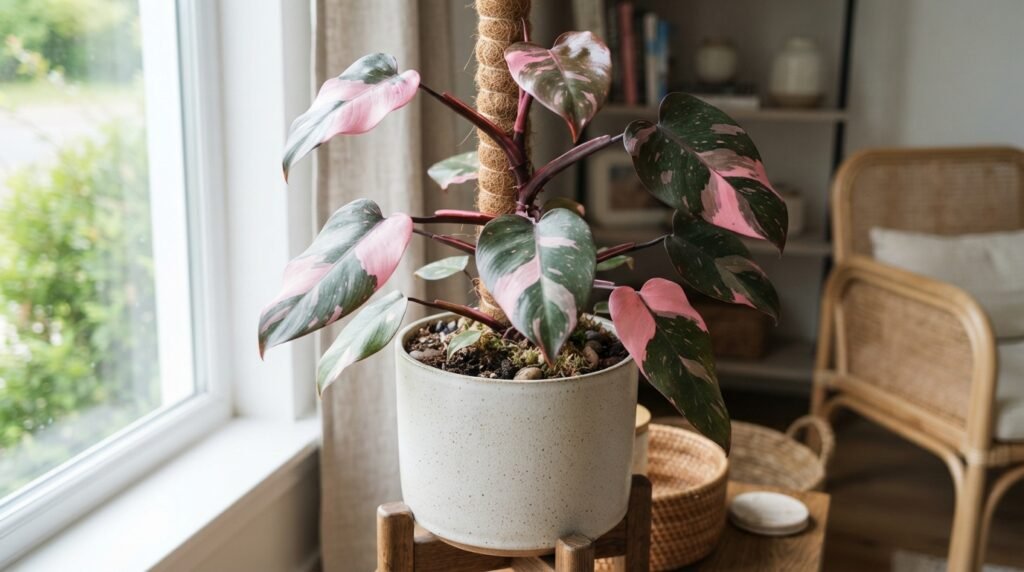
The pink princess philodendron is one of the most eye-catching houseplants you can grow indoors. Its dark green leaves can develop beautiful patches of bubblegum pink, deep burgundy, and lighter green. Every new leaf can look different, which makes growing this plant especially exciting. Yet its beauty has also created plenty of confusion. Some owners expect every leaf to become half pink. Others place the plant in direct sun, hoping to increase its color. Both approaches can lead to disappointment. This plant needs balanced care rather than extreme treatment. Good light, careful watering, airy soil, warmth, and steady feeding can support healthy growth. Variegation, however, also depends strongly on genetics. You cannot force a plant to produce perfect pink leaves every time. This guide explains practical care from lighting and watering to propagation, pruning, repotting, and common problems. The goal is simple: help you grow a strong plant with healthy, attractive foliage.
What Is a Pink Princess Philodendron?
The pink princess philodendron is a variegated form of Philodendron erubescens, a climbing philodendron species native to tropical South America. It belongs to the Araceae family, which includes many popular indoor foliage plants. Its most famous feature is its unusual pink variegation. Dark leaves can carry splashes, streaks, speckles, or larger blocks of pink. Young leaves may also show burgundy or reddish tones before they mature. Unlike plants that stay compact, this philodendron naturally wants to climb. Indoors, mature stems can benefit from a moss pole, stake, or similar support. The plant is grown mainly for foliage rather than flowers. Healthy specimens can become impressive statement plants over time. However, individual plants vary considerably. One may develop bold pink sections, while another stays mostly green. Understanding that natural variation helps you set realistic expectations and focus on overall plant health instead of chasing perfect leaf patterns.
Why Is the Pink Princess So Popular?
Few houseplants combine dark foliage and bright pink color in such a dramatic way. That contrast helped the pink princess philodendron become highly desirable among indoor plant collectors. Social media increased its popularity because unusual leaves photograph beautifully. Each leaf also feels unique. One might have small pink flecks, while the next develops a large pink patch. That unpredictability gives growers something new to watch for whenever a leaf begins to unfurl. The plant was once difficult and expensive to find in many areas. Wider propagation has made it more accessible, although prices still vary by plant size and variegation. Beauty is not its only advantage. Once its basic needs are understood, the plant is manageable for many indoor growers. It does not require a greenhouse to survive. Bright indirect light, suitable soil, sensible watering, and normal indoor warmth can provide a strong foundation. The challenge is maintaining healthy growth without trying to force more variegation through stressful care.
Understanding Pink Variegation
Pink sections appear because parts of the leaf contain less chlorophyll than green sections. Chlorophyll helps plants capture light energy for photosynthesis. This means the pink areas are visually beautiful but less useful for producing energy. A plant with too little green tissue may struggle, even if its leaves look spectacular. This is why a completely pink plant is not necessarily healthier or more valuable from a growing perspective. Strong specimens need enough green tissue to support continued growth. Variegation can also vary from leaf to leaf. Some leaves may be highly colorful, while others emerge mostly green. Genetics play a major role in this pattern. Good growing conditions support the plant’s potential, but care cannot guarantee a specific amount of pink. When choosing a plant, look beyond one extraordinary leaf. Examine several leaves and the stem. A plant showing balanced, repeated variegation may offer a more useful picture of its growth pattern.
How Much Light Does It Need?
Bright, indirect light is usually ideal for a pink princess philodendron. The plant needs enough light to support both its green and variegated tissue. A location close to a bright window can work well when harsh midday rays do not strike the leaves for long periods. Gentle morning light may be tolerated better than strong afternoon sun. Too little light can lead to slow growth, long spaces between leaves, and weaker-looking stems. Strong direct sunlight can scorch delicate foliage, particularly pale pink areas. Instead of moving a struggling plant straight into intense sun, increase light gradually. A sheer curtain can soften strong window light. Rotate the pot occasionally so different sides receive exposure. If natural light is poor, a suitable grow light can help. Follow the manufacturer’s distance and duration guidance because lights vary in strength. Watch the plant itself. Healthy compact growth often gives better feedback than simply counting hours near a window.
Best Location Inside Your Home
Choosing the right location can solve many care problems before they begin. Look for a bright room with stable temperatures and indirect light. An east-facing window can provide gentle morning sun in many homes. Bright rooms near south- or west-facing windows may also work when the plant sits back from intense rays or behind a sheer curtain. Window direction alone is not enough because buildings, trees, seasons, and curtains change actual light levels. Keep the plant away from cold drafts, heating vents, and strong air-conditioning. Sudden temperature changes can stress tropical foliage. You should also consider space. This philodendron can climb and may eventually need vertical support. Give it enough room to grow upward without pressing against walls or furniture. Finally, remember that philodendrons are considered toxic if ingested. Keep the plant where curious pets and small children cannot chew the leaves or stems.
How to Water Pink Princess Philodendron
Watering is one of the most important parts of pink princess philodendron care. Rather than following a rigid calendar, check the soil before adding water. Allow the upper layer to dry somewhat between waterings while avoiding prolonged bone-dry conditions. When watering, moisten the root zone thoroughly and allow excess water to drain from the pot. Never let the container remain filled with standing water for long periods. Indoor plants often need less water during cooler or darker months because growth slows. They may dry faster during warm, bright periods. Pot size, soil composition, humidity, and root density also affect drying speed. This is why “water every seven days” is not reliable advice for every home. Lift the pot and feel its weight as you gain experience. Combined with checking the soil, this can help you recognize when moisture is running low. Consistency matters more than following an exact weekly schedule.
Signs of Overwatering and Underwatering
Overwatering does not simply mean giving a plant a large drink. It usually means the roots remain wet for too long. Yellowing leaves, consistently soggy soil, weak growth, or a musty potting mix can indicate trouble. Severe cases may involve root rot. Underwatering produces different signs. Leaves may droop, curl, or develop dry edges when the root zone stays dry for too long. However, symptoms can overlap. A plant with damaged roots may wilt even while its soil is wet because unhealthy roots cannot function normally. That is why you should inspect the soil before responding to drooping with more water. If it feels wet, additional watering can worsen the problem. If it is dry several centimeters down and the pot feels light, watering may be appropriate. Learning to read both the plant and its soil is more reliable than diagnosing problems from one leaf. Older leaves can also yellow naturally as the plant grows.
Best Soil for Healthy Growth
The pink princess philodendron performs best in a loose, airy growing medium that holds some moisture without staying waterlogged. Dense garden soil is generally unsuitable for indoor containers because it can compact around the roots. A houseplant or aroid-style mix often combines organic potting material with chunky ingredients that improve airflow and drainage. Orchid bark, perlite, coco-based materials, or similar components are commonly used in aroid mixes. There is no single perfect recipe for every home. Someone living in a warm, dry environment may need a mix that retains moisture slightly longer. A grower in a humid environment may prefer faster drainage. The container must also have drainage holes. Even an excellent mix can become overly wet when water has nowhere to escape. When repotting, examine the existing roots and adjust the soil based on how quickly the previous mix dried. Healthy roots need both moisture and oxygen.
Temperature and Humidity Requirements
This tropical plant prefers warm, stable indoor conditions. Normal comfortable household temperatures are usually suitable, provided the plant is protected from cold drafts and sudden extremes. Avoid placing it directly beside heating systems or air conditioners. Very cold conditions can slow growth and damage tropical foliage. Humidity can also influence leaf quality. Moderate household humidity may be enough, but higher humidity can help new leaves unfurl more smoothly in dry homes. Avoid assuming that maximum humidity is always better. Constantly wet surfaces combined with poor airflow can encourage problems. A humidifier can be useful when indoor air is extremely dry, but it should be cleaned according to its instructions. Grouping plants can create a slightly more humid local environment as well. Focus on stability rather than chasing an exact percentage. Warmth, reasonable humidity, good airflow, and correct watering work together. Improving only humidity will not compensate for waterlogged soil or inadequate light.
Choosing the Right Pot
A good container supports root health rather than simply matching your room decor. Choose a pot with functional drainage holes. When water cannot escape, the risk of saturated soil increases. Pot size matters too. Moving a small root system into a very large container can leave a large volume of wet soil around the roots. A modest increase in pot size is usually easier to manage during repotting. Material can affect drying speed. Unglazed terracotta tends to lose moisture faster than many plastic or glazed containers. This may help growers who frequently overwater, but it can require more frequent watering in hot conditions. Decorative cover pots are fine when the inner nursery pot drains freely. Always empty water that collects in the outer container. The best pot is one that fits the root system, provides drainage, remains stable, and works with your normal watering habits.
Fertilizing for Strong Growth
A growing pink princess philodendron can benefit from regular nutrition during active growth. A balanced houseplant fertilizer is often suitable when used according to the product label. More fertilizer does not create more pink variegation. Excess fertilizer can damage roots and lead to salt buildup in the soil. If you are using a concentrated liquid product, measure carefully rather than estimating. Feeding needs usually decrease when growth slows during darker or cooler periods. Fresh potting mixes may also contain nutrients, so consider what is already in the soil before adding more. Watch the plant’s growth rather than assuming every problem means it needs fertilizer. Pale foliage can have many causes, including root problems, watering mistakes, or poor light. Periodically watering thoroughly and allowing excess water to drain may help reduce accumulated soluble salts, depending on your water and fertilizer. A steady, moderate feeding routine is safer than occasional heavy applications.
Helping the Plant Climb
Philodendron erubescens has a climbing growth habit, so vertical support can improve its appearance as it matures. Without support, long stems may lean, trail, or become difficult to manage. A moss pole, coir pole, wooden stake, or suitable plant support can guide growth upward. Install support carefully so you do not drive it through a large root mass. Secure stems loosely with soft plant ties. Never tighten ties enough to cut into growing tissue. As the plant develops, check the ties and adjust them when necessary. Climbing can create a more organized shape and help display the foliage attractively. A support also prevents heavy stems from bending sharply under their own weight. Do not expect a pole alone to create larger leaves. Light, root health, nutrition, maturity, and overall growing conditions also influence development. Think of support as part of the plant’s structure rather than a magic solution for bigger foliage.
When and How to Repot
Repotting becomes useful when the root system has clearly outgrown its container, the soil has degraded, or drainage has become poor. Roots emerging from drainage holes can be one clue, although a few visible roots do not always mean an emergency. Other signs include unusually fast drying, crowded roots, or slowed growth despite otherwise good care. Choose a container only slightly larger than the existing root mass. Gently remove the plant and inspect the roots. Healthy roots are generally firm rather than mushy. Trim clearly rotten tissue with clean tools if necessary. Add fresh, airy potting mix and settle the plant at a similar depth. Water appropriately after repotting based on the condition of the roots and medium. Some temporary stress is normal after root disturbance. Avoid combining major repotting, heavy pruning, and drastic environmental changes at the same time unless there is a clear reason.
How to Propagate Pink Princess Philodendron
The pink princess philodendron is commonly propagated from stem cuttings containing at least one viable node. A node is the part of the stem where leaves and roots can develop. A leaf without a node may stay attractive for a while but cannot produce a complete new climbing plant in the same way. Select a healthy stem and use clean, sharp cutting tools. Avoid taking too much from a weak or recently stressed plant. Depending on your preferred method, cuttings can be rooted in water or an appropriate moist propagation medium. Warmth, indirect light, and patience are important while roots develop. Keep water clean if using water propagation, and avoid letting a propagation medium become swampy. Once a healthy root system develops, the cutting can gradually transition into a suitable potting mix. Propagation results vary, and a cutting’s future variegation cannot be predicted perfectly from a single leaf.
Pruning and Managing Growth
Pruning can help control size, remove damaged growth, and encourage a more manageable plant shape. Use clean, sharp pruning tools to make tidy cuts. Remove dead or badly damaged leaves when necessary, but do not cut healthy foliage simply because it lacks perfect pink patterns. Green tissue is valuable because it supports photosynthesis. If the plant becomes long and sparse, first investigate light conditions. Pruning without correcting poor light may produce the same stretched growth again. Stem cuttings with suitable nodes can sometimes be used for propagation rather than discarded. Avoid removing a large percentage of the plant at once unless there is a specific reason. After pruning, continue normal care and watch for new growth. Cleaning tools between plants can reduce the chance of spreading pests or disease. Good pruning is selective and purposeful. It should improve plant structure while preserving enough healthy foliage for recovery and continued growth.
What to Do When Leaves Turn Mostly Green
A pink princess philodendron may sometimes produce leaves with very little pink. This is often described as reverting, although variegation patterns can naturally fluctuate. First, check whether the plant receives enough bright indirect light. Poor light can contribute to weak growth, but simply blasting the plant with direct sun will not safely force pink coloring. Look at several recent leaves rather than judging the plant from one. The stem itself may show useful variegation patterns that influence future growth. Some experienced growers prune back to a suitably variegated node when a plant repeatedly produces green growth. However, pruning always removes photosynthetic tissue and carries no guarantee of future pink leaves. If you are inexperienced, observe the plant for a few growth cycles before making drastic cuts. Healthy green leaves still provide energy. Your priority should remain a vigorous plant rather than maximizing pink tissue at any cost.
Can a Plant Have Too Much Pink?
Yes. Although heavily pink leaves attract attention, a plant needs green tissue for efficient photosynthesis. Leaves that are almost entirely pink contain much less chlorophyll. They may age faster or contribute less energy than greener leaves. A plant that repeatedly produces extremely low-chlorophyll growth can become weaker over time. This creates an interesting balance for collectors. The most dramatic-looking plant is not always the healthiest plant. Aim for attractive variegation combined with enough green foliage to support steady growth. Do not remove healthy green leaves merely because they appear less valuable. Those leaves may be doing much of the work that supports new growth. Likewise, do not expect fertilizer or intense sunlight to turn green areas pink. Variegation is strongly influenced by the plant’s genetics and growing points. Good care helps the plant express its potential, but it cannot rewrite the underlying biology.
Brown Spots and Brown Edges
Brown areas can develop for several reasons, so diagnosis requires more than looking at color. Dry, crispy edges may appear when humidity is low, watering is inconsistent, or roots become too dry. Pale variegated areas can also be more sensitive to environmental stress. Brown patches after strong sun exposure may indicate scorching. Soft dark spots combined with constantly wet soil can point toward moisture-related problems. Fertilizer salts can also contribute to damaged leaf edges in some situations. Before treating the plant, review recent care. Ask whether the soil stayed wet for too long, became extremely dry, or received a sudden increase in direct sun. Check the roots if symptoms continue and the soil condition seems abnormal. Damaged leaf tissue will not turn green again, so focus on improving future growth. Avoid cutting every imperfect leaf immediately. A partly damaged leaf can still provide useful photosynthetic area.
Why Leaves Turn Yellow
Yellow leaves are among the most common houseplant complaints. One old lower leaf turning yellow occasionally may simply be part of natural aging. Several yellow leaves appearing together deserve closer attention. Excess moisture is a common concern, especially when the soil remains wet for long periods. Poor drainage, an oversized pot, or compacted soil can contribute. Underwatering can also stress foliage, although the soil will usually provide an important clue. Low light can slow water use and indirectly make overwatering easier. Root damage, pests, or nutritional problems may produce similar symptoms. Instead of immediately adding fertilizer or water, inspect the full plant. Check soil moisture, drainage, roots when appropriate, light exposure, and recent environmental changes. The pink princess philodendron responds best when you correct the actual cause. Treating every yellow leaf with the same solution can make a simple problem much worse.
Leggy Growth and Small Leaves
Long spaces between leaves often indicate that a plant is stretching toward stronger light. The stems may become thin, and the overall plant can look sparse. Move it gradually toward brighter indirect light rather than placing it immediately in harsh direct sun. A grow light can also help in naturally dark rooms. Lack of support may make long stems look even more awkward, so consider adding a pole or stake. Nutrition and root health also matter. A severely root-bound or poorly fed plant may struggle to produce strong new growth. However, fertilizer cannot compensate for inadequate light. If the plant is already very leggy, pruning can help reshape it after environmental conditions improve. The removed sections may be suitable for propagation when they contain healthy nodes. New growth takes time, so do not expect an immediate transformation. Consistent conditions over several growth cycles usually produce a more meaningful improvement.
Common Pests to Watch For
Like many indoor tropical plants, this philodendron can attract common houseplant pests. Spider mites, mealybugs, scale insects, and thrips may appear under certain conditions. Check both sides of leaves and inspect new growth regularly. Early signs can include tiny moving insects, sticky residue, webbing, pale speckling, distorted new leaves, or unusual scarring. Isolate a newly purchased plant from your established collection when practical. This gives you time to notice hidden pests before they spread. If an infestation appears, identify the pest before choosing treatment. Different pests respond better to different approaches. Follow product labels exactly when using insecticidal soaps or other pest-control products. Repeated inspection is important because one treatment may not address every life stage. Keeping foliage reasonably clean also makes pests easier to spot. Good care cannot guarantee a pest-free plant, but healthy plants generally recover from minor problems more successfully.
Root Rot and How to Respond
Root rot is often linked with roots staying in poorly aerated, overly wet conditions for too long. Warning signs may include yellowing leaves, wilting despite wet soil, unpleasant smells, or dark mushy roots. If you suspect serious root damage, remove the plant carefully and inspect the root system. Healthy roots should feel firm. Clearly rotten roots may be soft, dark, and easily separated. Remove severely damaged tissue with clean tools and repot the remaining healthy plant in fresh, airy medium. Make sure the container drains properly. Afterward, adjust your watering habits rather than returning to the same routine. Root rot can also be influenced by low light, oversized pots, and dense soil because these conditions slow drying. Prevention is easier than recovery. Check moisture before watering and never assume a tropical plant wants permanently wet soil. Tropical forests can be humid while still providing roots with oxygen-rich growing conditions.
Cleaning and Caring for the Leaves
Large leaves can collect household dust over time. A dusty surface may also make it harder to inspect for pests. Gently wipe foliage with a soft damp cloth when necessary. Support the leaf with one hand while cleaning so you do not bend the petiole. Plain water is often enough for routine dust removal. Avoid aggressive rubbing, especially on tender new leaves. There is usually no need to coat foliage with oily products simply to create extra shine. Natural healthy leaves already have an attractive surface. Cleaning also provides a useful opportunity to inspect stems, nodes, leaf undersides, and new growth. Look for insects, unusual spots, webbing, or mechanical damage. The pink princess philodendron benefits more from steady basic care than complicated leaf treatments. Clean foliage, appropriate light, healthy roots, and regular observation will usually contribute more to long-term appearance than products designed only to create temporary shine.
Buying a Healthy Pink Princess Philodendron
When shopping, evaluate the entire plant instead of choosing the leaf with the largest pink patch. Look for firm stems, active growth, and foliage without widespread yellowing or pest damage. Inspect the undersides of leaves carefully. Check around nodes and where leaves join the stem because pests can hide in these areas. Look at the potting medium too. A foul smell or extremely waterlogged mix can signal root problems. Variegation across several leaves can provide a better picture than one highly pink leaf. Also inspect the stem for signs of variegation. Avoid assuming that an almost completely pink specimen is automatically the best choice. Plants need sufficient green tissue for healthy photosynthesis. Ask the seller about the plant’s recent growing conditions when possible. Once you bring it home, avoid immediately changing everything. Give the plant time to adjust before major repotting unless there is a clear pest, soil, or root problem.
Seasonal Care Throughout the Year
Indoor growing conditions change with the seasons even when room temperatures feel similar. Winter often brings shorter days and weaker natural light. Soil may remain moist longer, so watering usually needs adjustment. Moving the plant closer to a suitable bright window can help, provided cold glass and drafts are avoided. During spring and summer, stronger light and warmer temperatures can increase growth and water use. This is often when regular feeding becomes more useful. Check the plant more frequently instead of automatically increasing watering on a fixed date. Autumn can be a transition period as growth slows. Clean the foliage and inspect for pests before indoor heating makes the air drier. The goal is not to follow four completely different care routines. Instead, respond to actual changes in light, temperature, growth, and soil drying. Plants do not follow calendars as strictly as people do.
Common Care Mistakes to Avoid
One common mistake is watering on a strict schedule without checking the soil. Another is putting the plant in harsh sun because pink leaves seem to need more light. Bright indirect light is safer than suddenly exposing tender foliage to intense rays. Oversized pots are another frequent issue because extra soil can remain wet for too long. Some growers also fertilize heavily when growth slows, even though poor light or unhealthy roots may be the real cause. Constantly moving the plant can create additional stress. Choose a suitable location and allow time for adjustment. Do not remove every green leaf in an attempt to create a completely pink plant. Healthy green tissue supports growth. Finally, avoid comparing every new leaf with heavily edited social media photographs. A healthy plant naturally produces variation. Good growing is about long-term vigor, not producing one perfect leaf for a photograph.
Frequently Asked Questions
1. Is Pink Princess Philodendron difficult to grow?
The pink princess philodendron is not extremely difficult once its main needs are understood. Give it bright indirect light, airy soil, drainage, warmth, and sensible watering. Most problems come from excessive moisture, poor light, or unrealistic expectations about variegation. Regular observation makes care much easier.
2. How can I get more pink leaves?
Provide strong indirect light and maintain healthy overall growth. However, you cannot guarantee more pink through care alone. Genetics and the plant’s active growth points strongly influence variegation. Avoid harsh sunlight or excessive fertilizer in an attempt to force color. Those methods can damage the plant instead.
3. How often should I water it?
Do not water according to a fixed weekly schedule. Check the potting mix first. Allow the upper portion to dry somewhat before watering thoroughly. Then let excess water drain away. Temperature, light, humidity, pot size, and soil type all change how quickly the plant uses moisture.
4. Why is my Pink Princess losing its pink color?
Variegation can naturally change between leaves. Low light may also contribute to weaker growth, so check the plant’s location. Give it bright indirect light and watch several new leaves before making major changes. Persistent green growth can sometimes be managed through careful pruning, but results are never guaranteed.
5. Does Pink Princess Philodendron need a moss pole?
A moss pole is not required for basic survival, but vertical support suits its natural climbing habit. A pole, stake, or similar support can keep mature stems organized. Secure stems loosely and avoid damaging roots during installation. Good light and overall care remain important even when support is provided.
6. Is Pink Princess Philodendron safe for pets?
No. Philodendrons contain insoluble calcium oxalate crystals and should not be treated as edible or pet-safe plants. Chewing the plant can cause irritation and other symptoms. Keep it away from cats, dogs, and small children who may bite the foliage. Contact an appropriate medical or veterinary professional if ingestion occurs.
Conclusion
The pink princess philodendron deserves its popularity, but successful care involves more than chasing bright pink leaves. The healthiest plants have a useful balance between colorful variegation and green tissue. Start with bright indirect light and a loose, well-draining potting mix. Water according to soil conditions rather than a calendar. Keep temperatures stable, provide reasonable humidity, and feed moderately during active growth. As stems become longer, add suitable support and prune only when there is a clear reason. Watch for pests, root problems, and changes in growth before they become severe. Most importantly, allow the plant to be naturally unpredictable. Not every leaf will have perfect pink sections, and that is part of its appeal. With patient observation and steady care, you can build a strong climbing houseplant that continues producing distinctive foliage for years.