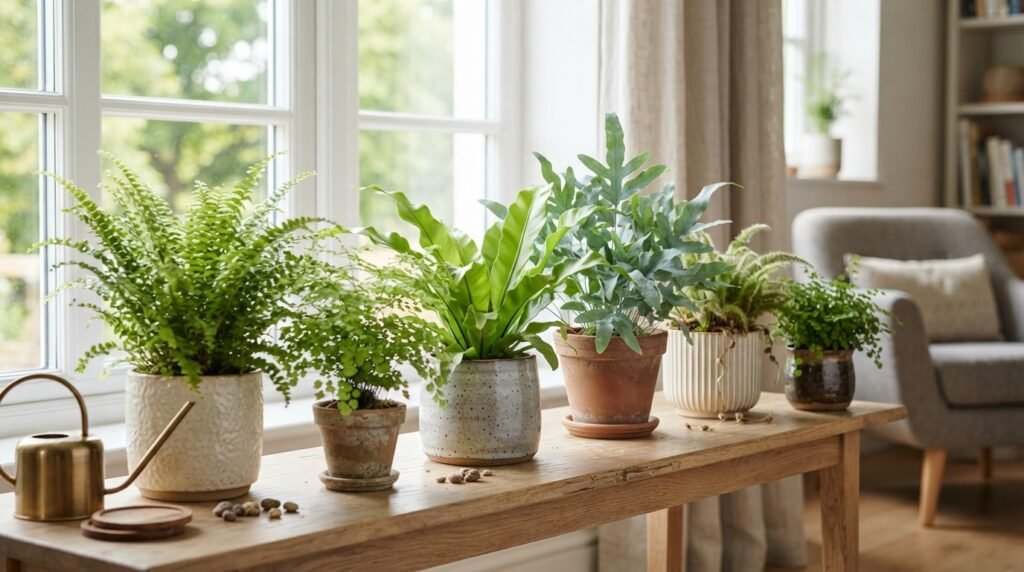
Ferns can turn a plain space into a lush green retreat. Their soft fronds bring texture, movement, and natural beauty. Some varieties stay small enough for a windowsill. Others grow into impressive garden plants. There are thousands of fern species worldwide, so choosing one can feel confusing. The good news is that you only need to understand a few basic differences. Some ferns enjoy moist shade outdoors. Others adapt well to indoor containers. A few can handle brighter light or slightly drier soil. Learning about different types of ferns helps you choose plants that match your home, garden, and climate. This guide introduces 20 beautiful varieties and explains their main features. You will also learn about light, soil, water, humidity, planting, and common problems. Whether you want a graceful houseplant or a woodland-style garden, there is likely a fern that fits your space.
What Are Ferns?
Ferns are ancient vascular plants that reproduce through spores instead of flowers and seeds. Most have leaves called fronds. New fronds often appear as tightly curled structures called fiddleheads. They slowly unfurl as they mature. Many species naturally grow in forests, where trees provide shade and organic matter covers the ground. However, not every fern needs the same environment. Some grow on rocks, trees, wetlands, or open slopes. Their needs depend on the species. Ferns also come in many shapes and sizes. Some have delicate, feathery foliage. Others develop broad, leathery leaves that barely resemble traditional fern fronds. Gardeners value these plants because foliage remains their main attraction. They can add texture even where flowering plants struggle. Before buying one, identify the species rather than treating every fern the same. Correct identification makes watering, lighting, and winter care much easier.
Why Grow Ferns at Home or in the Garden?
Ferns are useful because they bring greenery to spaces where many sun-loving plants cannot thrive. Shaded patios, woodland gardens, north-facing rooms, and protected corners can all benefit from the right variety. Their foliage also contrasts beautifully with broad-leaved plants and colorful flowers. Different types of ferns can create very different effects. A maidenhair fern looks light and delicate, while an ostrich fern creates a bold woodland display. Some evergreen species provide structure during cooler months. Many ferns also work well in containers. This lets you move tender varieties indoors when temperatures fall. They are especially useful for creating layered planting designs because varieties come in many heights. Ferns are not maintenance-free, though. Some indoor species can be sensitive to dry air or inconsistent watering. Choosing a fern that matches your actual conditions is far easier than constantly changing your home or garden to suit the wrong plant.
1. Boston Fern
Boston fern (Nephrolepis exaltata ‘Bostoniensis’) is one of the most recognizable houseplant ferns. It produces long, arching green fronds filled with many small leaflets. Mature plants can form a full, cascading shape that looks beautiful in hanging baskets. Boston ferns generally prefer bright indirect light and consistently moist, well-drained potting mix. Indoor air that becomes very dry can cause crispy tips or leaf drop. Keeping the plant away from heating vents can help. A bright bathroom may work when enough natural light reaches the plant. During warm weather, Boston ferns are also popular on shaded porches. Avoid suddenly placing an indoor plant in strong direct sunlight because the foliage may scorch. Check moisture regularly, especially in hanging baskets, which can dry faster. Boston fern is an excellent choice for growers who enjoy lush foliage and do not mind providing regular moisture.
2. Maidenhair Fern
Maidenhair ferns are loved for their delicate appearance. Their thin, dark stems hold small, fan-shaped leaflets that create an airy texture. Several species are grown as ornamental plants, and their exact needs can vary. Many prefer moist conditions, indirect light, and protection from harsh sunlight. Indoor maidenhair ferns have a reputation for being demanding because they dislike becoming extremely dry. Once the fine foliage dries badly, it can quickly turn brown. This makes consistent watering important. However, the roots should not sit in stagnant, waterlogged soil. High humidity can be helpful for indoor plants, especially during dry winters. Garden species suited to your climate may be easier to maintain outdoors in moist shade. Maidenhair ferns work beautifully in woodland gardens, terrariums, protected patios, and indoor plant collections. Their graceful texture makes them worth the extra attention for gardeners who can provide stable conditions.
3. Bird’s Nest Fern
The bird’s nest fern has a very different appearance from feathery traditional ferns. It develops broad, undivided fronds that grow outward from a central rosette. This center resembles a nest, which explains the common name. Bird’s nest fern is often grown indoors in warm conditions with bright, filtered light. Strong direct sun can damage its leaves. Water the potting medium carefully and avoid constantly pouring water into the central crown. Standing moisture there can encourage rot. This plant enjoys moderate to higher humidity but still needs airflow. Its broad leaves collect dust, so gently wiping them can improve appearance and make pest inspection easier. Several cultivated forms have wavy or crinkled leaf edges. Among the many types of ferns available as houseplants, bird’s nest fern is a great choice for someone who wants a bold tropical look rather than fine, feathery foliage.
4. Staghorn Fern
Staghorn ferns are unusual plants that naturally grow as epiphytes. This means they often grow attached to trees rather than rooted in ordinary ground soil. They are not parasites. Their distinctive fertile fronds can resemble antlers, while rounded basal fronds protect the root area. Staghorn ferns are commonly mounted on boards or grown in baskets using suitable materials around their roots. They prefer bright, indirect light and good airflow. Watering methods differ from standard potted houseplants because mounted specimens dry differently. The root area may be soaked or thoroughly moistened and then allowed to drain. Frequency depends on temperature, humidity, plant size, and mounting material. Avoid removing healthy brown shield fronds simply because they look dry. These fronds serve an important purpose. Staghorn fern makes an impressive living display and is ideal for growers who want something more unusual than a standard potted plant.
5. Kimberly Queen Fern
Kimberly Queen fern has an upright, tidy growth habit. Its strong green fronds tend to stand more vertically than those of Boston fern. This makes the plant useful where a cascading fern would occupy too much space. It can be grown in containers and is often used on patios in warm weather. The plant performs best with suitable indirect or filtered light and consistent moisture. It can tolerate some variation in conditions, but prolonged dryness can still damage the fronds. Containers should drain well so the roots do not remain waterlogged. In regions with cold winters, plants grown outdoors may need protection or indoor overwintering because they are not hardy everywhere. Check local climate guidance before planting them permanently in the landscape. Regular removal of dead fronds keeps the plant neat. Kimberly Queen fern works especially well for gardeners who want dense, upright greenery with a clean and structured appearance.
6. Ostrich Fern
Ostrich fern (Matteuccia struthiopteris) creates a dramatic woodland effect. Its large upright fronds form a vase-like shape and can reach impressive heights under favorable conditions. The fronds resemble ostrich feathers, giving the plant its common name. This fern prefers rich, moist soil and partial to full shade. It can spread through underground rhizomes when conditions suit it, so give it enough room. This spreading habit makes ostrich fern useful for naturalized woodland areas but less suitable for tiny beds where strict control is needed. The green fronds usually die back during cold seasons in regions where the plant is hardy. New growth returns from the crown in spring. Ostrich fern is also known for producing edible fiddleheads, but correct identification and safe preparation are essential. Never eat a wild or garden fern unless you are certain of its identity and proper food-safety preparation.
7. Japanese Painted Fern
Japanese painted fern (Athyrium niponicum) offers colors rarely associated with ferns. Its fronds can combine silvery gray, soft green, and burgundy or purple tones. This makes it valuable for brightening shaded garden beds. The plant generally prefers partial to full shade, although some gentle light can help show its coloring. Protect it from intense afternoon sun, especially in hot climates. Moist, rich, well-drained soil supports healthy growth. Once established, it can form an attractive clump without becoming as visually overwhelming as very large fern species. Japanese painted fern pairs beautifully with hostas and other shade-loving plants. Its metallic foliage can also provide contrast against dark mulch or stone. Among garden types of ferns, this variety stands out because foliage color is as important as texture. It is an excellent choice when an all-green shade garden needs a subtle splash of silver and purple.
8. Autumn Fern
Autumn fern (Dryopteris erythrosora) is known for colorful new growth. Young fronds often emerge with copper, bronze, or reddish tones before maturing toward green. This seasonal color creates extra interest in shaded garden areas. In suitable climates, the plant can remain evergreen or semi-evergreen. It generally prefers partial to full shade and moist, well-drained soil rich in organic matter. Once established, it may handle brief dry periods better than very moisture-sensitive species, but regular moisture usually produces better foliage. Autumn fern works well along shaded paths, beneath trees, and in mixed woodland borders. It can also provide a pleasing contrast with hostas, hellebores, and other shade plants. Its moderate size makes it easier to fit into smaller gardens than giant fern varieties. If you want a fern with changing color rather than plain green foliage, autumn fern is an attractive and relatively versatile option.
9. Cinnamon Fern
Cinnamon fern (Osmundastrum cinnamomeum) is a large native fern found naturally in moist environments across parts of the Americas. It produces tall green sterile fronds and separate fertile fronds that become a rich cinnamon-brown color. These upright fertile structures give the plant its name and create a distinctive appearance. Cinnamon fern performs well in moist, acidic soil and partial shade. It is especially suitable for rain gardens, woodland edges, pond surroundings, and other areas where soil remains consistently damp without becoming unsuitable for the roots. Mature plants can become quite large, so provide enough space. Unlike some tropical houseplant ferns, this species is mainly valued as an outdoor landscape plant where climate permits. It can create a natural, almost prehistoric atmosphere when planted in groups. Gardeners interested in native planting should confirm whether it naturally occurs in their region before choosing it for habitat-focused landscapes.
10. Lady Fern
Lady fern (Athyrium filix-femina) is a graceful woodland plant with finely divided green fronds. It grows naturally across a broad range and is often used in shaded landscapes. Depending on climate and local conditions, it can tolerate partial shade and sometimes brighter locations when moisture remains adequate. Rich, moist soil generally supports lush growth. Its soft foliage makes it useful for natural-looking borders, woodland gardens, and areas beneath deciduous trees. Lady fern can blend easily with native shade plants and spring woodland flowers. Mature size varies by growing conditions and cultivar, so check the specific selection before planting. Like many deciduous outdoor ferns, foliage may die back during cold weather before returning in spring. The old fronds can be cleaned up when they become unattractive. Lady fern is a good option for gardeners who want classic fern texture without an overly formal appearance.
11. Japanese Holly Fern
Japanese holly fern (Cyrtomium falcatum) has thick, glossy leaflets that give it a distinctive appearance. The foliage can resemble holly leaves more than the soft fronds of traditional ferns. This makes it useful for adding strong texture to shaded gardens and indoor collections. It prefers shade or filtered light and soil that drains well while retaining reasonable moisture. Once established outdoors in suitable climates, it may tolerate somewhat drier conditions than highly moisture-loving woodland ferns. However, hardiness varies, so check local winter temperatures before planting it permanently. In colder areas, it can be grown in a container and protected during winter. The glossy foliage pairs nicely with softer plants and can create contrast in mixed shade beds. Japanese holly fern is particularly appealing for gardeners who like ferns but want leaves that look bolder, thicker, and more structured than typical feathery varieties.
12. Button Fern
Button fern is a compact fern with small rounded leaflets arranged along slender stems. It is often grown as a houseplant because its size fits easily on shelves, plant stands, and smaller tables. Its appearance is neat and delicate without becoming extremely large. Bright indirect light generally works well indoors. The potting mix should retain some moisture while still allowing good drainage. Avoid letting the plant stay completely dry for extended periods. At the same time, constantly saturated soil can damage roots. Indoor humidity can support healthy foliage, especially when heating systems dry the air. Button fern is useful for people who want fern texture but do not have room for a large Boston fern. Before buying, check the botanical name on the label because several plants may be sold under similar common names. Correct identification helps ensure you provide the right temperature, light, and moisture conditions.
13. Lemon Button Fern
Lemon button fern is a compact relative within the sword fern group. It has small rounded leaflets and a soft, tidy appearance. The plant’s modest size makes it popular for desks, shelves, terrariums, and smaller indoor spaces. When the foliage is gently handled, it may have a light lemon-like scent, which contributes to its common name. Give it bright indirect light and a well-draining potting mix that does not remain soggy. Consistent moisture is helpful, but overwatering can still create root problems. It usually appreciates moderate humidity. Brown, crispy edges can appear when conditions become too dry. Because it remains smaller than many popular types of ferns, lemon button fern is a practical choice for apartments and crowded plant collections. It also works well for beginners who want to experiment with fern care without finding space for a large hanging or floor-sized specimen.
14. Rabbit’s Foot Fern
Rabbit’s foot fern is famous for its fuzzy creeping rhizomes. These structures often grow across the soil surface and over the edge of the container. Their soft, furry appearance resembles small animal feet, giving the plant its memorable common name. Do not bury these rhizomes deeply because they naturally grow near or above the surface. The plant produces attractive green fronds above them. Bright indirect light and a loose, well-draining potting medium are generally suitable. Rabbit’s foot fern often tolerates slightly more drying than very sensitive species such as maidenhair fern. However, it should not remain extremely dry for long periods. A hanging basket can display both the foliage and creeping rhizomes beautifully. Good airflow and sensible watering reduce the risk of rot. This fern is a fun choice for gardeners who want unusual structure as well as attractive green foliage.
15. Kangaroo Paw Fern
Kangaroo paw fern is an Australian fern known for its glossy, irregularly shaped fronds. Some leaves develop lobes that create a distinctive paw-like shape. It grows through creeping rhizomes and can gradually spread across a container. Indoors, it generally performs well in bright indirect light. It appreciates regular moisture but should not remain waterlogged. A loose potting medium and a container with drainage holes help protect the roots. Moderate humidity can keep foliage looking fresh, although good airflow is still important. This plant’s leaf shape gives it a more tropical appearance than finely divided ferns. It can look attractive in hanging baskets or elevated pots where the rhizomes and foliage have room to spread. Kangaroo paw fern is a good choice for growers who want an adaptable indoor fern with unusual leaves and a relaxed, spreading growth habit.
16. Blue Star Fern
Blue star fern (Phlebodium aureum) stands out because of its blue-green foliage. Its broad, lobed fronds have a soft, almost dusty color that contrasts beautifully with darker houseplants. It also develops creeping rhizomes that should not be buried too deeply. The species naturally grows as an epiphyte in tropical environments, so a loose, airy growing medium can suit its root system better than dense soil. Bright indirect light is a good indoor starting point. It appreciates moisture but should not sit in soggy potting mix. Blue star fern is often considered more forgiving than some delicate indoor ferns, although conditions still matter. Avoid strong direct sunlight and prolonged drought. The unusual foliage works well in modern interiors where its muted blue-green shade becomes part of the room’s design. It is one of the best options for anyone seeking a fern that looks noticeably different from classic green varieties.
17. Silver Brake Fern
Silver brake fern, commonly associated with Pteris cretica cultivars, has elegant fronds that may feature pale or silvery stripes through the center. This pattern gives the plant a brighter appearance than solid-green ferns. It can be grown indoors in containers and may also grow outdoors where temperatures are suitable. Bright indirect light can help maintain attractive foliage without exposing leaves to harsh direct sun. Keep the potting mix evenly moist but not constantly saturated. Moderate humidity can help prevent dry leaf edges. The plant’s upright growth habit makes it useful for tabletops and mixed houseplant arrangements. Cultivars vary in pattern and size, so read the plant label before buying. Silver brake fern is especially attractive against darker backgrounds because its pale markings become more visible. It offers an easy way to introduce variegated-looking fern foliage into an indoor collection without relying on flowers for visual interest.
18. Christmas Fern
Christmas fern (Polystichum acrostichoides) is an evergreen fern native to eastern North America. Its ability to retain green foliage into winter helped inspire its common name. The plant has sturdy, leathery fronds and grows naturally in woodland environments. It performs well in shade and prefers well-drained soil containing organic matter. Once established, it can tolerate somewhat drier conditions than ferns that naturally grow in wetlands. Christmas fern works beautifully on shaded slopes because its root system can help cover soil while its foliage adds year-round structure. It usually grows in clumps rather than spreading aggressively across a garden. This makes it easier to combine with woodland wildflowers and other shade plants. Gardeners interested in native landscapes may find it especially useful within its natural range. Among outdoor types of ferns, Christmas fern is valued for its durability, evergreen foliage, and classic woodland character.
19. Royal Fern
Royal fern (Osmunda regalis) is an impressive plant that can become quite large under suitable conditions. Its foliage has a more open structure than many traditional ferns, and mature plants can resemble small shrubs from a distance. Fertile portions develop distinctive spore-bearing structures that add seasonal interest. Royal fern prefers moist to wet soil and can work well near ponds, streams, rain gardens, and damp woodland areas. It may tolerate more sun when soil remains consistently moist, but conditions depend on climate. Give the plant enough room because a mature specimen can become a major landscape feature. Royal fern is not a good choice for a tiny dry border. It works best where its size and moisture needs can be accommodated naturally. In the right location, however, it creates a bold, elegant focal point and can remain attractive for many years.
20. Sword Fern
Sword fern is a name used for several related or similarly shaped species, including the western sword fern (Polystichum munitum). Western sword fern is a large evergreen species native to western North America. It produces long, sturdy fronds that create a classic forest appearance. In suitable climates, it performs well in partial or full shade and soil containing organic matter. Established plants can tolerate some seasonal dryness, especially compared with wetland ferns. Their size makes them useful beneath trees, along shaded foundations, and in naturalized landscapes. Other plants are also sold under “sword fern” names, so botanical identification matters. Some may have very different climate requirements. Always check the scientific name and hardiness information before planting. A correctly chosen sword fern can provide substantial green structure with relatively simple maintenance once established in a suitable outdoor location.
Indoor Ferns vs. Outdoor Ferns
The best growing location depends on the species rather than simply whether a plant is called a fern. Tropical varieties such as bird’s nest and staghorn ferns are commonly kept indoors in cooler climates. Hardy species like Christmas fern and Japanese painted fern are better suited to outdoor gardens across their appropriate hardiness ranges. Some types of ferns can move between indoor and outdoor environments seasonally. A Boston fern, for example, may spend summer on a shaded porch and winter indoors where freezing temperatures occur. Never move an indoor plant directly into intense outdoor sunlight. Acclimate it gradually. Likewise, inspect outdoor plants for insects before bringing them inside. Outdoor ferns planted permanently in the ground should match your climate, soil, moisture, and light conditions. Selecting the correct plant for the location reduces maintenance and gives you a much better chance of long-term success.
How Much Light Do Ferns Need?
The idea that every fern needs deep darkness is a common mistake. Many ferns prefer shade because they naturally grow beneath forest canopies. However, shade does not mean no light. Indoor species often perform best in bright, indirect light. A dark room several feet from a small window may provide too little light for healthy growth. Outdoor requirements also vary. Some woodland species prefer deep or partial shade, while others tolerate gentle morning sun. Strong afternoon sunlight can scorch sensitive fronds, especially when soil is dry. Observe your plant. Pale, scorched areas may suggest excessive direct exposure, while weak or sparse growth may indicate insufficient light. Always research the specific species because general fern advice can only go so far. If an indoor space lacks natural light, an appropriate grow light may help. Follow the manufacturer’s guidance for distance and duration rather than placing the lamp extremely close.
Watering Ferns Correctly
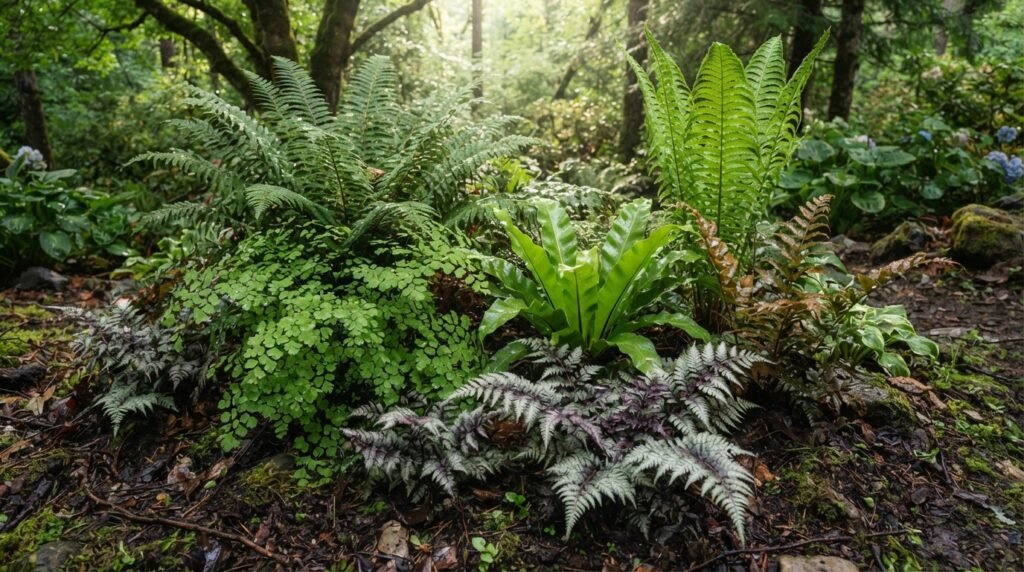
Many ferns enjoy regular moisture, but that does not mean their roots should remain underwater. The goal is usually a moist yet oxygen-rich root zone. Check the potting mix before watering indoor plants. Species differ, so learn whether your fern tolerates partial drying or prefers more consistent moisture. When watering a container, apply enough water to moisten the root ball and let excess drain away. Empty standing water from decorative outer pots. Outdoor ferns may need extra irrigation during dry weather, especially during their first growing season. Mulching with organic material can reduce moisture loss in garden beds. One of the biggest mistakes is using the same watering schedule all year. Plants dry more slowly during cool, dark periods and faster during warm weather. Pot size, humidity, soil composition, and airflow also matter. Check actual conditions rather than watering automatically every Tuesday or Saturday.
Best Soil for Ferns
Most commonly grown types of ferns benefit from soil or potting media that combine moisture retention with good drainage. Indoor ferns should generally be planted in quality potting mix rather than dense outdoor garden soil. Adding suitable airy materials can improve drainage for species that naturally grow on trees or rocks. Epiphytic ferns, including staghorn ferns, require especially different treatment because their roots are adapted to airy environments. Outdoor woodland ferns often appreciate soil rich in decomposed organic matter. Leaf mold and finished compost can help improve suitable garden soil. However, some fern species have specific preferences for acidic, alkaline, rocky, or very wet conditions. Check individual requirements before changing soil chemistry. Drainage is especially important in containers. A rich mix will not help if excess water cannot leave the pot. Healthy fern roots need both moisture and oxygen, just like the roots of other plants.
Humidity and Temperature
Many tropical indoor ferns appreciate moderate to high humidity because their natural environments are often humid. Dry indoor heating can lead to brown tips and crispy foliage on sensitive varieties. A clean humidifier can help in very dry rooms. Grouping plants together may also create a slightly more humid local environment. However, humidity should not come at the cost of airflow. Permanently wet leaves and stagnant air can encourage disease. Temperature requirements vary widely. Tropical houseplant ferns usually prefer warm indoor conditions and protection from cold drafts. Hardy outdoor ferns may survive freezing winters and return in spring. This is another reason correct identification matters. A plant labeled only “fern” does not provide enough information for winter care. Check the botanical name and hardiness range. Stable conditions are usually better than frequent dramatic changes. Avoid placing sensitive indoor ferns beside heaters, air conditioners, or frequently opened cold doors.
How to Fertilize Ferns
Ferns usually do not need aggressive feeding. Indoor plants growing actively can benefit from a suitable houseplant fertilizer applied according to its label. Overfertilizing can damage roots and cause brown leaf edges. Never assume that weak growth automatically means the plant needs more food. Poor light, damaged roots, dry air, or incorrect watering can produce similar symptoms. Outdoor ferns growing in healthy woodland-style soil may need little supplemental fertilizer. Organic matter breaking down around them can help support soil quality. If your garden soil has known nutrient problems, a soil test provides better guidance than guessing. Reduce feeding when indoor growth slows during darker or cooler months. Newly purchased plants may already contain slow-release fertilizer in their potting mix. Check before adding more. Moderate feeding combined with appropriate light, water, and soil usually produces healthier growth than trying to force rapid development with heavy fertilizer applications.
Common Fern Problems
Brown tips are among the most common problems, especially with indoor types of ferns. Dry air, inconsistent watering, excess fertilizer salts, or root stress can all contribute. Yellowing fronds may result from overwatering, poor drainage, aging, or other stress. A few old fronds naturally decline and do not always signal a serious problem. Pale scorched patches can appear after excessive direct sunlight. Indoor ferns may also attract pests such as scale insects, mealybugs, spider mites, or fungus gnats under certain conditions. Inspect foliage and stems regularly. When a problem appears, check the environment before applying a treatment. Feel the soil, inspect drainage, consider recent temperature changes, and look closely for pests. Avoid treating every brown leaf with extra water because wet soil may already be the problem. Correct diagnosis prevents a minor issue from becoming worse. Damaged fronds can be trimmed once you understand and correct the underlying cause.
Choosing the Right Fern for Your Space
Start with the conditions you already have. A bright bathroom with indirect light may suit a tropical indoor fern. A dry shelf near a heater probably will not suit a moisture-sensitive maidenhair fern. Outdoors, examine sunlight, soil drainage, available space, and winter temperatures. A large ostrich or royal fern needs much more room than a compact painted fern. Gardeners with dry shade should avoid species that demand constantly wet ground. If you frequently forget to water houseplants, choose a more forgiving variety instead of the most delicate option. Also consider the mature size. A small nursery plant can become much larger after several years. Finally, check the botanical name before purchasing. Common names are sometimes shared by different plants. Matching the exact species to your environment is one of the simplest ways to reduce problems and enjoy healthier foliage with less effort.
Frequently Asked Questions
1. What are the easiest types of ferns to grow indoors?
Boston, bird’s nest, blue star, lemon button, and rabbit’s foot ferns can be good options when their basic needs are met. Difficulty still depends on your home. A fern that enjoys your natural light and humidity will usually be easier than one requiring constant environmental adjustments.
2. Do all ferns need shade?
No. Many prefer indirect light or outdoor shade, but requirements differ between species. Some tolerate gentle sunlight, especially when moisture is adequate. Deep darkness is not ideal for most indoor plants. Research your specific species and protect sensitive foliage from sudden exposure to intense afternoon sun.
3. How often should I water a fern?
There is no universal schedule. Check the soil or growing medium and learn the needs of your particular species. Many ferns prefer consistent moisture without waterlogged roots. Indoor conditions change throughout the year, so watering frequency should change with temperature, light, humidity, and plant growth.
4. Can ferns grow in pots?
Yes. Many ferns grow beautifully in containers. Choose a pot with drainage holes and use an appropriate potting medium. Container size should match the root system and mature plant size. Hanging baskets work especially well for cascading varieties, while upright species look attractive in floor or tabletop pots.
5. Why are my fern leaves turning brown?
Brown foliage can result from dry soil, low humidity, excessive sunlight, fertilizer buildup, root damage, or natural aging. Check the entire plant before changing care. If only an old lower frond is brown, it may simply be dying naturally. Several damaged fronds usually deserve closer investigation.
6. Can ferns survive winter outdoors?
Some can, while others cannot. Hardy species such as Christmas fern tolerate cold winters within their appropriate climate ranges. Tropical varieties may be damaged or killed by freezing temperatures. Always check the botanical name and hardiness information before leaving a fern outdoors through winter.
Conclusion
The many types of ferns offer far more variety than their simple green reputation suggests. You can grow delicate maidenhair foliage, silver Japanese painted fronds, bold bird’s nest leaves, unusual staghorn displays, or towering ostrich ferns. The key is choosing a plant that fits your real growing conditions. Start by checking light, moisture, temperature, humidity, soil, and available space. Then choose a species adapted to those conditions instead of trying to force the wrong plant to survive. Water thoughtfully, provide drainage, and avoid excessive fertilizer. Inspect foliage regularly so pests or stress are caught early. With these simple habits, ferns can become dependable and beautiful parts of both indoor and outdoor spaces. Choose one variety that suits your home or garden, learn its individual needs, and build your collection slowly as your confidence grows.
Ferns can turn a plain space into a lush green retreat. Their soft fronds bring texture, movement, and natural beauty. Some varieties stay small enough for a windowsill. Others grow into impressive garden plants. There are thousands of fern species worldwide, so choosing one can feel confusing. The good news is that you only need to understand a few basic differences. Some ferns enjoy moist shade outdoors. Others adapt well to indoor containers. A few can handle brighter light or slightly drier soil. Learning about different types of ferns helps you choose plants that match your home, garden, and climate. This guide introduces 20 beautiful varieties and explains their main features. You will also learn about light, soil, water, humidity, planting, and common problems. Whether you want a graceful houseplant or a woodland-style garden, there is likely a fern that fits your space.
What Are Ferns?
Ferns are ancient vascular plants that reproduce through spores instead of flowers and seeds. Most have leaves called fronds. New fronds often appear as tightly curled structures called fiddleheads. They slowly unfurl as they mature. Many species naturally grow in forests, where trees provide shade and organic matter covers the ground. However, not every fern needs the same environment. Some grow on rocks, trees, wetlands, or open slopes. Their needs depend on the species. Ferns also come in many shapes and sizes. Some have delicate, feathery foliage. Others develop broad, leathery leaves that barely resemble traditional fern fronds. Gardeners value these plants because foliage remains their main attraction. They can add texture even where flowering plants struggle. Before buying one, identify the species rather than treating every fern the same. Correct identification makes watering, lighting, and winter care much easier.
Why Grow Ferns at Home or in the Garden?
Ferns are useful because they bring greenery to spaces where many sun-loving plants cannot thrive. Shaded patios, woodland gardens, north-facing rooms, and protected corners can all benefit from the right variety. Their foliage also contrasts beautifully with broad-leaved plants and colorful flowers. Different types of ferns can create very different effects. A maidenhair fern looks light and delicate, while an ostrich fern creates a bold woodland display. Some evergreen species provide structure during cooler months. Many ferns also work well in containers. This lets you move tender varieties indoors when temperatures fall. They are especially useful for creating layered planting designs because varieties come in many heights. Ferns are not maintenance-free, though. Some indoor species can be sensitive to dry air or inconsistent watering. Choosing a fern that matches your actual conditions is far easier than constantly changing your home or garden to suit the wrong plant.
1. Boston Fern
Boston fern (Nephrolepis exaltata ‘Bostoniensis’) is one of the most recognizable houseplant ferns. It produces long, arching green fronds filled with many small leaflets. Mature plants can form a full, cascading shape that looks beautiful in hanging baskets. Boston ferns generally prefer bright indirect light and consistently moist, well-drained potting mix. Indoor air that becomes very dry can cause crispy tips or leaf drop. Keeping the plant away from heating vents can help. A bright bathroom may work when enough natural light reaches the plant. During warm weather, Boston ferns are also popular on shaded porches. Avoid suddenly placing an indoor plant in strong direct sunlight because the foliage may scorch. Check moisture regularly, especially in hanging baskets, which can dry faster. Boston fern is an excellent choice for growers who enjoy lush foliage and do not mind providing regular moisture.
2. Maidenhair Fern
Maidenhair ferns are loved for their delicate appearance. Their thin, dark stems hold small, fan-shaped leaflets that create an airy texture. Several species are grown as ornamental plants, and their exact needs can vary. Many prefer moist conditions, indirect light, and protection from harsh sunlight. Indoor maidenhair ferns have a reputation for being demanding because they dislike becoming extremely dry. Once the fine foliage dries badly, it can quickly turn brown. This makes consistent watering important. However, the roots should not sit in stagnant, waterlogged soil. High humidity can be helpful for indoor plants, especially during dry winters. Garden species suited to your climate may be easier to maintain outdoors in moist shade. Maidenhair ferns work beautifully in woodland gardens, terrariums, protected patios, and indoor plant collections. Their graceful texture makes them worth the extra attention for gardeners who can provide stable conditions.
3. Bird’s Nest Fern
The bird’s nest fern has a very different appearance from feathery traditional ferns. It develops broad, undivided fronds that grow outward from a central rosette. This center resembles a nest, which explains the common name. Bird’s nest fern is often grown indoors in warm conditions with bright, filtered light. Strong direct sun can damage its leaves. Water the potting medium carefully and avoid constantly pouring water into the central crown. Standing moisture there can encourage rot. This plant enjoys moderate to higher humidity but still needs airflow. Its broad leaves collect dust, so gently wiping them can improve appearance and make pest inspection easier. Several cultivated forms have wavy or crinkled leaf edges. Among the many types of ferns available as houseplants, bird’s nest fern is a great choice for someone who wants a bold tropical look rather than fine, feathery foliage.
4. Staghorn Fern
Staghorn ferns are unusual plants that naturally grow as epiphytes. This means they often grow attached to trees rather than rooted in ordinary ground soil. They are not parasites. Their distinctive fertile fronds can resemble antlers, while rounded basal fronds protect the root area. Staghorn ferns are commonly mounted on boards or grown in baskets using suitable materials around their roots. They prefer bright, indirect light and good airflow. Watering methods differ from standard potted houseplants because mounted specimens dry differently. The root area may be soaked or thoroughly moistened and then allowed to drain. Frequency depends on temperature, humidity, plant size, and mounting material. Avoid removing healthy brown shield fronds simply because they look dry. These fronds serve an important purpose. Staghorn fern makes an impressive living display and is ideal for growers who want something more unusual than a standard potted plant.
5. Kimberly Queen Fern
Kimberly Queen fern has an upright, tidy growth habit. Its strong green fronds tend to stand more vertically than those of Boston fern. This makes the plant useful where a cascading fern would occupy too much space. It can be grown in containers and is often used on patios in warm weather. The plant performs best with suitable indirect or filtered light and consistent moisture. It can tolerate some variation in conditions, but prolonged dryness can still damage the fronds. Containers should drain well so the roots do not remain waterlogged. In regions with cold winters, plants grown outdoors may need protection or indoor overwintering because they are not hardy everywhere. Check local climate guidance before planting them permanently in the landscape. Regular removal of dead fronds keeps the plant neat. Kimberly Queen fern works especially well for gardeners who want dense, upright greenery with a clean and structured appearance.
6. Ostrich Fern
Ostrich fern (Matteuccia struthiopteris) creates a dramatic woodland effect. Its large upright fronds form a vase-like shape and can reach impressive heights under favorable conditions. The fronds resemble ostrich feathers, giving the plant its common name. This fern prefers rich, moist soil and partial to full shade. It can spread through underground rhizomes when conditions suit it, so give it enough room. This spreading habit makes ostrich fern useful for naturalized woodland areas but less suitable for tiny beds where strict control is needed. The green fronds usually die back during cold seasons in regions where the plant is hardy. New growth returns from the crown in spring. Ostrich fern is also known