A normal hammer is not always the right tool when you need controlled force. Hard steel hammers can rebound after impact. They can also leave marks on materials that need a softer striking surface. The craftsman dead blow hammer cmht54169 is designed for jobs where a firm strike with reduced rebound is more useful. CRAFTSMAN identifies this model as its 45 oz. Dead Blow Hammer. Its molded head is filled with steel shot, while its softer striking faces help reduce surface damage. The handle is also reinforced for added strength. These features make the tool useful for many assembly, automotive, workshop, woodworking, and home projects. However, a dead blow hammer does not replace every other hammer. Understanding what it does well is important before buying one. This guide looks closely at the CMHT54169, explains how dead blow technology works, covers practical uses, and shows where another hammer may be the better choice.
What Is the Craftsman Dead Blow Hammer CMHT54169?
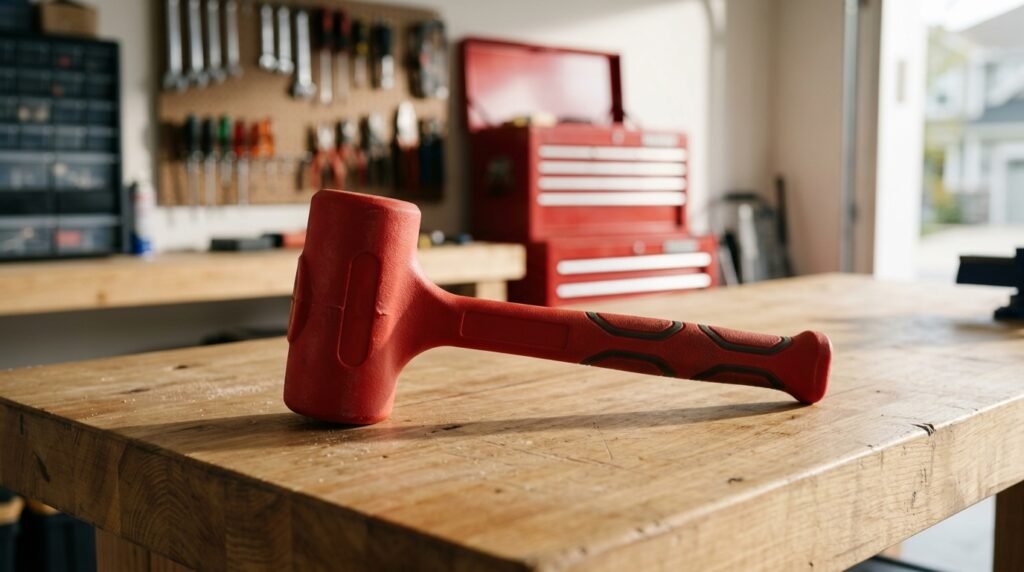
The craftsman dead blow hammer cmht54169 is a 45 oz. dead blow hammer designed to deliver controlled striking force while reducing rebound. CRAFTSMAN lists CMHT54169 as the model number for its 45 oz version. The manufacturer currently identifies it as an individual, double-face dead blow hammer with a polyurethane head and a straight rubber handle. Its listed overall length is about 14.18 inches, and the assembled tool weight is about 2.82 pounds. Most importantly, this is not the 28 oz model. CRAFTSMAN’s Canadian catalog currently lists CMHT54166 as the separate 28 oz dead blow hammer. That distinction matters when comparing listings because similar product names can easily create confusion. The CMHT54169 is the heavier option, making it more appropriate when you want substantial controlled impact rather than the lighter feel of a smaller dead blow hammer.
Key Specifications at a Glance
Before judging any hand tool, it helps to separate verified specifications from general marketing language. CRAFTSMAN’s current product information identifies the CMHT54169 as a 45 oz dead blow hammer. The company lists a polyurethane, double-face head, straight rubber handle, and non-marring design. The official listing gives an overall length of approximately 14.18 inches, width around 4.7 inches, and assembled weight around 2.82 pounds. Retail product information also describes a steel-reinforced handle and a molded head filled with steel shot. The craftsman dead blow hammer cmht54169 is therefore a fairly substantial hand tool rather than a small finishing mallet. Exact retailer descriptions can sometimes contain conflicting dimensions or other data-entry errors, so the manufacturer’s model number should be your main reference. Always confirm that CMHT54169 appears on the listing or packaging before ordering.
How a Dead Blow Hammer Works
A dead blow hammer behaves differently from a conventional solid-head hammer. Inside its head is loose material that moves during the swing. CRAFTSMAN specifies steel shot in the molded head of this model. When the head contacts the workpiece, the moving shot helps carry energy into the strike while reducing the tendency of the hammer to bounce backward. That is the basic idea behind the term “dead blow.” The result can feel more controlled than striking the same object with a hard solid hammer. The craftsman dead blow hammer cmht54169 combines this internal shot with a softer exterior face. This combination is useful when you need a firm impact but want to limit rebound and surface marking. It is important to remember that reduced rebound does not mean zero movement or zero risk. You still need proper technique, suitable eye protection, and a secure workpiece.
Why Reduced Rebound Matters
Rebound can make striking work less predictable. When a hard hammer hits another hard surface, some energy can send the hammer back toward the user. That bounce may make repeated controlled strikes harder. A dead blow design reduces this effect by changing how the impact energy is delivered. CRAFTSMAN specifically describes CMHT54169 as rebound resistant and says its dead blow function reduces bounce when striking hardened surfaces. The craftsman dead blow hammer cmht54169 can therefore be useful when you need a deliberate strike without the lively rebound of some traditional hammers. This can help during positioning, assembly, or adjustment work. Still, “rebound resistant” should not be interpreted as permission to strike carelessly. Always keep hands clear of the impact area. Make sure the target is stable, and avoid swinging toward yourself or another person.
Steel Shot-Filled Molded Head
The internal steel shot is one of the most important features of this hammer. CRAFTSMAN says the steel shot-filled molded head provides greater driving force with impact shock than its solid-head comparison while helping control the blow. Instead of behaving like one completely solid mass, the internal shot shifts during the swing and impact. That movement is what gives a dead blow hammer its distinctive response. For the craftsman dead blow hammer cmht54169, this construction is especially relevant because the tool has enough weight for stronger positioning and assembly tasks. You may notice that a dead blow hammer feels different in motion from a standard claw or ball-peen hammer. That is normal. The internal material is part of the design. If the outer shell becomes badly cracked, split, or damaged, however, stop using the tool and inspect it rather than continuing to strike with a compromised head.
Soft Face and Non-Marring Performance
CRAFTSMAN describes this hammer as non-marring and says its soft face helps prevent marking. That makes it useful when a steel hammer could damage the visible surface of a workpiece. For example, controlled blows may help seat or align certain parts without immediately putting a hard steel face against them. However, “non-marring” should not be treated as a guarantee that every material will remain perfect. Surface hardness, cleanliness, impact force, sharp edges, trapped grit, coatings, and the condition of the hammer face can all affect the result. Before using the craftsman dead blow hammer cmht54169 on a finished or delicate surface, test the technique on scrap material when possible. Clean the striking face too. A grain of metal or hard debris stuck to a softer hammer face can still scratch a surface. Use lighter blows first and increase force only when necessary.
Steel-Reinforced Handle and Overstrike Protection
The handle is another important part of a striking tool. Retail information for CMHT54169 describes a steel-reinforced handle designed to provide strength and overstrike protection. Overstriking happens when the handle or neck hits the work instead of the intended hammer face. It can occur when the swing is poorly aligned or the target is narrow. Reinforcement can improve durability, but it should not become an excuse for repeated bad strikes. The craftsman dead blow hammer cmht54169 should still be aimed so the face contacts the work squarely. Good technique reduces unnecessary stress on the tool and improves control. Inspect the handle periodically for cuts, cracks, deformation, looseness, or other damage. If the structure appears compromised, stop using the hammer. Striking tools experience repeated impact loads, so routine inspection is a simple but worthwhile safety habit.
What Is the Craftsman Dead Blow Hammer CMHT54169 Used For?
The craftsman dead blow hammer cmht54169 is best suited to tasks that need firm, controlled blows with less rebound than a conventional solid hammer. CRAFTSMAN broadly identifies dead blow hammers as useful for automotive and woodworking tasks. In practice, this type of hammer can also help with assembly, positioning, fitting, and alignment work when the workpiece can safely accept impact. You might use a dead blow hammer to help seat a stubborn component, align a heavy assembly, adjust certain workshop fixtures, or position materials during a home project. The softer face can be useful where a steel hammer would be too aggressive. However, suitability always depends on the specific part or material. Never strike precision parts, bearings, threads, glass, brittle components, electrical equipment, or finished surfaces unless the task instructions specifically allow impact.
Automotive and Garage Uses
Dead blow hammers are common in garage environments because mechanical work often involves parts that need controlled persuasion. A component may need slight repositioning without the sharp rebound of a hard steel hammer. The craftsman dead blow hammer cmht54169 can be useful for suitable automotive assembly and alignment tasks because its 45 oz head provides meaningful striking mass. CRAFTSMAN itself identifies automotive work as one of the intended categories for its dead blow hammers. Still, vehicle repairs require judgment. Do not strike brake components, bearings, threaded shafts, cast parts, sensors, wheels, suspension parts, or other components unless the repair procedure permits it. Some parts can crack, deform, or become unsafe after improper impact. Consult the vehicle’s service information when you are unsure. A dead blow hammer gives more controlled force, but it does not make every automotive component safe to hit.
Woodworking and Furniture Assembly
Woodworking is another area where a softer striking face can be helpful. A hard steel hammer can dent wood very quickly, especially around visible edges. A dead blow hammer may be useful for positioning sturdy joints, adjusting an assembly, or helping components settle into place. The craftsman dead blow hammer cmht54169 offers more weight than a light rubber mallet, so restraint matters. Start with a gentle swing. If you are assembling furniture, follow the manufacturer’s instructions because some connectors and engineered wood panels can be damaged by heavy impact. A protective wood block between the hammer and workpiece can sometimes spread force, but only when appropriate for the task. For delicate joinery, chisels, fine furniture, or small wooden parts, a traditional woodworking mallet or lighter soft-face tool may provide better control. Bigger is not always better.
Home Improvement and DIY Uses

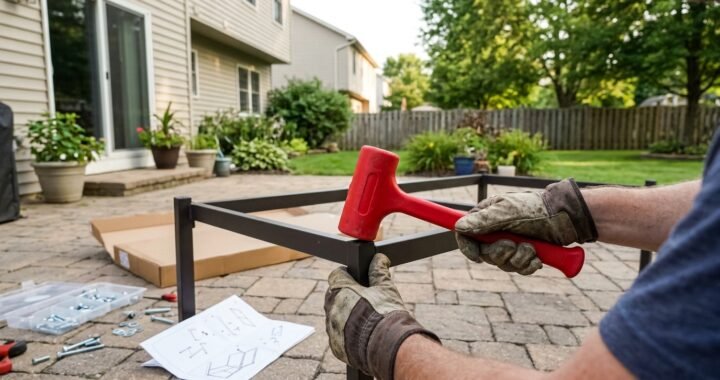
Homeowners can also find practical uses for a dead blow hammer. It may help when assembling heavy shelving, aligning sturdy outdoor furniture, positioning workshop equipment, or fitting certain non-fragile components. During a project, parts sometimes need a controlled tap rather than the sharp strike of a claw hammer. The craftsman dead blow hammer cmht54169 is especially useful when the task benefits from its heavier 45 oz size. However, avoid using it simply because something will not move. Resistance can signal a hidden fastener, incorrect alignment, cross-threaded hardware, or another problem. Striking harder may make the situation worse. Stop and inspect the assembly first. Also keep the hammer away from electrical panels, plumbing fixtures, tile edges, glass, and brittle materials unless the specific procedure calls for a suitable striking tool. Controlled force still needs careful judgment.
Dead Blow Hammer vs. Rubber Mallet
A rubber mallet and a dead blow hammer can look similar in purpose, but they behave differently. A simple rubber mallet usually has a solid rubber head. It provides a softer contact surface and is useful for lighter assembly, woodworking, flooring, and similar tasks. A dead blow hammer contains moving material inside the head to reduce rebound and transfer impact differently. The craftsman dead blow hammer cmht54169 uses steel shot inside its molded head, giving it a more controlled dead-blow effect. It is also a relatively heavy 45 oz model. For light tapping on delicate materials, a rubber mallet may be easier to control. For a stubborn assembly that needs stronger controlled force, the dead blow design may be more suitable. Choose according to the task rather than assuming one tool is universally better.
Dead Blow Hammer vs. Claw Hammer
A claw hammer is designed primarily around driving and removing nails. Its hardened metal face is useful for striking nail heads, while its claw provides pulling and prying ability. That makes it an essential general-purpose tool, but it is not designed to protect finished surfaces. The craftsman dead blow hammer cmht54169 serves a different purpose. It has no nail-pulling claw and should not replace a claw hammer for normal carpentry. Instead, it provides controlled impact with reduced rebound and a softer contact face. If you are hanging framing, driving nails, or removing fasteners, reach for the correct claw or framing hammer. If you are positioning a sturdy component and want to avoid a hard steel strike, a dead blow hammer may be the better option. A well-equipped toolbox can include both because their jobs overlap very little.
Dead Blow Hammer vs. Ball-Peen Hammer
Ball-peen hammers are common in metalworking and mechanical work. Their hardened steel faces make them suitable for tasks that require direct metal striking. The rounded peen also supports specific shaping and metalworking operations. A dead blow hammer is built around a different goal. The craftsman dead blow hammer cmht54169 emphasizes reduced rebound and a softer, non-marring face rather than hardened steel contact. This makes it useful for certain positioning and assembly tasks, but unsuitable for jobs that specifically require a ball-peen hammer. Do not use the dead blow tool as a substitute for metal shaping, peening, or striking hardened punches when the job calls for a proper steel hammer. Conversely, using a steel ball-peen hammer on a finished component may leave damage where a softer dead blow face could have been more appropriate. Match the hammer to the work.
Is the 45 Oz Size Right for You?
Weight has a major effect on how a hammer feels. CMHT54169 is officially identified as the 45 oz model, making it a substantial dead blow hammer. The assembled tool weight is listed at about 2.82 pounds. That mass can be helpful when moving or seating larger components because the hammer can deliver useful force without requiring an extremely fast swing. However, a heavier hammer can also be tiring and excessive for small tasks. The craftsman dead blow hammer cmht54169 makes the most sense when your projects regularly need moderate to strong controlled impact. For lighter work, CRAFTSMAN also lists a separate 28 oz dead blow model, CMHT54166. Users should choose based on the work rather than automatically selecting the heavier option. If most of your jobs involve delicate assemblies or short, precise taps, a smaller mallet may offer better control.
CMHT54169 vs. the 28 Oz CMHT54166
Model numbers matter here because these two tools can easily be confused. CRAFTSMAN’s current catalog identifies CMHT54169 as the 45 oz dead blow hammer and CMHT54166 as the 28 oz version. The craftsman dead blow hammer cmht54169 is therefore the heavier choice. That extra mass can help when a task requires more impact, while the smaller model may feel easier to maneuver during lighter work. Do not choose only by weight, though. Think about target size, material, working position, and how much control you need. A heavier hammer used with a controlled swing can be effective, but it may still be excessive for fragile components. When shopping online, verify the model number rather than relying on a product image or shortened title. Product photos, marketplace descriptions, and search snippets can occasionally mix information from similar models.
How to Use a Dead Blow Hammer Safely
Start by inspecting the hammer. Look for cracks, cuts, severe wear, deformation, or damage around the head and handle. Wear suitable eye protection because the workpiece itself may chip or release debris. Secure the work whenever practical. Hold the handle firmly and keep your free hand away from the strike zone. With the craftsman dead blow hammer cmht54169, begin with a controlled light strike instead of using maximum force immediately. Hit the work squarely with the center of the face. If the component does not move, stop and determine why. Do not keep increasing force without understanding the resistance. Never modify the hammer, grind its face, heat it, or use a visibly damaged tool. Also remember that a softer face does not make every target safe to strike. Follow the instructions for the material, equipment, or assembly you are working on.
Getting Better Results With Controlled Strikes
Technique matters more than brute force. A dead blow hammer works best when the face meets the target squarely. Angled hits waste energy and increase the chance of slipping. Before swinging, position your body so your arm can move naturally toward the target. Avoid awkward overhead or sideways blows when a better work position is possible. The craftsman dead blow hammer cmht54169 already provides substantial mass, so you often do not need a wild swing. Begin gently and observe what happens. For assembly work, alternate sides when necessary so a component moves evenly rather than binding. When protecting a finished piece, make sure both the hammer face and work surface are clean. If a task needs repeated heavy strikes without progress, reconsider the setup. The problem may require disassembly, lubrication, a press, puller, clamp, or another specialized tool instead.
When You Should Not Use This Hammer
A dead blow hammer is versatile, but there are clear situations where another tool is safer. Do not use it for driving ordinary nails because it lacks the appropriate hardened face and claw. Do not use it as a sledgehammer, pry bar, chisel, or demolition tool. The craftsman dead blow hammer cmht54169 should also not be used to strike hardened punches or chisels unless the relevant tool instructions specifically allow a soft-faced hammer. Avoid hitting sharp edges that could cut the polyurethane shell. Brittle castings, glass, ceramic tile, delicate bearings, threaded ends, electronics, and precision surfaces can be damaged by impact. Never strike pressurized containers or energized electrical equipment. A dead blow design controls impact behavior; it does not make dangerous striking tasks safe. When in doubt, check the repair or assembly procedure before reaching for a hammer.
Caring for the Craftsman Dead Blow Hammer CMHT54169
The craftsman dead blow hammer cmht54169 requires little routine maintenance, but basic care can extend its useful life. Wipe dirt, grease, metal chips, and abrasive debris from the faces after use. This is especially important when you want the softer face to protect another surface later. Store the hammer away from excessive heat, sharp tools, and conditions that may damage its molded exterior. Before each use, inspect the head for splits or deep cuts. Check the handle and the area where it meets the head. Do not attempt improvised repairs to a badly damaged striking tool. CRAFTSMAN provides customer-support resources for product and warranty information, and the model number is useful when seeking help. Keeping the model identification available also reduces confusion with the lighter CMHT54166 version.
What to Check Before Buying
Start with the exact model number. A listing for CMHT54169 should describe the 45 oz dead blow hammer. If it says 28 oz, verify the information because CRAFTSMAN currently assigns that weight to CMHT54166. Next, consider whether a heavy dead blow tool fits your typical work. Look at the striking surfaces, overall condition, and seller information when buying online or in person. For the craftsman dead blow hammer cmht54169, current official information lists a polyurethane double-face head, straight rubber handle, and non-marring design. Retail descriptions also identify the steel shot-filled head and steel-reinforced handle. Prices and availability can change, so compare current authorized or reputable sellers rather than relying on an old quoted price. If warranty coverage matters to you, review the current terms that apply to your location and purchase instead of assuming every retailer describes them identically.
Who Is This Hammer Best For?
This model makes the most sense for someone who regularly needs more than a light rubber mallet but still wants controlled impact. Home mechanics, DIY users, workshop owners, woodworkers, furniture assemblers, and tradespeople may find suitable uses for it. The craftsman dead blow hammer cmht54169 is particularly relevant when a heavier 45 oz dead blow tool fits the work. Someone who mainly hangs pictures, drives nails, or performs light household repairs may get more everyday value from a conventional claw hammer and smaller mallet first. Likewise, a person doing delicate craft work probably does not need this much striking mass. Think about the jobs you actually perform. A specialized hand tool earns its place in a toolbox when its design solves a recurring problem. Buying it only because it looks more powerful rarely improves the work.
Advantages and Practical Limitations
The main advantages are straightforward. The dead blow action reduces bounce, the steel shot-filled head helps deliver controlled driving force, and the softer face is intended to reduce marring. The reinforced handle is another practical feature for a tool expected to receive repeated impact. The craftsman dead blow hammer cmht54169 also offers a useful heavier size for jobs where small mallets lack authority. Its limitations are equally important. It cannot pull nails. It is not designed for demolition. Its softer face does not suit every metalworking task. Its 45 oz size may feel excessive for delicate work, and “non-marring” does not mean every surface is impossible to damage. These are not faults; they define the tool’s purpose. A specialized hammer should be evaluated by how well its design matches the intended job rather than by how many unrelated jobs it can replace.
Common Mistakes to Avoid
One common mistake is swinging too hard because the hammer has a soft exterior. Another is assuming reduced rebound means there is no need for eye protection. Users may also strike sharp metal edges, which can damage a molded hammer face. Dirty striking faces are another problem because trapped metal chips or grit can mark a finished surface. When using the craftsman dead blow hammer cmht54169, avoid using the side of the head as a striking face unless the manufacturer specifically identifies it for that purpose. Do not keep hammering a stuck component without checking for hidden fasteners or incorrect alignment. Finally, do not confuse model numbers when purchasing. CMHT54169 is the 45 oz version. The 28 oz CRAFTSMAN dead blow hammer is CMHT54166. A quick model-number check can prevent ordering the wrong size.
Is the Craftsman Dead Blow Hammer CMHT54169 Worth Considering?
Whether the tool is worth considering depends mainly on the work you do. Its verified design has a clear purpose: provide a substantial dead blow strike with reduced rebound and a softer contact face. That combination is useful in many garage, workshop, assembly, and suitable home-improvement tasks. The craftsman dead blow hammer cmht54169 is especially attractive to someone who already owns ordinary hammers but needs a heavier controlled-impact option. It is less compelling for a toolbox that still lacks basic tools or for someone whose projects require only light tapping. Rather than treating it as a universal hammer, consider it a specialist. If your work frequently involves aligning or seating sturdy parts where a hard steel strike is undesirable, its design makes practical sense. If those jobs are rare, a lighter mallet may cover more of your needs.
Frequently Asked Questions
Is the Craftsman Dead Blow Hammer CMHT54169 28 oz or 45 oz?
The craftsman dead blow hammer cmht54169 is the 45 oz model according to CRAFTSMAN’s current product catalog. The separate 28 oz CRAFTSMAN dead blow hammer uses model number CMHT54166. Check the model number carefully when shopping because product titles and search results can sometimes create confusion between similar tools.
What is inside the CMHT54169 dead blow hammer?
CRAFTSMAN and retailer product information describe a molded head filled with steel shot. The moving shot helps deliver impact while reducing the bounce associated with many solid-head hammers. The outer striking face is softer and designed to help reduce marring compared with a hard steel striking surface.
Can I use this dead blow hammer for woodworking?
Yes, for suitable woodworking and assembly tasks. CRAFTSMAN lists woodworking among the applications for its dead blow hammers. However, 45 oz is substantial. Start with light strikes and avoid hitting delicate joinery or finished wood aggressively. A lighter mallet may provide better control for small or fragile pieces.
Can the CMHT54169 replace a regular claw hammer?
No. A claw hammer is designed for driving and pulling nails. A dead blow hammer is intended for controlled impact with reduced rebound. It does not have a nail-pulling claw and should not be treated as a replacement for a standard carpentry hammer.
Is the face guaranteed not to damage a surface?
No striking tool should be treated as completely incapable of causing damage. CRAFTSMAN describes the tool as non-marring and says its soft face helps prevent marring. However, excessive force, sharp edges, dirt, metal debris, or delicate finishes can still lead to damage. Test carefully when appearance matters.
How long is the CMHT54169?
CRAFTSMAN’s current official listing gives the tool an overall length of approximately 14.18 inches. It also lists an assembled weight of about 2.82 pounds. When comparing retailer specifications, use the model number and official manufacturer information because third-party listings can occasionally contain data-entry errors.
Conclusion
The craftsman dead blow hammer cmht54169 fills a specific and useful role between lighter soft mallets and traditional hard-faced hammers. It is the 45 oz model, not the 28 oz version, and its design centers on controlled impact. A steel shot-filled molded head helps reduce rebound, while the softer face is intended to limit marring. The reinforced handle adds strength for repeated workshop use. Those qualities make the hammer worth considering for suitable automotive, woodworking, assembly, and home projects. However, the best results come from using it for the right tasks. It should not replace a claw hammer, ball-peen hammer, sledgehammer, or delicate woodworking mallet. Inspect it regularly, keep its faces clean, use proper eye protection, and start with controlled strikes. When a project needs firm positioning force without the sharp rebound of a conventional solid hammer, this CRAFTSMAN model offers a practical solution.