A palm plant is known for its graceful leaves, upright growth, and tropical appearance. Palms come in many shapes and sizes, from small indoor varieties to large outdoor trees. Some grow well in bright rooms, while others need open spaces and direct sunlight. Their care also varies by species, climate, and growing conditions. A healthy palm needs suitable light, well-draining soil, careful watering, and enough room for its roots and leaves. Choosing the right variety is just as important as knowing how to maintain it. A plant that thrives outdoors may struggle inside a home with limited light. This guide explains the main types of palms, how to grow them indoors and outdoors, how to recognize common problems, and what to consider before planting one.
What Is a Palm Plant?
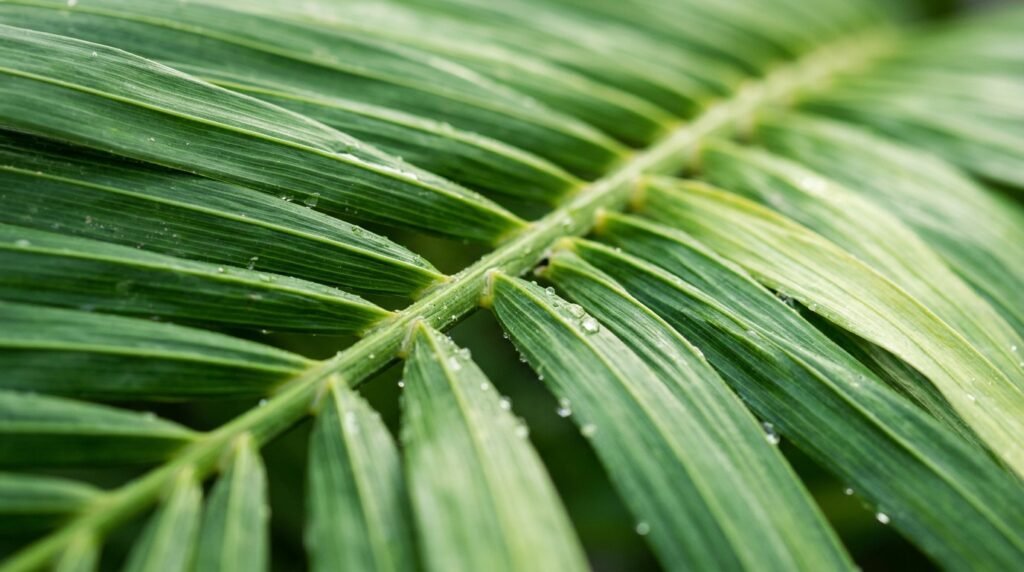
A palm plant belongs to the botanical family Arecaceae, which includes many different species of palms. These plants are mostly found in tropical and subtropical regions, although some species grow in cooler climates. Their appearance can vary greatly. Some have tall, narrow trunks with large leaves at the top, while others grow in compact clusters with several stems. Palm leaves are commonly called fronds. They usually have one of two main shapes: feather-like or fan-shaped. Feather-shaped leaves have smaller leaflets arranged along a central stem. Fan-shaped leaves spread outward from a central point, creating a rounded or hand-like appearance. Palms are not all trees, either. Some species grow as shrubs or climbing plants, and some have no obvious trunk above the ground. Their size, growth rate, and preferred conditions depend on the species. This variety makes palms suitable for gardens, patios, offices, and indoor spaces.
How to Identify Different Palm Plants
The easiest way to identify a palm is to examine its leaves, stems, and overall growth habit. Feather palms have long central leaf stems with narrow leaflets arranged along each side. Areca, date, and coconut palms are familiar examples of this form. Fan palms have leaf segments that spread from a central point. European fan palms and lady palms are examples of this group. The trunk can also provide useful clues. Some palms have smooth trunks, while others show old leaf bases, fibers, or rough patterns. A few species grow several stems close together, creating a dense, bushy shape. Others usually develop one main trunk. Color is another helpful feature, although it can change with age and growing conditions. Some palms have deep green leaves, while others show blue-green or silvery tones. Identification should not depend on one feature alone. Young plants may look different from mature specimens, and similar species can be difficult to distinguish without examining their botanical details.
Popular Types of Palm Plants
Many palm species are grown as houseplants, garden trees, and patio plants. Their suitability depends on available light, temperature, humidity, mature size, and local climate. Some are valued for compact growth, while others become large landscape features. Before selecting a palm, check its expected mature size and growing needs. A small nursery specimen may eventually become too large for a room or container. The following varieties are common choices, but they do not all need the same care.
Areca Palm
Dypsis lutescens, commonly known as the areca palm, is a popular indoor and outdoor ornamental species in suitable climates. It has several slender stems and soft, arching feather-like fronds. Its full shape makes it useful in bright living rooms, offices, and covered patios. It generally prefers bright, indirect light indoors and evenly moist soil with good drainage. Strong direct sunlight can damage leaves that have not adjusted to it. The areca palm can grow into a large plant, so it needs enough space for its stems and foliage. Indoor growth is often slower than outdoor growth under suitable tropical conditions. Dry air, poor lighting, and watering problems may cause its leaves to lose their healthy appearance.
Parlor Palm
The parlor palm, known botanically as Chamaedorea elegans, is a compact species often grown indoors. It has slim stems and delicate green fronds that create a soft, graceful appearance. It is one of the more adaptable palms for homes because it can tolerate lower light than many other varieties. However, low light tolerance does not mean it can grow well in a dark corner without natural or suitable artificial light. A position with indirect daylight is usually more suitable. The parlor palm grows slowly and generally stays smaller than many other indoor palms. It works well on shelves, side tables, and in spaces where a large floor plant would be impractical. Water when the upper layer of soil begins to dry, and avoid leaving the pot standing in excess water.
Kentia Palm
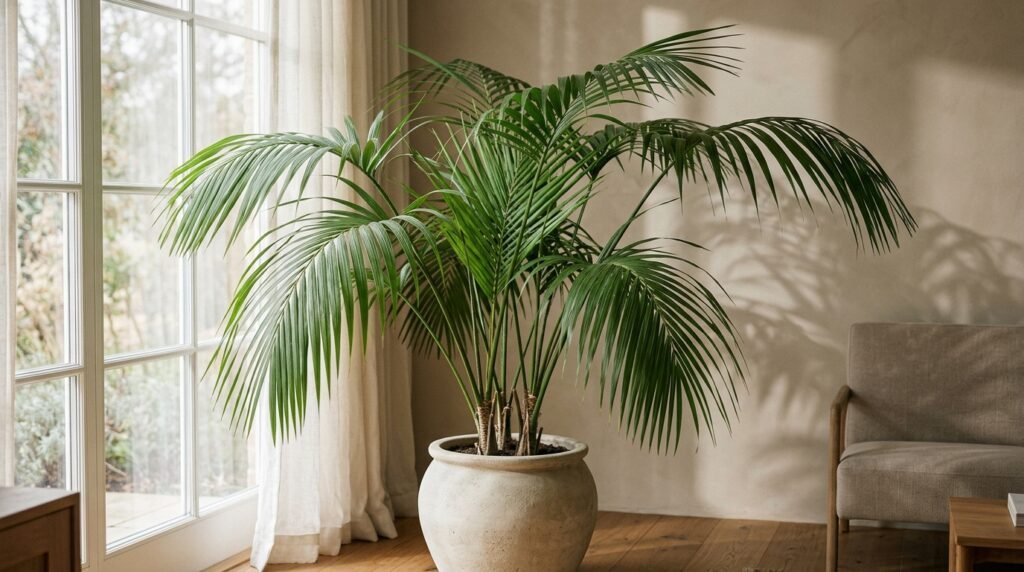
The kentia palm, or Howea forsteriana, is known for its long, arching fronds and elegant shape. It is often used in homes, offices, and other indoor spaces because it can adapt to conditions that are less bright than those preferred by many tropical palms. Bright, filtered light supports good growth, although it can tolerate some lower-light conditions. It is generally slow-growing, which makes it useful where a plant should not quickly outgrow its position. A kentia palm needs a pot with drainage and a growing mix that does not remain waterlogged. Its roots can be sensitive to disturbance, so unnecessary repotting should be avoided. This variety is a useful option for someone who wants a larger indoor palm without choosing a fast-growing species.
Bamboo Palm
The bamboo palm is commonly associated with Chamaedorea seifrizii. It develops several thin, upright stems that resemble bamboo canes. Its narrow growth habit can make it suitable for corners and spaces where a wide plant would be difficult to place. The leaves are feather-shaped and grow along the stems. Bamboo palms generally prefer filtered light and soil that stays lightly moist without becoming soggy. They can be useful indoor plants, but their needs still depend on room conditions and the specific plant. A dry room may cause leaf tips to turn brown, while excessive watering can damage the roots. Check the soil before watering rather than following a fixed daily schedule.
Lady Palm
The lady palm, Rhapis excelsa, has fan-shaped leaves divided into several segments. It usually grows in clusters of upright stems and has a dense, structured appearance. This makes it a good choice for indoor spaces that need a leafy plant with a more compact form. It can tolerate lower indoor light than many palms, although brighter filtered light generally supports better growth. Lady palms are often slow-growing and may take time to develop a full shape. Their soil should drain well, but the plant should not be left completely dry for long periods. Inspect the leaf bases when checking for pests because insects can sometimes hide in crowded growth.
Pygmy Date Palm
The pygmy date palm, Phoenix roebelenii, is a smaller date palm with a slender trunk and fine, arching leaves. It can be grown outdoors in suitable warm climates and in containers where its light and temperature needs can be met. It prefers bright light and may need some protection from intense afternoon sun when grown in a hot location. Unlike some compact houseplants, it can develop sharp structures near the leaf bases. Care is needed when handling or pruning it. Its mature size can be larger than expected, so it should not be placed where its leaves or sharp parts can obstruct a walkway.
European Fan Palm
The European fan palm, Chamaerops humilis, is a hardy palm compared with many tropical varieties. It can grow as a compact clump or develop a more defined trunk as it matures. Its fan-shaped leaves give it a strong architectural appearance. It is often used in outdoor landscapes, patios, and large containers in climates that suit it. It generally prefers a sunny position and well-draining soil. Although it tolerates some cooler conditions better than many tropical palms, its ability to withstand cold depends on local weather and the plant’s condition. It should not be assumed suitable for every cold region.
Indoor Palm Plants and Their Growing Needs
Indoor palms need conditions that support steady growth without exposing them to sudden environmental changes. Light is often the biggest challenge because indoor spaces may be much darker than outdoor environments. A position near a bright window can help, but the correct exposure depends on the species. Some varieties tolerate filtered light, while others need stronger brightness to remain healthy. Keep the plant away from strong heating and cooling vents because dry airflow can affect its leaves. Avoid moving it repeatedly between very different environments. Indoor palms also need enough room for their fronds to spread without constant contact with walls or furniture. A crowded position can damage the leaves and make routine care difficult. Choose a location that provides suitable light, stable temperatures, and enough space for mature growth. If the plant begins leaning toward a window, rotating the pot occasionally can help distribute light more evenly.
Outdoor Palm Plants and Climate Requirements
Outdoor palms can become attractive focal points in gardens, courtyards, and landscaped areas. However, not every species can survive outdoors in every region. Some need warm temperatures throughout the year, while others tolerate cooler conditions. Local rainfall, wind exposure, soil drainage, and seasonal temperature changes all affect their growth. In hot regions, young palms may benefit from protection while they become established. Mature plants may tolerate stronger sunlight, depending on the species. Before planting, check the expected mature height and spread. Consider nearby walls, paths, power lines, and buildings. Large palms can become difficult to manage if planted too close to structures. The planting location should also allow water to drain away from the root area. A species suited to a coastal garden may not be the right choice for a dry inland landscape. Select plants according to local conditions rather than appearance alone.
How Much Light Does a Palm Plant Need?
Light requirements vary widely between palm species. Many popular indoor varieties prefer bright, indirect light. This means they receive good natural brightness without harsh sunlight falling directly on their leaves for long periods. A position near an east-facing window may suit some indoor palms, while others can grow near a brighter south- or west-facing window with suitable filtering. Direct sunlight through glass can become intense and may scorch leaves that are not adapted to it. Outdoor palms often need more light, but some species prefer partial shade, especially when young. If the leaves develop pale or dry patches on the side facing a window, excessive direct light may be one possible cause. If growth becomes weak or the plant leans strongly toward a light source, it may not be receiving enough brightness. Adjust its position gradually. Sudden changes from shade to strong sunlight can cause stress, even in species that eventually tolerate brighter conditions.
How Often Should You Water a Palm?
There is no single watering schedule that suits every palm. Watering depends on the species, pot size, soil mix, room temperature, humidity, light, and season. A plant in a warm, bright room may use water faster than one in a cooler location. Check the growing mix before watering. For many indoor palms, watering is appropriate when the upper layer of soil has started to dry. Add water slowly until excess begins to drain through the bottom holes. Empty the saucer or outer container afterward. Roots need both moisture and oxygen, so soil that stays constantly saturated can cause root problems. Do not assume that yellow leaves always mean the plant needs more water. Overwatering can also cause yellowing and decline. In cooler months, growth may slow and the plant may need less frequent watering. Always adjust according to the soil rather than using the same schedule throughout the year.
Choosing the Right Soil and Pot
A suitable growing mix should hold some moisture while allowing excess water to drain. Heavy soil that stays wet for long periods can reduce air around the roots and increase the risk of root damage. A quality indoor potting mix may work for many container palms, but the exact needs vary by species. Some growers improve drainage by using suitable materials such as perlite, coarse bark, or other components designed for container plants. The pot should have drainage holes so extra water can escape. A decorative container without drainage can be used as an outer cover, but the plant should remain in a suitable inner pot. Choose a container that supports the plant without being excessively large. A very large volume of unused wet soil can take longer to dry. When repotting, select a pot only modestly larger than the root ball and avoid damaging the roots. Do not add stones to the bottom as a substitute for proper drainage holes.
Temperature and Humidity for Healthy Growth
Many commonly grown indoor palms prefer stable, comfortable room temperatures. Sudden cold exposure, hot air from heaters, and strong drafts can stress sensitive species. Tropical varieties generally need protection from cold conditions, while some outdoor species tolerate cooler weather. Check the requirements of the exact variety before placing it outside during winter. Humidity also affects leaf condition. Dry indoor air can contribute to brown tips, especially in species that prefer more moisture in the air. Grouping plants together may slightly change the local environment, while a room humidifier can provide more consistent humidity. Misting is sometimes used, but it does not maintain higher humidity for long. It should not replace suitable watering or proper air circulation. Avoid placing a plant directly beside a heater or air conditioner. These locations can create rapid changes in temperature and moisture around the leaves.
Fertilizing a Palm Plant
Palms need nutrients for healthy roots, stems, and leaf growth. Container plants may gradually use the nutrients available in their growing mix, so feeding can be helpful during active growth. Use a fertilizer suitable for palms or a balanced product appropriate for the plant. Follow the label directions carefully because fertilizer strength and application rates vary. More fertilizer does not mean faster or healthier growth. Excess nutrients can damage roots and create salt buildup in the soil. Feeding is usually reduced or stopped when growth slows during cooler or darker periods. Newly repotted plants may already have nutrients in their fresh growing mix, so check the mix and product guidance before feeding. If older leaves develop unusual yellowing or new leaves appear weak, several factors may be involved. Nutrient problems are only one possibility. Check light, watering, roots, and pests before adding more fertilizer.
How to Repot a Palm Plant
Repotting is needed when the roots have filled the available space or the growing mix has broken down. It is not necessary every year. Many palms grow slowly and prefer not to have their roots disturbed too often. Signs that repotting may be needed include roots emerging from drainage holes, water passing through the pot unusually quickly, or a root ball that has become tightly packed. Choose a container with drainage holes and fresh growing mix suitable for the species. Remove the plant carefully and avoid pulling or cutting healthy roots unnecessarily. Set it at the same soil depth as before. Do not bury the base of the stem deeper than it was previously planted. Fill around the root ball and water enough to settle the mix. Allow excess water to drain away. Keep the plant in suitable light while it adjusts. Avoid heavy feeding immediately after repotting unless the product instructions specifically support it.
Pruning and Cleaning Palm Leaves
Palm leaves are called fronds, and healthy green fronds should usually remain on the plant. They help the plant produce energy through photosynthesis. Removing too many healthy leaves can weaken growth and reduce its ability to recover from stress. Prune only fronds that are fully dead, badly damaged, or clearly affected by a problem that requires removal. Use clean, sharp tools and avoid cutting into the trunk or central growing point. Never pull leaves away with force because this can damage the plant. Some palms naturally develop older brown lower fronds as they grow. This can be part of normal aging rather than a disease. Dust can also collect on indoor leaves and reduce their clean appearance. Wipe broad leaves gently with a damp cloth when needed. Avoid harsh leaf-shining products because they may damage foliage or leave unwanted residue.
Common Palm Plant Problems and Their Causes
Changes in leaf color, growth, and texture can reveal that a palm is under stress. However, one symptom may have several possible causes. Check the soil, light, temperature, and leaves together before deciding what action to take. Making several changes at once can make it harder to identify the real problem.
Brown Leaf Tips
Brown tips may develop because of dry air, inconsistent watering, salt buildup, physical damage, or unsuitable growing conditions. They are common on indoor palms, especially in rooms with low humidity. Check whether the soil is drying too much between waterings. Also consider the water quality and whether fertilizer has been applied too often. If only the tips are brown and the rest of the frond is healthy, the plant may not need major treatment. Trim the dry part carefully if appearance is a concern, but leave a small brown edge rather than cutting into green tissue.
Yellowing Leaves
A small number of older lower fronds may turn yellow as part of natural growth. This is different from several leaves yellowing at the same time. Widespread yellowing can be linked to overwatering, underwatering, poor light, root damage, or nutrient problems. Check the moisture level below the soil surface rather than judging by the top alone. If the growing mix remains wet for a long time and the plant looks weak, inspect drainage and root condition. Avoid adding fertilizer until basic growing conditions have been checked.
Brown Spots and Leaf Damage
Brown spots can result from physical injury, environmental stress, pests, or disease. Sudden exposure to strong sunlight may cause damaged patches on leaves. Cold drafts and waterlogged soil can also contribute to poor leaf condition. Look for signs such as spreading marks, unusual texture, insects, or webbing. If the damage appears on only one area that has been rubbing against a wall, physical contact may be responsible. Remove badly damaged material only when necessary and keep tools clean.
Drooping or Wilting Fronds
Drooping leaves can indicate that the plant is too dry, but waterlogged roots can also prevent proper water uptake. Check the soil before adding more water. If it is dry, water thoroughly and allow the pot to drain. If it is wet, stop watering until the mix begins to dry and check that drainage holes are clear. A sudden change in temperature or light may also affect leaf posture. Do not assume every drooping plant needs immediate watering.
Common Pests That Affect Palms
Indoor and outdoor palms can attract several types of pests. Common problems include spider mites, scale insects, mealybugs, and occasionally other sap-feeding insects. Spider mites may cause fine speckling on leaves and sometimes leave delicate webbing. Scale insects can appear as small, fixed bumps on stems or leaf surfaces. Mealybugs often look like small white cottony patches. Inspect the undersides of leaves, the leaf bases, and the stems because pests may hide in these areas. If an infestation is found, isolate an indoor plant from nearby plants where practical. Remove visible pests with a suitable method and follow the label instructions for any treatment product. Avoid applying chemicals in ways not approved for indoor plants. Recheck the plant over time because a single cleaning may not remove every pest or egg.
Can a Palm Plant Grow in Low Light?
Some palms tolerate lower light better than others. Parlor palms, kentia palms, and certain lady palms are often more adaptable to indoor conditions than species that need strong brightness. However, low-light tolerance does not mean a plant can thrive without enough light for growth. A dim hallway or windowless room may not provide enough energy for long-term health. Growth can become slower, leaves may lose strength, and the plant may gradually decline. If natural light is limited, consider a suitable plant-growing light. Follow the light manufacturer’s guidance for placement and operating time. Rotate the pot occasionally if growth is leaning toward one direction. Select the species according to the actual brightness of the room rather than choosing only by its appearance.
Can Palm Plants Grow in Containers Outdoors?
Yes, many palm species can grow in outdoor containers when their light, temperature, and root needs are met. Container growing is useful for patios, balconies, entrances, and other spaces where planting directly in the ground is not practical. Choose a pot that is stable enough to support the plant as it grows. It must have drainage holes, and the growing mix should suit the species. Outdoor containers may dry faster than indoor pots because of sunlight, wind, and higher temperatures. Check soil moisture regularly during hot weather. At the same time, protect the roots from standing water after heavy rain. Some palms may eventually become too large for container life. Check the mature size before buying a young specimen. In areas with cold winters, a container may also need to be moved to a protected location if the species cannot tolerate local temperatures.
How to Choose a Palm for Your Home or Garden
Start with the space available rather than the appearance of the plant alone. Measure the area and consider how wide the fronds may spread as the plant matures. For a compact indoor position, a parlor palm or lady palm may be more practical than a large outdoor species. For a bright room with enough floor space, a kentia palm may be suitable. Outdoor planting requires checking local climate, sunlight, soil, and available space. Consider how much time can be given to watering, cleaning, pruning, and pest checks. Some species are more forgiving of indoor conditions, while others need specific care. Also think about children and pets. Do not assume every palm is safe to chew or handle. Check the exact species and consult a reliable veterinary or poison-control resource if ingestion occurs. A suitable plant should fit both the space and the household.
Are Palm Plants Safe for Pets?
Pet safety depends on the exact plant species. The word palm is used for many different plants, and some unrelated houseplants also have palm-like leaves or common names. The true sago palm, for example, is highly toxic to dogs and cats. It is not a true palm and belongs to a different plant group. This distinction is important because common names can cause confusion. Do not identify a plant as safe based only on its appearance or the word palm in its label. Check the botanical name before bringing it into a home with pets. If an animal chews an unknown plant, contact a veterinarian or an appropriate animal poison service for advice. Do not wait for symptoms before seeking help when a known toxic plant may have been eaten.
Mistakes to Avoid When Growing Palms
One of the most common mistakes is watering on a fixed schedule without checking the soil. This can leave roots too wet during cooler periods or allow the plant to dry out during hot weather. Another mistake is placing a light-loving species in a dark room because it is described as an indoor plant. Indoor suitability does not remove the need for adequate light. Choosing a pot without drainage can also create long-term root problems. Some owners remove green leaves to make the plant look tidy, even though those leaves still support growth. Others use too much fertilizer in an attempt to encourage faster development. Palms generally respond better to stable conditions and suitable care than frequent changes. Avoid moving a plant repeatedly, cutting healthy foliage, or repotting without a clear reason. Small, thoughtful adjustments are usually better than changing every part of its environment at once.
How Long Does a Palm Plant Take to Grow?
Growth speed depends on the species, age, climate, light, water, soil, and available root space. Some indoor palms grow slowly and may take years to develop a noticeably larger shape. Other outdoor species can grow more quickly under suitable conditions. Young plants often establish their roots before producing much visible growth. A palm may also grow more slowly during cooler or darker seasons. This does not always indicate a problem. Check whether new leaves are emerging and whether the existing foliage remains healthy. Avoid forcing growth with extra fertilizer or frequent watering. A palm that grows slowly but remains healthy may simply have a naturally slow growth habit. Before buying one, research its expected mature size and growth pattern. This helps set realistic expectations and prevents a small nursery plant from becoming unsuitable for its location later.
Frequently Asked Questions
Is a palm plant easy to care for?
Some varieties are relatively easy to maintain, especially parlor palms and kentia palms. They can adapt to common indoor conditions when given suitable light, careful watering, and good drainage. Other species need stronger light, more humidity, or warmer temperatures. The difficulty depends on the exact variety and the environment.
How often should I water an indoor palm?
Water when the upper layer of the growing mix begins to dry, then allow excess water to drain. The exact interval changes with temperature, light, humidity, pot size, and species. Check the soil before watering instead of following a fixed weekly schedule.
Why are the leaves on my palm turning brown?
Brown leaves or tips can result from dry air, underwatering, overwatering, salt buildup, direct sunlight, or physical damage. Check the soil moisture and growing conditions first. If the problem spreads, inspect the plant for pests and signs of root damage.
Can palm plants grow without direct sunlight?
Yes. Several indoor varieties grow well in bright, indirect light and do not need direct sunlight. Some tolerate lower light for limited periods. However, a very dark location may not provide enough energy for healthy long-term growth.
Do palm plants need large pots?
Not always. The pot should provide enough room for the roots while remaining suitable for the plant’s size. A container that is much larger than the root ball can hold excess moisture. Choose a pot with drainage holes and repot only when needed.
Can a palm survive outdoors throughout the year?
That depends on the species and local climate. Some palms tolerate cooler conditions, while tropical varieties need protection from cold weather. Check the plant’s temperature requirements and local seasonal conditions before leaving it outdoors throughout the year.
Conclusion
A palm plant can bring attractive foliage and a tropical feel to indoor and outdoor spaces. However, different species have different needs, so choosing the right variety is essential. Consider the plant’s mature size, light preference, temperature range, watering needs, and available growing space before planting it. Good drainage and careful watering help protect its roots, while suitable light supports healthy leaves and steady growth. Watch for brown tips, yellowing, pests, and changes in leaf condition rather than treating every problem the same way. With the right species and stable growing conditions, a palm can remain an attractive part of a home or garden for many years.