A herringbone pattern is a repeated arrangement of rectangular pieces placed at right angles to create a broken zigzag design. The pieces usually form rows of V-shaped lines, but their ends do not meet in sharp points. Instead, each piece meets the next at a staggered angle. This pattern appears in wood flooring, tiles, brickwork, fabric, clothing, and home decor. Its appeal comes from the way a simple arrangement creates movement and visual texture without needing bold colors or complex details. Understanding how the pattern works makes it easier to recognize, compare with similar designs, and use it well in a room. It also helps avoid common mistakes when choosing materials or planning an installation.
Why Is It Called a Herringbone Pattern?
The name comes from the pattern’s resemblance to the bones along a herring fish’s spine. A herring has a central backbone with smaller bones extending from both sides. The repeated angled pieces in this design create a similar visual effect. This connection explains the name, but the pattern is not limited to one material or craft. It can be made with wood, stone, brick, fabric, ceramic, and other materials. Its basic structure stays recognizable even when the size, color, texture, or direction changes. A small herringbone design in a jacket may look subtle, while a large floor installation can become a major feature of a room. The repeated arrangement gives the surface direction without relying on a printed image or decorative symbols.
How the Herringbone Pattern Is Formed
A traditional herringbone layout uses rectangular pieces arranged at right angles to one another. One piece is placed so its short end meets the long side of another. The next piece changes direction, and this sequence continues across the surface. Each pair creates an L-shaped connection, while the repeated rows form a broken zigzag. In flooring, the boards are commonly placed at a diagonal angle to the room’s walls, often creating a pattern that appears to run at 45 degrees. The exact angle can depend on the layout and product. Unlike a random arrangement, the pieces follow a clear sequence. Their consistent size and alignment help create a balanced result. The pattern becomes less convincing when pieces vary too much or the joints do not line up properly. This is why planning matters, especially when the design covers a large floor or wall.
Where the Herringbone Pattern Is Used
The design appears in many areas because it can be created from different materials and repeated at different scales. Wood flooring is one of its best-known uses, but it is also common in tile layouts, brick paving, woven fabrics, clothing, wallpaper, and decorative surfaces. In a home, it can add texture to a floor, kitchen backsplash, shower wall, fireplace surround, or fabric accessory. In clothing, it often appears as a woven design in coats, jackets, trousers, and suits. Bricklayers may use a related arrangement to create strong visual movement in paths and paved areas. The material changes the character of the result. Wood can make the pattern feel warm and traditional, while stone or ceramic may look more formal or modern. Fabric versions can be subtle enough for everyday clothing. The same basic structure can therefore suit very different styles and settings.
Herringbone Flooring and Its Visual Effect
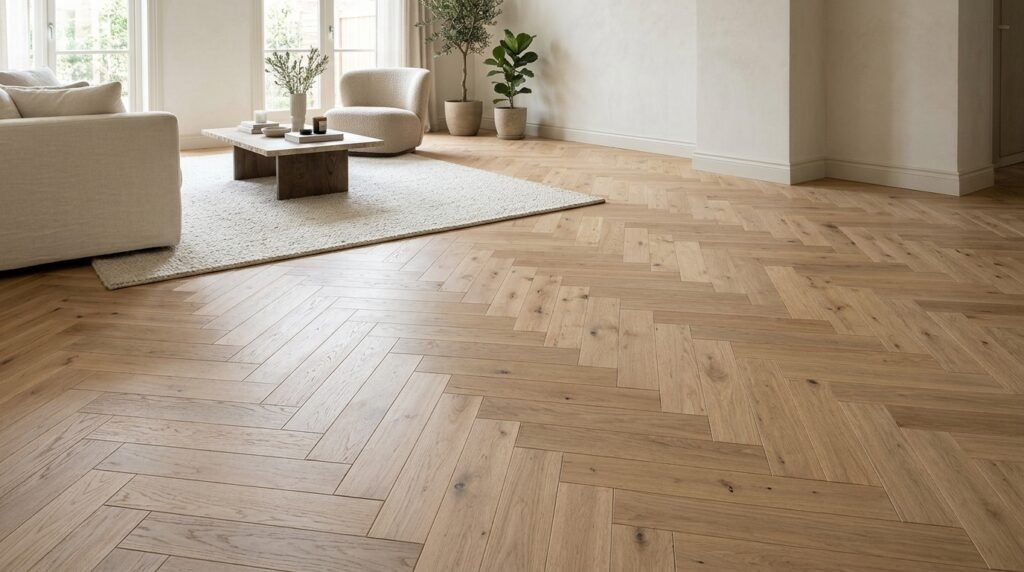
Herringbone flooring uses short rectangular boards placed in alternating directions. The repeated arrangement creates a broken zigzag across the floor. It can make a plain room feel more detailed without adding several colors or decorative objects. The direction of the pattern also affects how the floor is viewed. A layout that runs toward a doorway or focal point may draw the eye through the room. A layout across the width can make the floor feel more visually broad, depending on the room’s shape and lighting. The pattern does not physically change the room’s dimensions, so it should not be treated as a guaranteed way to make a small space look larger. Board size matters too. Short, narrow pieces create more joints and a busier surface. Longer or wider pieces produce a larger-scale design with fewer visual interruptions. Wood grain, color variation, finish, and natural light also influence the final appearance. Before choosing a floor, it helps to view a sample in the actual room rather than relying only on a small showroom display.
Common Materials for Herringbone Flooring
Wood is a familiar choice because its grain and natural color variation work well with repeated geometric lines. Solid wood and engineered wood products may both be available in herringbone formats, but they are not interchangeable in every installation. Their construction, moisture response, subfloor requirements, and installation methods can differ. The product instructions should guide the choice. Ceramic and porcelain tiles offer another option. They can provide a similar layout in kitchens, bathrooms, entryways, and other areas where tile is suitable. Natural stone can create a more varied surface because each piece may have its own markings and color changes. Laminate and some vinyl flooring products also come in herringbone designs. These may use printed or embossed surfaces to create the look of individual boards. Their performance depends on the product’s construction and installation requirements, not simply on the pattern. The best material is the one suited to the room’s moisture, traffic, cleaning needs, subfloor, and budget.
Herringbone Tile in Kitchens and Bathrooms
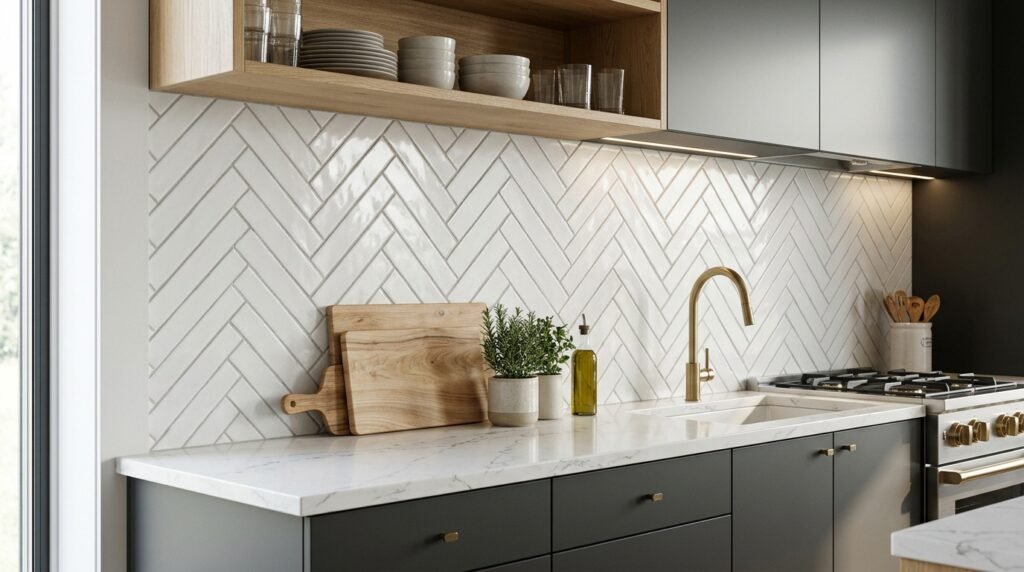
Tile can bring a herringbone layout to walls and floors. On a kitchen backsplash, narrow rectangular tiles can create movement behind a worktop without requiring a complex color scheme. A single-color design often keeps the surface calm, while contrasting grout makes each piece more visible. In bathrooms, the pattern may appear on shower walls, feature walls, or floors when the selected tile is suitable for that use. Floor tiles must have appropriate slip resistance for the intended location. A decorative wall tile should not automatically be assumed safe for a wet floor. Tile size also changes the appearance. Small pieces create more grout lines and a detailed surface, while larger pieces produce a more open pattern. Grout color can either blend with the tile or emphasize its outline. Before installation, consider how the layout will meet corners, edges, niches, drains, and fixtures. These areas often need careful cuts. A balanced design should look intentional at the boundaries, not only in the center of the wall.
Herringbone Brickwork and Outdoor Paving
A herringbone arrangement can also be used with bricks, pavers, and other rectangular masonry units. It is often selected for paths, patios, courtyards, and other paved areas because the repeated arrangement creates a clear visual structure. In paving, the direction of the units can influence how the surface looks and how the layout fits its boundaries. The pattern itself does not guarantee that a paved area will remain stable. Base preparation, drainage, edge restraint, joint material, and the suitability of the pavers are all important. The installation method should match the product and the site conditions. Outdoor surfaces also face rain, temperature changes, soil movement, and regular foot traffic. A poorly prepared base can lead to movement or uneven areas regardless of the pattern. Herringbone brickwork is therefore a design choice as well as a layout that needs sound construction. For driveways or areas carrying vehicles, the paving system must be suitable for that level of load.
Herringbone Fabric and Clothing
In textiles, herringbone describes a woven design with diagonal lines that reverse direction at regular intervals. This creates the familiar broken zigzag appearance. It is often associated with tweed, wool fabrics, jackets, coats, suits, and trousers. The pattern can be made with contrasting yarn colors or with similar shades that create a quieter texture. From a distance, a fine weave may look almost like a solid fabric. Up close, the diagonal structure becomes easier to see. Herringbone fabric is not defined by one fiber. It can be made from wool, cotton, synthetic fibers, or blends, depending on the intended garment and textile. The fabric’s weight, softness, warmth, durability, and care needs depend on its fiber content and construction. A wool herringbone coat, for example, will not behave exactly like a lightweight cotton shirt. When buying clothing, the pattern alone does not tell you how warm or durable the garment will be. Check the fabric label and construction as well.
Herringbone Weave and Broken Twill
The textile version is connected to twill weaving. In a twill weave, the threads form diagonal lines across the fabric. In a herringbone weave, the direction of those diagonal lines reverses at intervals. This creates a series of angled sections that resemble the familiar fishbone arrangement. The change in direction gives the cloth a textured appearance, even when the yarn colors are close. Herringbone is often described as a type of broken or reversed twill, although textile terminology can vary with the weave structure. It is useful to distinguish the woven structure from a printed design. A fabric may have a herringbone image printed onto its surface without being woven in that structure. Looking closely at the threads can help identify a true woven pattern. This distinction matters when texture, drape, and fabric construction are important to a garment or furnishing.
Herringbone Wallpaper and Decorative Details
Wallpaper can use the design to add structure to a room without introducing a large illustration or bold motif. Some versions show narrow lines, while others imitate wood, tile, fabric, or painted strokes. A subtle pattern in similar shades can work as a background, while a high-contrast design may become the main feature of a wall. The scale should suit the room and the viewing distance. Very small repeated shapes may look busy across a large wall, while oversized shapes may dominate a compact space. Herringbone can also appear in cushions, throws, rugs, curtains, cabinet details, and decorative panels. Using it in several places can create a connected look, but repeating the same pattern everywhere may make a room feel crowded. One main surface with a few smaller references is often easier to balance. The surrounding colors and textures should give the eye somewhere to rest.
Herringbone vs. Chevron: What Is the Difference?
Herringbone and chevron are often confused because both create a repeated zigzag or V-shaped appearance. The main difference is how the pieces meet. In a traditional herringbone layout, rectangular pieces have square-cut ends and meet at right angles. Their connections create staggered L-shaped joints. In a chevron layout, the ends of the pieces are cut at matching angles so they meet point to point. This creates a continuous line of Vs. Looking closely at the joints is the easiest way to tell them apart. Herringbone has a broken, staggered effect, while chevron has a more continuous and aligned effect. Both can be used in wood flooring, tiles, fabrics, and other decorative surfaces. The choice depends on the appearance desired and the material available. Installation requirements also vary by product. Chevron pieces need accurately matched angled ends, while herringbone layouts need careful right-angle alignment. Neither pattern is automatically better for every room.
Herringbone vs. Basket Weave
Basket weave is another pattern that can be mistaken for herringbone, especially when both use small rectangular pieces. In a basket-weave arrangement, pieces are grouped to resemble the over-and-under appearance of woven material. The groups often form square or rectangular blocks that alternate direction. Herringbone instead relies on individual rectangular pieces placed at right angles in a continuous staggered sequence. The difference becomes clear when you look at how each group repeats. Basket weave often creates a block-like surface, while herringbone creates a flowing zigzag. Both designs can be used in flooring, tile, and other decorative work. Basket weave may suit a layout that needs a more compact, woven appearance. Herringbone may be a better choice when a directional pattern is preferred. The scale and material can change how strong these differences appear, so samples are useful when comparing options.
Different Herringbone Layouts and Styles
The traditional arrangement is only one way to use the pattern. The width and length of each piece, the overall direction, and the amount of contrast can create very different results. Narrow pieces make the repeated joints more noticeable and can create a detailed surface. Wider pieces make the pattern feel larger and less busy. Some designs use long boards for an open appearance, while smaller blocks create a compact arrangement. The layout may run parallel to a room’s main axis or at an angle, depending on the product and design plan. Color also matters. A consistent tone gives the pattern a quiet texture, while alternating shades make the zigzag more visible. Some materials have natural variation, so the finished surface may look less uniform than a digital layout. The most suitable style depends on the size of the area, surrounding finishes, furniture, and how much visual detail the room can comfortably support.
How to Choose the Right Herringbone Pattern for a Room
Start by considering the room’s purpose and the material’s practical requirements. A kitchen floor may need a surface that is easy to clean and suitable for regular spills. A bedroom may allow more focus on warmth, texture, and appearance. A bathroom needs materials designed for wet conditions, with particular care given to floor safety. Next, consider the size of the pattern. Small pieces create more joints and a finer visual rhythm. Larger pieces can look calmer in an open room. Think about the direction as well. A long hallway may benefit from a layout that guides the eye along its length, while a square room may call for a centered arrangement. Check the color against cabinets, wall paint, furniture, and natural light. A sample viewed at home can look different from one seen under store lighting. Also consider whether the pattern will continue into nearby rooms. A transition between different floor layouts should look planned rather than accidental.
Planning a Herringbone Floor Installation
A herringbone floor needs more layout planning than a simple row of parallel boards. The installer must establish accurate reference lines and confirm the pattern’s center before laying the full area. The first pieces guide the direction of the remaining floor. If the starting section is out of square, the error can become more visible as the installation grows. Professional flooring guidance recommends checking the layout with reference lines and dry-laying a small section before installation. Some products are supplied as separate left- and right-hand pieces because the pattern is directional. Others use a universal design with a different connection system. These details affect how the boards fit together. The flooring manufacturer’s instructions should be followed for adhesive, fastening, expansion space, subfloor preparation, and installation conditions. The room’s dimensions and the pattern’s position should also be checked near doorways and walls. A centered layout may create balanced cuts at opposite sides, while a focal-point layout may prioritize a doorway or fireplace.
Why Installation Accuracy Matters
The pattern depends on repeated right angles and consistent joints. Small alignment errors can become more noticeable across a large area. A row may begin correctly but drift if the pieces are not checked as work continues. Gaps, uneven joints, and poorly aligned edges can interrupt the visual rhythm. Flooring pieces may also move during installation if the fastening or adhesive method is unsuitable. The National Wood Flooring Association’s installation guidance warns that certain fastening impacts can push pieces out of position. It also emphasizes accurate layout lines and checking the pattern as installation progresses. This is one reason herringbone flooring can require more labor than a straight plank layout. It is not simply a matter of placing boards in alternating directions. The installer must manage the starting point, alignment, material variation, and edge cuts. For a large or expensive floor, a qualified installer familiar with patterned flooring can reduce the risk of costly layout errors.
Common Mistakes When Using the Pattern
One common mistake is choosing a pattern sample without considering its scale in the full room. A small sample may look calm, but a large installation can create much more visual movement. Another mistake is selecting a high-contrast grout or board color without considering nearby surfaces. Strong contrast can make every joint stand out, which may be more detail than the room needs. Installation errors are another concern. Starting without clear reference lines can lead to uneven rows or awkward cuts at the edges. In flooring, failing to check whether left- and right-hand pieces are required can also cause problems. For tiles, ignoring the position of drains, corners, and fixtures may leave narrow or uneven cuts in visible areas. For outdoor paving, focusing only on the decorative arrangement while overlooking the base and drainage can affect long-term performance. A good plan considers the whole surface, including its boundaries and practical use.
Cleaning and Maintaining Herringbone Surfaces
Care depends on the material, finish, and location rather than the pattern alone. Wood floors should be cleaned according to the flooring manufacturer’s instructions. Excess water can damage some wood flooring systems, so wet mopping should not be assumed safe. Use cleaning products approved for the finish and avoid harsh methods that may dull or damage the surface. Tile care depends on the tile type and grout. Regular cleaning helps prevent dirt from collecting in the joints, and some grout types may need specific care. Natural stone may require products suitable for that stone. Fabric maintenance depends on the fiber and garment label. A wool coat and a cotton cushion cover may need very different cleaning methods. Outdoor paving should be checked for loose units, weed growth, drainage issues, and damaged joints. The key is to care for the material correctly. A herringbone arrangement does not require one universal cleaning method.
Is Herringbone Suitable for Small Rooms?
It can work in a small room, but the scale and contrast need careful thought. A fine pattern with many visible joints may create a busy effect, especially when the room already contains detailed furniture or strong colors. A larger pattern with a calm, consistent finish may feel more balanced. The direction can also influence how the space is viewed. A layout that leads the eye toward a window or doorway may create a sense of movement, but it does not increase the room’s actual size. Lighting plays a part too. Natural light can highlight the grain or texture of the pieces, while low light may make a dark, high-contrast pattern feel heavier. Before making a final choice, view a larger sample or a room-scale layout if available. This helps show how the pattern will interact with the walls, furniture, and light.
Is Herringbone a Timeless Design Choice?
The pattern has remained recognizable across different materials and design styles. Its geometric structure can look traditional in dark wood, understated in pale oak, or modern in simple ceramic tile. This flexibility helps explain its continued use in interiors and textiles. However, a pattern does not suit every room or personal style. A bold, high-contrast version may feel more tied to a particular design trend than a simple natural finish. The long-term appeal often depends on the material, color, scale, and quality of installation. A restrained design is generally easier to coordinate with changing furniture and decor. That does not mean every room needs a neutral floor. It means the choice should work with the room’s overall character rather than compete with every other feature. A well-planned herringbone pattern can provide detail without relying on temporary decorative trends.
Frequently Asked Questions
What does a herringbone pattern look like?
A herringbone pattern looks like a repeated series of broken zigzags or V-shaped lines. It is made from rectangular pieces placed at right angles, with each piece meeting the next in a staggered arrangement. The result resembles the bones along a fish’s spine.
Is a herringbone pattern the same as a chevron pattern?
No. Herringbone uses rectangular pieces that meet at right angles, creating staggered joints. Chevron uses angled ends that meet point to point, forming a continuous V-shaped line. The joint shape is the easiest way to identify the difference.
Is herringbone only used for wooden floors?
No. It is also used in ceramic and porcelain tiles, natural stone, brick paving, woven fabrics, clothing, wallpaper, rugs, and decorative details. The material changes the texture and appearance, but the repeated arrangement remains recognizable.
Does a herringbone pattern make a room look bigger?
It can guide the eye and create a sense of movement, but it does not physically make a room larger. The result depends on the pattern’s scale, direction, color, lighting, and surrounding decor. A low-contrast design may feel calmer in a small space.
Is herringbone flooring harder to install than straight flooring?
It often requires more careful planning because the boards must meet at consistent right angles and follow accurate reference lines. The starting layout is especially important. Product design, installation method, and room shape can affect the amount of work involved.
Can the herringbone pattern be used in a bathroom?
Yes, it can be used on bathroom walls and floors when the selected material is suitable for that location. Floor tiles must be appropriate for wet areas and provide suitable slip resistance. Installation details, grout, waterproofing, and product instructions also matter.
Conclusion
A herringbone pattern is a versatile design made by arranging rectangular pieces at right angles in a repeated, staggered sequence. Its recognizable shape appears in flooring, tiles, brickwork, fabrics, clothing, and home decor. The most useful distinction is between herringbone and chevron: herringbone has staggered joints, while chevron pieces meet at angled ends to form continuous points. For home projects, the right choice depends on material, room conditions, pattern scale, color, and installation quality. Samples and careful layout planning can help prevent an attractive design from becoming overwhelming or poorly fitted. When the material suits the space and the pattern is installed accurately, it can add lasting structure and texture without relying on complicated decoration.