Small furniture can make a surprisingly big difference in a home. A c table is a great example. This compact table has a simple shape that allows its base to slide under a sofa, chair, or bed. The tabletop then sits close to you without taking up much floor space. You can use it for a drink, book, laptop, snack, remote, or other small items. Its practical design makes it useful in apartments, bedrooms, living rooms, and home offices. However, not every model works equally well in every space. Height, base size, tabletop shape, weight, stability, and material all matter. A table that looks perfect online may not fit beneath your sofa. It may also be too low or unstable for your needs. This guide explains how these tables work, where to use them, what materials to consider, and how to choose one that fits your home.
What Is a C Table?
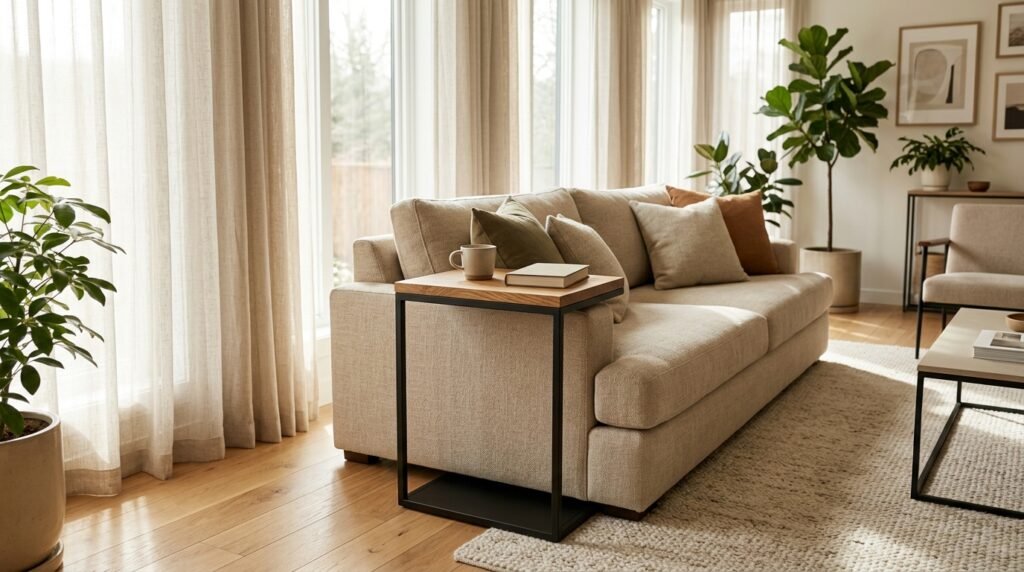
A c table is a small side table with a frame shaped roughly like the letter C when viewed from the side. The lower part of the frame can slide beneath certain sofas, beds, and chairs. The top extends over or beside the seating area. This design brings the tabletop closer than a traditional end table. Many versions have a metal frame with a wood, glass, stone, or engineered tabletop. Others are made almost entirely from wood or metal. Sizes and designs vary, so the “C” shape is more important than one exact measurement. These tables are sometimes called C-shaped side tables, sofa tables, snack tables, or laptop side tables. They should not be confused with larger console tables that sit behind a sofa. Their main advantage is compact, flexible surface space that can move closer to where you are sitting.
Why Are C Tables So Popular?
Modern homes often need furniture that can perform more than one job. A compact side table fits that need well. It can hold coffee in the morning, support a laptop for a short task, and become a snack table during a movie. When you finish using it, many designs can be moved beside the sofa or into a corner. This flexibility is especially useful in apartments and smaller living rooms. The simple design also works with many decorating styles. Metal and glass can feel modern, while wood can create a warmer look. Marble-style surfaces may add a more polished appearance. Another reason these tables are popular is convenience. Instead of leaning forward toward a distant coffee table, you can keep small items within easy reach. However, convenience depends on selecting the correct height and base dimensions for your furniture.
How Does a C-Shaped Table Work?
The design works by separating the base and tabletop vertically. A flat or narrow lower frame rests on the floor. A vertical support rises from one side and connects to the top. This leaves the opposite side mostly open. You can slide the lower section under compatible furniture while the tabletop moves over the seat or arm area. The concept is simple, but dimensions are critical. A thick sofa base may leave too little space underneath. Some sofas sit directly on the floor, making it impossible to slide anything below them. Recliners also require extra caution because moving parts can strike nearby furniture. Before buying a c table, inspect the underside of your sofa or chair. Measure both the available clearance and how far the base can safely slide inward. Good measurements prevent a useful idea from becoming an awkward piece of furniture.
Benefits of Using a C Table
The biggest benefit is easy access. You can place a drink, phone, remote, or book close to your seat without adding a large table. The small footprint can also help reduce visual clutter in compact rooms. Many models are light enough to move from one location to another, giving one piece of furniture several possible uses. A side table can serve beside a sofa during the day and move next to a bed at night. Some people also use one as a temporary laptop surface. Another benefit is flexibility when entertaining. You can provide guests with individual surfaces for drinks without filling the room with large furniture. Still, these tables have limits. Their narrow bases and offset tops can make some designs less stable than traditional four-legged tables. Weight limits and intended use should always be respected.
Measuring Your Sofa Before Buying
Measurement is one of the most important steps before buying. Start by measuring the height from the floor to the top of the sofa seat and arm. Then measure the open space beneath the sofa. You need enough clearance for the table’s lower base. Also check how deep the base can slide before it hits a sofa leg, support, or internal frame. Next, think about where you want the tabletop to sit. If it will extend over the seat, make sure there is enough room for your legs. If it will rest above the sofa arm, compare the tabletop height with the arm height. Product photographs can make furniture look smaller or larger than it really is. Always use listed measurements. A few minutes with a tape measure can prevent an inconvenient return and help you find a table that feels natural beside your seating.
Choosing the Right Height
A useful c table should place the surface at a comfortable height for its intended purpose. If you mainly want a place for coffee or a remote, a top near the sofa arm may work well. If you plan to use a laptop occasionally, the relationship between seat height, tabletop height, and your body position becomes more important. A table that is too low can encourage bending forward. One that is too high may raise your shoulders and wrists. Keep in mind that a small side table is not automatically an ergonomic desk. Long work sessions usually require a proper desk and supportive chair. Some models have adjustable heights, which can add flexibility. However, adjustable parts should lock securely. Check product measurements carefully and compare them with your actual seating position rather than assuming a table marked “sofa height” will suit every sofa.
Choosing the Right Tabletop Size
A larger top gives you more usable space, but it also changes the balance of the table. Think about what you actually plan to place on it. A small top may be enough for a mug, phone, and remote. A laptop requires more room, while snacks may need space for a plate and drink. Avoid choosing an oversized top simply because it seems more useful. A wide surface can become awkward beside a narrow chair and may extend too far over a seat. It may also encourage people to load the table with more weight than intended. Check the product’s weight limit before placing heavy items on it. Rounded corners can be helpful in tight walkways, while rectangular tops may offer more usable surface area. The best size gives you enough room without making movement around the sofa difficult.
Wood C Tables
Wood creates a warm, familiar look that works in many homes. Oak, walnut, ash, and other woods can provide beautiful natural grain. Some products use solid wood, while others use veneer or engineered wood with a wood-look finish. These materials differ in price, weight, durability, and maintenance. Read specifications carefully if solid wood matters to you. A wooden c table can work especially well with neutral sofas, woven rugs, plants, and other natural materials. However, wood still needs protection from moisture, heat, and scratches. Use a coaster under drinks and clean spills promptly. Care instructions depend on the finish, so follow the manufacturer’s guidance. Avoid soaking wooden surfaces during cleaning. If you already have several wood tones in your room, the new table does not need to match them perfectly. Similar warmth or undertones can often create a more natural, layered interior.
Metal C Tables
Metal is commonly used for the frame because it can provide strength without creating a bulky appearance. Steel frames can be thin and visually light while still supporting a useful tabletop. Some tables are made almost entirely from metal, creating a clean industrial or modern look. Finishes may include black, white, brass-like, chrome-like, or other coated surfaces. When choosing metal furniture, inspect how the frame connects to the top and base. Welds, screws, and joints affect stability. Protective floor pads are also helpful, especially on hardwood or tile. Metal edges should be smooth and properly finished. If the table will be used in a humid area, check whether the finish is suitable for those conditions. Rust resistance depends on the material and coating. A strong metal frame can be practical, but construction quality matters more than appearance alone.
Glass C Tables
Glass can make small furniture feel visually lighter because you can see through the surface. This may help a compact living room feel less crowded. Glass also pairs easily with metal frames and modern interiors. If you are considering a glass table, check what type of glass is used and follow the manufacturer’s safety guidance. Tempered glass is commonly used in furniture because of the way it is designed to behave if broken, but specifications vary between products. Glass shows fingerprints, dust, and water spots easily, so it may need frequent wiping. Avoid placing more weight on the surface than the manufacturer allows. Families with young children may also want to consider the shape of the corners and overall stability. A glass table can look elegant and airy, but it should be chosen for practical reasons as well as appearance.
Marble and Stone-Top C Tables
Stone can make a small table feel more substantial and decorative. Marble, granite, travertine, and engineered stone may appear in side-table designs. Marble-look porcelain and printed surfaces are also common. Always check the product description because a marble appearance does not necessarily mean natural marble. Real stone can be heavy, which may improve the feeling of stability but make the table harder to move. Natural marble can also stain or etch when exposed to certain liquids and acidic foods. A stone-top c table may work well in a modern or classic living room, especially when paired with a simple metal frame. If you choose natural stone, follow the correct cleaning and sealing advice for that material. For easier maintenance, a marble-look surface may provide a similar visual effect with different care requirements.
C Tables for Small Living Rooms
Small living rooms benefit from furniture that uses space carefully. A traditional coffee table can take up valuable floor area between the sofa and television. A compact C-shaped table may provide enough surface for everyday needs while leaving more open space for walking. It can also move when guests arrive or when you need additional floor space. Choose a slim design with proportions that match your sofa. Light visual materials, such as thin metal frames or glass tops, can help the room feel less crowded. However, do not sacrifice stability just to get the thinnest possible design. If the room has narrow walkways, rounded corners can reduce uncomfortable bumps. Think about storage too. Some tables include a small shelf or pocket, but added features increase size. In a truly compact room, a simple design may be the most useful choice.
Using a C Table Beside a Sofa
The sofa is the most common place to use this style of table. Slide the base underneath the sofa if there is enough safe clearance. The top can then sit over the arm or close to the seat. This setup keeps a drink, phone, book, or remote within easy reach. It can be particularly useful when the sofa is too far from a central coffee table. Before sliding furniture underneath, make sure there are no moving mechanisms, electrical parts, or low supports that could be damaged. Reclining sofas require special attention because their moving sections need clear space. Never place the table where it can become trapped by a recliner mechanism. If the sofa has no floor clearance, the table can still sit beside it like a traditional end table, provided its height and base design work in that position.
Using a C Table With an Armchair
An armchair can become a comfortable reading corner with a small table beside it. Place a lamp nearby, add a book, and keep a drink within reach. The table can slide close to the chair without requiring the floor area of a large end table. This setup works well in bedrooms, living rooms, libraries, and quiet corners. Measure the armchair carefully because some chairs have wide bases that block the lower frame. Swivel chairs need enough clearance to rotate safely. Recliners also require open space around moving parts. A c table should never interfere with the chair’s normal movement. If the table is very light, make sure it will not tip easily when bumped. The goal is to create a useful surface that improves comfort without making the seating area feel crowded or creating a tripping hazard.
Using a C Table as a Laptop Table
Many people use small sofa tables for short laptop sessions. The design can bring the screen and keyboard closer than a coffee table. This can be convenient for checking email, watching a video, or completing a brief task. However, comfort should come before convenience. A side table may not place your laptop at the ideal height for long periods. Poor posture can lead to discomfort in your neck, back, shoulders, or wrists. If you regularly work from home, a proper desk and supportive chair are usually better. For occasional laptop use, choose a stable table with enough surface area and a secure base. Keep charging cables out of walkways. Do not exceed the manufacturer’s weight limit. Also make sure ventilation openings on the laptop are not blocked by soft materials or other objects during use.
Using a C Table as a Snack Table
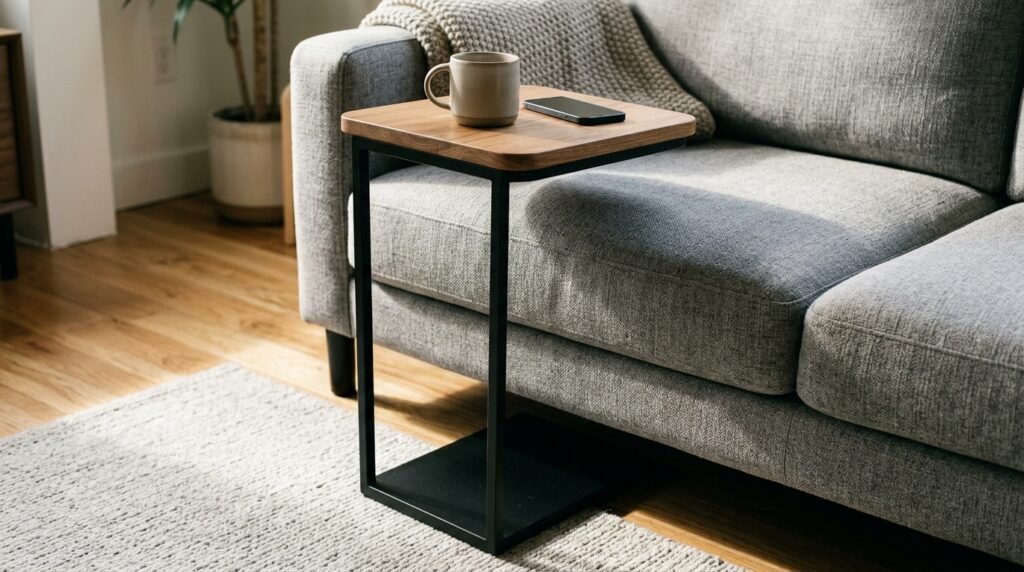
Movie nights, sports events, and casual evenings often involve snacks. A compact table can hold a plate and drink close to the sofa without requiring you to lean toward a coffee table. Choose a surface that is easy to clean and large enough for your usual items. Coasters and placemats can protect wood, stone, and other finishes from spills or heat. Avoid placing very hot cookware directly on a tabletop unless the manufacturer says the material can handle it. A c table should also remain stable when items are placed toward its outer edge. If the design feels wobbly, keep drinks closer to the supported side. Families with children or pets may prefer a heavier, wider base to reduce accidental tipping. The table should make snacking easier without turning a small spill into a larger problem.
Using a C Table in the Bedroom
This table style is not limited to living rooms. It can also work beside a bed, especially where there is little room for a traditional nightstand. Depending on height, it can hold a phone, book, water glass, or small lamp. Some models can slide partly beneath a bed frame, bringing the surface closer. Measure under-bed clearance first because storage drawers and low bed frames may prevent this. If you plan to use a lamp, make sure the tabletop is stable and the electrical cord can reach an outlet without crossing a walkway. Avoid overloading a small table with heavy books or large decorative objects. A bedroom setup should remain simple and safe. In guest rooms, this flexible furniture can be particularly useful because it can serve beside the bed or move to a chair when visitors need another surface.
Using a C Table in a Home Office
A home office often collects small items that do not need permanent desk space. A side table can hold a notebook, drink, headphones, or temporary paperwork. It can also sit beside a reading chair for reviewing documents away from the main desk. This makes it a useful supporting piece rather than a replacement for a workstation. Choose a stable surface if you plan to place electronics on it. Cable management also matters. Charging cords should not stretch across the floor where someone could trip. If the office is small, select a table that can tuck beside furniture when not needed. Wheels may seem useful, but rolling tables should have reliable locking mechanisms if electronics or drinks will sit on them. A simple movable surface can improve flexibility without adding a large cabinet or second desk.
C Tables for Apartments
Apartment furniture often needs to be compact, flexible, and easy to move. A c table meets many of these needs. It can serve as an end table, snack table, temporary work surface, or bedside table. When floor space is limited, one flexible piece may be more practical than several single-purpose tables. Before buying, consider the entire apartment rather than only the sofa area. Could the table move into the bedroom when guests visit? Could it serve beside an extra chair? Lightweight models offer easier movement, while heavier ones may provide greater stability. If you rent, floor protection is also important. Look for smooth feet or protective pads that will not scratch flooring. Avoid designs with sharp edges in narrow pathways. Good apartment furniture should make the space easier to use, not simply fill an empty corner.
Adjustable C Tables
Some models allow the tabletop height to move up or down. Others may include tilting surfaces or rotating tops. Adjustable designs can be useful when different people share the table or when it serves several purposes. However, moving parts create additional points that can loosen or wear. Check how the adjustment mechanism locks and whether it feels stable at different heights. Follow the manufacturer’s assembly and weight instructions. A table should not slowly drop while holding a laptop or drink. Tilting tops require extra care because objects can slide when the angle changes. If you only need a surface for coffee and books, a fixed model may be simpler and more stable. Adjustable features are most valuable when you will actually use them. Avoid paying extra for mechanisms that add complexity without improving your daily routine.
C Tables With Storage
Some side tables include shelves, magazine holders, drawers, or pockets. Storage can be useful in a small room because it gives remotes, books, chargers, and other items a defined place. However, every storage feature changes the table’s shape. A lower shelf may prevent the base from sliding under a sofa. A drawer can add weight and make the top thicker. Side pockets may increase width. Before choosing a storage model, decide whether storage or sliding ability matters more. Measure your furniture carefully and compare those measurements with the entire product, not just the tabletop. Avoid filling small shelves with heavy items unless they are designed to support the weight. A simple c table may actually be more useful when its main purpose is mobility. Extra features are worthwhile only when they solve a real problem in your room.
How to Style a C Table
Small furniture looks best when it remains functional. Avoid covering the entire surface with decorations. A small vase, candle, or decorative bowl may be enough when the table is not in active use. If you use it daily for drinks and books, leaving most of the surface open makes more sense. Match the style loosely with the rest of the room rather than trying to copy every finish. A black metal frame can connect with black lighting fixtures. A wood top can bring warmth to a neutral sofa. Brass-like finishes can add a polished detail, while glass can keep the room visually light. Plants can work too, but choose a stable pot and protect the tabletop from water. Styling should never make the table harder to use. Its small size means every object placed on top has a strong visual impact.
Matching a C Table With Your Interior Style
The simple shape makes this furniture easy to use in many interiors. For a modern room, try a thin black or chrome-like metal frame with a simple top. Scandinavian-inspired spaces may suit pale wood and clean lines. Industrial rooms can work well with dark steel and rustic wood. A marble or marble-look top can add a more elegant feel to modern-classic interiors. In a warm organic room, natural wood, stone, and softer shapes may fit better. Color matters, but material and proportion are equally important. A delicate table can look lost beside a huge sectional sofa, while a thick table may overpower a small chair. Look at the room as a whole. The best side table supports the existing furniture without demanding all the attention. Simple coordination often looks more natural than perfectly matching furniture sets.
Stability and Safety Matter
Because the top extends away from the vertical support, stability is especially important. A poorly designed table can tip if too much weight is placed on the unsupported edge. Look for a broad, sturdy base and solid connections between the frame and tabletop. Follow the manufacturer’s weight limit. Do not sit, stand, or allow children to climb on the table. Keep heavy objects near the supported area when possible. Uneven floors can also create wobbling, so adjustable feet may be useful. A c table placed in a busy walkway should be easy to see and should not create a tripping hazard. Rounded edges may be preferable in homes with young children. If the table is damaged, loose, or leaning, stop using it until the problem is repaired. Small furniture still needs the same safety attention as larger pieces.
Cleaning and Maintaining Your Table
Cleaning depends on the material. Wood usually benefits from gentle dusting and a slightly damp cloth, followed by drying. Glass may need a suitable glass cleaner and soft cloth. Metal frames can usually be wiped gently, but care varies by finish. Natural marble and other stones need products that are safe for their specific surfaces. Avoid assuming one multipurpose cleaner is suitable for everything. Check the manufacturer’s care instructions first. Wipe spills promptly and use coasters to protect sensitive tops. Tighten loose screws when needed, following assembly instructions. Check floor pads because worn or missing pads can scratch hard flooring. If the table moves frequently, inspect joints occasionally for looseness. Simple maintenance can extend the life of the furniture and help prevent wobbling. Caring for the table is usually easier when spills and small problems are handled early.
What to Check Before Buying
Begin with measurements. Check table height, top width, top depth, base thickness, base length, and overall footprint. Compare these numbers with your sofa or chair. Next, check materials. Words such as “wood effect” or “marble effect” do not mean solid wood or natural marble. Read the full specifications. Look at the product’s weight and maximum recommended load. Consider whether you want a table that is easy to move or one that feels heavier and more stable. Check assembly requirements and read care instructions before purchasing. If shopping online, study customer photos when available because they may show scale better than staged product images. Review the return policy too. Furniture can be expensive to ship back. A careful comparison of dimensions and materials can save more trouble than choosing based on appearance alone.
Common Mistakes to Avoid
The most common mistake is buying based only on a product photo. Without measurements, the base may not fit beneath your sofa or the tabletop may sit at an uncomfortable height. Another mistake is treating the table like a full desk. A small offset design may not support heavy equipment or provide good ergonomics for long work sessions. People also sometimes ignore stability because the furniture looks lightweight and stylish. Always check construction and weight limits. Avoid placing a c table where it can interfere with a recliner, door, or busy walkway. Another mistake is choosing delicate materials without considering daily habits. A household with frequent spills may need an easier-care surface. Finally, avoid buying extra features simply because they seem clever. Adjustable tops, wheels, and storage are helpful only when they improve how you actually use the room.
Frequently Asked Questions
What is a C table used for?
A C-shaped side table is designed to provide a small surface close to a sofa, chair, or bed. Its lower frame can often slide beneath furniture, while the tabletop extends closer to the user. People commonly use it for drinks, snacks, books, phones, remotes, and occasional laptop tasks. It can also work as a bedside or accent table. The exact use depends on the table’s size, stability, and weight limit. Always follow the manufacturer’s instructions and avoid placing more weight on the surface than the design can safely support.
Can I use a C table for a laptop?
Yes, some models can support a laptop for short periods if the top is large and stable enough. Check the manufacturer’s weight limit before use. Also consider height and posture. A sofa and small side table may not create an ergonomic position for long work sessions. If you regularly work for several hours, a proper desk and supportive chair are usually better. For occasional browsing, email, or watching videos, a stable side table can be convenient. Keep charging cables away from walkways and make sure laptop ventilation is not blocked.
Will a C table fit under any sofa?
No. Sofas have different floor clearances, legs, frames, and mechanisms. Some sit almost directly on the floor, leaving no room for a table base. Others have supports underneath that limit how far the base can slide. Reclining sofas can also have moving parts that require clear space. Measure the opening beneath your sofa and compare it with the table’s base thickness and length. Check the height of the tabletop too. Accurate measurements are the best way to know whether a particular model will work with your furniture.
Are C-shaped tables stable?
A well-designed table can be stable for its intended uses, but the open-sided shape means balance is important. Stability depends on base width, frame strength, tabletop size, construction, and weight distribution. Avoid placing excessive weight near the unsupported edge. Never sit or stand on the table. If children or pets frequently bump furniture, a wider or heavier base may be a better choice. Follow the manufacturer’s weight limit and assembly instructions. A table that rocks, leans, or has loose connections should be repaired before continued use.
What material is best for a C table?
There is no single best material. Wood provides warmth and works with many interiors. Metal is often used for strong, slim frames. Glass can make a room feel visually open, while natural stone can create a more luxurious appearance. Engineered and marble-look surfaces may offer easier maintenance at different price points. Think about cleaning, weight, durability, children, pets, and your decorating style. Construction quality matters as much as material. A well-built simple table can be more useful than an expensive model made from premium materials but designed poorly.
Is a C table good for a small apartment?
Yes, a c table can be particularly useful in a small apartment because it provides surface space without the large footprint of many traditional tables. It may serve several purposes during the day, such as an end table, snack table, temporary laptop surface, or bedside table. Choose a size that leaves walkways open and fits safely beneath or beside your furniture. Lightweight models are easier to move, while heavier models may feel more stable. The best choice balances compact dimensions, useful surface area, durability, and safe everyday use.
Conclusion
A c table is a simple piece of furniture that can solve several everyday space problems. Its open-sided design allows many models to slide beneath a sofa, chair, or bed. This keeps drinks, books, snacks, phones, and other small items within easy reach. It can be especially useful in apartments and compact living rooms where a large coffee or end table may take up too much floor space. Still, size and design matter. Measure your furniture carefully, check the base clearance, compare tabletop heights, and review weight limits before buying. Choose materials that fit both your interior style and your cleaning habits. Most importantly, use the table for the purpose it was designed to handle. With the right dimensions and stable construction, this small table can become one of the most practical pieces of furniture in your home.