A dining table is more than a place to eat. It often becomes the center of family meals, celebrations, conversations, and everyday life. A marble dining table can make this important space feel elegant without needing too much decoration. Natural marble has unique veins, soft color changes, and a smooth surface. No two natural marble slabs look exactly the same. This gives each table its own character. However, beauty is only one part of the decision. Marble is heavy, porous, and sensitive to some foods and cleaners. It can also require more care than wood or laminate. Before buying one, it helps to understand the material, sizes, shapes, finishes, bases, cleaning needs, and daily maintenance. This guide explains what really matters when choosing marble furniture. It also covers practical ways to protect the surface, arrange your dining room, and decide whether marble fits your household and lifestyle.
What Is a Marble Dining Table?
A marble dining table has a tabletop made from natural marble or, in some cases, a marble-based engineered material. Natural marble is a stone formed through geological processes involving limestone, heat, and pressure. The mineral structure creates the veining and color patterns that make marble easy to recognize. White marble with gray veins is popular, but marble can also appear in black, cream, green, brown, pink, and other shades. The table base may be made from wood, steel, stone, or another strong material. Some products marketed with a marble appearance are not solid natural marble. They may use engineered stone, porcelain, ceramic, laminate, or a thin marble layer. These materials can behave differently. Always read product specifications carefully. Knowing exactly what the tabletop contains helps you understand its weight, maintenance needs, durability, and expected appearance.
Why Marble Dining Tables Are Popular
Marble has been used in buildings, sculptures, and interior design for centuries. Its natural patterns give it a look that printed materials can imitate but never reproduce exactly. A dining table made from marble can become a strong visual feature without looking overly decorated. The stone works with many design styles, including modern, traditional, minimalist, and luxury interiors. It can also pair well with wood, metal, glass, leather, and fabric. Another reason people like marble is its cool, smooth surface. When properly maintained, quality stone furniture can remain attractive for many years. However, popularity should not be the only reason to buy it. Marble requires realistic expectations. Natural variations, small marks, and changes over time can become part of the table’s character. People who want a perfectly uniform, highly stain-resistant surface may prefer another dining table material.
Natural Marble vs. Marble-Look Materials
Not every table that looks like marble is made from a thick piece of natural stone. Manufacturers can create a similar appearance using engineered stone, porcelain, ceramic, sintered materials, laminate, or printed surfaces. These options may offer different levels of stain resistance, heat resistance, weight, and maintenance. A natural marble dining table usually has unique veining because every slab is different. Marble-look products can offer more consistent patterns and may be easier to maintain, depending on the material. Neither option is automatically better. The right choice depends on what you value. If natural variation and authentic stone matter most, real marble may be worth the additional care. If easy cleaning and predictable appearance are priorities, a marble-look surface may make more sense. Ask the seller exactly what the tabletop is made from instead of relying only on words such as “marble finish” or “marble effect.”
Choosing the Right Table Size
A beautiful table can still make a dining room uncomfortable if its size is wrong. Start by measuring the room carefully. Do not measure only the empty floor where the table will stand. You also need space for dining chairs to move backward and for people to walk around them. Doors, cabinets, sideboards, radiators, and nearby furniture can affect usable space. Marking the proposed table size on the floor with removable painter’s tape can help you understand its real footprint. Then place chairs around the marked area and imagine people sitting there. Think about your normal household size and how often guests visit. Buying an oversized table for rare events may make everyday movement difficult. An appropriately sized table usually looks more elegant because the room feels balanced. Always compare the manufacturer’s exact dimensions rather than judging size from product photographs.
How Much Space Should Be Around a Dining Table?
Comfort around the table is just as important as the tabletop itself. As a general planning idea, many rooms benefit from roughly three feet of clear space around a dining table. More room may be helpful behind chairs in busy walkways. However, every dining room is different, so treat this as a starting point rather than a strict rule. Pull a chair away from the table and check whether someone can pass behind it. Also consider doors that swing into the room. If a sideboard has drawers or cabinet doors, make sure they can open when chairs are occupied. A marble dining table is usually very heavy, so moving it repeatedly after installation is inconvenient. Planning the layout before delivery can save considerable effort. Accurate measurements also reduce the risk of discovering that a beautiful table makes your dining area feel crowded.
Round Marble Dining Tables
Round tables can create a warm and social dining experience because people face one another more directly. They can work particularly well in square dining areas and breakfast spaces. Without sharp corners, movement around a round table may also feel easier in some layouts. A central pedestal base can provide more flexible legroom than four corner legs, although base design varies. Before choosing a round table, consider its diameter and the number of chairs you want to use. Very large round tables can make it difficult to reach food placed in the center. Smaller round tables may be ideal for couples or compact families. A round marble dining table can also highlight the stone pattern because the top becomes a strong decorative shape. Pairing it with simple chairs can keep the room balanced and allow the marble itself to become the main visual feature.
Rectangular Marble Dining Tables
Rectangular tables are among the most common choices for dining rooms. Their shape works naturally in many long or rectangular spaces. They also provide a practical arrangement for larger families and dinner gatherings. A long tabletop can display marble veining beautifully, especially when the stone has bold linear patterns. Before buying, check where the legs or base sit. Some designs look impressive but reduce comfortable seating at the ends. Consider whether chairs can slide underneath without hitting supports. A rectangular table can also take up significant floor space, so accurate room measurements are essential. In open-plan homes, the shape may help define the dining zone between the kitchen and living area. If you regularly host guests, choose a size that supports your normal needs without overwhelming the room during everyday use. Good proportions matter more than simply buying the largest table available.
Oval Marble Dining Tables
An oval table offers some benefits of both round and rectangular designs. It can provide generous seating while reducing the visual weight created by sharp corners. The curved ends may improve movement through certain dining spaces. This can be useful when a rectangular table feels too rigid but a round table does not provide enough seating. Oval marble tops can look especially elegant because flowing stone veins complement the curved shape. However, seating capacity depends on the exact length, width, and base position. Do not assume every oval table will seat more people comfortably. Check manufacturer guidance and test the arrangement when possible. Also consider the surrounding room. Curved edges may create easier walking paths, but the table still needs enough clearance for chairs. An oval design works best when its proportions suit both the room and the number of people using it.
Square Marble Dining Tables
Square dining tables can suit compact square rooms and households that usually seat two to four people. Their balanced shape creates a simple, organized appearance. Each person can have a similar amount of table space, which makes conversation feel natural. Larger square tables exist, but they require considerable room and may make the center difficult to reach. A square marble dining table with a pedestal base can look modern and clean, while one with wooden legs may feel warmer and more traditional. Before buying, measure chair width as well as table width. Wide dining chairs can reduce how many people fit comfortably along each side. Think about daily use rather than squeezing in the maximum possible number of seats. Comfortable spacing makes meals more enjoyable and prevents chairs from constantly bumping into one another.
Understanding Different Marble Colors
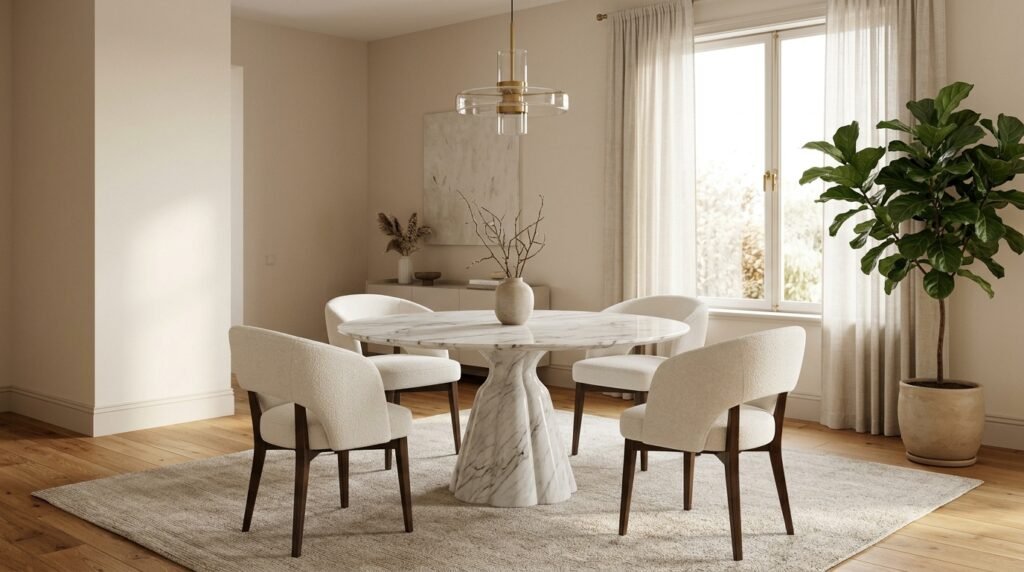
Marble is available in far more colors than classic white and gray. White marble can make a dining room feel bright and open. Black marble creates a dramatic effect and may suit modern interiors. Cream and beige stone can add warmth, while green marble creates a rich natural look. Some marble varieties include gold, brown, burgundy, or pink tones. The best color depends on the room’s flooring, walls, lighting, and furniture. Take samples into the actual space when possible because stone can look different under warm and cool lighting. Also remember that natural stone contains variation. A showroom sample cannot guarantee the exact pattern of a larger slab. If you are buying an expensive natural stone table, ask whether you can see images of the actual tabletop before purchase. Choosing the individual slab can help prevent surprises when bold veining is involved.
Why Marble Veining Matters
Veining is one of marble’s most recognizable features. These lines and cloudy patterns develop naturally as minerals change within the stone. Some marble has thin, subtle veins. Other slabs contain bold patterns that can dominate a room. Neither style is better. The choice depends on your taste and the surrounding interior. Strong veining often works best when nearby furniture and decor are relatively simple. Subtle marble can blend more quietly into a busy room. When choosing a marble dining table, remember that natural veining is not a defect. Small color changes and mineral patterns are part of real stone. However, cracks, repairs, chips, and structural problems are different from normal variation. A reputable seller should help explain which marks are natural features and which could affect performance. Viewing the actual tabletop before delivery is especially useful when appearance matters greatly to you.
Polished vs. Honed Marble
The finish changes both the appearance and feel of marble. Polished marble has a smooth, glossy surface that reflects light and makes colors appear richer. It can create a formal or luxurious look. Honed marble has a softer, more matte appearance with less reflection. Many people like its relaxed, natural character. Neither finish makes marble completely resistant to stains or acidic substances. Polished marble can show etching as dull areas when acids react with the stone. Honed surfaces can also stain and etch, though some marks may appear differently. Maintenance requirements depend on the specific stone and finish. Before choosing, ask the supplier how the surface should be cleaned, sealed, and maintained. Do not assume a glossy finish means the table is waterproof or maintenance-free. Understanding the finish helps you choose a surface that matches your expectations for daily use.
Choosing the Right Table Base
A stone tabletop needs strong support. Bases can be made from steel, iron, wood, stone, or engineered materials. Pedestal bases are popular because they create a clean appearance and can provide flexible seating. Four-leg designs may offer a more traditional look. Some tables use two wide supports beneath a rectangular top. Whatever the design, stability is essential. Marble is heavy, and a weak or poorly designed base can create a safety risk. Check the manufacturer’s assembly instructions and weight specifications. Avoid modifying the base without professional guidance. If children live in the home, stability becomes even more important because climbing or pulling on furniture can cause accidents. The base should also leave comfortable room for knees and chairs. A dramatic sculptural base may look impressive in photographs but become frustrating if diners constantly hit it with their legs.
Is a Marble Dining Table Durable?
A quality marble dining table can last for many years when handled correctly. Stone is strong, but marble is not indestructible. Edges can chip if struck by hard objects. Heavy impacts may cause damage, and acidic liquids can etch the surface. Marble is also porous to varying degrees, so spills may create stains if they remain on the surface. This combination can surprise people who assume stone must be impossible to damage. Durability should therefore be understood as long-term strength with proper care, not complete resistance to everyday accidents. Use coasters, placemats, and suitable trivets when needed. Clean spills quickly and follow the care guidance provided for your specific stone. Avoid sitting, standing, or climbing on the tabletop. With realistic expectations, marble can remain beautiful while developing a natural patina that reflects years of use.
Does Marble Stain Easily?
Natural marble can absorb liquids because it has some porosity. The amount varies between stone types and finishes. Coffee, wine, oils, sauces, and strongly colored liquids may leave marks if they remain on an unprotected surface. Sealing can reduce absorption and give you more time to clean spills, but a sealer does not make marble completely stain-proof. This distinction is important. People sometimes assume sealing creates an invisible plastic barrier, which is not usually how penetrating stone sealers work. Blot spills quickly instead of allowing them to sit. Avoid aggressive scrubbing without knowing what caused the mark. Different stains may require different treatments. If a valuable tabletop develops a serious stain, contact a stone-care professional before experimenting with harsh chemicals. Prevention is easier than repair, especially on light-colored marble where some stains can be more noticeable.
Marble and Acidic Foods
Acid is one of marble’s biggest everyday challenges. Lemon juice, vinegar, wine, tomatoes, and some soft drinks can react with calcium-based stone. This reaction can create etching, which may appear as a dull or lighter patch. Etching is different from staining. A stain involves material entering the stone, while an etch changes the surface itself. A sealed marble dining table can still etch because many sealers are designed mainly to reduce absorption, not stop chemical reactions. Use placemats, coasters, serving boards, and trays when handling acidic foods. Clean accidental spills promptly with a method recommended for marble. Avoid using vinegar-based homemade cleaners on natural marble. Although vinegar is often promoted as a general household cleaner, its acidity makes it unsuitable for many natural stone surfaces. Correct cleaning protects the finish and prevents unnecessary damage.
How to Clean a Marble Dining Table
Daily cleaning should be gentle. Remove crumbs with a soft cloth rather than dragging rough debris across the surface. For routine cleaning, use a soft damp cloth and a cleaner specifically suitable for natural marble when needed. Follow the stone supplier’s instructions because finishes and sealers can differ. Avoid acidic products, abrasive powders, rough scrubbers, and unknown multipurpose cleaners. Products containing vinegar or lemon should not be used on natural marble. After cleaning, dry the surface with a soft cloth to reduce water marks. For spills, blot rather than spreading the liquid across a larger area. If you are unsure whether a product is safe, test it in a hidden location or contact the table manufacturer. Simple care is usually better than constantly applying strong products. Marble does not need aggressive cleaning to look attractive.
Should Marble Be Sealed?
Many natural marble surfaces benefit from an appropriate penetrating sealer, but the correct schedule varies. Some tables may arrive sealed by the manufacturer. Others may need treatment before regular use. Stone type, finish, product, and daily use can all affect how often resealing is needed. Instead of following a universal yearly rule, check the manufacturer’s care instructions. A stone professional can also assess the surface. Sealers help reduce liquid absorption, but they do not make marble completely resistant to staining, scratching, or etching. You still need to wipe spills quickly and protect the table during messy meals. Avoid applying random products because incompatible treatments can change the appearance or create difficult residue. If your marble dining table is expensive or made from unusual stone, professional sealing may provide greater confidence than experimenting with an unfamiliar product.
Protecting Marble During Everyday Meals
You do not need to hide a marble table beneath a heavy cover every day. A few simple habits can provide practical protection while allowing the stone to remain visible. Use coasters beneath drinks and placemats during meals. Serving boards or trays can protect the surface from oily foods and acidic sauces. Use trivets beneath hot cookware rather than placing hot pans directly on the stone. Wipe spills promptly, especially wine, coffee, citrus juice, and tomato-based sauces. Lift heavy decorative objects rather than dragging them across the tabletop. Felt pads can protect the surface beneath vases, bowls, and other decor. These habits take only a few seconds and can prevent many common problems. Families with young children may prefer larger washable placemats during everyday meals. Protection can be practical without making the dining room feel formal or uncomfortable.
Can Marble Scratch?
Marble can develop scratches, especially when hard or gritty materials are dragged across it. Small grains of sand or dirt beneath decorative objects can act like abrasives. This is why lifting objects is safer than sliding them. Use soft protective pads beneath items that stay on the table. Avoid cutting food directly on marble. A cutting board protects both the tabletop and your knives. Some light surface marks may become part of the stone’s natural patina over time. Deeper scratches may require professional refinishing. Do not attempt to polish valuable marble using random abrasive products because they can create an uneven finish. A marble dining table used every day will naturally age, and some owners enjoy that lived-in appearance. If you want the surface to remain nearly perfect, you will need to be more careful with everyday objects and dining activities.
Styling a Marble Dining Table
Marble already has strong visual detail, so styling can stay simple. A low vase with fresh flowers, a ceramic bowl, or a small arrangement of greenery may be enough. Avoid covering bold veining with too many decorative items. Consider the colors within the stone when choosing accessories. Warm beige or gold veins can pair beautifully with wood and warm metals. Gray marble can work well with black, silver, oak, or soft neutral fabrics. Green marble may look especially attractive with natural wood and cream upholstery. Lighting matters too. A pendant light centered above the table can highlight the stone surface and define the dining area. Keep scale in mind. A tiny decoration may disappear on a large table, while an oversized arrangement can block conversation. Good styling supports the table rather than competing with it.
Choosing Dining Chairs for Marble Tables
Dining chairs can change the entire personality of a marble table. Upholstered chairs create softness against the hard stone surface. Wooden chairs can add warmth and make the room feel more relaxed. Black metal frames can create a modern contrast with white marble. Leather can produce a refined appearance, while woven materials may make the space feel casual and natural. Comfort should remain a priority. Check seat height against table height before buying. Make sure chair arms, if present, can fit beneath the tabletop where necessary. The table base must also leave enough legroom. If the marble has dramatic veining, simple chairs may create better visual balance. If the stone is subtle, chairs can provide more color or texture. You do not need to purchase a matching dining set. Mixing materials thoughtfully can make the room feel more personal.
Marble Dining Tables in Small Spaces
A marble table can work in a small dining area if the proportions are correct. A round pedestal table may be useful because it removes corner legs and can improve movement. Light-colored marble may also help a compact room feel visually brighter. However, stone furniture can look heavy when the tabletop and base are both bulky. Choose a slimmer profile when floor space is limited. Measure everything before ordering, including hallways, stairs, elevators, and door openings. Delivery can be challenging because marble is extremely heavy. In an apartment, confirm whether the delivery team can safely bring the table into the room. Avoid assuming the top can simply be tilted through a narrow doorway. Product dimensions, packaging, weight, and assembly method all matter. Planning access before purchase can prevent an expensive table from becoming an equally expensive delivery problem.
Marble Dining Tables in Open-Plan Homes
Open-plan rooms often combine the kitchen, dining area, and living room. A marble dining table can help define the dining zone without building walls or partitions. The stone creates a clear visual center, especially beneath a pendant light. To make the entire space feel connected, repeat one or two materials elsewhere. For example, gray veins in white marble may coordinate with gray kitchen details or living room textiles. A wooden table base can connect with wood cabinets or flooring. Avoid matching every item exactly because the room can feel overly planned. Instead, aim for a few repeated colors and textures. Rugs can also define the dining area, but choose a size large enough for chairs to remain on the rug when pulled back. Practical layout should always come before decoration in a busy shared space.
Is Marble Good for Homes With Children?
Marble can be used in family homes, but parents should consider daily habits and safety. Spilled juice, sauces, markers, and craft materials can create more maintenance. Protective placemats and quick cleanup can help. Sharp table corners may also be a concern for young children, making round or oval designs worth considering. Most importantly, stone tables are extremely heavy. They should be assembled correctly on a stable base and used only as intended. Children should never climb on, hang from, or pull heavily against furniture. If you expect every small mark to cause stress, natural marble may not suit a busy family dining space. A marble-look porcelain or other durable surface might provide the appearance with different maintenance needs. The best material is one that allows your household to use the dining area comfortably rather than constantly worrying about damage.
How Marble Compares With Wood
Wood and marble create very different dining experiences. Wood often feels warm, natural, and relaxed. Depending on the finish, some wooden tables can be sanded and refinished after years of wear. Marble feels cooler and often creates a more formal or architectural look. Both materials can last for years, but both require care. Wood can scratch, stain, swell, or suffer heat damage. Marble can stain, etch, chip, and scratch. Neither material is maintenance-free. The better option depends on your preferences and household habits. If you enjoy natural stone patterns and accept some patina, marble can be rewarding. If you prefer a warmer surface that may be easier to refinish, solid wood could be a stronger choice. Compare actual products rather than assuming every wood or marble table performs the same. Construction and finish quality make a major difference.
What to Check Before Buying
Before buying a marble dining table, confirm whether the top is natural marble, engineered stone, porcelain, or another material. Ask about the finish and whether the surface has already been sealed. Check the table’s total weight and delivery requirements. Measure the tabletop, base, dining room, doors, hallways, and stairs. Ask whether the table arrives assembled or in separate pieces. If natural stone is used, request photographs of the actual slab when possible. Review the warranty and understand whether natural variations are excluded from claims. Check return policies carefully because returning heavy stone furniture can be expensive. Examine the base for stability and comfortable legroom. Finally, consider your lifestyle. A table should work for everyday meals, not only look beautiful in a photograph. Practical details are what determine whether you will still enjoy the purchase years later.
Common Mistakes to Avoid
One common mistake is buying a table before measuring the room and delivery route. Another is assuming natural marble cannot stain because it is stone. People also damage marble by cleaning it with vinegar, lemon, abrasive powders, or harsh household products. Ignoring the base is another mistake. A beautiful tabletop needs stable support and comfortable legroom. Buyers may also expect the exact veining shown in a showroom sample. Natural stone varies, so each slab has its own appearance. Finally, some people choose a marble dining table based entirely on trends. Furniture of this size and cost should suit your home for many years. Choose proportions, colors, and materials you genuinely enjoy. A timeless table that fits the room is usually a better investment than a fashionable design that becomes inconvenient after the excitement of buying it disappears.
Frequently Asked Questions
Is a marble dining table good for everyday use?
Yes, marble can work for everyday dining when you understand its care needs. Use coasters, placemats, serving boards, and trivets when appropriate. Clean spills quickly, especially acidic liquids such as lemon juice, wine, and tomato-based sauces. Use cleaning products that are suitable for natural stone. Marble will not remain completely unchanged forever, and small marks may develop with regular use. Some people enjoy this natural patina, while others prefer a surface that stays more uniform. If you want very low maintenance, compare marble with porcelain or other marble-look materials before deciding.
How do I clean a marble dining table?
Use a soft cloth for routine cleaning and follow the table manufacturer’s care instructions. A cleaner specifically designed for natural stone may be used when needed. Avoid vinegar, lemon-based products, abrasive powders, rough scrubbers, and harsh unknown cleaners. Blot spills instead of spreading them. Dry the surface gently after cleaning. Because marble types, finishes, and sealers differ, one cleaning method may not suit every table. If you have a valuable or unusual stone surface, ask the manufacturer or a stone-care professional before using a new cleaning product.
Does a marble dining table need sealing?
Many natural marble surfaces benefit from a penetrating sealer, but not every table needs the same treatment schedule. Some tables arrive sealed. The type of marble, finish, existing treatment, and frequency of use can affect when resealing is needed. Follow manufacturer guidance rather than automatically applying a product every few months. A sealer can reduce liquid absorption but cannot make marble completely stain-proof or stop acidic foods from etching the surface. Good daily habits remain important even after sealing.
Is marble better than wood for a dining table?
Neither material is better for every household. Marble provides natural stone patterns and a cool, elegant appearance. Wood creates warmth and can suit both casual and formal interiors. Marble can stain and etch, while wood can scratch, stain, and react to moisture or heat. Some solid wooden tables can be refinished more easily after heavy wear. The best choice depends on your design preferences, maintenance expectations, budget, and household habits. Compare the specific products and finishes you are considering instead of choosing based only on material names.
Can you put hot dishes on marble?
It is safer to use a trivet or heat-resistant mat beneath hot cookware. Natural stone may tolerate some heat, but sudden temperature changes and direct contact with very hot items can create unnecessary risk. Heat may also affect certain sealers or treatments. Protecting the surface is simple and takes only a few seconds. Follow the table manufacturer’s care instructions for specific temperature guidance. Using trivets also prevents the bottom of rough cookware from scratching the polished or honed surface.
Is a marble dining table worth buying?
A marble dining table can be worth buying if you value natural stone, unique patterns, and long-term style. It is less suitable for someone who wants a completely maintenance-free tabletop. Before purchasing, consider the price, weight, delivery, cleaning, sealing, household habits, and risk of staining or etching. Compare natural marble with marble-look porcelain and engineered surfaces as well. If you understand the material and are comfortable caring for it, a well-made marble table can become a beautiful and functional centerpiece in your dining room for many years.
Conclusion
A marble dining table can bring natural beauty, character, and timeless style into a dining room. Every real marble slab has unique veins and color changes, giving the furniture an appearance that feels personal rather than mass-produced. However, marble needs thoughtful care. Acidic foods can cause etching, liquids can create stains, and heavy impacts can chip edges. Choosing the correct size, shape, finish, base, and stone color is just as important as appearance. Measure your room and delivery path carefully before ordering. Learn what material you are actually buying and follow the manufacturer’s cleaning and sealing guidance. Most importantly, choose a table that works with your real daily routine. When style and practical needs are balanced, marble can create a welcoming dining space that remains enjoyable through everyday meals, celebrations, and years of family memories.