
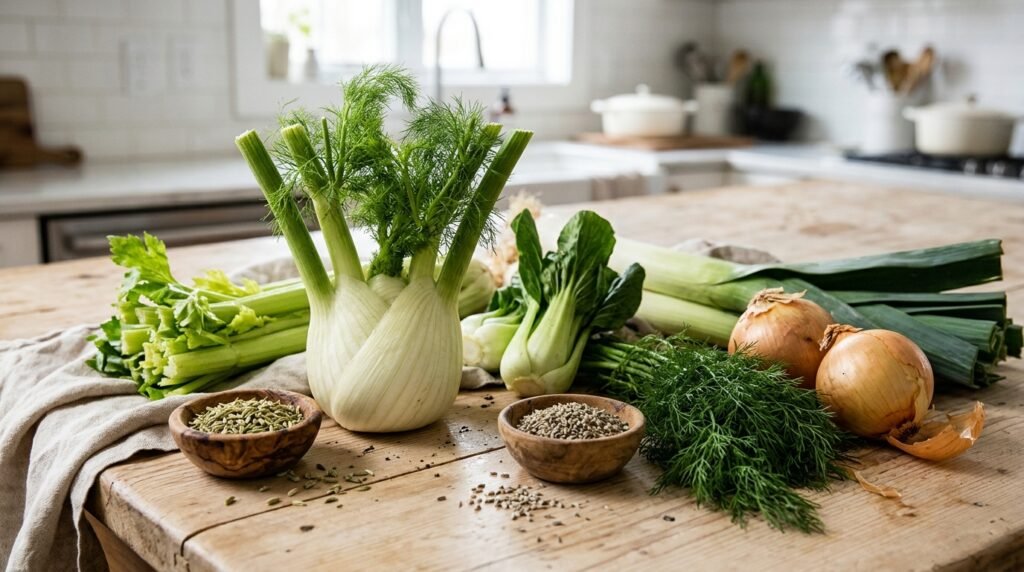
The best fennel substitute depends on which part of the plant your recipe needs. For fresh fennel bulbs, celery is a practical replacement when crunch and texture matter most. Bok choy, leeks, and mild onions can also work in cooked dishes. For fennel seeds, anise seeds provide a similar sweet, licorice-like flavor, while caraway seeds offer a more earthy alternative. Fresh dill is a useful replacement for fennel fronds, especially in salads, fish dishes, and sauces. These ingredients are not identical, so the right choice depends on the recipe, cooking method, and desired flavor. A raw fennel salad needs a different replacement from a slow-cooked soup or a sausage seasoning mixture. Understanding these differences helps preserve the dish’s balance without making the replacement more noticeable than necessary.
Why the Part of Fennel Matters
Fennel is an aromatic plant commonly identified as Foeniculum vulgare. Its bulb-like base, green stalks, feathery leaves, and dried fruits are used in different ways in cooking. The dried fruits are commonly sold as fennel seeds. Fresh fennel bulbs offer a crisp texture and a mild, sweet anise flavor. The fronds are delicate and herb-like, while the dried seeds have a more concentrated taste. A fennel substitute must therefore match the ingredient’s role, not just its name. Replacing a bulb with a dried spice will not provide the same volume or texture. Similarly, using celery in place of fennel seeds may add freshness but cannot reproduce their aromatic character. Before choosing a replacement, read the recipe carefully. Check whether it asks for sliced bulb, chopped stalks, fresh fronds, whole seeds, or ground seeds. This simple distinction prevents many substitution mistakes and helps narrow the options.
Celery Is a Practical Replacement for Fresh Fennel Bulb
Celery is one of the easiest alternatives when a recipe needs crisp vegetables. Its stalks provide a firm bite, a fresh aroma, and enough structure for salads, soups, and braised dishes. However, celery does not naturally reproduce fennel’s sweet licorice flavor. A fennel substitute based on celery works best when texture matters more than the exact taste. In a raw salad, thinly sliced celery can replace the crunch of shaved fennel. In a soup, chopped celery can form part of the aromatic vegetable base. Start with a similar prepared volume, then adjust to suit the dish. Celery stalks have a different shape and moisture content from fennel bulbs, so exact weight-for-weight replacement is not always ideal. If the recipe depends heavily on fennel’s distinctive aroma, a small amount of anise seed may help, provided that flavor suits the dish. Use the spice carefully because its taste is much stronger than that of the fresh vegetable.
Bok Choy Works Well in Stir-Fries and Lightly Cooked Dishes
Bok choy can be a useful alternative when the recipe calls for sliced fennel bulb in a cooked vegetable mixture. Its pale stems remain pleasantly crisp when cooked briefly, while the green leaves soften more quickly. The flavor is mild and slightly cabbage-like rather than sweet and anise-like. A fennel substitute using bok choy is particularly suitable for stir-fries, noodle dishes, and quick sautés. Separate the thick stems from the leaves before cooking. Add the stems first, then the leaves near the end. This helps avoid overcooking the tender parts. For dishes that originally use only fennel bulb, the pale stems are generally the closer textural match. Bok choy may release moisture during cooking, so avoid crowding the pan when a lightly browned result is desired. It is less suitable for recipes where fennel’s distinctive flavor is the main attraction. In those cases, a different vegetable or a carefully chosen aromatic addition may work better.
Leeks Can Replace Fennel in Soups and Braised Recipes
Leeks offer a gentle onion flavor that becomes sweeter when cooked. Their layered structure works well in soups, stews, and braised vegetables. They are especially useful when the recipe relies on fennel to provide a soft, savory base rather than a strong licorice note. A fennel substitute made with leeks will change the flavor profile, but the result can still be balanced and appealing. Use the white and light green portions for most cooked applications. Slice the leek lengthwise and rinse thoroughly between its layers because soil can collect inside. Cook it gently in oil or butter until softened, then continue with the recipe. Leeks can become very soft during long cooking, so they will not always provide the same structure as fennel bulb. They also belong to the onion family, making them unsuitable for anyone avoiding that family of vegetables. Their strength is their ability to create a mellow, rounded base without overpowering other ingredients.
Mild Onions Are Useful When Sweetness Matters
Onions are widely available and can replace some of the sweetness that fennel develops during cooking. Yellow onions, sweet onions, and shallots can all be considered, depending on the dish. They do not provide the same herbal aroma, and raw onions may taste much sharper than raw fennel. A fennel substitute using onions is therefore more suitable for roasted vegetables, soups, sauces, and slow-cooked dishes. Begin with a modest quantity and taste before adding more. When cooked gently, onions become softer and sweeter, making them useful in recipes where fennel contributes background flavor. For raw salads, a very mild onion sliced thinly may work, but it will produce a different result. Rinsing or briefly soaking sliced onion in cold water can soften some of its sharpness, although the effect varies. If fennel is a major ingredient rather than a small aromatic addition, replacing it entirely with onion may change the character of the dish too much.
Cabbage Can Provide Volume and Structure
Cabbage is a practical option when the recipe needs a substantial vegetable rather than a particular spice flavor. Thinly sliced green cabbage can add crunch to slaws and salads. It also holds up well in many cooked dishes. A fennel substitute made with cabbage works best when the fennel bulb contributes bulk, moisture, or texture. Cabbage has its own mild sulfurous character, especially when cooked for a long time. This makes it a less suitable choice for delicate recipes built around fennel’s sweetness. For raw dishes, slice cabbage finely and use a dressing that complements its flavor. For sautéed dishes, cook it until tender but not excessively soft. Cabbage may need a different cooking time from fennel, depending on the thickness of the pieces. It is an economical and accessible option, but it should be selected for structural similarity rather than as a direct flavor match.
Anise Seeds Are the Closest Flavor Alternative to Fennel Seeds
Anise seeds are a strong option when a recipe specifically calls for fennel seeds. Both ingredients have a recognizable sweet, licorice-like aroma, largely associated with the aromatic compound anethole. However, they are different plants and do not taste exactly the same. Anise often has a sweeter, more direct licorice character, while fennel seeds can seem warmer and more herbal. A fennel substitute using anise seeds works well in certain breads, cookies, spice mixtures, and savory dishes. Begin with less anise than the amount of fennel seed requested, then adjust if the recipe allows tasting. For example, if a dish calls for one teaspoon of fennel seeds, starting with about half a teaspoon of anise seeds is a cautious kitchen trial rather than a fixed conversion rule. The correct amount depends on the spice’s freshness and the desired intensity. Whole seeds may also release flavor differently from ground spices, so keep the preparation method in mind.
Caraway Seeds Offer a More Earthy Alternative
Caraway seeds are useful when a recipe needs aromatic warmth but does not require a strong licorice flavor. Their taste is earthy, slightly peppery, and distinctive. They are commonly associated with rye bread, cabbage dishes, and certain European recipes. A fennel substitute using caraway seeds may work in savory breads, roasted vegetables, and hearty stews. However, caraway is not a close flavor duplicate. It can make a dish taste noticeably different, especially when used in large amounts. Start with a smaller quantity than the fennel seed measurement and adjust carefully. Whole caraway seeds can be toasted briefly to bring out their aroma, but overheating may make them bitter. Ground caraway disperses more evenly through a mixture and may taste stronger at first. This alternative is most successful when the recipe can accommodate an earthy spice note. It is less suitable for desserts that rely on fennel’s sweet anise character.
Star Anise Can Work in Certain Cooked Recipes
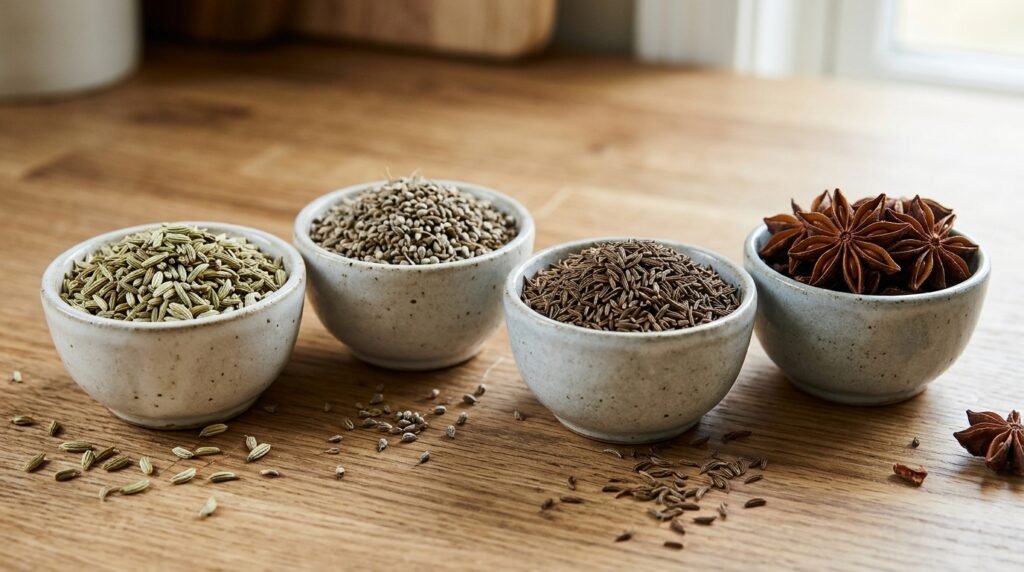
Star anise has a pronounced sweet licorice aroma and is often used in broths, braises, and spice blends. It is not botanically the same as fennel or anise seed. Its flavor is powerful, so direct one-to-one substitution is inappropriate. A fennel substitute using culinary star anise is most useful when the recipe involves a liquid that can be infused and tasted. Add a small piece of a food-grade star anise pod, allow it to flavor the dish, and remove it when the desired taste develops. This approach works better in long-cooked savory preparations than in a salad or recipe requiring the texture of whole fennel seeds. Star anise can easily dominate delicate ingredients. Buy it from a reputable food supplier and use only products clearly sold for culinary purposes. Other plants with similar-looking star-shaped fruits are not interchangeable and may be unsafe. When the recipe needs only a gentle fennel note, anise seeds are usually easier to control.
Fresh Dill Is a Useful Substitute for Fennel Fronds
Fennel fronds look delicate and feathery, making them suitable for garnishing finished dishes. Their flavor has a mild anise quality. Dill has a similarly fine appearance, but its taste is more grassy and tangy. A fennel substitute using fresh dill works particularly well with fish, potatoes, cucumber salads, yogurt sauces, and light dressings. Use the tender leaves and chop them shortly before serving. Start with a similar loose volume when the fronds are used mainly as a garnish, then adjust according to taste. Dill may become less vibrant when cooked for a long time, so adding it near the end often gives a fresher result. If fennel fronds are central to the recipe’s flavor, dill will create a different dish rather than a perfect copy. Still, it is one of the most practical choices when appearance and fresh herbal character matter.
Parsley Is Better When You Want a Neutral Herb
Flat-leaf parsley offers freshness without the strong licorice notes associated with fennel. It is useful when the recipe includes other bold ingredients and the fennel fronds mainly provide color and a light herbal finish. A fennel substitute made with parsley can work in salads, grain bowls, soups, and vegetable dishes. The leaves are broader and less feathery than fennel fronds, so the appearance will change. Chop parsley finely if the recipe needs a delicate garnish. Its flavor is generally more neutral than dill, making it a good choice for people who dislike anise-like tastes. Parsley will not replace the texture of fennel bulb or the aromatic strength of fennel seeds. It should be treated as a frond replacement only. For a more complex fresh-herb flavor, a small amount of dill can be combined with parsley, provided the combination suits the recipe.
Tarragon Can Replace Some of Fennel’s Herbal Aroma
Tarragon has a recognizable anise-like note, making it a possible alternative when the recipe uses fennel fronds for flavor. French tarragon is particularly valued for its aromatic leaves. It can work in chicken dishes, creamy sauces, egg preparations, and certain dressings. A fennel substitute using tarragon should be measured carefully because its flavor can be more noticeable than that of fennel fronds. Begin with a smaller quantity and taste before adding more. Fresh tarragon is generally easier to use in delicate sauces, while dried tarragon may require time to hydrate and release its aroma. Tarragon does not provide the same airy appearance as fennel fronds, so it is less convincing as a visual garnish. Its greatest value is flavor similarity in recipes where an herbal anise note is welcome. Avoid treating it as a direct replacement for fennel bulb or dried fennel seeds.
How to Substitute Fennel in a Raw Salad
Raw fennel is valued for its crisp bite, juicy texture, and light sweetness. A salad that features thinly shaved fennel often depends on those qualities. Celery is usually a practical starting point, especially when sliced very thinly across the stalk. It adds freshness and crunch but changes the flavor. A fennel substitute for a raw salad may also combine celery with a mild apple or pear to introduce sweetness. The fruit should complement the dressing rather than dominate it. For example, a salad with citrus, olive oil, and herbs can work with celery and crisp apple. Keep the slices thin so the texture remains delicate. Cabbage can also work when the recipe is closer to a slaw. Avoid adding large amounts of anise seed simply to imitate fennel’s taste. Whole spices can feel harsh in a delicate raw salad. The better approach is to preserve the salad’s balance of crunch, acidity, sweetness, and freshness.
What to Use Instead of Fennel in Soup
Fennel often appears in soups as part of the aromatic base. It may be cooked with onion, celery, carrot, or garlic before liquid is added. In this setting, the bulb’s sweetness and gentle herbal character support the other ingredients. A fennel substitute for soup can be celery, leek, or a combination of both. Celery contributes freshness, while leek provides a mellow onion-like sweetness. Start with a similar prepared volume and cook the vegetables until softened. If the original soup relies heavily on fennel’s anise flavor, a very small amount of anise seed may help. However, the spice should not be added automatically. A tomato-based vegetable soup may work perfectly well without the licorice note. Creamy soups may require more careful balancing because one strong spice can dominate the finished flavor. Taste the broth after the vegetables have cooked before deciding whether additional seasoning is necessary.
Replacing Fennel in Roasted Vegetable Dishes
Roasting changes fennel bulb considerably. The edges brown, the texture softens, and the flavor becomes sweeter and less sharp. Onions, leeks, and certain cabbage preparations can provide some of the same cooked sweetness, although their textures differ. A fennel substitute for roasted dishes should be chosen according to how the vegetable is cut and served. Onion wedges work well alongside potatoes, carrots, and other root vegetables. Leeks can roast successfully but may need protection from excessive browning, especially at their thinner edges. Cabbage wedges offer a firmer, more substantial result. Use enough oil to coat the vegetables lightly and arrange them so moisture can escape. Cooking times depend on the size and thickness of the pieces. Avoid assuming that every replacement will soften at the same rate as fennel. Check for tenderness and browning rather than relying only on the original recipe’s timing.
Fennel Seed Alternatives for Sausage and Meat Seasoning
Fennel seeds are associated with several savory seasoning traditions, including certain Italian-style sausages. Their sweet aromatic flavor helps balance salt, pepper, garlic, and other spices. If fennel seeds are unavailable, anise seeds may provide a related flavor, but they can taste sweeter and more pronounced. A fennel substitute for sausage seasoning should be tested in a small portion before being mixed into a large batch. Caraway can work when a more earthy profile is acceptable, although it changes the character of the seasoning. Crushed seeds distribute flavor more quickly than whole seeds. If using ground spices, start with less and adjust because the aroma spreads throughout the mixture. For raw meat preparations, evaluate seasoning by cooking a small test portion safely rather than tasting the raw mixture. Some recipes may be better without a replacement than with an unsuitable spice. The goal is a balanced finished flavor, not an exact copy at any cost.
What Works in Bread, Crackers, and Baked Goods
Fennel seeds can give breads and crackers a warm, sweet aroma. Some recipes use whole seeds for texture, while others use ground seeds for even flavor. Anise seeds are often the most logical alternative when a similar licorice note is desired. Caraway seeds can also work in savory breads, especially when an earthy flavor suits the dough. A fennel substitute in baking requires more care than one in a soup because the seasoning cannot be adjusted after the dough is baked. Begin with a modest quantity when using a stronger spice. Consider whether the seeds are mixed into the dough or scattered over the surface. Whole seeds provide small bursts of flavor, while ground spices affect the entire product. In sweet biscuits or cookies, caraway may taste out of place. In rye or savory crackers, it may be welcome. The surrounding ingredients should guide the decision.
Can Ground Fennel Be Replaced With Whole Seeds?
Ground fennel and whole fennel seeds come from the same culinary ingredient, but they behave differently in recipes. Grinding increases the exposed surface area and distributes flavor more evenly. Whole seeds release their aroma more gradually and add texture. If a recipe calls for ground fennel, whole seeds can often be ground using a clean spice grinder or mortar and pestle. This is generally a closer option than using a different spice. If grinding is not possible, whole seeds may work in a long-cooked dish where they have time to soften and release flavor. They are less suitable for smooth sauces, delicate baked goods, or mixtures where the texture would be noticeable. A fennel substitute should not be chosen before checking whether another form of fennel is already available in the kitchen. Freshly grinding the seeds can preserve the intended flavor more closely than switching to an unrelated ingredient.
How Much Substitute Should You Use?
There is no universal conversion that works for every fennel replacement. The correct amount depends on whether the recipe uses bulb, fronds, or seeds. For fresh bulb, a similar prepared volume of celery or another mild vegetable can be a useful starting point. For fronds used as a garnish, a similar loose volume of dill or parsley may be reasonable. Dried spices need more caution. A fennel substitute such as anise seed may taste stronger than fennel seed, so beginning with a smaller amount is sensible. Caraway and star anise also have distinct flavor profiles that make exact conversions unreliable. Cooking time matters because spices release flavor differently in hot oil, liquid, and baked mixtures. If the recipe can be tasted during cooking, adjust gradually. For baking or raw meat seasoning, prepare a small test batch when practical. A careful starting amount is more useful than a rigid substitution ratio that ignores the dish.
When It Is Better to Leave Fennel Out
Not every recipe needs a replacement. Fennel may appear in a small quantity alongside several other aromatic ingredients. In such cases, leaving it out may create a less noticeable change than adding a spice with a very different taste. A fennel substitute is most important when fennel provides the main vegetable, a defining flavor, or a visible garnish. If a soup contains onion, celery, garlic, and herbs, omitting a small amount of fennel may still produce a balanced result. A salad built mainly around shaved fennel is different because removing the bulb changes the dish’s structure. Likewise, a seasoning blend known for its fennel aroma may lose part of its identity without the seeds. Consider what the ingredient contributes before deciding. If the recipe remains complete without it, omission can be the simplest option. Substitution should improve the result, not introduce a flavor that clashes with the other ingredients.
How Cooking Changes the Best Replacement
Raw, sautéed, roasted, and slow-cooked fennel have different textures and flavor strengths. Raw fennel is crisp and aromatic. Gentle cooking softens the bulb and develops sweetness. Longer cooking makes the vegetable more tender and allows its flavor to blend with other ingredients. A fennel substitute should be selected with that change in mind. Celery is particularly useful for raw crunch and quick-cooked aromatic bases. Leeks and onions become softer and sweeter when cooked. Cabbage holds its structure differently depending on the cut and cooking time. Dried anise and caraway seeds release flavor through heat and moisture, but they cannot replace the bulk of a vegetable. If the dish is cooked for a long time, a mild vegetable may become almost invisible in the finished sauce. For a crisp salad, the same vegetable’s texture becomes central. Matching the cooking method is often more important than choosing the ingredient with the closest name or appearance.
Common Mistakes When Replacing Fennel
The most frequent mistake is treating fennel bulb, fennel fronds, and fennel seeds as interchangeable. Each has a different role in cooking. Another mistake is using equal amounts of a stronger spice without tasting. Anise and star anise can quickly dominate a dish. A fennel substitute can also fail when the replacement has the wrong texture. Soft cooked onion cannot reproduce the crisp bite of raw fennel, while celery does not create the same sweetness in every roasted preparation. Choosing a replacement without considering the other ingredients can produce an unbalanced flavor. For example, caraway may work in savory bread but feel unsuitable in a delicate dessert. Overlooking cooking time is another problem. Some vegetables soften faster than fennel and should be added later. The most reliable approach is to identify the missing ingredient’s purpose, select a replacement for that purpose, and adjust the amount carefully.
Choosing the Right Alternative for Different Recipes
A useful decision starts with the question of what fennel contributes to the dish. If it provides crunch, choose celery or another crisp vegetable. If it adds gentle sweetness to a cooked base, consider leeks or mild onions. If the recipe needs a sweet licorice aroma from seeds, anise seeds are often the closest practical choice. For an earthy savory seasoning, caraway may be suitable. If the recipe calls for feathery green fronds, dill or parsley can provide freshness and visual appeal. Tarragon is useful when an herbal anise note matters more than appearance. A fennel substitute should also fit the other ingredients. Citrus salads benefit from fresh, crisp replacements. Hearty stews can accommodate stronger vegetables and spices. Delicate sauces need restrained seasoning. Thinking in terms of flavor, texture, and cooking method makes substitution more predictable and reduces the chance of changing the dish unnecessarily.
FAQs
What is the closest substitute for fennel bulb?
Celery is a practical replacement when the recipe needs a crisp vegetable. It works particularly well in salads and soups. However, it lacks fennel’s sweet licorice flavor, so the finished dish will taste different.
Can I use anise seeds instead of fennel seeds?
Yes. Anise seeds provide a similar sweet, licorice-like aroma. Start with a smaller amount because the flavor can be more pronounced. Adjust according to the recipe and the freshness of the spice.
What is the best fennel substitute for Italian sausage?
Anise seeds are a reasonable option when a similar aromatic note is needed. Use a modest amount and cook a small test portion before seasoning a large batch. Caraway creates a more earthy flavor.
Can I replace fennel with celery in soup?
Yes. Celery works well in many soups because it contributes freshness and structure. Leeks can be added for a sweeter, milder cooked flavor. The combination will not reproduce fennel’s exact aroma.
What can I use instead of fennel fronds?
Fresh dill is a useful choice for fish, salads, potatoes, and yogurt sauces. Parsley works when a more neutral herb is preferred. Tarragon can provide a stronger anise-like flavor in suitable dishes.
Is star anise the same as fennel?
No. Star anise and fennel come from different plants, although both can have a sweet licorice-like aroma. Star anise is much more concentrated in flavor and should not be used as a direct one-to-one replacement.
Conclusion
The right fennel substitute depends on whether the recipe needs a crisp vegetable, a fresh herb, or an aromatic spice. Celery is a practical option for fresh fennel bulb, while leeks and onions work well in many cooked dishes. Anise seeds provide a related flavor when fennel seeds are missing, and dill is useful in place of fennel fronds. No replacement matches every quality of fennel, so consider texture, sweetness, aroma, and cooking time before choosing. Start with a modest amount, especially when using strong spices, and adjust when possible. A thoughtful substitution should preserve the balance of the dish rather than force an exact flavor match.

