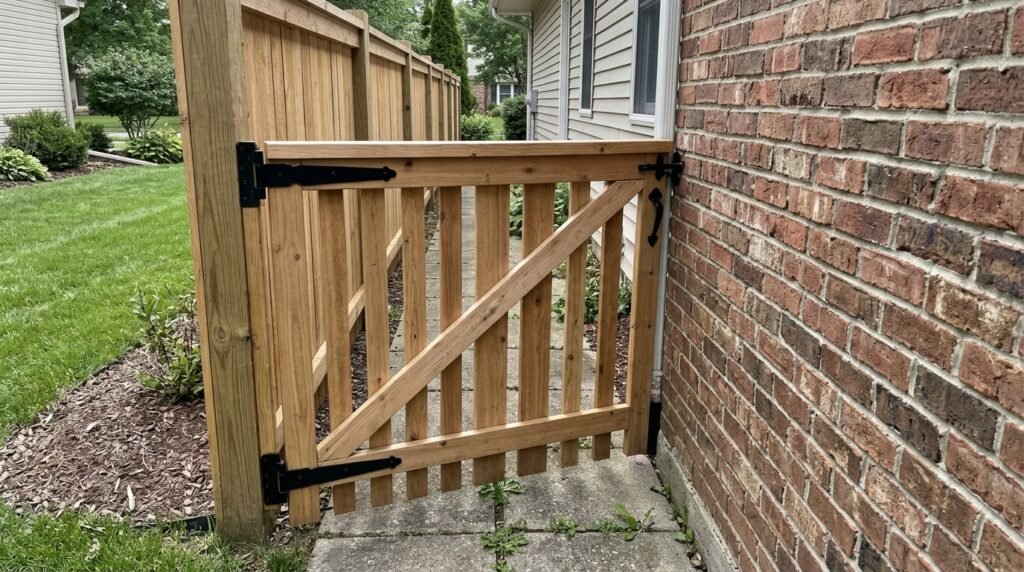
Incorrect gate placement can make a property entrance difficult to use, weaken security, create safety hazards, and cause unnecessary repair costs. A gate may be installed in the wrong position, open in an unsuitable direction, block a walkway, or lack enough clearance for people and vehicles. Poorly located posts, uneven ground, and unsuitable hardware can make these problems worse. The right gate position depends on its purpose, the available space, the surrounding fence, and local requirements. A garden gate needs convenient pedestrian access, while a driveway gate must allow safe vehicle movement. Pool gates, accessible entrances, and automated systems have additional safety considerations. Fixing incorrect gate placement begins with identifying the actual problem rather than immediately replacing the gate. Some issues can be corrected through hinge adjustments or changes to nearby obstacles. Others require moving posts, changing the opening direction, or redesigning the entrance. Careful measurements and an understanding of how the gate will be used can prevent the same mistake during installation or repair.
What Is Incorrect Gate Placement?
A gate is incorrectly placed when its location, orientation, or surrounding space prevents it from performing its intended function safely and effectively. The gate itself may be well built, but its position can still create problems. For example, a pedestrian gate installed behind a large shrub may be difficult to reach. A driveway gate that opens across a public sidewalk may interfere with people passing the property. A garden gate placed on uneven ground may drag whenever it swings. Incorrect gate placement can also involve choosing the wrong location within a fence line. An entrance positioned far from the natural walking route may encourage people to take shortcuts through landscaping. A gate that is too close to a wall may not open fully. The issue is therefore broader than a crooked installation. Good placement considers access, clearance, terrain, visibility, structural support, drainage, and the gate’s intended use. The best position allows the gate to open, close, latch, and remain secure without creating avoidable obstacles.
Why Gate Location Matters More Than Appearance
A gate often forms the main connection between two areas of a property. Its location affects how people move, where vehicles turn, and how outdoor spaces function. A decorative entrance may look balanced from the street but still create an awkward route to the front door. A wide driveway gate may appear impressive while leaving too little space for a vehicle to wait safely. Incorrect gate placement can also increase daily wear. When a gate regularly strikes paving, landscaping, or nearby structures, hinges and latches may become damaged. People may leave an inconvenient gate open, reducing the security it was meant to provide. The surrounding layout should therefore guide the design before appearance is considered. A gate should fit the movement patterns of the property rather than force people to work around it. Visual balance still matters, especially for front entrances, but practical access and safe operation are more important than making the opening perfectly centered.
A Gate That Opens in the Wrong Direction
The swing direction is one of the first things to check when a gate becomes inconvenient. A gate that opens toward a narrow path may reduce the space available for someone walking through it. An outward-opening driveway gate can interfere with a sidewalk or road if the property does not provide enough room. An inward-opening gate may be unsuitable where a steep slope or parked vehicle blocks its movement. Incorrect gate placement sometimes results from choosing the swing direction after the posts have already been installed. Before changing hinges, examine the complete opening arc and the space on both sides. Consider how the gate behaves when fully open, partly open, and closed. Also check whether the latch remains easy to reach. Some gates can be rehung, but others require different hardware or structural changes. Pool gates and gates serving required exits may have specific rules governing opening direction. Never reverse a safety-related gate without checking the applicable requirements.
Not Enough Space for the Gate to Swing
A swinging gate needs more space than its closed position suggests. The entire leaf travels through an arc, and every part of that arc must remain clear. A nearby wall, raised planter, parked car, or garden feature can stop the gate before it opens fully. Incorrect gate placement becomes obvious when users must squeeze through a partly open entrance. The problem may be worse with double gates because both leaves need suitable clearance. Measure the proposed opening before installing posts and mark the swing path on the ground. Check the movement at different points rather than measuring only the gap between posts. Hinges, handles, and other hardware may also project beyond the gate frame. A sliding gate can sometimes work where swing space is limited, but it needs enough clear space beside the opening for the leaf to travel. The choice between swinging and sliding designs should reflect the actual site rather than appearance alone.
Gate Width Must Match the Intended Use
A narrow garden entrance may be adequate for ordinary walking but inconvenient for moving bins, wheelbarrows, bicycles, or garden equipment. A driveway opening must accommodate the vehicles expected to use it, including their turning movements. Incorrect gate placement may result from measuring only the width of the gate leaf without considering posts, hinges, latches, and the clear opening. A wide gate can also create problems if its weight exceeds the capacity of its posts and hardware. Before choosing dimensions, identify the largest object that must pass through the entrance. Consider whether the approach is straight or requires a turn. Accessibility requirements may apply to certain entrances. Under U.S. ADA standards, manual gates on accessible routes generally must provide at least 32 inches of clear opening width, with additional requirements in some situations. That figure is not a universal rule for every private residential gate. Local codes and the specific use of the entrance determine what is required.
Uneven Ground Can Make a Gate Difficult to Use
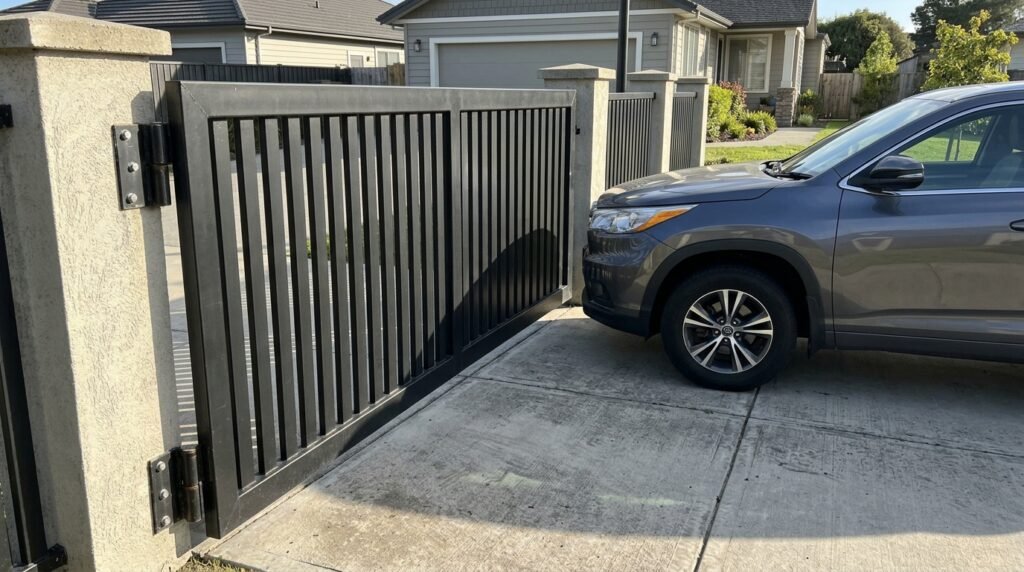
A gate installed over sloping or irregular ground may scrape the surface as it opens. The problem often appears when the ground rises along the swing path. A gate that clears the surface while closed may hit it halfway through opening. Incorrect gate placement can also occur when the entrance is positioned at the lowest part of a yard where rainwater collects. Mud, gravel movement, and frost-related ground changes in colder climates may affect clearance. Before installation, measure the ground at several points along the gate’s intended movement. Do not assume the closed position represents the highest ground level. Raising the gate may improve clearance, but excessive space beneath it can create other problems, especially where containment or security matters. Regrading may be possible in some locations, provided drainage is not harmed. A different gate design may be more suitable on a steep slope. The final solution should account for both ground clearance and the intended function of the barrier.
Poorly Positioned Gate Posts Cause Structural Problems
Posts support the gate’s weight and transfer movement forces into the ground or another suitable structure. If the posts are too close together, the gate may not fit correctly. If they are too far apart, the latch may not engage as intended. Posts that are not plumb can make the gate swing unexpectedly or create uneven gaps. Incorrect gate placement is sometimes blamed on the gate leaf when the real problem is the supporting structure. A heavy gate needs posts, foundations, and hinges designed for its size and expected loads. Soil conditions, post material, gate weight, wind exposure, and installation details all affect performance. There is no single post depth suitable for every location. Before resetting a post, check for underground utilities and follow local excavation requirements. In the United States, the 811 notification system helps arrange utility marking before digging. A leaning or unstable post should be repaired properly rather than hidden through repeated hinge adjustments.
Hinges and Latches Must Align With the Gate Position
A gate can be located correctly yet operate poorly because its hardware is misaligned. Hinges may bind, screws may loosen, or a latch may fail to reach its receiving plate. Repeated force can damage the hardware and surrounding materials. Incorrect gate placement should be distinguished from these installation defects before major changes are made. Inspect the gate when closed and observe the gaps around its frame. Look for sagging, twisting, loose fasteners, or movement in the posts. Check whether the latch engages without lifting or pulling the gate into position. Adjustable hinges may correct small alignment problems when the supporting structure is sound. They cannot safely compensate for a severely leaning post or an overloaded frame. Choose replacement hardware suitable for the gate’s material, weight, and environment. Outdoor hardware should also resist the corrosion conditions expected at the property. A properly positioned gate should close naturally and latch reliably without requiring excessive force.
Driveway Gates Need Space for Vehicle Movement
Driveway entrances involve more than the width of the opening. Vehicles need enough room to approach, turn, pass through, and stop without striking the gate or nearby objects. Incorrect gate placement may force drivers to make sharp turns or reverse into traffic. A gate installed immediately beside a narrow road can also create problems if a driver must stop while it opens. The required space depends on vehicle size, road conditions, driveway angle, local rules, and whether the gate is manual or automatic. Consider delivery vehicles and emergency access where relevant. Observe the normal driving path before deciding where posts should stand. A curved driveway may need a different arrangement from a straight entrance. For automated gates, the operator and safety devices must be designed for the complete movement area. A qualified installer should assess the site rather than assuming a standard residential layout will work everywhere.
Pedestrian Gates Should Follow Natural Walking Routes
A pedestrian gate is most useful when it connects directly to a practical path. Placing it far from the front door, parking area, or main walkway can create unnecessary detours. People may then cross lawns or planting beds instead of using the intended route. Incorrect gate placement can also leave users standing on a steep or uneven surface while operating the latch. Consider how someone approaches the gate while carrying groceries, pushing a stroller, or using a mobility aid. The entrance should have suitable space for opening and passing through. Lighting and visibility matter after dark. A gate hidden behind dense vegetation may feel less convenient and can make it harder to see approaching visitors. For entrances subject to accessibility standards, additional requirements apply to clear width, maneuvering space, thresholds, and hardware. A well-positioned pedestrian gate makes movement straightforward without requiring awkward turns or repeated adjustments.
Accessibility Can Be Affected by Gate Position
Accessibility involves more than making the gate wide enough. People using wheelchairs or other mobility aids may need space beside the latch and on both sides of the entrance. The U.S. Access Board explains that accessible gates must meet requirements for clear openings, maneuvering clearances, and related features. For example, ADA standards generally require at least 32 inches of clear opening at a manual gate on an accessible route. The required maneuvering space varies with the approach direction and whether the gate is pushed or pulled. Incorrect gate placement can make compliance difficult when a wall, fence corner, planter, or slope blocks this space. A gate that opens easily for a walking person may still be difficult to operate from a wheelchair. These standards apply where legally required and should not be presented as universal dimensions for every residential fence. When designing an accessible entrance, consult the applicable standards and local authority before setting the posts.
Pool Gates Require Special Safety Planning
Pool barriers are designed to restrict unsupervised access to water, particularly by young children. A poorly located gate can undermine that purpose even if the surrounding fence appears secure. Incorrect gate placement may put the entrance near climbable objects, allow the gate to be blocked open, or interfere with the required closing mechanism. Pool safety guidance from the U.S. Consumer Product Safety Commission emphasizes barrier design, self-closing gates, and self-latching devices. Exact requirements vary by jurisdiction and pool type. Many local rules also specify gate opening direction, latch placement, and other details. A pool gate should not be treated like an ordinary decorative garden gate. Check that it closes and latches consistently under normal operating conditions. Do not install objects nearby that make climbing easier. If the gate fails to close or latch, restrict access and arrange prompt repair. Proper supervision remains essential even when a compliant barrier is installed.
Automated Gates Introduce Additional Hazards
Motorized gates can create crushing, shearing, and entrapment hazards when their movement area is not properly designed. A gate that moves close to a wall, fence, or fixed object may create a dangerous space. Incorrect gate placement can make these hazards harder to control. In the United States, UL 325 addresses safety requirements for door, gate, and window operators, while ASTM F2200 addresses construction requirements for automated vehicular gates. The applicable edition and requirements depend on the installation and local rules. Safety sensors, monitored entrapment protection, warning signs, controls, and access arrangements must be selected and installed correctly. A vehicle gate should not be used as the ordinary pedestrian entrance unless the system is specifically designed and permitted for that purpose. Homeowners should not bypass safety devices to solve a nuisance problem. If an automated gate behaves unexpectedly, stop using it and contact a qualified gate technician. Correcting the location may require changes to the gate, operator, and surrounding protective measures.
Security Problems Caused by a Poor Gate Location
A gate should support the property’s security plan rather than create an obvious weak point. An entrance hidden from the main building may be difficult to monitor. A gate that does not latch properly can remain partly open. A poorly positioned opening may allow someone to reach the latch from outside when the design was intended to prevent that. Incorrect gate placement can also create blind corners or interfere with lighting and cameras. Security improvements should begin with reliable physical operation. Check that the gate closes completely, that posts remain stable, and that the latch functions as designed. Then consider visibility, lighting, and the relationship between the gate and nearby paths. Avoid placing expensive electronic equipment where it can be damaged by the gate’s movement. A secure design should also preserve required emergency exit routes. Security measures that trap occupants or obstruct lawful emergency access can create a more serious problem than the one they were meant to solve.
Fence Alignment and Property Boundaries Matter
A gate opening must work with the surrounding fence and the legal boundaries of the property. A visually centered entrance may not be practical if it conflicts with a utility easement, drainage feature, or required setback. Incorrect gate placement can become expensive when posts are installed beyond the property line or within a restricted area. Before construction, confirm the boundary using reliable property records and a survey when needed. Do not assume an existing fence accurately marks the legal boundary. Local rules may regulate fence and gate height, location, visibility near intersections, and driveway access. Homeowners’ associations may also have design requirements. A gate that projects into a public right-of-way can create legal and safety concerns. Resolve these questions before concrete is poured around the posts. Moving a gate after installation may require rebuilding adjacent fence sections, replacing paving, and restoring landscaping. Early planning is usually simpler than correcting a boundary dispute.
Drainage Should Influence Where the Gate Is Installed
Water can affect gate operation and the condition of surrounding materials. A gate positioned where runoff collects may experience corrosion, timber deterioration, soft ground, or movement around its posts. Repeated standing water can also make the entrance slippery or muddy. Incorrect gate placement may be partly responsible when the opening interrupts a drainage path or directs water toward a building. Observe the site during or after heavy rainfall before finalizing the location. Consider where water travels from the driveway, roof, paths, and neighboring ground. Gate posts and foundations should not block drainage systems without a suitable design. Regrading must be approached carefully because moving water away from one area can create problems elsewhere. If drainage is complicated, consult a qualified professional. The gate should remain usable in ordinary wet weather without requiring people to walk through standing water or repeatedly clear mud from the latch and hinges.
Landscaping Can Interfere With Gate Operation
Plants often look small when a gate is first installed, but shrubs and trees can grow into the opening area. Branches may catch the gate, while roots can affect nearby paving or structures over time. Incorrect gate placement can result from failing to consider mature plant size. A gate beside a hedge may need regular trimming to remain usable. Thorny plants can make access uncomfortable, and dense foliage can hide the latch or reduce visibility. Before choosing a location, consider how the surrounding landscape will develop. Leave suitable clearance for plants to grow without obstructing the gate. Avoid damaging important tree roots during post excavation. Where mature trees are nearby, professional advice may be appropriate before digging. A gate should also allow access for normal landscape maintenance. The best layout balances privacy, appearance, and practical movement rather than forcing the gate into the only gap that looks attractive at planting time.
Common Installation Mistakes That Lead to Poor Placement
Several mistakes can produce a gate that looks acceptable initially but becomes difficult to use. Installing posts before checking the full swing path is a common example. Another is measuring the opening without accounting for hinges and latches. Failing to check ground slope can lead to scraping. Choosing undersized posts or hardware can cause sagging. Incorrect gate placement may also result from copying another property’s design without considering differences in terrain and access. A driveway gate suitable for a wide, level entrance may not work on a narrow slope. Installers should confirm measurements, post alignment, gate weight, and clearance before fixing the structure permanently. Where the work involves electrical automation, excavation, pool barriers, or required accessible routes, additional technical requirements apply. Avoid making changes simply to match a photograph. A reliable installation is based on the actual site and the manufacturer’s specifications.
How to Check Gate Placement Before Installation
Start by marking the proposed opening and identifying the path people or vehicles will follow. Measure the clear width needed for normal use and confirm that the surrounding space supports it. For a swinging gate, mark the complete opening arc on the ground. Check for walls, steps, slopes, landscaping, and other obstacles. For a sliding gate, identify where the leaf will travel when open. Incorrect gate placement is easier to prevent when these movements are considered before digging. Confirm property boundaries, underground services, and local rules. Examine the ground for drainage problems and consider how the gate will operate during wet weather. Choose posts and hardware suited to the gate’s size and weight. If the gate is part of a pool barrier, accessible route, or automated system, review the applicable requirements before installation. A simple site plan with dimensions can reveal conflicts that are difficult to notice while looking at an empty fence line.
How to Fix a Gate That Is Already in the Wrong Position
The correct repair depends on whether the problem involves hardware, structure, or location. Begin by observing the gate through its complete movement. Check whether it strikes the ground, fails to latch, blocks a path, or creates a hazardous opening. Inspect the posts and hinges before changing the gate itself. Minor alignment problems may be corrected through suitable hardware adjustments. An obstruction such as an overgrown shrub may be removable without changing the entrance. More serious incorrect gate placement may require rehanging the leaf, changing the swing direction, moving a post, or rebuilding part of the fence. Do not reverse a pool gate or modify an automated system without checking safety requirements. If the post is unstable, repairing the hinge alone will not solve the underlying problem. For large or heavy gates, professional installation may be safer than attempting structural changes without the necessary equipment. The goal is to correct the cause rather than hide the symptom.
When Moving the Gate Is Better Than Adjusting It
Some placement problems cannot be solved through minor repairs. A gate located directly beside a steep step may remain awkward even after its hinges are adjusted. A driveway entrance with insufficient turning space may need a different position or layout. A gate that obstructs a required accessible route may need substantial redesign. Incorrect gate placement should be treated as a design problem when the surrounding space cannot support safe operation. Before relocating the opening, compare the costs of moving posts, replacing fence sections, changing paving, and restoring landscaping. Also consider whether a different gate type would solve the problem without changing the entire fence. A sliding design may help where a swing gate lacks clearance, although sliding gates require their own travel space and suitable foundations. Professional advice is especially valuable when relocation affects boundaries, drainage, structural supports, electrical systems, or safety barriers.
Cost Factors When Correcting Gate Placement
Repair costs depend on the gate’s size, material, weight, hardware, and the amount of work required. Adjusting a hinge may involve relatively little labor. Moving concrete-set posts can require excavation, disposal, new foundations, and reconstruction of nearby fencing. Automated gates may need electrical and safety-system changes. Incorrect gate placement can also affect paving, landscaping, drainage, or access controls. There is no dependable universal repair price because these conditions vary widely. Ask contractors to inspect the site and explain the proposed solution. A detailed estimate should distinguish between adjustment, repair, and full relocation. Confirm whether the price includes materials, excavation, debris removal, electrical work, and restoration of surrounding surfaces. Avoid selecting a cheaper repair that leaves the original safety or access problem unresolved. For specialized gates, confirm that the contractor understands the applicable product and safety requirements.
When Professional Gate Installation Is Necessary
Small adjustments to a simple garden gate may be manageable for an experienced homeowner. Larger projects can involve heavy components, unstable structures, excavation, and specialized safety requirements. Professional help is appropriate when posts are leaning significantly, a large gate needs lifting, or the entrance affects vehicle access. Automated gates require particular care because moving equipment and electrical systems can create serious hazards. Incorrect gate placement involving pool barriers, accessible routes, or emergency exits may also require qualified design and installation. Before hiring, explain the problem clearly and ask how the proposed work will correct it. A good installer should assess the site rather than immediately recommend a replacement. Check relevant qualifications, insurance, and local requirements. If the work requires permits or inspections, confirm who will arrange them. Proper planning helps ensure the corrected gate remains functional instead of developing the same problem after a short period.
FAQs
What is the most common sign of incorrect gate placement?
A common sign is a gate that cannot open fully without hitting the ground, a wall, a vehicle, or another obstacle. Other warning signs include awkward access, poor visibility, repeated latch problems, and insufficient space for people or vehicles.
Can a gate open outward toward the street?
That depends on the location, property boundary, and local rules. A gate should not create an obstruction or hazard in a public sidewalk or roadway. Check the applicable requirements before installing or reversing an outward-opening gate.
How much clearance should a garden gate have?
Clearance depends on the gate’s dimensions, material, hinge design, ground slope, and intended use. There is no single gap suitable for every installation. Follow the manufacturer’s requirements and measure the complete movement path before setting the posts.
Can a gate be moved without replacing the entire fence?
Sometimes. Relocation may be possible by removing and resetting posts, modifying adjacent fence sections, and reusing suitable gate components. The feasibility depends on the materials, structural condition, available space, and new opening location.
Does a driveway gate need professional installation?
Professional installation is advisable for heavy, oversized, or automated driveway gates. The work may involve structural foundations, vehicle clearance, electrical systems, and entrapment protection. A qualified installer can evaluate the complete site and operating conditions.
Can poor gate placement affect home security?
Yes. A gate that fails to latch, remains partly open, or creates hidden access points can reduce security. Correcting its position and ensuring reliable operation can improve the effectiveness of the surrounding fence and access-control system.
Conclusion
Incorrect gate placement is often a planning problem rather than a defect in the gate itself. The entrance must suit its purpose, the available space, the ground conditions, and the way people or vehicles move through it. Check the opening direction, clearance, post stability, hardware alignment, and surrounding obstacles before deciding on a repair. Safety requirements deserve special attention for pool gates, accessible entrances, and automated systems. Some problems can be solved through adjustments, while others require relocating the opening or changing the gate design. The most useful next step is to inspect the full operating area and identify what prevents the gate from working properly. A well-positioned gate should open smoothly, close securely, and provide convenient access without creating unnecessary hazards or maintenance problems.