Knowing how to assemble furniture after a move can save time, prevent damage, and make a new home functional sooner. Start by identifying each furniture piece, finding its hardware, and checking the manufacturer’s assembly instructions. Clear a workspace, protect the floor, and inspect every part before tightening anything. Rebuild the main frame first, install supporting parts, check alignment, and secure furniture that requires wall anchoring. Do not force screws into damaged holes or assume every item can safely be taken apart and rebuilt. Some flat-pack furniture loses strength after repeated disassembly, especially when screws grip directly into particleboard. The safest method depends on the furniture’s materials, connections, condition, and original design. Beds, desks, wardrobes, tables, and shelving units also need different assembly approaches. This article explains how to assemble furniture after a move in a practical order, including tools, missing hardware, damaged fittings, stability checks, and situations where professional help is the better choice.
Start by Sorting Furniture Before Opening Every Box
Moving boxes often contain a mixture of furniture parts, household items, and small hardware bags. Opening everything at once can create confusion and make important screws difficult to find. Begin by identifying which furniture belongs in each room. Place the bed frame in the bedroom, dining table parts near the dining area, and shelving components in their intended location. Keep separate furniture sets apart, even when their panels or hardware look similar. A screw that fits one cabinet may have a different length or thread from another. When learning how to assemble furniture after a move, organization is more useful than speed during the first stage. Check moving labels, photographs taken before disassembly, and any notes made during packing. If the movers packed the hardware, locate those bags before starting. Avoid throwing away wrapping material until all small parts have been recovered. Place screws, washers, brackets, and bolts in shallow containers so they cannot roll away. This simple preparation reduces interruptions once assembly begins and makes it easier to recognize missing components before a heavy structure is partly built.
Find the Original Assembly Instructions
The manufacturer’s instructions should guide the work whenever they are available. They show the intended order of assembly, hardware locations, orientation of panels, and any special safety requirements. Many furniture makers provide manuals online using a product name, model number, or article number. IKEA, for example, provides product assembly guides and advises checking the instructions before taking furniture apart for a move. An instruction booklet is especially valuable when a cabinet contains similar-looking side panels or several types of connectors. Photographs can help restore the previous layout, but they may not reveal hidden supports or the correct tightening sequence. If no manual is available, examine the furniture carefully before attempting reconstruction. Look for matching holes, connector locations, labels, and signs of previous assembly. Avoid drilling new holes or modifying fittings merely because the correct arrangement is unclear. A careful approach to how to assemble furniture after a move means using the original design as the starting point, not treating every piece as a general woodworking project.
Prepare a Safe and Clear Assembly Area
Choose a workspace large enough to lay out the furniture parts and move around them without stepping over hardware. A bedroom floor may be suitable for a bed frame, while a dining table might need a larger open area. Remove packing materials, loose cables, and other tripping hazards. Protect finished flooring with a clean moving blanket, cardboard, or another suitable covering. Make sure the protective material does not slide when weight is placed on it. Good lighting helps reveal screw holes, scratches, and differences between similar components. Keep children and pets away from loose hardware, tools, and unstable furniture during assembly. When deciding how to assemble furniture after a move, consider whether the finished piece will fit through nearby doorways. It is often easier to build a large wardrobe in its intended room than to assemble it elsewhere and move it again. Check ceiling clearance before raising tall cabinets. A flat assembly position may require more space than the furniture occupies when standing upright. Plan that movement before joining the main panels.
Gather the Right Tools Before Starting
Most household furniture can be assembled using a modest collection of hand tools, although exact requirements vary by manufacturer. Common items include correctly sized screwdrivers, hex keys, a measuring tape, a small level, and a rubber mallet when the instructions permit its use. A magnetic parts tray can help organize metal hardware. A flashlight is useful for checking concealed connections beneath beds or inside cabinets. A cordless screwdriver may save effort, but it should be used carefully because excessive torque can strip threads or damage engineered wood. Some products specifically require hand tightening or include warnings against power tools. Check those instructions before selecting a driver. A practical approach to how to assemble furniture after a move is to match the tool to the fastener rather than forcing a nearly fitting bit. Damaged screw heads make later adjustments much harder. Keep protective gloves available for handling rough edges, but avoid gloves that could catch in moving tools. Heavy furniture may require another adult to hold components in position. The correct tools reduce damage, but they cannot replace proper support or safe lifting.
Inspect Every Component for Moving Damage
Before connecting parts, examine the furniture for damage that may have occurred during disassembly, transport, or unloading. Look for cracked panels, bent metal rails, loose threaded inserts, stripped screw holes, damaged joints, and missing support brackets. Check the edges of particleboard furniture for swelling or crumbling. Inspect wooden bed rails for splitting near the connectors. A small scratch may be cosmetic, but a crack around a structural connection can affect the safety of the finished piece. Knowing how to assemble furniture after a move includes recognizing when assembly should stop. Do not hide a damaged load-bearing joint by tightening a bolt harder. Compare the affected component with its matching part to determine whether something has shifted or broken. Photograph damage before making changes, especially if a moving company or insurance provider may need documentation. If a component is visibly unsafe, obtain an approved replacement or seek professional advice. Rebuilding damaged furniture without addressing the defect can create a greater problem once the item carries weight.
Match Screws, Bolts, and Connectors to Their Original Locations
Furniture hardware is often more specialized than it appears. Two screws may have the same head but different lengths. Bolts may require particular washers, threaded inserts, or barrel nuts. Cam-lock systems depend on matching connectors being placed in the correct orientation. Sort hardware by type and compare it with the manual or disassembly photographs. Do not replace a missing screw with a longer one merely because it fits the opening. It may protrude through a finished panel or damage a hidden component. When learning how to assemble furniture after a move, understanding the connection matters more than memorizing a general tightening pattern. A cam lock should be released and re-engaged according to its design rather than forced with a screwdriver. If a threaded insert spins freely or pulls out, the connection may no longer be sound. Avoid mixing hardware from unrelated furniture sets. Keep any unidentified fasteners separate until their purpose is clear. Correct hardware placement helps restore the intended strength and makes later alignment easier.
Understand Why Some Furniture Cannot Be Reassembled Repeatedly

Not all furniture is designed for repeated moving. IKEA explains that some of its products can be disassembled and rebuilt, but repeated disassembly may affect structural integrity and potentially warranty coverage. Screws that cut directly into a panel can weaken their holes when removed. Cam-lock connections are different because their fittings are intended to engage and release through a specific mechanism. Nailed back panels can also be difficult to remove without damage. This distinction is central to how to assemble furniture after a move. A solid wood table with reusable mechanical fasteners may tolerate relocation differently from a cabinet made with particleboard and one-time screw connections. Examine the joints before deciding that every component must be separated. During a future move, leaving certain sections assembled may protect the structure, provided the item can be transported safely. If the current furniture has loose joints or damaged holes, simply rebuilding it in the original sequence may not restore its former strength. Manufacturer-approved parts or professional repair may be needed.
Assemble the Main Frame Before Smaller Parts
For many furniture designs, the main frame establishes the shape and alignment of the entire piece. Start with the structural components identified in the manual, such as side panels, rails, top and bottom sections, or support beams. Position them correctly before installing shelves, drawers, doors, or decorative pieces. A second person may need to hold a large panel upright while the first person inserts fasteners. Never rely on an unsecured tall panel to remain standing without support. The basic principle of how to assemble furniture after a move is to create a stable structure before adding weight or moving parts. Begin fasteners carefully and check that components sit flush where the design requires. If holes do not align, stop and inspect the orientation rather than forcing the connection. A panel may be reversed, a rail may belong on the opposite side, or another joint may have been tightened too soon. Follow the specified sequence because some furniture must remain slightly adjustable until later steps are complete.
Tighten Connections in the Correct Order
Tightening every screw fully as soon as it is inserted can make the remaining holes difficult to align. Some furniture instructions call for loosely starting several connections before final tightening. This allows the frame to settle into its intended shape. Other connections must be secured at a particular stage for safety, so the manufacturer’s sequence takes priority. If the instructions permit adjustment, bring matching parts together evenly and check their position before final tightening. Use steady hand pressure rather than maximum force. A screw that continues turning without becoming secure may be stripped or seated in damaged material. The safest way to approach how to assemble furniture after a move is to stop when a fastener behaves abnormally. Overtightening can crush particleboard, damage threads, split wood, or distort metal fittings. Undertightening can leave the frame loose. Correct tightening means the joint is secure according to its design, not that the tool has been turned as hard as possible. Recheck accessible structural connections after the furniture is standing and properly aligned.
Reassemble a Bed Frame Before Unpacking the Mattress
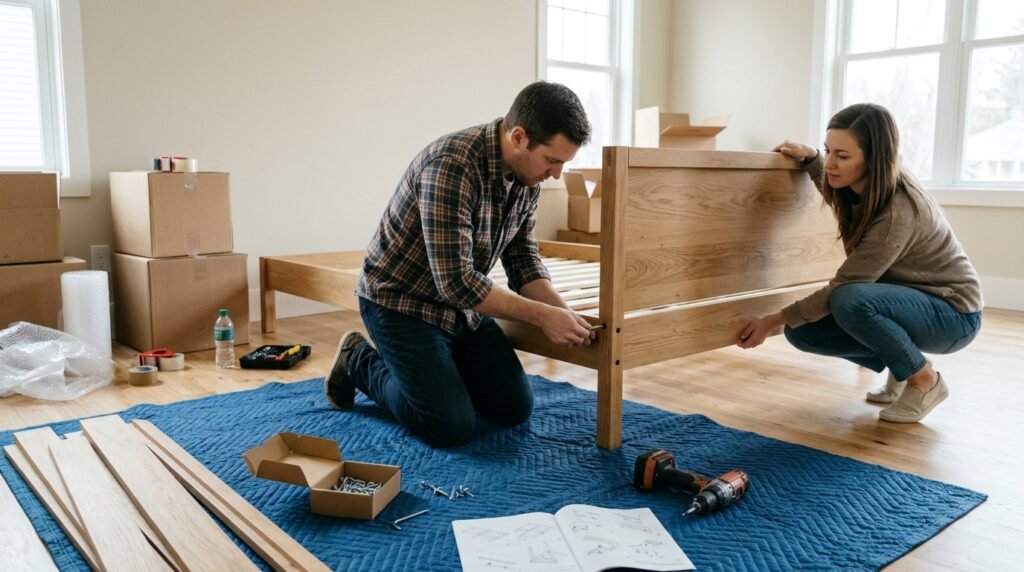
A bed is often the most useful large furniture item to restore first because it allows normal sleeping arrangements to resume. Identify the headboard, footboard, side rails, center support, slats, and all connecting hardware. Some beds use hook-on rails, while others rely on bolts or proprietary fittings. Rebuild the frame according to its instructions and confirm that each rail is fully seated. Install the center support and legs where the design requires them. Slats should be positioned and secured as specified rather than placed randomly. Understanding how to assemble furniture after a move is particularly important for beds because the structure must carry repeated loads. Do not substitute missing support legs with unstable household objects. Inspect the frame for movement before placing the mattress on it. A loose rail or unsupported center section can damage the bed and create a fall hazard. If the bed includes electrical adjustments, motors, or built-in lighting, follow its electrical and mechanical instructions rather than treating it like a basic wooden frame.
Rebuild Tables Without Damaging Their Tops
Dining tables, desks, and occasional tables often require their legs or bases to be reattached after transport. Begin by identifying the correct leg positions and checking the mounting brackets. Place the tabletop on a clean, padded surface if the manufacturer’s instructions call for upside-down assembly. Avoid resting a finished surface directly on rough flooring. Keep the tabletop supported across a suitable area so it does not bend or twist under its own weight. When considering how to assemble furniture after a move, pay attention to the difference between a simple four-leg table and a design with a central pedestal, extension mechanism, or cross-bracing. Each may require a different order of work. Start the bolts carefully and tighten them according to the instructions. Once the structure is complete, use enough people to turn it upright safely. Do not drag the table across the floor by one leg. Test for rocking and inspect whether the legs are properly seated. Adjustable feet can correct minor floor irregularities, but they cannot repair a loose structural joint.
Wardrobes and Tall Cabinets Need Extra Planning
Large wardrobes can be among the most difficult pieces to rebuild because their panels are tall, heavy, and sometimes flexible before the back and shelves are installed. Check ceiling height, floor space, and the manufacturer’s instructions before beginning. Some wardrobes must be assembled horizontally and raised, while others have different requirements. Do not assume the room has enough clearance merely because the finished wardrobe fits beneath the ceiling. The movement needed to raise it can require additional space. For anyone learning how to assemble furniture after a move, tall cabinets also introduce a serious tip-over risk. The U.S. Consumer Product Safety Commission recommends anchoring furniture with drawers, doors, and shelves to the wall. Complete the manufacturer’s specified anchoring process before putting the unit into normal use. Use hardware appropriate for the wall construction and furniture design. Do not rely on a simple plastic drywall anchor unless it is specifically suitable for the application. If the wall material or fixing location is uncertain, seek qualified help. Keep children away from the unit until it is secured.
Install Shelves and Drawers Only After the Cabinet Is Square
Cabinets may appear assembled before they are properly aligned. A slight twist in the frame can cause drawers to bind or doors to sit unevenly. Check the cabinet’s geometry using the methods described in its instructions before installing moving components. A level can help assess position, but a level floor alone does not prove the frame is square. Some designs use back panels, braces, or adjustable fittings to maintain alignment. Do not force a drawer into a cabinet that is visibly distorted. Drawer runners must match their intended positions, and both sides should engage correctly. When applying how to assemble furniture after a move to storage units, install components in the correct sequence so their weight does not pull on an incomplete structure. Check that shelf supports are fully seated and suitable for the shelf design. Avoid loading shelves immediately if the cabinet still needs adjustment or wall anchoring. After installation, open and close drawers carefully and confirm that they move without scraping, binding, or pulling the cabinet forward.
Reattach Doors and Adjust Hinges Carefully
Cabinet doors often become misaligned after a move because hinges were removed, panels shifted, or the cabinet frame is no longer square. Identify the original hinge positions before attaching each door. Many concealed cabinet hinges have adjustment screws that control door position, although their functions vary by model. Manufacturer guidance should determine which adjustment changes height, depth, or side-to-side alignment. Start by checking whether the cabinet itself is correctly assembled and positioned. Adjusting hinges cannot fully compensate for a badly twisted frame. A useful part of learning how to assemble furniture after a move is recognizing the difference between an alignment problem and a damaged fitting. If a hinge plate has pulled away from the panel, tightening its screw may not solve the problem. Avoid repeatedly driving screws into stripped holes. Support heavy doors during installation so their weight does not damage the hinge or mounting surface. Once attached, check that the doors open freely, close correctly, and do not strike nearby walls or furniture.
Reinstall Back Panels Without Distorting the Furniture
A back panel may look like a thin decorative sheet, but in some furniture designs it helps keep the cabinet square. Its role depends on the product and construction. IKEA warns that removing nailed back panels can damage furniture and that the frame can distort when the panel is removed. The company recommends particular care when disassembly is unavoidable. A sensible approach to how to assemble furniture after a move is to inspect the back panel and its original attachment method before reinstalling it. Do not assume that a new row of nails driven through old, damaged holes will provide the same connection. Follow the manufacturer’s fastening pattern and orientation. Make sure the cabinet is aligned before securing a panel that helps maintain its shape. Keep fingers clear of nail and staple locations, and protect the visible surfaces from tool damage. If the panel is cracked, warped, or missing, determine whether an approved replacement is available. A structurally important back panel should not be omitted merely because the cabinet appears able to stand without it.
Anchor Furniture Before Loading It
Wall anchoring is a safety step, not an optional finishing detail for furniture that requires it. The CPSC’s Anchor It! campaign emphasizes securing furniture with drawers, doors, and shelves because tip-overs can cause serious injuries. Heavy and wide furniture can still tip. Use the restraint system specified by the manufacturer and select wall fixings suitable for the wall material and the loads involved. Locate appropriate structural support as required by the installation instructions. Do not guess where hidden electrical wiring or plumbing runs before drilling. When planning how to assemble furniture after a move, include anchoring time and hardware in the schedule. Moving to a new home usually means the previous wall fixings cannot simply be reused without checking their condition and suitability. Some restraint kits have also been recalled, so damaged, unknown, or recalled hardware should not be trusted. Keep the unit inaccessible to children until it is properly secured. Load heavier objects low and avoid placing tempting items where children might climb to reach them. Anchoring reduces risk but does not replace safe use.
Check Stability on the Actual Floor
A piece of furniture that stood evenly in the previous home may rock in the new one. Floors can differ in slope, surface texture, carpet thickness, and local unevenness. After assembly, place the furniture in its intended position and check for movement. A small amount of rocking may come from uneven contact with the floor rather than a defective frame. Use manufacturer-approved adjustable feet or suitable leveling methods when available. Do not insert unstable stacks of loose objects beneath furniture legs. When assessing how to assemble furniture after a move, distinguish floor leveling from structural repair. A cabinet with loose joints will not become safe merely because one foot is raised. Likewise, a table with an improperly connected leg needs the joint corrected before normal use. Test drawers and doors after leveling because their operation can change with the cabinet’s position. Tall furniture still requires proper anchoring even if it feels stable during a light hand test. Stability checks should be completed before heavy loading or daily use.
Handle Missing Hardware Without Improvising
Missing hardware is one of the most common reasons an otherwise simple assembly project stops halfway. Begin by checking the original hardware bag, wrapping material, drawers, storage compartments, and the boxes used during the move. Small parts may have been taped to a larger component. Compare the remaining pieces with the manufacturer’s parts list. If a fitting is missing, contact the manufacturer or retailer to identify a suitable replacement. Some products use proprietary cam bolts, barrel nuts, inserts, or brackets that are not interchangeable with ordinary hardware-store fasteners. A practical lesson in how to assemble furniture after a move is that a screw that appears to fit is not necessarily correct. The wrong length can damage the opposite side of a panel, while the wrong thread can weaken a connection. Do not substitute glue, nails, or improvised brackets for a missing structural connector without an approved repair method. If the missing part supports weight or prevents tipping, leave the furniture unused until the correct connection is restored.
Know When Damaged Screw Holes Make Reassembly Unsafe
A stripped screw hole can prevent a fastener from developing the grip intended by the furniture design. This is especially concerning where screws connect bed rails, table legs, cabinet frames, or wall-restraint hardware. Repeated disassembly may enlarge holes in some engineered-wood panels. IKEA specifically warns that removing screws that cut directly into their receiving material can reduce the strength of those connections. When deciding how to assemble furniture after a move, inspect whether the fastener tightens securely or simply rotates. Do not assume adding a longer screw will fix the problem. It may break through a panel or create a new weakness. Woodworking repairs can sometimes restore certain joints, but their suitability depends on the material, loads, and connection design. Manufacturer-approved replacement parts are preferable for critical fittings. A decorative panel and a load-bearing bed connection do not require the same repair decision. If the damaged area is essential to stability, stop assembly and seek appropriate guidance rather than testing the furniture under normal household loads.
Protect Wood, Veneer, Glass, and Upholstery During Assembly
Different materials need different handling. Solid wood can be scratched or dented by tools and hard surfaces. Veneered and laminated panels can chip at their edges. Glass components may require special supports and careful lifting. Upholstered headboards and sofa sections can pick up dirt or tears when dragged across unfinished floors. Use clean protective coverings and avoid stacking heavy parts on delicate surfaces. When working out how to assemble furniture after a move, plan where each component will rest before lifting it. Keep glass panels away from crowded work areas and follow the manufacturer’s instructions for handling and installation. Do not place tools or loose bolts on a polished tabletop without protection. Avoid using a rubber mallet unless the assembly method calls for one. Force can damage hidden joints even when the outside surface appears unharmed. Clean dusty components gently using care methods suitable for their materials. Inspecting and protecting finishes during assembly is easier than repairing scratches, chips, or cracked glass after the furniture has been completed.
Avoid Lifting Heavy Furniture Alone
Large furniture can be awkward even when its total weight seems manageable. A long tabletop may shift unexpectedly, while a tall cabinet can become unstable as it is raised. Heavy bed sections can trap fingers if they move while a bolt is being fitted. Plan lifting tasks before beginning. Clear the route, remove loose obstacles, and decide where each person will stand. Follow the manufacturer’s guidance on the number of people required for assembly and handling. The safe method for how to assemble furniture after a move is not always the fastest one. If a panel needs two people to hold it securely, do not attempt the same operation alone using a chair or unstable support. Mechanical lifting aids may help with moving furniture, but they must be appropriate for the load and used correctly. Stop if the item begins to tip or the lifting position becomes unsafe. Professional movers or furniture assemblers may be the better option for exceptionally heavy, oversized, or difficult pieces.
Test Every Moving Part Before Using the Furniture
Assembly is not complete when the final screw has been installed. Test the finished item according to its intended function and the manufacturer’s instructions. Open and close drawers, check door movement, inspect sliding rails, and confirm that folding or extending mechanisms operate smoothly. Make sure adjustable shelves are seated correctly. Examine bed supports before placing bedding and occupants on the frame. Check table connections and any adjustable feet. When reviewing how to assemble furniture after a move, look for warning signs such as creaking joints, visible gaps, uneven movement, loose hardware, or components that shift unexpectedly. Do not apply excessive force to test strength. A cautious functional check is different from deliberately overloading the furniture. If a drawer catches, determine whether the runner is misaligned rather than forcing it shut. If a cabinet rocks, examine its frame and floor contact before adding contents. Complete any required wall anchoring before using storage furniture. A final inspection can reveal small mistakes while they are still easy to correct.
Decide Which Furniture to Assemble First
The best order depends on how quickly the household needs each room. Beds are often the first priority because they restore a place to sleep. A dining table or desk may follow if the household needs a place to eat or work. Essential storage can help clear unpacked boxes from walkways. Large wardrobes and shelving units may need to be positioned early because moving them later can be difficult. Learning how to assemble furniture after a move also involves planning around the available time and help. Group similar tasks together where practical, but keep hardware from different products separate. Finish one unstable structure before starting another in the same room. Do not leave partially assembled cabinets accessible to children. If several pieces require wall anchoring, plan for the correct tools and wall fixings rather than postponing every anchor until the end. Prioritize function and safety over decoration. Once the main furniture is secure, smaller pieces and accessories can be added without working around crowded floors and open hardware bags.
When Professional Furniture Assembly Makes Sense
Some projects are manageable with basic tools and careful attention, while others are better handled by an experienced assembler. Large wardrobes, complex modular systems, heavy wall-mounted furniture, adjustable beds, and pieces with damaged structural connections may require specialized skills. Professional help can also be useful when the manufacturer’s instructions call for multiple people or when the household lacks suitable tools. If wall anchoring involves uncertain wall construction, concealed services, or unusual mounting conditions, a qualified installer may be needed. Knowing how to assemble furniture after a move includes recognizing personal limits. Ask a service provider whether the work includes structural inspection, hardware replacement, leveling, anchoring, and cleanup. Confirm what happens if a part is missing or damaged. An assembler should not claim that every piece can be made safe regardless of its condition. The goal is a correctly assembled and stable item, not merely a finished-looking piece. For valuable antiques or unusual joinery, a furniture specialist may be more appropriate than a general flat-pack assembly service.
Common Mistakes That Cause Trouble After a Move
Several avoidable mistakes appear repeatedly during furniture reassembly. Mixing hardware between products can damage joints. Ignoring the manual can reverse panels or leave out essential supports. Tightening connections too early can distort a frame. Using excessive power-tool torque can strip holes. Dragging assembled furniture can damage legs and flooring. Skipping wall anchors can leave tall storage units unsafe. Another mistake is treating transport damage as a minor inconvenience rather than inspecting its effect on the structure. The most reliable approach to how to assemble furniture after a move is to work methodically and stop when something does not fit. A connection that requires unusual force often signals a problem with orientation, alignment, or hardware selection. Do not hide leftover parts simply because the furniture appears complete. Check whether they belong to a safety restraint, center support, brace, or another essential connection. Taking a little more time during assembly is usually easier than dismantling a distorted cabinet or repairing a damaged joint later.
Keep Hardware and Instructions for the Next Move
Once the furniture is assembled, store any spare manufacturer-approved hardware with its instructions. Label the bag with the product name and model number. Keep a digital copy of the manual when available. Photograph hidden connections and unusual assembly details before placing the item against a wall. These records can help if the furniture needs future maintenance or another move. Understanding how to assemble furniture after a move becomes easier when the next relocation is considered during the current one. Keep records of replaced fittings, repaired joints, and parts that should not be removed again. Do not assume that a piece surviving one disassembly means repeated disassembly is harmless. Some engineered-wood connections may become weaker each time they are disturbed. If the furniture has a warranty, retain purchase information and follow the manufacturer’s maintenance and handling instructions. Good records also help a future moving crew understand which sections can remain assembled and which require careful separation.
FAQs
How long does it take to reassemble furniture after moving?
The time depends on the furniture’s size, complexity, condition, available instructions, and number of people helping. A simple table may require relatively little work, while a large wardrobe or modular storage system can take much longer. Missing hardware, damaged joints, and wall anchoring can also add time.
What tools do I need to put furniture back together?
Common tools include correctly sized screwdrivers, hex keys, a measuring tape, and a level. Some products need specialized fittings or additional tools. Always check the manufacturer’s instructions before using a power driver or modifying a connection.
Can flat-pack furniture be taken apart and rebuilt?
Some flat-pack furniture can be disassembled and reassembled, but not every product is designed for repeated disassembly. IKEA warns that removing certain screws can weaken their holes and affect structural integrity. Check the specific product instructions and inspect all connections before rebuilding.
What is the safest way to assemble furniture after a move?
Identify the parts, follow the original instructions, inspect for damage, and build the structure in the required sequence. Use the correct hardware, support heavy components, and complete wall anchoring where needed. Test stability before putting the furniture into normal use.
What should I do if furniture screws are missing?
Check the packing materials and original hardware bags first. Then use the product’s parts list to identify the exact replacement. Contact the manufacturer or retailer when possible. Avoid substituting random screws for important structural connections.
Do dressers and bookshelves need to be anchored after moving?
The CPSC recommends anchoring furniture with drawers, doors, and shelves to prevent tip-over injuries. Follow the furniture manufacturer’s instructions and use restraint hardware appropriate for the wall. Anchoring is especially important before children can access the furniture.
Conclusion
Learning how to assemble furniture after a move is mainly about preparation, correct connections, and safety. Identify each piece, locate its instructions, organize the hardware, and inspect for damage before rebuilding the main frame. Follow the intended assembly sequence, avoid overtightening, and check alignment before adding drawers, doors, or heavy contents. Do not ignore stripped holes, missing supports, or unstable joints. Tall storage furniture needs appropriate wall anchoring, even when it appears steady on the floor. Some furniture can be rebuilt many times, while other designs may lose strength after disassembly. Knowing that difference helps prevent damage and unsafe repairs. Once every piece is aligned, secure, and tested, the new home becomes easier to organize without creating avoidable problems for the next move.