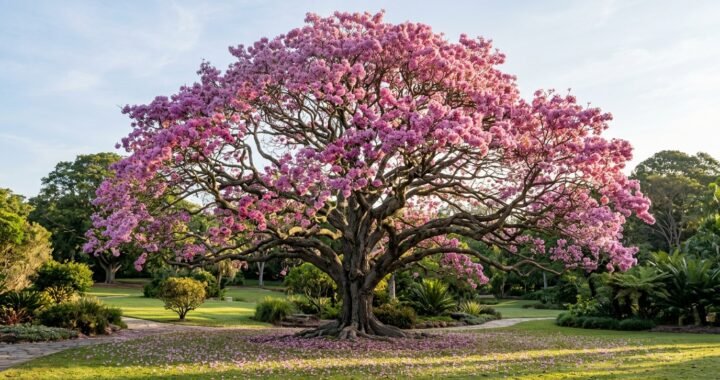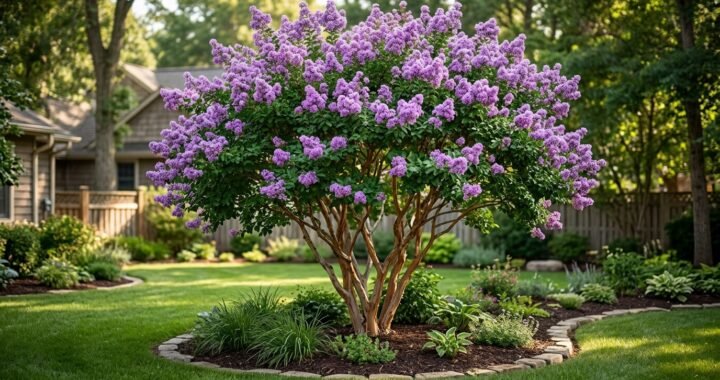
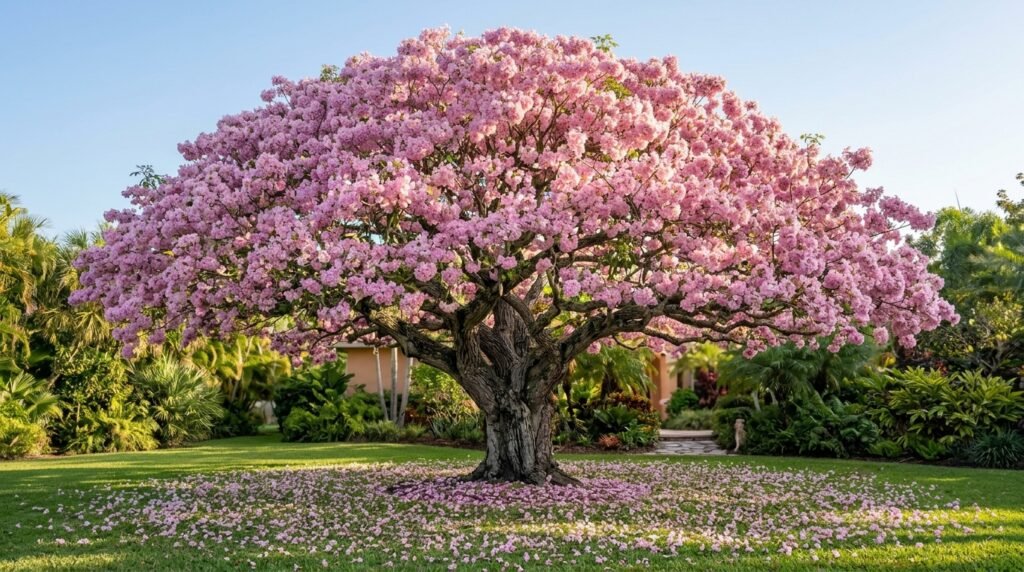
The pink trumpet tree is grown for its striking clusters of trumpet-shaped flowers, which can cover much of the canopy during its flowering season. One important detail is that this common name does not always refer to one species. The University of Florida identifies Tabebuia heterophylla, a Caribbean species, as “pink trumpet tree,” while Handroanthus impetiginosus is another widely grown tree with spectacular rose-pink to purple trumpet flowers and is also called a pink trumpet tree in horticultural use. The two belong to the Bignoniaceae family but differ in mature size, cold tolerance, flowering pattern, and native range. Kew currently accepts Handroanthus impetiginosus as the botanical name for the species formerly known as Tabebuia impetiginosa. For gardeners, the practical requirements are similar in several ways: plenty of sunlight, well-drained soil, enough room for a tree canopy, careful watering while young, and pruning that develops sound structure. Correct species identification matters before planting because climate suitability and final dimensions can vary.
What Is a Pink Trumpet Tree?
A pink trumpet tree is a warm-climate ornamental flowering tree known for showy, funnel- or trumpet-shaped blossoms. The name is commonly connected with trees once grouped broadly under Tabebuia, although botanical classification has changed for some species. Handroanthus impetiginosus, for example, is the currently accepted name at Royal Botanic Gardens, Kew, while Tabebuia impetiginosa is listed as a synonym. Kew places it in the family Bignoniaceae and reports a native range extending from central Mexico into tropical South America. Tabebuia heterophylla is different. The University of Florida describes that species specifically under the common name pink trumpet tree and identifies it as native to Puerto Rico and the West Indies. This naming overlap explains why two trees sold or discussed under similar common names may not behave exactly alike. Before following a care guide, buying a nursery specimen, or planning around a mature size, check the scientific name on the plant label.
Pink Trumpet Tree Species Are Easy to Confuse
Common names are useful in everyday gardening, but they are not precise botanical identifiers. Tabebuia heterophylla can grow about 20 to 30 feet tall according to UF/IFAS and develops from a relatively narrow young tree into a broader mature form. Its flowers may be pink or white and can appear through spring and summer. Handroanthus impetiginosus, formerly Tabebuia impetiginosa, is described differently by UF/IFAS. In Florida landscape guidance, it is a briefly deciduous tree around 15 to 20 feet tall, with dense terminal clusters of rose-pink to purple flowers appearing in late winter or early spring. Kew records that species over a much wider natural geographic range and botanical descriptions show that trees can become considerably larger under other growing conditions. Therefore, mature size should never be predicted from the common name alone. The scientific name, local climate, nursery source, growing conditions, and regional horticultural guidance provide a better basis for planning.
The Flowers Create the Tree’s Main Landscape Appeal
The flowers are the feature that makes these trees memorable. Handroanthus impetiginosus produces terminal flower clusters with a narrow funnel-shaped corolla. Kew botanical information describes flower colors ranging through magenta and orange-pink, with changes in throat coloration as flowers mature. UF/IFAS describes its landscape display as rose-pink to purple. Tabebuia heterophylla produces pink or white bell-shaped flowers, with flowering reported through spring and summer in warm Florida conditions. A pink trumpet tree can therefore look quite different depending on the species and stage of bloom. Some types can flower when they are nearly or partly leafless, making the floral display especially noticeable because foliage does not hide the blossoms. Climate and seasonal conditions influence exactly when flowering begins, so gardeners should treat published bloom periods as regional guidance rather than a guaranteed calendar date.
Leaves Help Identify the Tree Outside the Flowering Season
Flowers make identification easy during bloom, but foliage becomes more useful during the rest of the year. Handroanthus impetiginosus has palmately compound leaves, usually with five leaflets, although botanical descriptions can include more. Kew describes the leaflets as ovate to elliptic, while UF/IFAS also describes the foliage as dark green and palmately compound. The arrangement can resemble fingers spreading from the palm of a hand. Tabebuia heterophylla also has palmately compound green leaves. UF/IFAS notes that its foliage remains evergreen through much of its growing range but can become briefly deciduous while new foliage emerges. This is another reason that a pink trumpet tree losing leaves should not automatically be assumed unhealthy. Seasonal leaf loss can be normal for the species and climate. Look at the whole plant, including branches, buds, new growth, watering conditions, and season, before deciding that leaf drop indicates disease.
Choose a Warm Climate Before Choosing the Planting Spot
Climate is one of the first practical filters for growing these trees successfully. UF/IFAS places Tabebuia heterophylla in USDA hardiness zones 10A through 11, while its guidance for Tabebuia impetiginosa lists zones 9B through 11. These recommendations make both trees much better suited to warm regions than to climates with severe winter cold. Local conditions can still differ within a hardiness zone because elevation, wind exposure, urban heat, frost pockets, and microclimates affect plants. A protected urban garden may behave differently from an exposed rural site in the same general zone. A pink trumpet tree should therefore be selected using the scientific name and regional planting guidance rather than assuming all trumpet trees tolerate the same winter temperatures. Gardeners near the edge of the recommended range should also consider local extension advice and nursery experience. Cold damage can affect flowers, young branches, foliage, and overall tree performance even if a plant survives.
Full Sun Supports Strong Growth and Flowering
A sunny site is usually the best starting point. UF/IFAS lists full sun for both Tabebuia heterophylla and Tabebuia impetiginosa in landscape cultivation. Strong light supports normal canopy development and helps the tree produce the floral display for which it is planted. Before planting, observe the site through the day rather than judging it at one moment. Nearby buildings, fences, mature trees, and future construction can create substantial shade. A young pink trumpet tree may initially receive plenty of light but become shaded as surrounding plants grow. Space planning also matters because adequate sunlight is not useful if the mature canopy must later be severely cut back to fit beside a building. Select an open site that provides both light and enough long-term space. In very hot regions, soil moisture management during establishment remains important even though the canopy receives full sun. Light requirements do not mean a newly planted tree should be allowed to dry severely while roots are still establishing.
Well-Drained Soil Is More Important Than Perfect Soil

These trees can adapt to several soil conditions, but drainage deserves particular attention. UF/IFAS describes Tabebuia heterophylla as tolerant of clay, loam, and sand and able to grow across acidic to alkaline soil conditions, while also indicating that the soil should be well drained. Its guidance for Tabebuia impetiginosa similarly lists clay, loam, and sand among suitable soil textures and notes good drought tolerance once established. This means a gardener should not focus only on whether soil is sandy or clay-based. The bigger question is how water behaves around the root zone. A site that stays saturated after rain can create a different growing environment from one where excess water drains away. Before planting a pink trumpet tree, observe the site after heavy rainfall. Persistent standing water suggests that drainage should be assessed before planting. Avoid automatically solving poor drainage by placing a small pocket of highly amended soil into an otherwise unsuitable site because roots eventually grow beyond the planting hole.
Give the Tree Enough Space From the Beginning
A small nursery tree can make a planting area look much larger than it really is. Planning should instead be based on mature dimensions and canopy development. UF/IFAS reports Tabebuia heterophylla reaching about 20 to 30 feet in height with a similar spread. Its Florida guidance for Tabebuia impetiginosa describes a smaller landscape tree, about 15 to 20 feet high, although botanical records from other environments show that Handroanthus impetiginosus can grow larger. Do not plant a pink trumpet tree directly beneath utility lines or in a narrow location where the mature canopy will conflict with a roof, wall, street sign, or other permanent structure. Consider roots, nearby paving, visibility, maintenance access, and falling flowers or seedpods as well. Good placement reduces the need for aggressive pruning later. A tree that naturally fits its site is easier to maintain and more likely to develop an attractive form than one repeatedly cut back because its mature size was ignored.
Planting Correctly Helps Roots Establish
Good planting starts with the root system rather than the flowers above it. Keep the root ball intact enough to prevent unnecessary root damage, but inspect for obvious circling or defective roots that may need appropriate correction. The trunk flare should not be buried deeply beneath added soil. Digging an unnecessarily deep planting hole can allow the root ball to settle, leaving the trunk base too low. Backfill using soil appropriate to the site and avoid creating a buried container of radically different soil unless regional guidance specifically recommends an amendment strategy. Water after planting to settle soil around roots and eliminate large air gaps. A newly planted pink trumpet tree may need support only if the root ball or site conditions make it unstable. Stakes and ties should not become permanent restraints. UF/IFAS specifically notes that young Tabebuia impetiginosa can benefit from training to a single trunk and staking during early development before being allowed to grow naturally. Local arboricultural guidance should determine the best planting and staking method.
Young Trees Need More Consistent Water Than Established Trees
Drought tolerance should not be confused with zero watering after planting. UF/IFAS rates both Tabebuia heterophylla and Tabebuia impetiginosa as having high drought tolerance in established landscape conditions. A newly planted tree has a much smaller effective root system and therefore needs more careful moisture management while roots spread into surrounding soil. Water deeply enough to moisten the root zone, then let soil conditions guide the next irrigation rather than watering by a rigid calendar. Weather, soil texture, tree size, rainfall, temperature, wind, and drainage all affect how quickly moisture is lost. A pink trumpet tree planted in sandy soil during hot, dry weather may need a different schedule from the same species growing in heavier soil during a rainy period. Check the soil rather than assuming the surface tells the whole story. The goal is steady establishment without keeping the root zone constantly saturated. Once roots are established, irrigation can usually become less frequent according to local climate and actual plant needs.
Mulch Can Protect the Root Zone When Applied Correctly
Organic mulch can reduce rapid moisture loss, moderate soil temperature, and reduce competition from turf near a young tree. It is most useful when spread over the root zone rather than piled against the trunk. Keep the trunk flare visible and avoid creating a mound of mulch directly around the bark. Constant moisture against the trunk can create unhealthy conditions and hides the base of the tree, making inspection harder. A broad, moderate mulch layer is generally more useful than a deep pile concentrated beside the trunk. For a young pink trumpet tree, keeping aggressive grass and weeds away from the immediate root area can also reduce competition while the tree establishes. Mulch should not be treated as a permanent object that is simply topped up every year without checking existing depth. Organic material gradually decomposes, but repeated additions can also create excessive buildup. Inspect the root zone periodically and adjust mulch according to actual conditions and local tree-care guidance.
Structural Pruning Matters Most While the Tree Is Young
Early pruning should focus on building a sound framework rather than forcing the canopy into an unnatural shape. UF/IFAS notes that Tabebuia impetiginosa develops better form when trained to a single trunk during its early years. For Tabebuia heterophylla, UF/IFAS notes that branches can droop as the tree grows and may require pruning where vehicle or pedestrian clearance matters. Remove dead, damaged, or poorly positioned growth when appropriate, but avoid unnecessary heavy pruning. A pink trumpet tree selected for its natural canopy and flowers should not need repeated severe cutting simply to fit the site. Pruning timing can also influence flowering if flower-bearing growth is removed, so gardeners should understand the species and local bloom cycle before making major cuts. Large limbs, branches near utility lines, storm-damaged trees, and pruning that requires climbing are better handled by qualified tree-care professionals. Young-tree structure is easier to guide than correcting major defects after the trunk and branches become large.
Seasonal Leaf Drop Can Be Normal
A tree covered in flowers but carrying few leaves can look unusual to someone seeing it for the first time. For some trumpet trees, however, flowering and temporary leaf loss are part of their normal seasonal rhythm. Kew’s botanical description of Handroanthus impetiginosus notes that it can flower while almost leafless, and UF/IFAS describes Tabebuia impetiginosa as briefly deciduous. Tabebuia heterophylla behaves somewhat differently, remaining evergreen through much of its range while sometimes becoming briefly deciduous as new leaves emerge. Therefore, leaf loss on a pink trumpet tree needs context. Sudden decline during an inappropriate season, branch dieback, abnormal discoloration, soft roots, or other stress signs deserve investigation. Predictable seasonal leaf change followed by flowering or fresh growth may be normal. Knowing the exact species makes this distinction easier and prevents unnecessary fertilizer, excessive watering, or other treatments applied to a healthy tree simply because its normal cycle was misunderstood.
Flowering Time Depends on Species and Climate
There is no single bloom month that applies everywhere. UF/IFAS describes the rose-pink to purple flowers of Tabebuia impetiginosa appearing in late winter or early spring in its Florida landscape guidance. Tabebuia heterophylla can flower during spring and summer. Other climates can shift these periods because temperature, rainfall patterns, seasonal dryness, elevation, and local conditions influence plant development. This explains why photographs or flowering reports from another country may not match a local garden calendar. A healthy mature pink trumpet tree may also vary somewhat from year to year. Gardeners should observe their own tree over several seasons before deciding that a slight change in bloom timing indicates a problem. If a mature tree consistently produces little flowering, review sunlight, pruning, overall vigor, water conditions, and species identity. Avoid using excessive fertilizer simply to force blooms, since plant nutrition should be based on actual site conditions and deficiencies rather than an assumption that more fertilizer always means more flowers.
Seedpods Are a Normal Part of the Life Cycle
After flowering, trumpet trees can produce long fruits containing seeds. Kew describes the fruit of Handroanthus impetiginosus as cylindrical and records substantial variation in fruit length, while the India Trees portal describes a pale-brown capsule and identifies five leaflets and clustered flowers as useful recognition features. UF/IFAS also notes long, slender seedpods following the flowers of Tabebuia heterophylla. These pods are therefore not automatically evidence of disease or abnormal growth. They are part of reproduction. A pink trumpet tree placed beside a highly maintained patio, pool deck, driveway, or walkway may create seasonal cleanup from flowers, leaves, and pods. This does not make the tree unsuitable, but it should influence placement. Gardeners who value an immaculate paved surface may prefer positioning the canopy over a lawn, planting bed, or another area where seasonal plant litter is easier to manage.
Propagation From Seed Requires Realistic Expectations
Seeds can provide a practical way to propagate some trumpet trees, particularly when mature fruits are available and seed collection is permitted. However, seedlings are not always the best choice when a gardener wants a predictable ornamental result. Genetic variation means seedlings may differ from the parent tree in growth, form, flower traits, or other characteristics. Seed freshness, storage, temperature, moisture, and growing medium can also affect germination. If growing a pink trumpet tree from seed, collect mature seed responsibly, use clean containers and a suitable free-draining propagation medium, and maintain moisture without keeping the medium waterlogged. Protect young seedlings from extremes until they develop stronger roots. Do not assume a seedling will flower immediately; trees need time to mature, and flowering age varies with species and growing conditions. If a specific flower color, growth habit, or known selection is important, purchasing correctly identified nursery stock may offer greater predictability than raising an unknown seedling.
Pests and Diseases Should Be Diagnosed Before Treatment
UF/IFAS does not characterize either of these trumpet trees as requiring constant pest intervention, but any landscape tree can experience problems under unsuitable conditions or local pest pressure. Yellow leaves, sparse growth, spots, insects, branch decline, or leaf loss do not identify a single cause by themselves. Water stress, drainage problems, physical root damage, nutrient conditions, weather, pests, or disease may produce overlapping symptoms. Before spraying a pink trumpet tree, inspect affected leaves, stems, bark, soil moisture, and recent environmental changes. Determine whether the symptom is widespread or limited to one branch. Seasonal leaf drop should also be separated from abnormal defoliation. Avoid routine pesticide use without identifying a target problem. Incorrect treatment can waste money and may affect beneficial organisms without helping the tree. For serious decline, large trees, or symptoms that cannot be identified confidently, a local extension service, qualified arborist, or plant diagnostic service can provide guidance based on regional pests and diseases.
Common Care Mistakes Usually Begin With the Site
Many long-term problems can be traced to decisions made before the tree was planted. A location with poor drainage can create recurring root stress. Deep shade can reduce the value of a tree selected for flowering. A narrow strip beside a building can force repeated pruning as the canopy expands. Planting too deeply can bury the trunk flare. Constant shallow watering can create a different root environment from deeper, appropriate establishment watering. A pink trumpet tree can also be damaged by lawn equipment striking the trunk or by repeated soil disturbance near roots. Another common mistake is treating normal seasonal behavior as a problem. Brief leaf loss, flowering on relatively bare branches, or seedpod production may be normal depending on species. Successful care therefore starts with correct identification, appropriate climate, enough sunlight, good drainage, sensible spacing, and patient establishment. Those basic decisions usually matter more than complicated products or constant intervention.
Pink Trumpet Trees Work Best as Landscape Features
The flowering display makes these trees natural focal points. A specimen can work in a lawn, open garden, courtyard with adequate space, or other warm-climate landscape where the canopy can be viewed clearly. UF/IFAS lists Tabebuia heterophylla for uses including specimen planting, shade, parking-lot islands, and street-tree applications where conditions are suitable. Tabebuia impetiginosa is also valued as a specimen and landscape tree. Residential placement should be more thoughtful than simply choosing the place where flowers will be most visible. Consider mature canopy width, overhead utilities, pavement, property boundaries, drainage, sight lines, and cleanup. A pink trumpet tree planted where its natural form has room to develop can become a much stronger visual feature than one squeezed between structures. Its dramatic bloom can provide seasonal color without requiring a crowded planting design around it.
Handroanthus Impetiginosus Has a Wide Native Range
For readers using the common name for Handroanthus impetiginosus, its natural distribution helps explain why care information from different regions can vary. Kew records the species as native from central Mexico through parts of Central America and into tropical South America, including countries such as Brazil, Bolivia, Colombia, Paraguay, Peru, Venezuela, Costa Rica, Guatemala, Honduras, Nicaragua, and Panama. Kew recognizes Handroanthus impetiginosus as the accepted scientific name and lists Tabebuia impetiginosa among its synonyms. This taxonomic change is useful when researching a pink trumpet tree because older horticultural publications, nursery labels, and garden references may continue using Tabebuia impetiginosa. Both names can therefore lead to useful historical information, but current botanical references should be used to confirm identity. The broad native distribution also means natural specimens experience different environmental conditions across their range, so one simplified care rule cannot represent every setting in which the species grows.
Tabebuia Heterophylla Is a Different Caribbean Tree
Tabebuia heterophylla deserves separate treatment rather than being treated as another scientific name for Handroanthus impetiginosus. UF/IFAS identifies it as native to Puerto Rico and the West Indies and recommends it in USDA hardiness zones 10A through 11. It can reach about 20 to 30 feet tall and develop a similar spread. Its pink or white flowers appear during spring and summer, followed by slender seedpods. This species may remain evergreen through much of its range, although it can briefly shed foliage during new leaf emergence. These traits differ enough from Handroanthus impetiginosus that gardeners should not interchange all care expectations. If a nursery label simply says pink trumpet tree, look for Tabebuia heterophylla, Handroanthus impetiginosus, or another scientific name underneath it. Correct identification makes hardiness, mature size, bloom timing, and growth expectations much more reliable.
How to Choose a Healthy Nursery Tree
A flowering specimen can attract attention at a nursery, but flowers should not be the only selection factor. Confirm the botanical name first, especially because the common name can refer to more than one species. Look for a trunk and branch structure appropriate to the plant’s age, healthy foliage when the tree should normally be in leaf, and a root ball that has been maintained properly. Avoid choosing solely because one specimen has the most flowers that day. A younger pink trumpet tree with sound structure and healthy roots can be a better long-term choice than a stressed plant carrying a temporary flower display. Ask how the tree was propagated, how long it has been in its container, and whether the nursery has local guidance about cold tolerance and planting time. Inspect for major bark injuries, obvious dieback, severe root problems, or signs of prolonged neglect. A locally grown specimen may also be better adapted to regional nursery and climate conditions than one recently moved from a very different environment.
FAQs
How big does a pink trumpet tree get?
Size depends on the species and growing environment. UF/IFAS reports Tabebuia heterophylla at roughly 20 to 30 feet tall with a comparable spread, while its Florida landscape description for Tabebuia impetiginosa gives about 15 to 20 feet. Handroanthus impetiginosus can grow larger in other environments, so scientific identification and regional guidance matter.
Does a trumpet tree lose its leaves?
Some do. Handroanthus impetiginosus can be briefly deciduous and may flower while nearly leafless. Tabebuia heterophylla is evergreen through much of its range but can briefly lose foliage as new leaves appear. Seasonal leaf loss should therefore be judged according to species, climate, and timing.
How much sun does a trumpet tree need?
UF/IFAS recommends full sun for both Tabebuia heterophylla and Tabebuia impetiginosa. An open, sunny location also gives the canopy enough light to develop naturally and allows the flowering display to be seen clearly.
Is a trumpet tree drought tolerant?
UF/IFAS rates both discussed species as having high drought tolerance once established in suitable landscapes. Newly planted trees still require careful watering while their root systems establish, so drought tolerance should not be interpreted as no-water care immediately after planting.
When does the pink trumpet tree bloom?
Bloom time depends on species and climate. UF/IFAS describes Tabebuia impetiginosa flowering in late winter or early spring, while Tabebuia heterophylla can flower during spring and summer. Local weather can shift the exact timing.
Are Tabebuia impetiginosa and Handroanthus impetiginosus the same tree?
They refer to the same species under different botanical naming treatments. Royal Botanic Gardens, Kew currently accepts Handroanthus impetiginosus and lists Tabebuia impetiginosa as a synonym. This is different from Tabebuia heterophylla, which is a separate species also known as pink trumpet tree.
Conclusion
The pink trumpet tree can create one of the most striking seasonal flower displays in a warm-climate landscape, but successful growing begins with knowing which species is actually being planted. Tabebuia heterophylla and Handroanthus impetiginosus can both be associated with this common name, yet they differ in native range, mature dimensions, hardiness, foliage behavior, and flowering pattern. Once the botanical identity is clear, choose a sunny site with well-drained soil and enough room for mature growth. Water carefully during establishment, maintain a sensible mulch zone, develop good branch structure while the tree is young, and avoid treating normal leaf drop or seedpod formation as automatic signs of trouble. A correctly identified tree planted in a climate and location that suit its natural growth will usually require less corrective work and provide a much better long-term landscape result.