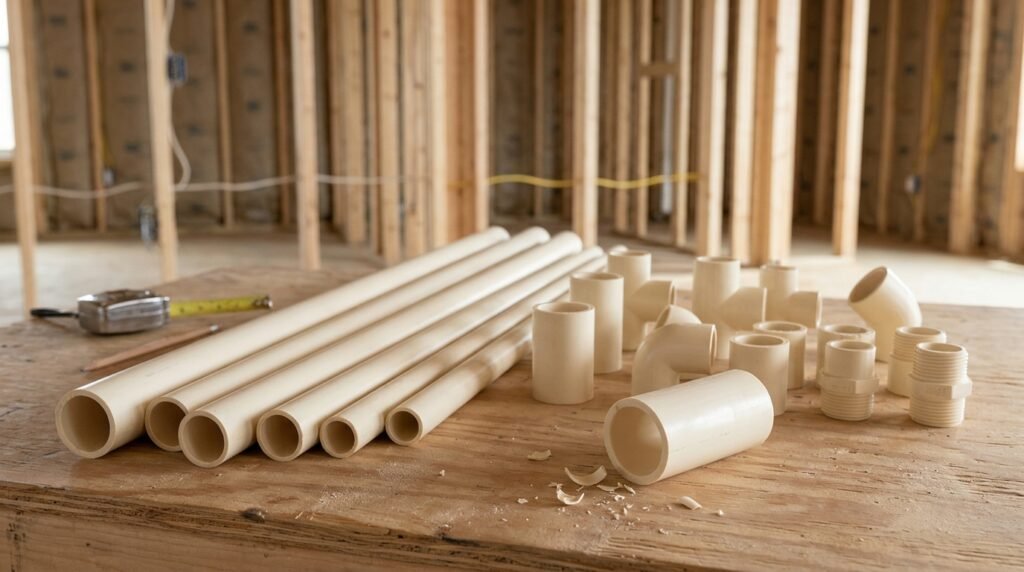
CPVC pipe is a plastic piping product used to carry hot and cold water in residential, commercial, and industrial buildings. CPVC stands for chlorinated polyvinyl chloride. It is made by adding chlorine to ordinary PVC, which improves its ability to handle higher temperatures. This makes it a useful option for plumbing systems where regular PVC may not be suitable. It is lightweight, resists corrosion, and can be joined without welding or open flames. However, not every CPVC product has the same dimensions, pressure rating, or approved use. Understanding its material, types, sizes, temperature limits, fittings, and installation requirements helps prevent plumbing problems. This article explains how CPVC piping works, where it is used, how it compares with PVC and other materials, and what to check before choosing or installing it.
What Is CPVC Pipe?
CPVC pipe is a thermoplastic pipe made from chlorinated polyvinyl chloride. Thermoplastic means the material can soften when heated and become firm again when cooled. Manufacturers produce CPVC by adding chlorine to PVC through a controlled chemical process. This additional chlorine changes the material’s properties and improves its ability to handle heat. As a result, CPVC is widely used in hot- and cold-water plumbing systems. It is also used in selected industrial piping and fire protection applications. The material is designed to carry pressurized liquids when the pipe, fittings, and connected substances are compatible. Its smooth internal surface supports water flow, while its resistance to corrosion makes it different from many metal piping materials. However, its performance depends on the specific product and operating conditions. A pipe designed for household water distribution should not automatically be used for chemicals, industrial fluids, or fire protection. Each application requires an appropriately approved piping system. The Plastics Pipe Institute identifies CPVC as a high-temperature plastic pressure piping material with applications in plumbing, hydronic systems, and certain fire protection installations. plasticpipe.org+1
How Is CPVC Made?
The production of CPVC begins with polyvinyl chloride, commonly called PVC. Manufacturers expose PVC to a controlled chlorination process that increases its chlorine content. This process changes the polymer’s structure and improves its performance at higher temperatures. The resulting material is then combined with suitable processing ingredients to create a compound for manufacturing pipes and fittings. The compound is processed into the required shapes using industrial production equipment. Manufacturers control factors such as dimensions, material quality, wall thickness, and product performance. After manufacturing, pipes undergo quality checks according to the applicable product specifications. These checks may cover dimensions, workmanship, pressure performance, and other physical properties. ASTM standards provide requirements for several CPVC product categories. For example, ASTM F441 covers Schedule 40 and Schedule 80 CPVC pipe, while ASTM F442 covers SDR pressure-rated products. These standards help establish consistent manufacturing and testing requirements. However, compliance with a manufacturing standard does not mean every product is automatically approved for drinking water or every plumbing application. Additional product listings and local approvals may be necessary. Buyers should therefore check the printed product information instead of relying only on the material name. ASTM Store+2
Common Types of CPVC Pipe
CPVC products are available in different dimensions and wall configurations. The correct type depends on the plumbing design, required pressure, operating temperature, and applicable standards. One common category is CTS SDR 11 tubing, which is generally used for hot- and cold-water distribution in smaller plumbing systems. CTS means Copper Tube Size, referring to a specific outside diameter system. SDR stands for Standard Dimension Ratio, which compares the pipe’s outside diameter with its wall thickness. A second category includes Schedule 40 and Schedule 80 CPVC pipe. These products use Iron Pipe Size dimensions and are available in different wall thicknesses. Schedule 80 has thicker walls than Schedule 40 at the same nominal size. Another category is SDR pressure-rated pipe, manufactured according to the relevant dimensional and pressure requirements. These types are not interchangeable simply because they are made from the same material. Their outside diameters, fittings, and pressure characteristics can differ. Before purchasing CPVC pipe, identify the product standard and dimensional system. A fitting designed for CTS tubing may not connect directly to IPS piping. A suitable transition fitting may be required. The Plastics Pipe and Fittings Association identifies ASTM D2846, ASTM F441, and ASTM F442 as relevant standards for different CPVC piping categories. YMAWS+1
CTS SDR 11 Tubing
CTS SDR 11 tubing is commonly used in smaller residential and commercial hot- and cold-water distribution systems. Its dimensions follow the copper tube size system. SDR 11 describes the relationship between the outside diameter and wall thickness. The wall thickness changes with the pipe diameter to maintain the specified ratio. This makes the dimensional design different from Schedule-based products. The 2025 Plastic Pipe and Fittings Association handbook identifies standard CTS SDR 11 products under ASTM D2846. It describes continuous pressure ratings of 400 psi at 73°F and 100 psi at 180°F for the covered system. These figures apply to the specified product category, not every CPVC pipe available in the market. The manufacturer’s documentation must always be checked before using these values for a plumbing design. YMAWS+1
Schedule 40 CPVC Pipe
Schedule 40 CPVC pipe uses Iron Pipe Size dimensions and a defined wall thickness for each nominal size. It is designed for suitable pressure piping applications when the product meets the relevant requirements. Its wall construction differs from Schedule 80. Schedule 40 may be appropriate for certain plumbing or industrial systems, depending on the manufacturer’s specifications and local regulations. The pressure rating is not identical across all sizes and operating temperatures. Therefore, choosing it only because it has a familiar schedule number is not enough. The intended fluid, system pressure, temperature, and fitting compatibility must all be considered. ASTM F441 covers Schedule 40 and Schedule 80 CPVC pipe. ASTM Store+1
Schedule 80 CPVC Pipe
Schedule 80 CPVC pipe has a thicker wall than Schedule 40 of the same nominal size. This construction can provide a different pressure capacity, depending on the pipe diameter, material designation, and operating temperature. It is used in selected plumbing and industrial piping applications. Its thicker wall also means a smaller internal passage than a comparable Schedule 40 product with the same nominal size. This difference can affect flow calculations and system design. Schedule 80 fittings must match the intended piping system. A thicker wall does not make a product suitable for every chemical or operating condition. Always use the manufacturer’s published pressure tables and compatibility information. ASTM F441 includes requirements for Schedule 40 and Schedule 80 products. ASTM Store+1
SDR Pressure-Rated CPVC Pipe
SDR pressure-rated CPVC pipe uses a standard dimension ratio to define the relationship between its outside diameter and wall thickness. A higher SDR generally means a thinner wall relative to the outside diameter. This system differs from Schedule piping, where wall thickness is assigned according to the nominal pipe size and schedule. SDR products are manufactured for specific pressure applications and must meet their applicable standard. ASTM F442 covers this type of CPVC pressure pipe. Its dimensions and fittings should be checked carefully before installation. Never assume that SDR piping will fit a Schedule 40 or Schedule 80 connection without a suitable transition component. ASTM Store+1
Main Uses of CPVC Pipe
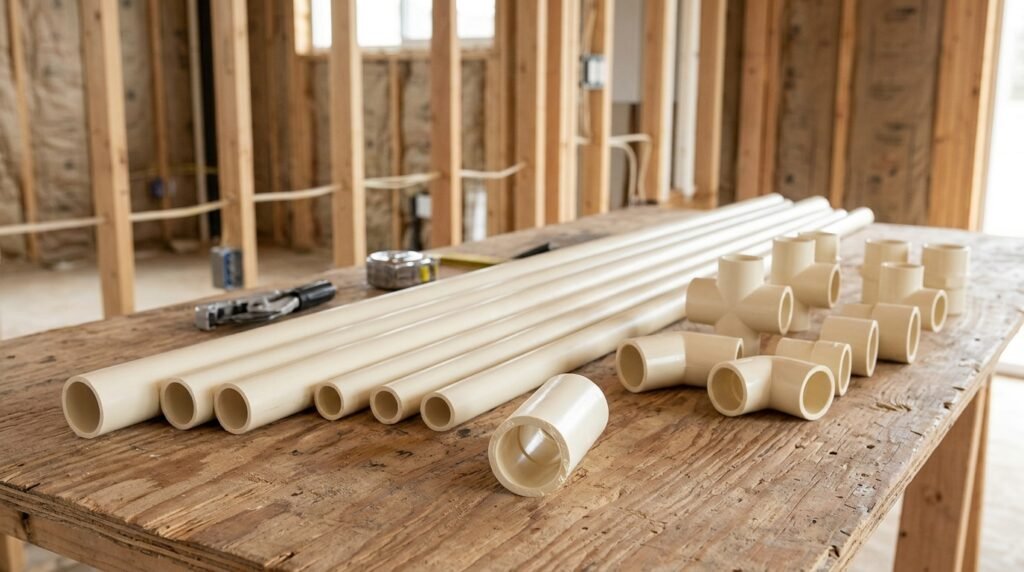
CPVC piping is used in several applications because it combines heat resistance with corrosion resistance and relatively simple installation. Its most familiar use is domestic hot- and cold-water distribution. In houses, it can carry water from the supply connection to suitable fixtures and plumbing points. Commercial buildings may use it in approved water distribution networks, including selected recirculation systems. Industrial facilities may also use CPVC for certain process liquids, provided the material is chemically compatible and the system is properly designed. Some manufacturers produce separate CPVC systems for fire protection. These products have specific approvals and installation requirements. They should never be confused with ordinary plumbing pipe. CPVC is also used in selected chilled-water and hydronic applications, including suitable heating and cooling distribution systems. Its use in each setting depends on temperature, pressure, fluid compatibility, and local regulations. For example, a pipe suitable for a household water heater connection may not be suitable for transporting an industrial chemical. Similarly, an ordinary plumbing product should not be substituted for an approved sprinkler system component. The Plastics Pipe Institute lists residential and commercial water distribution, selected fire protection, reclaimed water, chilled water, and hydronic systems among CPVC applications. plasticpipe.org+1
CPVC Pipe for Hot and Cold Water
One of the main reasons homeowners and contractors choose CPVC is its ability to handle both hot and cold water in suitable plumbing systems. Ordinary PVC has more limited temperature capabilities, so it is not automatically an appropriate substitute for hot-water distribution. CPVC is designed for higher-temperature service, but its pressure capacity changes as the water temperature increases. This relationship is important because a pipe that can handle a certain pressure with cold water may have a lower permitted pressure with hot water. For example, the PPFA specification sheet identifies CTS SDR 11 CPVC at 400 psi at approximately 73.4°F and 100 psi at 180°F. These are specific published ratings for the covered system, not universal ratings for every size or product. The same specification sheet states that pressure piping should not exceed 180°F under its stated limitations. The actual limits must come from the product manufacturer’s current technical information. Water heaters also need careful connection design. Heat exposure, system pressure, expansion, and the type of connecting fittings can affect performance. A plumber should confirm that the complete assembly is approved for the intended conditions. Choosing a suitable temperature rating is just as important as choosing the correct diameter. YMAWS+1
Benefits of Using CPVC Pipe
CPVC offers several practical advantages in suitable plumbing systems. One major benefit is its resistance to corrosion. Metal pipes can experience corrosion under certain water and environmental conditions, while CPVC does not rust like iron or steel. This can help reduce problems linked to corrosion products inside a piping system. Another advantage is its resistance to mineral deposits and tuberculation under suitable operating conditions. The smooth internal surface helps support water movement without the same type of internal corrosion buildup found in some metal systems. Its lightweight construction also makes handling and transportation easier. Installers can move and cut it without heavy metalworking equipment. CPVC joints are commonly made using compatible solvent cement, so welding equipment and open flames are not required for ordinary solvent-cement connections. The material also offers useful resistance to chemicals used in potable water disinfection. However, resistance to one chemical does not prove compatibility with every chemical. Another practical advantage is that CPVC does not have the same scrap value as many metal pipes, which can reduce certain jobsite theft concerns. It can also provide a quieter plumbing installation under suitable conditions. These benefits make it a useful option, but they do not remove the need for correct installation and product selection. The system must still be designed for its actual pressure, temperature, and service conditions. plasticpipe.org+1
Limitations and Disadvantages of CPVC
Despite its benefits, CPVC has limitations that should be considered before installation. The material expands and contracts as its temperature changes. This movement can place stress on joints or connected components when a long pipe run is installed without enough room for expansion. Proper offsets, bends, loops, and supports may be needed. Another limitation is its exposure to ultraviolet radiation. Although some products contain ingredients that help protect against sunlight, prolonged outdoor exposure is generally discouraged unless the manufacturer approves a suitable protective method. The PPFA specification sheet recommends protecting exposed piping with an appropriate light-colored, water-based latex paint when necessary. Chemical compatibility is another concern. Certain solvents, oils, sealants, insulation products, and construction chemicals can damage CPVC. A product that appears harmless may still be incompatible with a particular pipe compound. Temperature also affects its pressure capacity. The maximum permitted pressure must be reduced according to the manufacturer’s temperature-rating information. Physical damage is another possible problem. Dropping, striking, dragging, or improperly cutting piping can create damage that may lead to failure later. CPVC also requires compatible fittings and cement. Using the wrong joining material can result in weak connections or leaks. Finally, local plumbing rules may restrict certain uses or require specific product listings. These limitations do not make the material unsuitable. They simply mean the piping system must be selected and installed correctly. YMAWS+1
CPVC vs. PVC: What Is the Difference?
CPVC and PVC are related plastic materials, but their performance is not identical. PVC stands for polyvinyl chloride, while CPVC stands for chlorinated polyvinyl chloride. The main material difference is the additional chlorination process used to produce CPVC. This changes its properties and improves its ability to handle higher temperatures. PVC is commonly used in suitable cold-water, drainage, sewer, and other approved applications. CPVC is commonly used for hot- and cold-water distribution systems. Both materials are lightweight and resist corrosion, but their temperature limits and product approvals differ. Their dimensions and joining products may also vary. PVC solvent cement should not automatically be used on CPVC, and the reverse is also true. The correct cement must be selected according to the pipe and fitting manufacturer’s instructions. A practical example is a house with separate hot- and cold-water lines. A suitable CPVC system may serve both lines, while ordinary PVC may be appropriate for a different approved application. The decision should never be based on color alone. Product markings and technical documentation provide more reliable information. PVC and CPVC should not be treated as interchangeable simply because they look similar. plasticpipe.org+2
CPVC vs. PPR Pipe
PPR and CPVC are both plastic piping materials used in suitable water distribution systems. However, their material composition and joining methods are different. PPR stands for polypropylene random copolymer. Its joints are commonly made through heat fusion, where compatible pipe and fitting surfaces are heated and joined. CPVC generally uses solvent cement or approved mechanical connections. This means installation tools and methods differ. Both materials are available in products designed for hot- and cold-water applications. However, their pressure ratings, temperature limits, dimensions, and approvals depend on the specific product. PPR systems are commonly selected where a suitable fusion installation is available. CPVC may be preferred where solvent-cement joining is practical and the required product approvals are available. Maintenance and repair methods also differ. A damaged PPR joint may require a suitable fusion repair or replacement, while a CPVC system may require compatible fittings and solvent cement. Neither material is automatically better for every building. For a house, the more useful comparison includes local product quality, installer skill, availability of fittings, replacement costs, and technical documentation. A low-quality product or poor installation can cause problems with either material. The best choice is the one that meets the building’s design requirements and can be installed correctly.
CPVC vs. Copper Pipe
Copper and CPVC are used in plumbing systems, but they offer different material properties. Copper is a metal that can handle many demanding plumbing conditions when correctly selected and installed. It is commonly joined through soldering, brazing, or suitable mechanical fittings. CPVC is a plastic material that commonly uses solvent-cement joints. Copper is generally more resistant to physical impact than plastic piping, although it can still be damaged or affected by corrosion under certain conditions. CPVC does not rust, and its lightweight construction can make transportation and handling easier. Copper can also be more expensive to install in some markets because of material and labor costs. However, actual prices vary by location, pipe size, quality, and project conditions. CPVC has its own limitations, especially regarding chemical compatibility, ultraviolet exposure, and thermal expansion. Copper and plastic systems also require different support and installation practices. When choosing between them, consider the water chemistry, operating temperature, installation environment, local material availability, and repair options. A properly designed copper system can be suitable for many applications, while an approved CPVC system can offer a practical alternative. Neither material should be selected using price alone.
CPVC Pipe Sizes and Dimensions
Pipe size is one of the most important factors in plumbing design. The nominal size printed on a product does not always represent its exact outside or inside diameter. CTS and IPS are two different dimensional systems used for CPVC products. CTS refers to Copper Tube Size, while IPS refers to Iron Pipe Size. The outside diameters of these systems are different. For example, the PPFA installation handbook gives an outside diameter of 1.315 inches for a nominal 1-inch IPS pipe. A nominal 1-inch CTS product has a different outside diameter. This matters because fittings must match the correct dimensional system. A CTS fitting should not be forced onto an IPS pipe simply because both products have the same nominal size. The wall thickness also affects the internal diameter. A thicker-walled product has less internal space when the outside diameter is the same. This can affect water flow and pressure loss. Pipe sizing should therefore consider the required flow rate, pressure, pipe length, fittings, and number of connected fixtures. A plumber or engineer can calculate the appropriate size for the system. Before purchasing CPVC pipe, check its nominal size, outside diameter, wall specification, and matching fitting requirements. YMAWS+1
Understanding Pressure and Temperature Ratings
Pressure and temperature ratings determine whether a piping product can safely operate in a particular system. These two factors are closely connected. As the operating temperature increases, the permitted pressure generally decreases. This happens because higher temperatures affect the material’s ability to withstand internal stress over time. For this reason, a pressure rating printed for room-temperature conditions should not be used automatically for hot-water applications. The manufacturer’s technical tables provide the correct temperature adjustment factors for the relevant material designation and product size. The PPFA installation handbook includes derating factors for different CPVC material classifications. At 180°F, the published factors are lower than the factors at 73°F. This shows why temperature must be considered during system design. A useful example is a plumbing line that operates at a relatively low pressure with cold water. If the same line carries hotter water, its permitted working pressure may be lower. The design must account for both conditions. Pressure ratings also depend on the product’s wall construction and dimensions. A Schedule 40 product and a Schedule 80 product should not be assumed to have identical ratings. Never calculate a system’s safe working pressure using a general online figure without confirming the exact pipe marking and manufacturer’s data. YMAWS+1
CPVC Fittings and Connections
Fittings connect individual pipe sections and allow a plumbing system to change direction, branch, reduce size, or connect to equipment. Common fittings include elbows, tees, couplings, reducers, adapters, unions, and valves. An elbow changes the direction of a pipe, while a tee creates a branch connection. A coupling joins two compatible pipe sections. A reducer connects sections of different sizes. Adapters help connect CPVC to other piping materials or equipment. The fitting must match the pipe’s material, size, dimensional system, pressure rating, and intended application. Solvent-cement joints are common in many CPVC plumbing systems. The cement softens compatible surfaces so they can form a bonded connection as the joint sets and cures. Mechanical connections are also available for suitable products. Connections to metal piping may require special transition fittings, threaded adapters, flanges, or other approved components. Directly forcing incompatible threads or fittings together can damage the connection. Another important consideration is chemical compatibility. Sealants, lubricants, and other products used around a joint should be approved for the particular CPVC system. A complete piping installation depends on more than the pipe itself. Every fitting, valve, cement, and transition component must be suitable for the service conditions. YMAWS+1
How to Install CPVC Pipe Correctly
Installing CPVC requires suitable tools, compatible fittings, proper cutting, clean joint surfaces, and the correct solvent cement. The exact method depends on the pipe system and manufacturer’s instructions. Before starting, inspect all materials for cracks, gouges, damage, and contamination. Store the pipe away from prolonged direct sunlight and keep cement products according to their labels. Use a suitable plastic pipe cutter or fine-tooth saw to make a square cut. A square cut provides a better joining surface. Remove burrs and filings from the inside and outside edges. A slight bevel can help the pipe enter the fitting socket without pushing cement away from the joint. Clean dirt and moisture from the pipe end and fitting socket using the method approved by the manufacturer. Check that the pipe and fitting are compatible before applying cement. Use only CPVC solvent cement that meets the required specification, such as ASTM F493 where applicable. Some systems use a one-step cement, while others require primer and a two-step process. Local rules and manufacturer instructions determine which method is acceptable. Apply the correct amount of cement to the required surfaces. Avoid both insufficient coverage and excessive cement that can collect inside the fitting. Insert the pipe promptly and follow the specified assembly method. Hold the joint as directed to prevent movement or push-out. Allow the connection to cure for the required time before testing or putting the system into service. The PPFA handbook provides detailed joining instructions for CTS and IPS systems. YMAWS+1
Tools and Materials Needed
The tools required depend on the pipe dimensions and installation method. A suitable plastic pipe cutter or fine-tooth saw is needed for cutting. A miter box can help maintain square cuts when using a saw. A deburring or chamfering tool removes sharp edges and loose material. A clean, dry cloth helps remove surface dirt and moisture. A marker and measuring tape help with accurate pipe measurements and insertion-depth marks. The joining materials must include compatible CPVC fittings and the correct solvent cement. Some systems also require an approved primer. The cement label should identify its intended use and relevant standard. Safety equipment should be selected according to the product safety instructions. Gloves and suitable eye protection can help reduce exposure to chemicals and accidental splashes. Work in a properly ventilated area and keep solvent products away from flames and ignition sources. YMAWS
Common Installation Mistakes
Several mistakes can weaken a newly installed plumbing system. Using the wrong cement is one of the most serious problems because the connection may not bond correctly. Another mistake is leaving burrs or debris on the pipe end. These can interfere with the joint and reduce proper contact. A crooked cut may also create an uneven connection. Too little cement can leave gaps, while too much can collect inside the fitting and damage the material. Failing to insert the pipe fully or allowing the joint to move during initial setting can also cause problems. Installers sometimes use incompatible sealants, insulation, or construction chemicals around CPVC. This can lead to chemical damage even when the pipe itself is suitable. Another common error is putting water pressure into a newly joined system before the required curing period has passed. Always follow the cement manufacturer’s instructions for curing time. YMAWS+1
Expansion, Supports, and Installation Conditions
CPVC expands and contracts as its temperature changes. This movement needs to be considered during installation, especially in long straight pipe runs. If a pipe is tightly fixed between two structures, thermal expansion can place stress on joints and fittings. Suitable changes in direction, offsets, or expansion loops can provide room for movement. The required arrangement depends on pipe size, run length, temperature change, and manufacturer calculations. Support spacing is another important part of the design. Pipe hangers should support the system without creating sharp pressure points or restricting normal movement. Heavy valves and other concentrated loads may need separate support. Pipes passing through walls, studs, or other building structures should have suitable clearance or protective materials. This helps prevent abrasion and unwanted stress. Outdoor storage and installation also need attention. Prolonged sunlight exposure can affect plastic materials, so products should be protected according to manufacturer guidance. Chemical exposure from nearby materials must also be considered. For example, a coating, adhesive, or insulation product may not be compatible with the piping compound. Installation conditions can influence the quality of the finished system just as much as the pipe’s original manufacturing quality. YMAWS+1
Maintenance and Inspection of CPVC Plumbing
A correctly installed CPVC system does not require the same corrosion-control work as some metal piping systems. However, regular inspection can help identify developing problems. Check accessible pipe sections for visible cracks, impact damage, unusual movement, and signs of leakage. Inspect joints around valves, water heaters, pumps, and other connection points. These areas can experience additional movement or mechanical stress. Look for discoloration or damage that may indicate exposure to an unsuitable chemical or excessive sunlight. Do not apply random cleaners, paints, lubricants, or protective coatings without confirming compatibility. If a leak appears, avoid using temporary materials that have not been approved for CPVC. A plumber can identify the cause and replace damaged sections using compatible components. It is also useful to keep product information and installation records. These details help identify the original pipe type, standard, and fitting requirements during future repairs. If a building undergoes renovation, workers should know where CPVC lines are located before drilling or cutting walls. This simple precaution can prevent accidental damage. YMAWS+1
How to Choose the Right CPVC Pipe
Choosing the right product begins with understanding the actual application. For a household water system, confirm that the product is approved for potable water and suitable for hot or cold water service. Check the required pipe diameter and calculate the expected flow and pressure. Next, identify the maximum operating temperature. This matters because the pressure rating changes with temperature. Read the printed product markings and verify the applicable standard. Look for the manufacturer’s name, nominal size, product type, material designation, and relevant certification or listing marks. Make sure the fittings and solvent cement are approved for the selected piping system. If connecting to metal or another plastic material, use a suitable transition fitting. Consider the installation location as well. Outdoor exposure, nearby chemicals, physical impact, and available support points can affect product suitability. Check local plumbing regulations before purchasing materials. Requirements may vary by country, city, and building type. Do not assume that a product approved in one jurisdiction will automatically be accepted in another. For larger commercial or industrial systems, professional design and manufacturer consultation are especially important. The safest selection is based on documented product performance rather than appearance, price, or general claims made by a seller. YMAWS+1
Is CPVC Pipe Suitable for Drinking Water?
Certain CPVC piping systems are manufactured and certified for potable water use. Potable water means water intended for drinking, cooking, and other household uses. However, not every product made from CPVC automatically meets drinking-water requirements. Buyers should check the certification and product listing for the exact pipe and fitting system. NSF/ANSI/CAN 61 is a relevant standard that evaluates health effects of materials used in drinking water system components. NSF/ANSI 14 covers plastic piping components and related materials. NSF/ANSI 372 addresses lead content requirements. These standards serve different purposes, so one should not be treated as a replacement for another. A certified pipe also needs compatible fittings and joining materials. The certification of one component does not automatically certify every product connected to it. The PPFA specification sheet explains that third-party agencies evaluate and list many CPVC products for applicable potable-water requirements. Check the actual product listing rather than relying on a manufacturer’s general statement about the material. This is particularly important when buying products through local distributors or unfamiliar suppliers. YMAWS+2
Is CPVC Pipe Safe for Outdoor Use?
CPVC can be exposed to sunlight for limited periods during construction, but prolonged ultraviolet exposure requires attention. Sunlight contains ultraviolet radiation that can affect plastic materials over time. Some CPVC compounds include pigments that help shield the material from radiation. However, this does not mean every product is suitable for permanent outdoor installation without protection. The PPFA specification sheet advises against prolonged sunlight exposure unless the piping is protected using an appropriate light-colored, water-based latex paint. The exact protective method should be confirmed with the manufacturer. Outdoor piping should also be protected against physical damage, extreme environmental conditions, and incompatible chemicals. Supports must allow for normal thermal movement. If a pipe runs along an exposed wall or roof, the installer should check the manufacturer’s approved installation details. Underground applications require separate consideration of soil conditions, external loads, burial methods, and product approvals. A plumbing pipe should not be assumed suitable for every underground or outdoor installation simply because it is plastic. YMAWS+1
CPVC Pipe Standards and Certifications
Standards help establish the technical requirements for manufacturing, testing, and identifying piping products. Different CPVC products follow different specifications. ASTM D2846 covers CPVC hot- and cold-water distribution systems using the relevant CTS SDR 11 product category. ASTM F441 covers Schedule 40 and Schedule 80 CPVC pipe. ASTM F442 covers SDR pressure-rated CPVC pipe. ASTM F438 and ASTM F439 cover particular categories of CPVC fittings. ASTM F493 covers solvent cement for CPVC piping and fittings. These standards should be matched to the product being purchased. Drinking-water applications may also require third-party certification. NSF/ANSI/CAN 61 is particularly relevant to the health effects of materials in contact with drinking water. The manufacturer’s documentation should identify the applicable product standard and certification. Pipe markings are useful because they help distinguish genuine, correctly identified products from items with incomplete information. The PPFA installation handbook explains that product markings should include information such as manufacturer, size, applicable standard, and material designation. It also advises checking local code approval. Standards and certifications are not decorative labels. They provide information needed to determine whether a product is suitable for its intended service. plasticpipe.org+2
Frequently Asked Questions
What is CPVC pipe mainly used for?
CPVC pipe is mainly used for hot- and cold-water distribution in suitable residential and commercial plumbing systems. Depending on its design and approval, it can also be used in selected industrial, hydronic, chilled-water, and fire protection applications. The correct product must match the required pressure, temperature, fluid, and local regulations.
Is CPVC pipe better than PVC?
CPVC generally handles higher temperatures than ordinary PVC, which makes it more suitable for approved hot-water applications. PVC is widely used in suitable cold-water, drainage, and other applications. The better option depends on the intended use, product ratings, and local requirements.
How long does CPVC pipe last?
There is no single service-life figure that applies to every CPVC installation. Its actual service life depends on product quality, temperature, pressure, chemical exposure, installation workmanship, and maintenance. Follow the manufacturer’s service conditions instead of relying on a general lifespan claim.
Can CPVC pipe handle hot water?
Yes, suitable CPVC products are designed for hot-water distribution. However, their pressure ratings decrease as operating temperature increases. Check the exact manufacturer’s temperature and pressure ratings before using a particular product in a hot-water system.
Can CPVC pipe be connected to metal pipes?
Yes, CPVC can be connected to compatible metal piping through approved transition fittings, threaded adapters, unions, flanges, or other suitable mechanical connections. The correct connection depends on the pipe dimensions, pressure, temperature, and manufacturer’s instructions.
Is CPVC pipe suitable for drinking water?
Some CPVC products are certified for potable water systems. Check the exact pipe, fittings, and joining materials for relevant third-party certifications, including applicable NSF/ANSI/CAN 61 requirements. Do not assume that every CPVC product is approved for drinking water.
Conclusion
CPVC is a practical piping material for suitable hot- and cold-water plumbing systems. Its resistance to corrosion, lightweight construction, and ability to handle higher temperatures than ordinary PVC make it useful in many buildings. However, successful performance depends on selecting the correct product type, dimensions, pressure rating, fittings, and joining materials. Temperature changes, ultraviolet exposure, chemical compatibility, and thermal expansion also need proper attention. Before purchasing CPVC pipe, check its product markings, applicable ASTM standards, drinking-water certifications, and manufacturer instructions. Professional installation is especially valuable for larger systems, water heaters, commercial buildings, and applications with demanding operating conditions. A properly selected and installed piping system can provide dependable service when it operates within its approved limits.