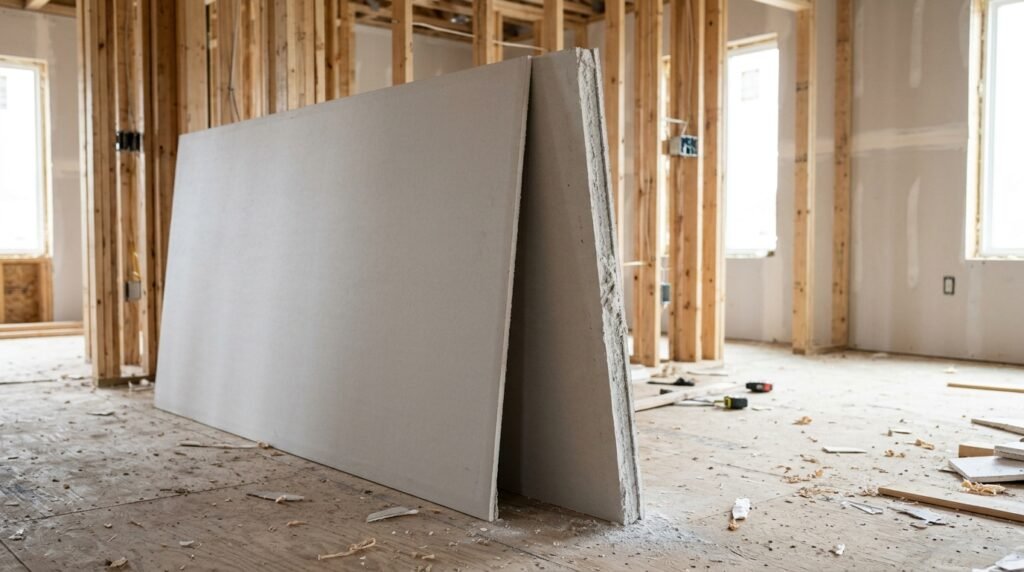
The main difference in sheetrock vs drywall is the name, not the basic material. Drywall is the general term for a building panel used to cover interior walls and ceilings. Sheetrock® is a registered brand of drywall made by United States Gypsum Company, also known as USG. Both can serve the same purpose when their specifications are suitable for the project. However, not every drywall panel is Sheetrock, and not every panel has the same features. Some products offer added resistance to moisture, mold, fire, or impact. Others are designed for standard rooms and everyday interior use. Understanding these differences helps homeowners, builders, and renovators choose the right material without paying for features they do not need. This comparison explains how the names differ, how the panels are made, which types are available, and what to consider before buying or installing them.
What Is the Difference Between Sheetrock and Drywall?
Drywall is a broad name for panels used to create smooth interior walls and ceilings, while Sheetrock is one manufacturer’s brand of those panels. The distinction is similar to the difference between a general product name and a brand name. Many companies manufacture drywall, but Sheetrock refers specifically to products sold under USG’s Sheetrock® brand. The panels can look similar and may perform similarly when they have matching specifications. Their core is commonly made from gypsum, a naturally occurring mineral processed into a firm board and covered with facing material. The finished panels are attached to framing, then joints and fastener marks are covered to create a smooth surface. The term drywall describes the product category, not one company’s formula or product range. Sheetrock describes a particular brand within that category. Therefore, the comparison is not between two completely different building materials. It is mainly a comparison between a general material name and a branded version of that material. The most useful buying decision is to compare the exact panel type, thickness, edge, performance rating, and intended use rather than relying on the name alone. The Gypsum Association also describes drywall and plasterboard as common, non-technical names for gypsum board. gypsum.org+1
What Is Sheetrock?
Sheetrock is USG’s registered brand name for gypsum panels used in building walls and ceilings. USG introduced its Sheetrock brand panels in 1917, helping make panel-based wall construction widely known in the building industry. The brand includes products for different construction needs, rather than one single panel with one fixed specification. Standard Sheetrock gypsum panels are made with a gypsum core and paper facing. Their long edges may be tapered so installers can fill and conceal the joints with joint compound and tape. USG also sells specialized Sheetrock products designed for specific applications, including panels with additional moisture, mold, fire, or abuse resistance. The exact options depend on the product line and local market. This is why the brand name alone does not tell you everything about a panel’s performance. A standard Sheetrock panel should not automatically be treated as mold-resistant or suitable for a wet area. Check the product label and technical data sheet before selecting it. USG’s product information identifies Sheetrock as a family of gypsum panels and lists different sizes, thicknesses, and intended applications across its range. USG+2
What Is Drywall?
Drywall is a building panel commonly used to cover the inside of walls and ceilings. It is also known as gypsum board, wallboard, or plasterboard in different markets. A typical panel has a gypsum-based core enclosed by facing material, often paper. The core gives the panel its shape and contributes to its fire-related performance, while the facing helps hold the board together and provides a surface for finishing. Installers attach panels to wood or metal framing with suitable screws or other specified fasteners. They then treat the seams, corners, and screw heads with joint compound and tape. After sanding and preparation, the surface can be primed and painted or finished with another suitable wall covering. Drywall is popular because it creates large, flat surfaces without requiring the same wet-plaster process used in traditional plaster construction. It is available from many manufacturers and in several product types. Standard panels are common in ordinary dry interior spaces, while specialized products are available for certain demanding locations. The word drywall does not guarantee a specific thickness, fire rating, moisture performance, or level of durability. Those details must be confirmed from the product’s specifications.
Sheetrock vs Drywall: Are They Made From the Same Material?
In many common applications, yes. Standard Sheetrock panels and standard drywall panels are both gypsum-based boards. The core is formed from gypsum and enclosed by facing materials. This shared construction explains why the two products can look almost identical after installation. However, it would be inaccurate to assume that every panel sold under either name has the same composition or performance. Manufacturers offer different formulations and panel designs for different uses. Some products include additives or different facing materials to meet specific performance needs. Certain boards are designed for improved moisture resistance, mold resistance, fire performance, sound control, or resistance to surface damage. Other panels are made for specialized systems, such as shaft walls or particular ceiling assemblies. Even within one brand, product specifications can vary. A standard panel from one manufacturer may be closer to a standard Sheetrock panel than a specialized Sheetrock product is. The correct comparison should therefore be between products with matching intended uses and documented specifications. Look at the technical data sheet rather than assuming that the brand name or general term explains the full construction.
Sheetrock vs Drywall: Key Differences at a Glance
The most important difference is branding. Drywall is the general product category, while Sheetrock is a USG brand within that category. Other differences depend on the exact products being compared. One manufacturer’s regular board may have similar uses to another manufacturer’s regular board, but a specialized panel may have features that a basic board does not. Availability also varies by country, supplier, and project requirements. In some places, buyers may find several drywall brands but only a limited selection of Sheetrock products. Product thickness, panel dimensions, edge design, weight, and performance claims should all be checked separately. The table below summarizes the distinction without suggesting that every product has identical specifications.
| Comparison point | Sheetrock | Drywall |
|---|---|---|
| Meaning | USG brand name | General product category |
| Manufacturer | United States Gypsum Company (USG) | Many manufacturers |
| Basic material | Gypsum-based panel | Commonly gypsum-based panel |
| Product range | Includes standard and specialized panels | Includes standard and specialized panels |
| Availability | Depends on supplier and market | Depends on supplier and market |
| Performance | Depends on the specific Sheetrock product | Depends on the specific drywall product |
| Price | Varies by product and location | Varies by brand, product, and location |
| Installation | Follows the product’s installation instructions | Follows the product’s installation instructions |
The table shows why the name alone is not enough to make a buying decision. A regular Sheetrock panel and a regular drywall panel may be suitable alternatives when their specifications match. A moisture-resistant or fire-rated panel should only be compared with another product designed for the same purpose.
Different Types of Drywall and Sheetrock Panels
Both the broader drywall market and the Sheetrock product range include panels designed for different building conditions. The names used for these products can vary between manufacturers and countries. Some labels describe a performance feature, while others identify a particular product family. Always confirm what a panel is approved or intended to do before using it.
Standard Gypsum Board
Standard gypsum board is commonly used for interior walls and ceilings in dry areas. It provides a smooth surface that can be taped, finished, primed, and painted. It is often suitable for bedrooms, living rooms, hallways, and other ordinary interior spaces when the project design allows it. Standard board is not intended to solve every moisture, impact, or fire-performance concern. It should not be selected for a location simply because it is inexpensive or easy to find. The correct thickness and installation method depend on framing, spacing, local requirements, and the manufacturer’s instructions.
Moisture-Resistant Board
Moisture-resistant panels are designed for locations where occasional humidity or limited moisture exposure may be a concern. They are sometimes called green board because certain products use a green-colored facing, but color alone is not a reliable way to identify performance. These panels are not waterproof and should not be treated as a substitute for a complete waterproofing system. A shower enclosure or other area exposed to direct water may require a different approved substrate and waterproofing method. The right product depends on the location, finish, and manufacturer’s stated use.
Mold-Resistant Board
Mold-resistant drywall is designed to reduce conditions that can support mold growth on or within the panel. Products may use treated facing materials, specialized cores, or other design features. Mold-resistant does not mean mold-proof. Persistent leaks, condensation, poor ventilation, and damp framing can still create mold problems. The source of moisture must be controlled before installing new boards. Check the product data to understand the level of resistance claimed and the environments where the panel is suitable.
Fire-Resistant Drywall
Fire-resistant drywall is designed for use in specified wall or ceiling assemblies where improved fire performance is required. Some products use a specially formulated gypsum core or reinforced construction. Type X is a common designation in certain markets, but the label alone does not establish the fire rating of an entire wall. The complete assembly matters. Framing, board layers, fasteners, joints, insulation, and installation details can all affect tested performance. A fire-rated panel should be installed according to the listed assembly and applicable building requirements.
Impact-Resistant and Abuse-Resistant Board
Some panels are designed to withstand more wear than standard drywall. They may be useful in corridors, schools, healthcare buildings, busy commercial spaces, or other locations where walls face frequent contact. Depending on the product, resistance may relate to dents, surface damage, or penetration. These terms are not interchangeable, so review the manufacturer’s test information and intended application. A tougher panel may cost more or require different tools and finishing methods.
Sound-Control Panels
Certain drywall products and wall systems are designed to improve sound control. Sound performance depends on the full assembly, not simply the board’s brand. Panel layers, framing design, insulation, resilient channels, gaps, and sealing can all influence how sound travels through a wall. A product described as sound-reducing should not be assumed to make a room soundproof. If noise control is a major goal, compare tested assembly details rather than choosing a panel based on a marketing label.
Which Is Better for Home Walls?
Neither Sheetrock nor drywall is automatically better for home walls because the terms do not describe two separate levels of quality. The better choice is the panel that meets the room’s needs, project specifications, and budget. For a typical dry bedroom or living room, a standard gypsum panel from a reputable manufacturer may be suitable. A Sheetrock product can be a good option if its specifications match the project and it is available at a reasonable price. A different manufacturer’s drywall can also be suitable when it meets the same requirements. In a bathroom, laundry area, basement, or other location with moisture concerns, the choice needs more care. A standard panel may not be the right solution if the area experiences dampness or direct water exposure. The wall assembly and ventilation also matter. In a garage or corridor where walls may receive frequent knocks, a more durable product may be worth considering. For walls that must meet a fire-resistance requirement, use the exact board and assembly specified by the project design. The practical answer to sheetrock vs drywall is to compare performance, not brand familiarity. Ask the supplier for the product data sheet and confirm that the panel is suitable for the planned location.
How to Choose the Right Panel for Each Room
Start by identifying the conditions the wall or ceiling will face. A dry bedroom has different needs from a bathroom wall, a garage partition, or a ceiling below an attic. Then check the project design, framing, required performance, and local building rules. A panel that works well in one room may be unsuitable in another.
Bedrooms and Living Rooms
Standard drywall is commonly used in bedrooms and living rooms because these spaces are generally dry interior environments. Choose a panel thickness and edge type that suit the framing and installation plan. If sound transfer between rooms is a concern, consider the complete wall design rather than expecting a special board alone to solve the problem. Properly sealed gaps and suitable insulation may also matter.
Kitchens and Laundry Rooms
Kitchens and laundry rooms can experience humidity, splashes, and occasional leaks. The best panel depends on the exact location and exposure. A wall away from water sources may have different requirements from a surface behind a sink or near a washing machine. Use a product approved for the intended conditions, and address ventilation and plumbing leaks. Do not assume that a moisture-resistant panel can tolerate standing water or repeated soaking.
Bathrooms and Shower Areas
Bathrooms require careful product selection because moisture levels can change quickly. Use the panel type and water-control system specified for each area. Surfaces outside direct wet zones may have different requirements from shower walls. Tile installations need a suitable substrate and a properly designed waterproofing system. A moisture-resistant gypsum panel is not automatically suitable behind every shower finish. Follow the product instructions and local building requirements.
Basements and Garages
Basements can have dampness, condensation, or water intrusion, even when they appear dry. Check for leaks and moisture problems before closing the walls. Select a board and wall assembly suited to the conditions. Garages may need panels that meet specific fire-separation or impact requirements, depending on the building design and local rules. Do not choose a product based only on its appearance or thickness.
Does Sheetrock Cost More Than Regular Drywall?
Sheetrock does not always cost more than other drywall because prices depend on the specific panel, supplier, location, and quantity. A standard Sheetrock panel may be priced similarly to a comparable standard panel from another manufacturer. Specialized products can cost more because they are designed for added performance or particular applications. Delivery fees, panel size, thickness, and availability can also affect the final cost. Prices may differ between large building suppliers and smaller local stores. In some markets, a brand may cost more simply because it is less widely stocked. Compare products with matching specifications to make the comparison fair. For example, comparing a standard panel with a mold-resistant panel does not show whether one brand is more expensive. It compares two different product types. Ask for the price per panel and, where useful, the price per square foot or square meter. Also consider waste, transport, finishing materials, and installation labor. A cheaper panel may not save money if it is unsuitable for the location or difficult to obtain in the required size. For sheetrock vs drywall, the best value is the product that meets the project requirements without unnecessary upgrades.
Can You Mix Sheetrock and Other Drywall Brands?
In many ordinary projects, panels from different manufacturers can be used in the same building if they meet the project specifications and are installed correctly. However, mixing brands should not be treated as automatic approval for every wall or ceiling. Panels may differ in thickness, edge profile, dimensions, weight, core design, or performance rating. Differences can affect alignment, joint finishing, and the performance of a tested assembly. If a wall must meet a specific fire or sound rating, use components that are permitted by the relevant assembly design. Mixing products outside that design may affect compliance. For a simple repair in a non-rated interior wall, a matching thickness and compatible edge can be practical, but the replacement should still suit the existing installation. Before mixing products, check the manufacturer’s guidance and any project specifications. If the wall is part of a required fire separation or another regulated assembly, ask the building professional responsible for the design.
What Thickness of Drywall Should You Use?
Drywall thickness should be selected according to the framing, spacing, wall or ceiling location, required performance, and product instructions. Common thicknesses in some markets include 1/4 inch, 3/8 inch, 1/2 inch, and 5/8 inch, but availability and standard practice vary by region. Thinner panels may be used for certain curved surfaces, overlays, or repair work when the product permits. Other thicknesses are selected for particular wall, ceiling, or fire-rated applications. Do not assume that a thicker panel always provides the required fire or sound performance. Those results depend on the tested assembly and installation details. Ceiling applications may have different sag-resistance needs from vertical walls. Framing spacing and panel orientation can also affect the correct selection. Before purchasing, check the product data sheet and the project specifications. If you are replacing a damaged panel, measure the existing thickness and confirm that the new panel is suitable for the framing and finish. A small mismatch can create a visible step or complicate joint finishing. In sheetrock vs drywall, thickness is a product specification, not a feature that belongs exclusively to one brand.
How Are Sheetrock and Drywall Installed?
The basic installation process is similar for many gypsum panels, but the exact method depends on the product and the wall system. Work begins with checking the framing, measuring the area, and planning panel layout. Installers cut panels to fit, attach them using approved fasteners, and finish the joints. The finished surface is then prepared for paint or another covering. Specialized panels may require different handling, fasteners, joint treatments, or installation details, so the manufacturer’s instructions take priority.
Prepare the Wall or Ceiling Frame
Check that framing is sound, aligned, and suitable for the panel system. Look for loose members, protruding fasteners, moisture damage, and uneven surfaces. Resolve leaks or dampness before covering the framing. Confirm the required panel thickness, spacing, orientation, and fastening method. Plan the layout so that joints and panel edges land on suitable framing or approved backing. Poor planning can leave unsupported edges or create unnecessary joints.
Measure and Cut the Panels
Measure each wall or ceiling section carefully before cutting. Mark the panel using a straightedge and a suitable cutting tool. Many gypsum panels can be scored and snapped, but the exact method depends on panel construction and thickness. Cut openings for electrical boxes and other services carefully. Avoid making openings larger than necessary. Wear suitable eye protection and a dust mask when cutting or sanding, and follow the product’s safety information.
Fasten the Panels
Attach panels using fasteners suitable for the framing and board system. Screw length, spacing, edge distance, and fastening patterns should follow the manufacturer’s instructions and project requirements. Fasteners should sit correctly without breaking through the paper face or leaving raised heads. Overdriving screws can weaken the hold and damage the panel surface. Underdriven screws may remain visible after finishing. Use care around electrical wiring and plumbing behind the wall.
Tape and Finish the Joints
After fastening, apply the specified joint tape and compound to panel seams, corners, and fastener marks. Tapered edges are designed to help create a flatter joint when finished correctly. Apply compound in suitable coats and allow each coat to dry according to the product instructions. Sand carefully to reduce ridges without damaging the facing paper. The goal is a smooth, even surface that will not show obvious seams after decoration. Lighting can reveal surface flaws, so inspect the wall from different angles before priming.
Prime and Decorate
Once the compound is dry and the surface is properly prepared, remove sanding dust and apply a suitable primer. Follow the paint or wall-covering manufacturer’s instructions for surface preparation and drying. Priming helps create a more consistent surface for the finish coat. Do not rush the process by painting over damp joint compound. Uneven drying can affect the final appearance.
Common Mistakes When Comparing Sheetrock and Drywall
One common mistake is treating Sheetrock and drywall as two completely different materials. This can lead buyers to pay more without understanding what they are purchasing. Another mistake is assuming that every Sheetrock panel has special moisture or fire protection. The brand includes different products, and each has its own specifications. A third mistake is choosing a board by color alone. Colored facings are not a substitute for reading the product label. Buyers also sometimes compare panels with different thicknesses or intended uses, then draw an unfair conclusion about price or quality. Installation errors create further problems. Incorrect fastener placement, unsupported edges, poor joint finishing, and failure to control moisture can affect the finished wall. Using a general-purpose panel in a location that needs a specialized system can also create avoidable repairs. Before buying, identify the room conditions and project requirements. Compare equivalent products and read their technical information. If a wall has a fire rating or other performance requirement, follow the approved assembly rather than substituting a product based on a similar appearance.
Safety and Storage Considerations
Gypsum panels are large and can be awkward to lift, carry, and position. Use safe lifting methods and ask for help with heavy or oversized sheets. Store panels flat on a dry, level surface when the manufacturer’s instructions allow it, and protect them from rain, standing water, and damage. Keep the storage area stable so panels do not bend or fall. During cutting, handling, and sanding, use suitable eye protection and respiratory protection based on the task and product safety information. Keep the work area ventilated and control dust. Use caution around electrical outlets, wiring, plumbing, and other services concealed behind walls. Damaged or wet panels should be assessed before installation. Do not cover a leak or mold problem with a new board. Find and correct the source of moisture first. Product safety sheets and installation guides provide details for specific panels, tools, and finishing materials.
When Should You Hire a Drywall Professional?
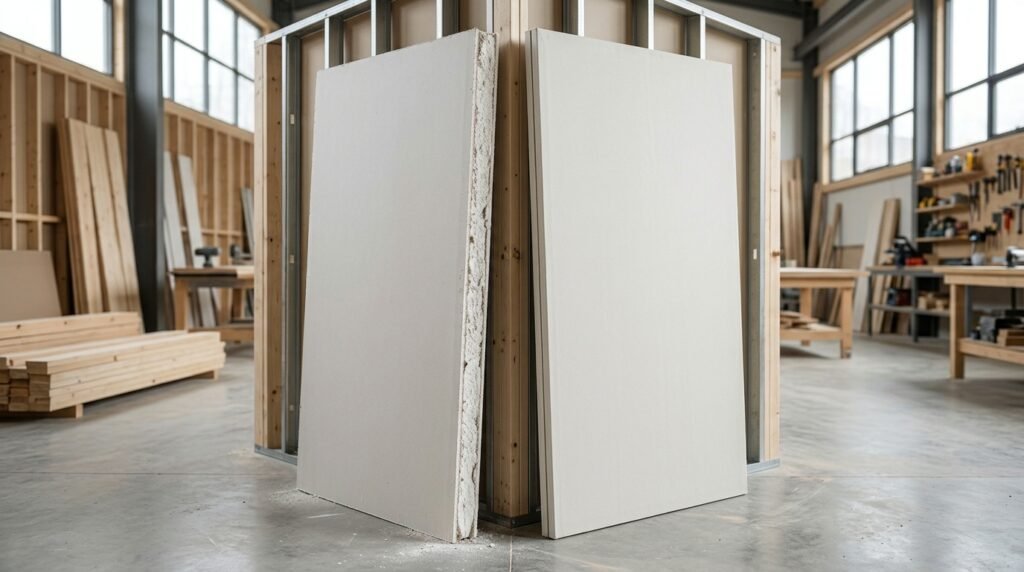
A straightforward patch or small repair may be manageable for someone with suitable tools and basic skills. Larger installations can be more demanding because panels are heavy, joints need careful finishing, and ceilings require safe overhead work. Consider hiring a professional when the project involves extensive damage, uneven framing, complicated corners, large ceilings, or a finish that must look consistent under strong lighting. Professional guidance is especially important when a wall or ceiling is part of a fire-rated assembly, sound-control system, or other regulated construction detail. A contractor can help identify the correct board and installation method, but the product specifications should still be checked. If water damage is present, the source must be repaired before new panels are installed. A professional may also be needed to assess hidden damage, insulation, wiring, or framing. Choosing between sheetrock vs drywall is only one part of the project. Correct installation and a suitable wall assembly are just as important as the panel itself.
How to Identify Sheetrock and Other Drywall Products
The most reliable way to identify a panel is to check its printed markings, packaging, product label, or supplier documentation. Sheetrock products are sold under the USG Sheetrock® brand, so look for the brand name and the specific product designation. Other drywall products will carry their own manufacturer and product names. Do not rely only on the panel’s color, texture, or appearance. Once installed and finished, many gypsum panels look almost the same. If you are inspecting an existing wall, it may not be possible to identify the brand from the visible surface. Check leftover materials, building records, invoices, or labels if available. For repairs, the exact brand may be less important than matching the thickness, edge, and required performance. For a rated assembly, identification and documentation matter more because the system may depend on specific approved components. When information is missing, avoid guessing that an existing board has a special rating.
Is Sheetrock Better Quality Than Other Drywall?
Sheetrock is a well-known drywall brand, but brand recognition alone does not prove that every Sheetrock product is better than every competing panel. Quality should be judged against the needs of the job and the panel’s documented characteristics. A standard panel from one manufacturer may be suitable for a basic interior wall, while a specialized product from another manufacturer may be better for a demanding application. Manufacturing consistency, product availability, technical support, compatibility with finishing materials, and compliance with project specifications can all matter. A panel that is easy to source locally may also reduce delays and transport costs. Ask the supplier for technical information rather than relying on broad claims such as premium, strongest, or highest quality. If two products meet the same specification and are intended for the same use, compare their price, availability, handling, and warranty terms where applicable. In the end, sheetrock vs drywall is not a simple contest between a premium product and a cheaper substitute. It is a decision about which specific panel fits the project.
Frequently Asked Questions
Is Sheetrock the Same as Drywall?
Sheetrock is a brand of drywall made by USG, while drywall is the general name for the product category. Many drywall manufacturers produce gypsum panels, but only USG products sold under the Sheetrock® brand should be called Sheetrock. Their basic purpose can be the same when the products have matching specifications.
Is Sheetrock More Expensive Than Drywall?
Not always. Sheetrock prices vary by panel type, thickness, supplier, and location. A comparable standard panel from another manufacturer may cost about the same or less. Specialized products can cost more because they offer features designed for particular applications. Compare products with matching specifications before deciding.
Can I Use Regular Drywall Instead of Sheetrock?
Often, yes. If the project calls for standard gypsum board, a suitable panel from another manufacturer may work. Check the required thickness, edge, performance, and installation details first. If the wall is part of a fire-rated or other tested assembly, use products approved for that assembly.
Is Sheetrock Waterproof?
No. Standard Sheetrock gypsum panels are not waterproof. Some products are designed for improved moisture resistance, but that does not make them suitable for constant water exposure. Wet areas may need a suitable substrate and a separate waterproofing system. Always follow the product’s stated application limits.
Which Is Better for Bathrooms, Sheetrock or Drywall?
The brand name does not decide whether a panel is suitable for a bathroom. Choose a product designed and approved for the specific moisture conditions. Areas outside direct wet zones may have different requirements from shower walls. Check the manufacturer’s instructions and local building rules before installation.
Can Sheetrock and Drywall Be Used Together?
They can sometimes be used together when their dimensions, thicknesses, and performance specifications are compatible. However, do not mix products freely in a fire-rated or other tested wall assembly. Follow the approved system details and manufacturer’s guidance. For ordinary repairs, matching the existing board’s thickness and edge is also important.
Choosing Between Sheetrock and Drywall
The clearest answer to sheetrock vs drywall is that Sheetrock is a USG brand, while drywall is the general name for gypsum wall panels. Neither term automatically tells you which product is stronger, more moisture-resistant, or better for a particular room. Start with the job’s real requirements, then compare panels with matching specifications. Check thickness, intended use, edge design, performance information, and installation instructions. For ordinary dry rooms, a suitable standard gypsum panel may be all that is needed. Areas with moisture, fire, impact, or sound-control requirements may need a specialized product or complete wall assembly. Confirm those needs before purchasing, and correct any moisture problems before closing the wall. The best choice is not simply the most familiar brand or the lowest price. It is the panel that meets the project requirements and can be installed correctly.