
Freon does not always have a noticeable smell, and some refrigerants are completely odorless. The term Freon is commonly used for certain refrigerants found in air conditioners, refrigerators, and other cooling systems. However, different refrigerants have different chemical properties. Some may have a faint chemical odor, while others provide no reliable smell at all. This creates an important safety concern for homeowners. A refrigerant leak may occur without producing an obvious warning smell. If an air conditioner suddenly stops cooling, develops unusual sounds, or shows signs of a leak, relying on smell alone is not a safe way to identify the problem. Understanding does freon have a smell requires looking at the refrigerant type, the condition of the cooling system, and the other signs that may appear during a leak. This article explains common refrigerant odors, possible symptoms, health concerns, leak detection methods, and the steps to take if a leak is suspected.
What Does Freon Actually Smell Like?
The smell associated with Freon depends on the specific refrigerant used in the cooling system. Some older refrigerants have a faint, sweet chemical odor. Others have little to no noticeable smell. For example, the National Institute for Occupational Safety and Health (NIOSH) describes R-22, also known as chlorodifluoromethane, as a colorless gas with a faint, sweetish odor. This does not mean every refrigerant has the same smell. Some modern refrigerants are blends of different chemicals, so their properties can vary. A person might describe an unusual odor as sweet, chemical-like, or slightly ether-like. However, these descriptions are not reliable enough to identify a refrigerant. The smell may also come from another part of the cooling system. Electrical components, insulation, dust, mold, and drainage problems can create unusual odors. Therefore, a strange smell near an air conditioner should be treated as a warning sign, not proof of a refrigerant leak. The exact refrigerant type and professional testing are needed to establish the cause. Chlorodifluoromethane+2
Does Freon Have a Smell in Every Air Conditioner?
No, not every air conditioner produces a noticeable smell when refrigerant escapes. The answer to does freon have a smell depends partly on the refrigerant in the system and the amount released. A small leak may not create an odor that anyone can recognize. Some refrigerants have a faint smell, but it may be difficult to notice in a room with normal background odors. Other refrigerants may be effectively odorless under ordinary conditions. Air movement also affects how quickly a released gas spreads through a space. A leak near an outdoor condenser may not create an indoor smell at all. A leak inside an indoor unit may spread through the room, depending on the equipment and ventilation. Even then, a person might notice no unusual odor. This is why homeowners should not use their sense of smell as a refrigerant detector. A system can lose refrigerant while continuing to operate for some time. Cooling performance, visible ice, and professional leak testing provide more useful information than odor alone.
Why the Word Freon Can Be Confusing
Freon is a registered trademark associated with refrigerant products. It is not the technical name for every cooling chemical. People often use the word to describe almost any refrigerant inside an air conditioner, refrigerator, or heat pump. This everyday use can create confusion because different systems contain different substances. Older equipment may use R-22, while other systems use refrigerants such as R-410A or newer alternatives. These chemicals do not all have identical physical or safety properties. Their odor characteristics can also differ. A homeowner who asks does freon have a smell may therefore be asking about a particular refrigerant without knowing its name. The easiest way to identify the correct substance is to check the equipment’s manufacturer label or technical documentation. Air conditioners usually have a data plate that lists the refrigerant type. The label may be attached to the outdoor unit or another accessible part of the equipment. Never assume the refrigerant type based only on the age, size, or brand of an air conditioner. A qualified technician can confirm the correct refrigerant before inspecting or servicing the system.
Common Refrigerants and Their Odor Differences
Refrigerants are available in several chemical groups, and their properties are not identical. R-22 is an older hydrochlorofluorocarbon refrigerant. NIOSH identifies it as a colorless gas with a faint, sweetish odor. R-11, another older refrigerant, is described by NIOSH as nearly odorless. These examples show why one general description cannot cover every substance sold under the Freon name. R-410A is a refrigerant blend commonly associated with residential cooling equipment. Its exact odor characteristics should be checked against the relevant manufacturer’s safety data sheet rather than guessed from another refrigerant. R-32 is another refrigerant used in some newer equipment. It has a different safety classification and should not be treated as interchangeable with older refrigerants. Some newer refrigerants also have mild flammability classifications. This makes correct identification especially important before any service work. ASHRAE assigns refrigerant designations and safety classifications based on properties that include toxicity and flammability. These classifications help technicians understand the risks of handling particular refrigerants. They do not make smell a dependable way to identify a leak. Chlorodifluoromethane+3
What Does a Refrigerant Leak Smell Like?
A refrigerant leak may produce a faint chemical, sweet, or ether-like odor, depending on the substance involved. However, this description is not universal. Some leaks produce no noticeable smell, while other unusual odors come from unrelated problems. For example, a musty smell may point toward moisture or microbial growth around an evaporator coil or drain area. A burning plastic smell may suggest overheating electrical parts or damaged wiring. A rotten-egg odor may indicate a separate gas-related concern, depending on the building and equipment. These smells should not automatically be blamed on the cooling refrigerant. If someone notices a strange odor near an air conditioner, the first step is to consider the immediate safety risk. A burning smell, smoke, or signs of electrical damage require prompt attention. A suspected refrigerant release also deserves caution, particularly in a small or poorly ventilated room. The question does freon have a smell should never become a reason to approach a suspected leak and take a closer sniff. Deliberately smelling an unknown chemical is unsafe. Leave the area if a release is suspected and arrange a professional inspection.
Signs of a Freon Leak Besides an Unusual Smell
A refrigerant leak can cause changes in how an air conditioner operates. One common warning sign is reduced cooling. The system may run for long periods but struggle to reach the selected temperature. This happens because refrigerant helps move heat through the cooling cycle. When the charge becomes too low, the equipment may not transfer heat as intended. Ice or frost on the refrigerant lines or evaporator coil can also indicate a problem. However, restricted airflow, a dirty filter, or other faults can cause similar symptoms. A frozen coil alone does not confirm a refrigerant leak. Another possible sign is repeated cooling problems after the system has been serviced. If refrigerant needs frequent topping up, the technician should investigate why it is being lost. Refrigerant is not normally consumed during routine cooling operation. Unusual hissing or bubbling sounds may also deserve inspection, although these noises can have other causes. Water around an indoor unit may result from melting ice or a blocked condensate drain. The answer to does freon have a smell becomes less important when several operating problems appear together. A technician can inspect the system, measure operating conditions, and test for leaks instead of relying on one symptom.
Can You Smell Freon Through an Air Conditioner Vent?
Sometimes an unusual odor may seem to come directly from an air conditioner vent. However, that does not establish that refrigerant is escaping into the room. Most split air-conditioning systems keep the refrigerant inside sealed copper tubing and the cooling components. The indoor fan moves room air across the evaporator coil, while refrigerant circulates through a separate sealed circuit. These two paths are designed to remain separate. A refrigerant leak from the indoor coil or nearby connections may create a release near the air handler, but the odor alone cannot confirm this. Other sources are often possible. Dust on a coil, wet insulation, a dirty filter, or a blocked drain can create unpleasant smells. A damaged motor or electrical component can also produce an unusual odor. If the smell is chemical-like and cooling performance has suddenly changed, arrange a professional inspection. Do not remove the indoor unit cover or touch refrigerant pipes to investigate. If there is a strong unexplained chemical odor, move away from the affected area. Understanding does freon have a smell is useful, but identifying the exact source requires checking the equipment safely.
Is Freon Dangerous to Breathe?
Breathing refrigerant gas can be dangerous, particularly when a large amount escapes into an enclosed or poorly ventilated space. The risk depends on the refrigerant, its concentration, the length of exposure, and the surrounding conditions. Refrigerant gases can displace oxygen, which may lead to suffocation when enough gas accumulates. Certain substances can also affect the nervous system and heart. Poison Control explains that inhalation exposure may cause coughing, wheezing, headaches, vomiting, and more serious effects. Severe exposure can result in unconsciousness or life-threatening complications. Liquid refrigerant creates a separate hazard because it can cause cold burns or frostbite when it contacts skin or eyes. Some refrigerants also have specific toxicity or flammability concerns. It is incorrect to assume that every refrigerant is harmless because it is used in household equipment. The question does freon have a smell is therefore not just about comfort. It also relates to how people recognize a possible release. Unfortunately, the absence of odor does not mean the air is safe. If someone develops breathing difficulty, dizziness, confusion, or other concerning symptoms after suspected exposure, they should move to fresh air and seek urgent medical help. Poison Control+2
What Should You Do If You Suspect a Freon Leak?
If a refrigerant leak is suspected, avoid investigating it yourself. Move away from the affected area and get into fresh air, especially if the odor is strong or anyone feels unwell. Keep other people and pets away from the suspected release. Do not deliberately smell the air near the equipment to identify the chemical. Avoid touching refrigerant pipes, valves, or any liquid that may have escaped. Refrigerant released as a liquid can cause serious cold injuries. Do not attempt to repair a refrigerant line, tighten a pressurized fitting, or add refrigerant without the required training and equipment. If the equipment can be switched off safely without approaching the suspected leak, follow the manufacturer’s emergency guidance. If there is a strong release, symptoms, or an immediate danger, contact local emergency services. For a suspected small equipment leak without an immediate emergency, arrange service with a qualified HVAC or refrigeration technician. Explain the smell, changes in cooling, noises, and any visible frost. If the refrigerant type is known, provide that information. The technician can decide which detection method and safety precautions are appropriate. The safest response to does freon have a smell is never to use your nose as the main test. Leave detection and repair to someone equipped to handle the refrigerant.
How Technicians Detect Refrigerant Leaks
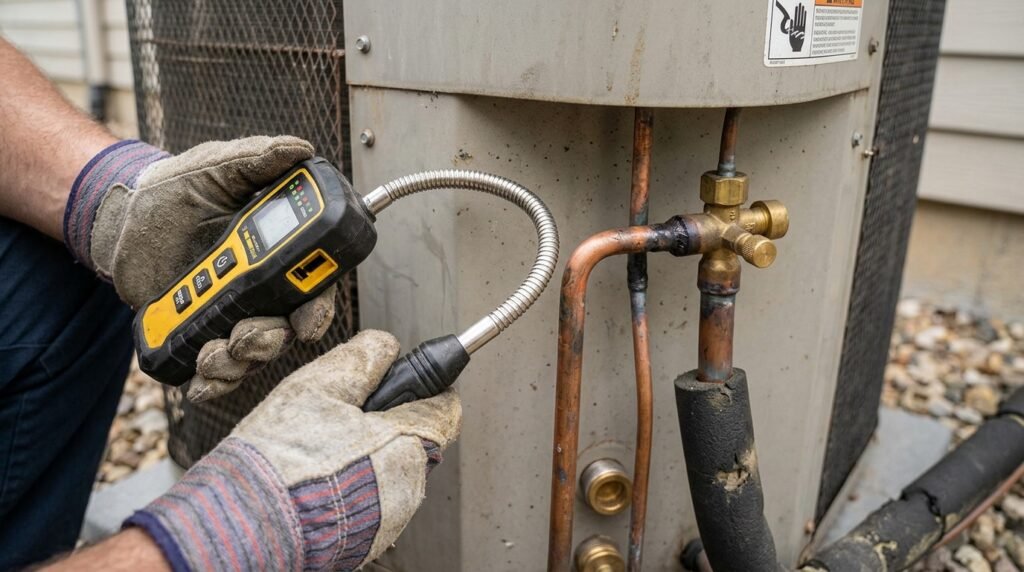
HVAC technicians use dedicated tools and inspection methods to locate refrigerant leaks. The right method depends on the refrigerant, equipment design, and suspected leak location. An electronic refrigerant detector can identify certain refrigerant gases near a leaking connection or component. Technicians may also use approved bubble solutions on accessible joints. Bubbles forming at a connection can indicate escaping gas. In some situations, a technician may use a manufacturer-approved fluorescent dye or another specialized method. Not every system supports every detection method. The technician may inspect copper lines, service valves, evaporator coils, condenser coils, and other connections. They may also check operating pressures and temperatures to understand system performance. Pressure measurements can help diagnose a cooling problem, but they do not always identify the exact leak location. A proper repair should address the source of the leak before the system is recharged. Simply adding refrigerant may restore cooling temporarily while allowing the underlying problem to continue. The question does freon have a smell is not part of a reliable technical leak test. Professional instruments provide a much better way to identify refrigerant in the air. A technician should also follow the equipment manufacturer’s service instructions and applicable safety requirements.
Why an Air Conditioner May Smell Even Without a Refrigerant Leak
Air conditioners contain several parts that can develop odors unrelated to refrigerant. A dirty air filter can collect dust and other particles, allowing unpleasant smells to circulate. Moisture around the evaporator coil and condensate drain can also create a musty odor. If water cannot drain properly, it may collect inside the equipment or surrounding area. This can encourage unwanted microbial growth and damage nearby materials. Electrical problems are another possible source. Overheated insulation, damaged wiring, or a failing motor may produce a burning or plastic-like smell. These problems should be treated seriously because electrical faults can create fire risks. Sometimes the odor comes from outside the air conditioner. Household cleaning products, paint fumes, cooking odors, and nearby drains can enter the return-air system. A smell that appears only when the air conditioner starts may provide a useful clue, but it still does not identify the cause. Instead of assuming does freon have a smell explains every chemical odor, consider the complete situation. Note when the smell begins, whether it disappears after the system stops, and whether cooling performance has changed. Share these details with a technician. Never ignore persistent burning or strong chemical odors simply because the equipment continues to operate.
Can a Refrigerant Leak Happen Without Any Warning?
Yes. A refrigerant leak can develop without a clear warning that a homeowner can see, hear, or smell. Small leaks may release gas slowly. The cooling system might continue working while its refrigerant charge gradually decreases. In other cases, a damaged connection or component can cause a more noticeable release. Corrosion, vibration, physical damage, and faulty joints may contribute to refrigerant loss. The location of a leak also matters. A leak in an outdoor unit may be difficult to notice from inside the home. A leak near an indoor coil may be closer to occupied rooms, but that still does not guarantee a detectable odor. This explains why the answer to does freon have a smell cannot be used as a safety rule. People may expect a strong smell before a leak becomes serious, but this expectation is unreliable. Regular maintenance can help identify equipment problems before they become more disruptive. A technician can inspect accessible components, check system performance, and investigate signs of refrigerant loss. Homeowners should also pay attention to repeated cooling problems, unexplained ice formation, and unusual operating changes. These observations do not prove a leak, but they provide useful reasons to request service.
Does Freon Have a Smell in Refrigerators and Freezers?
Refrigerators and freezers also use refrigerants, but their cooling systems are designed differently from many home air conditioners. The refrigerant circulates through a sealed system containing components such as a compressor, condenser, and evaporator. A leak may occur in tubing, joints, or other sealed parts. However, the smell of food, spills, cleaning products, and plastic materials can make odor identification difficult. A refrigerator may also develop a bad smell because of spoiled food, dirty drain areas, or trapped moisture. These common problems should be considered before assuming the refrigerant has escaped. Some refrigerator models use refrigerants that have different safety properties from traditional air-conditioning refrigerants. Certain newer household refrigeration systems use hydrocarbon refrigerants such as R-600a, which are flammable. The manufacturer label identifies the correct refrigerant and provides important service information. If a refrigerator has a suspected refrigerant leak, avoid opening or repairing the sealed system yourself. Keep ignition sources away when the equipment uses a flammable refrigerant, and follow the manufacturer’s safety instructions. If there is a strong chemical odor or a suspected release, move away and seek appropriate professional assistance. The same basic principle applies to does freon have a smell in refrigerators: odor is not a dependable way to rule a leak in or out.
What Factors Affect How Noticeable a Refrigerant Leak Is?
Several conditions influence whether a person notices an odor during a refrigerant leak. The chemical properties of the refrigerant are one factor. Some substances have a faint odor, while others have little noticeable odor. The amount released also matters. A very small leak may not create a detectable smell, even if it occurs near the equipment. Room size and ventilation affect how a released gas spreads. A larger, well-ventilated space may dilute a release more quickly than a small enclosed area. Airflow patterns can also carry a released substance away from the original leak location. The distance between the leak and the person is another factor. A leak inside a wall, cabinet, or equipment compartment may not produce an obvious smell in the room. Individual sensitivity to odors varies as well. One person might notice an unusual smell that another person does not recognize. These differences make smell-based judgments especially unreliable. Someone researching does freon have a smell should understand that no single odor description applies to every refrigerant or every leak. The absence of a smell does not confirm that a system is leak-free. Likewise, a noticeable chemical odor does not prove that refrigerant is the source. Proper inspection is the only sensible way to distinguish these possibilities.
Can You Prevent Refrigerant Leaks?
Refrigerant systems are sealed, so homeowners cannot guarantee that a leak will never happen. However, sensible maintenance can reduce avoidable equipment problems. Keep the outdoor condenser clear of leaves, weeds, and other debris. Make sure the unit has the clearance required by its manufacturer. Replace or clean air filters according to the equipment instructions. Poor airflow can affect cooling performance and may contribute to coil icing. Arrange professional maintenance when recommended for the specific system. During service, ask the technician to inspect accessible refrigerant connections, coils, and other components for signs of damage or corrosion. Avoid placing heavy objects against refrigerant lines or bending exposed tubing. If construction or landscaping work takes place near the outdoor unit, protect the equipment from accidental impact. Do not allow unqualified workers to open refrigerant circuits or perform charging work. A refrigerant leak should be repaired rather than repeatedly covered up with additional refrigerant. Regular maintenance cannot prevent every failure, but it can help identify developing problems earlier. Knowing does freon have a smell is useful background information, yet preventive care should focus on equipment condition and professional inspection rather than waiting for an odor.
Common Mistakes People Make When Identifying Refrigerant Leaks
One common mistake is assuming that every refrigerant smells sweet. This description applies to certain substances but cannot identify all refrigerants. Another mistake is believing that no smell means no leak. Some refrigerants have little or no noticeable odor, so a leak can remain undetected by smell. People also confuse refrigerant odors with musty air, burning electrical parts, or household chemical fumes. These problems have different causes and may require different repairs. A further mistake is trying to locate a leak by putting a face close to a pipe or connection. This creates unnecessary exposure risk and provides no dependable result. Some homeowners also assume that ice on a copper line proves refrigerant loss. Ice can develop because of restricted airflow, dirty filters, or other equipment faults. Repeatedly adding refrigerant without finding the leak is another poor approach. It does not fix the damaged component and may allow the problem to return. Finally, people sometimes delay service because the air conditioner still produces some cool air. Reduced performance can be an early sign of trouble, even when the system has not stopped completely. The better approach to does freon have a smell is to consider the full set of symptoms and let a qualified technician confirm the cause.
Frequently Asked Questions
Does freon have a smell when it leaks?
Sometimes. Certain refrigerants have a faint, sweet, or chemical-like odor, while others have little or no noticeable smell. The odor depends on the refrigerant used and the amount released. Therefore, does freon have a smell cannot be answered with one description for every cooling system. A professional leak detector is more dependable than human smell.
Can you smell a Freon leak inside your house?
A refrigerant leak near an indoor air-conditioning component may release gas into the surrounding area. However, some refrigerants have little noticeable odor. A leak can also occur outside the home without producing an indoor smell. If you suspect a release, leave the affected area and arrange a professional inspection.
Does Freon smell like rotten eggs?
Freon is not generally identified by a rotten-egg smell. Certain refrigerants may have faint sweet or chemical-like odors, but these descriptions vary. A rotten-egg smell should be investigated as a separate possible gas or plumbing-related problem. Do not assume that an unfamiliar odor is harmless or automatically blame the air conditioner.
Can an air conditioner leak Freon without making a smell?
Yes. Some refrigerants are nearly odorless, and even refrigerants with faint odors may not be noticeable during a small leak. This means does freon have a smell is not a reliable method for deciding whether an air conditioner has lost refrigerant. Professional leak detection is necessary when other symptoms suggest a problem.
How do I know if my air conditioner is low on Freon?
Common warning signs include weak cooling, unusually long operating cycles, and ice on the evaporator coil or refrigerant lines. However, these symptoms can also result from airflow restrictions or other mechanical problems. A qualified technician should inspect the equipment and confirm whether refrigerant loss is occurring.
Is it safe to sleep in a room with a suspected Freon leak?
Do not continue sleeping in a room when a refrigerant leak is suspected. Leave the affected area and get fresh air. Refrigerant exposure can be dangerous, particularly in enclosed spaces or at high concentrations. Seek medical assistance if anyone develops breathing problems, dizziness, confusion, or other concerning symptoms.
Conclusion
So, does freon have a smell? Sometimes, but not always. Certain refrigerants have a faint, sweet, or chemical-like odor, while others are nearly odorless. The exact smell depends on the chemical used in the cooling system. More importantly, the absence of an unusual odor does not mean an air conditioner is free from leaks. Reduced cooling, ice formation, and unusual operating sounds can provide additional reasons for inspection. However, none of these signs alone confirms refrigerant loss. If a leak is suspected, avoid direct contact with the equipment and do not attempt a repair yourself. Move away from a possible release and contact a qualified HVAC technician. Professional testing can identify the refrigerant, locate the leak, and determine the correct repair. Recognizing the limitations of smell is the most useful safety lesson for homeowners.