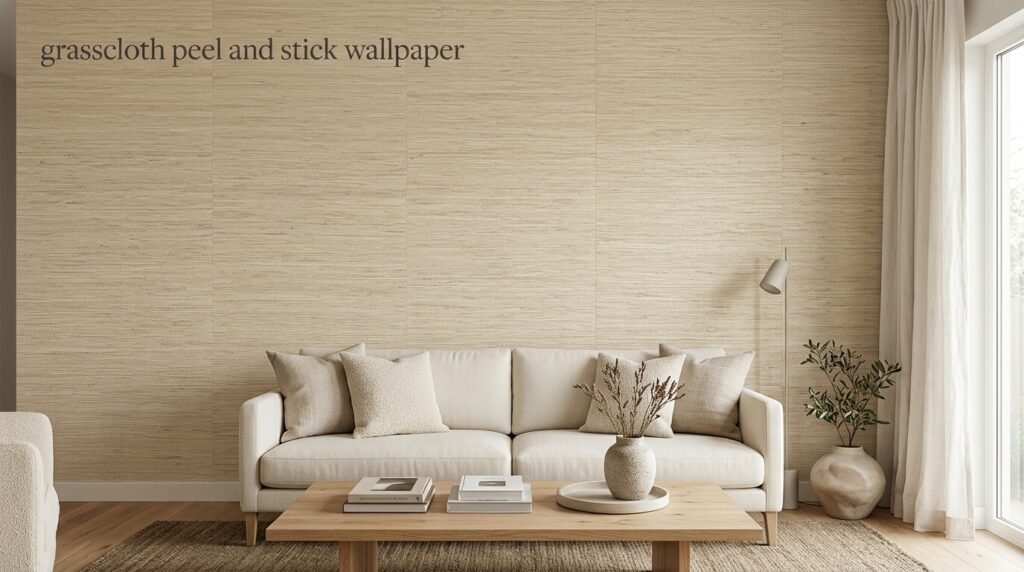
Grasscloth peel and stick wallpaper gives walls the warm, woven look of natural grasscloth without the usual paste-based installation. Most products in this category use a printed or textured surface to imitate woven fibers, rather than actual natural grasscloth. That difference matters because real grasscloth is made from natural plant fibers and has its own care and installation needs. Peel-and-stick versions are often easier to apply, remove, and use for smaller decorating projects, but their performance depends on the backing, wall surface, room conditions, and product instructions. Before choosing grasscloth peel and stick wallpaper, it helps to understand how it looks, what it is made from, where it works best, and what can cause it to fail. This article explains those details so you can decide whether it suits your room and prepare the wall properly.
What Grasscloth Peel and Stick Wallpaper Actually Is
Grasscloth peel and stick wallpaper is a self-adhesive wall covering designed to create the appearance of woven grasscloth. It usually has a decorative surface that copies the color shifts, fine lines, and natural texture associated with woven wall coverings. The backing has a pressure-sensitive adhesive covered by a removable liner. You peel away the liner, position the material, and press it onto a prepared surface. The term can describe several different product constructions, so the name alone does not tell you what the wallpaper contains. Some designs use printed patterns on smooth vinyl or paper-like material. Others use an embossed surface that gives the design a raised texture. A product may also use a woven-look finish without containing real grass fibers. Read the material description before ordering, especially if you want an authentic natural surface. This distinction affects appearance, cleaning, durability, installation, and removal. It also helps explain why two products advertised with the same style name can look and perform differently.
Is It Real Grasscloth or a Grasscloth-Look Finish?
Most peel-and-stick designs that imitate grasscloth are not the same as traditional natural grasscloth. Real grasscloth is made from natural plant fibers, such as sisal, and is usually supplied with a backing for conventional wallpaper installation. Its handmade texture can include visible variations in color, weave, and thickness. These differences are part of its natural appearance rather than necessarily being defects. Spoonflower, for example, describes its traditional grasscloth wallpaper as a handcrafted natural sisal wall covering with a non-woven backing. The company also explains that panel seams and natural variations remain visible after installation. Spoonflower Help Center+1 By contrast, grasscloth peel and stick wallpaper is generally selected for its visual effect and easier application. Its surface may be printed, embossed, or otherwise designed to suggest woven fibers. It can provide a similar room style without the same material or installation requirements. Check the product specifications for words such as natural sisal, vinyl, non-woven, paper, embossed, printed, or self-adhesive. These terms help you understand what you are buying.
Why Homeowners Choose This Wallpaper Style
The main appeal is its ability to add texture and warmth without using a complicated wall treatment. Plain painted walls can look flat, especially in rooms with simple furniture and limited decoration. A grasscloth-inspired surface introduces fine visual detail while keeping the overall design calm. It can make a room feel more layered without relying on a large floral print or bold geometric pattern. The peel-and-stick format also makes the project approachable for many DIY decorators. There is no need to spread traditional wallpaper paste across the wall when the product has its own adhesive backing. Some products can be repositioned during installation, although this depends on the material and adhesive. The format can suit an accent wall, a small decorative area, or a temporary room update. It may also appeal to renters, but permission and removal risk still matter. Removable does not mean guaranteed damage-free on every painted surface. The wall condition, paint type, adhesive, room environment, and length of use can all affect the result.
Different Grasscloth Looks and Finishes
Grasscloth-inspired wallpaper is available in several visual styles. The right choice depends on how much texture you want and how noticeable you want the wall to be.
Fine Linear Texture
Fine linear designs use narrow vertical or horizontal lines to suggest closely woven fibers. They create a quiet background that works well with simple furniture, natural wood, and neutral fabrics. This style is useful when you want texture without a strong pattern. Look closely at sample images because some printed designs have little physical depth.
Embossed Woven Texture
Embossed designs have a raised surface that can catch light and create a more tactile effect. They may look more convincing from a short distance than a flat printed design. However, embossing does not automatically mean the product contains natural fibers. Check the listed material and care instructions before treating it like real grasscloth.
Multitone and Variegated Designs
Natural grasscloth often has subtle changes in tone across its woven strands. Some imitation designs recreate this effect with several close shades. A mix of beige, taupe, gray, or brown can add depth without creating a busy wall. These finishes are often easier to coordinate with furniture than strong contrasting patterns.
Bold or Dark Grasscloth Effects
Dark charcoal, deep green, navy, and brown designs create a stronger feature wall. They can make a room feel intimate, but they may also show dust, scratches, or installation marks more clearly. Check a sample under the room’s actual lighting before choosing a dark finish.
Where It Works Best in the Home
Grasscloth peel and stick wallpaper can work in several dry, low-moisture areas when the product is approved for the intended surface. Living rooms are a common choice because a textured feature wall can sit behind a sofa or entertainment unit. Bedrooms can benefit from a soft woven appearance behind the bed, where the finish adds interest without competing with bedding. A home office may use it behind a desk or on a wall visible during video calls. In a dining room, a neutral design can create a more finished look around a sideboard or dining table. Small entry areas may also benefit from a textured wall, provided the surface is not exposed to frequent scuffing or moisture. Consider the amount of contact the wall receives. A narrow hallway where bags, shoes, and furniture regularly touch the surface may be harder on wallpaper than a quiet bedroom. Before choosing grasscloth peel and stick wallpaper, check whether the product is rated for the room and its expected level of use.
Rooms and Surfaces That May Not Be Suitable
A self-adhesive wall covering needs a stable surface and an environment that suits its adhesive. Bathrooms with showers or bathtubs can expose wallpaper to high moisture and changing humidity. Some manufacturers specifically advise against using their peel-and-stick wallpaper in these areas. Spoonflower, for example, states that its peel-and-stick product is not suitable for high-moisture bathroom areas. Spoonflower Help Center+1 Kitchens can also be challenging near sinks, cooking areas, and places where grease or steam collects. A product may work on a dry wall away from direct exposure, but the manufacturer’s room guidance should decide. Avoid applying wallpaper over damp walls, active mold, mildew, or water-damaged surfaces. Covering these problems does not repair them. The moisture source should be fixed and the wall made sound before any decorative finish is installed. Textured walls can also reduce contact between the adhesive and the surface. Heavy orange-peel, knockdown, popcorn, or rough plaster finishes may prevent reliable bonding. Some manufacturers warn that even slight texture can affect adhesion.
How to Choose the Right Color
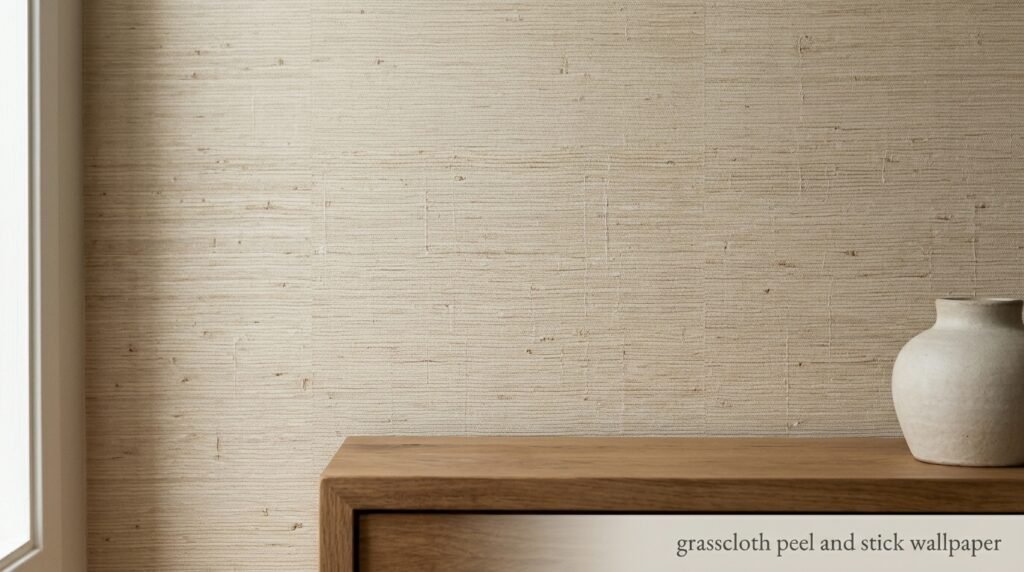
Color changes how the texture looks and how much attention the wall receives. Beige and warm sand shades create a soft, natural effect. They work with cream upholstery, oak furniture, linen curtains, and warm lighting. Gray and greige designs can suit modern rooms with black accents, stone finishes, or cooler wood tones. White and ivory versions keep a room light, although a very pale design may show dirt more easily in busy areas. Brown and taupe shades add warmth and can help connect wood furniture with neutral walls. Dark green, navy, and charcoal create a more dramatic background. They can look especially effective behind a light-colored sofa or bed. Do not choose a shade from a small online image alone. Screen brightness, image editing, room lighting, and surrounding colors can change how a wallpaper appears. Order a sample when available and place it beside the furniture, flooring, curtains, and trim. Look at it in daylight and under the room’s evening lights before making a final choice.
How to Match It With Furniture and Decor
The woven appearance is usually subtle, so it can work with several interior styles. In a modern room, pair it with clean furniture shapes, simple lighting, and a limited color palette. In a coastal-inspired room, combine a light grasscloth look with pale wood, white fabrics, and natural accessories. For a traditional room, warm taupe or beige can sit comfortably beside classic furniture, framed art, and soft patterned fabrics. Avoid making every surface compete for attention. If the wallpaper has strong color variation, choose simpler curtains and upholstery. If it has a quiet, uniform finish, patterned cushions or artwork can add contrast. Metal finishes also influence the overall mood. Brass and warm gold can complement beige or brown tones, while black or brushed nickel can suit gray and charcoal designs. The best combination is not necessarily an exact color match. A small difference in tone can create a more natural and layered result. Use a sample beside large furniture pieces before buying enough material for the whole wall.
How Much Wallpaper Do You Need?
Measure the wall before ordering, rather than estimating from the room’s floor area. Measure the wall width and height at several points because older homes may have uneven ceilings or floors. Use the largest relevant measurements when planning coverage. Product packaging may list roll width, roll length, panel size, or total square footage. Check which measurement applies to the product you are buying. For a simple rectangular wall, multiply its width by its height to estimate the surface area. Then compare that figure with the stated coverage of the wallpaper. This basic calculation does not account for pattern matching, trimming, repeat design, or installation mistakes. If the design has a visible pattern or comes in numbered mural panels, follow the manufacturer’s ordering guidance. Do not assume every roll can be placed in any order. Some murals must be installed in a specific sequence. Check whether the product requires overlap or edge-to-edge installation, since this affects the amount needed. Buying one extra roll may be sensible if the manufacturer recommends it, but first confirm its return policy and whether additional rolls may come from a different print batch.
What to Check Before Buying
The product listing should answer more than questions about color and style. Look for the exact material, adhesive type, surface finish, roll dimensions, coverage, and removal instructions. Confirm whether it is sold as a roll, sheet, or numbered panel set. Check whether the design repeats and whether the pattern needs to be matched between strips. If the seller does not explain these details, ask before ordering. Also review the recommended wall types and paint finishes. Some peel-and-stick products do not bond well to washable, scrubbable, stain-resistant, or certain low-VOC paints. Spoonflower lists specific paint finishes and preparation conditions for its own product, including a required curing period for newly painted or primed walls. Those directions are product-specific and should not be treated as a universal rule for every wallpaper. Spoonflower Help Center+1 Check the return policy, sample availability, and warranty terms. Read customer feedback carefully, but look for comments about the same product and wall conditions. A review saying that wallpaper stayed in place on a smooth bedroom wall does not prove it will work on textured bathroom paint.
Tools and Materials for Installation
The tools needed are usually simple, but having them ready makes the work easier. You will generally need a tape measure, pencil, level, straightedge, sharp utility knife, and a wallpaper smoother or squeegee. Keep a clean cloth nearby for handling the surface and removing dust before installation. A step ladder may be needed for tall walls. A second person can help support a long panel and keep it aligned while the backing is removed. Use a fresh blade for trimming so the edge stays clean. A dull blade can drag, tear, or pull the wallpaper. Do not assume a metal scraper or hard-edged tool is safe for every finish. A softer smoother may be more suitable for delicate or easily marked surfaces. Follow the manufacturer’s tool recommendations, especially if the wallpaper has a printed or embossed face. Keep the work area clear and protect nearby floors and furniture. If the installation involves outlets or switches, turn off power at the appropriate breaker before removing cover plates. Do not work on exposed electrical components.
Preparing the Wall Properly
Wall preparation is one of the biggest factors in how well self-adhesive wallpaper performs. The wall should be clean, dry, smooth, and in sound condition. Remove old wallpaper and loose paint. Fill holes and dents, then sand repaired areas until they blend with the surrounding wall. Remove sanding dust before installation. Grease, soap, dust, and cleaning residue can interfere with adhesion. Use a cleaning method suitable for the existing paint and allow the wall to dry fully. Do not apply wallpaper over mold, mildew, leaks, or damp plaster. Resolve the cause first. New drywall may need joints taped, filled, sanded, and primed according to the wallpaper manufacturer’s directions. Porous surfaces can absorb or weaken adhesive contact, while strongly colored walls may show through some thin materials. A suitable primer or sealer may be needed, but not every primer works with every self-adhesive product. Check the wallpaper instructions before applying one. Paint must also be fully cured, not merely dry to the touch. Manufacturers give different waiting periods, so follow the instructions for the exact product. Spoonflower specifies at least 30 days for painted or primed walls for its peel-and-stick wallpaper, while York recommends a minimum four-week cure for its product. Spoonflower Help Center+1
How to Install Grasscloth Peel and Stick Wallpaper
Start by reading the product instructions from beginning to end. Different brands use different panel layouts, seam methods, and adhesive systems. Open the packaging and inspect every piece before cutting or applying anything. Check the color, pattern, panel order, and edges. Stop if you find a print defect or a mismatch. Keep the packaging and order details until the project is complete.
Plan the Starting Line
Choose a starting point that allows the first strip to hang straight. Use a level to draw a vertical guide line. Do not rely on a corner, ceiling, or door frame being perfectly straight. If the first panel leans, the error can become more obvious as the next panels are added. For a full wall, plan how the final strip will meet the far corner. For a feature wall, consider where the most visible seam will fall.
Apply the First Panel Slowly
Peel back only a small section of the release liner at the top. Position the panel against the guide line and press the exposed area into place. Check that the top edge is level and the side edge is straight. Continue removing the liner gradually while smoothing the wallpaper down the wall. Avoid pulling the material tightly because stretching can distort the pattern or create tension at the edges. A helper can hold the panel while you guide it into position.
Smooth and Align the Seams
Work from the center toward the edges to push out trapped air. Use even pressure and the smoother recommended by the manufacturer. Bring the next panel into position according to the product’s seam instructions. Some products are installed edge to edge, while others may require a slight overlap. Never guess the seam method. Keep the design aligned and avoid leaving visible gaps. If the wallpaper needs repositioning, lift it gently rather than pulling sharply. Some products allow limited adjustment, but repeated lifting can collect dust on the adhesive and reduce its grip. Manufacturer instructions commonly advise working in small sections and smoothing bubbles as the panel is applied. Peel &Stick+1
Trim the Edges
Once the panel is positioned, trim excess material at the ceiling, baseboard, and corners. Use a straightedge and a sharp blade. Make controlled cuts rather than trying to remove a long strip in one rough movement. Keep the blade away from the wall surface where possible to avoid scratches. Replace the blade if it begins to drag. Continue with the remaining panels, checking alignment as you go.
Common Installation Problems and How to Avoid Them
Bubbles, lifting corners, visible seams, and crooked panels are common concerns with self-adhesive wallpaper. Many problems begin with the wall or the way the material is handled. Dust and grease can reduce adhesive contact, while rough surfaces prevent the wallpaper from sitting evenly. Applying a full panel before checking its alignment can also make correction difficult. Work slowly and inspect each section before moving on. Do not stretch the material to force a pattern match. If a bubble appears, follow the manufacturer’s guidance for lifting and smoothing that area. Avoid piercing the surface unless the product instructions specifically recommend it. A pinhole may remain visible, especially on a textured or printed finish. If an edge repeatedly lifts, check for dust, wall texture, moisture, or incompatible paint. Pressing harder will not solve an underlying adhesion problem. If the wallpaper keeps releasing, stop and contact the manufacturer or seller rather than applying an unapproved glue or adhesive.
How to Care for the Finished Wall
Care depends on the material, not just the grasscloth appearance. A vinyl-like surface may have different cleaning limits from a paper-based or fabric-like finish. Read the product’s care label before wiping it. If cleaning is permitted, start with the least aggressive method recommended by the manufacturer. Avoid soaking the wall or using abrasive pads, harsh cleaners, or strong chemicals without approval. Water can affect some printed surfaces, weaken adhesive edges, or leave marks. Keep furniture from rubbing against the wallpaper. Use care when moving beds, chairs, and tables near the wall. In a kitchen or entry area, remove dirt promptly using an approved method rather than scrubbing repeatedly. Inspect seams and corners from time to time. Early lifting may be easier to address than a large section that has collected dust behind it. Do not assume that a product described as wipeable can withstand heavy scrubbing. Cleaning claims are specific to the material and should be checked before use.
Can It Be Used in a Rental?
It may be suitable for some rental projects, but check the lease and ask the property owner before applying it. A removable label does not guarantee that the wallpaper will come away without affecting paint. Adhesive can bond differently to different coatings, and removal conditions can change over time. Spoonflower describes its peel-and-stick wallpaper as suitable for temporary home projects, including rentals, while also explaining that removal depends on temperature, humidity, wall preparation, and how long the material remains installed. Spoonflower Help Center If you rent, test a small sample in an inconspicuous area and leave it in place for the period recommended by the manufacturer. Remove it using the stated method and inspect the paint. A test can reduce uncertainty, but it cannot guarantee the same result across every wall. Avoid applying wallpaper to freshly painted walls, damaged paint, or surfaces that the product instructions exclude. Keep a record of the product name and removal directions for the day you move out.
How to Remove It Without Unnecessary Wall Damage
Removal should be slow and controlled. Start at a corner or edge that the manufacturer identifies as a suitable starting point. Lift the material gently and pull it back in the direction recommended by the product instructions. Some manufacturers advise pulling downward and keeping the material close and parallel to the wall rather than pulling it sharply outward. Spoonflower gives this type of guidance for its own peel-and-stick wallpaper because it can reduce unnecessary paint removal. Spoonflower Help Center Do not rush or yank a large section away. If the wallpaper resists, stop and check the removal instructions. Heat, humidity, adhesive age, and wall preparation may affect how easily it releases. After removal, inspect the surface for residue or damaged paint. Use only a cleaning or residue-removal method approved for the wall finish. If the paint lifts, repair the surface before repainting or applying another wall covering.
Grasscloth Peel and Stick Wallpaper Compared With Traditional Grasscloth
The two options can create a similar visual mood, but they are not interchangeable. Natural grasscloth has genuine plant fibers and a distinctive woven surface. Its natural variations and visible seams are part of its character. It usually requires more careful handling and a traditional installation method. Some natural grasscloth is not washable and can be affected by moisture, sunlight, or odors. Manufacturer guidance for natural sisal products highlights these limitations and may recommend professional installation. Spoonflower Help Center+2 Grasscloth peel and stick wallpaper is generally easier to approach as a DIY project because it has a self-adhesive backing. Its surface may be printed or embossed rather than woven from natural fibers. It can be easier to remove when the product is designed for that purpose, but wall damage remains possible. Traditional grasscloth may appeal to someone who values authentic natural materials and accepts their irregularities. A peel-and-stick imitation may be more practical for a temporary update, a smaller project, or someone who prefers a simpler installation. Compare the actual product construction instead of relying on the style name.
Is It a Good Choice for a Small Room?
A grasscloth-inspired finish can add depth to a small room without using a large-scale pattern. Light beige, ivory, pale gray, and soft taupe can keep the wall from feeling too heavy. A fine linear texture may create a calm background behind a bed, desk, or compact sofa. However, a dark finish can also work if the goal is a cozy, deliberate look. The key is to consider the room’s natural light, ceiling height, and furniture. Covering every wall is not always necessary. A single feature wall can introduce texture while leaving the other walls simple. In a narrow room, consider whether a vertical or horizontal pattern changes the visual balance. Order a sample and view it from the doorway as well as close up. A texture that looks subtle in a product photo may appear stronger across a full wall.
Mistakes to Avoid Before and During Installation
One common mistake is buying wallpaper based only on the product photograph. Photos may hide the difference between a printed texture and a raised finish. Another mistake is assuming every product advertised as grasscloth contains natural fibers. Check the material description and sample before ordering. Poor wall preparation is another frequent cause of trouble. Dust, grease, moisture, loose paint, and rough texture can all affect adhesion. Applying wallpaper before fresh paint has cured can also lead to failure. Do not use a general waiting period when the manufacturer gives a specific one. Measuring only once can result in too little material, especially when the design needs matching or trimming. Failing to inspect all rolls before cutting can leave a defect discovered after installation has begun. Finally, avoid forcing wallpaper into a room where the product is not recommended. A decorative wall covering cannot solve dampness, peeling paint, or poor surface conditions. Fix the wall first, then decide whether the product is suitable.
Frequently Asked Questions
Does grasscloth peel and stick wallpaper contain real grass?
Not necessarily. Many products use printed or embossed surfaces to imitate woven grasscloth rather than actual plant fibers. Read the material specifications to confirm whether the product contains natural sisal or another fiber.
Can grasscloth peel and stick wallpaper be used in a bathroom?
It depends on the product and the bathroom conditions. Many manufacturers advise against using peel-and-stick wallpaper in high-moisture areas, especially near showers and bathtubs. Check the product instructions before installation.
Will it stick to textured walls?
It may not. Texture reduces the amount of contact between the adhesive and the wall. Some manufacturers require smooth surfaces and warn that even slight texture can affect adhesion. Test a sample if the product instructions allow it.
Can it damage paint when removed?
Yes, it can. The result depends on the paint, wall preparation, adhesive, room conditions, and time in place. A product described as removable is not guaranteed to leave every painted wall undamaged.
Can I install it over freshly painted walls?
Do not install it until the paint has cured for the period stated by the wallpaper manufacturer. The waiting period varies by product. Paint that feels dry may still need more time before adhesive wallpaper can be applied.
How do I clean grasscloth peel and stick wallpaper?
Follow the care instructions for the exact product. Some surfaces may allow gentle wiping, while others may be damaged by water or cleaners. Avoid scrubbing or soaking the wallpaper unless the manufacturer specifically permits it.
Conclusion
Grasscloth peel and stick wallpaper can give a room the soft, woven appearance of grasscloth with a more approachable installation process. The most important step is checking what the product is actually made from. A printed or embossed imitation is different from natural sisal, even when the designs look similar in photographs. Choose a finish that suits the room, confirm that the wall is smooth and dry, and follow the product’s own preparation, installation, cleaning, and removal instructions. Test a sample before covering a large area, especially in a rental or on a painted surface. With the right product and a properly prepared wall, this style can create a warm feature without requiring a full traditional wallpaper project.
How to Judge the Quality From a Sample
A sample is useful because the surface can look different in person than it does on a screen. Hold it at different angles to see whether the texture is printed, embossed, or made from visible fibers. Run your fingers lightly over it to understand how much physical depth it has. Check whether the color changes under daylight and warm indoor lighting. Also look at the edges and backing. A sample may help you judge thickness, flexibility, and how easily the material handles a gentle bend. It cannot fully show how the adhesive will behave on your wall, so follow the manufacturer’s testing advice. If possible, order samples from two or three finishes and compare them beside your flooring and furniture. This small step can prevent an expensive mismatch across a full wall. It is especially useful when choosing grasscloth peel and stick wallpaper for a room with limited natural light or several existing wood tones.
What to Do if the Wallpaper Starts Peeling
If an edge begins to lift, first identify why it is happening. Check whether the wall was dusty, textured, damp, or coated with paint that does not support the adhesive. Look for nearby sources of steam, condensation, or temperature changes. If only one small area is affected, consult the manufacturer’s repair advice before trying to press it back down. The adhesive may have collected dust or lost contact with the surface. Repeatedly lifting and pressing the same section can make the problem worse. Do not add craft glue, double-sided tape, or construction adhesive unless the manufacturer approves that method. An added adhesive may stain the surface or make later removal harder. If several seams are opening or entire panels are falling away, stop the installation and contact the seller. Keep photographs of the problem and the product packaging. This information can help the manufacturer assess whether the issue relates to the material, wall preparation, or installation conditions.
Choosing Between a Full Wall and an Accent Wall
A full-room installation creates a continuous textured look, but it also requires more material and careful planning around doors, windows, corners, and outlets. It can work well when the wallpaper has a subtle color and a quiet weave effect. A single accent wall is often easier to plan and can provide enough texture to change the room’s appearance. It is also a practical way to try grasscloth peel and stick wallpaper before committing to a larger project. Choose a wall that naturally draws attention, such as the wall behind a bed, sofa, or console. Avoid selecting a wall simply because it is empty. Consider how the pattern will look around furniture and whether seams will fall in highly visible places. If the wall has many doors, shelves, or built-in features, the extra cuts may make installation more difficult. A simpler wall usually gives a cleaner result and makes it easier to keep the design aligned.