Counter stools with backs provide extra support while making a kitchen island or breakfast counter more comfortable for everyday use. They are useful for quick meals, conversations, homework, and longer periods of sitting. However, choosing the right pair involves more than finding a design that matches the kitchen. Seat height, backrest shape, width, legroom, footrests, and available floor space all affect comfort. A stool that looks perfect online may feel cramped if its seat is too high or its back hits the counter when pushed in. The best choice depends on the counter’s measurements, how often people use the seating, and the space around it. This guide explains the main styles, materials, measurements, and practical details to check before buying.
What Are Counter Stools With Backs?
Counter stools with backs are raised seats designed for kitchen counters, islands, and counter-height tables. Unlike backless stools, they include a backrest that supports at least part of the sitter’s back. The back may be low, medium, or full height, depending on the design. Some models also include padded seats, armrests, swivel bases, or footrests. These features change how the stool feels and how much room it needs. A low-back design may offer light support while keeping the kitchen visually open. A full-back model feels closer to a dining chair and may suit people who sit for longer periods. The term counter stool describes the seat height, not the overall height of the back. This distinction matters when comparing product listings. A tall back does not mean the seat is suitable for a tall bar. Always check the seat-height measurement separately.
Counter Stools vs. Bar Stools: Know the Difference
Counter stools and bar stools are not the same height, even though retailers sometimes use the names loosely. A typical kitchen counter is around 36 inches high, while a raised bar is often around 40 to 42 inches high. Counter-height seats commonly fall around 24 to 26 inches, while bar-height seats are often around 28 to 30 inches. These are common ranges, not fixed rules for every home or product. A thick countertop, support rail, or unusual island height can change the required seat size. The most reliable method is to measure the actual counter and the space below it. A stool that is too tall can leave little room for thighs and knees. One that is too short may make eating and working uncomfortable. Retailer guidance also stresses checking seat height rather than relying only on the product’s counter or bar label. Raymour & Flanigan+2
How to Measure for the Correct Stool Height
Correct height is the first measurement to get right. Measure from the finished floor to the underside of the counter, including any apron, support rail, or fixed obstruction. Then compare that measurement with the stool’s seat height. A useful starting point is to leave about 10 to 12 inches between the seat and the underside of the counter. This space gives most people room for their legs, although body size and seat shape can affect comfort. For a counter around 36 inches high, a seat near 24 to 26 inches is often a sensible place to start. Do not measure the stool’s total height when checking this fit. The total height includes the backrest, while seat height tells you where your body will sit. If the stool has a thick cushion, confirm whether the listed seat height includes it. A cushion can compress under weight, so the usable height may differ slightly from an unloaded measurement. Measure more than once and compare the result with the exact model dimensions.
How Much Space Should You Leave Between Stools?
The number of stools that fit depends on their width, shape, and how people use them. A narrow stationary stool may need less room than a wide swivel model with arms. As a practical starting point, allow roughly 24 inches of counter width per seat, then increase the allowance for broad backs, armrests, or swivel movement. Houzz notes that stools with arms take more room, while a high-back design can offer more support than a low-back option. Houzz Measure the usable seating length rather than the full island length. End panels, cabinets, legs, and decorative supports can reduce the available area. For example, a 72-inch seating run may appear large enough for three stools, but three wide models could leave little elbow room. Two comfortable seats may work better than three crowded ones. Also check the space behind the stools. People need room to pull out a seat and move around it. If a walkway runs behind the island, consider how often someone will pass while another person is seated. The layout should work during normal household activity, not only when every stool is pushed in.
Types of Backrests and Their Differences
The backrest has a major effect on comfort, appearance, and how easily the stool fits beneath the counter. A low-back stool has a short support panel near the lower back. It often keeps sightlines open and may slide partly under an overhang, depending on its shape. A mid-back design reaches higher and gives more support without looking as large as a dining chair. A full-back stool has a taller panel that supports more of the back and creates a more substantial appearance. Curved or bucket-style backs wrap around the sides and can feel more enclosing. Slatted backs allow more visual space between the frame pieces, while solid backs create a stronger shape. Upholstered backs add softness but may require more care. No single style is best for everyone. Someone who sits for breakfast and then leaves may prefer a compact low back. A household that uses the island for long meals or laptop work may value a taller, more supportive design. Check the backrest height and width, not just the product photograph.
Fixed, Swivel, and Adjustable Counter Stools
A fixed stool stays in one position and usually has a simple frame. It can feel stable and suits traditional, farmhouse, and minimalist kitchens. A swivel stool turns on its base, allowing someone to face the counter or turn toward another person without moving the entire stool. This can be useful when an island faces a living room or open-plan space. However, the swivel mechanism adds moving parts, so check how smoothly it turns and whether the base feels steady. Some swivel designs return to a forward-facing position after use, but this feature is model-specific. Adjustable stools use a lifting mechanism to change seat height. They can help when a counter has an unusual height or when several people need different settings. Check the adjustment range and locking or lifting mechanism before choosing one. Do not assume every adjustable model is suitable for a standard kitchen island. Some are designed for bars or work surfaces instead. In a busy family kitchen, consider whether the mechanism is easy for everyone to use and whether the base occupies too much floor space.
Materials: Wood, Metal, Upholstery, and More
The frame and seat materials affect appearance, cleaning, weight, and long-term use. Wood stools can bring warmth to a kitchen and pair well with timber cabinets, natural flooring, and traditional furniture. Solid wood frames may be repairable, but finishes can scratch and some woods need care around spills. Metal frames suit modern and industrial spaces. They can be strong and visually light, although the finish may scratch or corrode if poorly maintained or exposed to moisture. Upholstered stools offer a softer seat and backrest. Fabric can add color and texture, but food stains and everyday marks may need prompt attention. Performance fabrics and removable covers can make care easier when the product is designed for them. Faux leather and other coated materials are often easier to wipe than textured fabric, but their cleaning instructions still matter. Rattan and woven details add a relaxed look, though they may collect crumbs and dust in the weave. Plastic and molded materials can be practical for easy cleaning, depending on their construction. Compare the complete stool rather than choosing by one material label. Frame joints, seat support, finish quality, and replaceable floor glides also matter.
Choosing a Comfortable Seat and Footrest
A comfortable stool needs more than a soft cushion. Seat depth, width, shape, padding, and edge design all affect how it feels. A deep seat may suit a taller person but can press behind the knees of someone with shorter legs. A narrow seat may feel restrictive, especially when the stool has arms. A shaped seat can help keep the body in a natural position, but personal comfort varies. Try sitting on a similar design if possible, or review the seat dimensions carefully. The footrest is another important feature because it gives the feet a place to rest when they cannot reach the floor. Its position should feel natural rather than forcing the knees too high. Metal footrests can be practical in busy kitchens because feet often rub against them. A padded seat and supportive back can make counter stools with backs more suitable for longer meals, but the overall proportions still need to fit the sitter. If several people will use the same stool, consider the range of body sizes in the household.
Should You Choose Stools With Arms?
Armrests can make a stool feel more like an occasional dining chair. They give the arms a place to rest and may make sitting down or standing up easier for some people. However, they increase the stool’s overall width and can prevent it from sliding beneath the counter. The arm height also matters. If the arms are higher than the underside of the counter, the stool may not tuck in at all. Measure the distance from the floor to the underside of the counter and compare it with the stool’s arm height. Also check the width between neighboring seats. Two stools with arms may need more space than two armless models. If the kitchen is narrow, armless designs can provide a cleaner fit. If comfort during longer meals matters more than a fully tucked-in look, arms may be worth the extra space. The right choice depends on how the seating area is used each day.
Matching Stool Style to Your Kitchen
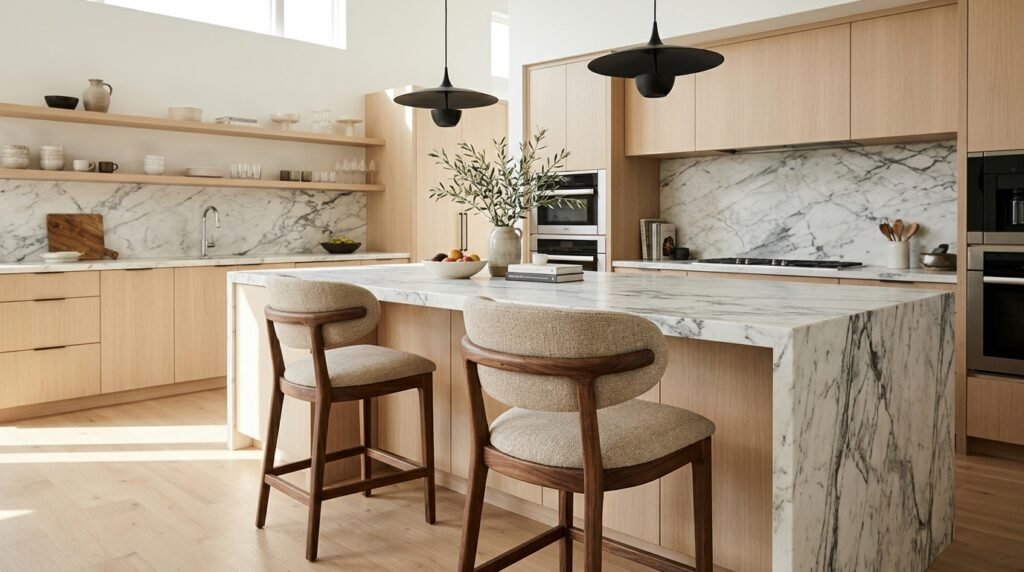
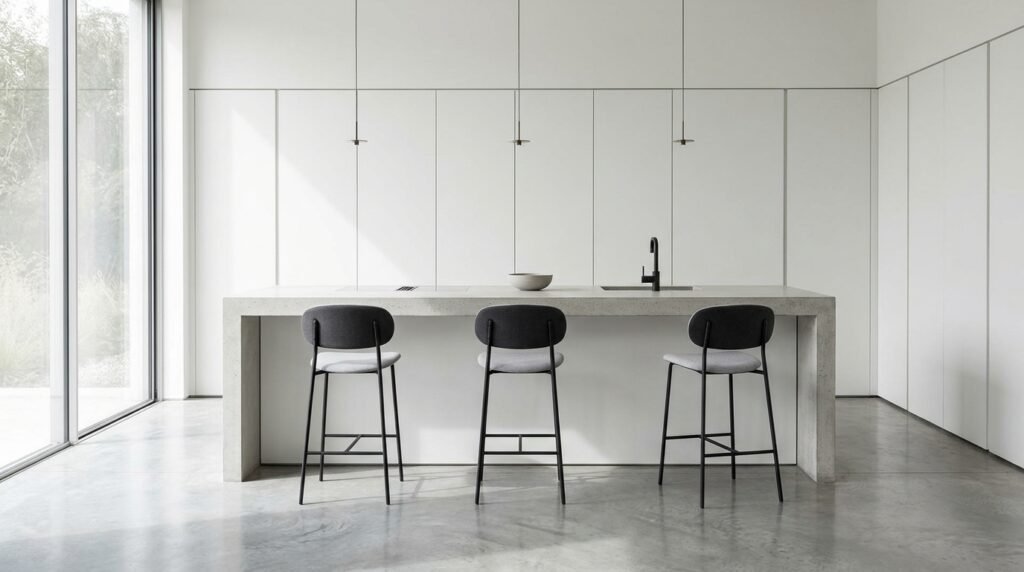
The stools should connect with the kitchen without making every finish identical. For a modern kitchen, simple metal frames, clean lines, and neutral upholstery can keep the look calm. A farmhouse space may suit wood frames, woven seats, or soft fabric in warm colors. Traditional kitchens often pair well with curved backs, darker wood, and upholstered details. Industrial interiors can use black metal, visible hardware, and leather-look seats. Coastal rooms may suit pale wood, light woven textures, and soft blue or cream fabrics. Color is another way to create balance. Dark stools can add contrast to pale cabinets, while light upholstery can soften a dark island. If the countertop has strong veining or a bold pattern, a simpler stool may keep the space from feeling busy. If the kitchen is plain, a textured seat or distinctive backrest can add interest. Look at the stools beside the cabinet doors, handles, lighting, and flooring. A finish that looks attractive alone may feel out of place beside the existing materials.
Counter Stools With Backs for Small Kitchens
A small kitchen needs careful attention to both stool dimensions and visual weight. A bulky full-back design may make the island feel crowded, even when the measurements technically fit. Slim frames, armless seats, and open backs can keep the area looking lighter. Low-back counter stools with backs may be a useful middle ground between full support and a compact appearance. Check whether the backrest can slide under the overhang without hitting the counter edge. Also consider the space needed to pull the stool out. A model that fits neatly when pushed in may block a drawer or walkway when someone sits down. If the island is short, two appropriately spaced stools can be more practical than squeezing in three. Avoid choosing a very narrow seat only to increase the number of places. Comfort and safe movement matter more than maximum seating capacity. In a tight layout, measure the full stool footprint, including the back and legs, before ordering.
How to Check Stability and Build Quality
A stool should feel steady when someone sits down, shifts position, or rests their feet on the footrest. Look at how the legs connect to the seat and whether the frame has visible movement. On a metal model, inspect the welds, joints, and finish. On a wood model, check the joinery and whether the legs feel evenly aligned. A stool that rocks on a level floor may have uneven legs or a loose connection. Floor glides can help protect flooring and reduce minor movement, but they cannot correct a weak frame. Check the manufacturer’s stated weight capacity and make sure it suits the people who will use the stool. Do not guess a capacity based on appearance or material alone. Also look for care and assembly instructions, replacement-part information, and warranty terms. A stool may look sturdy in a product image but still have weak joints or a poor swivel mechanism. Reviews can help identify repeated concerns, but check that they refer to the same model and size.
Assembly and Placement Tips
Before assembling a stool, lay out the parts and compare them with the included instructions. Use the correct fasteners and avoid tightening every bolt fully until the frame is aligned, if the instructions recommend that sequence. Once assembled, place the stool on a level floor and check for wobble. Tighten connections according to the manufacturer’s directions, not by forcing them beyond their intended fit. If the stool has a swivel or height-adjustment mechanism, test it before regular use. Position stools so they do not block cabinet doors, drawers, appliances, or main walking routes. Check the distance between the seat and counter when the stool is in its normal position. A stool can fit beneath the overhang but still leave too little room for knees. If the floor is delicate, use suitable glides or protective pads that fit the legs. Do not use a pad that makes the stool unstable. Keep assembly tools and small fasteners away from children and pets during the setup process.
Cleaning and Maintaining Different Stool Materials
Cleaning needs depend on the material and the manufacturer’s care instructions. Wipe wood with a suitable soft cloth and clean spills promptly. Avoid leaving standing water on joints or unfinished areas. Metal frames can usually be wiped with a soft cloth, but dry them if moisture remains. Use cleaning products that are safe for the specific finish. Fabric upholstery may need vacuuming with an appropriate attachment to remove crumbs and dust. Treat spills according to the fabric care label instead of rubbing them deeply into the fibers. Coated upholstery may allow gentle wiping, but harsh cleaners can damage the surface. Woven seats can collect debris between the strands, so use a soft brush or vacuum attachment if permitted. Check screws, bolts, footrests, and swivel parts from time to time. Tighten loose fasteners as directed by the manufacturer. If a component becomes damaged, stop using the stool until it is repaired or replaced. Routine care helps preserve the finish and can reveal small problems before they become more serious.
Common Buying Mistakes to Avoid
The most common mistake is choosing a stool by its overall height rather than its seat height. The backrest can make the product look much taller without changing where the sitter’s body rests. Another mistake is assuming every counter stool fits a standard island. Counter heights vary, and a support rail or thick countertop can reduce legroom. Buyers may also underestimate the width of stools with arms or swivel bases. This can lead to crowded seating or blocked walkways. Choosing a style without checking the backrest clearance can cause another problem: the stool may not tuck under the counter. Upholstery also deserves attention. A pale fabric seat may look attractive but need more care in a kitchen where spills are common. Finally, do not ignore the return policy, delivery dimensions, assembly requirements, or warranty. A stool that arrives in a large box may be difficult to return once assembled. Measure first, compare specifications, and keep packaging until you are sure the fit is right.
When a Different Type of Seating May Work Better
A stool with a back is not automatically the right choice for every counter. Backless stools can work well in very small kitchens where seats need to tuck fully beneath the overhang. They may also suit a household that uses the island only for short stops. A dining chair may be better if the surface is standard table height rather than counter height. A bench can suit a long built-in breakfast nook where several people sit together. For a raised bar, choose a bar-height seat rather than trying to make a counter-height model work. If someone in the household has difficulty climbing onto a high seat, consider a lower seating option or a chair with a more accessible height. A stool’s footrest and back support do not make it suitable for every mobility need. Check the actual user’s comfort and ability to sit down and stand up safely. The best furniture choice is the one that suits the space and the people using it, not simply the one that matches a popular kitchen trend.
Frequently Asked Questions
Are counter stools with backs more comfortable than backless stools?
They can be more comfortable for longer sitting because the backrest provides support. However, comfort also depends on seat depth, padding, footrest position, and the sitter’s height. A well-shaped backless stool may still work for short meals or quick use.
What height should counter stools with backs be?
For a counter around 36 inches high, start by checking stools with seats around 24 to 26 inches high. Leave roughly 10 to 12 inches between the seat and the counter’s underside. Measure your own counter before choosing a model.
Do counter stools with backs fit under a kitchen island?
Some do, but it depends on the backrest shape and height. Low-back models may slide partly beneath an overhang, while taller backs often remain visible. Check the overall height and the clearance beneath your counter.
How many counter stools do I need for a kitchen island?
The number depends on the usable seating length and each stool’s width. Around 24 inches per seat is a useful starting point, but wide, armed, or swivel designs may need more room. Measure the seating area before ordering.
Are swivel counter stools with backs a good choice?
They can be useful when the island faces another part of an open room. Swivel seats let people turn without dragging the entire stool. Check that the base feels stable and that the rotating seat has enough space.
What material is easiest to clean?
Metal, molded plastic, and some coated upholstery are often easier to wipe than textured fabric. However, cleaning depends on the exact finish and care instructions. For a busy kitchen, check the manufacturer’s cleaning guidance before buying.
Conclusion
The right counter stools with backs should fit the counter, provide comfortable support, and leave enough room for people to move around. Start with the seat height and available width before choosing a color or style. Then compare backrest shape, arm clearance, footrest position, frame construction, and upholstery care. A low-back model may suit a compact kitchen, while a taller padded design can work well for longer meals. Always check the full product dimensions instead of relying on general labels or photographs. Measure the counter, test a sample seat if possible, and review the return terms before ordering. These simple checks can help you choose seating that looks balanced and works well in everyday life.