Navy blue wallpaper can give a room a rich, calm, and well-defined look without relying on bright colours or busy decoration. Its deep blue shade works with many interior styles, from classic and traditional rooms to clean, modern spaces. The right design can make a wall feel elegant, add depth behind furniture, or create a strong feature without changing the entire room. However, the result depends on more than colour alone. Pattern size, surface texture, lighting, room dimensions, furniture, and wallpaper material all affect the finished appearance. Some designs use navy as a solid background, while others combine it with florals, geometric shapes, metallic details, or natural textures. Each option creates a different mood and suits different spaces. Choosing navy blue wallpaper also means considering practical details, such as whether the surface can be cleaned, how it is installed, and whether the wall is suitable. This guide explains the main styles, room ideas, colour combinations, materials, and selection tips to help you choose a design that looks balanced and works well in everyday use.
Why Navy Blue Wallpaper Works in Interior Design
Navy is a deep shade of blue that often feels more grounded than brighter blues. It can add colour without making a room look overly playful or loud. Depending on its undertone and finish, it may appear cool, warm, muted, or dramatic. A matte design usually creates a softer effect, while metallic details can make the wall look brighter under artificial light. The depth of navy also gives furniture and decorative objects a clear background. Light-coloured sofas, wooden tables, brass lamps, white bedding, and neutral curtains can all stand out against it. This contrast is one reason navy blue wallpaper works in both traditional and modern interiors. It can also help define a specific area, such as the wall behind a bed or the space around a dining table. The colour does not automatically make a room feel smaller, but a dark, heavily patterned design can feel visually strong in a compact or poorly lit space. The best result comes from considering the whole room rather than selecting a pattern in isolation.
Popular Types of Navy Blue Wallpaper
The design you choose affects the mood more than the colour name alone. Plain designs create a simple backdrop, while patterns bring movement and detail. Textured surfaces add depth even when they use only one shade. Some styles are quiet enough for an entire room, while others work better on one feature wall. Before choosing, decide whether the wall should blend with the interior or become its main visual focus. Navy blue wallpaper is available in several broad design styles, although the exact selection varies by retailer and collection.
Plain and Solid Designs
Plain navy wallpaper offers a clean look without a visible printed pattern. It can suit rooms where furniture, artwork, rugs, or lighting already provide enough detail. A smooth matte finish creates a restrained appearance, while a slight sheen reflects more light and can make the surface feel more formal. Solid designs are also easier to coordinate with patterned cushions, curtains, and bedding. However, a plain surface can reveal wall imperfections more clearly than a textured pattern. Check the wall condition before installation and choose a product that matches the surface quality. A sample is useful because a deep colour can look different across a large wall than it does on a small screen.
Floral and Botanical Designs
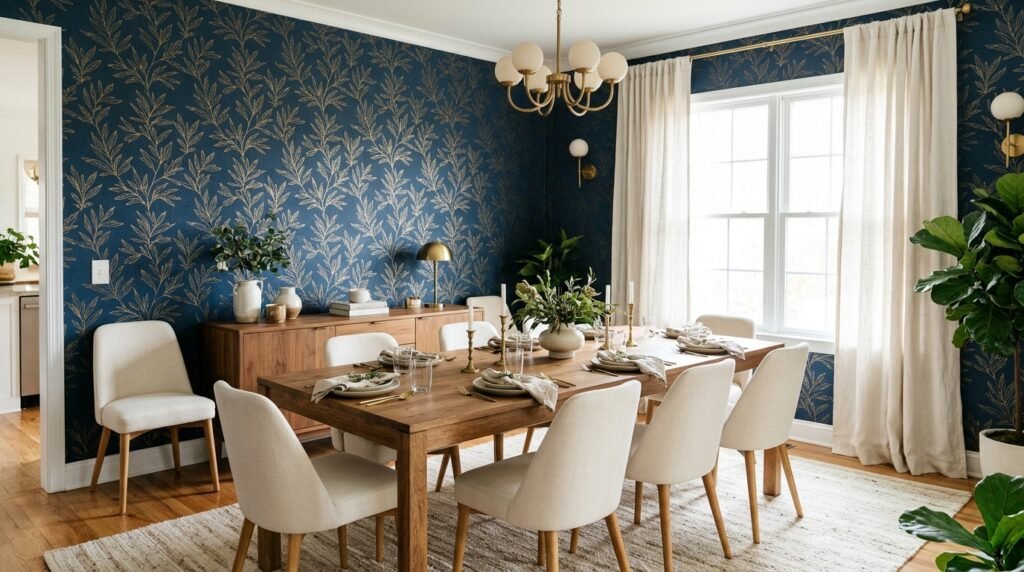
Floral wallpaper combines navy backgrounds with flowers, leaves, branches, or other plant-inspired details. Depending on the print, it can look classic, romantic, modern, or dramatic. Large flowers create a bold statement, while small botanical patterns usually feel more delicate. Designs with cream, pale blue, soft pink, or muted green details can soften the dark background. Floral prints often work well behind a bed, in a reading corner, or on a dining room wall. Consider the size of the pattern in relation to the wall. Large motifs may be difficult to appreciate when interrupted by doors, windows, shelves, or large furniture. Smaller prints can provide more continuous detail across narrow walls.
Geometric and Abstract Patterns
Geometric wallpaper uses shapes such as lines, circles, diamonds, grids, or repeating angles. It can make a room feel structured and contemporary. Navy backgrounds paired with white or pale grey shapes create strong contrast. Gold or silver details can make the design feel more decorative. Abstract patterns offer a less predictable appearance, with curved forms, irregular shapes, or layered colour effects. These designs are useful when a room needs visual interest but does not suit traditional floral decoration. Check how the pattern repeats before ordering. A large geometric design may need careful alignment, especially across several adjoining strips.
Textured and Fabric-Look Designs
Textured wallpaper can imitate linen, woven fabric, brushed surfaces, or other materials. It adds visual depth without depending on a large printed motif. This makes it useful in bedrooms, living rooms, and spaces where a quiet finish is preferred. Some products have a raised surface that can be felt, while others use printing to create the appearance of texture. These finishes are not all cleaned in the same way. A fabric-look design may be delicate, while a suitable vinyl surface may tolerate gentle wiping. Read the product care instructions rather than assuming that every textured wallcovering is washable.
Metallic and Decorative Designs
Metallic wallpaper uses reflective details to catch light. Gold, brass, silver, or copper accents can create contrast against a dark blue background. These designs may suit dining rooms, formal sitting areas, or a feature wall in a bedroom. Their appearance changes with the direction and strength of the light. A pattern that looks subtle during the day may appear much brighter under ceiling lights. Metallic finishes can also draw attention to uneven wall surfaces, so preparation matters. Use a sample in the actual room before choosing a large quantity.
How to Choose Navy Blue Wallpaper for Different Rooms
A design that looks right in a bedroom may feel too bold in a small hallway. Each room has different lighting, furniture, daily use, and practical needs. Start by considering how the space is used, then choose a pattern and material that suit those conditions. The best navy blue wallpaper is not necessarily the darkest or most decorative option. It is the one that works with the room’s size, light, and existing finishes.
Living Room
The living room can handle a wide range of wallpaper styles because it often has more furniture and decorative elements to balance the wall. A plain or lightly textured design can create a calm background for artwork and seating. A patterned feature wall can add interest behind a sofa or around a fireplace, provided the wallpaper is suitable for the surface and heat conditions. If the room has a light sofa, pale flooring, or white trim, navy can provide contrast. In a room with dark furniture, choose a design with lighter details or a softer blue tone to prevent the space from feeling too heavy. Look at the wall from the main seating position before deciding where the pattern should begin and end.
Bedroom
Navy can create a restful and intimate atmosphere in a bedroom, especially when paired with soft bedding and warm lighting. A plain finish may suit a simple interior, while a floral or subtle geometric print can make the wall behind the bed more personal. Many people choose the wall behind the headboard because it gives the room a clear focal point. The design should not compete with a highly patterned duvet, curtains, or rug. If those items already have strong prints, a quieter wallcovering may create a better balance. Navy blue wallpaper can also work on more than one wall, but test the colour in the room first. Dark shades may feel stronger at night when the only light comes from bedside lamps.
Dining Room
A dining room is a suitable place for a more decorative pattern because the wall can add character without needing to cover every surface. Botanical prints, classic motifs, and metallic details can complement a dining table and pendant lighting. Consider the finish of the table, chairs, flooring, and nearby cabinets. Warm wood and brass details can sit comfortably with navy, while glass and chrome may create a cooler, more modern effect. If the dining area is part of an open-plan room, use wallpaper to define the dining zone. Keep the surrounding colours connected so the wall does not feel separate from the rest of the space.
Home Office
A home office needs a background that supports concentration and looks appropriate during video calls. A plain, lightly textured, or restrained geometric design can provide colour without becoming distracting. If the wallpaper will appear behind a desk, check how it looks through the camera under normal room lighting. Very reflective surfaces may create glare, while a high-contrast pattern can draw attention away from the person on screen. Shelves and framed artwork should also be considered before installation. A simpler pattern may be easier to work with if the wall already contains monitors, storage, and cables.
Hallway and Entryway
Hallways are often narrow and receive limited natural light. A dark pattern can add character, but a very busy print may make the passage feel crowded. Consider a small-scale design, a subtle texture, or a navy pattern with a lighter background. If the hallway receives frequent contact from bags, coats, shoes, or pets, material choice becomes especially important. A suitable washable or durable product may be more practical than delicate paper or fabric. Check the manufacturer’s cleaning and durability information before using it in a high-contact area.
Colour Combinations That Complement Navy
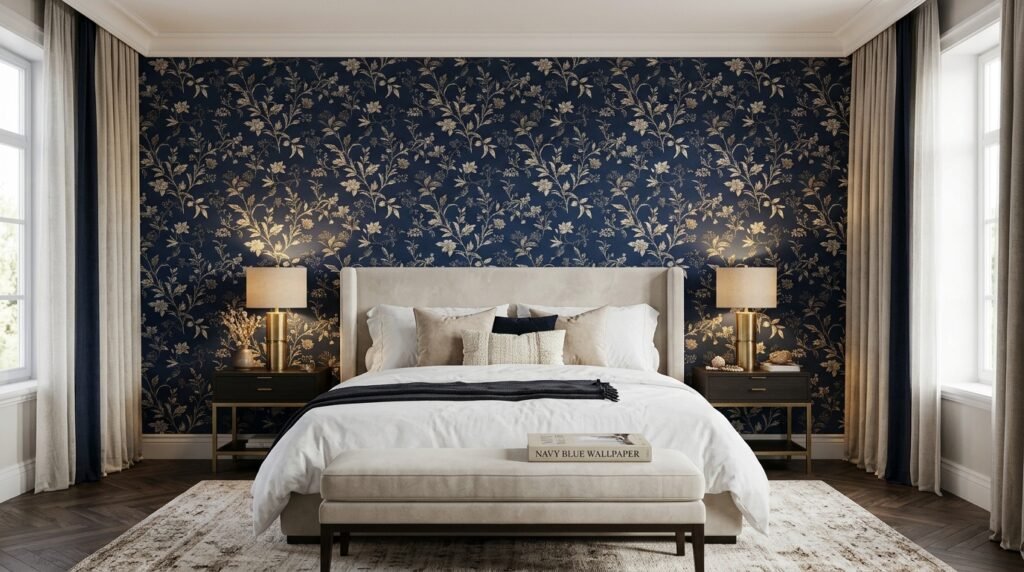
Navy works with many colours, but the balance between them changes the overall mood. A room can feel soft and relaxed, formal and polished, or bright and contemporary depending on the colours around the wall. Look at large items first, including flooring, sofas, curtains, bedding, and cabinets. Smaller accessories can then help connect the colours. When using navy blue wallpaper, avoid choosing every other item from a separate colour scheme. A few repeated tones usually create a more connected interior.
Navy and White
White creates a clear contrast with navy. It can make the room feel crisp and fresh, especially when used on ceilings, trim, bedding, or furniture. This pairing suits both modern and traditional spaces. A white background with navy motifs may feel lighter than a solid dark wall. If the room is already bright, a deep navy feature wall can provide definition without needing many extra colours.
Navy and Gold
Gold adds warmth and a decorative touch. It can appear in wallpaper details, picture frames, lamps, handles, or mirror edges. The combination often suits formal living rooms and dining spaces. The amount of gold matters. Small accents can look refined, while large reflective areas may become visually dominant. Warm lighting can make gold details appear richer, so view samples under the lighting that will be used in the room.
Navy and Grey
Grey can soften the contrast of navy and create a calm, balanced interior. Pale grey works well when the room needs brightness, while charcoal produces a darker and more dramatic look. The undertones should be considered. A cool grey may sit naturally beside a blue-based navy, while a warmer grey can create a softer contrast. Use fabric or paint samples together rather than relying on colour names alone.
Navy and Beige
Beige, cream, and warm neutral shades can make navy feel less formal. These colours work well in rooms with wooden furniture, natural rugs, and warm-toned floors. Beige curtains or upholstery can soften a dark wall without removing its character. This combination is useful when a room needs warmth but still benefits from a strong colour.
Navy and Green
Muted sage, olive, and other subdued greens can complement navy in botanical or nature-inspired interiors. The combination can feel calm when both colours have similar levels of softness. Bright green may create a sharper contrast and should be used in smaller amounts if the wallpaper already has a strong pattern. Plants can also connect a botanical wall design with the rest of the room.
Choosing the Right Pattern Size
Pattern scale can change how a wall feels. Large motifs attract attention and can make a feature wall look dramatic. Small patterns create more repeated detail and may feel quieter from a distance. Medium patterns can provide a balance between the two. The right scale depends on the wall’s size, the distance from which people view it, and the amount of furniture in front of it. A large floral print may look impressive on a wide wall but lose its impact behind a tall wardrobe. A small geometric design may appear busy when repeated across every wall in a compact room. Ask for a sample or view a full pattern image at a realistic scale. Also check the pattern repeat, which describes how often the design repeats vertically. A larger repeat can increase the amount of material needed because installers may have to match the design across strips. The repeat and match type are usually listed in product specifications. Understanding them before ordering helps reduce waste and avoid unexpected alignment issues.
Solid Wallpaper or a Patterned Feature Wall?
A solid wallcovering and a patterned feature wall solve different design needs. Solid wallpaper can create a continuous background and may work across several walls. It is useful when the room already has strong furniture shapes, artwork, or textiles. A patterned feature wall adds a focal point and can help define a specific area. It may be a better choice when the room feels plain but does not need decoration on every wall. Think about what the wall will sit behind. A patterned wall behind open shelves may become visually crowded, while a plain surface may allow the objects to stand out. A feature wall should also make sense in the room’s layout. It is usually more effective when it highlights an existing focal point, such as a bed, sofa, or dining table, rather than drawing attention to an unimportant corner. Navy blue wallpaper can be used in either approach, but the pattern and darkness should suit the amount of visual detail already present.
What Wallpaper Material Should You Choose?
The material affects how a wallcovering looks, feels, installs, and cleans. The decorative surface and the backing are not always made from the same material. A product may have a vinyl face with a non-woven backing, for example. This is why reading the product description matters more than relying on a broad label. The Wallcoverings Association advises choosing wallcoverings with the room’s traffic and intended use in mind. More delicate paper and natural coverings are generally better suited to lower-traffic spaces, while durable vinyl and synthetic options are often used where cleaning and wear matter. Wallcoverings Association (WA)+1
Vinyl Wallpaper
Vinyl wallpaper has a decorative vinyl surface, often combined with a paper, fabric, or non-woven backing. Depending on the specific product, it may offer better resistance to marks and easier cleaning than an uncoated paper design. This can make it a practical option for busy living spaces and hallways. However, not every vinyl product has the same performance. Check whether the manufacturer describes it as washable, scrubbable, or suitable for a particular room. These terms should not be treated as interchangeable.
Non-Woven Wallpaper
Non-woven wallpaper uses a backing made from a blend of fibres. Many products are designed for paste-the-wall installation, although the exact method depends on the product. Some are also easier to remove than traditional paper designs. Non-woven describes the backing or construction, not necessarily the visible surface. A non-woven product may have a printed paper-like surface, a textured finish, or another decorative layer. Follow the instructions supplied with the roll.
Traditional Paper Wallpaper
Paper wallpaper offers a wide range of printed designs and can provide a soft, decorative finish. It may suit bedrooms and lower-traffic rooms where gentle care is acceptable. Some paper products are more delicate than vinyl options and may not tolerate damp cleaning. Installation methods also vary. Check whether the wallpaper is pre-pasted, unpasted, or designed for another application method before buying.
Textured and Specialty Materials
Grasscloth, fabric, foil, and other specialty wallcoverings can create distinctive surfaces. Grasscloth often has natural variations in colour and texture, which are part of its appearance. Fabric can add a soft, rich finish, while foil or metallic surfaces reflect light. These products may require more careful handling and maintenance. Some are difficult to clean or may highlight uneven walls. Use them where their appearance is worth the extra care, and follow the specific product guidance.
How Lighting Changes the Appearance of Navy
Lighting has a major effect on deep colours. Natural daylight can reveal blue undertones that look less obvious under warm evening lights. A north-facing or shaded room may make navy appear darker, while strong daylight can bring out more colour. Artificial lighting also changes the result. Warm bulbs may make the room feel softer, while cooler lighting can make the blue look sharper. Reflective wallpaper may show stronger highlights near lamps or windows. Before buying, place a sample on the intended wall and view it at different times of day. Check it with curtains open and closed, and under the lights used in the evening. Do not judge a design only from a retailer’s product photograph. Screen brightness, image editing, and room styling can make the colour appear different from the actual roll. If a room has limited natural light, consider a lighter pattern, a design with pale details, or using the wallpaper on one wall rather than covering the entire room.
How to Measure a Wall Before Ordering
Accurate measurements help you estimate how many rolls or panels are needed. Measure the width and height of each wall you plan to cover. Multiply the width by the height to estimate the wall area, then account for doors and windows only according to the supplier’s calculator or installer guidance. Do not assume every opening will reduce the order by its full area. Pattern matching, trimming, and unusable offcuts can affect the amount required. Wallpaper rolls also vary in width and length, so the number of rolls cannot be calculated from wall area alone. Check the product’s roll dimensions and pattern repeat. If the design has a large repeat, extra material may be needed to line up the pattern across strips. For murals, measure the full installation area and confirm whether the product is supplied as numbered panels. Keep the product details and batch information until installation is complete. If a professional installer is handling the work, ask them to confirm the quantity before placing the order. Ordering too little can create problems if the same colour batch is no longer available.
Preparing Walls Before Installation
Good wall preparation helps wallpaper adhere properly and creates a smoother finish. The wall should be clean, dry, stable, and free from grease, loose paint, and surface defects. Fill holes and cracks with a suitable repair compound, allow repairs to dry, and sand them smooth. Remove dust before applying the primer recommended for the wallpaper and wall surface. The Wallcoverings Association stresses that preparation is one of the most important parts of a successful installation. It also advises following the product label and preparing different wall surfaces appropriately. Wallcoverings Association (WA)+1 Do not install over damp areas or cover active mould. The source of moisture must be addressed first, and serious mould problems may require qualified remediation. Old adhesive should be removed where required because it can interfere with bonding and leave an uneven surface. Glossy paint may need suitable preparation to improve adhesion. New drywall and repaired areas may need specific primer treatment. Never assume that ordinary paint primer is suitable for every wallpaper. Use the primer and adhesive recommended by the manufacturer.
Installing Wallpaper: DIY or Professional Help?
Some wallpaper products are designed for DIY installation, but the difficulty depends on the material, pattern, wall condition, and room layout. A simple non-woven design on a smooth wall may be manageable for someone who can measure and work carefully. A large mural, delicate fabric finish, complex repeat, or difficult staircase wall may need an experienced installer. The Wallcovering Installers Association notes that first-time installers should consider the wallpaper type and complexity before deciding to work alone. It also identifies kitchens and bathrooms as more challenging spaces for beginners. Wallcovering Installers Association+1 Before starting, read the full instructions and gather the correct tools. Common tools include a tape measure, level or plumb line, pencil, smoothing tool, sharp utility knife, suitable adhesive, and clean cloths. The exact list depends on the product. Turn off power before removing electrical faceplates, and follow safe practices around outlets and switches. Do not cut or handle electrical fittings while they are live. Work in good light so seams and pattern alignment are easy to see. If the first strip is not straight, the error can become more obvious as the installation continues. For a complex or expensive wallcovering, professional installation may reduce the risk of waste and visible mistakes.
Common Wallpaper Installation Mistakes
Poor preparation is one of the main reasons wallpaper can fail to adhere or look uneven. Dust, grease, loose paint, dampness, and rough repairs can affect the bond. Another common mistake is failing to check the first strip for vertical alignment. Even a small angle can become more noticeable across the wall. Pattern matching is also important. If the design does not line up correctly, the joins may stand out. Using the wrong adhesive can cause poor bonding or damage, so match the adhesive to the wallpaper and wall type. Some installers apply too much pressure to seams or use tools that mark delicate surfaces. Others wipe a surface with too much water, which can affect certain finishes. Avoid rushing the work. Allow adhesive and preparation products to be used according to their instructions. Do not rely on a general online tutorial when the wallpaper manufacturer provides different directions. If a strip develops bubbles, lifting edges, or visible stains, identify the cause before attempting a repair. Some problems can be corrected while the adhesive is workable, but others need a careful patch or professional attention.
Cleaning and Maintaining Navy Wallpaper
Maintenance depends on the wallpaper’s surface, not just its colour. Some products can be wiped gently, while others should only be dusted with a soft cloth or suitable dry method. Check the manufacturer’s cleaning symbols and instructions before using water or cleaning products. Test any approved method on an inconspicuous area first. Avoid harsh chemicals, abrasive pads, and excess moisture unless the product instructions specifically allow them. Too much water can affect the surface or weaken adhesive, particularly around seams. Dust can usually be removed with a soft, clean cloth or a suitable brush attachment used gently. If a mark appears, deal with it according to the product’s care guidance rather than scrubbing immediately. Keep furniture from rubbing against the wall, and address leaks or condensation promptly. A washable product may be more practical in a hallway or family room, but washable does not automatically mean waterproof or suitable for a wet area. Choose navy blue wallpaper with a care level that fits the room’s daily use.
How to Remove or Replace Wallpaper
Removal depends on the wallpaper construction and the method used during installation. Some products are designed to peel away in full strips, while others need water or a wallpaper removal solution. Certain wallcoverings have a peelable top layer that leaves a backing layer on the wall. The product instructions should explain the intended removal method. Before removing wallpaper, protect the floor and nearby furniture. Turn off power before working around electrical fittings, and avoid getting moisture into outlets or switches. Work carefully to prevent damage to the wall beneath. Once the covering is removed, leftover adhesive may need to be cleaned away. The Wallcoverings Association recommends removing old adhesive and preparing the surface before hanging new wallpaper. Wallcoverings Association (WA)+1 Repair any damaged areas, allow them to dry, and apply the appropriate primer before installing a replacement. If the wall surface begins to tear or crumble, stop and assess the damage rather than pulling harder. A professional may be needed when the old covering is difficult to remove or the wall is in poor condition.
Mistakes to Avoid When Choosing Navy Wallpaper
A common mistake is choosing a design from a small online image without checking a physical sample. Deep colours and reflective finishes can look very different under real room lighting. Another mistake is ignoring the pattern scale. A large print can overwhelm a narrow wall, while a tiny repeat may look too busy across a large surface. Some buyers focus only on appearance and overlook the material’s cleaning needs. This can become frustrating in a hallway, dining area, or room used by children and pets. It is also easy to forget about furniture placement. A striking motif may end up hidden behind a wardrobe or headboard. Measure the wall and check the pattern repeat before ordering. Do not assume that a product described as washable can be scrubbed or exposed to water. Finally, avoid choosing a dark design simply because it looks dramatic in a styled photograph. The room’s daylight, ceiling height, flooring, and furniture should guide the decision. A balanced choice will usually look better for longer than a design selected only for its first impression.
Is Navy Blue Wallpaper Suitable for Small Rooms?
Yes, it can work in a small room, but the design and placement matter. A dark colour does not automatically make every small space look smaller. The effect depends on lighting, contrast, pattern, and how much of the wall is covered. A single feature wall can add depth and create a clear focal point. A small-scale pattern with light details may feel less heavy than a large, dark print. Plain navy across every wall can look intentional in a well-designed room, but it may feel enclosed if the space has little natural light. Use pale ceilings, lighter flooring, and balanced lighting to maintain contrast. Mirrors can reflect light and help connect the wall with the rest of the room, although they do not change the actual size of the space. If the room is narrow, consider placing the wallpaper on the wall that naturally draws attention rather than covering every surface. Test a sample before making a final decision.
How to Make Navy Wallpaper Look Balanced
A successful room needs more than one attractive wall. Repeat a small amount of the wallpaper’s colours elsewhere to create a connection. For example, a navy floral design with cream details can be paired with cream cushions or curtains. A geometric design with gold accents may work with a brass lamp or picture frame. Avoid matching every object exactly, as this can make the room feel overly coordinated. Mix finishes and textures to add depth. Wood, woven fabrics, soft rugs, glass, and metal can all provide contrast. Keep large furniture pieces simple if the wall has a strong pattern. If the wallpaper is plain, artwork and textiles can add detail without making the space feel crowded. Leave some visual breathing room around bold designs. The aim is not to fill every empty area, but to create a room where the wall, furniture, and accessories support one another.
FAQs
Is navy blue wallpaper suitable for bedrooms?
Yes. Navy can create a calm and cosy bedroom when balanced with suitable lighting, bedding, and furniture. A plain or subtle design may suit a restful room, while a floral or geometric print can create a feature behind the bed. Test the shade in the room before ordering.
Does navy wallpaper make a room look smaller?
It can make a room feel more enclosed when used heavily in a dark space, but this is not always the result. Lighting, pattern size, contrast, and placement all affect the appearance. A feature wall or a design with lighter details can work well in a smaller room.
What colours go best with navy blue wallpaper?
White, cream, beige, grey, muted green, and gold can all complement navy. The best choice depends on the wallpaper’s undertone and the room’s furniture. Use samples together to check that the colours work under the room’s natural and artificial lighting.
Can navy wallpaper be used on all four walls?
Yes, if the design and room conditions support it. A plain or subtle pattern may work across several walls, while a large or high-contrast print may feel overwhelming. Consider room size, daylight, ceiling height, and furniture before covering the whole room.
Is navy wallpaper easy to clean?
Cleaning depends on the material and surface finish. Some vinyl wallpapers can be wiped gently, while paper, fabric, and specialty finishes may need dry or more delicate care. Always follow the manufacturer’s cleaning instructions and test an approved method first.
How do I choose the right navy blue wallpaper?
Start with the room’s lighting, wall size, furniture, and intended use. Then compare pattern scale, material, finish, cleaning needs, and installation method. Order a sample if possible and view it on the actual wall before buying enough for the project.
Conclusion
Navy blue wallpaper can bring depth, character, and a sense of balance to many home interiors. The right choice depends on the room rather than colour alone. Plain finishes suit quieter spaces, while florals, geometric prints, textures, and metallic details create different levels of visual interest. Material matters just as much as appearance because it affects installation, cleaning, and everyday wear. Before ordering, check a sample under the room’s lighting, measure the walls carefully, and review the pattern repeat and product instructions. Prepare the surface properly and choose an installation method that matches the wallpaper and your skill level. With these details considered, navy can become a strong but balanced part of the room’s design.