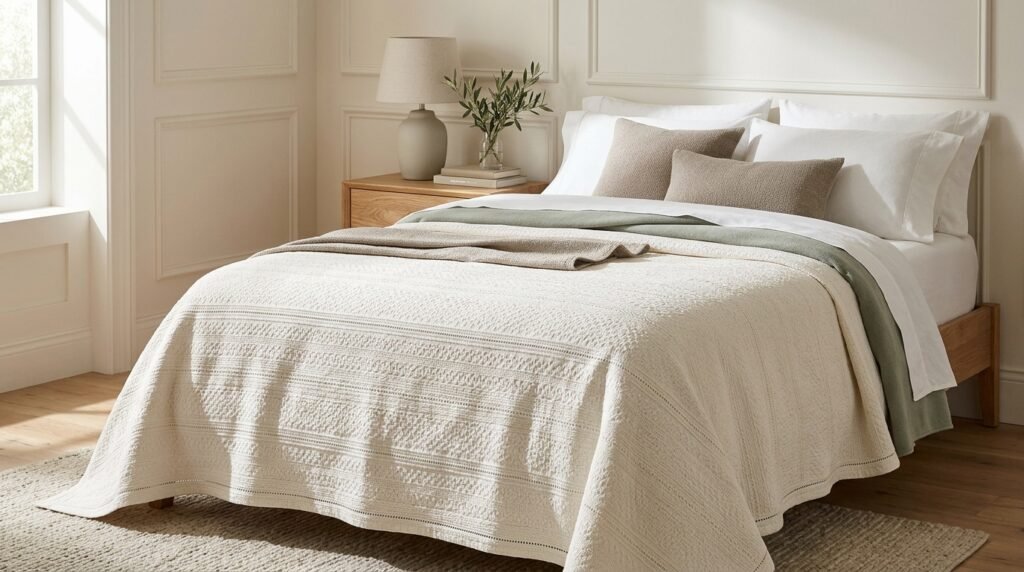
A coverlet is a lightweight bed covering placed over the sheets or other bedding. It adds a neat, finished look to a bed and provides a light layer of warmth. Unlike a thick comforter, a coverlet usually has little or no bulky filling. Many styles feature woven patterns, textured designs, or light quilting. Some coverlets cover the top of the mattress, while others hang slightly over the sides. Their exact size and construction depend on the maker. A coverlet can be used on its own during warm weather or layered with blankets and other bedding in colder months. Understanding what is a coverlet also helps explain how it differs from a quilt, bedspread, comforter, and duvet. These terms can overlap in shops, so the fabric, thickness, construction, and measurements matter more than the product name alone.
What Is a Coverlet Used For?
A coverlet serves as a light top layer for a bed. Its main purpose is to make the bed look tidy while adding a small amount of warmth. It can sit directly over a flat sheet, cover a duvet, or form part of a layered bedding arrangement. Many people use one as a decorative layer because its lighter construction makes it easier to fold back than a thick comforter. It can also help protect the bedding underneath from everyday dust and contact. However, it should not be treated as a replacement for a mattress protector or washable sheet. A coverlet is useful in guest rooms, spare bedrooms, and everyday sleeping spaces where a simple, neat finish is wanted. Its practical value depends on the fabric and construction. A thin cotton coverlet may feel comfortable in warmer weather, while a heavier quilted version may offer more warmth.
How Does a Coverlet Differ From Other Bedding?
The word coverlet describes a type of bed covering, but it does not always refer to one exact construction. Retailers may use it for woven blankets, lightly quilted covers, or decorative top layers. This can make shopping confusing because some products look similar to quilts or bedspreads. A useful way to identify one is to check its thickness, filling, stitching, and dimensions. A coverlet is generally lighter than a comforter and often shorter than a traditional bedspread. It may have a textured woven surface or a thin layer of filling. A quilt usually has a more clearly stitched construction, while a duvet is designed to fit inside a removable cover. These are common distinctions, not strict rules for every product. Always read the product description and measurements before deciding which type suits a bed.
Coverlet vs. Quilt
A coverlet and a quilt can look very similar, especially when both have stitched patterns. The main difference is often their construction and intended use. A traditional quilt is made by joining fabric layers with stitching, often creating decorative patterns across the surface. It commonly has a top layer, a filling, and a backing. A coverlet may also be quilted, but it is often lighter and designed mainly as a decorative bed layer. Some coverlets have no separate filling at all. Others use thin padding or a textured weave to create depth. A quilt may provide more warmth, depending on its filling and fabric, but this is not guaranteed. A thin quilt can be cooler than a thick coverlet. For a bed that needs a decorative layer with modest warmth, either may work. The best choice depends on its actual weight and construction rather than the label.
Coverlet vs. Bedspread
A bedspread is generally designed to cover most or all of the bed, often reaching close to the floor. A coverlet is usually shorter and may leave the bed skirt, lower mattress, or part of the bedding visible. This difference gives the two styles a distinct appearance. Bedspreads often create a more formal, fully covered look. Coverlets tend to suit a simpler, layered arrangement. However, product sizing varies, and some modern bedspreads are shorter than traditional designs. Some oversized coverlets may also cover much of the mattress. The best way to compare them is to check the finished dimensions against the mattress and bed height. If the goal is to hide the mattress sides and create a full draped appearance, a bedspread may be more suitable. If the goal is a lighter top layer with a more relaxed finish, a coverlet may be the better option.
Coverlet vs. Comforter
A comforter is usually thicker and more padded than a coverlet. It is made to provide warmth and is often used as the main top layer of a bed. Its filling may include polyester, cotton, down, or other materials. The outer fabric holds the filling in place through stitching, quilting, or other construction methods. A coverlet usually has less bulk and may contain no filling. This makes it easier to fold, move, and layer with other bedding. The difference becomes clear when both items are placed on a bed. A thick comforter creates a fuller appearance, while a lightweight coverlet creates a flatter finish. Neither is automatically better. A cold bedroom may call for a warm comforter, while a mild climate may make a coverlet more practical. Some people also use both. The coverlet can sit over a comforter during the day and be folded back at bedtime.
Coverlet vs. Duvet
A duvet is a soft, filled bedding insert that is normally used inside a removable duvet cover. The insert provides warmth, while the cover protects it and gives the bed its chosen appearance. A coverlet is a complete bed covering rather than an insert that needs a separate outer cover. It can be placed directly over sheets or over a duvet. This makes the two products useful in different ways. A duvet is often chosen as the main source of warmth, while a coverlet is commonly used as a lighter top layer. A duvet cover can be removed for washing, which is helpful because washing a bulky insert may be difficult. A coverlet may be easier to handle, but care depends on its fabric, size, and weight. Some people use a duvet at night and fold a coverlet across the foot of the bed for decoration.
Coverlet vs. Blanket
A blanket is usually a simple layer made to provide warmth. It may be woven, knitted, fleece-lined, or made from another soft material. A coverlet is more often designed to cover the bed neatly and give it a finished appearance. It may also provide warmth, but decoration and layering are common parts of its purpose. Blankets are often used directly over a person while sleeping or relaxing. A coverlet is more commonly spread across the bed as a top layer. The distinction is not absolute. A large woven blanket can work as a bed covering, and a thick coverlet can feel much like a light blanket. Consider the product’s size, texture, and intended use. If warmth is the main concern, compare fabric weight and construction. If the goal is to make the bed look orderly, a coverlet may be more suitable.
Common Types of Coverlets
Coverlets come in several styles, and their appearance depends on how the fabric is made. Woven coverlets use patterns created during weaving. Their designs can include stripes, checks, geometric shapes, or textured details. Quilted coverlets have stitched layers that hold a thin filling or fabric layers together. Matelassé coverlets feature a raised pattern that creates a quilted or padded look without necessarily using a thick separate filling. Some designs are smooth and simple, while others have decorative stitching, borders, or textured surfaces. Lightweight cotton styles are often selected for everyday use. Polyester and blended fabrics are common in easy-care bedding. Linen versions have a relaxed texture and may soften with use. These descriptions refer to common styles rather than fixed product standards. A retailer may describe a similar design using a different name, so examine the construction details before buying.
What Is a Matelassé Coverlet?

A matelassé coverlet has a raised, textured pattern that gives the surface a padded appearance. The texture is created through the fabric’s construction rather than relying on thick batting in the same way as many conventional quilts. It may look like a quilted cover, but the pattern is often woven into the material. Traditional designs can feature floral shapes, diamonds, scrolls, or other raised patterns. The result is a decorative surface with more depth than a plain sheet. Matelassé bedding is often chosen for bedrooms with classic, traditional, or understated styling. It can also work in modern rooms when the pattern and color are simple. The amount of warmth varies by fabric and weight. A textured surface does not automatically mean the coverlet is thick or warm. Check its care label as well, because washing instructions can differ between cotton, polyester, and blended versions.
What Materials Are Used to Make Coverlets?
The material affects how a coverlet feels, looks, wears, and needs to be cleaned. Cotton is a common choice because it feels soft and is available in many weaves and finishes. Its breathability can make it comfortable in different seasons, although the actual feel depends on the fabric’s thickness and construction. Linen has a natural texture and a relaxed appearance. It may feel crisp at first and become softer with use and washing. Polyester is often selected for its durability, easy care, and resistance to some forms of wrinkling. Cotton-polyester blends combine features of both fibers, though the exact result depends on the blend and fabric quality. Other products may use viscose or specialty fibers. These materials can have different care needs. Before choosing a coverlet, check the fiber content rather than relying only on product photographs. Two covers with similar designs can feel quite different when made from different fabrics.
Cotton Coverlets
Cotton coverlets are popular because cotton is a familiar bedding material with a range of textures and weights. It can be woven into smooth, crisp, or textured fabrics. Some cotton coverlets are lightly quilted, while others use a flat woven construction. A lighter cotton design may suit warm bedrooms or people who prefer minimal bedding. A thicker version may add more coverage during cooler nights, especially when layered with a blanket. Cotton can shrink if it is washed or dried in conditions that are unsuitable for the fabric. Color may also fade over time with frequent washing or strong sunlight. Always follow the care label. If the coverlet is made from several materials, the washing needs may differ from those of pure cotton. Look for clear fiber information and check whether the item can be machine washed. This is especially useful when choosing bedding for a frequently used guest room.
Linen Coverlets
Linen coverlets have a natural, slightly textured appearance that works well in relaxed bedroom designs. Linen is made from flax fibers and is known for its distinctive feel. It often has a crisp texture when new, though it can soften with regular use and proper care. Its appearance may include natural creases, which are part of the fabric’s character rather than always being a sign of poor care. Linen coverlets are available in simple solid colors, textured weaves, and decorative patterns. They can suit warm-weather bedding, but warmth still depends on the fabric weight and how the cover is made. Linen can wrinkle more easily than some synthetic fabrics. It may also need gentle washing and careful drying to maintain its shape. Check the manufacturer’s instructions before cleaning. A linen coverlet is a good option for someone who likes natural texture and does not mind a less perfectly smooth finish.
Polyester and Blended Coverlets
Polyester coverlets are often chosen for their practical care needs and broad range of designs. Polyester fibers can help fabrics resist wrinkles and dry more quickly than some natural-fiber alternatives. They are also used in blends with cotton or other fibers. A cotton-polyester coverlet may offer a balance between the feel of cotton and some of polyester’s easy-care qualities. However, the result depends on the fiber percentages, weave, and finishing. Polyester can feel different from cotton or linen, especially in warm rooms or for people who prefer natural fibers. It is worth checking the fabric description and reviews for comments about texture, weight, and comfort. Do not assume every polyester coverlet is low quality or every cotton blend is superior. Construction and finishing matter too. A well-made product in a suitable fabric may serve better than a more expensive option that does not match the household’s needs.
How to Choose the Right Coverlet Size
The correct size depends on the mattress dimensions, mattress depth, bed frame, and the look you want. A coverlet that is too small may leave large areas of the mattress exposed. One that is too large may hang farther down than expected or bunch near the floor. Start by measuring the mattress width and length. Then decide how much drop you want on each side and at the foot of the bed. The drop is the distance the coverlet hangs below the top edge of the mattress. Add the desired drop to the mattress measurements to estimate the finished size you need. For example, a bed with a thick mattress may need a wider coverlet than a standard mattress of the same width. Pillow arrangements and bed skirts can also affect the final appearance. Do not assume that a product labeled queen or king will fit every mattress of that size. Compare the actual measurements before ordering.
How to Measure a Bed for a Coverlet
Measure the mattress rather than relying only on the bed frame label. Use a tape measure to find the mattress width, length, and depth. If you want the coverlet to hang over the sides, decide how far it should fall. Measure from the top edge of the mattress down to the preferred stopping point. Add twice that side drop to the mattress width. Add the desired drop at the foot to the mattress length. The head of the bed may need less coverage if pillows sit there or if the coverlet is tucked in. A simple example can help: if a mattress is 60 inches wide and you want a 15-inch drop on both sides, the coverlet needs to be about 90 inches wide. This is only a planning calculation, not a universal size recommendation. Check the product’s finished dimensions and allow for any shrinkage stated by the maker. If the bed has an unusually deep mattress, measure carefully before choosing a standard size.
How to Style a Coverlet on a Bed
A coverlet can create a clean look without making the bed feel heavy. For a simple arrangement, place it evenly over the sheets and smooth the surface. Fold the top edge down if you want to show the sheets or a decorative blanket underneath. Another option is to place it over a duvet and fold the duvet back slightly near the pillows. This creates layers without hiding every part of the bedding. In a guest room, a neatly spread coverlet can make the bed look prepared and welcoming. In a main bedroom, a textured coverlet can add detail without introducing a bold pattern. Keep the number of layers practical. Too many blankets and decorative pieces can make the bed difficult to use and maintain. Choose colors that work with the room’s walls, curtains, and furniture. A neutral coverlet can suit changing decor, while a patterned design can become the main visual feature.
Using a Coverlet in Different Seasons
A coverlet can be useful throughout the year because it is often lighter than heavily filled bedding. During warm weather, a thin cotton or linen style may provide enough coverage for people who prefer a light layer. In cooler months, it can sit over a blanket or duvet to add another layer and create a finished look. The best arrangement depends on bedroom temperature, personal comfort, and the fabric’s weight. A coverlet alone may not provide enough warmth in a cold room. In that case, use it with a warmer layer rather than expecting it to perform like a thick comforter. In a heated bedroom, a heavy duvet may feel unnecessary, and a lightweight coverlet may be more comfortable. There is no single seasonal rule that works for every home. Consider how warm the room feels at night and adjust the layers accordingly.
Can You Sleep Under a Coverlet?
Yes, a coverlet can be used as a sleeping layer if its fabric and weight feel comfortable. Some people sleep under a lightweight coverlet instead of a heavier comforter, especially in warm weather. Others use it over a sheet or combine it with a blanket when more warmth is needed. The important point is that coverlets are not all made alike. A thin woven style may provide little insulation, while a quilted version may feel warmer. The texture can also affect comfort. Raised stitching, decorative seams, or rough fabric may bother people who prefer smooth bedding. If the coverlet is mainly decorative, check whether its care instructions and construction suit regular use. A product designed for occasional display may not be as convenient as one intended for everyday sleeping. Choose based on comfort, washability, and the temperature of the room.
Can a Coverlet Replace a Comforter?
A coverlet can replace a comforter when a lighter bed covering provides enough warmth for the room and sleeper. It may be a practical choice in warm climates, heated bedrooms, or homes where people prefer fewer layers. However, it may not offer enough insulation during cold nights. The decision should depend on the coverlet’s fabric, weight, and construction rather than its name. A thin woven coverlet is unlikely to feel like a thick comforter. A padded or quilted design may provide more coverage, but it still may not match a heavily filled comforter. If the bedroom temperature changes often, keeping a separate blanket nearby can make the setup more flexible. Some households use a coverlet during warmer months and bring out a comforter when temperatures drop. This approach also makes it easier to change the bedroom’s appearance without replacing the entire bedding set.
How to Layer a Coverlet With Other Bedding
Layering allows a coverlet to work with bedding that provides different levels of warmth. A common arrangement starts with a fitted sheet, followed by a flat sheet, then a blanket or duvet. The coverlet sits on top as the finishing layer. It can also be placed directly over the sheets when little warmth is needed. For a tidy appearance, align the coverlet with the mattress edges and fold the top section back if you want the sheets to show. In colder weather, place it over a duvet or comforter to add texture and another light layer. Avoid adding so many layers that the bed becomes uncomfortable or difficult to make. The fabrics should also work well together. A smooth coverlet may slide over some silky bedding, while a textured fabric may stay in place more easily. Try the arrangement before deciding whether extra layers are useful.
How to Care for a Coverlet
Care depends on the fabric, filling, stitching, and size. Always check the care label before washing because products that look similar may have different cleaning needs. Some cotton and polyester coverlets can be machine washed, while delicate fabrics may require a gentler method. Use the recommended water temperature and washing cycle. Avoid overloading the machine, especially with a large coverlet that needs room to move. If the item is too bulky for a household washer, a larger machine may be needed. Dry it according to the label, since high heat can damage some fibers or cause shrinkage. Make sure the coverlet is fully dry before storing it. Damp bedding can develop an unpleasant smell and may encourage mold growth. If the coverlet has decorative stitching, trims, or raised details, handle it carefully to avoid snagging or damage.
How Often Should You Wash a Coverlet?
There is no single washing schedule for every coverlet. The right frequency depends on whether it is used every night, placed over a duvet, or kept mainly as a decorative layer. A coverlet used directly against the body will usually need more frequent washing than one placed over other bedding. Household factors also matter, including pets, children, allergies, spills, and personal hygiene needs. Follow the care label and wash it when it becomes visibly dirty, develops an odor, or needs freshening. If it is used as a decorative layer, regular airing and occasional washing may be enough, depending on how much contact it receives. Sheets should still be washed regularly because they sit closest to the body. A coverlet does not replace clean sheets. Keeping it clean helps maintain its appearance and makes the bed more pleasant to use.
How to Store a Coverlet
A clean, fully dry coverlet should be stored in a dry, well-ventilated place. Before putting it away, check for stains and follow the care label for cleaning. Storing a dirty item can make marks harder to remove later. Fold it loosely rather than pressing it tightly into a small space. If the fabric creases easily, avoid placing heavy items on top. A breathable storage bag or clean shelf can help protect it from dust. Do not pack it away while damp, even if it feels only slightly wet. Moisture trapped in folded fabric can lead to musty odors and possible mold. Keep stored bedding away from direct sunlight and damp areas. If the coverlet is used seasonally, label the storage container so it is easy to find when needed. Check it before placing it back on the bed, especially after several months in storage.
What Makes a Coverlet Look High Quality?
A good coverlet does not need to be expensive or heavily decorated. Its quality is better judged by the fabric, stitching, finishing, and how well it suits the bed. Look closely at the seams and edges. They should appear even and secure, without loose threads or obvious gaps. On a quilted design, the stitching should hold the layers together without large areas of loose filling. On a woven coverlet, check that the surface looks consistent and that the edges are neatly finished. The fabric should feel suitable for its intended use. A decorative piece may prioritize texture and appearance, while an everyday coverlet should also be easy to clean and comfortable. Read the fiber content and care instructions before buying. Product photographs can make thin fabric look thicker or richer than it is, so written details and actual measurements are useful.
Common Mistakes When Buying a Coverlet
One common mistake is choosing a coverlet by its color or pattern alone. A design may look attractive online but be too small for the mattress or too heavy for the bedroom. Another mistake is assuming every coverlet is a thin quilt. Some are flat woven covers, while others have padding or raised textures. Buyers may also confuse a coverlet with a bedspread and expect it to reach the floor. Checking the finished dimensions can prevent this disappointment. Fabric care is another detail that should not be overlooked. A delicate coverlet may not suit a busy household that needs frequent machine washing. It is also unwise to judge warmth from photographs. A thick-looking surface may be mostly texture rather than insulation. Before buying, consider the bed size, desired drop, material, weight, care needs, and whether the item will be used for sleeping or decoration.
Is a Coverlet Suitable for Every Bedroom?
A coverlet can suit many bedroom styles, but the best design depends on the room and how the bed is used. In a small bedroom, a simple coverlet with a subtle pattern can keep the bed from looking too crowded. In a larger room, a textured or patterned design can add visual interest. Guest rooms often benefit from easy-care bedding that looks neat without requiring many layers. Children’s rooms may need washable fabrics that can handle frequent use and spills. A main bedroom may call for a softer material or a more detailed finish. The climate also matters. A lightweight coverlet can work well in a warm room, but a colder space may need a duvet or blanket underneath. Think about daily routines as well. If the bed is used for reading, relaxing, or pets, a durable and easy-to-clean fabric may be more practical than a delicate decorative style.
What Should You Check Before Buying One?
Start with the finished size, since a coverlet should fit the mattress and provide the amount of drop you prefer. Next, check the fiber content and construction. The product description should make clear whether it is woven, quilted, padded, or made with a textured weave. Look for the care instructions before purchasing, especially if the coverlet will be used every day. Consider the weight too. A lightweight cover may be suitable for warm weather, while a thicker version may work better as an extra layer. Check whether the product includes matching pillow shams or other pieces, because photographs sometimes show accessories that are sold separately. If buying online, read the return policy and compare the stated measurements with your own bed. These checks can prevent common problems such as a poor fit, unexpected texture, or difficult cleaning. A thoughtful choice is more useful than selecting a coverlet based on appearance alone.
Why Do Coverlet Sizes and Names Vary?
Bedding labels are not always consistent across brands and retailers. One company may describe a lightly quilted top layer as a coverlet, while another may use a different term for a similar product. The size can also vary because some makers design their covers to sit close to the mattress, while others allow a longer drop. Mattress depth adds another layer of variation. A standard queen mattress and a deep queen mattress may need different coverage to achieve the same appearance. This is why a size label alone cannot guarantee a perfect fit. Check the listed width and length, and look for details about the model’s intended bed size. If measurements are missing, contact the seller before ordering. The product’s construction matters too. A coverlet may be sold as a set with pillow shams, but the included pieces and their dimensions can differ. Read the full description instead of relying on the product title.
Are Coverlets Only Decorative?
No. Many coverlets are designed for both appearance and everyday use. They can provide a light layer over sheets and help make a bed look finished. Some are soft and comfortable enough to sleep under, while others are mainly used as a decorative top layer. The difference depends on the fabric, texture, construction, and personal preference. A coverlet with rough decorative stitching may not feel pleasant against the skin. A smooth cotton version may be more comfortable for regular use. If it is intended mainly for decoration, it can still serve a practical role by covering the bedding during the day. However, it should not replace a fitted sheet, flat sheet, or mattress protector. Those items have different functions and are usually easier to wash often. Choose a coverlet based on how it will be used, not simply how it looks in a styled bedroom photograph.
Frequently Asked Questions
What is a coverlet used for?
A coverlet is used as a lightweight top layer that gives a bed a neat, finished appearance. It can also provide light warmth, depending on its fabric and construction. Some people use it directly over sheets, while others place it over a duvet or comforter. It is useful for everyday bedrooms, guest rooms, and seasonal bedding arrangements.
Is a coverlet warmer than a quilt?
Not necessarily. A quilt often contains stitched layers and filling, but its warmth depends on the type and amount of filling. A coverlet may be flat woven or lightly quilted. Some coverlets are warmer than thin quilts, while others provide very little insulation. Compare the fabric, thickness, and construction instead of relying only on the product name.
Can you use a coverlet without a comforter?
Yes. A coverlet can be used on its own if it provides enough coverage and warmth for the room. Lightweight cotton or linen styles may suit warm weather or heated bedrooms. During colder weather, it may need to be layered with a blanket or another warmer covering. Personal comfort and bedroom temperature should guide the choice.
Does a coverlet go over or under a duvet?
A coverlet usually goes over a duvet when both are used together. The duvet provides the main warmth, while the coverlet adds another light layer and creates a finished appearance. Some people fold the coverlet near the foot of the bed during sleep. It can also be removed at night if the extra layer feels too warm.
Is a coverlet the same as a bedspread?
No. A bedspread is generally designed to cover more of the bed and may hang close to the floor. A coverlet is usually shorter and often forms part of a layered bedding arrangement. However, product sizes and names vary between brands. Checking the actual measurements is the best way to know how much coverage an item will provide.
How do you wash a coverlet?
Follow the care label because washing needs vary by material, filling, and construction. Some coverlets can be machine washed, while delicate versions may need gentler cleaning. Avoid overcrowding the washing machine and use the recommended drying method. Make sure the coverlet is completely dry before storing it to prevent damp smells and moisture damage.
Choosing a Coverlet That Works for Your Bedroom
A coverlet is a useful bedding layer when you want a tidy bed without the bulk of a thick comforter. It can provide light warmth, add texture, and work with sheets, blankets, quilts, or duvets. The right choice depends on more than color or pattern. Check the fabric, construction, finished measurements, weight, and care instructions before buying. A lightweight cotton style may suit a warm bedroom, while a quilted design may offer extra coverage. If you want a longer drape, measure the mattress and decide how far the edges should hang. Most importantly, choose a coverlet that matches how the bed will be used. A decorative layer, an everyday sleeping cover, and an extra winter layer may need different features.