
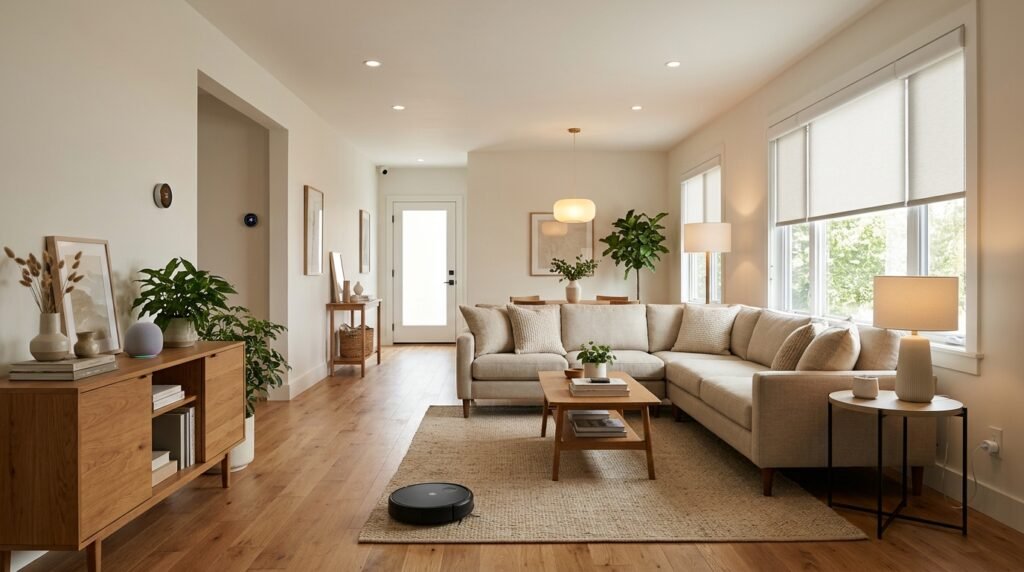
Decoradtech home devices from decoratoradvice is a search phrase tied to the idea of combining smart-home technology with thoughtful interior design. Online pages using the DecorAdTech name discuss connected lighting, security devices, thermostats, automated curtains, smart speakers, appliances, and other home technology. However, the available public information does not clearly establish DecorAdTech as one major hardware manufacturer with a documented proprietary product catalog. It is safer to understand the term as a smart-home and design concept unless a particular device, manufacturer, and model can be independently confirmed. That distinction matters because a useful smart home is not built by collecting gadgets. It starts with real household needs. Lighting should be easier to control. Heating and cooling should remain comfortable. Security technology should be practical and private. Automated devices should save effort rather than create new problems. The best connected home also needs strong account security, reliable software support, compatible devices, and simple manual controls. This article explains how the DecorAdTech idea can be applied responsibly, which smart devices may fit different rooms, and what homeowners should check before spending money on connected technology.
What Are DecorAdTech Home Devices From DecoratorAdvice?
Decoradtech home devices from decoratoradvice can be understood as smart or connected household devices chosen with both usefulness and home design in mind. A smart-home device may connect to a network, respond to an app or voice command, follow schedules, provide information, or automate a repeated task. The DecorAdTech concept adds another consideration: the technology should fit comfortably into the living space instead of making the home feel like a collection of electronics. Examples may include smart lighting, connected thermostats, plugs, switches, security cameras, doorbells, locks, speakers, displays, automated shades, robot cleaners, sensors, and connected appliances. The right combination will differ from one household to another. A small apartment may gain more from two smart lights and a useful plug than from an expensive whole-home system. A larger property may benefit from climate controls, entrance monitoring, leak sensors, automated shades, and several lighting zones. The important point is to begin with a problem rather than a product. If a device removes a repeated inconvenience and remains simple to operate, it has a stronger reason to be in the home.
Why Design and Technology Work Better Together
The practical value of decoradtech home devices from decoratoradvice becomes clearer when technology is treated as part of the room instead of an afterthought. Traditional smart-home planning can sometimes focus heavily on specifications, apps, and automation. Interior planning focuses on how people move through a space, where furniture sits, how lighting works, and which objects attract attention. Bringing these ideas together can produce a home that feels more natural to use. A wall covered with separate control panels may offer plenty of technology but still create visual clutter. A large smart display may be unnecessary in a room where physical switches already handle everyday tasks. Visible adapters, charging cables, and hubs can also weaken a clean design. Thoughtful planning considers device size, location, power access, wireless performance, controls, and appearance before installation. Technology should never be hidden in a way that blocks ventilation, sensors, cameras, microphones, or wireless communication. Manufacturer instructions still come first. The design goal is not to make technology invisible at any cost. It is to prevent unnecessary technology from becoming the dominant feature of a comfortable living space.
Smart Lighting Is a Practical Place to Begin
Lighting is one of the simplest ways to explore decoradtech home devices from decoratoradvice because it combines function, comfort, atmosphere, and automation. Smart bulbs, switches, dimmers, and compatible plugs may allow lights to follow schedules or respond to supported apps, sensors, buttons, or voice controls. A hallway could have lighting available when it is normally needed. Bedroom lighting could become softer in the evening. A living room could use different lighting arrangements for reading, watching television, entertaining guests, or general use. Smart controls can make these changes easier, but technology cannot repair a poor lighting plan. Fixture position, brightness, glare, room size, wall finishes, and the activities performed in the space still matter. Manual operation also deserves attention. A light that can only be controlled through one person’s phone may become inconvenient for everyone else. Guests, children, and other family members should still have an obvious way to use important lights. Before replacing existing switches, homeowners should check electrical compatibility and installation requirements. Fixed electrical work may require professional help depending on the installation and local requirements. A successful lighting system should make the room easier to use without turning a basic action into a complicated digital process.
Smart Thermostats Can Make Climate Control More Flexible
Climate control is another useful category associated with decoradtech home devices from decoratoradvice. A smart thermostat can provide features such as scheduling, remote temperature control, usage information, geofencing, learning functions, or occupancy-based adjustments, depending on the model. ENERGY STAR explains that certified smart thermostats are Wi-Fi-enabled devices designed to control heating and cooling settings, and certified models must demonstrate energy savings using real-world field data. This makes thermostats different from many smart gadgets because they control equipment that can account for a significant part of household energy use. Compatibility must be checked carefully before purchase. HVAC type, wiring, voltage, and available power can affect which thermostat will work. ENERGY STAR notes that many smart thermostats use a C-wire for consistent power, although requirements vary by model and system. More complex systems may benefit from professional installation. A stylish display should therefore be one of the last considerations, not the first. The thermostat must communicate correctly with the heating and cooling equipment, remain easy to operate, and suit the household’s routine. ENERGY STAR-certified smart thermostats are also required to retain basic thermostat operation if connectivity to the service provider is unavailable, which is a useful example of why basic functionality matters in connected products.
Smart Plugs and Switches Can Upgrade Existing Equipment
Not every smart-home improvement requires replacing an appliance. Smart plugs and connected switches can add basic automation to equipment already in the home, making them a practical entry point for people exploring decoradtech home devices from decoratoradvice without planning a major renovation. A compatible lamp, for example, may be controlled through a suitable smart plug and placed on a schedule. A smart wall switch can provide a cleaner and more permanent solution for compatible lighting circuits. These controls do not make every appliance suitable for remote or unattended operation. Manufacturer instructions should always take priority, especially for equipment that produces significant heat, moves mechanically, or requires supervision. The electrical rating of a plug or switch must also suit the connected load. Fixed wiring deserves additional care because incorrect electrical work can create serious risks. From a design perspective, built-in switches may look cleaner than placing visible adapters around a room, but renters may prefer solutions that can be removed easily. The right choice therefore depends on the equipment, electrical compatibility, household needs, property type, installation limits, and how permanent the smart-home setup should be.
Smart Security Requires Privacy as Well as Convenience
Security devices are a major part of modern connected homes and fit naturally into discussions about decoradtech home devices from decoratoradvice. Video doorbells, cameras, connected locks, entry sensors, motion sensors, and alarms can help homeowners monitor important areas or receive useful alerts. Yet every internet-connected security device also adds another account, piece of software, or network connection that may need protection. The U.S. Federal Trade Commission recommends changing default credentials, using unique passwords, enabling two-factor authentication where available, installing updates, and disabling features that are not needed. It also recommends checking access logs on internet-connected cameras for unusual activity. These steps are especially important for cameras, microphones, and access-control devices because they may handle sensitive information about the home. Placement matters too. A camera aimed at an entrance raises different privacy questions from one placed in a private indoor area. Household members should understand where cameras or microphones are located and what they do. Visual appearance should never be the main factor when selecting security equipment. Secure configuration, useful placement, account protection, software support, and reliable physical security should come first. A discreet device is valuable only when it also performs its actual security role responsibly.
Automated Curtains and Shades Connect Comfort With Interior Design

Window coverings are one of the clearest examples of technology meeting décor. Automated curtains, blinds, and shades can help manage daylight, privacy, glare, and difficult-to-reach windows, which makes them a natural fit for the decoradtech home devices from decoratoradvice concept. A household might schedule bedroom shades to change at a chosen time or close living-room coverings when stronger afternoon light reaches the windows. The exact capabilities depend on the product, motor, control system, and supported integrations. Good planning starts with the window rather than the automation. Measurements must be accurate, the selected covering must suit the room, and the motorized hardware needs suitable mounting and power. Visible cables or oversized components can weaken an otherwise clean installation. Homeowners should also check how the coverings operate if an app, hub, network, or internet service becomes unavailable. Compatibility should be confirmed rather than assumed. Matter, the smart-home interoperability standard from the Connectivity Standards Alliance, was created to help compatible devices from different ecosystems communicate through a common IP-based application layer. Support still varies by product and device type, so the actual product documentation should be checked before purchase.
Smart Speakers and Displays Can Simplify Control
Smart speakers and displays can serve as convenient control points for compatible connected devices. In a decoradtech home devices from decoratoradvice setup, they may provide access to lighting, music, routines, temperature controls, timers, reminders, or other supported functions without requiring a phone for every interaction. More screens do not automatically create a better home. A kitchen may benefit from a display because information and timers are useful there. A bedroom may need only a small speaker, physical controls, or no voice assistant at all. A living room may already have enough screens. Placement should therefore be based on function rather than the idea that every room needs a smart controller. Privacy settings also deserve attention because voice assistants may use microphones and connected accounts. The FTC recommends reviewing security and privacy settings for connected devices and disabling features that are not needed. Account access should also be protected with strong, unique credentials and stronger authentication when supported. The best control system is one household members can understand easily. If a routine task requires remembering complicated commands, searching through apps, or asking one person for access, the technology is adding friction instead of removing it.
Robot Cleaners Can Reduce Repetitive Floor Work
Automated cleaning devices are another category often included in the wider decoradtech home devices from decoratoradvice idea. Robot vacuums and similar devices can handle part of routine floor cleaning, while features vary widely by manufacturer and model. Some products may offer scheduling, mapping, docking, app controls, or other automated functions. Their usefulness depends heavily on the home itself. Loose cables, small objects, lightweight rugs, narrow gaps, raised thresholds, crowded furniture, and stairs can limit how smoothly a robot moves. This creates an important connection between room design and automation. Better cable management and clear movement paths may improve the usefulness of a cleaning robot without requiring more technology. Buyers should also consider maintenance. Brushes, filters, rollers, sensors, bins, and other parts may need regular attention or replacement according to manufacturer instructions. Connected models can introduce additional questions about accounts, software updates, maps, and data handling. A robot cleaner should therefore be judged by the floor types, layout, cleaning needs, maintenance requirements, replacement-part availability, software support, and privacy settings that matter in the actual home. Automation is most useful when it reliably removes repetitive work rather than creating another device that constantly needs attention.
Connected Kitchen Devices Need a Real Purpose
The kitchen offers many opportunities for connected technology, but it is also a place where unnecessary features can quickly increase cost and complexity. Smart refrigerators, ovens, dishwashers, coffee makers, sensors, and other appliances may provide remote information or automated features depending on the model. The decoradtech home devices from decoratoradvice approach suggests asking a simple question before buying: what repeated problem will this feature solve? A status notification may be useful if household members often need to know when an appliance has finished. Maintenance alerts may help with certain equipment. Other connected features may add little value if nobody uses them after the first few weeks. Safety is particularly important in kitchens. Remote control should never be treated as permission to operate an appliance contrary to its manufacturer’s instructions. Buyers should also consider the likely life of the physical appliance compared with the software and online services supporting its smart functions. A refrigerator or oven may remain physically useful for many years, so the availability of updates, replacement parts, basic manual operation, and long-term manufacturer support can matter more than an impressive app demonstration at the time of purchase.
Compatibility Can Matter More Than Extra Features
A common smart-home problem appears when several individually useful devices cannot work together conveniently. That is why compatibility should be central to decoradtech home devices from decoratoradvice planning. Before purchasing anything, homeowners should identify the platforms, apps, hubs, and connectivity methods already used in the home. Two devices having Wi-Fi does not automatically mean they can communicate or join the same automation. Some products rely on manufacturer-specific apps or cloud services. Others support broader ecosystems or standards. Matter was designed to improve interoperability for smart-home products through an IP-based application layer, but compatibility still needs to be checked for each specific product and feature. A practical approach is to choose a few core requirements before shopping. Decide how household members should control devices, whether physical controls are essential, which platform is preferred, and what should continue working if internet access is interrupted. Then verify those needs against official product documentation. This approach is less exciting than buying whichever device has the longest feature list, but it can prevent duplicated apps, unnecessary hubs, confusing routines, and expensive replacements later.
Cybersecurity Should Be Part of the Home Plan
Connected technology needs digital maintenance just as ordinary household equipment needs physical maintenance. This makes cybersecurity a core part of decoradtech home devices from decoratoradvice. The home router is particularly important because many connected devices depend on the home network. The FTC recommends changing default router settings, using network encryption, checking for router updates, changing default device credentials, using unique passwords, enabling two-factor authentication where offered, keeping device firmware and apps updated, and disabling remote management or other features that are not needed. It also advises disconnecting old connected devices that are no longer used because outdated security can create a weak point. These steps do not require turning every homeowner into a cybersecurity specialist. They are basic maintenance habits similar to locking doors or replacing worn hardware. Buyers can also reduce future problems by checking what security controls a device provides before purchasing it. Cameras, smart locks, voice assistants, and other sensitive devices deserve especially careful consideration. Convenience should never require accepting weak passwords, abandoned software, unclear account access, or unnecessary permissions. A thoughtfully designed smart home protects the digital side of the household as carefully as the visible space.
Energy Efficiency Depends on How Technology Is Used
Energy savings are often associated with smart-home technology, but decoradtech home devices from decoratoradvice should not be treated as automatically energy-saving. A connected product may help reduce unnecessary energy use only if its functions change how equipment actually operates. A scheduled light may reduce unnecessary operating time. A thermostat may adjust heating or cooling when appropriate. Monitoring tools may help residents understand usage patterns. The strongest claims should be supported by evidence for the specific product category rather than applied to every connected device. ENERGY STAR says its certified smart thermostats are independently certified using actual field data to demonstrate energy savings. It also notes that features vary between products, which is why buyers should choose a model that suits their HVAC system and household needs. Actual results can still depend on climate, existing habits, equipment, occupancy, temperature preferences, and other household conditions. Someone who already manages heating and cooling carefully may have a different outcome from a household that regularly conditions an empty home. Smart technology should therefore be viewed as a tool for better control rather than a guarantee of lower bills.
How to Choose DecorAdTech Home Devices From DecoratorAdvice
Choosing decoradtech home devices from decoratoradvice should begin with a list of everyday problems rather than a list of products. Identify tasks that repeatedly waste time, cause inconvenience, or are easy to forget. Poorly placed lighting, difficult temperature control, hard-to-reach shades, entrance monitoring, or repetitive floor cleaning can all provide clear starting points. Next, decide what level of automation is actually useful. Some households want detailed routines, while others only need schedules and remote controls. Check compatibility with existing equipment, the preferred smart-home platform, network requirements, hubs, smartphones, and physical controls. Then consider what happens during an internet outage or service problem. Basic household functions should remain reasonably usable whenever possible. ENERGY STAR-certified smart thermostats, for example, must work as basic thermostats without connectivity to the service provider. Finally, examine privacy controls, software updates, manufacturer support, installation needs, replacement parts, appearance, maintenance, and possible ongoing costs. A device with fewer features can be the better choice if it is easier to maintain and fits the household more naturally. Smart-home planning works best when usefulness is decided before specifications are compared.
Start With One Problem Instead of Automating Everything
A gradual approach can make decoradtech home devices from decoratoradvice easier to manage. Trying to automate an entire home at once can create a large collection of apps, accounts, hubs, devices, and settings before anyone knows which features will actually be useful. Starting with one repeated problem provides a clearer test. If a hallway is regularly left dark or lights are frequently forgotten, lighting may be the first project. If heating and cooling schedules are difficult to manage, a compatible thermostat may provide greater value. If entrance monitoring is the priority, a suitable security device may make more sense than buying entertainment technology. Using one or two devices first also reveals how household members prefer to interact with automation. Some people enjoy voice commands. Others prefer buttons and wall switches. Some like detailed routines, while others want technology to remain almost invisible. These preferences can guide later purchases and reduce wasted money. Gradual expansion also provides time to understand security settings, software updates, compatibility, and maintenance before the system becomes larger. A smart home does not need to be completed in one shopping trip. It can grow as genuine needs become clear.
Keep Manual Controls Easy to Find and Use
One of the most useful principles for decoradtech home devices from decoratoradvice is simple: ordinary household tasks should remain ordinary. A guest should not need an app to switch on a lamp. A family member should not need the administrator’s phone to adjust a basic setting. A smart thermostat should still be understandable at the wall. Technology becomes frustrating when automation removes familiar controls without providing an equally simple replacement. Physical switches, buttons, remotes, and on-device controls can work alongside apps and routines. They also provide useful backup when phones are unavailable or a network service is interrupted. This is particularly important for essential functions such as lighting, heating, cooling, and access. The principle also improves accessibility because household members have different levels of comfort with apps and voice assistants. Children, older relatives, visitors, or anyone without access to the main account may still need to use the home normally. Good automation reduces the number of actions required for a task. If it adds steps, creates confusion, or makes a basic function dependent on one person, the setup needs reconsideration.
Plan Smart Devices Around Each Room
Room-by-room planning can make decoradtech home devices from decoratoradvice more practical because different spaces have different needs. An entrance may benefit from clear lighting, a suitable doorbell, access control, or entry sensors. A living room may gain more from flexible lighting, window coverings, media controls, and carefully positioned speakers. A bedroom often benefits from simpler technology, such as lighting, temperature management, or automated shades, without unnecessary screens and notifications. A kitchen may need task lighting, leak detection, timers, or useful appliance information. A home office may benefit from lighting and temperature controls that support long periods of work. Bathrooms and utility areas may have different moisture, electrical, ventilation, or installation considerations, so not every consumer device is suitable for every location. The room itself should therefore guide the technology rather than the other way around. Think about power, Wi-Fi coverage, furniture, movement, privacy, visibility, manual access, and the people who use the space. A connected device earns its place when it solves a specific problem in that room without making the room harder to understand or maintain.
Common Mistakes That Make a Smart Home Harder to Use
Several mistakes can reduce the value of decoradtech home devices from decoratoradvice. Buying before checking compatibility is one of the biggest. A well-reviewed device may still be wrong for the platform, wiring, HVAC system, door, window, or network already in the home. Another mistake is paying for features without deciding whether anyone will use them. Complex routines may sound impressive but provide little benefit if household members keep turning them off. Ignoring cybersecurity is another problem. Default credentials, old firmware, unused remote-access features, and abandoned devices can create avoidable risks. Poor placement can also hurt performance. Hiding a sensor for visual reasons may stop it from sensing correctly. Putting wireless equipment in a weak-signal location can make it unreliable. Removing physical controls can make simple tasks frustrating. Finally, homeowners should not assume every installation is a suitable DIY project. Fixed electrical wiring, complex HVAC equipment, security hardware, and certain structural installations may require knowledge beyond basic home setup. The goal is not to install the greatest number of devices. It is to create a home that remains reliable, understandable, secure, and comfortable.
Are DecorAdTech Devices an Official Hardware Collection?
The wording around decoradtech home devices from decoratoradvice can make it sound like a conventional branded hardware range, but public information should be interpreted carefully. Pages using the DecorAdTech name discuss categories including smart lighting, cameras, thermostats, appliances, curtains, speakers, and other connected-home products. Other pages describe the phrase as a collection or broader design approach. However, these pages do not provide enough authoritative manufacturer documentation to responsibly assume that every product mentioned under the phrase belongs to one confirmed proprietary hardware ecosystem. For a real purchase, the actual device manufacturer and model matter far more than the general label used in an article. Check the manufacturer’s official specifications, compatibility information, installation instructions, privacy documentation, software-support information, certifications where relevant, and warranty terms before buying. This avoids transferring general claims about smart-home technology to a specific product without evidence. The DecorAdTech idea can still be useful as a way of thinking about connected homes: choose technology that solves a problem, fits the room, works with existing systems, and remains manageable over time.
Conclusion
Decoradtech home devices from decoratoradvice represents a useful way to think about the relationship between home technology and interior design, but the phrase should not be treated as proof of one confirmed proprietary hardware collection without supporting manufacturer documentation. The strongest smart-home setup begins with real needs and then selects devices that are compatible, secure, practical, easy to maintain, and suitable for the room. Lighting, thermostats, plugs, security equipment, automated shades, speakers, cleaners, and connected appliances can all be useful when they remove genuine friction from daily life. Compatibility and cybersecurity deserve as much attention as appearance. Official guidance from ENERGY STAR shows why product compatibility and demonstrated performance matter for smart thermostats, while FTC guidance highlights the importance of secure routers, strong account practices, updates, and careful device settings. A connected home does not need the largest possible collection of gadgets. It needs technology that performs a clear job without making ordinary life harder. Starting small, keeping manual controls available, checking manufacturer information, and expanding only when there is a real reason can produce a smarter home that still feels comfortable, simple, and human.