Growing tomatoes at home can be one of the most rewarding parts of gardening. Few things compare with picking a ripe tomato straight from your own plant. However, tomato plants do not all grow in the same way. Some remain compact and produce most of their fruit within a shorter period. Others continue growing, flowering, and producing tomatoes throughout the season. These long-growing plants are called indeterminate tomatoes. They are popular with home gardeners because they can provide a steady harvest for months. Their vines can become very tall, so they need enough space and strong support. They also benefit from regular care, watering, feeding, and pruning. Understanding their growth pattern makes them much easier to manage. In this guide, you will learn how these tomato plants grow and how to care for them. You will also discover popular varieties, planting methods, support options, common problems, harvesting tips, and practical ways to get a healthy crop.
What Are Indeterminate Tomatoes?
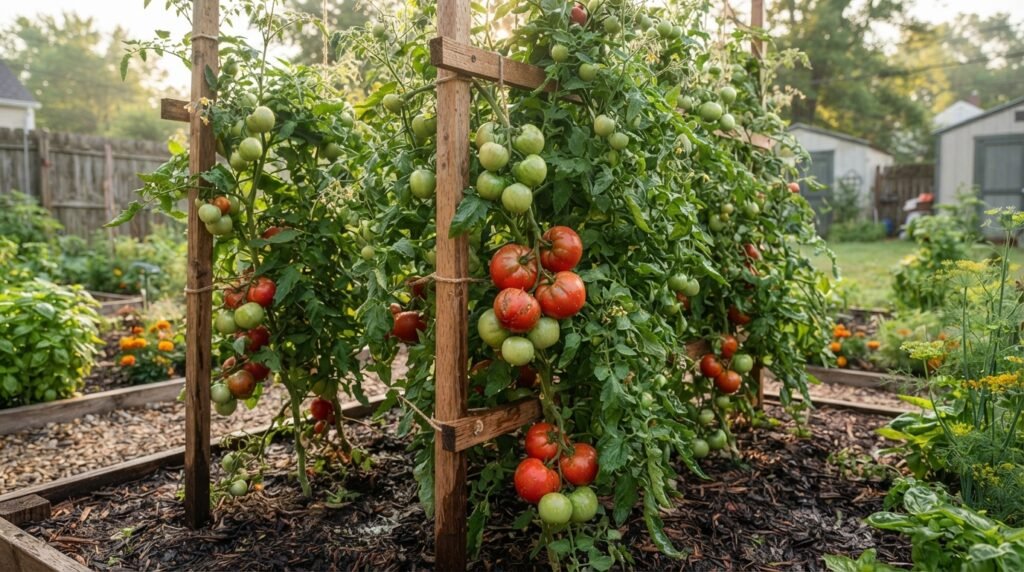
Indeterminate tomatoes are tomato plants that continue growing throughout their active growing season. Unlike compact tomato plants, they do not naturally stop growing after reaching a fixed height. Their main vines keep extending while producing new leaves, flowers, and fruit. Under good conditions, some plants can grow six feet tall or even taller. Growth usually continues until frost, extreme heat, disease, or another environmental problem stops the plant. Because fruit develops at different times, gardeners can harvest ripe tomatoes over a long period. This makes these plants useful for people who enjoy fresh tomatoes throughout summer and early fall. Their tall growth means they usually need cages, stakes, trellises, or another support system. Without support, the vines may fall onto the soil. That can make fruit more vulnerable to pests and disease. Understanding this growth habit is the first step toward managing these productive plants successfully.
Indeterminate vs Determinate Tomatoes
The main difference between indeterminate and determinate tomato plants is their growth pattern. Determinate varieties usually reach a set size and then stop growing taller. They often produce much of their crop within a shorter harvest period. This makes them useful for gardeners who want many tomatoes at once. They can also work well in smaller spaces. Indeterminate varieties behave differently. Their vines continue growing and producing new flower clusters during the season. As older tomatoes ripen, new fruit may still be developing higher on the plant. This creates a longer harvest period. However, these plants generally need more vertical space and stronger support. Determinate varieties may be easier for container gardens and compact spaces. The better option depends on your gardening goals. Choose determinate plants for a concentrated harvest. Choose long-growing varieties when you want fresh tomatoes over an extended period.
Why Grow Indeterminate Tomato Plants?
A long harvest season is one of the biggest reasons gardeners choose this type of tomato. Instead of receiving most tomatoes at once, you can often pick ripe fruit regularly. This works well for families that enjoy fresh tomatoes in salads, sandwiches, sauces, and everyday meals. Another advantage is variety. Many popular heirloom and slicing tomatoes have a vining growth habit. Gardeners can choose from large beefsteak tomatoes, colorful heirlooms, cherry tomatoes, and many other options. Vertical growth can also make good use of limited garden space. Instead of spreading across the ground, supported vines grow upward. However, these plants need regular attention. You may need to tie stems, remove damaged growth, monitor pests, and guide vines onto their support. For gardeners who enjoy spending time caring for plants, this can be rewarding. A healthy vine can continue producing delicious tomatoes for much of the growing season.
Popular Indeterminate Tomato Varieties
Gardeners have many varieties to choose from. Beefsteak types are popular because they produce large tomatoes that work well for sandwiches and slicing. Brandywine is a famous heirloom variety known for large fruit and rich flavor. Cherokee Purple is another favorite with dark-colored fruit and a deep tomato taste. Sungold is a popular cherry tomato known for sweet orange fruit. Sweet Million produces clusters of small red tomatoes. Better Boy is widely grown for medium to large fruits and dependable production. Some gardeners also enjoy Black Krim because of its dark color and distinctive flavor. The best variety depends on climate, garden space, disease pressure, and how you plan to use your harvest. Check seed packets or plant labels before buying. They normally identify the growth habit and expected maturity time. Trying several varieties can help you discover which plants perform best in your garden.
Choosing the Best Location
Sunlight is essential for healthy tomato plants. Choose a location that receives at least six hours of direct sunlight daily. Eight or more hours can be even better in many climates. However, extremely hot regions may benefit from some protection during intense afternoon heat. Good airflow is also important. Crowded plants can hold moisture around their leaves, which may encourage disease. Leave enough space between plants for air to move freely. The soil should drain well after watering or rain. Tomato roots do not perform well when they remain waterlogged. Avoid low areas where water collects. If possible, select a location where tomatoes and related crops have not recently suffered serious soil disease. Crop rotation can help reduce some recurring problems. Remember that tall plants can cast shade. Position them where they will not block sunlight from smaller vegetables. Planning the location before planting can prevent many problems later.
Preparing Soil for Healthy Tomato Growth
Healthy soil gives tomato plants a strong foundation. Tomatoes generally prefer fertile, well-drained soil with plenty of organic matter. Before planting, remove weeds and large debris from the growing area. Loosen compacted soil so roots can expand more easily. Adding finished compost can improve soil structure and provide useful organic matter. A soil test is one of the best ways to understand your garden. It can show soil pH and nutrient levels. Tomatoes generally grow well in slightly acidic soil. Avoid adding large amounts of fertilizer without knowing what the soil needs. Too much nitrogen can create lots of leafy growth with fewer fruits. Balanced fertility supports roots, flowers, and fruit development. Raised beds can be useful where native soil drains poorly. Container gardeners should use a quality potting mix instead of heavy garden soil. Good soil preparation can improve plant health for the entire season.
When to Plant Tomatoes
Tomatoes are warm-season plants and do not tolerate frost well. Planting too early can expose young plants to cold temperatures. Wait until frost danger has passed in your area. The soil should also have warmed before transplanting. Cool soil can slow root development and plant growth. Gardeners often start seeds indoors several weeks before outdoor planting time. This gives seedlings time to develop before warm weather arrives. Harden seedlings before moving them permanently outside. Hardening means gradually exposing young plants to outdoor sunlight, wind, and temperature changes. Start with a short period outdoors and increase the time over several days. This helps reduce transplant stress. If you purchase young plants from a nursery, they may already have some outdoor exposure. Still, ask how they were grown. Planting at the correct time gives tomatoes a stronger start and can reduce early-season problems.
How to Plant Indeterminate Tomatoes
Planting indeterminate tomatoes correctly helps them develop strong root systems. Begin by digging a hole deeper than the plant’s original container. Tomato stems can form additional roots when buried in soil. Remove the lower leaves and place part of the stem beneath the soil surface. This can create a stronger root system. Handle the stem carefully because young tomato plants can break easily. After planting, press the soil gently around the roots. Water deeply to remove large air pockets and settle the soil. Install the support system soon after planting. Waiting too long can make it difficult to place stakes or cages without damaging roots. Leave enough distance between plants for airflow and future growth. Exact spacing depends on your training system and variety. Read the seed packet or plant label for guidance. Good planting practices can make later care much easier.
How Much Space Do Tomato Plants Need?
Spacing is especially important for tall tomato vines. Plants that grow too close together can compete for sunlight, water, and nutrients. Crowded leaves also reduce airflow. This creates a humid environment where some plant diseases can spread more easily. The correct spacing depends on the support and pruning system. Plants trained to a single main stem can sometimes grow closer together. Large cages usually require more room. A common home garden approach is to leave several feet between large plants. However, always consider the expected mature size of your chosen variety. Rows should also provide enough room for walking, harvesting, and maintenance. Container plants need enough space around their foliage for airflow. Do not place many large pots tightly together. Proper spacing may seem wasteful when seedlings are small. Yet, those small plants can become large vines quickly. Giving them room early can create healthier plants later.
Supporting Indeterminate Tomatoes
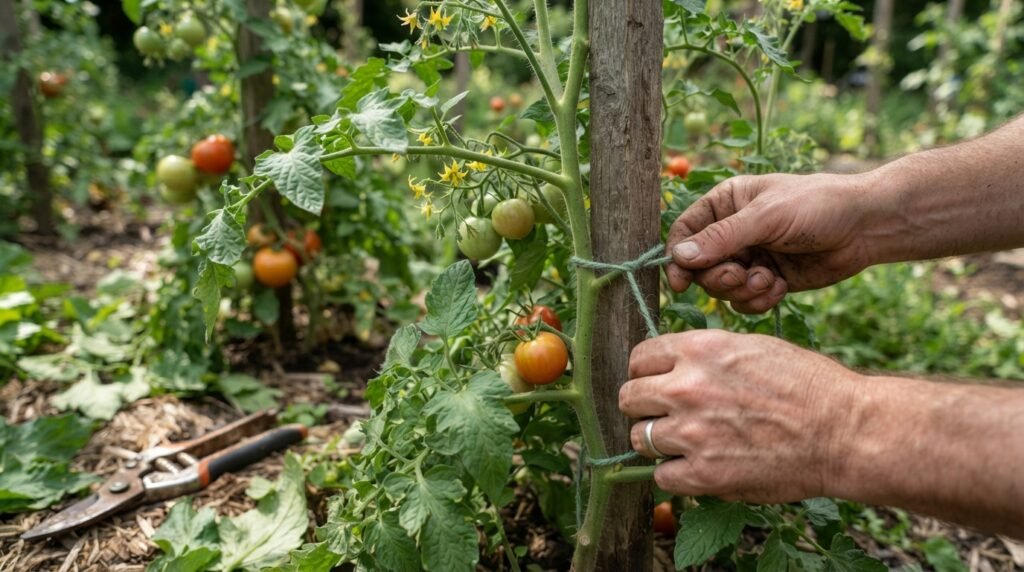
Strong support is essential because indeterminate tomatoes can grow tall and become heavy with fruit. Tomato cages are one popular option. Choose sturdy cages that can handle mature vines. Small lightweight cages may bend under the weight of a large plant. Stakes are another simple solution. Drive a strong stake securely into the ground near the plant. Tie the main stem to the stake as it grows. Use soft plant ties rather than thin wire that can cut into stems. Trellises can support several plants in a row. String systems are also common in greenhouses and carefully managed gardens. Install supports early whenever possible. Adding a large support after the plant becomes mature can damage roots and stems. Check ties throughout the season because stems become thicker. Loosen or replace tight ties when needed. Good support keeps fruit off the soil and makes harvesting easier.
How to Water Tomato Plants Properly
Consistent watering helps tomatoes grow and develop healthy fruit. Irregular watering can stress plants and may contribute to problems such as fruit cracking. Water deeply rather than giving the soil a tiny amount every day. Deep watering encourages roots to grow into a larger soil area. The exact schedule depends on weather, soil type, plant size, and whether plants grow in containers. Hot weather increases water needs. Containers also dry faster than garden soil. Check soil moisture with your finger before watering. Water near the base of the plant instead of soaking the leaves whenever practical. This can help keep foliage drier. Morning is often a useful time to water because plants have moisture available before daytime heat. Mulch can help the soil stay evenly moist. Straw, shredded leaves, or another suitable garden mulch can reduce evaporation. Always adjust watering based on actual soil conditions rather than following a fixed schedule.
Fertilizing for Strong Growth and Fruit
Tomatoes need nutrients, but more fertilizer does not always mean more tomatoes. Too much nitrogen can create a large green plant with limited fruit production. Start by improving the soil with organic matter and using soil test results when available. A fertilizer designed for tomatoes or fruiting vegetables can be useful when the soil needs additional nutrients. Follow the product directions carefully. Avoid adding extra fertilizer simply because the plant looks small during its early growth stage. Tomatoes naturally grow faster as temperatures warm. Container plants may need feeding more often because nutrients can wash from the pot during watering. Watch the plant for signs of nutrient problems, but remember that yellow leaves can have several causes. Watering problems, disease, root damage, and normal aging can all change leaf color. Good nutrition works best when combined with proper sunlight, moisture, spacing, and healthy soil.
Should You Prune Indeterminate Tomatoes?
Pruning indeterminate tomatoes can help manage their size and improve airflow. However, these plants do not need every side shoot removed. A common method is removing selected suckers. Suckers are shoots that grow where a leaf stem meets the main stem. If every sucker grows, the plant can become very dense. Removing some can make the vine easier to support and improve access to fruit. Use clean fingers for tiny shoots or clean pruning tools for larger growth. Avoid removing too many healthy leaves. Leaves create energy through photosynthesis and also shade developing tomatoes. Remove yellow, damaged, or diseased leaves when appropriate. Lower leaves touching the soil are often worth removing because soil splash can carry disease organisms. Pruning needs depend on spacing and support style. A well-spaced plant inside a large cage may require less pruning than a vine trained vertically.
Understanding Tomato Suckers
Suckers are often misunderstood by new gardeners. They are simply new shoots that develop between the main stem and a leaf branch. A sucker can eventually produce its own leaves, flowers, and tomatoes. This means suckers are not automatically harmful. However, allowing every sucker to grow can create a very large and crowded plant. Gardeners who train tomatoes on stakes often remove many suckers to maintain one or two main stems. Gardeners using large cages may allow more suckers to remain. Your choice should depend on space, airflow, and support strength. If you remove suckers, start while they are small. Small shoots can usually be pinched off easily. Larger shoots require more careful cutting and leave a bigger wound. Avoid heavy pruning during wet conditions when possible. The goal is not to make the plant bare. Good pruning creates a manageable plant while keeping enough leaves for healthy growth.
Mulching Around Tomato Plants
Mulch is a simple tool that can make tomato care easier. A layer of organic mulch helps slow water evaporation from the soil. It also reduces weed growth around the plants. Another useful benefit is reducing soil splash onto lower leaves during rain or watering. This may help limit exposure to certain soil-borne problems. Straw, shredded leaves, and other suitable organic materials can work well. Avoid piling mulch directly against the main stem. Leave a small open space around the plant base. Apply mulch after the soil has warmed enough for the season. A very thick layer placed too early can keep cool soil from warming. Check moisture beneath the mulch before watering because the surface may look dry while the lower soil remains moist. Organic mulch can gradually break down and contribute material to the soil. This simple practice can support healthier and easier garden management.
Growing Indeterminate Tomatoes in Containers
You can grow indeterminate tomatoes in containers, but they need enough root space. Choose a large pot with good drainage holes. Small containers dry quickly and can restrict root growth. A large container also provides a more stable base for tall support structures. Fill the pot with quality potting mix rather than heavy garden soil. Garden soil can become compacted inside containers and may drain poorly. Install a strong cage, stake, or trellis at planting time. Place the container where it receives plenty of sunlight. Check soil moisture often because large tomato plants use significant amounts of water. During hot weather, pots may require frequent watering. Container tomatoes also need regular nutrition because watering can remove nutrients over time. Follow appropriate fertilizer directions instead of overfeeding. With enough sunlight, root space, support, water, and nutrients, container plants can provide an impressive harvest.
Flowers and Fruit Development
Tomato flowers eventually become fruit when pollination occurs successfully. Tomato flowers contain both male and female reproductive parts. Wind movement and vibration can help release pollen inside the flower. Bees and other insects may also help. Extreme temperatures can reduce successful fruit set. Very hot days or unusually cool nights may cause flowers to drop without producing tomatoes. Water stress can also affect flowering. Keep the plants consistently watered during flowering and fruit development. Avoid excessive nitrogen fertilizer because it may encourage leaves instead of flowers. Once fruit forms, it slowly increases in size before changing color. Different varieties need different amounts of time to ripen. Cherry tomatoes often mature faster than very large slicing types. Be patient with healthy plants. A strong vine with flowers does not always produce ripe tomatoes immediately. Good growing conditions support the natural process.
Common Pests That Attack Tomatoes
Several garden pests may feed on tomato plants. Aphids are small insects that gather on tender growth and leaves. Hornworms are large caterpillars that can remove a surprising amount of foliage. Whiteflies and spider mites may also become problems under certain conditions. Check your plants regularly rather than waiting for severe damage. Look under leaves and along stems. Inspect plants whenever you water or harvest. Hand removal can work for large pests such as hornworms. Other pest problems may require different management methods. Always identify the pest before choosing a treatment. Not every insect on a tomato plant is harmful. Some insects help control pests or pollinate nearby plants. Healthy plants are often better able to handle minor feeding damage. Avoid using treatments without understanding what is causing the problem. Careful observation can often catch pest problems before they become serious.
Common Tomato Diseases
Tomatoes can develop fungal, bacterial, and viral diseases. Leaf spots, yellowing foliage, wilting, and damaged fruit can have many different causes. Early blight and other leaf diseases can affect garden tomatoes in some regions. Good spacing and airflow may help reduce favorable conditions for certain diseases. Water near the soil rather than regularly wetting leaves. Remove badly affected plant material when appropriate. Clean gardening tools can also reduce accidental spread between plants. Crop rotation may help when soil-borne problems have occurred in previous years. Resistant varieties can be useful where certain diseases are common. However, correct identification matters before taking action. Nutrient problems and water stress can sometimes look like disease. If you are unsure, contact a trusted local extension service, horticulture expert, or experienced garden professional. Accurate identification can prevent unnecessary treatments and help protect the rest of your garden.
Blossom End Rot and Fruit Cracking
Blossom end rot appears as a dark, damaged area on the bottom of developing tomatoes. It is linked to calcium movement within the plant and is often associated with uneven moisture. This does not always mean the soil lacks calcium. Root stress and irregular watering can make calcium harder for the plant to use properly. Consistent soil moisture can help reduce the problem. Avoid letting plants become extremely dry before soaking them heavily. Fruit cracking can also happen when moisture levels change quickly. A tomato may absorb water rapidly after dry conditions, causing the skin to split. Mulching and steady watering can reduce dramatic changes in soil moisture. Some varieties naturally resist cracking better than others. Damaged tomatoes may still be usable if they are otherwise healthy and harvested quickly. Preventing water stress is one of the most useful steps for improving fruit quality.
How Long Do Indeterminate Tomatoes Produce?
Healthy indeterminate tomatoes can continue flowering and producing fruit for much of the growing season. Unlike determinate plants, they do not naturally finish their main harvest after a short period. Production may continue until frost or another serious environmental stress ends growth. In warm climates, the growing season can be longer. However, extreme summer heat can temporarily reduce flower production or fruit set. Plants may begin producing again when conditions improve. Disease and pest pressure can also shorten the productive season. Regular watering, proper support, balanced feeding, and disease management help plants remain healthy longer. Harvest ripe tomatoes regularly so you can enjoy fruit at its best quality. As the end of the season approaches, gardeners in cooler climates sometimes remove new flowers. This can help the plant focus its remaining energy on fruit that already has a chance to mature before frost.
When and How to Harvest Tomatoes
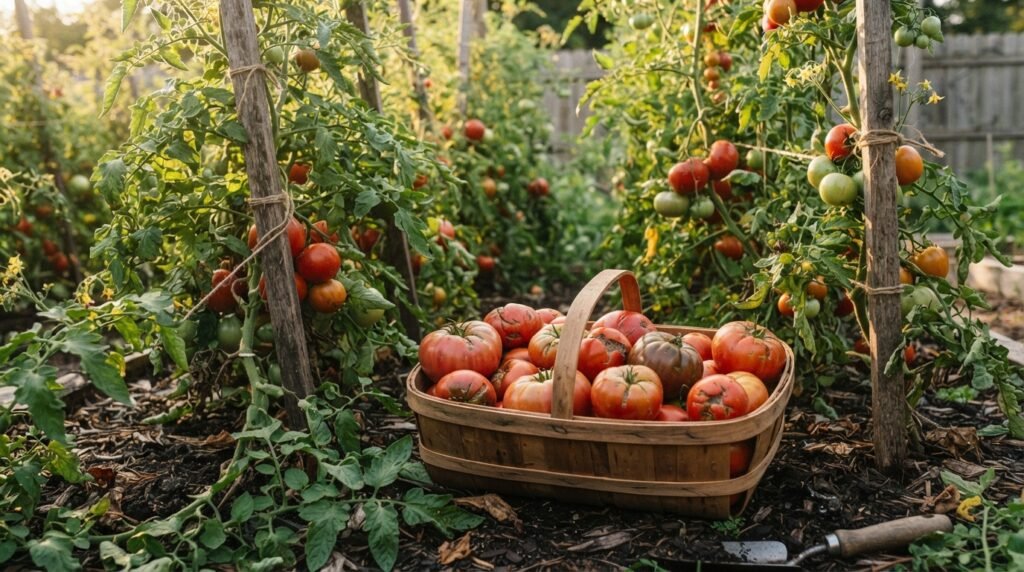
Harvest tomatoes when they reach the appropriate color and firmness for their variety. Red tomatoes should usually develop their expected mature color. Yellow, orange, purple, and striped varieties have different ripening signs. Gently hold the fruit and twist it from the stem. You can also use clean scissors or pruners to avoid damaging delicate vines. Do not pull hard because this can break branches. Tomatoes can continue ripening after harvest once they have reached a mature stage. This can be useful when animals, storms, or cold weather threaten the crop. Store fresh tomatoes at room temperature when possible for the best flavor and texture. Avoid placing unripe tomatoes in very cold storage. Check plants regularly during peak season because several fruits may ripen each day. Frequent harvesting also helps you notice pests, damaged leaves, and other problems while they are still manageable.
Best Ways to Use Fresh Tomatoes
Fresh garden tomatoes can be used in countless meals. Large slicing tomatoes are perfect for sandwiches, burgers, salads, and fresh tomato plates. Cherry tomatoes work well in salads, pasta dishes, roasting recipes, and quick snacks. Paste-style tomatoes are useful for sauces and cooking. Heirloom tomatoes can provide unusual colors and rich flavors for fresh dishes. If your plants produce more than your family can eat, consider preserving part of the harvest. Tomatoes can be made into sauces, frozen using suitable methods, or preserved through tested canning recipes. Always follow reliable food safety guidance when canning. Sharing extra tomatoes with friends and neighbors is another simple option. Growing several varieties can make meals more interesting because each tomato has a different balance of sweetness, acidity, texture, and size. A steady harvest gives you plenty of opportunities to experiment in the kitchen.
Mistakes to Avoid When Growing Tomatoes
One common mistake is planting tomatoes too close together. Crowding reduces airflow and makes maintenance harder. Another mistake is using weak supports. Small cages may collapse when vines become heavy. Installing strong supports early prevents this problem. Inconsistent watering is another frequent issue. Repeated cycles of very dry and very wet soil can stress plants and damage fruit. Too much fertilizer can also create problems, especially when it contains high levels of nitrogen. Avoid removing excessive foliage during pruning. Leaves are necessary for plant growth and help protect fruit from intense sunlight. Gardeners should also avoid ignoring small pest or disease problems. Regular inspection makes early action possible. Finally, do not assume every tomato variety has the same needs. Read plant labels and learn about the variety you are growing. Small improvements in basic care often produce much better results.
Are Indeterminate Tomatoes Good for Beginners?
Indeterminate tomatoes can be excellent for beginners who have enough space and time for basic maintenance. Their long harvest period makes them especially rewarding. A beginner can start with one or two plants rather than growing a large tomato garden immediately. Choose a dependable variety and prepare strong support before planting. Place the plants in a sunny location with good soil. Focus on consistent watering instead of trying complicated techniques. Check leaves regularly for pests and unusual spots. Learn how the plant grows before doing heavy pruning. Many beginner mistakes come from doing too much rather than too little. Tomatoes need attention, but they do not require daily complicated care. Watching a tall vine grow, flower, and produce fruit can teach new gardeners many useful skills. With patience and simple maintenance, beginners can enjoy a productive crop.
Frequently Asked Questions
1. What does indeterminate mean for tomatoes?
The term describes a tomato plant that keeps growing and producing new flowers during its active season. The main vine does not naturally stop at a short fixed height. It can continue producing fruit until frost, disease, severe weather, or another condition stops growth. This creates a longer harvest compared with many compact determinate varieties.
2. How tall do indeterminate tomato plants grow?
Many varieties can reach six feet or taller under good growing conditions. Some vigorous plants can grow much longer when trained on strong supports. Final size depends on variety, climate, soil, sunlight, pruning, and growing season length. Strong cages, stakes, or trellises are important because mature plants can become heavy.
3. Do indeterminate tomato plants need cages?
They need some form of reliable support. A strong cage is one option, but it is not the only choice. Stakes, trellises, and vertical string systems can also work. The best support depends on garden space and pruning style. Install the support early so you do not damage established roots later.
4. Should I remove all tomato suckers?
No. Suckers can produce leaves, flowers, and fruit. Removing every sucker is not always necessary. Gardeners using narrow vertical supports may remove more suckers to control plant size. Plants growing inside large cages can often keep more side shoots. The goal is to balance fruit production, airflow, support, and healthy foliage.
5. Can these tomatoes grow in pots?
Yes, but choose a large container with good drainage. Tall tomato vines need plenty of root space, regular water, nutrients, sunlight, and strong support. Small pots can dry out quickly and become unstable. Large containers are usually easier to manage. Check soil moisture frequently during hot weather because container-grown plants can use water quickly.
6. Do indeterminate tomatoes produce all season?
They can continue producing flowers and fruit throughout their active growing season. Harvest usually continues until frost or severe environmental stress stops growth. Very hot weather may temporarily reduce fruit set. Healthy plants can resume production when conditions improve. The actual season length depends greatly on local climate and the variety being grown.
Final Thoughts
Growing indeterminate tomatoes is a great choice for gardeners who want fresh fruit over a long season. These plants continue developing new vines, flowers, and tomatoes while growing conditions remain suitable. Their vigorous growth does require planning. Give them plenty of sunlight, fertile soil, consistent moisture, and enough space. Install a strong cage, stake, or trellis early. Keep an eye on suckers and remove only those that interfere with your training system. Mulch can help control weeds and maintain soil moisture. Regular plant checks also make it easier to catch pests and disease early. Choose varieties that match your climate and cooking needs. You can grow large slicing tomatoes, colorful heirlooms, or sweet cherry varieties. Start with a few healthy plants and learn from each season. With steady care and patience, tall tomato vines can provide a rewarding supply of fresh homegrown fruit for many weeks.