Living rooms need to do more than look beautiful. They often serve as places to relax, eat, work, talk, and entertain guests. A sofa table with stools can help one room handle several of these jobs without adding bulky furniture. The table usually sits behind a sofa, while matching stools tuck underneath when they are not needed. This simple setup can provide extra seating, a casual eating area, a work surface, or a place for drinks. It can be especially useful in apartments and open-plan homes where every foot of space matters. However, the right table should fit your sofa, room, and daily routine. Height, width, stool size, legroom, stability, materials, and placement all deserve attention. This guide explains how these tables work, where to place them, what to measure, and how to choose a setup that feels comfortable instead of crowded.
What Is a Sofa Table With Stools?
A sofa table with stools is a narrow table paired with two or more seats. The table is commonly placed directly behind a sofa, although it can also sit against a wall or near a kitchen. Unlike a standard console table, this design is usually made with enough height and legroom for people to sit comfortably. The stools can slide underneath the tabletop when nobody is using them. This helps keep walkways open and gives the room a cleaner appearance. Designs range from simple wooden tables to modern metal frames, upholstered stools, and tables with storage. Some are counter height, while others are closer to standard dining height. Because product dimensions vary, the name alone does not tell you whether a particular set will work in your home. Measuring the table, stools, sofa, and surrounding space is always important.
Why Are Sofa Tables With Stools Popular?
Modern homes often use one room for several activities. A living room may also function as a dining area, study space, or entertainment zone. Furniture that performs more than one job can make these spaces easier to use. A narrow table behind the sofa creates an extra surface without occupying the center of the room. Add stools, and the same area becomes useful for breakfast, homework, laptop work, or casual conversation. When the seats tuck away, the room returns to a more open layout. This flexibility is one reason these tables are common in apartments and open-plan homes. They can also help connect a kitchen with a living area. However, multifunctional furniture only saves space when its dimensions are right. A table that blocks a walkway or stools that cannot tuck underneath may create more clutter instead of reducing it.
Where Should You Place a Sofa Table?
The most common location is directly behind a freestanding sofa. This works particularly well when the sofa faces a television or fireplace and its back is visible from another part of the room. The table can make that exposed area more useful. It may also create a gentle visual boundary between the living room and kitchen. Another option is placing the table against a wall and using it as a compact eating or work station. Before choosing a location, study how people move through the room. Avoid blocking doors, hallways, heating vents, or frequently used paths. If stools will be used often, leave enough space behind them for people to sit and stand comfortably. The best location should make the room easier to use. Furniture should support natural movement rather than forcing people to squeeze around it.
Measure Your Sofa Before Buying
Start by measuring the height of the sofa back from the floor. Then measure its overall width. A sofa table with stools often looks most balanced when it does not extend far beyond the sofa. However, exact proportions depend on the room and design. Height is even more important when people will sit at the table. A low sofa paired with a very tall table can look awkward. A table that is too low may not provide a comfortable eating or working position. Also inspect the back of your sofa. Some sofas have reclining mechanisms, curved backs, power cords, or other features that affect table placement. Leave any clearance required by the sofa manufacturer. Do not push another piece of furniture against a reclining sofa if that prevents safe movement. Accurate measurements can save you from ordering a beautiful table that simply does not fit.
Choose the Right Table Height
Table height should match the stools and the way you plan to use the surface. Standard dining tables, counter-height tables, and bar-height tables all require different seat heights. There should be enough vertical space between the stool seat and tabletop for a person’s legs. Product descriptions often recommend compatible stool heights, so read them carefully. If you already own stools, measure from the floor to the top of each seat before choosing a table. Consider the sofa as well. A table much taller than the sofa back will be visually noticeable and may affect sight lines. That is not always a problem, especially when the table is intended for dining. However, it should be a deliberate choice. Comfort matters more than following a strict design rule. Sit at a similar table in person if possible before deciding which height feels natural.
How Long Should a Sofa Table Be?
Length depends on sofa width, available floor space, and how many stools you want to use. A shorter table may hold two stools and leave more open space around the sofa. A longer model may accommodate three or four seats but requires a larger room. Avoid judging length from product photographs alone. Measure the exact area behind your sofa and mark the proposed table dimensions with painter’s tape. Then walk around the room as you normally would. Imagine the stools pulled out with people sitting on them. A sofa table with stools should not turn an important walkway into a narrow passage. Also consider where table legs are positioned. A long tabletop does not automatically provide room for many stools if supports or storage compartments occupy the space underneath. Usable seating width matters more than the table’s total length.
How Much Space Does Each Stool Need?
Stools need enough horizontal space for people to sit without bumping shoulders. They also need clear room underneath for knees and feet. Wider upholstered stools naturally require more space than narrow backless seats. Instead of assuming that three stools will fit because a product photo shows three, check the exact seat widths and table supports. Allow some breathing room between seats. Also consider how easily each stool can be pulled out. If the table stands close to a wall, kitchen island, or another sofa, there may not be enough room behind the sitter. A comfortable furniture arrangement considers people in motion, not only furniture at rest. Mark stool positions on the floor when planning your layout. This quick test can show whether your intended number of seats is realistic before you spend money on the set.
Why Tuck-Under Stools Save Space
One of the biggest advantages of this furniture style is the ability to hide the stools underneath the table. When the seats are fully tucked in, they occupy little additional floor space. This keeps walkways open and reduces visual clutter. It can be especially helpful in a small apartment where permanent dining chairs would make the room feel crowded. However, not every stool fits completely beneath every table. Crossbars, shelves, drawers, and table legs can limit the available space. Check the dimensions carefully before buying. A sofa table with stools is most space-efficient when the seats disappear neatly below the tabletop without sticking far into the walkway. If you plan to use the stools only occasionally, backless designs are often easier to store. Stools with backs can provide more support, but they may remain partly visible above or outside the table.
Sofa Tables for Small Living Rooms
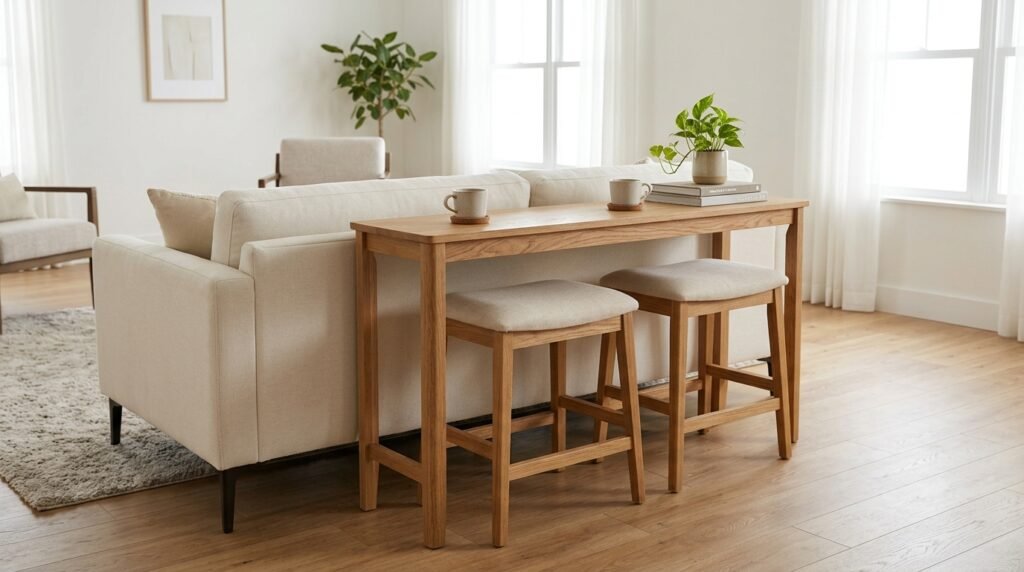
Small rooms benefit from furniture that has a clear purpose. A narrow table behind the sofa can provide useful surface space without taking over the room. It may replace the need for a separate desk or small dining table in some homes. Light colors, simple frames, and open bases can also help the furniture feel visually lighter. Avoid overly deep tables because they consume valuable walkway space. Measure carefully and consider how the room looks when stools are both stored and in use. A table may appear compact while everything is tucked away but become difficult to walk around once three people are seated. In very small rooms, two stools may be more practical than four. Good small-space design is not about fitting the maximum amount of furniture into a room. It is about leaving enough open space for comfortable everyday living.
Using a Sofa Table in an Open-Plan Home
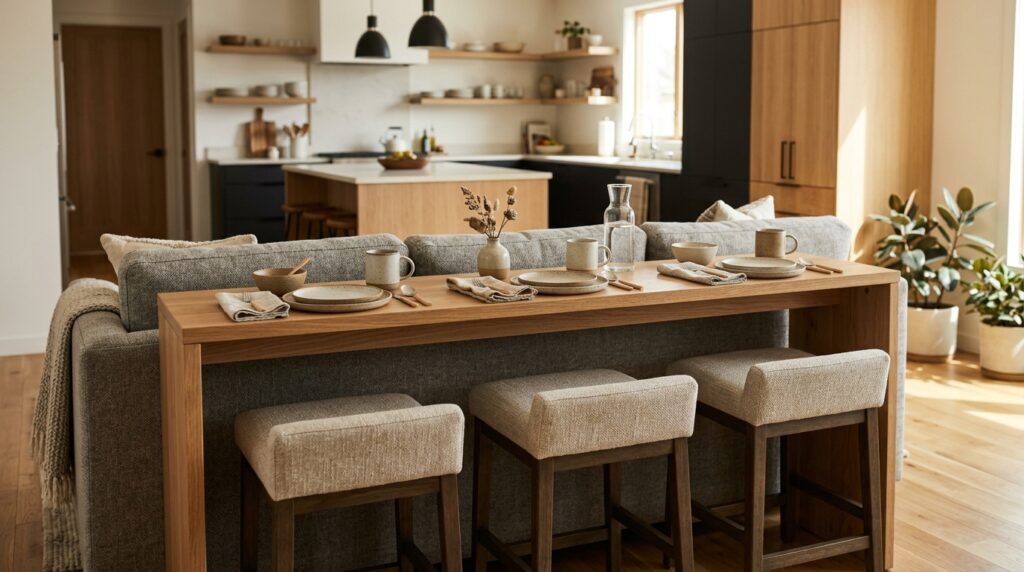
Open-plan rooms can sometimes feel undefined because the kitchen, dining area, and living room share one large space. A sofa table can help create a visual boundary without adding a wall. Place it behind the sofa facing the kitchen or dining area. The tabletop creates a transition between zones while keeping the space visually open. Stools make the boundary functional by adding casual seating. Guests can sit there while someone prepares food in the kitchen. Children may use the surface for a snack while adults relax nearby. A sofa table with stools can therefore connect different activities rather than separating them completely. Keep materials consistent with nearby furniture for a more unified appearance. For example, a wood top can relate to kitchen cabinets, while a black metal frame can echo light fixtures or cabinet hardware.
Using the Table for Casual Dining
Not every meal needs a formal dining table. A sofa table can work well for quick breakfasts, snacks, coffee, or casual meals. This can be helpful in small households where a large dining area would rarely be used. Before treating the table as an eating surface, make sure it provides comfortable height and enough depth for plates and drinks. Very narrow console-style tables may look attractive but offer limited dining space. The surface should also be easy to clean. Use placemats or coasters when needed, especially on natural wood or other surfaces that can stain. Avoid placing very hot cookware directly on the tabletop unless the manufacturer confirms it is safe. If your household plans to eat at the table every day, prioritize comfortable stools and good legroom rather than choosing the smallest possible design.
Using a Sofa Table as a Work Area
A narrow table behind a sofa can become a simple laptop station. It can be useful for checking email, studying, paying bills, or completing short work sessions. Make sure the tabletop is deep enough for your laptop and other essentials. Long periods of computer work require more attention to posture and seating support. Backless stools may be fine for brief tasks but may become uncomfortable during a full workday. A sofa table with stools should not automatically be treated as a replacement for an ergonomic desk setup. If you regularly work from home for many hours, a proper chair and desk may provide better support. Still, the sofa table can be a useful secondary work surface. Keep charging cables organized and away from walkways. If the table includes outlets, follow the manufacturer’s instructions and avoid overloading electrical connections.
Sofa Tables for Homework and Study
Families can also use this setup as a flexible homework area. Children can sit at the table while remaining close to adults in the living room or kitchen. The open location makes it easier to help with assignments without creating a separate study room. Keep the surface simple so books, notebooks, and school supplies have enough space. A small storage basket nearby can hold pencils and other items when study time ends. Consider stool comfort if children will sit there for extended periods. Make sure the table and seats are stable and appropriate for their size. Younger children should not climb on stools or use the table as play equipment. After homework, the supplies can be cleared away and the stools tucked back underneath. This quick change helps the living room return to its normal purpose without requiring another dedicated piece of furniture.
Choosing Wood for a Sofa Table
Wood can bring warmth to a living room and works with many interior styles. Solid wood offers natural grain and variation, while engineered wood products can provide different price points and finishes. Each material has its own care requirements. Do not assume every table described as “wood” is made entirely from solid timber. Read the material details carefully. A wood sofa table with stools may suit farmhouse, traditional, Scandinavian, rustic, or modern interiors depending on its shape and finish. Protect the surface from standing water and very hot items. Use coasters under drinks and clean spills promptly. If the table has a natural finish, expect some variation in grain and color. These differences can add character. When buying online, remember that screen colors and lighting can make wood tones look different from how they appear in your home.
Metal and Wood Designs
A combination of wood and metal is common because it provides visual contrast and structural strength. A warm wooden top paired with a black metal frame can fit industrial and modern interiors. Lighter wood and thin metal legs may create a softer contemporary appearance. Look beyond style and inspect how the frame is built. Crossbars can increase stability but may reduce legroom or prevent stools from sliding fully underneath. Check whether metal feet have protective pads, especially on hardwood or tile floors. If the furniture needs assembly, tighten all fasteners according to the instructions and check them periodically. Loose hardware can make a table or stool wobble. A good design balances appearance, stability, and comfort. The strongest-looking frame is not automatically the most useful if its supports make sitting uncomfortable.
Upholstered vs. Backless Stools
Backless stools are compact and easy to tuck under a table. They are a strong choice when saving space is the main goal. However, they provide less back support. Upholstered stools can feel softer and more comfortable, especially during longer meals or conversations. Some designs include both cushioning and a backrest. These may be comfortable but take up more room. Think about how long people usually sit at your table. For ten-minute breakfasts, simple stools may work perfectly. For long study sessions or evening meals, more supportive seats may be worth the extra space. Upholstery also needs cleaning, especially in homes with children or pets. Check the fabric care instructions before buying. Removable or easy-clean materials can make everyday maintenance simpler. Choose stools for real household use rather than appearance alone.
Choosing a Sofa Table With Storage
Some tables include drawers, shelves, hooks, or built-in storage. These features can be helpful when the table doubles as a work or dining area. Drawers can hold chargers, pens, notebooks, coasters, and other small items. A shelf may store baskets or decorative objects. However, storage can reduce the space available for knees and stools. A sofa table with stools designed mainly for seating should provide enough open room underneath. Before choosing a storage-heavy design, decide which function matters more. If you already have cabinets nearby, an open table may be more comfortable. If your living room lacks storage, a few well-placed drawers could be useful. Avoid filling open shelves with too many objects because they can make a narrow table feel visually heavy. Simple storage often works better than trying to turn the table into a large cabinet.
Stability and Safety Matter
Tables and stools should feel stable during normal use. Check the weight limits provided by the manufacturer and follow assembly instructions carefully. Place furniture on a level surface whenever possible. If a table rocks, first check whether the floor is uneven or the hardware needs adjustment. Do not let children climb on stools or hang from the tabletop. Tall stools can tip if used carelessly. A table behind a reclining sofa also needs enough clearance for moving parts. If the sofa uses electricity, keep cords organized and away from stool legs. Furniture should never block emergency exits or create a trip hazard. Stability is particularly important when the table holds drinks, laptops, lamps, or other valuable objects. Good design is not only about appearance. Safe, comfortable furniture makes a room easier for everyone in the household to enjoy.
How to Style a Sofa Table With Stools
Start with function and add decoration afterward. Keep the surface mostly clear if the table is used for eating or working. A small plant, decorative bowl, or simple lamp may be enough. Large accessories can quickly reduce usable space on a narrow tabletop. When styling a sofa table with stools, consider what is already in the living room. Repeat a few colors or materials for a connected look. A wooden tabletop can echo a coffee table. Black metal legs can match light fixtures. Neutral upholstered stools can relate to sofa cushions. Avoid trying to match every item exactly. Rooms often feel more natural when finishes coordinate without being identical. If the table sits directly behind the sofa, keep tall objects away from areas where they might easily be knocked over by someone sitting down or reaching backward.
Choosing the Right Color and Finish
Color can make the table blend into the room or stand out as an accent. Light wood often creates a relaxed and airy look. Dark wood can feel richer and more traditional. Black frames provide strong contrast, while white or cream finishes may work well in bright interiors. Consider your flooring before choosing a wood tone. A table that is almost the same color as the floor may disappear visually, while a slightly different tone can create depth. You do not need to match all woods perfectly. Mixing wood tones can look natural when they share similar warm or cool undertones. Also consider practical care. Very dark glossy surfaces may show dust and fingerprints easily. Highly textured finishes may trap crumbs. A finish should look good but also suit the way your household actually uses the furniture.
Lighting Around a Sofa Table
Good lighting makes the table more useful. If it serves as a work or homework area, nearby light should be bright enough for reading. Natural daylight can work well during the day. In the evening, a floor lamp or suitable overhead fixture may provide additional light. Be careful with table lamps if the surface is narrow or frequently used for dining. A lamp can occupy valuable space and may be knocked over. Keep electrical cords away from stools and walking paths. If your sofa table with stools sits between a living room and kitchen, existing lighting from both areas may already be enough. Test the space at night before adding new fixtures. Lighting should support the table’s main purpose while keeping the area comfortable. Warm, soft lighting often works well for casual dining, while task lighting is more useful for studying.
Sofa Tables in Apartments
Apartment furniture often needs to work harder because rooms may have limited space. A sofa table can create a small dining or work area without requiring another large piece of furniture. It can also move with you more easily than built-in seating. Before buying, measure apartment doors, hallways, stairs, and elevators. Check whether the table arrives assembled or flat-packed. If you rent, avoid furniture that requires permanent wall attachment unless your lease allows it. Lightweight designs are easier to move, but they should still be stable. Consider neighbors as well. Protective pads under metal stool legs can reduce scraping sounds and protect flooring. A compact setup that allows stools to tuck away can make an apartment feel much more organized. The key is choosing dimensions based on the actual room rather than assuming all narrow tables are apartment-friendly.
How to Clean and Maintain the Set
Cleaning depends on the materials. Use the manufacturer’s instructions whenever available. Wood surfaces may need a soft damp cloth and prompt drying. Metal frames can often be dusted and wiped gently, but certain finishes may require specific products. Upholstered stools should be cleaned according to their fabric codes or care labels. Avoid soaking fabric unless the manufacturer recommends it. Check screws and bolts occasionally because regular movement can loosen hardware over time. Clean crumbs from joints and underneath seat cushions where possible. Protect floors by inspecting the pads beneath table and stool legs. Replace damaged pads before exposed metal or wood scratches the floor. A sofa table with stools usually receives frequent contact because people move the seats often. Small maintenance habits can keep the furniture stable, clean, and pleasant to use for longer.
What to Check Before Buying
Begin with exact measurements. Check table height, length, depth, and the dimensions of every stool. Confirm whether all stools fit completely underneath. Review materials instead of judging only from photographs. Check the table and stool weight limits provided by the manufacturer. Look at the position of legs, shelves, and crossbars to understand available legroom. Read assembly requirements and determine whether you need another person to help. If buying online, study the return policy before ordering large furniture. Returning an assembled table can be difficult and expensive. Reviews may help identify repeated issues, but remember that individual experiences vary. Think about your main use as well. A set for occasional drinks has different requirements from one used for daily meals. Buy for the activity you perform most often rather than trying to satisfy every possible situation.
Common Mistakes to Avoid
A common mistake is measuring the sofa but forgetting the walkway behind it. Another is choosing stools that look attractive but are too tall for the table. Buyers may also assume all stools shown in product photos will tuck completely underneath. Always check dimensions. Avoid buying a very narrow table for daily dining without confirming there is enough space for plates. Do not ignore crossbars that could reduce legroom. Choosing style over stability is another mistake. Tall furniture should feel secure during normal use. Families should also think carefully about fabric care before buying light upholstered seats. Finally, do not assume a sofa table with stools will automatically save space. It saves space only when the table fits the room, the stools store efficiently, and people can still move comfortably when the seats are occupied.
Frequently Asked Questions
What is a sofa table with stools used for?
It is a multifunctional furniture setup that can provide extra seating and surface space behind a sofa. People may use it for casual meals, drinks, laptop work, homework, or entertaining guests. The stools usually tuck beneath the table when they are not needed, helping keep the room open. This makes the design useful in apartments and open-plan homes. However, the exact use depends on table depth and height. A very narrow console-style table may be better for drinks than full meals, so always check dimensions before deciding how you will use it.
How tall should a sofa table with stools be?
The right height depends on the stools and intended use. Dining-height, counter-height, and bar-height tables all need different seat heights. Look at the manufacturer’s recommended stool height and make sure there is enough room between the seat and tabletop for comfortable legs. Also compare the table with the height of your sofa back. A taller table can work, but it will be more visible. Comfort should guide the decision. If possible, test a similar table and stool combination before buying.
Can you use a sofa table as a dining table?
Yes, some sofa tables work well for casual dining. The surface needs enough depth for plates, glasses, and basic serving items. The stools should also provide comfortable seating and legroom. Very narrow console tables may not be suitable for full meals. If the table will replace a traditional dining area, measure carefully and choose durable, easy-to-clean materials. A table that works well for a quick coffee may not be comfortable for a one-hour dinner, so consider how your household usually eats.
Are sofa tables with stools good for small spaces?
Yes, they can be useful in small homes because the stools can often slide under the table when not in use. This reduces the amount of permanent floor space needed for seating. The table may also serve several purposes, such as dining, working, and entertaining. However, you still need enough space behind the stools when people are seated. Measure the room with the stools pulled out, not only when they are stored. A compact two-stool set may work better than a larger model in a very small living room.
Should a sofa table be shorter than the sofa?
It often looks balanced when the table is similar to or shorter than the sofa’s width, but this is not a strict rule. Height depends more on how the table will be used. A console used only for decoration may sit near the sofa-back height. A counter-height eating table may be taller. The most important factors are comfort, room proportions, sight lines, and available space. Measure both pieces before buying and use painter’s tape to preview the table’s size on your floor.
Is a sofa table with stools worth buying?
A sofa table with stools can be worth buying when you need flexible seating without adding a large dining table. It is particularly useful in apartments, open-plan homes, and multipurpose living rooms. The table can support meals, work, study, and entertaining while the stools store underneath. However, the benefits depend on proper sizing. Measure your sofa, walkways, table area, and stool clearance carefully. A well-fitted set can make unused space behind a sofa much more practical without making the room feel crowded.
Conclusion
A sofa table with stools can turn the empty space behind a sofa into one of the most useful areas in a living room. It can provide extra seating for guests, a place for breakfast, a simple laptop station, or a homework area. When the stools tuck underneath, the setup can remain compact and organized. The key is choosing furniture based on real measurements and everyday needs. Check table height, depth, stool size, legroom, stability, materials, and walkway clearance before buying. Think about whether you need two seats or several and whether backless or upholstered stools better suit your routine. A beautiful design is useful only when it feels comfortable in the room. With careful planning, this simple furniture combination can add function without adding unnecessary clutter.