
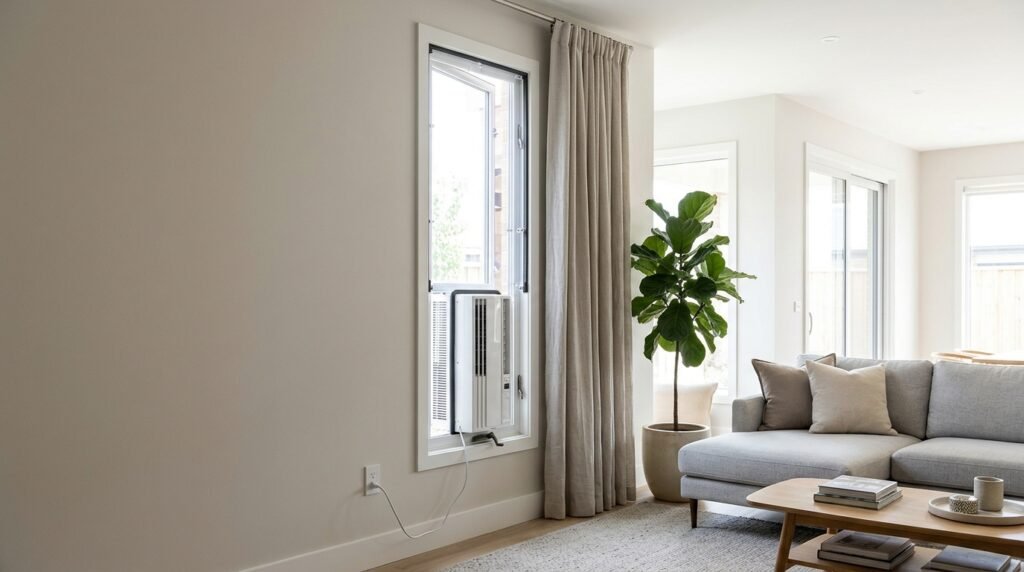
A window AC casement setup is designed for windows that open sideways rather than moving up and down. Standard window air conditioners usually fit double-hung windows, so they often do not work safely in narrow casement or horizontal sliding openings. A casement or slider air conditioner solves this problem with a taller, narrower cabinet and a mounting system made for this window style. Some models are specifically sold for both horizontal sliding and casement windows. The basic idea is simple: the air conditioner occupies the lower part of the opening, while a panel closes the unused space above it. Choosing the right unit still requires careful measurements, enough cooling capacity, a suitable electrical supply, secure support, weather sealing, and an installation method approved by the manufacturer. This article explains how a window AC casement system works, which windows can accept one, how to measure the opening, what installation involves, and when another type of air conditioner makes more sense.
What Does Window AC Casement Mean?
The phrase window AC casement generally refers to a window air conditioner designed to fit a casement or sliding window rather than a conventional double-hung window. Casement windows normally use hinges and open outward, often with a crank. Horizontal sliders have one sash that moves sideways. Both create an opening that is taller and narrower than the opening found in many vertically sliding windows. That difference matters because a traditional window AC has a wide, relatively short cabinet. A slider/casement model changes those proportions. For example, current and recent manufacturer documentation shows dedicated slider/casement units with narrow cabinets intended for these window configurations. Keystone describes its slider/casement room air conditioners as products specifically designed for horizontal slider or casement windows. Midea has also offered a dedicated casement window air conditioner rather than treating every window unit as interchangeable.
Why a Standard Window Air Conditioner May Not Fit
A normal window AC is usually designed around a sash that moves vertically and closes down against the top of the cabinet. That arrangement helps locate and secure the unit. A casement window behaves differently. Its sash may swing outward, and there may be no upper sash that can simply lower onto the air conditioner. Horizontal sliding windows create a similar problem because their opening is vertical rather than horizontal. Trying to force a conventional wide unit into these openings can leave large gaps and may make proper support difficult. More importantly, installation is not only about making the cabinet physically fit. The mounting hardware, support points, drainage position, clearances, and electrical requirements must match the manufacturer’s instructions. A purpose-built window AC casement model is therefore usually the cleaner option when a compatible model is available. It reduces the amount of improvisation required and gives the installer instructions designed around this type of window.
Casement and Sliding Windows Are Similar but Not Identical
People often see the terms casement, slider, and sliding window used together in air-conditioner listings. They are related, but the windows work differently. A casement sash is hinged along one side and swings outward or inward, although outward-opening designs are common. A slider moves horizontally along a track. A window AC casement product may support both configurations, but that should never be assumed from the cabinet shape alone. Check the product’s installation manual and supported window dimensions before buying it. The window frame also matters. A crank, screen, fixed divider, handle, track, or projecting hardware can reduce usable space even when the rough opening looks large enough. Some casement designs may require the operating sash or screen to be removed during installation. The correct method depends on the window and AC model, so the manufacturer’s instructions should take priority over a generic online installation method.
Measure the Window Before Choosing an Air Conditioner
Accurate measurements can prevent one of the most expensive mistakes: buying a unit that cannot be safely installed. Open the window as far as the intended installation allows, then measure the usable opening rather than only the overall frame. Record the clear width and clear height. Look for tracks, handles, cranks, stops, locks, trim, and other parts that reduce the opening. Next, compare those measurements with the exact minimum and maximum window dimensions listed for the air conditioner. Do not assume all window AC casement units use the same dimensions. As one example, Keystone lists a narrow supported window-width range and a minimum window height for its KSTSW08B and KSTSW10B slider/casement models. Those numbers apply to those specific products, not every casement AC. Measure the sill depth and inspect the exterior side as well. The rear portion of a window AC must have the clearance required by its manual. A railing, wall, screen, shutter, roof edge, or other obstruction can interfere even when the indoor opening appears suitable.
Choose Cooling Capacity for the Room, Not Just the Window
Finding a cabinet that fits is only half of the decision. The air conditioner must also be suitable for the room it needs to cool. Cooling capacity is commonly expressed in BTU per hour. Larger rooms generally need more capacity, but room size is not the only factor. Sun exposure, ceiling height, insulation, occupancy, heat-producing appliances, connected rooms, and local climate can change the cooling load. Avoid automatically choosing the largest window AC casement model that fits. An incorrectly sized system can provide poor comfort or unnecessary energy use. Manufacturer ratings can help narrow the choice. For example, Midea has listed a 10,000 BTU casement model with a stated coverage rating, while Keystone offers slider/casement products in different cooling capacities. Treat these ratings as model-specific information and use the sizing guidance supplied for the unit you are considering. If the room has unusual heat loads or an open floor plan, a professional load assessment may be more useful than relying on floor area alone.
Check the Electrical Requirements Before Installation
Electrical compatibility deserves attention before a window AC casement unit is placed in the opening. Check the nameplate and manual for voltage, frequency, current, plug type, circuit requirements, and grounding instructions. Do not assume two units with similar cooling capacity have identical electrical requirements. Manufacturer safety instructions may prohibit extension cords or adapter plugs and may require a properly grounded receptacle. Keystone documentation, for example, instructs users not to use an extension cord or adapter plug and discusses the need for a correctly grounded receptacle. The outlet also needs to be located so the original power cord can reach it without being stretched, pinched, modified, or routed unsafely. If the required receptacle or circuit is not available, use a qualified electrician rather than altering the plug or relying on an improvised connection. Electrical work must follow applicable local requirements as well as the appliance instructions.
How a Window AC Casement Installation Works
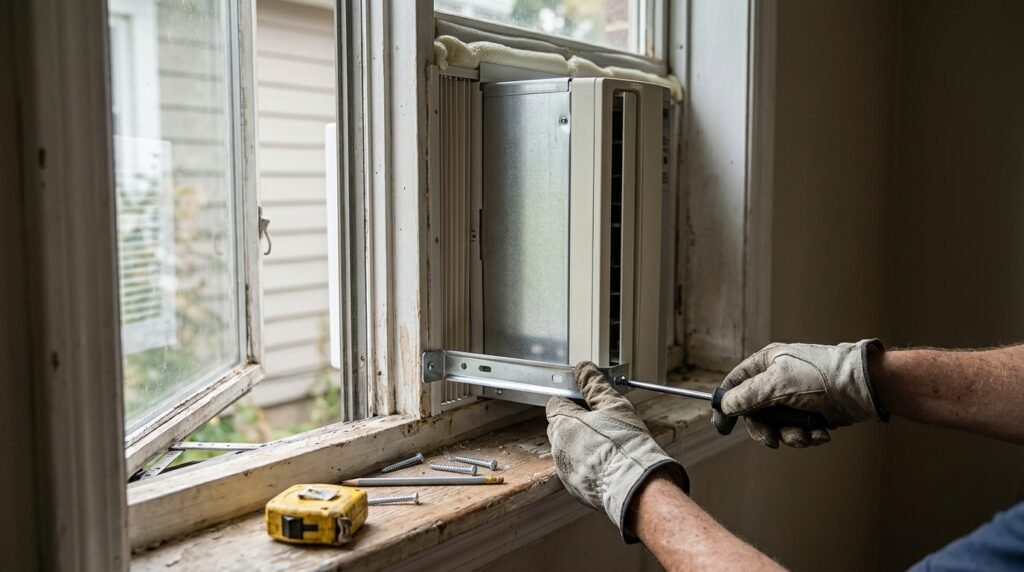
A typical installation starts by preparing the window and confirming that its frame is strong enough to support the appliance and mounting hardware. The unit is then positioned using the supplied support system or the method specified by its manufacturer. The remaining open area above the narrow air conditioner is closed with the supplied panel or another material allowed by the instructions. Weather seals help reduce air and water leakage around the installation. Some manufacturer instructions require additional framing in certain window constructions. Electrolux installation instructions for slider/casement air conditioners, for example, note that a wood-frame casement window may require a frame and that some masonry installations may need a wood stool strip for mounting. The same instructions warn that these units can be heavy and recommend help during installation. These details show why window AC casement installation should be treated as structural appliance installation rather than simply placing a machine on a windowsill.
Support and Stability Matter More Than Appearance
A clean-looking installation is not necessarily a safe one. Much of a window air conditioner’s weight extends outside the room, so the support system must prevent movement, tipping, and excessive stress on the window frame. Use the brackets, hardware, and fasteners required for the specific unit. Do not substitute random screws simply because they fit a hole. Electrolux’s slider/casement installation instructions specifically tell installers to use the specified screws and warn about the risk of the air conditioner falling during installation. Some models include a support bracket; others may use a different arrangement. The window itself also needs inspection. Loose trim, damaged wood, cracked frames, weak tracks, or deteriorated sills should be addressed before adding the appliance’s weight. A window AC casement installation on an upper floor deserves particular care because a mounting failure could create a serious hazard outside the building.
Seal the Open Space Without Blocking the Unit
A tall casement opening usually leaves unused space above the air conditioner. That opening needs to be closed without interfering with the appliance. Depending on the product, an installation kit may include a panel or frame system for this purpose. The goal is to reduce uncontrolled outdoor airflow, rain entry, insects, and unnecessary heat transfer while maintaining all clearances required by the unit. Avoid covering ventilation openings or wrapping the outdoor section in insulating material. The condenser side needs unrestricted airflow to reject heat outdoors. A poor seal around a window AC casement installation can also make the room feel less comfortable because warm, humid outdoor air can leak around the cabinet. Inspect corners, panel edges, and contact points after installation. Weather stripping may be useful where permitted, but it should not replace proper structural mounting. If a custom panel is necessary, choose a durable material suitable for the environment and install it so water cannot easily enter around its edges.
Drainage and Outdoor Positioning Need Care
Window air conditioners remove heat from indoor air and can also remove moisture during cooling. The unit must therefore sit in the position specified by its manufacturer so condensate behaves as intended. Do not invent a steep slope because older window AC advice says every unit must lean dramatically outdoors. Follow the model’s instructions instead. Keystone troubleshooting guidance states that water dripping indoors can be associated with improper installation and advises checking the installation instructions, including the specified outward positioning. Outdoor dripping, by contrast, can be normal during humid conditions because the system may be removing a large amount of moisture. The exterior portion should also have enough airflow around it. Do not place the condenser directly against an obstruction. If water begins entering the room after a previously dry window AC casement installation, inspect the unit’s position, drainage path, weather sealing, and window condition before assuming the air conditioner itself has failed.
Installation Tools and Materials Vary by Model
Common installation work may involve a tape measure, screwdrivers, level, drill, saw, knife, scissors, pencil, mounting hardware, seals, and panel materials. Electrolux’s slider/casement installation documentation lists tools including flat-head and Phillips screwdrivers, a carpenter’s level, saw, drill, tape measure, knife, scissors, and pencil. That does not mean every window AC casement installation requires every one of those tools. Some installations are relatively straightforward, while others need custom framing. The correct hardware also depends on whether the frame is wood, vinyl, aluminum, masonry, or another construction. Drilling into a window without understanding its structure can damage drainage channels, glass, weather barriers, or frame components. Before making permanent holes, read the entire installation procedure rather than working one step at a time without seeing what comes next. If the manufacturer’s method cannot be followed because of the window construction, professional installation may be the safer choice.
Common Window AC Casement Installation Mistakes
Several mistakes can turn an otherwise suitable air conditioner into a noisy, inefficient, or unsafe installation. The first is buying before measuring the actual opening. The second is treating a conventional window AC as interchangeable with a dedicated slider/casement unit. Another mistake is depending on the filler panel to support the appliance; the structural mounting system, not the decorative closure, should carry the required load. Poor sealing is also common and can allow outdoor air or rain around the unit. Incorrect positioning may contribute to indoor water leakage. A dirty filter can restrict airflow, while curtains, blinds, or furniture placed directly in front of the unit can interfere with air distribution. Keystone troubleshooting information identifies restricted filters, blocked airflow, open doors or windows, poor installation, and window vibration among possible causes of cooling or operating problems. Finally, never solve an electrical mismatch with an unapproved adapter, extension cord, or plug modification.
Noise and Vibration Are Often Installation Problems
Some sound is normal. Airflow, the compressor, fan, refrigerant movement, and condensate can all produce operating noises. Excessive rattling or vibration is different. A loose panel, weak window frame, poorly seated bracket, or incorrect installation can amplify normal mechanical vibration. Keystone documentation specifically notes that poor wall or window construction and incorrect installation can cause vibration and noise. If a newly installed window AC casement unit rattles, first check the installation against the manual. Make sure the mounting hardware is secure, the panel is not vibrating against the frame, and nearby blinds or objects are not touching the cabinet. Do not open or modify the refrigeration system to investigate normal sounds. If the noise suggests mechanical damage, or the unit changes suddenly from its usual operating sound, stop and consult the manufacturer’s troubleshooting information or an appropriate service professional.
Maintenance Helps Preserve Cooling Performance
Routine maintenance for a window AC casement system is usually simple, but it should follow the manufacturer’s instructions. The air filter is the main homeowner maintenance point on many models. Dust buildup restricts airflow and can reduce cooling performance. Some slider/casement units use washable filters and provide a filter reminder. Keystone, for example, lists a washable filter and check-filter indicator on its slider/casement models. Turn the appliance off as directed before maintenance, remove the filter according to the manual, clean or replace it as specified, and reinstall it correctly. Keep indoor intake and discharge areas clear. The outdoor coil also needs unrestricted airflow, but cleaning should never involve unsafe access from an upper-floor window. Inspect weather seals and the surrounding panel periodically because seasonal movement and weather exposure can create gaps. If the power cord, plug, cabinet, mounting hardware, or window structure becomes damaged, address the problem rather than continuing to operate the unit normally.
When a Casement Window AC Is a Good Choice
A window AC casement system makes sense when a room has a compatible casement or horizontal sliding window, a suitable electrical supply, enough structural support, and no practical central cooling option. It can also be useful when only one room needs cooling and permanent whole-house work would be unnecessary. Unlike a portable air conditioner, a window unit places much of its heat-rejection equipment outside the conditioned room. However, suitability depends heavily on the individual window. Renters may face restrictions on removing screens, drilling, adding brackets, or changing the appearance of the exterior. Condominium or apartment rules can also affect exterior installations. Historic or specialty windows may not be good candidates for modification. Before purchasing, check the physical opening, manufacturer requirements, property rules, and safe access to the exterior mounting area. The best product is not simply the one with enough BTUs; it is the one that can be installed correctly in the available window.
When Another Air Conditioner May Be Better
Not every casement window needs a casement AC. If the window is too narrow, the frame cannot support the required mounting system, exterior obstructions prevent adequate clearance, or building rules prohibit window units, another cooling method may be more practical. A portable air conditioner can avoid placing a heavy cabinet in the window, although it still requires an exhaust arrangement and occupies floor space. A ductless mini-split may provide a more permanent solution when installation is feasible, especially for rooms that need regular cooling. Through-the-wall units are another distinct category, but they should only be used in wall installations designed for them. Do not assume a window AC casement unit can automatically be installed through a wall. Cabinet ventilation and installation requirements differ between products. The correct choice depends on the room, window, building construction, cooling load, budget, ownership situation, and how permanent the solution should be.
What to Check Before Buying a Window AC Casement Unit
Start with the window rather than the product advertisement. Measure usable width and height and identify anything that reduces the opening. Then compare those numbers with the manufacturer’s installation specifications. Confirm that the model explicitly supports the type of window you have. Check the cooling capacity against the room’s needs and consider strong sunlight, unusual ceilings, connected spaces, and major heat sources. Review cabinet dimensions, product weight, mounting requirements, exterior clearances, panel system, electrical specifications, plug type, and cord location. Look at the installation manual before ordering whenever possible. This is especially useful because product listings can simplify compatibility into a phrase such as “casement window AC,” while the manual gives the actual dimensional and structural limits. Also check what installation hardware comes in the package. A unit that fits the opening but cannot be securely mounted is not a suitable choice.
Safety Considerations That Should Not Be Skipped
A window AC is a heavy electrical appliance positioned partly outside a building, so installation safety matters. Manufacturer instructions may recommend two people for lifting because some slider/casement units weigh dozens of pounds. Electrolux’s installation guidance warns that these appliances can weigh roughly 60 to 80 pounds and recommends assistance and proper lifting technique. It also instructs users to inspect whether the window can support the appliance and to follow applicable codes and ordinances. Sharp metal fins are another concern during handling. Electrical safety is equally important: use the required grounded supply and do not operate equipment with damaged cords or unsuitable receptacles. Upper-story installation adds another layer of risk because working near an open window and securing a heavy appliance can be dangerous. If the required mounting work cannot be completed safely from indoors, or the frame needs structural modification, hiring an experienced installer is a sensible choice.
How to Troubleshoot Weak Cooling
If a window AC casement unit runs but the room stays warm, start with simple causes. Check the temperature setting and operating mode. Inspect the filter and clean it according to the manual if it is dirty. Make sure curtains, furniture, or other objects are not blocking indoor airflow. Close unnecessary doors and windows so cooled air does not escape. Consider whether the room’s heat load has changed because of extreme outdoor temperatures, direct sunlight, additional occupants, cooking, or heat-producing equipment. Manufacturer troubleshooting information for slider/casement units identifies dirty filters, blocked airflow, open doors or windows, and very hot outdoor conditions as factors that can affect cooling. If the appliance was recently installed and has never cooled properly, revisit sizing and installation. Persistent icing, electrical problems, unusual noises, or loss of cooling despite normal airflow may require professional service rather than repeated adjustments.
FAQs
Can you put a window AC in a casement window?
Yes, but the safest approach is to use a model specifically approved for the window configuration. A window AC casement or slider/casement model has a narrow cabinet and installation system designed for taller openings. Always compare the exact window dimensions with the manufacturer’s requirements before purchasing.
Can a normal window air conditioner be installed sideways?
A standard window air conditioner should not simply be turned on its side to make it fit. Air conditioners are designed to operate in a particular orientation, and changing that orientation can interfere with components, condensate management, and operation. Use the appliance only in the orientation and installation configuration specified by its manufacturer.
Do casement window air conditioners need a support bracket?
Many installations use a support system, but the exact hardware depends on the model. Some products include mounting brackets or related installation hardware. Never assume a generic bracket is suitable. Check the package contents and installation manual for the specific unit before mounting it.
How do I fill the space above a casement window AC?
Purpose-built slider/casement units commonly use a panel or installation kit to close the remaining vertical opening. Some windows may need additional framing or a custom solution allowed by the manufacturer. The finished panel should be secure and weather-resistant without blocking required airflow or supporting weight it was not designed to carry.
Why is my casement window AC leaking water indoors?
Indoor leakage can result from installation or drainage problems, among other causes. Check that the appliance is mounted in the position required by its manual and inspect the surrounding seals and drainage path. Manufacturer troubleshooting guidance for slider/casement units identifies improper installation as one possible cause of indoor water dripping.
Are casement window air conditioners different from portable ACs?
Yes. A casement window unit sits in the window opening, with part of the appliance exposed outdoors. A portable AC normally sits inside the room and sends hot exhaust air outside through a hose and window kit. Their installation methods, space requirements, and operating arrangements are therefore different.
Conclusion
A window AC casement setup is a practical way to cool a room with a narrow casement or horizontal sliding window, but success depends on compatibility rather than improvisation. Measure the usable opening carefully, choose cooling capacity appropriate for the room, confirm the electrical requirements, and read the installation manual before buying. Use the specified support hardware, close the unused opening securely, maintain required outdoor airflow, and follow the manufacturer’s positioning and drainage instructions. A standard wide window unit should not be forced into a window it was not designed to fit. If the window structure, electrical supply, exterior access, or mounting method creates uncertainty, professional installation or another cooling system may be the better option. The right window AC casement unit should fit the opening securely, cool the room effectively, and remain serviceable without compromising the window or creating avoidable safety problems.