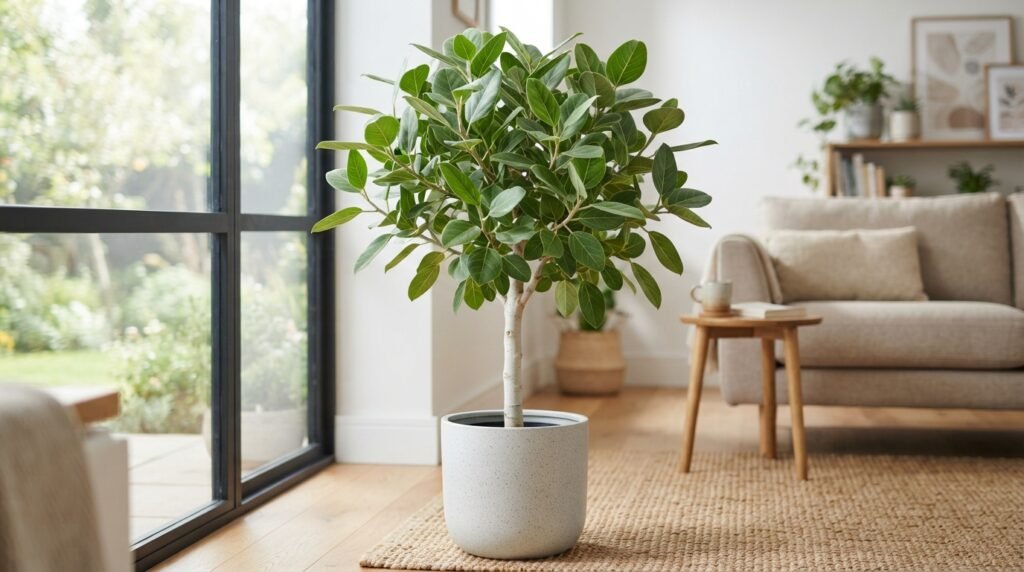
The Audrey ficus is a beautiful indoor tree with a clean and modern look. Its large leaves and pale trunk make it stand out in almost any room. Many plant lovers choose it because it feels elegant without looking too formal. It can brighten a living room, bedroom, office, or entryway with very little decoration around it. However, this plant still needs the right care to grow well. Light, watering, soil, humidity, temperature, and pot size can all affect its health. New leaves may appear slowly, especially after a change in location. Some leaves may also drop when the plant feels stressed. This does not always mean something is seriously wrong. Understanding the plant’s natural growth pattern makes care much easier. This complete guide explains how to grow a healthy tree, avoid common problems, choose the right location, and keep the foliage looking fresh throughout the year.
What Is an Audrey Ficus?
The Audrey ficus is a popular ornamental tree known for its attractive green leaves and light-colored trunk. Its botanical name is Ficus benghalensis, and it is related to other well-known ficus plants. In nature, this species can become a very large tree. Indoor plants remain much smaller because their roots and growing space are limited. The leaves usually have a rich green color with a soft, slightly textured appearance. Young plants often have a slim trunk, while older specimens can develop a thicker and more interesting base. One feature that makes this plant special is its pale trunk, which creates a strong contrast with the green foliage. This gives it a stylish appearance in modern interiors. The plant can also be trained to grow upright with careful pruning. With suitable conditions, it can become a long-term feature rather than a short-lived decorative plant.
Why Is the Audrey Ficus So Popular?
The Audrey ficus has become popular because it combines the appearance of a small indoor tree with relatively simple care needs. Its broad leaves provide a strong natural look without creating a messy appearance. The light trunk also works well with neutral furniture, wood floors, white walls, and modern decor. Many homeowners use one as a focal point in a large room. It can fill an empty corner without requiring several small plants. The upright growth habit also makes it useful when floor space is limited. Another benefit is its ability to develop a tree-like shape over time. With regular care, the plant can become more attractive as it matures. Its appearance can change as the trunk thickens and new branches develop. This makes it more interesting than many temporary decorative plants. Still, popularity should not be confused with zero maintenance. It needs consistent conditions to remain healthy.
How Much Light Does an Audrey Ficus Need?
Bright light is one of the most important parts of ficus care. The plant generally performs best when it receives plenty of bright, indirect light. A location near a bright window can work well. However, extremely strong direct sunlight through hot glass may damage leaves, especially when the plant has not been slowly introduced to stronger light. A window with filtered light can provide a good balance. If your room is dark, growth may become slower and the plant may produce fewer new leaves. You may also notice longer spaces between leaves as the plant searches for more light. Rotate the pot every few weeks so different sides receive similar exposure. This can help maintain balanced growth. If the plant sits beside a window, watch the leaves for signs of excessive heat or sun stress. Finding the right light level may require small adjustments. Observe the plant rather than changing its location repeatedly.
Where Should You Place It Indoors?
Choosing the right location can make plant care much easier. A bright living room is often a good choice because it usually receives more natural light. Large bedrooms, home offices, and open entry areas can also work well. Keep the plant away from cold drafts and strong heating vents. Sudden temperature changes can cause stress and leaf loss. You should also avoid placing it directly beside an air conditioner. A stable environment is usually better than a location with constantly changing conditions. Consider the mature size before choosing a permanent spot. A small plant may look perfect beside a chair today but could become crowded later. Give the branches enough room to spread naturally. Avoid pushing the pot into a narrow corner where leaves touch walls constantly. A little space around the plant improves airflow and makes watering easier. It also allows you to turn the pot without damaging the foliage.
How Often Should You Water It?
Watering should be based on the soil rather than a strict calendar. Indoor conditions can change throughout the year, so the plant may need water more often during active growth. Before watering, check the upper part of the soil with your finger. If the surface feels dry, inspect deeper into the pot before adding more water. The goal is to provide enough moisture without leaving the roots in constantly wet soil. Water slowly until excess moisture begins to leave the drainage holes. Then allow the pot to drain completely. Never leave the plant sitting in a tray filled with water for long periods. Constantly wet roots can create serious problems. On the other hand, allowing the soil to become completely dry for long periods can also cause stress. Leaves may become dry or drop. Learning how quickly your specific pot dries is more useful than following a fixed weekly schedule.
What Type of Soil Works Best?
Well-draining soil is important because ficus roots need both moisture and air. A heavy soil that stays wet for a long time can create poor root conditions. A quality indoor potting mix can work well when combined with materials that improve drainage. Some growers use mixes containing components such as perlite, bark, or other airy materials. The exact mixture depends on the growing environment and watering habits. A plant kept in a humid room may need a different mix from one growing in a dry home. The pot itself also matters. A container with drainage holes allows excess water to escape. Decorative pots without drainage should be used carefully. If you place the plant inside a cover pot, remove it when watering. This allows extra water to drain properly. Fresh soil can also help when repotting becomes necessary. Avoid packing the soil too tightly because compacted soil can restrict airflow around the roots.
Choosing the Right Pot
A suitable pot gives the roots enough room without creating a large area of wet soil. When a container is much larger than the root system, the soil may remain wet for too long. This can increase the risk of root problems. When the pot is extremely small, roots may become crowded and watering may become difficult. Look for a container that has drainage holes and provides reasonable space for root growth. Heavy pots can also be useful for taller plants because they provide better stability. A lightweight container may tip when the tree becomes top-heavy. When moving the plant into a larger pot, choose one only moderately bigger than the current container. Avoid making a huge jump in pot size. The new container should also match your interior style if the plant is displayed in a main living area. A simple ceramic, terracotta, or neutral planter can complement the pale trunk and green foliage.
When Should You Repot It?
Repotting is usually needed when the plant has outgrown its current container or the soil has become difficult to manage. Roots growing through drainage holes can be one sign. Water may also run through the pot very quickly when the root system has become crowded. Slow growth can have many causes, so it should not automatically mean repotting is needed. When you decide to repot, choose a container that is only somewhat larger. Gently remove the plant and inspect the root system. Healthy roots should generally appear firm rather than mushy. Avoid damaging the roots unnecessarily. Add fresh, well-draining soil around the root ball and keep the plant at a similar depth. After repotting, place it in a stable location with suitable light. Avoid making several major changes at the same time. A plant may need time to adjust after being moved into a new container.
How to Maintain Healthy Leaves
Healthy leaves usually come from consistent care rather than one special trick. Bright light, suitable watering, good drainage, and stable temperatures all contribute to strong foliage. Dust can also collect on broad leaves, especially in indoor rooms. A soft, damp cloth can gently remove surface dust. Clean leaves may also look brighter because their natural texture becomes easier to see. Be gentle when wiping because rough handling can damage leaf surfaces. Check the plant regularly for unusual spots, insects, or sudden changes in color. Early observation makes problems easier to manage. Avoid constantly moving the plant from one window to another. Ficus plants can respond poorly to frequent changes. Give the plant time to adjust to its location. New growth is often a good sign that conditions are suitable. Remember that older leaves naturally age and may eventually fall. Focus on the overall pattern rather than one imperfect leaf.
Fertilizing an Audrey Ficus

Fertilizer can support growth when the plant is actively producing new leaves. A balanced indoor plant fertilizer can provide nutrients that may be missing from older potting soil. Always follow the product instructions and avoid using more than recommended. Extra fertilizer does not automatically produce faster or healthier growth. Too much can damage roots and create nutrient problems. Plants growing in brighter conditions may have stronger growth and therefore different feeding needs. Plants kept in lower light may grow more slowly and require less fertilizer. Seasonal growth also matters. Many indoor plants slow down when light levels drop during colder months. Avoid treating fertilizer as a cure for poor light or improper watering. Those conditions should be corrected first. If the plant already looks stressed, review its environment before feeding it. Healthy roots and suitable light provide the foundation for growth. Fertilizer should simply support that foundation rather than replace good care.
Pruning and Shaping the Tree
Pruning can help control size and encourage a pleasing shape. It is especially useful when the plant starts becoming too tall or develops uneven branches. Before cutting, decide what shape you want to create. Clean pruning tools are important because dirty tools can spread unwanted problems between plants. Remove dead or damaged growth first. You can then consider cutting longer branches to encourage a more balanced structure. Avoid removing too much growth at one time. A large pruning session can create unnecessary stress. The best approach is often gradual shaping over time. If one side receives more light, the plant may naturally grow toward that direction. Regular rotation can help maintain more even growth. You can also prune branches that make the plant too wide for its space. Save major shaping for a period when the plant is actively growing. Always consider the plant’s overall health before making significant cuts.
Can It Grow Taller Indoors?
Yes, an indoor ficus can continue growing when conditions are suitable. Its growth speed depends on light, water, nutrition, temperature, root space, and overall plant health. Some plants grow steadily, while others take longer to produce noticeable height. Indoor growth is naturally more limited than growth in a suitable outdoor environment. A plant kept in a bright room may produce more new growth than one placed in a dark corner. Pruning can also change the way the plant develops. Instead of allowing unlimited height, many homeowners choose to create a fuller shape. This makes the plant easier to manage indoors. Consider the ceiling height before allowing the tree to grow upward for many years. A plant that looks small in a nursery can eventually become a significant piece of furniture-like greenery. Plan for its mature size when choosing the location. This prevents the need for major changes later.
How to Encourage Fuller Growth
A fuller plant usually needs good light and thoughtful pruning. If all new growth develops toward one window, the tree may become uneven. Rotating the container can help different sides receive light. Pruning selected branches can also encourage a more balanced shape. However, pruning alone cannot solve a major lack of light. If the plant is struggling in a dark location, move it toward a brighter area gradually. Give it time to adjust to the new conditions. Avoid making sudden changes from low light to very strong sunlight. This can cause leaf stress. New branches may appear slowly, so patience is important. Indoor trees are not always fast growers. Instead of expecting dramatic changes every week, watch for healthy new leaves over time. A fuller shape is usually created through a combination of suitable light, proper nutrition, adequate root space, and careful pruning. Consistency is more useful than constant intervention.
Common Audrey Ficus Problems
Several common problems can affect indoor ficus plants. Yellow leaves may appear because of watering issues, environmental stress, aging, or other causes. Brown edges can sometimes develop when conditions are too dry or the plant experiences inconsistent moisture. Sudden leaf drop may happen after a major change in location, light, temperature, or watering. It is important to look at the entire situation rather than treating one symptom alone. Check the soil before watering again. Inspect the leaves and stems for signs of pests. Look at the drainage and consider whether the plant receives enough light. Problems often become easier to understand when several clues are considered together. Avoid making many changes at once because this can create additional stress. Instead, identify the most likely environmental issue and correct it gradually. If symptoms continue or become severe, consider consulting a local nursery or qualified plant professional for a closer assessment.
Why Are Leaves Turning Yellow?
Yellow leaves can have several possible causes, so there is no single answer. Overwatering is one common concern with indoor plants. If soil stays wet for long periods, roots may struggle to function properly. Poor drainage can make this problem worse. However, yellowing can also happen when the plant is stressed by changes in light, temperature, or other growing conditions. Older leaves may naturally change color before falling. Look at how many leaves are affected and where they appear. A few older yellow leaves may not indicate a major problem. Widespread yellowing deserves closer attention. Check the soil moisture and inspect the drainage holes. Also consider whether the plant has recently been moved. Avoid immediately adding fertilizer when leaves turn yellow. More nutrients will not fix every cause of yellowing. Understanding the reason first gives you a much better chance of correcting the problem.
Why Is It Dropping Leaves?
Leaf drop can be alarming, especially when a healthy-looking plant suddenly loses several leaves. Ficus plants can react to environmental changes, including movement from one location to another. A change in light can also affect the plant. Temperature changes, drafts, watering problems, and root stress may contribute as well. The best response is to review recent changes. Did you move the plant? Did watering increase or decrease? Did the room become colder? Did it move closer to a heater or air conditioner? These questions can reveal useful clues. Avoid constantly relocating the plant in response to every fallen leaf. Frequent changes can create more stress. Instead, choose a suitable location and keep conditions stable. Check the roots and soil if leaf loss continues. If new growth remains healthy, the plant may simply be adjusting. Give it time and watch the overall pattern before making major changes.
Pests to Watch For
Indoor ficus plants can occasionally attract common houseplant pests. Small insects may hide under leaves, along stems, or around new growth. Regular inspection makes early detection easier. Look closely at both sides of the leaves when checking the plant. Sticky residue, tiny insects, unusual spots, or fine webbing can indicate a pest issue. If you find pests, isolate the affected plant from nearby houseplants. This helps reduce the chance of spreading the problem. Clean the leaves gently and use an appropriate treatment according to the pest and product instructions. Avoid applying random household chemicals to plant foliage. Some products can burn leaves or create additional damage. Repeated observation is important because eggs or hidden insects may remain after the first treatment. Good plant care also helps the tree handle stress. Healthy plants are not immune to pests, but consistent care makes problems easier to identify and manage.
Audrey Ficus and Humidity
Indoor humidity can affect how many tropical and subtropical plants perform. Homes can become especially dry during heating seasons. Dry air may contribute to brown leaf edges or general leaf stress in some plants. However, increasing humidity is not always the first solution. Good watering habits and suitable light remain more important. If your home is very dry, you can use a humidifier to raise moisture in the surrounding air. Place it safely away from electrical hazards and follow the manufacturer’s instructions. Grouping plants can also create a slightly more humid local environment. Avoid keeping leaves constantly wet because poor airflow and excessive moisture can create other problems. A humidity tray may provide limited local benefit but should not replace proper room conditions. Watch the plant and consider the entire environment. Humidity is one part of care, not a magic solution. Stable conditions usually produce better results than frequent environmental changes.
Temperature and Airflow Needs
A stable indoor temperature generally makes plant care easier. Avoid placing the plant next to doors that open frequently during very cold weather. Strong heating vents can also create dry, hot airflow. Air conditioners may create sudden cool drafts. These changes can stress the plant, especially when they happen repeatedly. Choose a location with comfortable indoor conditions and moderate airflow. Good air movement can help prevent stagnant moisture around leaves. However, strong fans blowing directly on the plant are usually unnecessary. Temperature stability is more important than chasing an exact number. Observe how the room behaves throughout the day. A sunny window may become very hot in the afternoon even when the room feels comfortable earlier. Seasonal changes can also affect watering needs. When temperatures and daylight change, adjust your care routine based on the plant’s response. Consistency helps reduce unnecessary stress and makes growth easier to monitor.
Styling an Audrey Ficus in Your Home
The tree-like shape makes this plant easy to use as a decorative feature. A tall plant can fill an empty corner beside a sofa or cabinet. It can also create a natural transition between different areas in an open room. Neutral planters often highlight the pale trunk and green leaves. You can choose a woven basket for a warmer look or a simple ceramic planter for a cleaner style. Make sure the decorative container does not block drainage. If it has no drainage hole, use it as an outer cover rather than the primary growing pot. Consider the plant’s mature size when decorating around it. Leave enough space for branches to spread. Avoid placing fragile objects directly beneath heavy leaves or branches. Good styling should also allow easy access for watering and pruning. A beautiful plant should remain practical to care for. When the pot, plant, furniture, and room colors work together, the tree can become a natural focal point.
How to Keep the Plant Looking Clean
Large leaves can collect dust over time. Dust may make the plant look dull and can cover the natural surface of the foliage. Gently wiping leaves with a soft, damp cloth can improve their appearance. Support the leaf while cleaning to avoid bending or tearing it. Avoid harsh household cleaners unless a product is specifically designed and safe for plants. Leaf-shine products are also not always necessary. Natural-looking foliage often looks better than heavily coated leaves. Remove dead leaves from the soil surface as well. Check around the base of the plant when watering. This gives you a chance to notice pests, mold, or unusual changes early. Clean the surrounding floor and planter occasionally because dust can collect there too. A simple maintenance routine can keep the entire display looking fresh. The goal is not perfection. A healthy plant will naturally have older leaves and minor marks. Focus on overall growth and strong new foliage.
Seasonal Care Tips
Plant care can change with the seasons because indoor light and temperature change. During brighter months, the plant may use water more quickly and produce more growth. Check the soil regularly rather than automatically increasing watering. During darker months, growth may slow and the soil may remain wet longer. This means watering may need to become less frequent. Fertilizer use may also need to change when growth slows. Watch the plant’s response instead of following the same routine all year. Window temperatures can also change dramatically with the seasons. A spot that is comfortable in spring may become very hot in summer. A location beside a window may become colder during winter nights. Seasonal observation is one of the easiest ways to improve indoor plant care. Keep notes if necessary. Recording watering dates, changes in location, and new growth can help you understand what works best for your particular plant.
Can Beginners Grow an Audrey Ficus?
Beginners can certainly grow this type of indoor tree when they understand its basic needs. The most important habits are providing suitable light, avoiding excessive watering, using well-draining soil, and keeping conditions stable. Beginners sometimes make plant care harder by doing too much. They move the plant frequently, water on a strict schedule, add fertilizer too often, or change the soil unnecessarily. A simpler approach usually works better. Observe the plant before taking action. Check the soil before watering. Look at the leaves regularly. Make one change at a time when something appears wrong. This creates a clearer connection between your care routine and the plant’s response. Patience also matters. Indoor trees may take time to settle after being brought home. Some leaf loss can happen during adjustment. Once the plant becomes comfortable, consistent care can support steady growth. With basic attention, even a new plant owner can enjoy a beautiful indoor tree.
Frequently Asked Questions
1. Is an Audrey ficus easy to care for?
The Audrey ficus can be manageable for beginners when its basic needs are met. Bright light, careful watering, good drainage, and stable conditions are the main priorities. The plant does not need constant attention. In fact, frequent changes can sometimes create more problems. Check the soil before watering and observe the leaves regularly. Give the plant enough space to grow and avoid placing it near strong drafts. Once you understand how quickly your specific pot dries, the routine becomes easier. Every home has different light and temperature conditions. Therefore, your care schedule may differ from another person’s schedule. Start with simple habits and adjust based on the plant’s response.
2. How much sunlight does an Audrey ficus need?
This plant generally prefers bright light, making a bright indoor location a good choice. Filtered light near a window can work well. Extremely strong direct sunlight can sometimes scorch leaves, especially when the plant has been kept in lower light. If you want to move it into stronger light, make the change gradually. Watch for changes in leaf color, texture, or damage. A dark location may result in slower growth and weaker development. Rotating the pot can also help the plant receive more balanced exposure. The best location is one that provides strong light without excessive heat or harsh exposure.
3. Why is my Audrey ficus losing leaves?
Leaf loss can happen for several reasons. Changes in location, light, temperature, watering, and root conditions can all create stress. Ficus plants may also drop leaves after being moved to a new home. Start by checking recent changes in the plant’s environment. Examine the soil and make sure excess water can drain properly. Check for pests and look at the leaves carefully. Avoid making several changes at once. Give the plant a stable location and suitable care. If new growth appears healthy, the plant may be adjusting. Persistent or severe leaf loss may require a closer inspection of the roots and growing conditions.
4. How often should I water an Audrey ficus?
There is no perfect weekly watering schedule for every plant. Water when the soil has dried sufficiently rather than watering automatically on a certain day. Indoor temperature, light, pot size, soil type, and season all affect drying speed. When watering, soak the soil thoroughly and allow excess water to drain. Do not leave the container sitting in standing water. If the soil stays wet for many days, review the pot and drainage. If it becomes completely dry for long periods, the plant may become stressed. Checking the soil regularly is the simplest way to learn your plant’s needs.
5. Can an Audrey ficus grow indoors for many years?
Yes, an indoor ficus can remain part of a home for many years when conditions are suitable. Its size can be managed through pruning and container choices. Growth speed depends on light, nutrition, watering, root health, and other environmental factors. As the plant becomes larger, you may need to adjust its location or pot. Think about its future size when choosing a spot. A mature indoor tree can become a significant visual feature. Regular pruning can help maintain a manageable shape. With patience and consistent care, the plant can develop a stronger trunk and fuller structure over time.
6. What is the best soil for an Audrey ficus?
A well-draining indoor potting mix is a good starting point. The soil should hold enough moisture for the roots while allowing excess water to escape. Materials such as perlite or bark can improve air space in some homemade mixes. The exact recipe depends on your indoor environment and watering habits. A container with drainage holes is equally important. Avoid using heavy soil that remains saturated for long periods. When repotting, choose fresh soil and a container that is only moderately larger. Good drainage protects the roots and makes watering easier. If you are unsure about mixing your own soil, a quality indoor plant mix can provide a simpler option.
Final Thoughts
Growing a beautiful indoor tree does not require a complicated routine. The key is understanding what the plant needs and keeping those conditions steady. Bright light, careful watering, good drainage, suitable soil, and regular observation can support healthy growth. The Audrey ficus can also become a striking part of your home decor because of its broad leaves and attractive trunk. Give it enough room, choose a suitable pot, and avoid making sudden environmental changes. When problems appear, look at the complete growing environment instead of focusing on one symptom. Plant care becomes much easier when you learn to observe before acting. With patience, your tree can gradually develop a fuller shape and stronger presence. Whether you are buying your first indoor tree or adding another plant to your collection, thoughtful care can make a major difference. Give your plant time to settle, learn its routine, and enjoy watching it grow into a beautiful feature of your home.