A strong roof protects far more than a building. It protects people, equipment, inventory, documents, electrical systems, and daily business operations. However, even a well-built commercial roof will not last forever. Years of sunlight, rain, wind, temperature changes, foot traffic, and standing water can slowly damage roofing materials. Small repairs may solve early problems. Eventually, repeated repairs can become expensive and unreliable. That is when commercial roof replacement may become the better long-term choice. Replacing a large roof can feel complicated because many decisions are involved. You need to consider materials, drainage, insulation, contractors, warranties, building codes, schedules, and business disruption. Cost is important, but the cheapest proposal is not always the best value. A successful project starts with an accurate roof assessment and a clear plan. This guide explains the major signs of roof failure, replacement options, costs, materials, project stages, and practical ways to protect your investment.
What Is Commercial Roof Replacement?
Commercial roof replacement is the process of removing or covering an aging roofing system and installing a new system designed for the building. The exact work depends on roof condition, construction, local codes, and the chosen material. Some projects require complete removal down to the structural roof deck. Others may allow a new roofing system over an existing roof when conditions and building codes permit it. Commercial buildings often use low-slope or flat roofing systems. These roofs are very different from the steep asphalt-shingle roofs common on houses. They may contain membranes, insulation boards, vapor-control layers, flashing, drainage components, and protective coatings. Roof-mounted equipment can make the project more complex. A proper replacement therefore involves more than installing a visible surface. Contractors must evaluate the complete roof assembly. Drainage, insulation, penetrations, edges, structural conditions, and rooftop equipment all influence the final design and installation method.
How Commercial Roofing Differs From Residential Roofing
Commercial roofs are often larger, flatter, and more complicated than residential roofs. A warehouse may have thousands of square feet of low-slope roofing. Office buildings can have HVAC equipment, vents, drains, skylights, pipes, solar equipment, and access points across the roof. Every penetration requires careful waterproofing. Drainage is another major difference. A steep residential roof naturally sheds water toward gutters. Low-slope commercial roofs rely heavily on drains, scuppers, gutters, and carefully designed slopes. Water that cannot leave the roof can create serious problems. Commercial systems also use specialized materials such as TPO, PVC, EPDM, modified bitumen, and built-up roofing. Installation methods may involve heat welding, adhesives, mechanical fasteners, asphalt, or other approved systems. These differences make contractor experience important. A company skilled in residential shingles is not automatically qualified to design or install a large commercial roofing system.
Signs You May Need a Commercial Roof Replacement
A leaking roof does not always require replacement. One isolated leak around a damaged flashing may be repairable. However, widespread or repeated problems deserve closer attention. Warning signs include recurring leaks, large areas of damaged membrane, open seams, cracks, bubbles, deteriorated flashing, wet insulation, and persistent standing water. Interior ceiling stains can also signal moisture entry. Rising repair costs are another important clue. If contractors repeatedly fix different areas but new leaks keep appearing, the system may be reaching the end of its practical service life. Roof age should also be considered, although age alone does not determine condition. Installation quality, maintenance, weather, material, and rooftop traffic all affect lifespan. A professional inspection can identify whether damage is local or widespread. The decision should be based on the entire roof system rather than one visible symptom. Documentation from previous repairs can make that assessment much more useful.
When Repairs Are No Longer Enough
Repair is often the sensible choice when damage is limited and the rest of the roof remains healthy. Problems begin when repairs become a routine operating expense rather than an occasional maintenance task. Imagine paying for leak repairs every few months. Each visit solves one problem, but another appears somewhere else. The direct repair bills are only part of the cost. Leaks can interrupt employees, damage inventory, create slip hazards, and affect tenants or customers. Moisture trapped beneath the membrane can also spread beyond the visible leak location. At this stage, commercial roof replacement may provide better value than continuing to patch an exhausted system. A roofing professional should examine moisture levels, insulation, seams, flashing, roof edges, drainage, and the deck. Ask for a clear explanation of which areas remain serviceable and which have failed. A good recommendation should be supported by observed conditions, not simply the desire to sell a larger project.
How Long Does a Commercial Roof Last?
There is no single lifespan for every commercial roof. Service life depends on material, installation quality, climate, drainage, maintenance, roof traffic, and exposure. A roof that receives regular inspections may last longer than a neglected system with blocked drains and ignored punctures. Membrane roofs can provide many years of service when correctly installed and maintained. Metal systems may also have long service lives when corrosion and seams are properly managed. However, published lifespan ranges should be treated as estimates rather than guarantees. A twenty-year-old roof can sometimes remain serviceable, while a much younger roof may fail because of poor installation or severe damage. Keep records of installation dates, repairs, warranties, inspections, and storm events. These documents help owners understand the roof’s history. Condition is more important than age alone. An experienced commercial roofer can help estimate remaining service life after a detailed inspection.
Planning a Commercial Roof Replacement
Good planning can reduce cost, confusion, and business disruption. Start with a professional roof assessment. The inspection should identify the existing roof type, moisture problems, drainage, penetrations, insulation condition, and visible deck concerns. Building owners should also gather old drawings, warranties, repair records, and previous inspection reports when available. Next, define project priorities. Some owners want the lowest initial cost. Others value energy performance, long service life, low maintenance, or strong warranty coverage. The building’s future also matters. A property expected to remain in the portfolio for decades may justify a different system than a building scheduled for redevelopment. Discuss daily operations with the contractor before work starts. Delivery routes, employee parking, tenant entrances, noise-sensitive areas, and working hours may affect scheduling. The best commercial roof replacement plan treats the building as an active business property, not simply a surface that needs new material.
Commercial Roof Inspection Before Replacement

A detailed inspection is one of the most important parts of the project. Contractors should evaluate more than the top surface. They may examine seams, flashing, drains, curbs, penetrations, edge details, previous patches, insulation, and visible deck conditions. Moisture surveys or other diagnostic methods may be useful on some buildings. These tools can help locate wet areas beneath the visible membrane. Interior inspection is also valuable because stains, corrosion, damaged ceiling materials, and moisture patterns can provide additional clues. Ask the contractor to document important findings with photographs and written notes. This information makes competing proposals easier to compare. It can also help explain why certain sections require removal or repair. If the inspection reveals structural concerns, a qualified engineer or other appropriate professional may need to become involved. Accurate information before construction reduces the chance of expensive surprises after the old roofing system has been opened.
Repair, Recover, or Full Replacement?
Commercial building owners may have more than one option. Repair targets specific damaged areas while leaving most of the existing roof in place. Recovering involves installing a compatible new roofing system over an existing system when conditions and codes allow. Full replacement usually involves removing existing roofing layers and addressing the assembly below before installing the new roof. Each approach has advantages and limits. A recover can reduce tear-off labor and waste, but it should not hide widespread wet insulation or damaged decking. Full removal provides greater access to hidden conditions but often costs more and creates more debris. Building codes may limit how many roof layers can remain. Warranty requirements can also influence the decision. Do not choose an option based only on the lowest proposal. Ask why the contractor recommends that method, what existing materials will remain, and how moisture or damaged components will be handled.
Common Commercial Roofing Materials
Material selection has a major effect on performance, installation, maintenance, and cost. Common systems include TPO, PVC, EPDM, modified bitumen, built-up roofing, and metal roofing. Each material has strengths and limitations. A warehouse in a hot climate may have different needs from a restaurant with rooftop exhaust equipment. A building exposed to heavy foot traffic may also require extra protection. Roof slope, drainage, structural capacity, local weather, energy goals, and existing roof construction all influence the choice. Do not assume one material is universally superior. The quality of design and installation can be just as important as the membrane brand. Compatibility also matters. Adhesives, insulation, fasteners, flashing materials, and accessories must work together as a complete approved system. When comparing proposals, ask contractors to specify the exact assembly rather than listing only the top membrane. A roof is a system, not a single sheet of material.
TPO Roofing Systems
Thermoplastic polyolefin, commonly called TPO, is widely used on low-slope commercial roofs. It is usually installed as a single-ply membrane. Seams are commonly heat-welded, creating a continuous waterproof surface when installation is performed correctly. Light-colored TPO membranes can reflect a significant amount of sunlight, which may support energy goals in certain climates and buildings. However, energy performance depends on the entire building, not only roof color. TPO systems can be mechanically attached, adhered, or installed using other approved methods depending on the roof design. Proper seam welding, flashing, edge details, and penetration work are essential. Material thickness and warranty options can vary. Owners should compare the complete specifications rather than assuming all TPO roofs are identical. Contractor experience with the selected manufacturer is also important. A strong membrane can still perform poorly when details are rushed or installed incorrectly.
PVC Roofing Systems
PVC is another single-ply roofing membrane commonly used on commercial buildings. Like TPO, PVC seams are generally heat-welded. PVC can be useful where resistance to certain chemicals, oils, or grease is important, although compatibility should always be verified for the specific building. Restaurants and facilities with rooftop exhaust systems may consider PVC for this reason. White and light-colored membranes can also provide reflective properties. The final design must account for insulation, fastening or adhesion, flashing, drains, rooftop equipment, and perimeter conditions. PVC may have a higher initial cost than some alternatives, depending on project specifications and local market conditions. Cost should be compared with expected performance and building needs. During a commercial roof replacement, owners should ask whether the proposed membrane suits the actual rooftop environment rather than selecting a system simply because it is popular on other commercial properties.
EPDM Roofing Systems
EPDM is a synthetic rubber roofing membrane with a long history of commercial use. It is often recognized by its dark surface, although other options may exist depending on the system. EPDM is flexible and can perform well across changing temperatures when properly designed and installed. Unlike thermoplastic membranes that commonly use heat-welded seams, EPDM systems rely on compatible seam tapes, adhesives, and flashing methods. Installation quality at seams and penetrations remains critical. Dark roofing can absorb more solar heat than highly reflective membranes, which may be useful or undesirable depending on climate and building design. Owners should evaluate the complete energy picture rather than focusing on membrane color alone. EPDM can be installed using different attachment methods, and membrane thicknesses vary. As with any commercial system, maintenance and regular inspections remain important after installation. No membrane becomes maintenance-free simply because it has a strong performance history.
Modified Bitumen Roofing
Modified bitumen combines asphalt-based roofing with reinforcing materials and polymer modification. It is often installed in sheets and may be used as part of multi-layer commercial roofing systems. Depending on the product, installation can involve adhesives, self-adhered materials, hot asphalt, or heat-based methods. Some installation methods create greater safety and operational concerns than others, so building owners should understand exactly how the proposed system will be applied. Modified bitumen can provide a durable surface and may work well in areas where rooftop traffic is expected. Surface finishes vary, including mineral surfaces and reflective coatings. Flashing details, seams, drainage, and substrate preparation remain important. The existing building and roof configuration will determine whether this material is suitable. Contractors should follow manufacturer requirements closely. Owners should also discuss future maintenance because repairs must use materials and techniques compatible with the installed system.
Built-Up Roofing
Built-up roofing, often shortened to BUR, has been used on commercial buildings for many decades. These systems generally consist of multiple layers of roofing felt or reinforcing material combined with bitumen. A protective surface may be added on top. The layered design can provide durability and redundancy. However, installation can involve significant labor and may create odors or operational concerns depending on the materials and methods used. The weight of the system also needs consideration. Building structure, existing roof layers, and local requirements can influence whether BUR is appropriate. Modern commercial projects have many alternatives, but built-up roofing remains relevant for certain properties. If your existing building has a BUR system, replacement planning should include careful investigation of moisture and the roof deck. Removing several old layers can produce a large amount of debris. Accurate planning for tear-off, disposal, and site access becomes especially important.
Metal Commercial Roofing
Metal roofing can provide long service when properly designed, installed, and maintained. Commercial metal roofs may use standing-seam panels or other systems depending on the building. Metal is common on warehouses, industrial facilities, agricultural buildings, and other structures. It sheds water efficiently when the roof slope and details are appropriate. However, metal roofing has its own maintenance concerns. Fasteners, seams, penetrations, coatings, corrosion, and thermal movement require attention. Metal expands and contracts as temperatures change, so the system must accommodate movement without opening leak paths. Some older metal roofs can be restored with coatings or other systems rather than fully replaced, but condition must be assessed carefully. A new metal roof can involve a significant initial investment. Owners should compare expected service life, maintenance needs, insulation strategy, and building use when evaluating it against membrane alternatives.
Insulation and Commercial Roof Replacement
Insulation is an important part of many commercial roof assemblies. It affects energy performance, condensation control, roof slope, and sometimes the way the membrane is supported. During replacement, existing insulation should be evaluated for moisture and physical damage. Wet insulation can lose performance and may contribute to continuing problems. Simply installing a new membrane over saturated materials can trap moisture inside the roof system. Depending on the project, contractors may replace all insulation or only damaged areas. New tapered insulation can also help direct water toward drains on low-slope roofs. Energy codes may require specific insulation values when significant roofing work is performed. Requirements vary by location and building type. This is why the roofing contractor, designer, and building professionals must understand applicable codes. Improving insulation during commercial roof replacement can sometimes provide long-term operational benefits, but the design should be based on building needs rather than assumptions.
Drainage Is Critical on Commercial Roofs
Water must have a reliable path off the roof. Low-slope commercial roofs often use internal drains, scuppers, gutters, or combinations of these systems. Blocked or poorly placed drains can lead to ponding water. Long-term standing water increases stress on roofing materials and can reveal weak points in seams or flashing. It also adds weight to the roof. Before installing a new system, contractors should evaluate existing drainage and identify areas where water regularly collects. Tapered insulation or other design changes may improve slope toward drainage points. Drains should be properly connected and flashed into the roofing system. After installation, regular maintenance remains necessary. Leaves, trash, and other debris can block drainage even on a perfectly installed roof. Building managers should include roof drains in routine inspection schedules, especially before and after seasons known for heavy rain or falling leaves.
What Does Commercial Roof Replacement Cost?
There is no reliable single price that applies to every project. Cost depends on roof size, material, tear-off requirements, insulation, deck repairs, building height, access, labor rates, permits, drainage, penetrations, and warranty specifications. A roof crowded with HVAC units and pipes usually requires more detail work than an open warehouse roof. Removing several existing layers also increases labor and disposal costs. Wet insulation or damaged decking discovered during tear-off can create additional expenses. Material prices and labor rates vary by location and over time. For these reasons, online cost-per-square-foot estimates should only be treated as rough planning tools. Obtain detailed proposals from qualified commercial roofing contractors who have inspected the building. Compare what each proposal includes. A low number may exclude insulation replacement, deck repairs, permits, disposal, or important warranty requirements. Total project scope matters more than one headline price.
Factors That Affect Replacement Cost
Several details can change the final cost of commercial roof replacement. Roof area is an obvious factor, but size alone does not determine price. Building height can require special lifting equipment and additional safety measures. Limited access may slow material delivery and debris removal. Complex roof shapes require more labor. Numerous penetrations increase flashing work. The condition of the existing roof matters because wet insulation and damaged decking may need replacement. The selected membrane, thickness, insulation type, fastening system, and warranty also affect price. Local building codes may require upgrades that were not part of the original roof. Working around occupied spaces can increase scheduling complexity. If crews must work only during certain hours, labor efficiency may change. Weather can also affect project duration. The most useful estimate is therefore based on a site inspection and detailed scope, not a generic online calculator.
How to Budget for Unexpected Roof Damage
Even a thorough inspection cannot reveal every hidden condition before tear-off begins. Moisture may have damaged insulation or decking in places that looked normal from above. A responsible project budget should therefore include a reasonable contingency for unforeseen work. Ask bidders how they price additional deck replacement, wet insulation removal, or other hidden conditions. Unit pricing can make these costs easier to understand before work begins. Also establish who has authority to approve changes. On a large property, unclear approval processes can delay construction while the roof remains open. Require documentation of hidden damage, ideally with photographs and measurements. This protects both the owner and contractor. Avoid automatically rejecting every change order as an attempt to increase cost. Some hidden conditions are real and must be corrected. At the same time, clear documentation prevents vague additions from appearing on the final invoice.
Choosing a Commercial Roofing Contractor
Contractor selection can have as much impact on performance as material selection. Look for companies with documented experience on commercial buildings and the roofing system you are considering. Verify licensing requirements in your area, insurance, safety practices, and manufacturer relationships where relevant. Ask for references from similar projects. A contractor who mainly installs residential shingles may not have the equipment or training required for large low-slope systems. Review proposals carefully. They should explain tear-off, insulation, membrane specifications, flashing, drainage, disposal, warranties, and any exclusions. Ask who will supervise the project and how communication will work. The lowest bid should not automatically win. An incomplete proposal can become more expensive after change orders. A strong contractor should be willing to explain technical details in plain language and show why the recommended system fits your particular building.
Questions to Ask Before Hiring a Contractor
Ask how long the company has worked on commercial roofs and whether it has installed your proposed system before. Find out who performs the actual work. Some companies rely heavily on subcontractors, which is not automatically a problem, but responsibilities should be clear. Ask for proof of appropriate insurance and required licensing. Discuss manufacturer certification when it affects warranty eligibility. Ask how the contractor will protect entrances, vehicles, landscaping, equipment, and building occupants. Find out how unexpected deck damage will be documented and priced. Request information about cleanup, disposal, daily site security, and weather protection. Also ask who will perform the final inspection. A professional commercial roof replacement proposal should explain more than membrane type and total price. The details surrounding installation often determine whether the project runs smoothly and whether the finished roof performs as expected.
The Commercial Roof Replacement Process
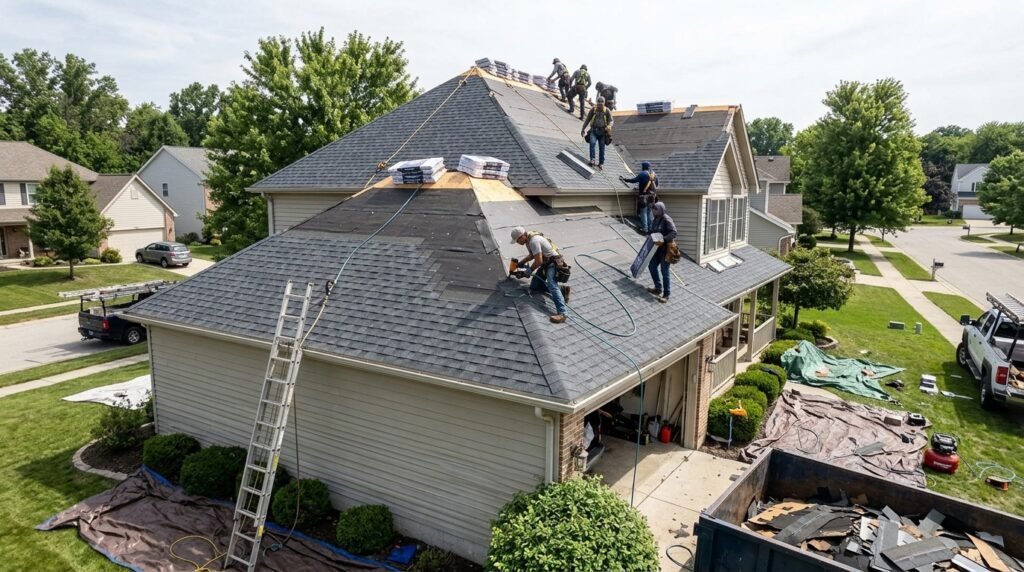
The project usually begins with planning, permits where required, material ordering, and site preparation. Contractors establish safe work zones and coordinate access before tear-off begins. Existing roofing is then removed in controlled sections when full replacement is required. Crews inspect the exposed insulation and deck and repair damaged areas. New insulation or cover boards may be installed according to the design. The roofing membrane or other primary system follows. Contractors then complete seams, flashings, roof edges, drains, curbs, and penetrations. Quality-control inspections may occur throughout the project rather than only at the end. The roof should remain protected from unexpected weather during construction. Once installation is complete, crews remove debris and perform final checks. Manufacturer inspection may be required for certain warranties. Building owners should receive warranty documents, final specifications, maintenance instructions, and updated roof records for future management.
Protecting the Building During Tear-Off
Removing an existing roof temporarily increases the building’s exposure to weather. Experienced contractors therefore limit how much roofing they remove at one time. They should monitor weather forecasts and maintain temporary waterproofing procedures. Materials and debris must also be controlled so they do not damage vehicles, landscaping, or nearby properties. Interior operations may require special protection. Dust or vibration can affect sensitive equipment, manufacturing processes, healthcare spaces, or food operations. Discuss these concerns before work begins. Rooftop HVAC units may need coordination to prevent debris from entering air intakes. Building entrances should remain safe for employees and customers. Emergency plans are also useful if unexpected rain develops. The exact protective measures depend on the property, but the goal is simple: replace the roof without creating unnecessary damage or safety risks elsewhere on the site.
How Long Does Roof Replacement Take?
Project duration depends on size, complexity, material, crew size, weather, access, and the amount of hidden damage. A simple open warehouse roof may progress faster than a smaller roof filled with mechanical equipment and complex flashing. Tear-off requirements also affect timing. Removing several roofing layers takes longer than installing an approved recover system. Wet insulation and deck repairs can extend the schedule. Rain, strong winds, extreme temperatures, and other unsafe conditions may stop work temporarily. Ask the contractor for an estimated schedule, but understand that roofing work is weather-sensitive. More important than the shortest schedule is a realistic plan for protecting the building throughout construction. Rushing seams or flashing simply to meet an aggressive deadline can create long-term problems. Good project management balances speed with quality, safety, and weather protection.
Reducing Disruption to Business Operations
A well-planned commercial roof replacement should consider the people using the building. Roofing can create noise, vibration, odors, dust, blocked parking areas, and changes to normal entrances. Some work may need to happen outside peak business hours. Discuss sensitive areas before the project begins. A medical office, school, restaurant, warehouse, and manufacturing plant will each have different concerns. Contractors should coordinate material deliveries so trucks do not block essential routes. Clearly marked work zones can protect customers and employees. Building managers should also communicate schedules to tenants and staff. Let people know when particularly noisy work is expected. If rooftop equipment must be temporarily shut down, plan around operational needs. Clear communication prevents small inconveniences from becoming major conflicts. A roofing project is easier when everyone understands what will happen, where work will occur, and who to contact with concerns.
Commercial Roofing Warranties
Roof warranties can be valuable, but they must be read carefully. There may be separate warranties for materials, contractor workmanship, or manufacturer-backed systems. Coverage length alone does not tell the whole story. Understand what is included, what is excluded, and what maintenance is required to keep coverage valid. Some warranties require installation by approved contractors and inspection by the manufacturer. Others may limit coverage for ponding water, certain chemicals, unauthorized repairs, or damage caused by storms and third parties. Ask who should be contacted when a leak appears. Also find out whether routine inspections must be documented. Keep all warranty paperwork in an accessible property file. Future building managers may otherwise have no idea what coverage exists. A warranty should support a properly designed and installed roof. It should never be used as a substitute for careful contractor selection and ongoing maintenance.
Maintenance After Roof Replacement
A new roof still requires attention. Regular inspections can catch small problems before they become expensive. Many building owners schedule professional inspections at least once or twice a year, depending on the system and warranty requirements. Additional checks are useful after severe storms or rooftop construction. Keep drains and gutters clear. Remove debris that can trap moisture or block water flow. Control access to the roof so untrained workers do not puncture the membrane. HVAC technicians, electricians, and other trades should use designated walkways when available. Document any new penetrations and make sure they are flashed by qualified roofing professionals. Keep records of inspections, repairs, photographs, and warranty work. Preventive maintenance may seem like another operating expense, but it can protect a much larger roofing investment. Small seam or flashing issues are usually easier to correct before water reaches insulation and decking.
How to Extend the Life of a Commercial Roof
Start with regular inspections and quick repairs. Water intrusion rarely improves on its own. A small opening can allow moisture to spread beneath the visible membrane. Keep drainage systems clear and watch for standing water after storms. Limit unnecessary rooftop traffic. When workers must access mechanical equipment, provide protected routes where appropriate. Avoid allowing other trades to cut or modify roofing without coordination. Keep trees and loose debris away from roof surfaces when possible. Monitor roof edges and flashing because high winds place significant stress on these areas. Maintain coatings or other protective finishes according to system requirements. Most importantly, keep records. Photos taken during annual inspections can show gradual changes that are easy to miss from memory. Proper maintenance after commercial roof replacement protects both the roof itself and the money invested in the project.
Energy Efficiency and Commercial Roofing
Roofing can influence building energy use, but the effect depends on climate, insulation, roof color, HVAC performance, and building design. Reflective membranes may reduce solar heat gain under certain conditions. Insulation can slow heat transfer through the roof assembly. Air sealing and moisture control also matter. Do not choose a roofing system based on one energy claim without considering the complete building. In some locations, energy codes require insulation upgrades during major roof work. Utility incentives may also be available for certain improvements, depending on location and program availability. A building energy professional can help evaluate larger projects. Owners should compare upfront cost with expected operating savings and service life. Energy improvements make the most sense when they also support roof performance, code compliance, and building comfort. Roofing decisions should be based on realistic building data rather than marketing claims alone.
Roof Replacement and Building Codes
Building codes can affect insulation, fire performance, wind resistance, drainage, roof coverings, and the number of existing layers that may remain. Requirements vary by location and building type. A roof that met code decades ago may require upgrades during major replacement work. Permits and inspections may also be required. Do not assume the contractor will automatically handle every responsibility without discussing it. The proposal should state who obtains permits and coordinates required inspections. Special buildings may involve additional rules. Structural changes or major drainage modifications may require design input from engineers or other licensed professionals. Code compliance is one reason generic online roofing advice cannot replace a project-specific evaluation. A qualified local contractor should understand current requirements for the area. Building owners should also keep final permit and inspection records with other roof documents for future reference.
Safety During Commercial Roofing Projects
Roofing work involves serious hazards, including falls, hot materials, equipment, sharp objects, and changing weather. Safety planning should be part of contractor selection. Professional crews use appropriate fall protection, access systems, personal protective equipment, and site controls. Building occupants also need protection. Work zones should prevent employees or visitors from walking beneath hazardous areas. Materials must be stored securely, especially during high winds. Ladders and roof access points should be controlled. Fire safety may require special procedures when certain installation methods are used. Building owners should not direct untrained employees onto an active roof to inspect progress. Instead, coordinate inspections with the project manager. Safety requirements vary by project and jurisdiction, so contractors must follow applicable rules. A lower bid is not a bargain if the company cuts corners on worker or public safety.
Common Commercial Roof Replacement Mistakes
Choosing a contractor based only on price is one of the biggest mistakes. Another is failing to compare the actual scope behind each bid. Two proposals can have similar membrane names while including completely different insulation, flashing, warranty, and tear-off work. Ignoring drainage problems is another costly error. A new membrane will not perform at its best if water still has nowhere to go. Covering wet insulation without proper investigation can also trap existing problems. Owners sometimes forget to coordinate rooftop HVAC, solar, or electrical work before roofing begins. Later trades may then cut into a brand-new roof. Poor documentation creates future problems as well. Keep photographs, specifications, warranties, permits, and inspection reports. Finally, do not ignore maintenance after installation. Commercial roof replacement is a major investment, and protecting it requires ongoing attention rather than assuming the new system can be forgotten for decades.
How to Compare Commercial Roofing Quotes
Start by placing proposals side by side and checking the scope. Compare roof area, tear-off requirements, membrane type and thickness, insulation, cover boards, fastening methods, flashing, drainage work, edge details, and warranties. Check whether disposal, permits, taxes, lifting equipment, and cleanup are included. Look closely at exclusions. One contractor may include deck repairs while another lists them as additional work. Ask for unit prices for hidden damage where possible. Also compare contractor qualifications, not just material specifications. Find out whether manufacturer inspections are included and what documentation you receive at completion. If one proposal is dramatically cheaper, ask why. There may be a reasonable explanation, but important work may also be missing. The best bid is the one that provides appropriate value, clear scope, qualified installation, and realistic protection for the building.
When Is the Best Time to Replace a Commercial Roof?
Roofing contractors generally prefer periods with stable, suitable weather, but the ideal season varies by climate and roofing system. Temperature can affect adhesives, welding, coatings, and other materials. Rain and strong wind can interrupt work. Scheduling during a business’s slower season may reduce operational disruption. However, do not postpone a failing roof for months simply to reach a preferred season if active leaks are damaging the building. Emergency conditions may require temporary repairs followed by planned replacement as soon as weather permits. Contractor availability can also influence timing. Popular companies may book major projects months ahead. Begin inspections and budgeting before the roof reaches a crisis. Early planning gives you more time to compare systems, contractors, warranties, and financing. It also reduces the chance of making an expensive decision under pressure after a major leak.
Creating a Long-Term Roofing Plan
Commercial property owners can benefit from treating the roof as a managed asset. Keep a file containing installation records, repair history, inspection reports, photographs, warranties, and contractor contact details. Schedule routine inspections and budget for maintenance each year. Track recurring problem areas. If one drain, seam, or rooftop unit causes repeated leaks, investigate the underlying cause rather than repeatedly patching symptoms. Estimate the roof’s remaining service life and begin financial planning several years before expected replacement. This prevents a large project from becoming a sudden emergency expense. Multi-building owners can rank properties by roof condition and plan capital spending across several years. A long-term approach also helps when selling or leasing a property because accurate roof records demonstrate responsible maintenance. Planning cannot prevent every storm or unexpected failure, but it makes expensive roofing decisions far easier to manage.
Frequently Asked Questions
1. How do I know if my commercial roof needs replacement?
Repeated leaks, widespread membrane damage, wet insulation, failing seams, damaged flashing, and increasing repair costs can all indicate serious deterioration. Age is another factor, but condition matters more. A professional inspection can determine whether repairs remain practical or whether replacement offers better long-term value.
2. How much does a commercial roof replacement cost?
Cost varies widely based on roof size, material, insulation, tear-off, building height, access, drainage, labor, permits, and hidden damage. Generic square-foot prices cannot accurately represent every building. Obtain detailed site-specific proposals from qualified commercial roofing contractors and compare the complete scope rather than only total price.
3. Can a new commercial roof be installed over an old roof?
Sometimes. A recover system may be possible when the existing roof and insulation are suitable and local codes allow another layer. However, covering widespread wet insulation or serious deck damage is generally not appropriate. A professional assessment should determine whether recovery or full tear-off makes sense.
4. What is the best material for a commercial roof?
There is no single best material for every building. TPO, PVC, EPDM, modified bitumen, built-up roofing, and metal systems each have advantages. Climate, building use, drainage, rooftop traffic, chemical exposure, budget, and expected service life should guide material selection.
5. How long does commercial roof replacement take?
Project duration depends on roof size, complexity, weather, material, crew size, access, tear-off requirements, and hidden damage. A simple roof can progress much faster than a roof with many penetrations and repairs. Ask your contractor for a realistic schedule and weather-protection plan before work starts.
6. Can a business stay open during roof replacement?
Many businesses remain open during roofing projects. However, noise, vibration, odors, deliveries, parking restrictions, and rooftop equipment work may affect operations. Careful planning between the contractor and building management can reduce disruption. Sensitive businesses may schedule certain work outside normal operating hours.
Conclusion
A successful commercial roof replacement begins long before workers remove the first section of old roofing. It starts with an accurate inspection, clear priorities, realistic budgeting, and careful contractor selection. Building owners should understand why the existing roof is failing and whether repair, recovery, or complete replacement provides the best value. Material selection should consider climate, building use, drainage, insulation, rooftop equipment, energy goals, and maintenance needs. During construction, strong communication helps protect employees, tenants, customers, equipment, and normal operations. After installation, regular inspections and prompt maintenance can help protect the new system for years. Avoid choosing a roof based only on the lowest initial price. Instead, compare complete assemblies, warranties, contractor experience, and long-term performance. A commercial roof is a major building asset. Treating replacement as a planned investment rather than an emergency repair can reduce risk, improve reliability, and provide better value throughout the roof’s service life.