

A wood ceiling can completely change the look and feel of a room. It adds warmth, texture, and natural beauty without taking over the space. Wood also works well with many design styles. You can use it in a modern living room, a cozy bedroom, a rustic cabin, or a stylish office. There are many ways to use wood overhead. You can choose simple wood planks, decorative beams, tongue-and-groove boards, or detailed panel designs. Each option creates a different visual effect. The right choice depends on your room, budget, ceiling height, and personal style. A wood ceiling can also make a large room feel warmer and more comfortable. However, good planning is important before starting the project. You need to think about moisture, lighting, ventilation, wood type, and installation. This guide explains everything in simple terms. You will learn about styles, materials, benefits, costs, maintenance, and common mistakes. By the end, you will know how to choose the right ceiling for your home.
What Is a Wood Ceiling?
A wood ceiling is a ceiling surface made partly or fully from wood products. It may cover the entire ceiling or only a selected section. Common options include wood planks, panels, beams, strips, and decorative boards. Some ceilings use real solid wood. Others use engineered wood, plywood, or wood-look materials. Each material has its own benefits and limits. The design can also range from very simple to highly detailed. For example, a clean plank ceiling creates a relaxed appearance. Exposed beams can create a strong rustic look. Decorative panels can make a formal room feel more elegant. A wood ceiling can also hide an old or damaged ceiling surface when installed correctly. It adds visual interest without requiring major changes to the room layout. Before choosing a product, consider the room’s size and purpose. Bathrooms, kitchens, and other damp areas need special attention. Moisture can damage some wood products over time. Proper sealing, ventilation, and material selection can help reduce these problems.
Why Are Wood Ceilings So Popular?
Wood ceilings remain popular because they combine natural beauty with practical design. Wood has a warm appearance that can make a room feel more welcoming. It also adds texture to a space that may otherwise look flat. Painted drywall gives you a smooth surface, but wood adds visible grain and character. This makes the ceiling an important design feature. Many homeowners also like wood because it can work with different interior styles. Light wood suits Scandinavian and modern spaces. Dark wood works well with traditional and dramatic interiors. Medium tones can create a comfortable transitional look. Wood can also complement stone, brick, metal, glass, and painted walls. Another reason for its popularity is flexibility. You can install it across the whole ceiling or create a smaller feature area. Designers often use wood above dining tables, kitchen islands, beds, or seating areas. This creates a visual focal point without changing the entire room. With the right finish, a wood ceiling can remain attractive for many years.
Popular Wood Ceiling Styles
There are many wood ceiling styles to consider. The most common choice is a plank ceiling. Long boards are installed across the ceiling to create a clean and simple pattern. Another popular option is a tongue-and-groove ceiling. Its boards fit together closely, creating a smooth finished surface. You can also choose exposed beams. These beams can be structural or decorative, depending on the building. Coffered ceilings are another attractive choice. They use recessed sections and raised beams to create a grid pattern. Tray ceilings can also include wood panels around the raised or recessed center. Slatted ceilings use narrow wood strips with small spaces between them. They are popular in modern homes and commercial interiors. Reclaimed wood creates a more aged and rustic appearance. Shiplap-style boards can provide a relaxed farmhouse feel. Wood panel ceilings offer another option for homeowners who want larger decorative sections. Each style creates a different mood. Think about your home’s existing architecture before making a final choice. The ceiling should support the room rather than compete with everything else.
Wood Ceiling Planks
Wood planks are one of the easiest ways to create a warm ceiling design. They can be installed in straight rows across the room. Some homeowners prefer narrow boards because they create more visible lines. Others choose wider planks for a cleaner appearance. The direction of the boards also matters. Installing boards along the longest wall can make a room appear longer. Running them across the room can create a different visual effect. You can leave natural wood exposed or apply stain. Paint is another option if you want a specific color. White-painted boards can make a ceiling feel brighter while keeping the texture of wood. Natural finishes highlight the grain and knots. When selecting planks, check their moisture content and quality. Boards should be suitable for interior ceiling use. Uneven or poorly dried wood can move after installation. That movement may create gaps or other problems. Good preparation can prevent many issues. Always follow the manufacturer’s installation instructions for the specific product.
Tongue-and-Groove Wood Ceilings
Tongue-and-groove boards are designed to fit together using a special edge profile. One side has a raised section called the tongue. The other side has a matching groove. When the boards connect, they create a neat and consistent surface. This system is popular because it gives the ceiling a finished appearance. It can also make installation easier when compared with individually fitted boards. Tongue-and-groove products come in different wood species, sizes, and finishes. Pine is often chosen because it is affordable and easy to work with. Cedar can add a distinctive color and natural character. Hardwood products can provide a more premium appearance. You can stain the boards to change their color. Clear finishes can protect the surface while showing natural grain. Painted tongue-and-groove ceilings are also common. Before installation, allow the material to adjust to the indoor environment when recommended by the manufacturer. This helps reduce movement after installation. Proper fastening is equally important. A professional installer can help achieve straight lines and consistent joints.
Exposed Beam Ceiling Designs
Exposed beams can make a ceiling feel bold and architectural. They are often used in rustic, farmhouse, traditional, and industrial interiors. Some beams are part of the building structure. Others are lightweight decorative beams installed over an existing ceiling. Decorative beams can provide the appearance of solid timber without the same weight or cost. Beam placement can dramatically affect the room. A simple parallel arrangement creates a calm appearance. A grid pattern creates a more formal design. Cross beams can highlight a specific area, such as a dining table or seating zone. Beam color also matters. Dark beams create strong contrast against a light ceiling. Light beams create a softer appearance. If the beams are structural, a qualified professional should inspect the building before changes are made. Never remove or alter structural components without proper guidance. Decorative beams still require careful attachment. They must be securely fastened to the ceiling structure. When done correctly, beams can turn an ordinary ceiling into a major architectural feature.
Best Wood Types for Ceilings
The best wood depends on the room, design, budget, and desired finish. Pine is a common choice because it is affordable and widely available. It has a soft texture and visible grain. Cedar is another popular option. It has a distinctive smell and natural appearance. Cedar can work especially well in relaxed or rustic designs. Oak is harder and provides a strong grain pattern. It can create a more refined appearance. Maple has a smoother and lighter look. It is often used in modern interiors. Walnut offers a deep, rich color and luxurious appearance. It can work beautifully as an accent ceiling. Reclaimed wood provides a unique appearance because every board may have different marks and colors. Engineered wood can also be useful. It may provide greater consistency than some solid wood products. When selecting a material, do not focus only on appearance. Consider weight, moisture resistance, availability, maintenance, and installation requirements. The best wood is the one that fits the room and your long-term needs.
Natural Wood vs Engineered Wood
Homeowners often need to choose between solid wood and engineered wood products. Solid wood is made from natural timber. It offers genuine grain, texture, and character. It can also be sanded and refinished in many situations. However, solid wood can expand and contract as humidity changes. This movement must be considered during installation. Engineered wood uses wood fibers, layers, or other processed wood materials. It is designed to provide more consistent dimensions. Some engineered products are lighter than solid wood. This can make installation easier in certain projects. Engineered products can also provide a more uniform appearance. Neither option is automatically better. The right choice depends on the specific room and product. Always check the manufacturer’s specifications. A ceiling material must be suitable for overhead installation. You should also check fire ratings and other building requirements. If you are unsure, speak with a qualified contractor. Their advice can help you avoid choosing a material that does not suit your home’s conditions.
Benefits of a Wood Ceiling
A wood ceiling offers several design and practical benefits. Its biggest advantage is visual warmth. Natural wood can make a room feel comfortable and inviting. It also introduces texture without requiring additional wall decorations. Another benefit is versatility. Wood can fit modern, traditional, rustic, coastal, farmhouse, and many other design styles. You can change its appearance with stain, paint, oil, or clear finishes. A wood ceiling can also become a strong focal point. This is useful in open-plan rooms where you want to define different areas. For example, wood above a kitchen island can visually separate the kitchen from the living area. Wood may also provide some acoustic benefits depending on the entire ceiling assembly. However, the performance depends on the material, installation, insulation, and room construction. Wood can also help conceal an uneven or outdated ceiling when installed over a suitable surface. The final benefit is character. Unlike perfectly uniform materials, natural wood often has small variations. These details can make a room feel more personal and distinctive.
Can a Wood Ceiling Make a Room Look Smaller?
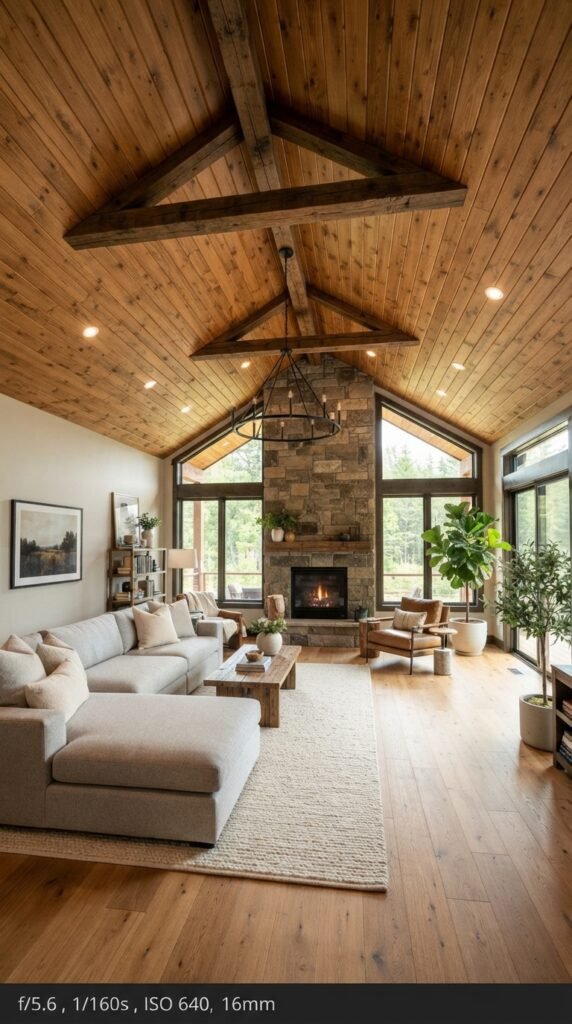
A wood ceiling does not automatically make a room feel smaller. The result depends on the wood color, board width, pattern, lighting, and ceiling height. Dark wood can make a room feel more enclosed. This can be attractive in bedrooms, studies, and cozy entertainment rooms. However, it may feel heavy in a small room with limited natural light. Light-colored wood usually creates a brighter appearance. Narrow boards can create more visual lines. Wide boards can make the ceiling feel simpler and more open. The direction of the boards also changes the visual effect. Good lighting is especially important. Recessed lights, pendant fixtures, and wall lighting can prevent a wood ceiling from feeling too dark. You can also combine wood with white walls for balance. If the room has a low ceiling, avoid overly heavy beams. A simpler plank design may work better. Always consider the entire room rather than choosing the ceiling material by itself.
Wood Ceiling Ideas for Living Rooms
Living rooms are excellent places for a wood ceiling because they often benefit from warmth and texture. A full plank ceiling can create a comfortable and polished appearance. If you prefer a smaller feature, install wood only over the seating area. This can help define the main gathering space. Another option is a ceiling with decorative beams. Beams can complement fireplaces, stone walls, or large windows. Light wood can create a relaxed modern appearance. Dark wood can create a richer and more dramatic atmosphere. Reclaimed boards can bring rustic character to older homes. For contemporary interiors, consider clean slatted panels with simple lines. You can also combine wood with white drywall. This creates contrast without making the entire ceiling heavy. Lighting should be planned before installation. Fixtures need suitable electrical access and support. If the ceiling is being remodeled, consider wiring and ventilation at the same time. A thoughtful design can make the living room feel finished and intentional.
Wood Ceiling Ideas for Bedrooms
A wood ceiling can create a calm and cozy bedroom. Natural wood tones work especially well with soft fabrics and warm lighting. A simple plank ceiling above the bed can create a natural focal point. You can also install boards across the entire ceiling for a more immersive effect. Light-colored wood can make the bedroom feel bright and peaceful. Medium or dark wood can create a comfortable retreat. If the room is small, consider using lighter finishes. Avoid overly busy patterns if you want a relaxing environment. A simple ceiling often works best in bedrooms. You can also match the ceiling with wooden furniture or flooring. However, do not use exactly the same wood tone everywhere. Slight differences can create more depth. Lighting should remain soft and comfortable. Wall sconces and warm ceiling fixtures can highlight the wood grain. Good ventilation is important too. Bedrooms should maintain healthy indoor humidity levels. Excess moisture can affect natural wood over time.
Wood Ceilings in Kitchens
Kitchens can look beautiful with wood overhead, but material selection is important. Kitchens experience heat, moisture, cooking vapors, and regular cleaning. A properly finished wood ceiling can handle normal indoor conditions. However, exposed unfinished wood may absorb moisture and odors. Choose a finish suitable for the environment. Wood can also help soften the hard surfaces found in kitchens. Cabinets, countertops, tile, and metal appliances can sometimes make a kitchen feel cold. A wood ceiling adds natural texture and warmth. You can install wood above the entire kitchen or create a smaller feature around an island. Beams can also highlight a large kitchen layout. Keep the ceiling design balanced with the cabinets. If the cabinets have strong details, choose a simpler ceiling. If the cabinets are plain, a more detailed ceiling may add interest. Always consider access to electrical fixtures, ventilation systems, and plumbing. Planning these elements before installation can save time and money later.
Wood Ceilings for Bathrooms
Bathrooms require more careful planning than most rooms. High humidity can cause problems for certain wood products. That does not mean wood cannot be used in bathrooms. It means you need suitable materials and good ventilation. Choose wood products designed for humid interior conditions. A protective finish can help reduce moisture absorption. Proper bathroom ventilation is also essential. Use an exhaust fan that effectively removes humid air. Avoid allowing water to collect or leak near the ceiling. Wood should be inspected regularly for staining, swelling, or surface damage. A smaller wood feature may be easier to maintain than a full ceiling. For example, you could use wood above a vanity or bathtub area. The design can add warmth without covering every surface. Always follow product instructions for bathroom applications. Local building requirements may also affect the materials you can use. If you are unsure about moisture exposure, consult a professional before installation.
Wood Ceiling Cost Factors
The cost of a wood ceiling can vary greatly. Several factors affect the final price. The wood species is one of the biggest factors. Basic pine can cost much less than premium hardwood. Reclaimed wood can also vary because quality and availability are inconsistent. Installation is another major cost. Simple boards may be easier and faster to install. Complex patterns require more cutting and fitting. Decorative beams, coffers, and custom panels can increase labor costs. The condition of the existing ceiling also matters. If repairs are needed before installation, the project may become more expensive. Finishing can add another cost. Staining, painting, sealing, or custom coloring requires additional labor and materials. Electrical work can also affect the budget. You may need to move or add lighting fixtures. Before starting, request a detailed estimate. Make sure it includes materials, labor, preparation, finishing, and cleanup. A clear estimate helps prevent unexpected expenses during the project.
How to Install a Wood Ceiling
Installing a wood ceiling requires careful preparation. Start by inspecting the existing ceiling and supporting structure. Check for moisture problems, leaks, damaged materials, and uneven areas. These problems should be addressed before installing new boards. Next, plan the layout. Decide where the first board will start and how the boards will meet walls. Measure the room carefully before ordering materials. Allow the wood to acclimate when the manufacturer recommends it. Installation methods vary by product. Some boards are nailed or screwed into ceiling framing. Other systems use specific clips or fastening methods. The material must be properly supported overhead. Cutting around lights, vents, and other fixtures requires accuracy. Once the boards are installed, gaps and edges may need finishing. The final step is usually staining, painting, or sealing if the product is unfinished. Because overhead work can be difficult and unsafe, professional installation may be the best choice. Always follow manufacturer instructions and local building codes.
DIY Wood Ceiling or Professional Installation?
Some simple ceiling projects can be completed by experienced DIY homeowners. However, ceiling work is more difficult than many people expect. Materials must be lifted overhead and held accurately during fastening. Long boards can also be awkward to handle. Mistakes become very visible because ceilings are large surfaces. Professional installation may be worthwhile for complex designs. This is especially true for coffered ceilings, beams, custom panels, or large rooms. Professionals can also identify structural problems before work begins. They may know how to handle electrical fixtures, ventilation openings, and uneven surfaces. If you choose DIY installation, start with a small project. Read the product instructions carefully. Use proper safety equipment and get help handling long boards. Never work around electrical wiring without appropriate knowledge. For structural beams or major ceiling changes, use qualified professionals. The goal is not simply to install the material. The goal is to create a safe, durable, and attractive finished ceiling.
How to Maintain a Wood Ceiling
Proper maintenance can keep a wood ceiling attractive for many years. Start by removing dust regularly. A soft microfiber cloth or suitable vacuum attachment can help. Avoid excessive water when cleaning natural wood. Too much moisture can damage some finishes and materials. Follow the cleaning instructions provided by the manufacturer. Inspect the ceiling occasionally for stains, cracks, gaps, or changes in color. Pay special attention to areas near bathrooms and kitchens. If you notice a water stain, find the source quickly. Painting over the stain will not solve the underlying problem. Check for leaks from plumbing, roofing, or ventilation systems. Finished wood may eventually need refinishing. The timing depends on the product and environmental conditions. Some finishes last many years with little work. Others need periodic maintenance. Keep indoor humidity within a reasonable range. Large humidity changes can cause wood movement. Regular inspection is easier than repairing major damage later.
Common Wood Ceiling Mistakes to Avoid
One common mistake is choosing wood based only on appearance. A beautiful material may not be suitable for the room. Moisture, weight, installation method, and maintenance should also be considered. Another mistake is skipping preparation. Existing leaks or ceiling damage can create serious problems later. Some homeowners also forget to plan lighting before installation. Cutting around fixtures after the ceiling is finished can be difficult. Choosing an overly dark material can also make a small room feel heavy. Another issue is using too many wood finishes in one space. Matching every wooden surface perfectly can sometimes make the room look flat. Poor spacing is another common problem. Boards should follow a consistent layout. Finally, some people try complex ceiling designs without professional help. A small installation mistake can become very noticeable overhead. Take time to plan the project. Order enough material and account for cuts and waste. Good preparation usually creates a better result than rushing into installation.
How to Choose the Right Wood Ceiling Design
Start by looking at the room itself. Consider its size, ceiling height, natural light, furniture, and existing finishes. Then decide what you want the ceiling to achieve. Do you want warmth, texture, contrast, or a dramatic focal point? If the room is small, lighter wood may work well. If the ceiling is high, beams or darker tones can add visual weight. Modern rooms often suit clean planks or slatted designs. Traditional rooms may benefit from beams, panels, or coffered details. Rustic rooms can work beautifully with reclaimed or textured wood. Budget should also guide your choice. A simple plank ceiling is usually easier than a custom architectural design. Think about maintenance too. Some finishes require more care than others. Samples are helpful because wood can look different under different lighting. Place samples in the actual room before making your final decision. This simple step can prevent an expensive design mistake.
Are Wood Ceilings Environmentally Friendly?
Wood can be a responsible building material when it comes from well-managed sources. Choosing certified or responsibly sourced wood can support better forestry practices. Reclaimed wood is another interesting option. It gives old materials a second life and can provide unique character. Engineered wood products may also use wood fibers efficiently. However, environmental performance depends on the product and manufacturing process. Transportation, finishing products, and installation materials also affect the overall impact. Look for manufacturers that provide information about sourcing and certifications. Avoid making environmental claims based only on the word “natural.” Natural does not always mean sustainable. Ask where the wood comes from and how it was produced. Long-lasting materials can also reduce waste because they do not need frequent replacement. A well-maintained ceiling may serve a home for many years. When planning a sustainable renovation, consider durability alongside sourcing. The most environmentally responsible choice is often a material that performs well and lasts a long time.
Wood Ceiling Design for Modern Homes
Modern homes often benefit from clean and simple wood ceiling designs. Wide planks can create a smooth appearance with fewer visual lines. Light oak, maple, or similar tones can work well with white walls. Slatted ceilings can create a stronger architectural feature. They can also add texture without looking overly traditional. Another option is a floating wood panel above a specific area. This approach works well in open-plan homes. The wood feature can visually separate the dining or living space. Modern designs usually benefit from careful spacing and simple details. Avoid adding too many decorative elements at once. The goal is to create interest without creating visual clutter. Black metal lighting fixtures can contrast nicely with warm wood. Large windows can also highlight natural grain during the day. When designing a modern ceiling, consider the entire room. The ceiling should connect with the flooring, furniture, walls, and lighting. A simple design can often have the strongest effect when the materials are chosen carefully.
Wood Ceiling Design for Rustic and Farmhouse Homes
Rustic and farmhouse interiors are natural matches for wood ceilings. These styles often celebrate texture, age, and natural materials. Reclaimed wood can provide authentic character with visible knots and marks. Rough-sawn boards can create a more textured appearance. Exposed beams are another popular choice. You can leave the beams natural or apply a darker stain. White-painted ceiling boards can create a classic farmhouse look. They keep the room bright while adding subtle texture. Mixing wood with stone, brick, and metal can strengthen the rustic style. However, balance is still important. Too many heavy materials can make a room feel dark. Use lighter walls or natural light to keep the space comfortable. If reclaimed wood is used, inspect it carefully before installation. Old boards may contain nails, dirt, insects, or other unwanted materials. Proper cleaning and preparation are important. A professional can help determine whether reclaimed material is suitable for indoor use.
Frequently Asked Questions About Wood Ceilings
Is a wood ceiling a good idea?
Yes, a wood ceiling can be an excellent choice for many homes. It adds warmth, texture, and visual character. It can also work with many interior styles. The main consideration is choosing suitable materials for the room. You should also plan for moisture, lighting, installation, and maintenance. A good design should fit the home’s architecture and the room’s purpose. Simple plank ceilings can provide a subtle effect. More detailed designs can become a major focal point. If you are unsure, speak with a professional before starting the project.
What is the best wood for a ceiling?
There is no single best wood for every ceiling. Pine is popular because it is affordable and easy to work with. Cedar offers natural character and a distinctive appearance. Oak provides a stronger grain and a more premium look. Maple has a lighter and smoother appearance. Walnut offers rich color and a luxurious feel. Your choice should depend on the room, budget, finish, and installation requirements. Always select a product specifically suitable for ceiling applications.
Are wood ceilings expensive?
Wood ceiling costs can range from affordable to very expensive. Simple pine planks may provide a budget-friendly option. Premium hardwoods and custom designs can cost much more. Labor also affects the final price. Complex patterns, beams, coffers, and difficult ceiling layouts require more installation time. Finishing and electrical changes can add additional costs. Get a complete estimate before starting. This should include materials, labor, preparation, finishing, and other required work.
Can you put wood over an existing ceiling?
In some situations, wood can be installed over an existing ceiling. However, the existing surface must be suitable and secure. The supporting structure must also handle the added weight. Any moisture damage should be repaired first. The installation method depends on the wood product. Some systems require direct attachment to ceiling framing. Others may use furring strips or specialized fasteners. Always follow the manufacturer’s instructions. A professional can determine whether the existing ceiling is suitable.
Do wood ceilings make rooms darker?
Dark wood can make a room feel darker, but wood itself does not have to make a room dark. Light-colored wood can create a bright and natural appearance. Good lighting also makes a major difference. Use natural light, recessed fixtures, pendant lights, or wall lighting as needed. White walls can provide additional contrast. If the room has a low ceiling, lighter wood may be the better choice. Test wood samples in the actual room before choosing the final finish.
How long does a wood ceiling last?
A properly installed and maintained wood ceiling can last for many years. Its lifespan depends on the wood type, installation quality, moisture levels, and finish. Water damage is one of the biggest threats to long-term performance. Regular inspection can help identify problems early. Keep indoor humidity reasonably stable and repair leaks quickly. Follow the manufacturer’s cleaning and maintenance instructions. A quality installation combined with proper care can help the ceiling remain attractive for decades.
Conclusion
A wood ceiling can be one of the most effective ways to add warmth and character to a home. It turns an often-overlooked surface into an important part of the interior design. From simple planks to dramatic beams, there are options for almost every style and budget. The best choice depends on your room, ceiling height, lighting, moisture levels, and overall design. Material selection is equally important. Pine, cedar, oak, maple, walnut, reclaimed wood, and engineered products can all create different results. Good planning also matters. Think about lighting, ventilation, installation, finishing, and future maintenance before beginning the project. If you are working with structural elements or complex designs, professional help is a smart investment. A beautiful ceiling should also be safe and durable. Take your time, compare samples, and choose materials that fit your home’s needs. With thoughtful planning, a wood ceiling can create a comfortable, timeless feature that you will enjoy for many years.