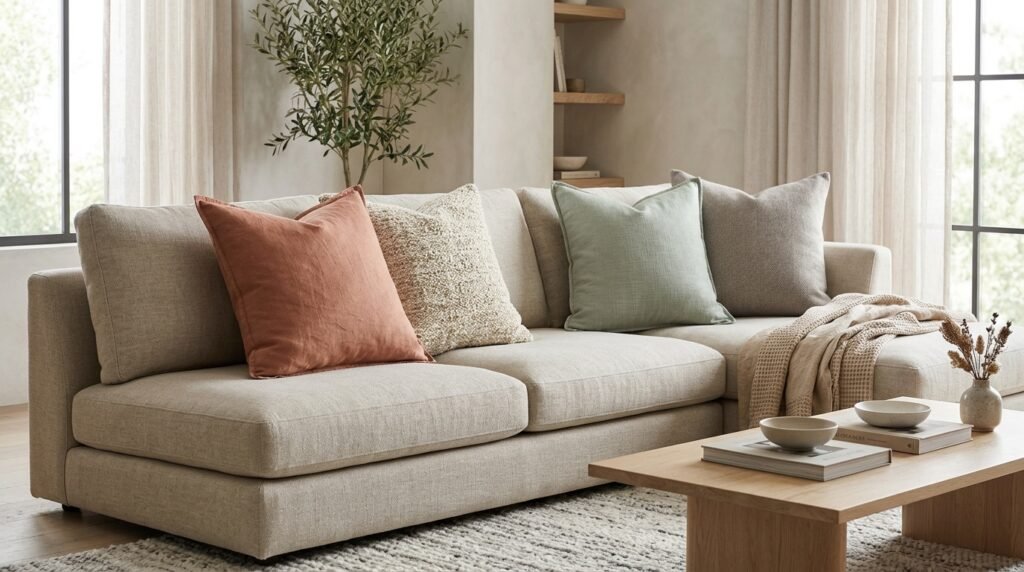
Couch pillow covers 24×24 inches are large decorative covers designed for square throw pillows. They can add comfort, color, texture, and personality to sofas, sectionals, and living room furniture. Their generous size makes them useful for creating a layered look with smaller cushions and lumbar pillows. However, choosing the right cover involves more than finding an attractive design. The insert must fit properly, the fabric should suit everyday use, and the color should work with the sofa and surrounding decor. A 24×24-inch cover usually needs a 26×26-inch insert for a fuller appearance, although the best fit depends on the fabric, filling, and construction. Understanding these details can help homeowners choose decorative couch covers that look balanced, feel comfortable, and remain easy to maintain.
What Makes 24×24-Inch Couch Pillow Covers Different?
A 24×24-inch decorative pillow is larger than many standard throw pillows. Its size gives it a noticeable presence on a couch without requiring a complicated design. These covers are often used on three-seat sofas, large sectionals, oversized chairs, and beds. They can provide back support while also making furniture look more inviting. Their larger surface area gives designers more room for detailed prints, embroidery, textures, and color combinations. A simple solid cover can create a clean appearance, while a patterned design can become the main feature of a seating area. Size also affects how a pillow arrangement looks. Two large cushions can create a balanced appearance on a wide sofa, while several oversized cushions may crowd a smaller couch. The available seating space should always be considered. A large pillow can look attractive but may reduce the space available for sitting if the sofa is already compact.
What Size Insert Fits a 24×24 Pillow Cover?
For a fuller decorative pillow, a 26×26-inch insert is a common starting recommendation for a 24×24-inch cover. The insert is slightly larger because the extra filling helps push the fabric toward the corners. This creates a plumper appearance and reduces empty-looking areas. However, this is a general styling recommendation rather than a universal rule. Some covers are designed for inserts of the same labeled size, while others are intentionally made smaller. Fabric thickness, stretch, seam construction, and filling type also affect the result. Several specialist suppliers recommend an insert approximately two inches larger for square decorative covers. The Ashleigh P. Collection+2 Before ordering, check the seller’s sizing instructions. A tightly woven cover with little stretch may need a different insert from a soft, flexible cotton cover.
Same-Size Insert or Larger Insert?
A same-size insert can produce a softer and less structured pillow. This may be suitable for people who prefer a relaxed appearance or want a cushion that compresses easily when sitting. A larger insert creates more fullness and helps the corners look defined. For example, a 24×24 cover paired with a 24×24 insert may look less firm than the same cover filled with a 26×26 insert. However, an insert that is too large can place excessive pressure on the zipper and seams. It may also make the cover difficult to close. The right choice depends on the desired shape, insert firmness, and cover construction. If a seller provides a specific insert recommendation, follow that guidance instead of automatically applying the two-inch rule.
How to Measure a 24×24 Pillow Cover Correctly
Accurate measurements help prevent problems with fit and appearance. If an existing cover has a zipper, remove the insert before measuring. Lay the empty cover flat on a clean surface and smooth out wrinkles without stretching the fabric. Measure its width from one inside seam to the opposite inside seam. Repeat the process for its height. Measuring from seam to seam gives a more useful result than measuring a filled pillow across its rounded front. If the cover has piping, decorative borders, or flanges, distinguish the usable pillow area from the outer decorative edge. Also check whether the seller lists finished cover dimensions or the size of the insert the cover is intended to fit. These descriptions can mean different things. A product labeled 24×24 may be a finished cover or a cover designed for a 24-inch insert. Ask the seller if the listing does not explain this difference. SNdsigns+1
Popular Fabric Choices for Large Couch Pillow Covers
Fabric affects comfort, appearance, durability, and cleaning needs. Some materials feel soft and relaxed, while others create a more formal or structured look. A family living room may need covers that tolerate frequent handling and regular cleaning. A decorative sitting room may allow more delicate materials. The best fabric also depends on the climate, sunlight, pets, and household routine. A beautiful material may not be practical if it requires special cleaning that the household cannot easily manage. When comparing couch pillow covers 24×24, read the fabric description carefully. Product photographs may not show thickness, surface texture, or how the material feels. Look for details about fiber content, closure type, lining, and care instructions before choosing.
Cotton Pillow Covers
Cotton is a familiar choice for decorative cushions because it is available in many colors, patterns, and fabric weights. It can feel comfortable against the skin and suits casual, traditional, and modern interiors. Cotton covers may feature plain weaves, printed patterns, embroidered details, or textured finishes. Lightweight cotton can create a relaxed appearance, while heavier cotton canvas may provide a more structured shape. Some cotton covers can be machine washed, but the correct method depends on the fabric and construction. Shrinkage, color fading, and seam damage are possible if care instructions are ignored. Check whether the cover is pre-shrunk and whether it requires cold washing or air drying. Cotton is a practical option for everyday living rooms when its weight and care requirements match the household’s needs.
Linen Pillow Covers
Linen is valued for its natural texture and relaxed appearance. Its slightly uneven surface can give a living room a calm, understated look. Natural linen often has visible fibers and gentle creases, which are part of its character. It works well with neutral sofas, wooden furniture, cotton throws, and simple decorative accessories. Linen covers are available in natural beige, white, gray, blue, and many other shades. They can suit coastal, farmhouse, rustic, and contemporary interiors. However, linen may wrinkle more easily than some synthetic fabrics. Its care requirements also vary according to the blend and finish. Some products can be washed gently, while others require professional cleaning. Check the label before washing, especially if the cover includes lining, embroidery, or decorative trim.
Velvet Pillow Covers
Velvet creates a soft surface with a rich appearance. Its pile reflects light differently depending on the direction in which the fibers sit. This gives velvet cushions visual depth, especially in darker shades such as navy, emerald, burgundy, and charcoal. Velvet can work well in formal living rooms, modern interiors, and spaces with warm metallic accents. It also creates an attractive contrast against leather and smooth cotton upholstery. However, velvet is not one single fabric. Cotton velvet, polyester velvet, and blended versions may have different cleaning requirements. Some should not be washed with water or placed in a washing machine. Professional cleaning may be required for certain varieties. Timothy Oulton – Timothy Oulton+1 Always check the care label before purchasing velvet covers for a frequently used sofa.
Polyester and Microfiber Covers
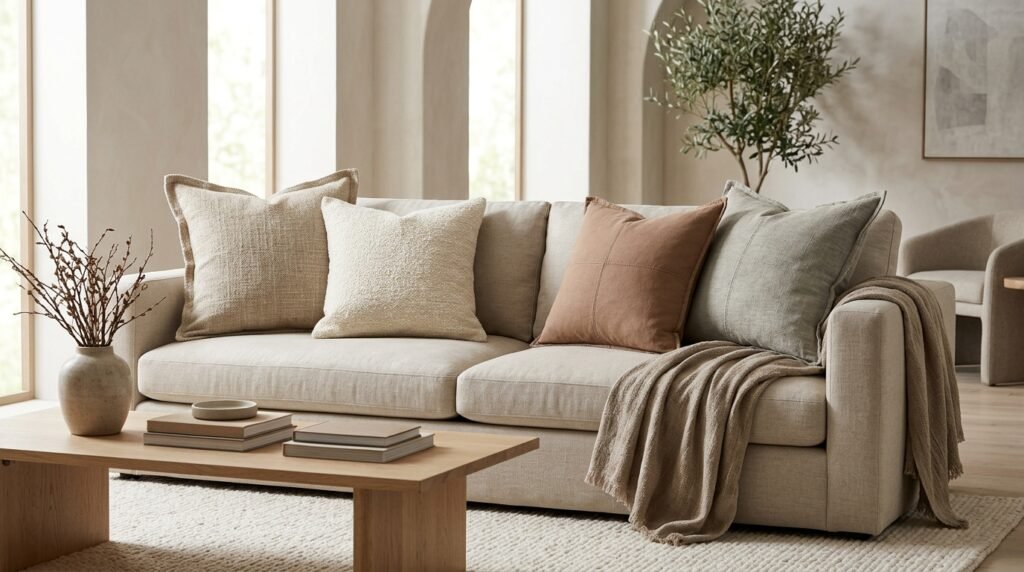
Polyester is commonly used in decorative home textiles because it can be made in many textures and finishes. It may imitate the appearance of cotton, linen, suede, or other materials. Microfiber is another synthetic option with a soft, smooth surface. These fabrics can be useful in busy households because some versions are easier to maintain than delicate natural materials. However, their performance varies by construction and quality. Not every polyester cover is stain-resistant or machine washable. Check the cleaning instructions and fabric details rather than relying on the material name alone. Polyester can also retain static and may feel warmer than some natural fabrics. For a family couch, choose a product that balances comfort, appearance, and realistic maintenance needs.
Chenille and Textured Fabrics
Chenille has a soft, raised texture that gives cushions a cozy appearance. It can make a plain sofa look more layered without requiring bright colors or complicated patterns. Woven textures, boucle-style surfaces, and other tactile fabrics also add interest to neutral living rooms. These materials can work especially well with smooth leather or tightly woven upholstery. However, textured surfaces may collect dust, pet hair, and small debris more easily. Some fabrics can also snag when exposed to sharp objects or pet claws. Check the weave and cleaning instructions before buying. A textured cover is a good option when the room needs more visual depth, but it should match the household’s daily activity.
Different Styles of 24×24 Couch Pillow Covers
The style of a pillow cover determines how it contributes to the overall room design. Some people prefer simple cushions that blend into the sofa, while others want bold decorative pieces. A large square cover provides enough space for detailed artwork and noticeable textures. However, choosing too many strong designs can make a seating area feel crowded. It helps to decide whether the cushions should create contrast, add texture, or support the existing color scheme. A combination of different styles can look attractive when they share a common color or design theme.
Solid Color Pillow Covers
Solid covers are among the easiest options to coordinate with existing furniture. They provide color without adding another pattern to the room. Beige, cream, gray, navy, olive, and white are popular choices for neutral or balanced interiors. A solid cover can also help connect different decorative elements. For example, a navy cushion may repeat the color found in a rug or curtain. Two matching covers can create symmetry on a sofa, while different solid shades can create a more relaxed arrangement. Texture becomes especially important when the color is simple. Velvet, linen, woven cotton, and textured polyester can all create different effects. Solid designs are useful when the sofa or surrounding decor already contains strong patterns.
Floral and Botanical Designs
Floral covers bring natural patterns and decorative detail into a living room. They may feature small flowers, large blooms, leaves, branches, or garden-inspired artwork. A light background with delicate flowers can create a traditional appearance. Dark botanical designs can look more dramatic and work well with neutral furniture. These covers are suitable for cottage, farmhouse, classic, and some contemporary interiors. When selecting a floral pattern, consider the size of the print. Large flowers may become a strong focal point on a 24-inch cushion. Smaller prints usually create a more subtle effect. If the sofa already has patterned upholstery, choose a floral design with a limited color palette to avoid visual competition.
Geometric and Modern Patterns
Geometric covers use lines, squares, circles, diamonds, and repeating shapes. They can make a living room feel more organized and contemporary. Black-and-white designs provide strong contrast, while beige and gray patterns create a softer appearance. Abstract prints offer another modern option. They use free-form shapes and artistic color combinations instead of regular repeating patterns. These styles work well with simple sofas, metal furniture, and modern lighting. A large geometric print can stand out clearly on a 24-inch cushion, so consider its scale before buying. Small repeating designs may look busy from a distance, while larger shapes can create a stronger decorative statement.
Embroidered and Decorative Covers
Embroidered covers feature stitched designs that add detail and texture. Common decorations include flowers, leaves, borders, geometric shapes, and raised patterns. Some covers also include tassels, piping, fringes, buttons, or decorative edges. These details can give a sofa a more traditional or handcrafted appearance. However, decorative elements may affect comfort and cleaning. Large buttons can feel uncomfortable when leaning against a cushion, while loose tassels may catch on objects or pets. Embroidery can also require gentle cleaning. Before choosing a decorative design, consider whether the pillow will be used mainly for display or regular support.
Seasonal and Holiday Designs
Seasonal covers allow homeowners to refresh a living room without replacing the cushions or buying new inserts. Neutral covers can be used throughout the year, while themed designs can be introduced for specific occasions. Warm colors and leaf patterns may suit autumn, while lighter shades can work well during spring and summer. Holiday covers may include seasonal artwork, decorative stitching, or themed colors. Having removable covers makes these changes easier to manage. Store unused covers in a clean, dry place and avoid folding delicate decorative details too tightly. A small collection of interchangeable covers can provide variety without filling storage space with complete pillows.
Choosing Colors That Complement Your Couch
Color coordination is one of the most important parts of selecting decorative covers. The sofa does not need to match every cushion exactly. In fact, a little contrast can make the arrangement more interesting. A neutral sofa provides flexibility because it can work with many color combinations. Beige and cream sofas can pair with olive, rust, navy, or soft blue. Gray sofas can work with white, mustard, blush, charcoal, and green. Brown furniture often looks balanced with cream, tan, terracotta, and muted blue. If the sofa already has a strong color, choose cushions that complement rather than compete with it. Couch pillow covers 24×24 can also repeat a smaller color found in artwork, rugs, curtains, or nearby furniture. This creates a visual connection across the room. Before ordering several covers, compare their color with the actual sofa under natural and artificial lighting. Online photographs can look different from the physical fabric.
How to Arrange Large Throw Pillows on a Couch
Large pillows can make a sofa look comfortable and well-decorated, but their placement matters. A common approach is to place larger cushions near the outer corners and use smaller cushions closer to the center. This creates a layered appearance without covering the entire seating area. On a wide sectional, large square cushions can help balance the length of the sofa. On a smaller couch, one or two large cushions may be enough. Avoid filling every available space with pillows if people regularly use the sofa for sitting. The arrangement should leave enough room for comfortable seating. Different textures can also create interest without using many colors. For example, a plain linen cover can sit beside a textured velvet design. A patterned lumbar cushion can complete the arrangement without making it look crowded.
How Many 24×24 Pillow Covers Does a Couch Need?
The number depends on the sofa’s width, seating capacity, and available space. A compact two-seat couch may look balanced with one or two large cushions. A standard three-seat sofa can often accommodate two large cushions with smaller accents. A wide sectional may support several cushions, but the final arrangement should still leave enough space for people to sit comfortably. There is no fixed number that works for every sofa. Measure the seating area and consider the size of its back cushions. Also think about how the sofa is used. A formal sitting room may have more decorative cushions, while a family living room may need fewer. If large pillows are used for back support, leave enough room for people to move and adjust them easily.
How to Choose Pillow Inserts for Comfort and Shape
The insert determines how a pillow feels and how well it holds its shape. Common filling options include polyester fiber, down, feather, and down-alternative materials. Polyester inserts are often selected for their accessible price and simple everyday use. Down and feather fills can create a softer, more adjustable feel, but they may need regular fluffing. Down-alternative fills provide another option for people who prefer not to use animal-based filling. The best insert depends on comfort, maintenance, allergies, and the desired appearance. For couch pillow covers 24×24, compare the insert’s actual dimensions and filling density before buying. A 26×26 insert is often used for a fuller result, but a very firm insert may create too much tension. If the pillow is intended for regular back support, consider how easily the filling compresses and whether it returns to its shape.
What Closure Is Best for Decorative Pillow Covers?
The closure affects appearance, convenience, and how easily the cover can be removed. Zipper closures are common because they allow the insert to be removed for cleaning or replacement. A concealed zipper creates a neat finish and is less noticeable from the front. Envelope closures use overlapping fabric panels at the back. They avoid a visible zipper and can make the cover look simple and clean. Button closures provide a decorative detail, although they may take longer to open and close. Some handmade covers use ties or other fastening methods. When choosing a closure, check its position and construction. A zipper should move smoothly and should not have sharp edges that could damage the insert. The opening should also be wide enough to fit the intended filling without excessive force.
How to Buy Couch Pillow Covers 24×24 Online
Online shopping provides access to many designs, but product descriptions need careful attention. Start by confirming the finished dimensions and whether the listing refers to the cover or its recommended insert. Check whether the insert is included because many decorative pillow listings sell covers separately. Review the fabric composition, closure type, cleaning instructions, and available color options. Product photographs should show the front and back when possible. Close-up images can help reveal texture, stitching, and decorative details. Read customer reviews for repeated comments about sizing, color differences, zipper quality, and fabric thickness. A single negative review may not represent the product, but repeated complaints can point to a real issue. Also check the return policy, especially for custom-made or clearance items. If exact color matching matters, ask whether fabric samples are available. These steps help reduce the risk of ordering a cover that does not suit the furniture.
Are Large Pillow Covers Suitable for Every Sofa?
Large square covers can work on many sofas, but they are not ideal for every seating arrangement. A deep sectional has more room for oversized cushions than a narrow apartment couch. A low-back sofa may look crowded if several large pillows cover its seating area. The pillow’s thickness also matters. A heavily filled cushion can project forward and reduce usable seat depth. Consider the people who use the furniture. A household with children may prefer fewer cushions that are easy to move and clean. A decorative sitting room may have more flexibility. Couch pillow covers 24×24 are most useful when the sofa has enough width and depth to support their size without making seating uncomfortable.
Common Buying Mistakes to Avoid
One frequent mistake is confusing the cover size with the insert size. A listing may describe a cover intended for a 24-inch insert rather than a finished 24-inch cover. Another mistake is ordering based only on a photograph. Lighting, camera settings, and display screens can change how fabric colors appear. Buyers may also overlook fabric care requirements. A delicate velvet cover may not be suitable for a home where cushions need frequent washing. Choosing a very firm insert can make a cover difficult to close, while an undersized insert may leave empty corners. Other common problems include ignoring the zipper quality, forgetting to check whether the insert is included, and selecting patterns that clash with existing upholstery. Before placing an order, review the dimensions, material, closure, care label, and return conditions. A few minutes of checking can prevent unnecessary replacement costs.
How to Wash and Maintain Pillow Covers
Cleaning depends on the fabric and the manufacturer’s care instructions. Always remove the insert before washing a removable cover. Check the care label for the recommended water temperature, cycle, detergent, and drying method. Some cotton covers can be machine washed, while certain velvet, linen blends, and decorative materials may need special treatment. Avoid assuming that every removable cover is machine washable. For small marks, use an approved spot-cleaning method and test it on a hidden area first. Do not rub delicate fabrics aggressively because this may damage the surface or spread the stain. Allow washed covers to dry completely before putting them back on the inserts. Damp fabric can create unpleasant odors and may affect the filling. Regularly remove dust and loose hair using a method suitable for the material. If a zipper becomes stuck, avoid forcing it because the teeth or fabric may tear.
Using Pillow Covers in Homes With Pets and Children
Homes with pets and children often need a different approach to decorative fabrics. Smooth, tightly woven covers may be easier to remove loose hair from than fabrics with deep textures. Dark colors can hide some marks, but they may show light-colored pet hair. Light covers can make stains more visible, although they may be easier to coordinate with neutral furniture. Washable materials are useful when frequent cleaning is expected, provided the product’s care label allows regular washing. Avoid delicate decorative details that can easily snag or come loose. Covers should also have secure seams and well-made closures. If pets regularly scratch or chew cushions, no ordinary decorative fabric should be treated as damage-proof. Choose a practical material and keep extra covers available when quick replacements are useful.
How to Store Extra Pillow Covers
Extra covers are useful for seasonal decorating and quick room updates. Before storage, make sure each cover is completely clean and dry. Close zippers and fold the fabric gently to reduce unnecessary creasing. Delicate embroidery, tassels, and raised decorations should not be pressed under heavy objects. Store covers in a clean, dry cupboard or breathable storage container. Avoid placing them in damp areas because moisture can cause odors and damage. If covers are used only during certain seasons, label the storage groups so they are easier to find. Keep fabric samples or product details with custom covers when replacement inserts or matching accessories may be needed later.
When Should You Replace a Pillow Cover?
A decorative cover does not need replacing simply because its style is no longer new. However, visible fabric damage, broken zippers, loose seams, permanent stains, and significant fading may make replacement sensible. A cover that no longer fits its insert can also affect the pillow’s shape. Sometimes the problem is the filling rather than the fabric. An old insert may have become flat or uneven, while the cover remains in good condition. In that situation, replacing the insert may restore the pillow’s appearance. If the cover has sentimental or decorative value, a tailor may be able to repair a small seam or replace a zipper. Compare the repair cost with the price of a new cover before deciding.
Frequently Asked Questions
What insert size is best for couch pillow covers 24×24?
A 26×26-inch insert is a common choice for a fuller appearance inside a 24×24-inch cover. However, some manufacturers recommend a same-size insert or a different size based on fabric and construction. Check the product’s sizing instructions before ordering.
Are 24×24 pillow covers too large for a regular couch?
Not necessarily. They can look balanced on a standard three-seat sofa or a deep couch. However, a small or shallow sofa may become crowded if several oversized cushions are added. Consider the available seating space before choosing them.
Do pillow covers usually include inserts?
Many decorative pillow listings sell the cover separately, but some products include a complete filled cushion. Read the product description carefully and check the package contents before purchasing. Never assume an insert is included just because it appears in the product photograph.
Which fabric is easiest to maintain for couch pillows?
Some tightly woven cotton and polyester covers offer convenient everyday care. However, cleaning requirements depend on the fabric finish, construction, and manufacturer instructions. Check the care label rather than assuming a material is machine washable.
Can I use 24×24 pillow covers on a bed?
Yes. Large square decorative covers can be used on beds as accent cushions. They can sit in front of sleeping pillows or complement other decorative cushions. Choose colors and textures that coordinate with the bedding and leave enough room for comfortable sleeping.
How do I make a large decorative pillow look fuller?
Choose an insert that suits the cover’s construction and filling type. A slightly larger insert can help fill the corners and create a plump shape. For many square covers, a two-inch increase is a useful starting point. Avoid overfilling because excessive pressure can strain seams and zippers.
Conclusion
Couch pillow covers 24×24 are a practical decorative option for sofas, sectionals, and beds that have enough space for oversized cushions. Their large surface makes them suitable for solid colors, floral prints, geometric patterns, embroidery, and textured fabrics. The most important decision is choosing a cover and insert that work together. A 26×26-inch insert often creates a fuller appearance, but the manufacturer’s sizing advice should always take priority. Fabric, closure type, cleaning needs, sofa dimensions, and existing colors also deserve attention before purchasing. Compare measurements carefully, check product details, and select materials that suit everyday use. A well-fitted cover can refresh a living room without requiring new furniture or a complete change in decor.