The best front porch ideas improve three things at once: curb appeal, comfort, and everyday function. You do not need a huge porch or a complete remodel to make the entrance feel more inviting. A better layout, correctly sized furniture, layered lighting, durable materials, useful storage, and a few well-chosen plants can make a noticeable difference. Start with function before decoration. Keep the route to the front door clear. Decide whether the porch needs seating, package space, shoe storage, weather protection, or mainly visual improvement. Then choose features that fit its actual size and exposure. A small porch may benefit from one chair and a wall-mounted light. A deeper covered porch may support a conversation area, outdoor rug, ceiling fan, and several planters. Structural work is different from decorating. Changes to stairs, railings, roofs, electrical systems, or load-bearing components may require permits, code compliance, or professional help. This guide covers practical ways to improve porches of different sizes and styles without making the entrance crowded or difficult to maintain.
Start With the Way Your Front Porch Is Actually Used
Before choosing furniture or colors, watch how people move through the entrance. The most useful front porch ideas begin with daily behavior. Notice where guests naturally stand while waiting for the door. Check whether packages block the walkway. Look at where shoes, umbrellas, children’s items, or pet supplies tend to collect. Then measure the porch, including the usable depth and width. Account for the front door’s swing, stairs, railings, columns, windows, outlets, and access to utility equipment. A beautiful chair is a poor choice if people must squeeze around it every time they enter the house. On a narrow porch, decoration may belong against a wall rather than beside the main route. On a deeper porch, you can divide the area into entry and seating zones. This functional plan prevents one of the most common decorating mistakes: filling the porch with attractive objects before determining how much open space everyday movement requires.
Small Front Porch Ideas That Avoid Clutter
A small porch benefits from restraint. Choose one or two features that create impact instead of filling every corner. A compact chair, narrow bench, small side table, wall-mounted light, and one substantial planter can often do more than several tiny decorations. Vertical space is especially useful. Wall planters, hanging baskets, narrow trellises, or tall plants can add interest without occupying much walking space. When considering front porch ideas for a tight entrance, keep the visual weight balanced. Oversized furniture can make the porch feel cramped, while many tiny pieces create visual clutter. Measure before buying anything and test furniture placement with cardboard or painter’s tape. Remember the door must open freely. People also need room to stand while unlocking it. If packages are commonly delivered, leave a stable area where they will not obstruct the doorway or steps. Small porches look larger when the floor remains visible and the design uses a limited number of coordinated materials and colors.
Use Seating That Matches the Porch Depth
Porch seating should fit the available space rather than a photograph you want to recreate. Deep covered porches may support outdoor sofas, rocking chairs, or conversation sets. Moderate spaces often work better with two chairs and a compact table. A narrow entrance may need only a bench or single chair. Among practical front porch ideas, furniture scale makes one of the biggest differences because it affects both appearance and movement. Before purchasing, check the full dimensions, including chair depth when someone is sitting in it. Leave enough room for comfortable circulation and door operation. Choose furniture intended for the conditions it will face. A fully covered porch may protect furniture better than an exposed porch, but wind-driven rain, humidity, sunlight, and temperature changes can still reach it. Cushions and fabrics should also suit outdoor use. If the porch rarely gets used for sitting, do not force a large seating area into the design. A simpler entrance may be more useful.
Create a Clear and Welcoming Path to the Door
The route from the steps to the front door should be obvious. Furniture, plants, decorations, storage, and delivery boxes should not turn that route into an obstacle course. Good front porch ideas frame the entrance rather than compete with it. You can guide attention toward the door using matching planters, lighting, a contrasting door color, or a centered mat. Symmetry can work well on traditional homes, but it is not required. An asymmetrical arrangement can feel natural when one side of the porch has more usable space. Pay special attention to stairs and changes in floor level. Avoid placing loose objects where they create a tripping hazard. Rugs and mats should remain stable and suitable for outdoor conditions. If an existing walkway feels disconnected from the porch, repeating a material, color, or planting style can visually connect the two areas. The goal is simple: visitors should immediately understand where to walk and where the entrance is.
Choose a Front Door Color That Works With the House
Changing the door color can transform an entrance without changing the porch structure. Instead of selecting a color in isolation, compare it with the siding, brick, stone, roof, trim, hardware, and nearby landscaping. Useful front porch ideas often treat the door as a focal point while allowing permanent exterior materials to guide the palette. A dark door can provide contrast against a pale facade. Muted green or blue can complement natural surroundings. Warm wood can soften painted siding or masonry. Brighter colors can work when the rest of the exterior is restrained. Always test paint samples in the actual location because exterior light changes throughout the day. Confirm that the paint and preparation method are appropriate for the door material and existing finish. If the door receives intense sun or weather exposure, product suitability matters as much as color. Coordinate nearby hardware and lighting, but avoid making every finish identical simply for the sake of matching.
Layer Porch Lighting for Safety and Atmosphere
Lighting should help people see steps, locks, faces, and walking surfaces while making the entrance feel comfortable after dark. Common front porch ideas include wall lanterns, ceiling fixtures, recessed lights, and landscape lighting near the approach. The right combination depends on the architecture and porch size. A small entrance may need only a well-positioned wall fixture. A large covered porch can benefit from several light sources instead of one overly bright fixture. Choose fixtures rated for the installation location and exposure. Electrical work must follow the manufacturer’s instructions and applicable local electrical requirements. Existing wiring that is damaged, outdated, or unsuitable should be assessed by a qualified electrician. Also consider glare. A fixture can be bright without illuminating the useful area well. Light should reach steps and the lock without shining uncomfortably into visitors’ eyes. Warm, controlled lighting generally creates a more relaxed residential feel than harsh illumination across the entire porch.
Use Plants Without Turning the Porch Into a Garden Center
Plants soften hard exterior materials and help connect the porch with the landscape. The challenge is choosing plants that fit the available light, climate, container size, and maintenance level. When developing front porch ideas, first observe whether the space receives direct sun, filtered light, or deep shade. A plant that thrives beside one front door may struggle beside another. Large containers can create stronger visual impact than many small pots and may need watering less frequently than tiny containers, though plant and climate needs vary. Use containers with appropriate drainage and protect surfaces where water could cause staining or deterioration. Tall plants can frame an entrance, while lower containers can add color without blocking windows. Hanging baskets work where there is adequate overhead support and headroom. Avoid placing thorny, toxic, or irritating plants where household members, children, pets, or visitors may brush against them. Healthy, appropriately placed plants look better than an oversized collection that is difficult to maintain.
Make a Covered Porch Feel Like an Outdoor Room
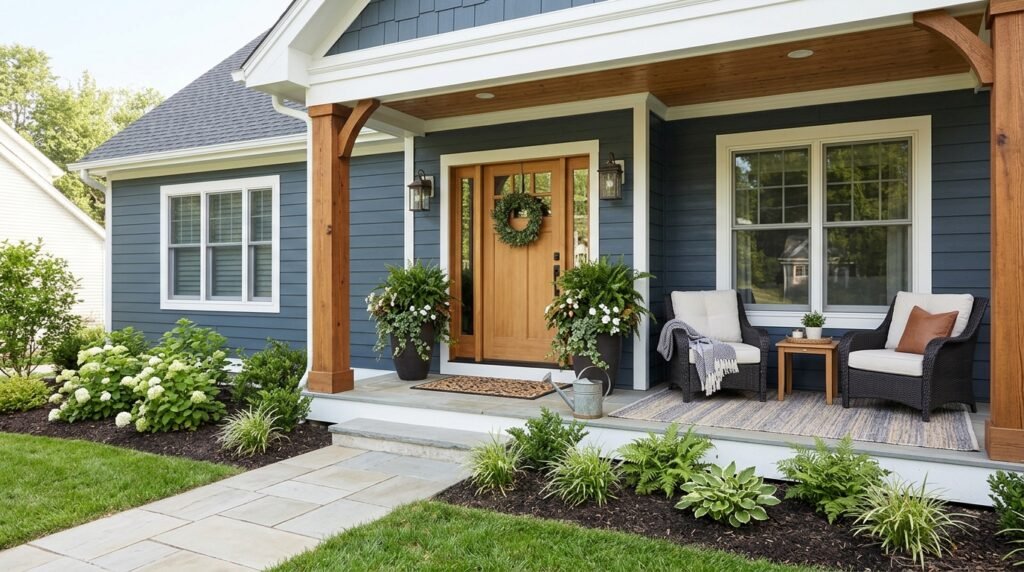
A covered porch offers more freedom because the roof provides some protection from direct weather. The best front porch ideas for these spaces borrow useful principles from interior rooms without pretending the porch is indoors. Start with a clear furniture arrangement. Two chairs facing each other encourage conversation. A bench can provide flexible seating without requiring several pieces. An outdoor rug may visually define the zone when the product suits the location and does not trap moisture against a vulnerable floor. Add a small table where people can place drinks or books. Cushions can introduce color and pattern, but choose materials intended for outdoor exposure. On larger porches, a ceiling fan may improve comfort where the structure, electrical system, clearance, and product installation requirements allow it. Keep decorative objects limited. Porches collect dust, pollen, insects, and windblown debris, so every additional accessory creates more cleaning. Comfort should come from good layout and useful furniture rather than excessive styling.
Modern Front Porch Ideas Work Best With Simple Materials
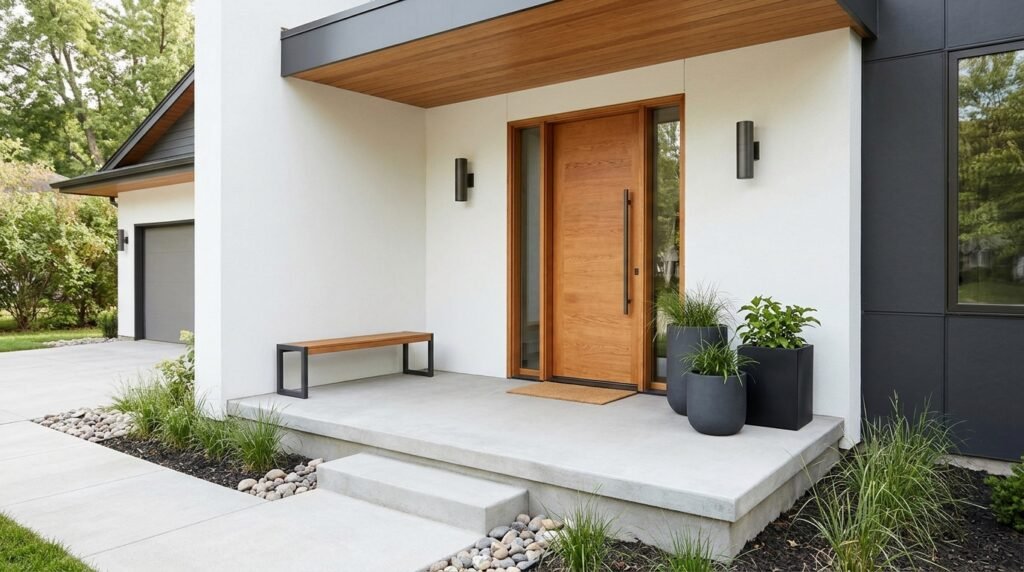
Modern porches usually benefit from clean forms, restrained colors, and fewer decorative elements. Consider large planters, simple lighting, straight-lined furniture, warm wood accents, smooth concrete, or dark metal details. Successful modern front porch ideas do not require making an older house look ultra-modern. Instead, simplify the entrance while respecting the architecture. Replacing several small decorations with one substantial planter can immediately create a cleaner appearance. A simple bench may work better than ornate furniture. Repeating one dark metal finish across lighting and selected hardware can provide visual consistency, although exact matching is unnecessary. Modern designs also depend heavily on proportion. An oversized fixture can overwhelm a small door, while tiny sconces may look lost on a tall facade. If you plan structural changes such as a new canopy, posts, stairs, or railings, appearance should not override structural requirements. Decorative updates are relatively simple; alterations to structural components require proper design and installation.
Traditional Porches Benefit From Architectural Consistency
Traditional homes often look best when porch improvements support existing details rather than compete with them. Rocking chairs, painted wood furniture, classic lantern-style lighting, planters, restrained seasonal decor, and familiar materials can work naturally. The strongest front porch ideas take cues from the home’s windows, trim, columns, masonry, and proportions. A historic-looking home does not automatically need ornate decoration. Too many signs, wreaths, patterned cushions, lanterns, and small planters can hide the architecture instead of enhancing it. Choose a few features and give them room to stand out. If original porch elements are deteriorated, investigate whether they can be repaired before replacing them with unrelated materials. Older homes can also hide structural, electrical, moisture, or paint-related conditions that deserve professional assessment before major renovation. Decorative inspiration should never be used as a substitute for evaluating the actual building. A porch feels convincing when its new additions appear compatible with the house rather than temporarily attached to it.
Farmhouse Style Does Not Require Excessive Rustic Decor
Farmhouse-inspired porches are often most successful when they focus on useful materials rather than themed accessories. A simple bench, wood accents, black or dark metal lighting, large planters, natural textures, and a restrained neutral palette can create the character without covering the porch in signs. Practical front porch ideas should still come before style. If a bench is never used and blocks the walkway, it does not become useful because it matches the design theme. Natural wood needs a finish and maintenance approach appropriate for outdoor exposure. Metal pieces should suit the local environment, especially where moisture or coastal conditions can encourage corrosion. Textiles need outdoor durability. Use seasonal objects sparingly so the porch remains easy to clean and update. Farmhouse style works best when the entrance feels relaxed and functional rather than staged. Let the home’s architecture and a few substantial materials provide most of the character.
Add Privacy Without Completely Closing the Porch
Some porches face busy sidewalks, neighboring homes, or streets. Privacy can make seating more comfortable, but fully enclosing the area may reduce daylight, airflow, and the welcoming character of the entrance. Front porch ideas for partial privacy include appropriately placed plants, outdoor curtains on suitable covered structures, decorative screens, lattice, or furniture positioned away from direct sightlines. The right approach depends on porch construction and local conditions. Screens and curtains can catch wind, so secure mounting and product suitability matter. Tall plants require stable containers that will not tip easily. Permanent screens may be subject to local rules, property restrictions, or permit requirements depending on the project. Avoid blocking visibility around stairs or creating hidden areas that make the entrance harder to navigate at night. Privacy does not need to mean complete visual separation. Even a partial screen beside a seating area can create a stronger sense of enclosure while leaving the doorway open and visible.
Use Outdoor Rugs Carefully
An outdoor rug can define a seating zone, introduce pattern, and make a covered porch feel more finished. However, it should suit the surface underneath and the amount of weather exposure. When considering rug-based front porch ideas, think beyond color. Water should not remain trapped for long periods against materials that can be damaged by persistent moisture. Rugs also need to remain stable under normal use and should not create raised edges where people can trip. Measure the furniture layout before selecting size. A tiny rug floating between large chairs can make the area feel disconnected. A properly scaled rug can visually connect the seating group. In very exposed areas, skipping a rug may be easier than constantly dealing with wet fabric, leaves, dirt, and drying. A painted or naturally attractive porch floor can provide enough visual interest on its own. Decoration should make maintenance easier to accept, not create a new problem every time it rains.
Add Storage Only Where It Solves a Real Problem
Front porches often collect shoes, gardening tools, delivery items, children’s outdoor gear, and pet supplies. A storage bench or weather-suitable cabinet can help, but it should not become a place where forgotten objects accumulate. Storage-focused front porch ideas work best when each piece solves an existing problem. A bench can store outdoor cushions if its construction and location protect them appropriately. A small covered basket may hold frequently used outdoor items. Wall hooks can work for lightweight objects when mounted correctly. Avoid storing valuable, moisture-sensitive, hazardous, or temperature-sensitive products outdoors unless their instructions specifically allow those conditions. Storage should also stay away from stairs and clear paths. In a tiny entrance, moving clutter indoors may be better than adding another piece of furniture. Before buying porch storage, list what actually needs to stay near the door. If the list is short, a compact solution will usually look cleaner and function better.
Seasonal Decorating Is Better When the Base Design Is Simple
A porch can change with the seasons without requiring a complete redesign several times each year. Establish a permanent base using furniture, lighting, containers, and a color palette that work throughout most of the year. Then change a limited number of temporary elements. These front porch ideas might include seasonal plants, one wreath, cushion covers, or a few holiday decorations. This approach reduces storage needs and keeps the entrance from becoming visually crowded. Outdoor decorations should be suitable for weather exposure and secured where wind is a concern. Do not run electrical cords across walking paths or use electrical decorations in locations for which they are not rated. Natural seasonal materials also need maintenance. Leaves, dried plant material, and debris can collect moisture or become messy around the entrance. The most effective seasonal porch usually has one clear theme rather than several competing ones. Keeping the foundation neutral also makes future changes easier and less expensive.
Upgrade Porch Flooring With Maintenance in Mind
The floor occupies a large visual area, so improving it can have a major effect. Existing porch floors may be concrete, wood, composite decking, masonry, tile, or another material. The appropriate treatment depends on the substrate and exposure. Flooring-related front porch ideas include cleaning, refinishing suitable wood, applying compatible coatings to concrete, repairing damaged surfaces, or replacing deteriorated materials when needed. Do not cover damage simply to improve appearance. Soft wood, loose boards, major cracks, movement, persistent moisture, or unstable tiles should be investigated first. Outdoor walking surfaces also need practical traction, especially when rain reaches the porch. Any coating, tile, or finish should be intended for the specific exterior use and substrate. Follow manufacturer requirements for preparation, temperature, application, and curing. If the porch floor forms part of a structural deck or elevated platform, significant deterioration deserves professional assessment rather than a cosmetic patch.
Railings and Steps Should Be Treated as Safety Features
Railings can contribute greatly to porch style, but their primary role may be safety. Loose rails, unstable steps, damaged boards, uneven surfaces, and poor lighting deserve attention before decorative upgrades. If your front porch ideas include replacing railings, changing stair geometry, adding a porch, or modifying guards, check applicable local building requirements before construction. Requirements can vary by jurisdiction and project. A photograph found online does not establish whether a railing design is appropriate or compliant for your home. Materials also affect maintenance. Painted wood may require periodic refinishing. Metal systems can vary in corrosion resistance. Composite and other manufactured systems have specific installation requirements. Keep steps visually clear and avoid decorating stair treads with planters or lanterns that reduce usable space. Good porch design should make the entrance safer while improving appearance. When structural movement, rot, severe corrosion, or uncertain support conditions are present, use a qualified professional to evaluate the structure.
Low-Budget Front Porch Ideas With Noticeable Impact
You can improve a porch without replacing its structure or buying an entire furniture set. Start by cleaning the floor, door, trim, lighting, and furniture. Remove broken planters and decorations that no longer add value. Then identify one feature that deserves attention. Affordable front porch ideas can include repainting a suitable front door, replacing a worn doormat, refinishing existing furniture, updating compatible decorative hardware, adding one healthy planter, or changing cushion covers. Costs vary widely by material, product, labor, and location, so a fixed budget cannot responsibly apply to every porch. Reuse what is still functional before buying more. A cleaned and simplified porch often looks better than one filled with new accessories. If money is limited, spend first on maintenance and safety. Repair loose boards, unstable furniture, failing finishes, or lighting problems before purchasing decorative pieces. Improvements that make the porch easier to use usually provide more lasting value than trend-driven decorations.
Plan for Rain, Sun, Wind, and Local Climate
Outdoor design needs to respond to weather. A north-facing covered porch behaves differently from an exposed entrance receiving strong afternoon sun. Before choosing front porch ideas, observe the space during different conditions. Notice where rain blows in, where water collects, how much direct sun reaches furniture, and whether strong winds affect planters or decorations. Choose materials based on those conditions. Fabrics, finishes, plants, rugs, furniture, and lighting should be suitable for their expected exposure. Drainage also matters. Decorative changes should not block paths intended to move water away from the house. If water repeatedly collects against the building or porch structure, address the source instead of hiding the area with furniture or a rug. In regions with freezing conditions, exterior materials face different stresses than those in warm climates. Coastal environments can also be hard on certain metals. Climate-specific choices generally last longer and require less maintenance.
Keep Maintenance Realistic
A porch that looks beautiful only after an hour of cleaning every week may not suit a busy household. Maintenance should influence material and decoration choices from the beginning. When comparing front porch ideas, ask how each element will age. Light cushions may show dirt quickly. Intricate furniture can collect dust in difficult areas. Numerous small planters need more individual care. Natural wood may need periodic maintenance depending on species, finish, and exposure. Outdoor rugs collect debris and may need drying or cleaning. Simplifying the design can reduce this workload. Leave enough room around furniture to sweep easily. Use washable textiles where appropriate. Check fasteners and furniture condition periodically. Clean leaves and organic debris before they hold moisture against surfaces. Inspect painted and coated areas for deterioration so small problems can be handled before they grow. A porch should remain attractive through normal use rather than requiring constant staging.
Common Front Porch Design Mistakes
One common mistake is buying furniture before measuring. Another is treating every empty corner as a decorating opportunity. Too many chairs, planters, signs, lanterns, rugs, and seasonal pieces can make an entrance feel smaller and harder to use. Some front porch ideas also fail because they ignore the architecture. Ultra-modern furniture may feel disconnected from a strongly traditional facade unless other elements help bridge the styles. Scale matters as well. Tiny lighting beside a large doorway can appear weak, while an oversized fixture can dominate a small entrance. Safety mistakes are more serious. Do not narrow stairs with decorations, block door movement, create unstable walking surfaces, or make structural alterations based only on appearance. Avoid choosing plants without checking their light and climate needs. Finally, do not copy an inspiration photo exactly. Use it to understand color, balance, materials, or layout, then adapt those ideas to your porch’s dimensions, weather, architecture, and daily use.
How to Plan a Front Porch Makeover Step by Step
Begin by photographing the porch from the street and from the walkway. Photos can reveal clutter and proportion problems that are easy to miss when you see the entrance every day. Next, measure the porch and mark fixed features. Write down the main problems you want to solve. Maybe there is nowhere to sit, lighting is poor, packages block the door, or the entrance simply lacks visual focus. Rank these problems before choosing front porch ideas. Address repairs and safety first. Then create a basic layout and decide which existing items can remain. Choose a limited exterior color and material palette. Add furniture according to the available space. Add lighting and storage only where needed. Plants and decorative pieces should come near the end. This order prevents accessories from driving the entire design. Live with the new arrangement before adding more. Empty space is useful on a porch because it supports movement and lets stronger design features stand out.
When a Porch Project Needs Professional Help
Many cosmetic changes are approachable DIY projects. Cleaning, arranging freestanding furniture, replacing simple decor, and planting containers may require little specialized work. Other front porch ideas can involve building systems that deserve professional attention. Examples include structural roof changes, new foundations or footings, major stair reconstruction, unstable columns, significant rot, extensive masonry failure, electrical work beyond your skills, and alterations to guards or railings. Permit and code requirements depend on location and project scope, so check with the appropriate local authority before structural construction. An older porch may also contain hidden damage that becomes visible only after finishes are removed. If a column appears to support a roof, do not remove or modify it simply because a cleaner design is desired. Likewise, persistent water problems should be investigated before new finishes cover the symptoms. Professional help costs more initially, but structural and safety work is not the right place to experiment.
Frequently Asked Questions
What are the easiest front porch ideas for a quick update?
Start with cleaning and removing clutter. Then consider a fresh doormat, one or two suitable planters, updated cushions, better furniture placement, or a compatible new door color. Improving lighting can also make a large difference, though electrical installation may require professional help.
How can I make a small front porch look better?
Use fewer, larger elements instead of many small decorations. Keep the walking path open and use vertical space where practical. One chair, a tall planter, good lighting, and a clean door can create a stronger entrance than several pieces of small furniture.
How do I make my front porch look expensive without spending too much?
Focus on condition, scale, and consistency rather than adding more objects. Clean surfaces, repair damaged finishes, reduce clutter, coordinate a limited color palette, and use a few substantial pieces. Well-maintained existing furniture often looks better than several inexpensive new accessories.
What furniture works best on a front porch?
The best furniture fits the porch dimensions, expected weather exposure, and how you plan to use the space. Deep porches may support sofas or rocking chairs. Small porches often work better with a bench or single chair. Always measure door and walking clearance first.
What plants are best for a front porch?
Choose plants according to your climate and the actual light reaching the porch. Full-sun, partial-shade, and deep-shade entrances need different plants. Container size, drainage, watering needs, mature plant size, and exposure to wind should also influence the choice.
Should a front porch match the interior of the house?
It does not need to match exactly. The porch should relate more strongly to the home’s exterior architecture and materials. You can still repeat selected interior colors or design details to create continuity. The result should feel connected without looking like an indoor room moved outside.
Conclusion
The most successful front porch ideas begin with the way the entrance works, not with decorations. Keep movement toward the door clear, choose furniture that fits the actual dimensions, use lighting where it improves visibility, and select plants and materials for the local conditions. Small porches benefit from restraint and vertical thinking. Large covered porches can support comfortable seating and more defined outdoor living areas. In every case, maintenance and safety should influence the design. Repair structural or moisture problems before hiding them beneath new finishes, and seek appropriate professional guidance for structural, electrical, railing, or major stair work. Once those basics are handled, color, furniture, plants, textiles, and seasonal details can give the porch personality. A well-designed entrance does not need to contain many things. It needs a clear purpose, comfortable proportions, durable materials, and enough open space to feel welcoming every day.