
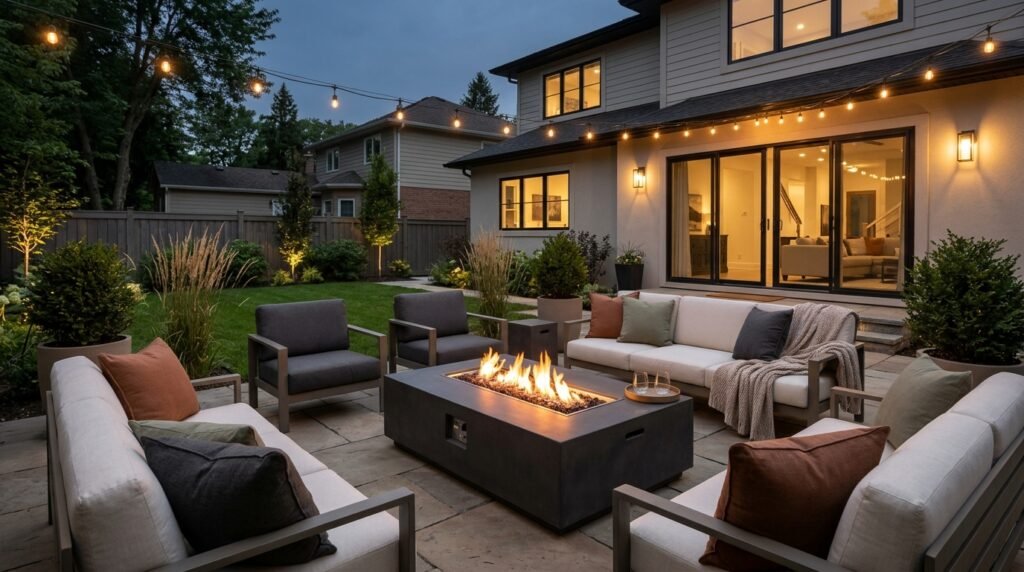
A fire pit table is an outdoor table with a built-in flame feature, usually fueled by propane or natural gas. It combines the social feel of an outdoor fire with a tabletop surface that can be useful for drinks, small plates, or decor when the burner area is not in use. Unlike a traditional wood-burning fire pit, most gas models produce controlled flames without firewood, ash, or flying embers. They are commonly used on patios, decks, and other outdoor living areas, but placement depends on the individual appliance, surrounding materials, ventilation, and the manufacturer’s required clearances. Gas fire tables are decorative outdoor appliances rather than indoor fireplaces, and recognized safety standards cover outdoor decorative gas appliances. The right model depends on more than appearance. Fuel type, table dimensions, heat output, burner controls, surface material, weather resistance, seating layout, and safety instructions all matter. Understanding those details makes it easier to decide whether this type of outdoor feature actually fits the space.
How Does a Fire Pit Table Work?
Most gas models use a burner installed in the center or another defined section of the tabletop. Fuel reaches that burner from either a propane cylinder or a fixed natural-gas supply. An ignition system starts the flame, while a control valve allows the user to adjust it within the range designed by the manufacturer. Decorative media, such as approved fire glass or lava rock, may surround or cover parts of the burner according to the product instructions. The flames rise through this media and create the visual center of the table. A propane fire pit table may hide its cylinder inside the base or use a remote cylinder arrangement, depending on its design. Natural-gas versions connect to a fixed supply and therefore have different installation considerations. ANSI Z21.97/CSA 2.41 covers outdoor decorative gas appliances that use natural gas or propane and recognizes portable, stationary, and built-in configurations. The exact operating procedure should always come from the manual supplied with the appliance.
What Is the Difference Between a Fire Table and a Traditional Fire Pit?
The biggest difference is how the space is used. A traditional fire pit is primarily a place for a fire. A fire pit table combines that flame with a raised surface designed to function more like outdoor furniture. The tabletop can make conversation seating feel natural because people gather around it much as they would around a coffee or dining table. Many gas versions also offer quick ignition and adjustable flames without storing logs or cleaning ash. Traditional wood-burning pits provide a different experience. They can offer the smell, sound, and character of burning wood, but they also create smoke, sparks, embers, and ash. Local rules may restrict open wood fires in some areas. Gas fire tables avoid many wood-related issues, but they introduce fuel-system considerations and must still be operated as flame-producing appliances. Neither option is automatically better. The useful choice depends on whether the priority is atmosphere, convenience, heat, outdoor cooking, tabletop function, or the experience of a wood fire.
Propane Fire Pit Tables
Propane is popular because it allows a gas fire feature to work without a permanent natural-gas connection. Many models use a cylinder that is stored in or connected to the appliance as designed. This can make placement more flexible, although the unit should not be moved while operating or hot unless its instructions specifically allow otherwise. Propane also makes it possible to add a fire pit table to a patio where extending a natural-gas line would be impractical. The tradeoff is that the cylinder eventually needs refilling or replacement. Its approved location, hose, regulator, connections, and ventilation must remain exactly as intended by the manufacturer. Do not improvise cylinder storage or modify the fuel system. The current ANSI/CSA standard for outdoor decorative gas appliances includes requirements for appliances connected to self-contained propane supplies, including different configurations and cylinder arrangements. Before buying, check where the cylinder sits and whether it can be accessed comfortably without reaching near hot components.
Natural Gas Fire Pit Tables
Natural gas can make sense when an outdoor area already has a suitable gas supply or when the table will remain in one permanent location. Instead of changing propane cylinders, the appliance connects to a fixed fuel piping system designed for the product. The ANSI/CSA outdoor decorative gas appliance standard covers appliances connected to fixed fuel piping systems as well as propane configurations. A natural-gas fire pit table should not simply be connected to an improvised line because a homeowner wants to avoid propane. Gas type, pressure, burner design, regulator requirements, connections, and installation instructions must match the appliance. Professional installation may be required by local rules or appropriate for the work involved. Natural gas also reduces portability. Once the gas connection determines the table’s location, rearranging the patio becomes less flexible. For a permanent outdoor seating area, that may not matter. For people who regularly reorganize furniture or expect to move homes, a propane model can sometimes provide more flexibility.
Round, Square, and Rectangular Designs
Shape affects both appearance and the way people gather around the flame. A round fire pit table naturally supports conversation because seating can be arranged around the entire perimeter without obvious corners. It often works well in compact conversation areas or with curved outdoor furniture. Square models create a balanced arrangement for four-sided seating and can suit patios with strong geometric lines. Rectangular tables work especially well with outdoor sofas, long benches, or dining-style layouts. They can provide more usable tabletop length and visually anchor a larger seating group. Shape should not be selected from product photographs alone. Measure the patio and place temporary markers on the ground to represent the actual table. Then add the chairs at their normal distance. Make sure people can sit, stand, and walk behind occupied seats without entering unsafe areas around the flame. A smaller table with comfortable circulation usually works better than an oversized centerpiece that dominates the patio.
Coffee-Height and Dining-Height Fire Tables
Not every fire table is built at the same height. Lower models behave much like outdoor coffee tables and pair naturally with deep lounge chairs and sofas. Taller versions can work with dining chairs or counter-style seating if specifically designed for that use. The most comfortable choice depends on the furniture already in the space. A low fire pit table may look awkward beside upright dining chairs, while a tall model can interrupt views across a relaxed lounge arrangement. Check the actual dimensions rather than relying on terms such as “coffee height” or “dining height,” since product proportions vary. Also look at the width of the usable tabletop around the burner. A large overall table may still provide limited space if the burner occupies most of its surface. If the goal is regular outdoor dining, verify that the particular appliance is designed and suitable for that arrangement. Never place plates, cups, fabrics, or other objects where the manufacturer says the surface can become hot.
How Much Heat Does a Fire Table Provide?
Heat output varies by model, burner size, fuel system, weather, and seating distance. Manufacturers often state burner input in BTUs per hour, but a higher number does not automatically mean everyone around the table will feel proportionally warmer. Outdoor heat is affected by wind and open-air conditions, while much of a gas flame’s heat rises. A fire pit table should therefore be viewed primarily as an outdoor flame feature with supplemental warmth rather than assumed to replace a dedicated patio heater. Compare models using their documented specifications, but also consider the intended use. A compact table used during mild evenings may not need the same output as a larger gathering area used in cooler weather. Wind guards can affect flame behavior on models designed to use them, but only compatible accessories should be installed. Do not modify burners or fuel components to increase heat. If strong outdoor heating is the main goal, a purpose-designed outdoor heater may be more suitable.
Choosing the Right Size for Your Patio
Start with the complete seating arrangement rather than the table alone. Measure the outdoor area, then identify doors, steps, railings, walls, planters, pathways, roof supports, and other fixed features. Place the intended chairs or sofa positions on the plan. The fire pit table should fit inside that arrangement without forcing people into awkward circulation paths. Manufacturer-required clearances from combustible materials must also be respected. There is no responsible universal clearance number for every fire table because appliance instructions and installations differ. Follow the specific product’s manual and applicable local requirements. A tabletop that looks compact online can feel surprisingly large once chairs are pulled out. Conversely, a tiny burner table may look lost in a broad sectional arrangement. Cardboard, painter’s tape, or temporary markers can help test the footprint before purchase. Also check the table’s height against seat height. The goal is a comfortable conversation zone that remains practical when the flame is off as well as when it is operating.
Where Can You Safely Put a Fire Pit Table?
Placement is a safety decision before it is a decorating decision. Outdoor decorative gas appliances are intended for outdoor installation under the scope of ANSI Z21.97/CSA 2.41. A fire pit table needs the ventilation, clearances, surface conditions, and overhead space specified by its manufacturer. Do not assume that an outdoor-looking space is automatically appropriate. Enclosed porches, screened rooms, covered patios, balconies, decks, and areas beneath awnings can create different conditions. Some products may allow certain installations while others may prohibit them. Nearby walls, furniture, railings, plants, umbrellas, curtains, roofs, and other combustible materials also matter. Keep the appliance stable and use it only on surfaces allowed by its instructions. Local fire or building rules can impose additional restrictions. If the manual is missing, obtain the correct manual for the exact model rather than copying clearance information from a similar-looking product. Flame appliances should never be positioned based only on what looks attractive in a patio photograph.
Can You Use a Fire Table on a Deck?
Possibly, but the answer depends on the exact appliance, deck material, installation conditions, and manufacturer instructions. Do not assume every fire pit table is suitable for wood or composite decking. Heat can affect materials differently, and the required separation from combustible surfaces varies by product. The safest approach is to find the installation section of the manual before purchasing. Check the required base surface, side clearances, overhead clearance, and any restrictions involving combustible construction. If a heat-resistant pad or another protective product is recommended, use only an arrangement suitable for the appliance and surface. A protective mat should never be treated as permission to ignore required clearances. Also consider practical risks. Chairs should not block the controls or cylinder access. Gas hoses should remain protected from traffic and damage. Children and pets should not have an easy route directly through the flame area. For uncertain installations, the manufacturer or a qualified local professional can provide guidance specific to the product and property.
Covered Patios Need Extra Attention
A covered patio may seem like an ideal location because it protects furniture from rain, but overhead construction changes the fire environment. A fire pit table produces an open flame and hot combustion gases. The roof, ceiling, curtains, screens, furniture, and nearby walls can affect whether the location is suitable. Never rely on a generic statement that all gas fire tables are safe under patio covers. Some appliance manuals provide specific clearance and ventilation conditions, while others restrict installation more severely. Outdoor use also does not mean safe use in every semi-enclosed space. Adequate ventilation matters for gas-burning appliances. Before installing under any roof, compare the exact location with the manufacturer’s installation requirements. Measure clearances rather than estimating them visually. Consider retractable awnings and umbrellas as well; they may end up above the flame even if they were moved away during initial setup. If the instructions do not clearly permit the planned location, choose a more open area or contact the manufacturer for model-specific guidance.
Fire Glass, Lava Rock, and Burner Media
Gas fire features often use decorative media around the burner. Fire glass creates a polished modern appearance and reflects flame light. Lava rock produces a more natural, textured look. Some designs use other media specifically approved for the appliance. The important word is “approved.” Do not fill a fire pit table with ordinary landscaping stones, decorative glass, river rocks, or random materials because they look similar. Materials exposed to heat must be suitable for that application and installed according to the manufacturer’s directions. Burner ports and ignition components also need to remain arranged as instructed. Excess media or incorrectly placed pieces can interfere with ignition or flame behavior. Follow the required amount, depth, and placement for the exact model. If replacing the original media, check compatibility first. Decorative media also collects dust, leaves, and outdoor debris over time, so periodic inspection is useful. Never handle or rearrange the material until the burner and media have fully cooled.
Wind Changes How the Flame Behaves
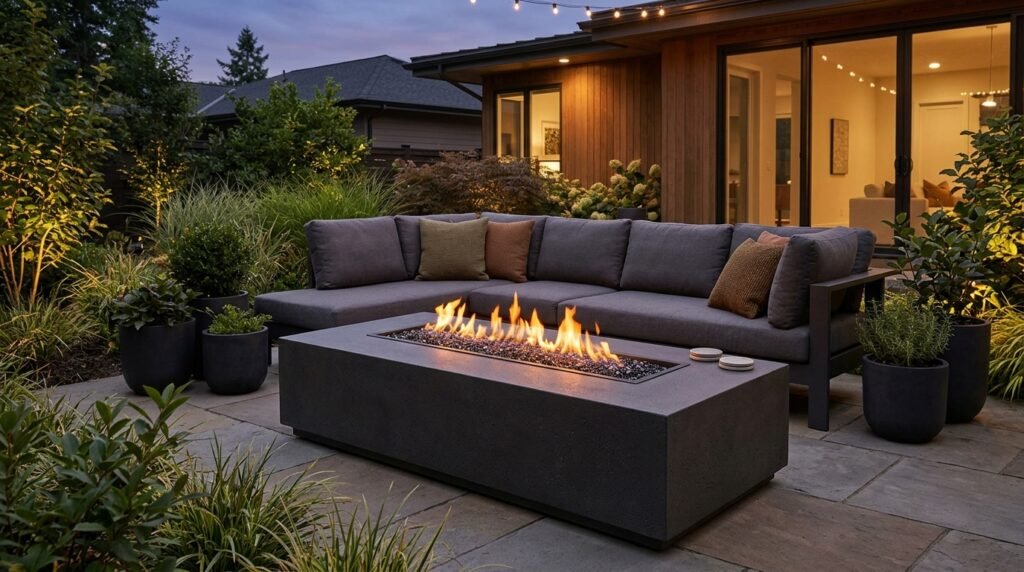
Outdoor flames do not behave the same way in calm and windy conditions. Strong air movement can push flames toward one side, reduce comfort, make ignition difficult, or create operating conditions outside the manufacturer’s recommendations. If a fire pit table sits in an exposed area, observe the site’s normal wind patterns before deciding its permanent location. Buildings, fences, and walls can also create turbulence rather than simply blocking wind. Some fire tables support compatible glass wind guards. These surround the burner area and can help shield the flame while preserving visibility. They should not be improvised from ordinary glass or unrelated products. Use accessories specifically approved for the appliance. A wind guard also does not make it safe to operate the unit in weather conditions the manufacturer says to avoid. If flames repeatedly lean toward furniture or users, turn the appliance off rather than treating the behavior as normal. Stable operation matters more than keeping the fire running during an outdoor gathering.
What Materials Work Well Outdoors?
The table body and top may be made from metal, concrete-like composites, stone, tile, or other outdoor-suitable materials. Each material has different weight, maintenance, weathering, and heat characteristics. Powder-coated metal can create a clean modern look but may need protection from scratches and corrosion. Heavier composite or concrete-style tables can feel substantial and resist casual movement, but their weight makes relocation harder. A fire pit table with a tiled or stone-like surface should still be maintained according to its manufacturer’s instructions because finishes, grout, sealers, and substrates can differ. Do not assume a heavy table can remain uncovered through every climate. Freeze-thaw conditions, standing water, coastal salt, intense sunlight, and repeated wetting can affect outdoor materials. Check the care instructions before buying, especially if the table will remain outside year-round. Replaceable covers can help keep debris and water away when appropriate, but the appliance must be completely off and cool before it is covered.
How to Use a Fire Pit Table Safely
Read the entire manual before the first use, including lighting, shutdown, fuel, clearance, and maintenance instructions. Check the appliance for visible damage and make sure burner media is positioned correctly. For propane models, inspect the cylinder connection, hose, and regulator as directed. Never use a flame to search for a gas leak. If gas is smelled, do not attempt normal ignition; follow the manufacturer’s emergency and leak instructions. Keep children, pets, loose clothing, and combustible objects away from hot surfaces and flames. Do not leave an operating fire pit table unattended. CPSC tracks safety issues involving LP-gas appliances and fire pits, and past recalls show why product condition and correct design matter. One recalled outdoor gas fire pit table lacked adequate heat shielding and created a burn hazard near the propane tank controls. Check the exact product for recalls when buying used equipment or when safety concerns arise.
A Fire Table Is Not Automatically a Cooking Appliance
The presence of a flame does not mean the table is designed for roasting food, grilling meat, or holding cookware. Outdoor decorative gas appliances and outdoor cooking gas appliances are addressed as different categories in safety standards tracked by the CPSC. Unless the manufacturer specifically states that a fire pit table and its approved accessories are designed for cooking, treat it as a decorative flame appliance. Food, grease, marshmallows, pans, and cooking residue can interfere with burner media and components. Improvised grates may also change heat exposure or place loads where they were never intended. This distinction is easy to miss because some outdoor products combine fire and cooking functions. The product manual and listing determine what a particular model is designed to do. If outdoor cooking is important, choose equipment specifically designed and approved for that purpose rather than converting a decorative fire feature into a grill.
Cleaning and Routine Maintenance
Maintenance is usually straightforward, but it should be regular. Once the unit is completely cool and the fuel is off, remove leaves and loose debris according to the manufacturer’s instructions. Keep burner openings and ignition areas free from obstruction without enlarging, drilling, or modifying them. Clean the tabletop with products suitable for its finish. Harsh chemicals or abrasive tools can damage some surfaces. A propane fire pit table also needs periodic attention to the hose, regulator, cylinder area, and connections as directed by the manufacturer. Stop using the appliance if components appear damaged, badly corroded, cracked, loose, or otherwise unsafe. Do not make improvised gas-system repairs. If replacement parts are required, use parts specified for the exact model. During long periods without use, follow the manufacturer’s storage instructions for the appliance and fuel cylinder. Proper maintenance is less about making the table look perfect and more about keeping debris, deterioration, and damaged components from interfering with safe operation.
What to Look for Before Buying
Begin with the intended location and fuel source. Decide whether propane flexibility or a fixed natural-gas connection makes more sense. Measure the patio and furniture, then choose a table shape and height that fits the seating arrangement. Check the actual burner rating, ignition system, approved fuel, product dimensions, weight, materials, required clearances, included burner media, compatible accessories, warranty, replacement-part availability, and weather-care instructions. For a gas fire pit table, look for credible safety certification or listing information applicable to the product and market. ANSI Z21.97/CSA 2.41 is a recognized standard for outdoor decorative gas appliances, and CPSC identifies it among voluntary standards relevant to LP-gas appliances such as fire pits. Certification does not eliminate the need for correct installation and use. Finally, read the manual before buying when possible. It can reveal placement restrictions or operating requirements that are difficult to discover from a retailer’s product description.
Common Mistakes That Can Ruin the Experience
Buying by appearance alone is one of the most common mistakes. A beautiful table can be frustrating if it is too large, too tall, difficult to access for propane changes, or unsuitable for the intended patio. Another mistake is treating every model as interchangeable. Required clearances, fuel systems, burner media, controls, accessories, and weather instructions can vary. Some owners may also expect a fire pit table to provide the same concentrated warmth as a dedicated outdoor heater. Others place chairs so close that guests feel uncomfortable around the flame. Using unapproved decorative stones, blocking ventilation, adding homemade wind guards, or converting the unit for cooking can create unnecessary risks. Covering the table while it is still warm can also damage the cover or appliance. Before use, understand how the product was designed to operate. Most practical problems are easier to avoid when the table is selected around the patio and intended use rather than forcing an attractive product into the wrong setting.
Frequently Asked Questions
Is a fire pit table worth having?
A fire pit table can be worthwhile for people who want a convenient outdoor flame feature and a social centerpiece without managing firewood and ash. Its value depends on how often the patio is used, the available space, fuel access, climate, and whether the tabletop function is genuinely useful.
Can you leave a fire table outside all year?
That depends on its materials, climate, and manufacturer instructions. Some models are built for extensive outdoor exposure but still benefit from an approved cover and routine care. Follow storage guidance for both the appliance and propane cylinder, especially during severe weather or long periods without use.
Can a gas fire table get wet?
Outdoor appliances are designed with outdoor conditions in mind, but that does not mean every component should remain exposed to standing water or severe weather. Follow the manufacturer’s weather and covering instructions. Never operate equipment with damaged or unsafe fuel or ignition components.
Can you put drinks on a fire table?
Many designs provide usable tabletop space around the burner, but surfaces near the flame can become hot. Keep drinks, plates, napkins, and other items only in areas the manufacturer considers suitable. Never allow objects to interfere with burner openings, controls, or required ventilation.
Is propane or natural gas better for a fire table?
Neither fuel is universally better. Propane offers greater placement flexibility and avoids a fixed gas connection. Natural gas can suit a permanent installation and removes the need to change cylinders. The appliance must be specifically designed for the fuel being used.
Does a fire table keep you warm?
It can provide noticeable warmth near the flame, but performance varies with burner output, weather, wind, and seating position. Outdoor heat disperses quickly. If heating a large patio is the main goal, compare the fire feature with purpose-designed outdoor heating options before deciding.
Conclusion
A fire pit table works best when it is chosen as both an outdoor appliance and a piece of patio furniture. The right shape, height, fuel type, and size should fit the way people actually use the seating area. Safety deserves equal attention. Follow the exact manufacturer’s requirements for outdoor placement, ventilation, clearances, burner media, fuel connections, weather conditions, and accessories rather than relying on generic rules from another model. Propane offers flexibility, while natural gas can suit a permanent setup. Neither choice is automatically better. Before buying, measure the patio, read the product manual, check credible safety certification information, and understand what the table is designed to do. A well-chosen model can create a comfortable gathering point without making the outdoor space difficult to move through or maintain.


