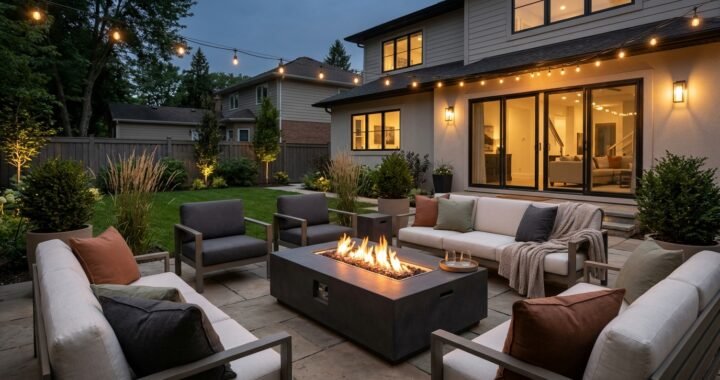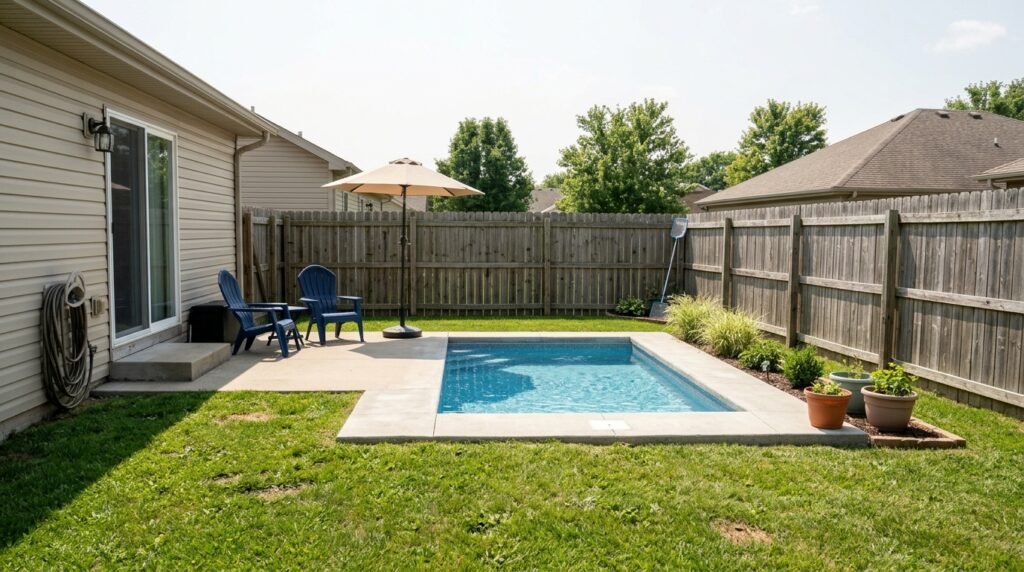
Small pool ideas on a budget work best when the plan starts with a simple pool, a realistic site, and only the features that will actually be used. A compact above-ground pool, stock-tank-style pool, plunge pool, or small in-ground design can provide a place to cool off without turning the whole yard into a resort project. The biggest savings usually come from reducing excavation, complicated shapes, oversized decks, elaborate water features, and unnecessary hardscaping. Safety, drainage, electrical work, circulation, and local permits are not good places to cut corners. A low-cost pool should still be safe and practical to maintain. Before choosing a design, decide whether the main goal is swimming, cooling off, relaxing, entertaining, or giving children a supervised place to play. That decision determines how much water, deck space, equipment, and landscaping are really needed. The smartest budget design is rarely the cheapest object in the store. It is the smallest complete setup that fits the yard, intended use, maintenance capacity, and local requirements.
Start With the Pool’s Real Purpose
A small backyard can support very different kinds of pools, so begin with use rather than appearance. Someone who mainly wants to sit in cool water may be satisfied with a shallow compact pool. A household that wants short exercise sessions needs more usable length. Families may care more about safe access, visibility, and room around the water than decorative finishes. Defining that purpose keeps small pool ideas on a budget from becoming a collection of expensive extras. Write down the two or three activities the pool must support. Then choose dimensions and features around them. This can prevent paying for a large deep end that is rarely used, a broad deck with no seating plan, or decorative jets that add equipment and maintenance. Also think about who will use the pool in several years. A design that works only for one summer can be poor value if changing it later requires new construction. Compact does not have to mean cramped; it means giving useful space priority over unused water and decoration.
Above-Ground Pools Can Reduce Major Site Work
An above-ground pool is one of the most practical directions for homeowners trying to control construction costs. It can avoid much of the excavation and permanent structural work associated with an in-ground pool. There are basic framed models, rigid-wall systems, and more finished designs that can be integrated into landscaping. The important point is to compare the complete setup, not just the pool package. Ground preparation, a level base, electrical needs, filtration, access, barriers, permits, and suitable steps can add to the project. Among small pool ideas on a budget, a simple above-ground pool often makes sense when the yard is reasonably level and the owner values function over a seamless built-in appearance. Avoid trying to hide the entire pool behind an oversized custom deck simply because photographs online show that approach. A small landing, safe steps, and a modest seating area may provide everything needed while preserving more yard and keeping material and labor under control.
A Stock-Tank-Style Pool Can Create a Simple Cooling Spot
Stock-tank pools became popular because a compact round container can create an appealing place to cool off with relatively little visual clutter. The idea works best for lounging and cooling rather than conventional swimming. A proper setup still requires more thought than filling a container with a garden hose. Water needs appropriate circulation and sanitation, and electrical equipment around water requires safe installation. The supporting surface must also be stable and capable of handling the filled container. For people exploring small pool ideas on a budget, this format can be attractive because the surrounding design can remain simple. Gravel, a few containers of plants, shade, and movable chairs can make the area feel intentional without building an expensive deck. Before converting any tank or container, confirm that the product and planned modifications are appropriate for the intended use. Sharp edges, unsuitable coatings, improvised electrical connections, and poorly installed plumbing can turn a cheap project into a safety problem. Local barrier rules may apply even to small or shallow backyard pools.
Consider a Compact Plunge Pool When Permanence Matters
A plunge pool is smaller than a conventional swimming pool and is intended mainly for cooling, relaxing, or soaking rather than long-distance swimming. It can be a good solution for a narrow courtyard or compact backyard where a full-size pool would dominate the site. However, “small” should not be confused with “cheap.” Excavation, structural work, waterproofing, plumbing, equipment, electrical work, permits, access, and surrounding surfaces can still make a built-in plunge pool a substantial project. The value of this option among small pool ideas on a budget comes from controlling scope. Keep the geometry simple. Avoid adding several levels, complex curves, raised walls, multiple water features, and large areas of premium paving unless they solve a real need. Ask contractors to separate essential construction from optional finishes in their proposals. That makes it easier to see where money is going. A simple rectangular pool with a restrained deck can often feel more deliberate than a tiny pool overloaded with expensive details.
Simple Shapes Keep the Design Under Control
Curves and unusual outlines can look attractive, but a straightforward rectangle, square, or circle is often easier to integrate into a modest backyard. Simple geometry makes furniture placement, fencing, covers, paving, and landscaping easier to plan. It can also reduce awkward leftover spaces around the water. Construction cost depends on the pool system and site, so no shape guarantees a specific saving. Still, limiting complexity is a reliable way to reduce the number of custom details that need attention. This principle is useful across small pool ideas on a budget, from portable pools to permanent installations. A rectangle can sit parallel to a fence or patio and leave a clear path along one side. A round above-ground pool can fit a corner with a compact access area. Before deciding, mark the proposed outline on the ground with a hose, rope, or another removable method. Add the required barrier, equipment, access, and seating zones too. A pool that fits mathematically may still make circulation around the yard uncomfortable.
Use the Existing Patio Before Building a New One
One of the easiest ways for a modest pool project to grow expensive is to treat the surrounding patio as a second major construction project. If the property already has a sound patio, consider placing the pool where that space can serve nearby seating and dining needs. This can reduce the amount of new hardscape required. The pool still needs appropriate clearances, barriers, drainage, and safe walking surfaces, so the existing patio cannot simply dictate placement. Yet reusing functional space is one of the most sensible small pool ideas on a budget. Instead of paving every side of the pool, create hard surfaces where people actually enter, exit, sit, or maintain equipment. Other edges may be suitable for landscaping, depending on the pool design and local requirements. Be careful with surfaces that become slippery when wet. Also consider how runoff moves across the patio. Water should not be directed toward the house, pool equipment, or areas where standing water creates a problem.
Keep the Pool Deck Small and Purposeful
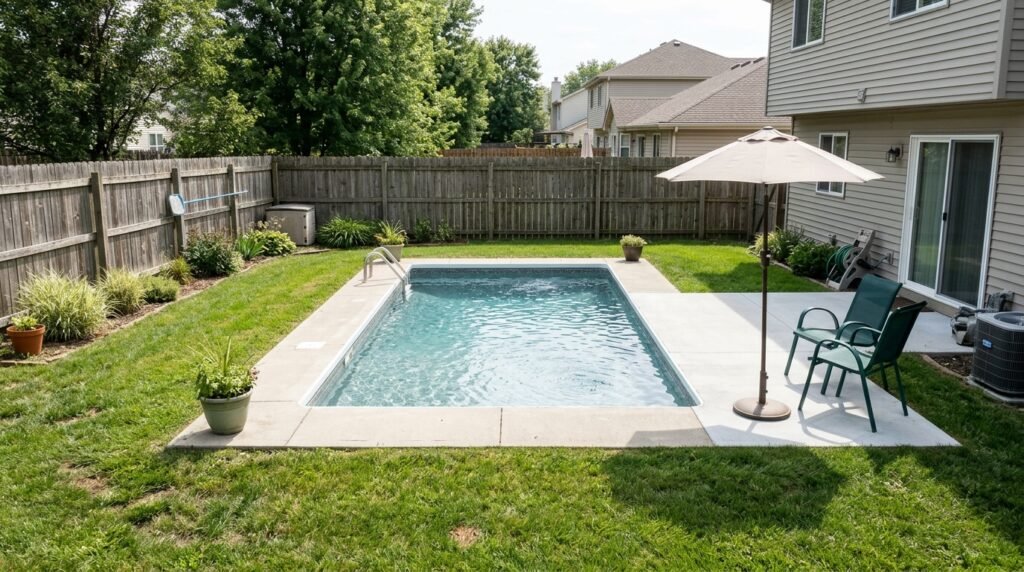
A large deck can cost as much attention and money as the pool itself. Start by deciding what the deck must do. If it only needs to provide safe entry and space for two chairs, there is little reason to build an entertainment platform around the entire pool. For an above-ground design, a compact access deck may be enough. For an in-ground pool, a practical paved zone can leave room for a separate existing patio. This is where small pool ideas on a budget benefit from drawing furniture before construction. Put chairs, a small table, steps, storage, and walking routes on the plan at their real dimensions. That reveals where surface area is useful and where it is simply empty paving. Any deck or walking surface should be appropriate for a wet pool environment and installed according to applicable requirements. Drainage matters as well. A cheap surface that stays slippery, settles badly, or directs runoff toward the pool can create more work than it saves.
Landscaping Can Make a Basic Pool Look Finished
A modest pool does not need expensive stonework to feel connected to the yard. Repeating a few existing landscape materials can make the pool area look planned. Gravel, suitable mulch, simple edging, a limited plant palette, and existing lawn can create a clean transition around the water. Containers are useful because they add height and texture without requiring large permanent planting beds. Landscaping is particularly helpful for small pool ideas on a budget because it can soften an ordinary above-ground wall or simple pool surround. Plant selection still needs care. Avoid placing thorny plants where swimmers may brush past them. Plants that drop large amounts of leaves, flowers, fruit, or seeds directly into the water can increase cleaning. Aggressive roots may also be unsuitable near certain pool structures or underground services. Leave equipment accessible for maintenance instead of hiding it behind dense planting. A few well-placed plants usually create a calmer result than filling every open edge with decorative material.
Create Privacy Only Where You Need It
Privacy can make a compact pool far more comfortable, especially in a small urban yard. The expensive response is to replace every boundary and add permanent structures everywhere. A better approach is to identify the actual sightlines. One neighboring window may be the main issue, while other sides of the yard are already private. Targeted screening can therefore provide more value. Depending on local rules and the pool barrier design, possibilities may include an existing fence, a compliant new barrier, planted screening, or a separate privacy screen positioned away from required safety features. Small pool ideas on a budget should never use decorative privacy elements as substitutes for required pool barriers. Screens, planters, benches, and furniture should also not create easy climbing routes over a safety fence. Before installing tall structures, check local height and setback rules. Treat safety and privacy as related but separate design problems: first create appropriate access control, then improve views and comfort without weakening it.
Shade Does Not Require a Pool House
Full outdoor structures can be attractive, but a small pool may only need shade over a seating spot. An existing covered patio can sometimes serve that purpose. Where appropriate, a simple outdoor umbrella or another properly installed shade solution can create a comfortable place to rest without constructing a pavilion. Shade is a useful addition to small pool ideas on a budget because it improves how the space functions without changing the pool itself. Placement matters. Keep movable items from becoming climbing aids near safety barriers. Umbrellas need stable bases and should be closed or stored as appropriate during strong winds. Avoid attaching improvised shade structures to fences, pool walls, or buildings without considering structural loads. Shade over part of a seating area is often more practical than trying to cover the entire pool. It gives swimmers somewhere comfortable to take a break while preserving a simple backyard layout.
Spend on Pool Safety Before Decoration
A low budget should change the finishes, not the commitment to water safety. The CDC recommends four-sided fencing around home pools that separates the pool from the house, with self-closing and self-latching gates. CDC guidance describes a fence at least four feet high, while CPSC also provides detailed residential pool-barrier guidance. Local rules can differ or be stricter, so the authority responsible for permits should be consulted before construction.
These costs belong in the core budget for small pool ideas on a budget, rather than being treated as optional extras. Close and constant adult supervision is still necessary when children are in or near water; barriers do not replace supervision. The CDC notes that drowning can happen quickly and silently, which is why layers of protection matter. Pool alarms and qualifying safety covers may add protection, but each product should be used for its intended purpose. For an above-ground pool, access through ladders and steps also deserves careful control when the pool is unattended.
Do Not Cut Corners on Electrical Work
Pumps, lighting, heaters, controls, and nearby receptacles introduce electrical considerations that should not be handled with casual extension cords or improvised connections. Requirements vary by location and installation type. Permanent pool electrical work should follow applicable electrical rules and local inspection requirements, with qualified professional help where required. That cost belongs in the core project budget. People collecting small pool ideas on a budget sometimes focus so heavily on the vessel and landscaping that equipment installation gets overlooked. Ask what power the pump and other planned equipment require before choosing the pool location. A convenient location for the pool itself may become less practical if electrical service requires difficult work. Equipment also needs suitable access for maintenance. Water and electricity are a combination where an unsafe shortcut is never a meaningful saving. Look for savings in decorative finishes, furniture, planting, pool size, or project scope instead.
Choose Features That Earn Their Cost
Small pools can quickly become expensive when every attractive option is added. Waterfalls, fountains, elaborate lighting, built-in benches, heating, automatic controls, premium tile, tanning ledges, and specialty finishes can each be useful, but they should solve a real need. Ask three questions about every upgrade: Will it be used often? Does it make maintenance easier or harder? Would the pool still satisfy its main purpose without it? This filter keeps small pool ideas on a budget focused. A built-in bench may be worth more than a decorative fountain if the pool is mainly for relaxing. Lighting may be useful if the area is used after sunset, provided it is correctly designed and installed. Heating can extend use in some climates but also adds equipment and operating costs. Make an essential list and an optional list before choosing upgrades. Fund safety, circulation, site preparation, and basic usability first. Decorative features can be considered if the budget still allows them.
A Pool Cover Can Have Practical Value
A suitable pool cover can reduce debris and evaporation, although performance depends on the cover and pool. The U.S. Department of Energy identifies evaporation as a major source of swimming-pool energy loss and notes that covers can reduce evaporation and water loss. That can make a cover more useful over time than a purely decorative feature.
For small pool ideas on a budget, however, it is important to distinguish an ordinary pool cover from a safety cover. CPSC guidance discusses power safety covers that conform to recognized safety specifications as a protective layer in certain residential pool arrangements. A basic debris or evaporation cover should not automatically be treated as a child-safety barrier. Choose a cover for its actual intended function and check compatibility with the pool. Think about daily handling as well. A cover that is too awkward to use regularly may offer less practical value. Leave enough room in the layout for rolling, folding, or storing the chosen cover.
Plan Equipment Access Before Hiding It
Pumps, filters, valves, and other pool equipment are not usually the prettiest part of the yard, but they need room for inspection and service. Placing them in an inaccessible corner can make routine maintenance frustrating. Decorative screening can improve the view if it does not interfere with ventilation, required clearances, drainage, or access. This is an overlooked part of small pool ideas on a budget because homeowners can end up spending money twice: first hiding equipment too tightly, then rebuilding the screen when service is needed. Ask the installer or equipment manufacturer how much access each component requires. Think about the path someone would use to reach it. Filters may need to be opened, pumps may eventually need repair, and plumbing valves should remain usable. Equipment noise can also affect placement. A location immediately beside a favorite chair or bedroom window may be less appealing than it looked on paper. Solve function first, then disguise the equipment with a simple removable visual treatment.
Use Movable Furniture Instead of Built-In Seating
Built-in masonry benches and custom outdoor kitchens can make a pool area look permanent, but movable furniture is often more flexible in a small yard. Two comfortable chairs and a compact side table may be enough for everyday use. Furniture can be rearranged for guests, moved into shade, stored seasonally, or replaced without construction. That flexibility fits naturally with small pool ideas on a budget. Measure furniture before buying it. Oversized loungers can consume the entire walking zone beside a compact pool. Choose pieces suited to outdoor exposure and position them so they do not obstruct gates or necessary access. Furniture should also stay away from safety barriers where it could become a climbing aid. Instead of buying an entire matching outdoor set immediately, furnish the area around real habits. If people mostly swim and then sit for a drink, a simple seating pair may be enough. Add more furniture after the pool has been used and a genuine need becomes clear.
Think About Maintenance Before Choosing the Cheapest Pool
Purchase price is only one part of affordability. Every pool requires some level of cleaning, water care, circulation, equipment attention, and seasonal work. The CDC says disinfection and proper pH are key defenses against germs in swimming pools. It also advises following product labels and keeping pool chemicals secured away from children and pets.
A very cheap pool that is difficult to clean or relies on poorly supported equipment may not feel economical after repeated maintenance problems. Evaluate small pool ideas on a budget by asking what routine ownership will involve. How easy is it to reach the filter? Are compatible replacement parts available? How will leaves and debris be removed? Where will chemicals and maintenance tools be stored safely? Will seasonal winterization be necessary in the local climate? Do not improvise chemical mixtures or assume that adding extra sanitizer is better. Follow the pool, equipment, and chemical manufacturers’ directions. If water quality cannot be corrected confidently, professional pool service can be safer than repeatedly experimenting with chemicals.
Leave Room for Drainage and Wet Foot Traffic
A pool changes how water moves through a yard. Swimmers drip around the entry point, splashing wets nearby surfaces, and storms add runoff. If the pool area is squeezed tightly against the house or into a poorly drained corner, the project can create puddles and muddy paths. Good small pool ideas on a budget account for drainage before decorative landscaping. Observe the yard during rain. Note where water already collects and how the ground slopes. A pool should not block an existing drainage route without an appropriate solution. Hard surfaces should be planned so water does not simply run toward the house. The walking route from the pool to the house also deserves attention. A smaller amount of properly chosen paving in the main traffic area may provide more value than covering the entire yard. Avoid makeshift surfaces that become unstable or dangerously slippery when wet. Significant grading or drainage changes may need professional design or local approval, depending on the property.
Use DIY Work for Lower-Risk Finishing Tasks
Doing some work personally can help control costs, but the best DIY tasks are those where mistakes are easy to correct and unlikely to create serious hazards. Painting an approved exterior screen, assembling movable furniture, planting suitable landscaping, or completing simple decorative work may be reasonable for many homeowners. Excavation, structural pool work, electrical systems, gas connections, complex plumbing, barriers, and major deck construction can carry much greater consequences when completed incorrectly. A balanced approach makes small pool ideas on a budget more realistic. Ask contractors to separate optional finish work from technical work. Some decorative tasks can be completed later, allowing the first stage to remain focused on a safe and functioning pool. Check permit rules before assuming homeowner labor is allowed for every part of the installation. Saving money by delaying a decorative planting bed is sensible. Saving money by skipping required inspections or improvising a safety system is not.
Build the Backyard in Stages
A pool area does not need to look finished on delivery day. Phasing the project can prevent overspending and reveal what the space actually needs. Phase one can cover the pool, required barriers, essential equipment, safe access, drainage, and a basic seating area. After a season of use, patterns become clearer. Perhaps more afternoon shade is needed, or a storage bench would be more useful than another planting bed. This staged approach is one of the most flexible small pool ideas on a budget because it protects money from being spent on assumptions. Future work might include additional planting, improved furniture, a larger patio section, or upgraded lighting. Leave future improvements in mind during the initial layout so they do not require moving equipment or removing recently completed work. Phasing does not mean postponing safety, permits, required barriers, or essential construction. Those belong in the first stage. It means allowing cosmetic and convenience features to earn their place after actual use.
Common Budget Pool Mistakes
The most expensive mistake is comparing pool prices without comparing complete projects. A low advertised price may not include site preparation, delivery, electrical work, barriers, access, permits, filtration, decking, or restoration of the yard. Another mistake is choosing a pool before checking local rules. Setbacks, barriers, permits, utility locations, and other requirements can change where or whether a pool fits. Good small pool ideas on a budget also avoid overbuilding the surroundings. An enormous deck, complex retaining walls, or elaborate landscaping can erase the savings of choosing a compact pool. At the opposite extreme, underbuilding can create problems too. Poor drainage, unstable bases, unsafe access, inadequate circulation, or missing barriers are not sensible economies. Finally, avoid copying a photograph without considering the property. A design that works on a flat, private yard may require major grading or screening on another site. Budget around the actual conditions rather than only the desired appearance.
Frequently Asked Questions
What are the easiest small pool ideas on a budget?
Simple above-ground pools are often among the easiest ways to reduce major construction work. Stock-tank-style setups may also suit people who mainly want a compact cooling space. The complete cost still needs to include site preparation, equipment, safe access, barriers, electrical needs, and maintenance.
Is a small in-ground pool always cheaper than a large pool?
Not necessarily. A smaller pool uses less space and may reduce some materials, but many project costs do not shrink in direct proportion to pool size. Excavation, equipment, permits, electrical work, access, and contractor setup can still be required.
How can I make an inexpensive pool look better?
Keep the design simple and repeat materials already used in the yard. A tidy seating area, restrained planting, clean edging, attractive outdoor furniture, and targeted privacy can make a basic pool feel intentional without surrounding it with expensive hardscape.
Can I install a backyard pool myself?
Some pool systems are designed with homeowner assembly in mind, but installation requirements vary. Site preparation, barriers, electrical work, structural work, plumbing, and permits may require qualified professionals or inspections. Follow the manufacturer’s instructions and local requirements.
Do small pools still need fencing?
Small size does not automatically remove barrier requirements or drowning risk. CDC and CPSC guidance emphasizes preventing unsupervised access to residential pools. Local laws determine the specific requirements for a property, so confirm them before installation.
Which small pool features are worth paying for first?
Prioritize safe access, required barriers, reliable circulation and filtration, appropriate electrical installation, drainage, and a usable surface around the main entry. After those needs are covered, spend on features that match how the pool will actually be used.
Make the Budget Serve the Way You Will Use the Pool
The strongest small pool ideas on a budget are not built around finding the cheapest pool possible. They reduce the parts of the project that add cost without adding much everyday value. A simple shape, compact footprint, limited hardscaping, movable furniture, targeted landscaping, and phased upgrades can create an inviting backyard without trying to imitate a large resort pool. Start with the intended use and the real conditions of the property. Then price the complete project, including preparation, equipment, utilities, permits, barriers, safe access, drainage, and maintenance. Keep safety and technical work in the essential budget, and treat decorative upgrades as optional. Once those priorities are clear, a modest pool can feel deliberate rather than compromised. The goal is not to fit the most features into a small yard. It is to create a pool area that gets used often, remains manageable, and does not create unnecessary expenses after the first summer.