Slime is fun until it lands on the carpet. The soft, sticky mixture can sink between carpet fibers very quickly. If it dries there, the mess can look even worse. Bright slime may also leave color behind after the sticky material is removed. Fortunately, you usually do not need to replace the carpet. Learning how to get slime out of carpet starts with one simple rule: remove as much slime as possible before adding a cleaner. Work gently and avoid rubbing the mess deeper into the pile. The best cleaning method also depends on the carpet. A washable synthetic carpet may tolerate treatments that are unsuitable for wool or another delicate fiber. Always check the carpet manufacturer’s care instructions when available. Test any cleaning solution in a hidden area first. This guide covers fresh slime, dried slime, leftover color, odor, and common mistakes. It also explains when a stain is better handled by a professional carpet cleaner.
Why Slime Sticks to Carpet
Slime is difficult to remove because it is designed to stretch and stick. Many homemade slime recipes contain glue, water, coloring, and an activator. Store-bought versions can contain other ingredients. When slime falls onto carpet, the soft mixture surrounds individual fibers. Walking on it or rubbing it can push the material deeper. Once moisture evaporates, the residue may become firm and harder to lift. Food coloring, pigments, glitter, or other additives can create a second problem. You may successfully remove the slime but still see a colored mark. This is why cleaning works best in stages. First remove the physical slime. Then treat remaining residue. Finally, address color or odor only if necessary. Trying to solve every part of the stain with one strong chemical can damage the carpet without fully removing the mess.
Act Quickly When Slime Is Still Fresh
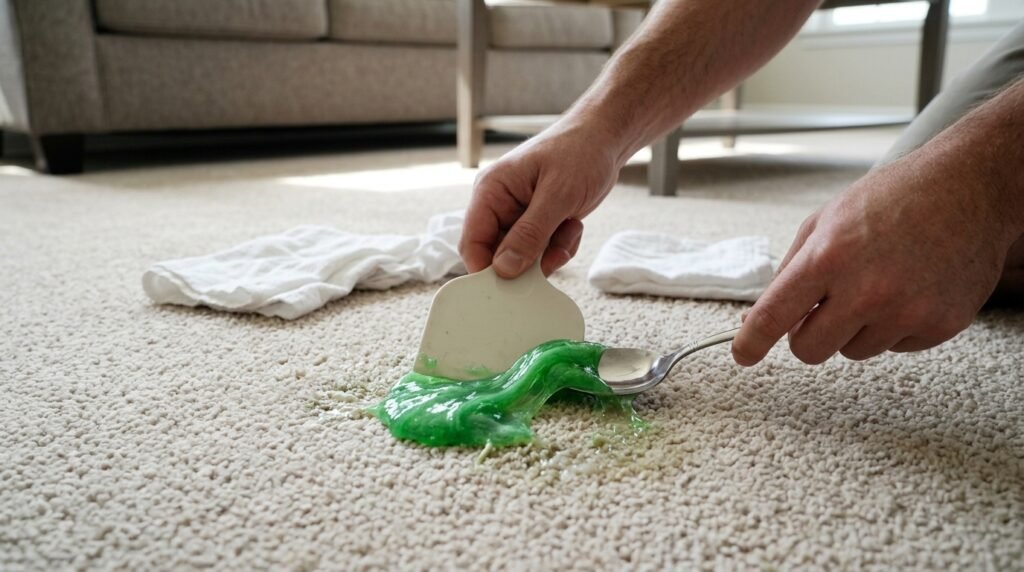
Fresh slime is often easier to remove than a completely dried patch. If you see the spill happen, keep people and pets away from the area. Do not step on it. Use a spoon, dull scraper, or similar blunt object to lift the thick material from the carpet. Work from the outside toward the center. This helps prevent the slime from spreading. Place removed material directly into a disposable container or bag. Avoid wiping it onto another section of carpet. Once most of the thick slime is gone, you can evaluate the remaining residue. Do not immediately pour a large amount of water or cleaner over the area. Excess liquid can carry dissolved color farther into the carpet or backing. Slow, controlled cleaning is usually much more effective.
What You Need Before Cleaning Slime
Gathering your supplies first makes the process easier. You may need a spoon or dull plastic scraper, several clean white cloths, paper towels, cool or lukewarm water, and a carpet-safe cleaning product. A white cloth is useful because you can see whether slime color is transferring onto it. You may also need a soft brush for some durable carpets, although aggressive brushing should be avoided. Keep a small bowl nearby for cleaning solution rather than pouring directly from a large container. If you plan to use any household cleaning ingredient, first check whether your carpet manufacturer allows it. Wool, natural fibers, dyed carpets, and specialty rugs may need different care. A wet-dry vacuum or carpet extraction machine can sometimes help with suitable carpeting, but it should only be used according to its instructions.
Check Your Carpet Before Using a Cleaner
Before deciding how to get slime out of carpet, identify the carpet material if possible. Synthetic fibers such as nylon, polyester, and polypropylene can respond differently from wool and other natural fibers. Carpet dyes also vary. A treatment that removes a stain from one carpet may lighten another. Check the manufacturer’s cleaning instructions or warranty information. Some carpets require approved products to maintain warranty coverage. If you do not know the fiber type, start conservatively. Test the proposed cleaner in an inconspicuous area, such as inside a closet. Apply a small amount, follow the intended cleaning process, and let the test area dry completely. Look for fading, color transfer, texture changes, or other damage. If anything looks wrong, stop and choose another method or contact a professional.
How to Get Slime Out of Carpet While It Is Fresh
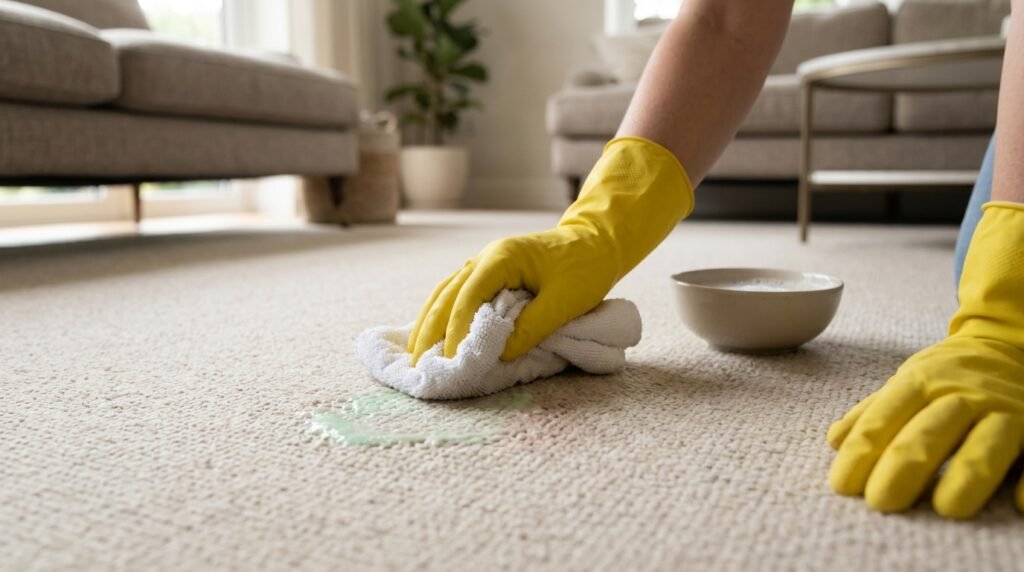
To tackle fresh slime, lift away the largest pieces first. A spoon works well because it has smooth edges and is unlikely to cut the fibers. Scoop upward instead of rubbing sideways. Continue until you cannot easily remove more solid slime. Next, blot the affected area with a clean cloth according to the cleaning method approved for your carpet. If a carpet-safe detergent solution is appropriate, apply a small amount to the cloth rather than soaking the floor. Blot from the outside toward the middle. Move to a clean part of the cloth as residue transfers. Repeat slowly. The goal is to pull slime upward from the fibers. Rubbing back and forth may spread pigment and distort the carpet pile, so patience is more useful than force.
Never Rub a Fresh Slime Stain
Rubbing is one of the most common mistakes people make. It feels natural because we scrub many dirty surfaces. Carpet stains behave differently. Hard rubbing can push slime deeper and spread its color across a larger area. It may also fray or distort fibers. Blotting and lifting are safer motions. Press a clean cloth against the residue, then lift it away. Repeat with a clean section of cloth. When using a spoon or scraper, move upward and inward rather than smearing slime sideways. If the carpet has a deep pile, use your fingers carefully to separate fibers after most of the slime is gone. Wear gloves if desired. Slow work may take longer, but it reduces the chance of turning a small spill into a large stain.
How to Remove Dried Slime From Carpet
Dried slime requires a different approach because it has already hardened around the fibers. Start by gently loosening what you can without pulling or cutting the carpet. A dull spoon or plastic scraper can help break away raised pieces. Do not use a sharp knife. Once loose material is removed, the remaining residue may need controlled moisture to soften it. Use a carpet-compatible cleaning method and apply only enough liquid to work on the affected fibers. Give the product the recommended contact time if its instructions specify one. Then blot and lift softened residue with clean cloths. Repeat instead of saturating the area. When learning how to get slime out of carpet after it dries, expect several gentle passes to work better than one aggressive treatment.
Can Ice Help With Slime?
Cold can sometimes make sticky materials firmer and easier to lift, but the result depends on the slime recipe. If you want to try ice, place it in a sealed plastic bag so melting water does not soak the carpet. Hold the cold bag against the slime briefly, then see whether the material becomes easier to scrape gently. Do not force hardened slime from fibers if it remains firmly attached. You could damage the carpet pile. Ice is better treated as a possible mechanical aid rather than a guaranteed stain remover. After lifting the bulk material, you may still need an appropriate carpet cleaner for residue or pigment. Always consider the carpet type before introducing additional cleaning products.
Using Mild Dish Soap Carefully
A small amount of mild dishwashing liquid diluted in water is sometimes used for carpet spot cleaning. However, it should not automatically be used on every carpet. First check your carpet care instructions. If permitted, make a weak solution rather than applying concentrated soap directly. Too much detergent can be difficult to rinse from carpet and may leave a sticky film. Apply the solution to a clean white cloth and blot the affected fibers. Avoid flooding the carpet backing. After the slime residue lifts, remove detergent using another cloth lightly dampened with clean water, if appropriate for the carpet. Blot the area dry with towels. If soap residue remains, the spot may attract dirt later. Using less product is usually easier than trying to rinse out an excessive amount.
Can Vinegar Remove Slime From Carpet?
White vinegar appears frequently in slime-cleaning advice because its acidity can affect some slime residues. However, it is not automatically safe for every carpet or rug. Carpet manufacturers may recommend against homemade cleaning mixtures, particularly on wool or specialty fibers. If you are considering vinegar, check the care instructions first and perform a hidden-area test. Never assume that “natural” means harmless. Acids can affect certain dyes and materials. Do not mix vinegar with bleach or other household chemicals. If the carpet manufacturer recommends a specific spot cleaner, that product is generally a more predictable option. How to get slime out of carpet should always be adapted to the carpet rather than based only on which household ingredient happens to be available.
What About Rubbing Alcohol?
Rubbing alcohol may dissolve or loosen certain sticky residues, but it also carries risks. It can affect dyes, carpet backing, adhesives, or other materials depending on the carpet construction. Do not pour alcohol directly onto a slime stain. Check the carpet manufacturer’s guidance before using any solvent-based treatment. If an approved method involves a solvent, use only the amount needed and provide good ventilation. Keep it away from flames and heat sources. For an expensive rug, wool carpet, or unknown material, professional advice is safer. A small slime stain is frustrating, but permanent color loss or backing damage is worse. Start with mechanical removal and the mildest compatible cleaner before considering stronger solvents.
Why You Should Be Careful With Hot Water
Hot water may seem useful because it loosens many kinds of dirt. Slime stains are more complicated. Heat can affect some ingredients and dyes, while excessive moisture can carry pigment deeper into the carpet. Very hot water can also be unsuitable for certain carpet fibers or backing materials. Use the water temperature recommended by the carpet or cleaning-product manufacturer. Cool or lukewarm water is often a conservative starting point for basic spot cleaning when water is allowed. Avoid pouring water directly onto the stain. Instead, control the amount with a cloth or suitable extraction tool. The carpet should become damp enough for cleaning, not soaked through to the padding underneath.
How to Remove Slime From a Shag Carpet
Shag and deep-pile carpets require extra patience. Slime can wrap around long fibers instead of remaining near the surface. Begin by lifting the thickest material with your fingers or a spoon. Do not pull hard because individual fibers may come loose. Separate the pile gently so you can see where residue remains. Work on small sections rather than wetting the entire area. Apply an approved cleaning solution with a cloth and blot each group of affected fibers. You may need to support longer fibers with one hand while cleaning with the other. Once the slime is removed and the carpet is dry, gently restore the pile with your fingers or an appropriate carpet tool. Avoid aggressive brushing while the fibers are wet and vulnerable.
How to Remove Slime From Low-Pile Carpet
Low-pile carpet can be easier to work with because slime usually cannot hide as deeply between long fibers. Still, rubbing can spread the stain. Scrape up the bulk material using a dull tool held nearly flat against the surface. Then blot the remaining residue using a compatible carpet cleaner. Work from the outer edge toward the center. Change cloth sections often so you are not pressing removed slime back into the carpet. If the carpet has loops, avoid catching them with a scraper or brush. Pulling one loop can damage a larger section. Once cleaning is complete, remove cleaner residue according to product directions and blot away excess moisture. Allow the carpet to dry fully before deciding whether further treatment is necessary.
Removing Slime From Wool Carpet
Wool deserves special care. It is a natural fiber that can be damaged by unsuitable chemicals, excessive alkalinity, heat, rough scrubbing, and over-wetting. If your carpet or rug is wool, check its care label or manufacturer instructions before applying homemade mixtures. Remove solid slime carefully with a spoon. Then use a cleaning product specifically suitable for wool if spot treatment is permitted. Keep moisture controlled and blot gently. Do not use random stain removers simply because they worked on a synthetic carpet elsewhere. Valuable handmade wool rugs may also contain dyes that can bleed during cleaning. If the slime is large, deeply embedded, or strongly colored, a professional rug cleaner may be the safest choice.
How to Remove Slime Color From Carpet
Sometimes the sticky material disappears but a pink, blue, green, or purple shadow remains. At this stage, stop treating the problem like physical slime. You are now dealing with a dye or pigment stain. Blot the area with a carpet-approved stain remover suitable for the fiber and stain type. Follow the label carefully. Avoid combining several products because chemical mixtures can create dangerous reactions or damage the carpet. If color transfers to a white cloth, continue blotting with clean sections as directed. Do not scrub. Some pigments may permanently alter certain carpet dyes, especially if the slime sat for a long time. If repeated safe treatment produces little improvement, professional stain removal may be a better option than using increasingly harsh chemicals.
How to Get Glitter Slime Out of Carpet
Glitter adds another stage to the cleaning process. Remove the sticky slime first rather than trying to vacuum wet slime and glitter together. A vacuum can spread sticky material inside the machine. Once the area is fully dry and free from slime residue, vacuum loose glitter using an appropriate attachment. Move slowly from several directions. Small glitter pieces may remain between fibers, so repeated vacuuming can be necessary. For stubborn dry pieces, gently lifting them with suitable adhesive material may sometimes help, but test first and avoid products that leave their own sticky residue. The main goal is to separate the jobs: remove slime while it is sticky, allow the area to dry, then handle loose decorative particles.
How to Get Clear Slime Out of Carpet
Clear slime can be harder to see than brightly colored slime. Run your fingers lightly over the affected area after removing the visible material. Sticky or stiff sections may reveal residue that remains between fibers. Use good lighting from the side because it can make dried residue easier to spot. Treat the remaining material with the cleaning method approved for your carpet. Blot rather than rub. Clear slime has one advantage: it may leave less pigment behind. However, additives such as glitter, scents, beads, or colored decorations can create their own cleaning problems. Once the carpet dries, check the texture again. A stiff patch may indicate leftover slime or detergent residue that needs another gentle cleaning pass.
How to Get Slime Out of Carpet After Several Days
Old slime can become firmly attached to carpet fibers. Start by gently breaking away dry raised material with a spoon or blunt scraper. Vacuum loose dry fragments only after confirming they are no longer sticky. Next, soften remaining residue using a cleaning method compatible with your carpet. Do not soak the area in an attempt to speed things up. Give the approved cleaner time to work according to its directions, then blot and lift. Repeat as needed. How to get slime out of carpet after several days is usually a process rather than a single step. If you reach a point where only discoloration remains, switch to treating the stain rather than continuing to scrape the fibers.
How to Clean Slime Near Carpet Edges
Slime near a wall or baseboard can be awkward because you cannot approach it from every direction. Use a spoon or small blunt scraper to lift material carefully without damaging the baseboard. Avoid pouring cleaning solution near the edge because liquid may run beneath trim or into carpet padding. Apply cleaner to a cloth instead. Blot in controlled movements and keep moisture limited. If slime has reached the baseboard, determine what material and finish it has before cleaning that surface. Painted wood, unfinished wood, vinyl, and other materials require different care. Treating both surfaces with one strong chemical can create damage. Work slowly and use separate clean cloths for the carpet and wall area.
Removing Slime From Carpeted Stairs
Carpeted stairs require extra care because liquid can move downward and the carpet may wrap tightly around edges. Remove solid slime first. Work with small amounts of an approved cleaning solution rather than saturating the step. Blot firmly but gently. Place an absorbent towel against the area afterward to remove as much moisture as possible. Keep the staircase unused while the spot is wet to prevent slips and additional staining. If slime has reached the vertical riser or the edge where carpet is attached, avoid pulling aggressively. Carpet installation around stairs can be more complex than a flat floor. For a large stain, professional cleaning may reduce the risk of loosening the carpet.
Removing Slime From a Large Carpet Area
A large slime spill requires restraint. It may be tempting to pour cleaner across the entire patch, but that can spread dissolved glue and pigment. Divide the area into smaller sections. Remove thick slime first, starting at the outer edge. Use fresh tools and cloth sections as they become dirty. Once most physical material is gone, spot-clean each section with a compatible product. If slime has penetrated deeply across a wide area, home treatment may become inefficient. A carpet-cleaning professional can use extraction equipment and select chemistry based on the fiber and stain. Professional help is especially sensible when the carpet is expensive, the stain is strongly colored, or previous cleaning attempts have already made the area larger.
Rinse Away Cleaning Residue
Removing slime is only part of the job. Cleaning products can also leave residue when too much is used. Soap left in carpet may make fibers stiff or attract dirt. Follow your cleaning product’s instructions for rinsing. If a light water rinse is recommended, dampen a clean white cloth and blot the area. Do not pour water directly onto the carpet. Continue until obvious soapiness is gone. Then press dry towels firmly against the spot to absorb moisture. Replace the towel when it becomes damp. Proper residue removal is an important part of how to get slime out of carpet because a clean-looking area can quickly become dirty again if sticky detergent remains in the pile.
Dry the Carpet Properly
Carpet should dry as quickly and completely as practical after spot cleaning. Press clean dry towels onto the area to remove excess moisture. Increase normal room ventilation when possible. A fan can help move air across the carpet. Avoid placing intense heat directly against the fibers unless the manufacturer specifically permits it. Do not put furniture back on a damp spot because furniture legs can transfer color or trap moisture. Keep children and pets away until the area is dry. Once dry, gently lift flattened pile with your fingers or a suitable carpet tool. If the carpet smells musty or remains wet for an unusually long time, deeper moisture may have reached the backing or padding and may require further attention.
What to Do If the Carpet Feels Sticky Afterward
A sticky area after cleaning usually means slime or cleaning product remains in the fibers. First allow the carpet to dry fully. Damp fibers can feel different from dry ones. If the spot is still sticky, inspect it under good light. Visible slime residue may require another controlled cleaning pass. If there is no visible slime, excess detergent may be the cause. Follow the product’s rinsing directions and blot with minimal clean water if appropriate. Extract moisture with dry towels or suitable equipment. Avoid adding another cleaner on top without understanding the problem. Layering products can leave even more residue. Once dry, vacuum the area if the carpet care instructions allow it. The fibers should feel closer to the surrounding carpet.
How to Handle a Slime Smell
Some slime contains fragrances, glue, or other ingredients that can leave an odor behind. The first step is complete removal of the slime and cleaning residue. Do not cover the smell immediately with perfume or deodorizing spray. That only adds another substance to the carpet. Allow the cleaned area to dry fully and ventilate the room. If an odor remains, use a deodorizing product approved for your carpet type. Follow its directions carefully. Persistent unpleasant smells after a large wet cleaning can also indicate that moisture reached the carpet backing or padding. If the area stays damp or develops a musty smell, professional inspection may be useful. Solving the source of an odor works better than simply masking it.
What Not to Use on a Slime Stain
Avoid random chemical experiments. Do not combine bleach, ammonia, vinegar, alcohol, peroxide, or other cleaning products. Some mixtures can release dangerous gases, while others can permanently discolor carpet. Chlorine bleach can remove carpet dye and should not be treated as a normal stain remover. Nail polish remover and strong solvents can damage fibers, backing, or adhesives. Boiling water is also unnecessary. Sharp knives can cut carpet while you scrape. Another mistake is using a large amount of any cleaner because a small amount did not work instantly. Controlled treatment is safer. If you do not know whether a product is compatible with your carpet, check the manufacturer’s instructions or contact a professional before applying it.
Common Mistakes When Cleaning Slime
The first mistake is rubbing the slime deeper into the carpet. The second is waiting until someone walks across the spill. Another common error is soaking the carpet with water or cleaner. This can spread color and wet the padding underneath. Some people also use several household chemicals one after another without fully removing the previous product. That creates unpredictable chemistry and may damage the carpet. Skipping the hidden-area test is another avoidable risk. How to get slime out of carpet successfully often depends more on patience than cleaning strength. Remove the thick material, treat residue, blot carefully, rinse when required, and dry thoroughly. Each stage has a purpose. Rushing them together can make the stain harder to manage.
When to Call a Professional Carpet Cleaner
Some slime stains are better left to a professional. Consider expert help if the carpet is wool, handmade, antique, very expensive, or covered by a special warranty. A professional is also useful when a large amount of slime has soaked through the pile or when strong pigment remains after safe spot cleaning. Tell the cleaner what kind of slime caused the stain if you know. Mention every product you already applied. This information can help prevent incompatible treatments. Professionals can identify carpet fibers, select suitable stain removers, and use controlled extraction equipment. They cannot guarantee every stain will disappear, but early professional treatment may provide a better chance than repeated experiments with harsh household products.
How to Prevent Future Slime Carpet Stains
Prevention is much easier than cleaning. Create a slime play area on a hard, washable surface. A kitchen table, craft table, or washable mat can contain most spills. Keep slime away from sofas, rugs, beds, and carpeted stairs. Use a tray with raised edges during play. Store slime in sealed containers when it is not being used. Children can also learn a simple rule: slime stays at the table. If a spill happens, ask them to tell an adult rather than rubbing or hiding it. Keep basic carpet-cleaning supplies somewhere easy to reach. Fast action can turn a difficult stain into a much simpler cleanup.
A Simple Slime Removal Checklist
When slime reaches the carpet, start by keeping everyone away from the spill. Lift the bulk material with a spoon or dull scraper. Check your carpet’s cleaning instructions. Test the selected cleaner in a hidden area. Blot residue instead of rubbing it. Work from the outer edge toward the center. Use small amounts of solution and avoid soaking the carpet. Treat leftover pigment separately after the slime itself has been removed. Rinse cleaner residue only as directed. Press dry towels against the area and provide good airflow. Finally, inspect the carpet after it is completely dry. This simple sequence makes how to get slime out of carpet easier to remember and reduces unnecessary cleaning mistakes.
Frequently Asked Questions
What is the easiest way to get slime out of carpet?
The easiest method depends on whether the slime is fresh or dry. For fresh slime, lift away as much as possible with a spoon. Then blot remaining residue with a cleaner approved for your carpet. Dried slime may need gentle loosening and controlled moisture before it can be lifted. Always avoid rubbing and over-wetting.
How do you get dried slime out of carpet?
Gently loosen dry slime with a dull spoon or plastic scraper. Remove loose pieces without pulling carpet fibers. Apply a small amount of a compatible carpet cleaner to soften remaining residue. Blot and lift repeatedly. Avoid sharp tools and excessive water. Treat any remaining dye stain separately after the slime has been removed.
Does vinegar get slime out of carpet?
Vinegar may affect some slime residue, but it is not suitable for every carpet. Wool, specialty fibers, dyes, and carpet backing can react differently. Check the manufacturer’s cleaning guidance before using vinegar or another homemade solution. A carpet-approved spot cleaner is usually a more predictable starting point.
Can I remove slime without vinegar?
Yes. How to get slime out of carpet does not require vinegar. Much of the slime can be removed mechanically with a spoon or blunt scraper. Remaining residue can then be treated with a carpet-safe spot cleaner or another method approved by the carpet manufacturer. Mild diluted detergent may be suitable for some carpets when their care instructions allow it.
Will slime permanently stain carpet?
Sometimes. Slime containing strong pigments may transfer color into carpet fibers, especially when left for a long time. Quick removal improves your chances. Even after the sticky material is gone, a separate dye stain may remain. Avoid harsh bleaching methods because they can remove the carpet’s original color along with the stain.
Should I vacuum slime from carpet?
Do not vacuum wet or sticky slime with a standard household vacuum. It can spread the material and dirty the machine. Remove sticky slime manually first. Once the area is completely dry and only loose particles remain, vacuuming may be appropriate according to your carpet and vacuum instructions.
Conclusion
Knowing how to get slime out of carpet can save you from turning a small craft accident into a permanent-looking stain. Begin by removing as much slime as possible without rubbing it deeper into the fibers. Treat fresh and dried slime differently, and always consider the carpet material before choosing a cleaner. Use small amounts of moisture, blot with clean white cloths, and treat leftover color only after the sticky residue is gone. Avoid dangerous chemical mixtures, sharp scraping tools, excessive heat, and aggressive scrubbing. Most importantly, give the carpet time to dry before judging the result. If the carpet is valuable, delicate, or heavily stained, professional cleaning may be the safer choice. For the future, keeping slime activities on a washable hard surface can prevent the problem entirely. A little patience and the right method can often restore the carpet without unnecessary damage.