Finding tiny black insects indoors can be frustrating. You may notice them near windows, kitchen cabinets, houseplants, carpets, or bathroom drains. The problem is that many household pests look similar from a distance. Some fly, while others crawl. Some are attracted to food, while others prefer damp soil or natural fibers. That is why dealing with small black bugs in home starts with identification. Spraying every insect you see may kill a few adults. It rarely solves the source of a larger problem. A better approach is to note where the insects appear, how they move, and what attracts them. Then inspect food, plants, fabrics, drains, cracks, and damp areas nearby. This guide covers several common tiny dark-colored household pests. You will learn what they look like, why they enter homes, where they hide, and practical ways to control them safely.
Why Are Small Black Bugs Appearing in Your Home?
Small insects usually appear because your home provides something they need. That could be food, water, shelter, warmth, or a place to reproduce. Crumbs under an appliance can feed pantry pests. Damp potting soil can support fungus gnats. Natural fibers may attract certain carpet beetle larvae. Moist organic material around drains can support drain flies. Other insects simply enter through open doors, damaged screens, gaps, or items brought indoors. Seasonal changes can also affect insect activity. When you notice small black bugs in home, avoid assuming poor housekeeping is always responsible. Even a clean home can develop a pest problem. A bag of contaminated dry food, an overwatered plant, or a small plumbing leak may be enough. Finding the source matters more than simply cleaning visible surfaces.
Start by Identifying the Bug
Before choosing a treatment, take a close look at the insect. A phone camera with zoom can make identification easier. Note its approximate size and shape. Does it have wings? Does it jump when disturbed? Does it crawl slowly? Is its body round, narrow, fuzzy, or beetle-like? Next, record where you found it. Bugs around flour require a different investigation from insects around a houseplant. Check whether you see one insect or dozens. Look for larvae, shed skins, webbing, damaged food packages, holes in fabric, or sticky residue. These clues can reveal more than color alone. Many pests described as “black” are actually dark brown, gray, or patterned when viewed closely. If you cannot identify an insect confidently, capture one in a sealed clear container or take detailed photographs for a pest professional.
Carpet Beetles
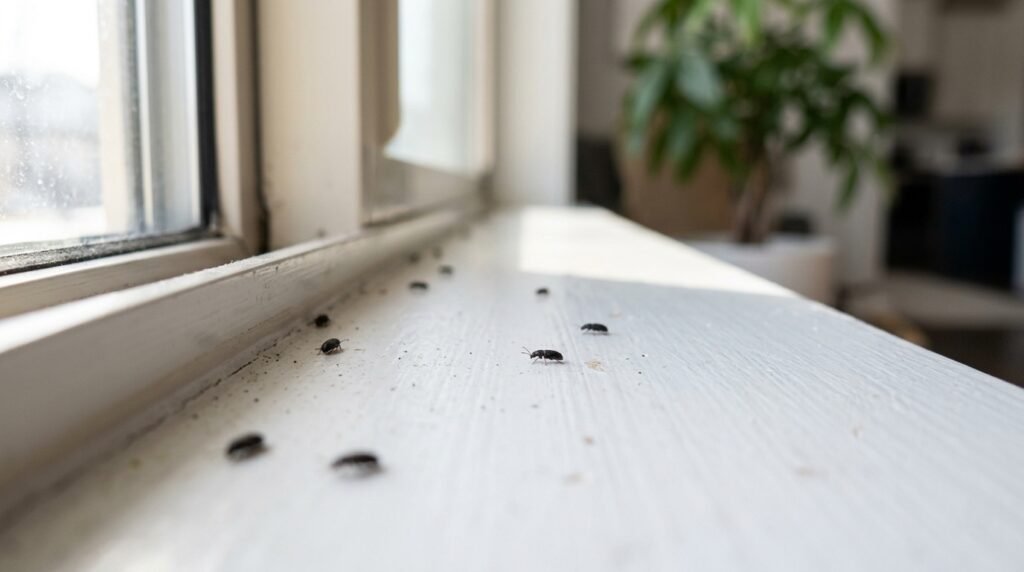
Adult carpet beetles are among the insects people may describe as tiny dark bugs indoors. Several species can occur in homes, and their appearance varies. Some adults are dark, while others have mottled patterns. They are small and may be noticed around windows because adults can be attracted to light. The larvae are usually more important when household materials are being damaged. Depending on the species, larvae may feed on materials containing animal-based fibers or products, such as wool, fur, feathers, hair, and certain stored items. If you suspect carpet beetles, inspect closets, carpet edges, upholstered furniture, stored fabrics, and quiet areas where lint or pet hair collects. Finding an adult near a window does not automatically mean your carpet is infested. Look for larvae, shed skins, or material damage before deciding what action is needed.
How to Get Rid of Carpet Beetles
Start with a detailed cleaning rather than immediately spraying the room. Vacuum carpet edges, baseboards, closets, furniture seams, and areas beneath heavy furniture. Pet hair and lint can provide material that supports larvae, so remove these deposits carefully. Inspect wool clothing, blankets, rugs, feathers, and other susceptible items. Clean or launder affected materials according to their care instructions. Store clean vulnerable textiles in secure containers when appropriate. Vacuuming should be repeated because one cleaning session may miss hidden larvae or debris. Dispose of vacuum contents in a way that prevents insects from returning indoors. If you continue finding larvae or see widespread damage, professional pest control may be appropriate. Correct identification remains essential because another small beetle may require a different control plan.
Fungus Gnats Around Houseplants
If small black bugs in home seem to gather around indoor plants, fungus gnats are a strong possibility. Adult fungus gnats are tiny, delicate flies that often appear dark and may be seen walking over potting mix or flying around plants. Their larvae live mainly in moist growing media and feed largely on fungi and decaying organic matter, although some can affect plant roots. Constantly damp potting soil creates favorable conditions. You may notice adults when watering a plant or when they fly toward nearby light. A few gnats are mainly annoying, but a large population suggests the growing medium is staying favorable for reproduction. Inspect the soil rather than treating only flying adults. If several plants sit close together, check all of them because adults can move between pots.
How to Control Fungus Gnats
Moisture management is one of the most important tools for fungus gnat control. Avoid watering houseplants automatically on a fixed schedule. Check what each plant actually needs. When suitable for the species, allowing the upper portion of potting mix to dry between waterings can make conditions less favorable for larvae. Make sure pots drain properly and empty standing water from saucers when needed. Remove dead leaves and decaying plant material from the soil surface. Yellow sticky traps can help capture and monitor adult gnats, but traps alone may not eliminate larvae in the potting mix. Severe infestations may require a treatment specifically labeled for fungus gnat larvae and safe for the intended plants. Always follow the product label. Avoid applying random household chemicals to potting soil because they can damage roots or create other problems.
Drain Flies in Bathrooms and Kitchens
Tiny flies near sinks, showers, floor drains, or other plumbing areas may be drain flies. They are often grayish or dark and have fuzzy, moth-like wings. Adults may rest on walls close to drains. The real issue is usually the moist organic film where immature stages develop. Killing visible adults without cleaning the breeding material often leads to more flies. Inspect drains that are used infrequently as well as frequently used fixtures. Also look for hidden moisture problems, leaking pipes, wet mop areas, or other places where organic material remains damp. A persistent population can sometimes point to a plumbing or sanitation issue that is not obvious from the surface. Correcting that source is more useful than repeatedly spraying adult flies.
How to Get Rid of Drain Flies
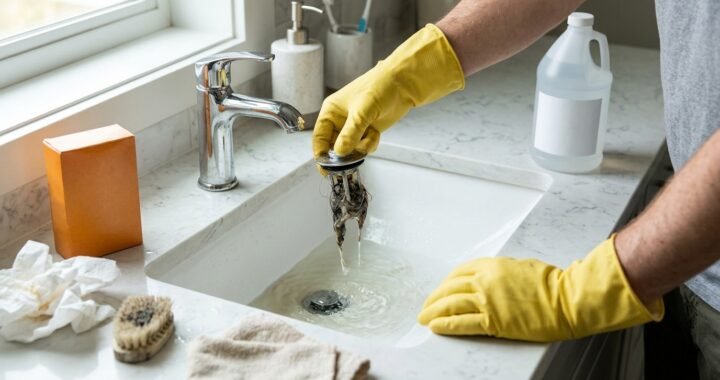
Begin by identifying which drain or wet area is producing the flies. Cleaning needs to remove the organic film inside the affected plumbing area, not simply make the visible sink look clean. Use mechanical cleaning methods and products appropriate for your plumbing. A drain brush may help remove buildup where accessible. Follow any drain-cleaning product label carefully. Never mix bleach with acids, ammonia, vinegar, or other cleaners. Dangerous gases can result. If flies continue despite proper drain cleaning, look for another moisture source. A damaged pipe, hidden leak, sewage issue, or rarely used drain may be involved. A plumber or pest professional can help when the breeding location cannot be found. Long-term control depends on removing the moist organic material that supports development.
Pantry Beetles and Other Stored-Food Pests
Tiny beetles in a kitchen or pantry may be associated with stored foods. Different beetle species can infest flour, grains, cereal, pasta, spices, pet food, birdseed, nuts, or other dry products. Their exact appearance and food preferences vary. If small black bugs in home are concentrated inside cupboards, inspect food packages carefully. Look for adult insects, larvae, damaged packaging, unusual dust, webbing, or clumped food. Do not assume the product where you first see an insect is the original source. Adults can move away from an infested package. Check unopened packages too, especially thin cardboard or paper containers. Some stored-food pests can enter through small openings or may already be present in a product when it enters the home.
How to Remove Pantry Pests
Take everything out of the affected cabinet and inspect each dry food item. Discard clearly infested products in a sealed bag according to local waste practices. Vacuum shelves, corners, shelf-pin holes, and cracks where food particles or insects may remain. Clean the cabinet surface using an appropriate household cleaning method and let it dry before restocking. Do not spray pesticides directly onto food or food-contact surfaces unless a product label specifically permits that use. Transfer susceptible dry foods into tight-fitting containers. This both protects clean food and makes future problems easier to spot. Pet food and birdseed should not be overlooked. After cleaning, continue monitoring the pantry. Seeing an occasional adult shortly afterward does not always mean treatment failed, but continued activity suggests that an infested product or hidden food source remains.
Weevils in Dry Food
Some people use the word “weevil” for almost any tiny pantry beetle, but true weevils have distinctive features and specific habits. Certain species can infest stored grains. Small dark beetles found around rice, wheat, corn, or similar foods should therefore prompt a careful pantry inspection. Look inside packages rather than checking only the shelves. If insects are emerging from a food product, remove the source and inspect nearby goods. Clean up spilled grain from cabinet corners and beneath appliances. Prevention involves buying reasonable quantities, rotating older food forward, and storing vulnerable foods properly. If you repeatedly find insects despite removing affected food, consider whether another stored product has been missed. Accurate species identification can also help narrow the search.
Fleas
Fleas are small, dark insects known for powerful jumping. Homes with cats or dogs may be more likely to encounter them, although fleas can also be associated with wildlife or previous animal activity. Adults feed on blood and may bite people. If tiny dark bugs suddenly jump when disturbed, fleas should be considered. Check pets for signs of flea activity and speak with a veterinarian about safe, effective treatment. Do not apply household insecticides directly to an animal unless the product is specifically approved for that animal and use. Home control usually requires addressing both the animal host and the indoor environment. Vacuuming carpets, upholstery, cracks, and pet resting areas can help remove some life stages. Persistent infestations may require an integrated treatment plan because flea eggs, larvae, pupae, and adults occupy different parts of the environment.
Springtails
Springtails are extremely small organisms that may appear dark and can jump when disturbed. They are not insects in the strict taxonomic sense, but homeowners often describe them as tiny bugs. They prefer damp environments and feed on fungi, algae, decaying material, and related organic matter. Indoors, large numbers may appear around bathrooms, basements, sinks, windows, plant pots, or other humid locations. Their presence often points toward excess moisture rather than a food infestation. Springtails do not normally cause structural damage and are generally considered a nuisance indoors. If they repeatedly appear, look for damp areas. Check plumbing, condensation, drainage, houseplant soil, and exterior moisture near the foundation. Reducing moisture is usually more important than killing individual springtails.
Ants That Look Like Tiny Black Bugs
Small dark ants are another common possibility. Ants are easier to identify when you watch how they move. Workers may follow trails between food and a nest. You may see them near kitchen counters, sinks, windows, doors, or cracks. Different ant species have different nesting habits and treatment needs, so identifying the species can matter. Clean food spills quickly and keep sweet or greasy foods covered. Seal obvious entry gaps where practical, but remember that sealing a single opening may simply redirect a colony. Baits can be useful for certain ant problems because workers carry material back toward the colony. However, bait choice depends on species and feeding preferences. Follow label instructions and keep pesticide products away from children and pets. Persistent indoor ant activity may need professional identification.
Tiny Bugs Around Windows
Windows often become gathering points for many unrelated insects. Light attracts some species, while others simply become trapped while trying to leave. Carpet beetle adults, fungus gnats, small flies, and insects entering from outdoors may all appear near glass. Therefore, location alone cannot identify small black bugs in home. Look at what is near the window. Are there houseplants on the sill? Is stored fabric nearby? Does the window screen have holes? Are insects coming from a gap around the frame? Vacuum visible insects and inspect the surrounding area. Repair damaged screens and seal appropriate exterior gaps. If adults keep appearing, trace them back into the room rather than assuming the window is the source. It may simply be where the insects become easiest to notice.
Small Black Bugs in the Bedroom
A bug found in a bedroom can create immediate concern about bed bugs. However, not every small dark insect near a bed is a bed bug. Adult bed bugs are generally reddish-brown rather than simply tiny black specks. Other insects can wander into bedrooms or live in carpet, clothing, windows, or houseplants. If bites or suspicious insects appear around the bed, inspect mattress seams, the bed frame, headboard, and nearby cracks for signs associated with bed bugs. Avoid diagnosing the problem based only on skin marks because many conditions can resemble insect bites. If you capture a specimen, professional identification can prevent unnecessary treatment. Bed bug control can be difficult, and random pesticide use may make management harder. A confirmed infestation is usually best handled with a structured control plan.
Small Black Bugs in the Bathroom
Bathrooms offer water, humidity, drains, and hidden gaps, so several pests may appear there. Drain flies are possible when fuzzy adults gather near plumbing. Springtails may occur where moisture remains high. Ants and other insects may enter through gaps or follow plumbing routes. Start by checking for leaks beneath sinks, around toilets, and near tubs or showers. Dry standing water and improve ventilation. Clean drains if there are signs of organic buildup. Check damp bath mats and areas that remain wet for long periods. If the insects disappear after moisture is controlled, the environment was likely supporting them. If they continue, capture a specimen for identification. Treating the bathroom with broad pesticide sprays without knowing the pest may expose household members unnecessarily while leaving the actual breeding source untouched.
Small Black Bugs in the Kitchen
The kitchen provides several possible food and water sources. Start with the pantry. Inspect flour, grains, spices, cereal, dried fruit, pet food, and other stored goods. Then check beneath appliances for crumbs and grease. Look around sinks for leaks or damp organic buildup. Houseplants near the kitchen can also produce fungus gnats. Watch how the insects behave. Flying around plant pots suggests a different problem from crawling inside flour. Ants may form visible trails. Pantry beetles may appear inside cabinets or around windows after leaving food. The location of activity can narrow the possibilities quickly. Once you identify the likely source, remove it and clean the surrounding area. General cleaning helps, but targeted cleaning is much more effective.
Small Black Bugs in Houseplant Soil
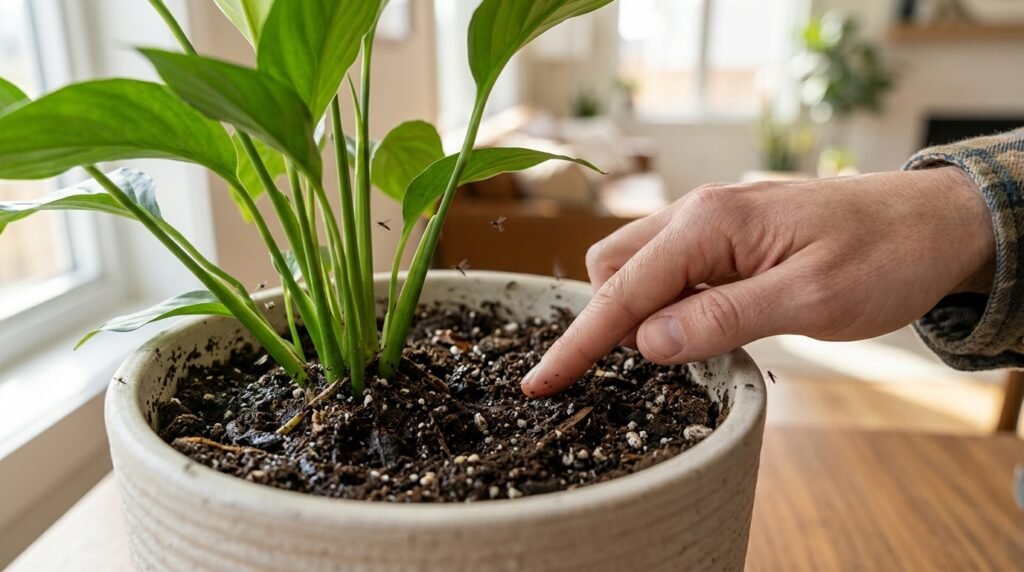
Houseplant soil is a common place to notice tiny moving creatures. Fungus gnats are frequent suspects when small dark adults fly around pots. Springtails may also occur in moist growing media, especially when organic matter and moisture remain abundant. Do not immediately throw away a healthy plant. First, examine watering habits and drainage. Many indoor plants suffer when kept constantly wet anyway. Allow the growing medium to dry appropriately for the plant species before watering again. Remove dead leaves from the soil surface and make sure drainage holes are not blocked. If you bring a new plant home, inspecting it before placing it beside your existing collection can help prevent pest spread. Sticky traps can help monitor flying fungus gnats but should be combined with management of the potting environment.
Small Black Bugs on Carpets and Furniture
When dark bugs appear on carpets or upholstered furniture, inspect rather than immediately applying spray. Carpet beetles may be involved, especially when larvae or shed skins appear near natural fibers. Fleas are another possibility if the insects jump and animals live in the home. Pantry insects can also wander far from their original source, so the room where you find an adult is not always where it developed. Vacuum the area carefully and inspect furniture seams, carpet edges, baseboards, pet bedding, and nearby closets. Look for physical evidence such as larvae, fabric damage, or jumping behavior. Identifying that evidence will guide the next step. Broad spraying can hide activity temporarily without removing eggs, larvae, food sources, or breeding sites.
Are Small Black Bugs Dangerous?
Most tiny household insects are more annoying than dangerous, but risk depends entirely on the species. Fleas can bite and have health importance. Some ants may contaminate food or create other concerns. Carpet beetle larvae do not bite, but their hairs can irritate some people’s skin. Pantry pests can contaminate stored food. Fungus gnats are mainly a nuisance in homes, though heavy larval populations can affect some plants. Drain flies usually signal a sanitation or moisture source that needs attention. This is another reason identification matters. Describing everything as small black bugs in home groups together organisms with very different behaviors. If anyone experiences a severe allergic reaction, breathing difficulty, or another urgent medical problem after suspected insect exposure, seek appropriate medical care rather than relying on pest identification alone.
How Moisture Encourages Indoor Pest Problems
Water is one of the most overlooked pest attractants. A home can be spotless and still support insects when moisture remains available. Check beneath sinks and around pipes for slow leaks. Look at window condensation, damp basements, poorly ventilated bathrooms, and water collecting beneath plant pots. Clean gutters and exterior drainage may also matter when moisture accumulates around the building. A dehumidifier can help in some persistently humid indoor spaces when used correctly. Repairing the source of moisture is better than repeatedly drying the same puddle. Fungus gnats, springtails, and drain-related flies are especially connected with damp environments. Moisture control also helps protect the building itself from mold and material damage. When insects repeatedly return to the same wet location, investigate why that area stays damp.
Clean Food Sources and Hidden Crumbs
Food does not need to be sitting openly on a counter to support pests. Flour dust inside a cabinet, cereal beneath a refrigerator, pet food around a bowl, and crumbs inside a toaster area can all matter. Vacuum or wipe hard-to-reach kitchen spaces periodically. Clean spills promptly. Store dry food in containers that close securely when practical. Rotate pantry items so forgotten packages do not remain untouched for years. Inspect food before storing it if packaging appears damaged. Pet feeding areas deserve regular attention too. Remove leftover food according to your pet’s feeding routine and keep storage containers clean. These habits do not guarantee a pest-free home, but they remove many easy resources. They also make an infestation easier to detect because insects have fewer places to feed unnoticed.
Seal Entry Points Around the Home
Some insects originate outdoors and simply find a way inside. Inspect door sweeps, window screens, utility openings, and obvious cracks. Repair torn screens and weather stripping. Seal suitable gaps around pipes and cables using materials appropriate for the building. Avoid blocking required ventilation or drainage openings. Exterior lighting can also attract flying insects toward doors and windows, so consider placement and fixture choices where insect activity is high. Trim vegetation when it directly touches the building and creates easy pathways for pests. Keep exterior areas reasonably free from decaying organic debris near entrances. Sealing is most effective when combined with identification. It will not solve an infestation that is breeding inside a pantry bag, drain, carpet, or flowerpot.
Use Vacuuming as a Pest-Control Tool
A vacuum is useful for more than ordinary cleaning. It can physically remove insects, larvae, eggs, shed skins, food debris, lint, and pet hair from accessible surfaces. Focus on baseboards, carpet edges, furniture seams, closets, and spaces beneath furniture when dealing with carpet pests. Vacuum pantry shelves after removing food during a stored-product pest cleanup. For fleas, repeated vacuuming can form part of a broader management plan. Empty the vacuum according to the manufacturer’s directions and manage the contents so captured pests do not return indoors. Vacuuming will not solve every infestation by itself. Hidden populations can remain inside food, soil, cracks, or other inaccessible areas. Still, it is a useful low-residue tool that supports source removal and monitoring.
Should You Use Insecticide Sprays?
A spray should not be the first response to every unidentified bug. Pesticides work best when the pest, location, and product are correctly matched. A product labeled for one pest or application area may not be appropriate elsewhere. Never spray food, dishes, countertops, children’s toys, pet bedding, or houseplants unless the label specifically allows that use. Follow all directions, ventilation requirements, and reentry instructions. Keep pesticides in their original containers and away from children and pets. In many cases, removing infested food, drying wet areas, cleaning drains, vacuuming, or changing plant watering habits solves the underlying problem more effectively. If pesticide treatment becomes necessary, targeted use is generally preferable to spraying an entire room without understanding where the insects are coming from.
Natural Remedies Are Not Automatically Safe
People often search for natural solutions when they see small black bugs in home. Some low-chemical approaches are genuinely useful. Vacuuming, moisture control, sanitation, food storage, physical barriers, and traps can all reduce pests without broad pesticide use. However, “natural” does not automatically mean safe or effective. Essential oils can irritate people and may be unsafe around certain pets. Vinegar is a useful cleaner in some situations but is not a universal insect treatment. Diatomaceous earth products require correct handling and should only be used according to their labels. Random mixtures can damage surfaces or create unnecessary exposure. Focus on removing the pest’s food, moisture, breeding site, or entry point. These environmental changes often provide more lasting control than a homemade spray.
How to Prevent Small Bugs From Returning
Prevention begins after the current problem is identified and controlled. Keep dry foods properly stored and inspect older pantry products. Clean crumbs and spills before they accumulate. Vacuum quiet areas where lint and pet hair collect. Check houseplants before bringing them indoors and avoid unnecessary overwatering. Repair plumbing leaks and improve ventilation in damp rooms. Keep drains maintained when organic buildup becomes a problem. Repair damaged screens and obvious exterior gaps. Inspect secondhand textiles or furniture carefully before bringing them inside. These habits create a home that offers fewer opportunities for pests. You do not need to make your house sterile. The goal is simply to remove easy food, water, shelter, and entry routes.
When Should You Call Pest Control?
Professional help is worth considering when insects continue appearing despite source removal and careful cleaning. Call sooner when you suspect bed bugs, a significant flea infestation, structural pests, or another problem that is difficult to identify. A pest professional can examine specimens, locate breeding areas, and choose treatments suited to the species. Before the visit, collect photographs or a specimen when possible. Note which rooms have activity and what time insects tend to appear. Also tell the professional about pesticides or home remedies you already used. This information can make inspection more effective. Professional pest control should still focus on the source rather than simply spraying visible insects. Long-term results usually come from combining treatment with sanitation, repairs, moisture control, exclusion, or other preventive steps.
A Quick Way to Narrow Down the Bug
Location and behavior provide useful clues. Tiny flying insects around damp houseplant soil often suggest fungus gnats. Fuzzy little flies resting near drains point more toward drain flies. Small beetles near windows may include carpet beetles, especially when larvae or damaged natural fabrics are also present. Beetles inside dry foods suggest a stored-product pest. Tiny dark insects that jump and are associated with pets may be fleas. Very small jumping organisms in damp areas may be springtails. Ant-like insects traveling in organized trails are likely ants. These clues are useful starting points, not final diagnoses. Color alone is unreliable. When small black bugs in home cannot be identified from their location and behavior, a clear close-up photograph or physical specimen is the best next step.
Frequently Asked Questions
What are the tiny black bugs in my house?
Several pests can look like tiny black bugs. Common possibilities include carpet beetles, fungus gnats, pantry beetles, drain flies, fleas, springtails, and small ants. The best clue is usually where you find them and how they behave. Check whether they fly, crawl, jump, gather near plants, or appear around stored food.
Why do I suddenly have small black bugs in my home?
A sudden increase may result from an infested food package, wet potting soil, a drain breeding site, seasonal insect activity, a moisture problem, or insects entering from outdoors. Look for a shared source near the area where most bugs appear. Finding and removing that source is usually more effective than killing individual adults.
What are tiny black bugs near my windows?
Several insects can gather near windows because they are attracted to light or trying to leave the home. Carpet beetle adults, fungus gnats, small flies, and outdoor insects are possibilities. Check nearby plants, carpets, stored fabrics, screens, and window gaps before deciding which pest is responsible.
What are the tiny black bugs around my houseplants?
Fungus gnats are a common possibility. Their small dark adults often fly around pots containing moist growing media. Springtails may also occur in damp soil. Check watering habits and drainage. Allow the soil to dry appropriately for the plant species and remove dead organic material from the surface.
How do I get rid of small black bugs naturally?
Start with non-chemical source control. Vacuum affected areas, remove contaminated food, clean breeding material from drains, reduce excess moisture, manage plant watering, and seal entry gaps. Sticky monitoring traps can help with some flying pests. The right method depends on the species, so identify the bug before choosing additional treatment.
Why do small black bugs keep coming back?
Recurring small black bugs in home usually mean a food source, breeding site, moisture problem, or entry route remains. Killing visible adults may provide temporary relief while eggs or larvae continue developing elsewhere. Inspect the surrounding environment carefully. Persistent unexplained activity is a good reason to seek professional pest identification.
Conclusion
Finding small black bugs in home does not automatically mean you have a serious infestation. The insects may be carpet beetles, fungus gnats, pantry pests, drain flies, fleas, springtails, ants, or another species. Their location and behavior provide the most useful clues. Start by identifying the pest rather than reaching immediately for a spray. Inspect food, houseplants, carpets, drains, windows, and damp areas based on where activity occurs. Remove the source whenever possible. Clean carefully, control moisture, store food securely, vacuum hidden areas, and repair entry points. Use pesticides only when needed and exactly as directed on the label. If the insects continue returning or you cannot identify them, collect a specimen or clear photograph and contact a qualified pest professional. Correct identification makes pest control safer, faster, and far more effective.