
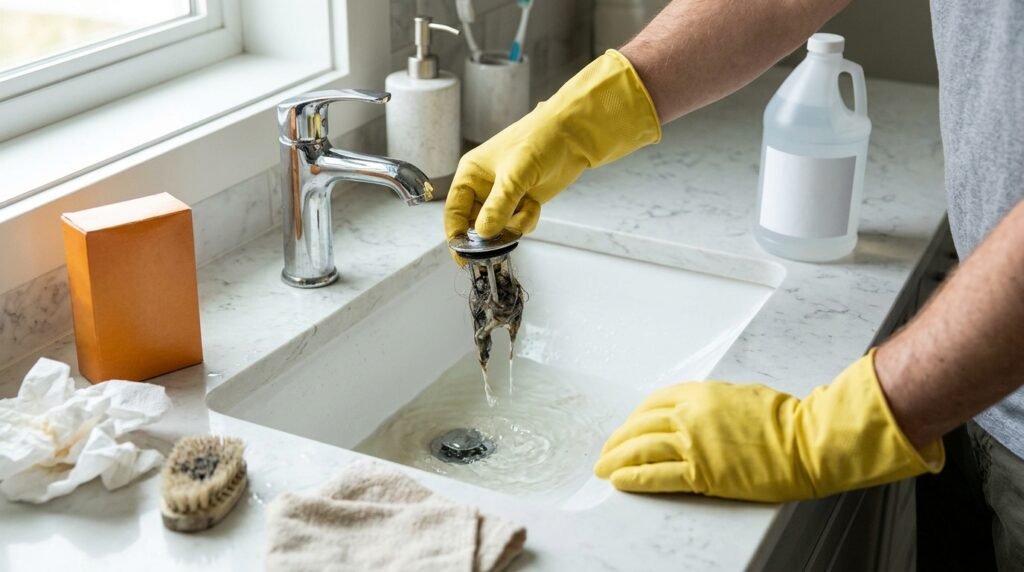
A slow bathroom drain is often caused by hair, soap residue, toothpaste, grooming products, or debris trapped around the stopper. If you want to unclog bathroom sink naturally, start with physical removal rather than pouring random mixtures into the drain. Remove visible debris, clean the stopper, flush the drain with hot tap water when suitable, then try a sink plunger or plastic drain tool. Baking soda and vinegar can help loosen light residue, but they are not a reliable solution for a dense hair blockage. Poison Control notes that the fizzing reaction does not normally create enough pressure to force a serious clog through an open drain. This distinction matters because many bathroom clogs are physical masses that need to be pulled out or displaced. Natural drain cleaning can work well for minor buildup, but a fully blocked pipe, recurring backup, leak, or clog deeper in the plumbing may require mechanical cleaning or a plumber.
Find Out What Is Blocking the Sink First
Before trying to unclog bathroom sink naturally, watch how the fixture behaves. A sink that drains slowly often has a partial obstruction. Water that remains almost completely still suggests a more serious blockage. Bathroom sinks commonly collect hair around the stopper assembly. Soap, toothpaste, skin oils, shaving residue, and other material can then stick to that hair and gradually narrow the drain opening. The location of the problem matters because different methods solve different clogs. Debris sitting directly beneath the stopper may take only a few minutes to remove by hand. Material farther down the drain may respond better to a drain stick or plunger. A blockage inside the P-trap may require trap cleaning. If several fixtures are draining slowly at the same time, the problem may be farther into the plumbing system rather than limited to one bathroom sink. In that situation, repeatedly treating one drain may not address the real cause.
Start by Removing Standing Water and Visible Debris
The simplest solution is often the one people skip. If water has collected in the basin, remove enough to see and access the drain safely. A cup or small container can be used to transfer standing water into a bucket. Wear gloves because stagnant drain water can contain soap residue, hair, and other unpleasant debris. Next, inspect the drain opening. Hair may be wrapped around the stopper or sitting just beneath it. Pull out anything that can be reached safely without pushing it farther into the pipe. This first step can unclog bathroom sink naturally without using any cleaning mixture at all. Avoid forcing sharp metal objects into the drain. They can scratch the finish, damage components, or compact the obstruction deeper in the pipe. If the sink uses a removable stopper, cleaning that part thoroughly may restore much of the lost drainage. Once visible debris is gone, run a small amount of water and watch whether the flow has improved.
Clean the Pop-Up Stopper Before Treating the Drain
A pop-up stopper can hide a surprising amount of buildup. Hair catches around its lower section, then soap and grooming residue coat the mass. This creates a sticky obstruction close to the drain opening. Lowe’s notes that some stopper types can be removed from above, while others use a pivot rod beneath the sink and require partial disassembly. If you want to unclog bathroom sink naturally, cleaning this component should come before stronger methods. Determine which stopper design is installed instead of pulling forcefully on a part that is mechanically connected underneath. Once removed correctly, clear the hair and residue from the stopper and the accessible drain opening. Wash the stopper with an appropriate mild cleaner before reinstalling it. If the sink begins draining normally afterward, there is little reason to pour anything else down the pipe. This approach removes the material instead of trying to dissolve or push it farther through the plumbing.
Hot Water Can Help With Light Soap Buildup
Hot water may loosen light soap residue and soft buildup, but it should not be treated as a cure for every clog. Use hot tap water rather than assuming that very hot or boiling water is appropriate for every sink and plumbing system. Plumbing materials, joints, sink surfaces, and manufacturer guidance can vary. If you are trying to unclog bathroom sink naturally after removing hair from the stopper, a controlled hot-water flush can help wash away loosened residue. Let the water flow only if the drain is moving well enough to accept it. Pouring a large amount into a fully blocked basin simply creates more standing water. Hot water is also unlikely to pull out a compact ball of hair. If drainage remains slow after visible debris has been removed, move to a mechanical method instead of repeatedly adding hotter water. The goal is to match the method to the blockage, not to increase temperature until something changes.
Does Baking Soda and Vinegar Really Unclog a Sink?
Baking soda and white vinegar are frequently suggested as a natural drain treatment. The mixture fizzes because an acid and a base react and release carbon dioxide. That visible reaction looks powerful, but fizzing should not be confused with the ability to dissolve a difficult clog. Poison Control explains that drains are not airtight, so the carbon dioxide normally escapes instead of building enough pressure to dislodge stubborn material. It also notes that the mixture is unlikely to dissolve tough oily or greasy blockages. For someone trying to unclog bathroom sink naturally, the mixture may still be useful for minor residue after physical debris has been removed. Home Depot also lists baking soda and vinegar as an option for a slow bathroom sink, while recognizing that different clogs require different methods. Treat it as a mild cleaning approach, not as a substitute for removing a dense hair obstruction.
How to Use Baking Soda and Vinegar Carefully
First make sure no commercial drain cleaner, bleach, or other cleaning chemical is sitting in the drain. Household cleaning products should not be casually mixed. Poison Control specifically warns that vinegar and chlorine bleach can release chlorine gas, which can irritate the eyes and airways and cause more serious respiratory effects. If the drain has recently received an unknown chemical product, do not add a homemade mixture on top of it. For an otherwise untreated drain, Home Depot’s bathroom-sink instructions describe using baking soda followed by white vinegar, covering the drain, allowing the mixture to sit briefly, and then flushing the drain. This can be one way to unclog bathroom sink naturally when the problem is light residue. It should not become an endless cycle. If one attempt does not improve drainage, inspect for hair or use a mechanical tool. Physical clogs usually respond better when the material is actually removed.
A Sink Plunger Often Works Better Than a Homemade Cleaner
A small sink plunger is one of the most useful chemical-free tools for a clogged bathroom basin. Unlike a toilet plunger with an extended flange, a flat-bottom cup is designed to seal around a sink drain. Lowe’s recommends this type for sinks and explains that blocking the overflow opening helps direct pressure toward the obstruction. To unclog bathroom sink naturally with a plunger, remove the stopper if needed and block the overflow with a wet cloth. Add enough water to cover the plunger’s cup. Center it over the drain and work it up and down while maintaining the seal. The movement creates pressure changes that can shift a blockage. Test the drain afterward. If it improves, run water to carry away loose debris. Plunging is particularly useful because it relies on mechanical force rather than chemical reactions. However, do not plunge a drain containing commercial chemical cleaner, since contaminated water could splash onto skin or eyes.
Use a Plastic Drain Tool for Hair Clogs
Hair is one of the situations where a simple mechanical tool can outperform homemade drain mixtures. Flexible plastic drain sticks have small barbs that can catch hair and pull it back through the drain opening. Lowe’s recommends drain sticks for some sink, tub, and shower clogs and notes that they can physically remove trapped material. This makes them especially practical when the goal is to unclog bathroom sink naturally without corrosive drain opener. Remove the stopper if the design allows it, then insert the tool carefully. Twist or move it as needed to catch the obstruction without forcing it aggressively against plumbing components. Pull it out slowly and place the removed debris directly into the trash rather than rinsing it back into the sink. Several passes may be needed. Once little additional material comes out, run water and check the flow. If the sink immediately drains faster, hair near the upper drain was probably a major part of the problem.
Cleaning the P-Trap Can Solve a Deeper Local Clog
The curved pipe beneath a sink is called the P-trap. It retains water that forms a seal against sewer gases, but its shape can also collect objects and debris. If the stopper, drain opening, plunging, and a small drain tool do not solve the problem, the obstruction may be in or near this trap. Lowe’s identifies P-trap cleaning as one way to clear certain sink clogs. Cleaning it can unclog bathroom sink naturally because the blockage is physically removed instead of chemically dissolved. Place a bucket underneath before loosening anything because the trap contains water. The exact connections vary, and older or corroded plumbing deserves extra care. After cleaning and reassembly, check every joint for leaks while water runs. If fittings are damaged, difficult to move, or unfamiliar, forcing them can turn a clog into a plumbing repair. Anyone uncomfortable disassembling drain plumbing can stop at this stage and call a plumber instead.
Why Hair Is Usually More Important Than the Cleaning Mixture
Many natural drain remedies focus on what should be poured into the pipe. Bathroom sink maintenance often works better when attention shifts to what can be pulled out. Hair can wrap around stopper parts and combine with soap and grooming residue into a stubborn mass. A mild liquid treatment may clean the surface without removing the structure holding the blockage together. That is why a drain tool, stopper cleaning, or trap cleaning can unclog bathroom sink naturally when repeated homemade mixtures do very little. Think of the clog as a physical object rather than simply a dirty pipe. If the water still moves slowly, the blockage may have enough open space for liquid to pass around it. That does not mean the treatment has reached or broken the core of the clog. Removing hair also helps reveal whether the remaining problem is ordinary residue or something deeper. This approach reduces unnecessary experimentation and often makes the repair much easier to understand.
Avoid Mixing Natural Remedies With Chemical Drain Cleaners
“Natural” ingredients are not automatically safe when combined with other products. Vinegar is acidic. Bleach contains hypochlorite. Mixing the two can release chlorine gas. Poison Control warns against mixing household cleaners and specifically identifies bleach combined with acids as a source of hazardous fumes. This warning matters when trying to unclog bathroom sink naturally because it may be impossible to see what remains inside a blocked pipe. If someone already poured a commercial drain cleaner or bleach into the sink, do not immediately follow it with vinegar, another cleaner, or an unknown homemade formula. Lowe’s likewise advises against trying a second drain-cleaning chemical after the first one fails because chemical combinations can create dangerous fumes. Do not plunge the sink or open the P-trap while corrosive drain cleaner remains inside either. Splashing can expose skin and eyes to the chemical. If the product fails, follow its label instructions and seek appropriate professional help.
Salt, Dish Soap, and Other Internet Remedies Have Limits
Online advice includes salt, dish soap, lemon juice, soda, borax, and many other ingredients. A bathroom sink clog does not become easier to remove simply because more household products are combined. In fact, Poison Control advises against casually mixing cleaning products because ingredients can vary and some combinations are hazardous. If the goal is to unclog bathroom sink naturally, a smaller number of clearly understood methods is safer and usually more practical. Start with debris removal. Clean the stopper. Try an appropriate hot-water flush if suitable. Use a sink plunger. Pull out hair with a drain tool. Clean the trap if necessary and if the plumbing can be handled safely. Baking soda and vinegar can be reserved for minor residue rather than treated as a miracle formula. Adding five different ingredients makes troubleshooting harder because it becomes unclear what is sitting in the drain. A simple mechanical approach is often more predictable than a complicated homemade recipe.
What to Do if the Sink Is Completely Blocked
A completely blocked sink needs a different approach from one that is merely slow. Do not keep pouring water into a basin that cannot drain. Remove standing water first so the drain opening can be accessed. Inspect and clean the stopper, then try a suitable drain tool or sink plunger. If those methods fail, the trap may need inspection. This sequence can unclog bathroom sink naturally without filling the plumbing with unnecessary chemicals. A complete blockage that returns quickly may indicate material farther down the line. Pay attention to other fixtures. If a nearby tub, shower, or another sink also drains poorly, the issue may not be isolated to the bathroom basin. Gurgling, backups, wastewater appearing in another fixture, or repeated clogs deserve more attention than a single slow drain. Continuing to force water through a plumbing system with a larger obstruction can create messy backups. At that point, professional drain diagnosis may be more sensible than adding another home remedy.
When a Natural Method Is Unlikely to Be Enough

Natural and mechanical DIY methods work best on accessible, ordinary clogs. They are less useful when the problem is a damaged pipe, severe buildup deep in the line, an incorrectly installed drain, a foreign object that cannot be reached, or a larger plumbing blockage. If repeated attempts to unclog bathroom sink naturally produce no meaningful improvement, stop repeating the same treatment. A drain that clears briefly and becomes slow again may have a remaining obstruction rather than simply needing more baking soda. Water leaking beneath the sink also changes the problem. Tightening or disassembling fittings without understanding the leak can cause additional damage. Multiple slow fixtures, sewage odors, wastewater backup, or unusual drain noises can point to a broader plumbing issue. A plumber can use appropriate drain-cleaning and diagnostic equipment when the obstruction is beyond the reach of basic household tools. Knowing when to stop is part of responsible DIY maintenance.
How to Prevent Hair From Clogging the Sink Again
Prevention is easier than clearing a packed drain. Clean the stopper regularly rather than waiting until the basin drains slowly. Hair caught at the top is much easier to remove than hair that has moved deeper into the trap. Home Depot recommends cleaning sink stoppers and keeping shaving hair from going down the drain. It also suggests a screen or grate in high-use sinks where suitable. After you unclog bathroom sink naturally, pay attention to how quickly new residue appears. People who shave over the sink can wipe loose hair from the basin before rinsing it. Do not intentionally wash cotton swabs, dental floss, pieces of tissue, cosmetic material, or other solid waste into the drain. A removable drain screen can catch larger debris, provided it fits the fixture without interfering with the stopper. Regular prevention reduces the amount of material available to combine with soap residue and form another obstruction.
Keep the Stopper and Drain Opening Clean
A sink can look spotless while the underside of its stopper is coated with residue. This hidden area deserves routine attention because it is one of the first places hair becomes trapped. Remove the stopper according to its design, clear attached hair, and clean accessible surfaces. If removal requires disconnecting the pivot mechanism below the basin, learn how the assembly fits together before loosening it. After you unclog bathroom sink naturally, this small maintenance habit can help identify buildup before drainage becomes noticeably poor. Avoid pushing collected debris back through the opening. Put it in the trash. While the stopper is out, inspect the visible drain for buildup, but do not scrape aggressively with sharp tools. Also check that the stopper moves correctly after reassembly. A stopper that does not lift far enough can itself restrict drainage and mimic a partial clog. If drainage is slow immediately after stopper work, verify its adjustment before assuming another blockage has formed.
Natural Does Not Mean Risk-Free
Baking soda is relatively mild, but the broader idea of “natural cleaning” can lead people to experiment with acids, concentrated substances, hot liquids, and mixed cleaners. That is unnecessary for a basic bathroom drain. The safest way to unclog bathroom sink naturally is usually to rely on simple mechanical removal and use mild household ingredients only where appropriate. Never mix vinegar with bleach. Never add a homemade remedy to an unknown drain cleaner. Poison Control notes that many non-enzymatic commercial drain cleaners contain strong acids or alkalis capable of causing serious chemical burns. Gloves are sensible when handling dirty drain parts, and eye protection becomes particularly important if there is any possibility that a chemical product is present. Keep children and pets away while the sink is being serviced. If there is uncertainty about what was previously poured into the drain, avoid experimenting and identify the product before proceeding.
A Practical Order for Clearing a Slow Bathroom Sink
A logical sequence saves time. First, observe whether the sink is slow or completely blocked. Second, remove standing water if needed. Third, clean visible debris and inspect the stopper. Fourth, try a suitable hot-water flush for light residue if the plumbing and fixture allow it. Fifth, use a flat-bottom sink plunger while blocking the overflow opening. Sixth, use a plastic drain stick to pull out hair. If those steps do not unclog bathroom sink naturally, consider inspecting the P-trap if the plumbing can be safely disassembled. Baking soda and vinegar can be used as a mild option for small residue, but it should not replace mechanical removal of a hair clog. Stop if chemical drain cleaner is already present, the plumbing begins leaking, several fixtures are affected, or the obstruction repeatedly returns. This order moves from simple and low-risk tasks toward more involved work without filling the drain with multiple substances that complicate the next step.
Common Mistakes That Make a Clogged Sink Harder to Fix
The first mistake is pouring several products into the drain before identifying the blockage. This can create safety concerns and makes later mechanical work unpleasant. Another is assuming fizz means a clog is dissolving. Baking soda and vinegar create a visible reaction, but Poison Control explains why that reaction may not generate enough pressure to remove a stubborn blockage. People trying to unclog bathroom sink naturally also sometimes ignore the stopper even though hair may be wrapped directly around it. Other mistakes include using the wrong plunger, failing to block the overflow while plunging, pushing debris deeper with a rigid object, and forgetting to place a bucket under the P-trap. Repeatedly treating a drain that quickly clogs again is another warning sign. The goal is not simply to make water disappear for one evening. A successful repair removes or clears the obstruction well enough for normal drainage to continue.
Frequently Asked Questions
What is the easiest way to unclog bathroom sink naturally?
Start by removing visible hair and cleaning the stopper. If drainage remains slow, try a sink plunger or plastic drain tool. These methods physically address common bathroom clogs and often work better on hair than homemade liquid mixtures.
Will baking soda and vinegar dissolve hair?
They should not be relied upon to dissolve a dense hair clog. The fizzing reaction may help with light residue, but physical removal is more appropriate for tangled hair. A drain stick or stopper cleaning can pull the obstruction out instead of leaving it inside the pipe.
Can I pour boiling water down a bathroom sink?
Do not assume boiling water is suitable for every sink and drain system. Materials and installation conditions differ. Hot tap water is a more cautious option for light residue when appropriate. Follow relevant fixture or plumbing guidance if there is concern about heat-sensitive components.
Why does my bathroom sink keep clogging?
Recurring clogs can result from hair and residue repeatedly collecting around the stopper or farther down the drain. They can also indicate an obstruction that was only partly cleared. If a clog keeps returning despite proper cleaning, deeper mechanical cleaning or professional inspection may be needed.
Can I use a plunger after using drain cleaner?
Not while chemical drain cleaner may remain in the sink or pipe. Plunging can splash corrosive liquid. Lowe’s advises against plunging or opening the P-trap after chemical drain cleaner has been used and failed. Follow the product’s safety directions instead.
When should I call a plumber for a clogged bathroom sink?
Consider professional help when basic mechanical methods fail, the blockage repeatedly returns, plumbing leaks, multiple fixtures drain poorly, or wastewater backs up elsewhere. These signs may indicate a problem that extends beyond an accessible sink clog.
Conclusion
The most dependable way to unclog bathroom sink naturally is often less about finding a powerful homemade formula and more about removing the actual obstruction. Begin with the stopper and visible hair. Move to a sink plunger or drain stick if necessary. Use hot water cautiously for light residue, and understand that baking soda and vinegar have limits against stubborn clogs. Most importantly, do not mix household cleaners or add vinegar to a drain that may contain bleach or another chemical product. If the obstruction remains after accessible debris and the trap have been checked, or if several fixtures are affected, the problem may be deeper in the plumbing. A simple, methodical approach keeps the job easier to understand and avoids turning a routine slow drain into a chemical or plumbing problem.


