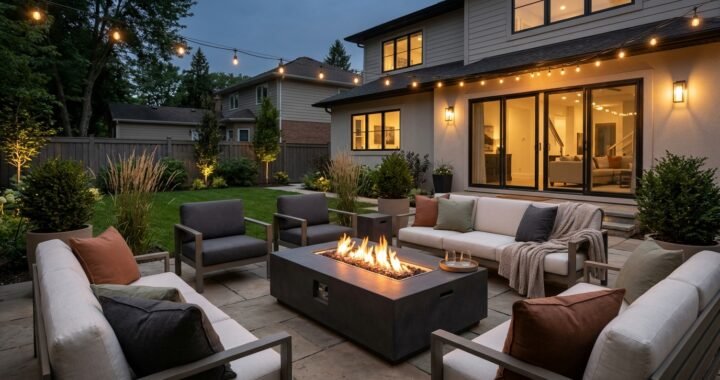
A private backyard can make your home feel more comfortable. You may want a quiet place for family meals, gardening, or relaxing outside. However, installing a full privacy fence can become expensive very quickly. Materials, posts, gates, hardware, labor, and permits can all add to the final cost. The good news is that there are many cheap privacy fence ideas that can provide useful screening without a luxury budget. Some use simple wood boards. Others use wire fencing, plants, reed screens, pallets, or mixed materials. The right choice depends on your yard, climate, local rules, and the amount of privacy you need. A low-cost fence should still be stable, safe, and suitable for outdoor conditions. This guide explains practical options, where they work best, and what to consider before building. With careful planning, you can create a private outdoor space without spending more than necessary.
Plan Your Privacy Fence Before Buying Materials
Start by deciding what you actually need the fence to do. Complete privacy may require a solid barrier. Partial privacy may only need a screen around a patio, deck, or seating area. Walk around your property and identify the exact views you want to block. Sometimes you do not need to fence the entire yard. A short privacy screen placed in the right location can solve the problem for much less money. Measure each section carefully and mark possible gate locations. Check slopes, trees, drainage areas, utility equipment, and other obstacles. Before digging, locate underground utilities through the appropriate local service. You should also check property boundaries, easements, permits, homeowner association rules, and local fence height limits. Good planning makes cheap privacy fence ideas more effective because it prevents wasted materials, rebuilding, and costly mistakes.
Simple Wood Board Privacy Fence
Wood remains one of the most familiar privacy fence materials. A basic vertical board fence can create strong visual coverage without a complicated design. Pressure-treated lumber is commonly used for posts and structural parts because it is made for outdoor exposure. Other wood choices vary by region, price, appearance, and durability. Keeping the design simple can reduce both material waste and labor. Straight boards generally cost less to install than detailed patterns with decorative trim. Leave suitable clearances from the soil where needed to reduce constant moisture exposure. Use exterior-rated fasteners that are compatible with your chosen lumber. Wood will still need maintenance over time. Cleaning, staining, sealing, or painting may be needed depending on the material and local climate. A basic wood fence can be economical, but compare its long-term maintenance costs with the initial purchase price.
Use Fence Pickets Instead of Decorative Panels
Ready-made decorative panels can be convenient, but they may cost more than a simple fence built from individual pickets. Basic wood pickets allow you to control spacing and replace damaged pieces separately. For greater privacy, place the boards close enough to reduce clear sight lines while allowing for normal wood movement. Remember that wood can expand, shrink, twist, or warp as weather changes. Choose reasonably straight boards and install them with appropriate fasteners. A simple top line usually looks cleaner than adding unnecessary decorative details. This approach works well for homeowners who want traditional cheap privacy fence ideas and are comfortable with a straightforward building project. Before buying, calculate the number of pickets, rails, posts, concrete, screws, gate hardware, and finish you will need. A fence that looks inexpensive by the board can cost more once every supporting component is included.
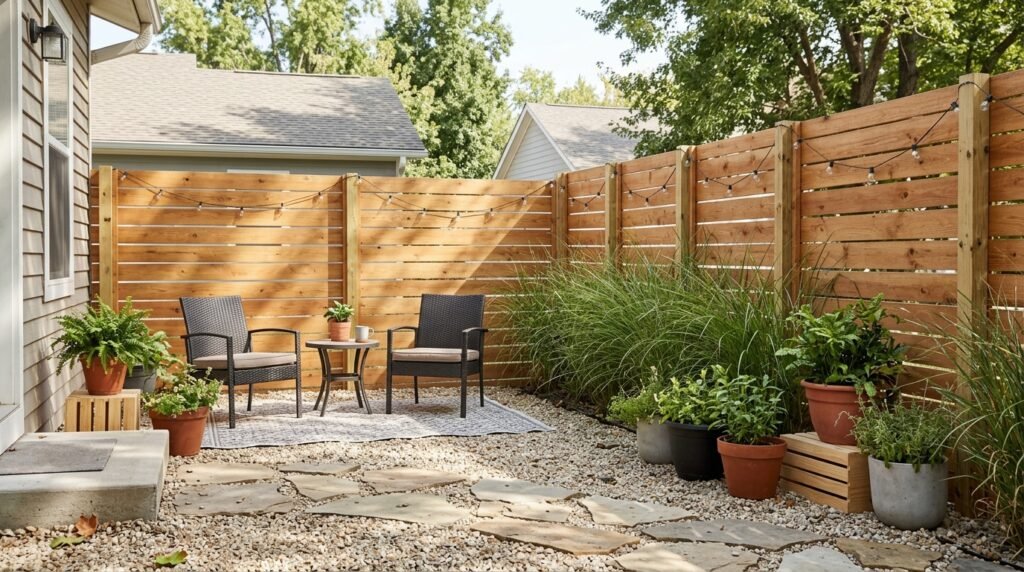
Try a Horizontal Wood Fence
Horizontal fencing can give a backyard a clean, modern look without requiring expensive decorative panels. Boards run from post to post instead of vertically. This design can work with standard lumber, but proper support is important because long boards may sag or warp. Post spacing, board thickness, and intermediate supports should suit the chosen material. Narrow gaps between boards can provide partial screening, while closer spacing creates more privacy. A horizontal layout can also work well as a smaller patio screen rather than a full property fence. This saves materials while creating a strong visual feature around the area you use most. Keep in mind that trendy layouts do not automatically make a fence stronger. Structure should come first. Use outdoor-rated materials and suitable fasteners, and follow local requirements for fence height, placement, and wind resistance.
Pallet Fence Ideas for a Very Small Budget
Reclaimed pallets are often mentioned among cheap privacy fence ideas because they may be available at little or no cost. However, they require careful selection. Not every pallet is suitable for a home project. Avoid pallets with unknown chemical exposure, oil stains, strong odors, mold, or visible contamination. Check markings and sourcing information when available. Pallet wood may also contain nails, splinters, cracks, and rough surfaces that need attention. If suitable pallets are used, they still need secure posts or another stable support system. Do not simply stand loose pallets around a yard and expect them to remain safe during strong winds. Sand rough edges and replace damaged boards. A pallet fence works best for small garden areas, temporary screens, or rustic backyard sections where appearance does not need to be perfectly uniform.
Build a Privacy Screen Instead of a Full Fence

One of the easiest ways to reduce cost is to build only where privacy is needed. Perhaps your patio is visible from one neighboring window. Maybe your deck needs screening on only two sides. A targeted privacy screen can use far fewer materials than a fence around the whole yard. Wood slats, outdoor lattice, composite boards, metal frames, or suitable screening panels can all work. Think carefully about the viewing angle. A six-foot-wide screen placed correctly may block more of an unwanted view than thirty feet of poorly positioned fencing. This strategy is especially useful for renters or homeowners who do not want to visually close the entire yard. Freestanding screens must still be stable and safe in wind. Permanent screens may also fall under local fence or structure rules, so check requirements before installation.
Lattice Panels for Partial Privacy
Lattice is a useful option when you want separation without creating a completely solid wall. Wood, vinyl, and other outdoor-rated lattice products are available in different patterns. The openings allow some light and airflow through the barrier, which can make a small yard feel less enclosed. Lattice can be installed between sturdy posts or added above another fence where local height rules permit it. It can also support certain climbing plants. However, vines add weight and moisture, so the structure must be strong enough for mature growth. Lattice alone will not provide full privacy when viewed straight through its openings. It works better for partial screening or when combined with plants. Among cheap privacy fence ideas, lattice is particularly useful around patios, air-conditioning equipment, garden sections, and outdoor dining spaces where complete visual blockage is unnecessary.
Reed or Bamboo Screening
Reed and bamboo-style rolls can quickly cover an existing chain-link fence or open railing. They can also be attached to a properly built frame. These materials create an immediate natural look and are often easier to install than a new solid fence. Their lifespan can vary widely based on product quality, sun exposure, rain, humidity, and wind. Thin screening may fade, crack, or loosen faster than a heavier permanent fence. Attach it at enough points to prevent large sections from moving in strong weather. Do not rely on lightweight rolls as structural fencing. They are screening materials, not substitutes for secure posts and rails. If you already have a stable fence that lacks privacy, adding screening can be far cheaper than removing and rebuilding everything. Check local rules before changing the appearance or height of an existing boundary fence.
Add Privacy to a Chain-Link Fence
Chain-link fencing is durable and practical, but it provides almost no visual privacy by itself. If you already have one, improving it may cost less than replacing it. Privacy slats can be inserted into the mesh to reduce visibility. Outdoor-rated privacy fabric or screening can also be attached to suitable fencing. Reed or bamboo rolls are another possibility. Before adding any solid or semi-solid material, inspect the existing posts and connections. A privacy covering catches more wind than open chain-link mesh. This can place additional force on the fence, especially during storms. A weak fence may need reinforcement before screening is added. This is one of the more practical cheap privacy fence ideas because you reuse an existing structure. Choose a screening material based on durability, appearance, airflow, and the weather conditions in your area.
Corrugated Metal Privacy Fence
Corrugated metal panels can create a durable and modern privacy barrier. They are often paired with wood posts and rails, which softens the industrial appearance. Cost varies by panel type, coating, size, and local availability. Reclaimed metal may save money, but inspect it carefully for sharp edges, severe rust, holes, and unknown previous uses. New panels may provide more predictable performance. Metal can become hot in direct sunlight, and cut edges require safe handling. Use appropriate fasteners and follow the manufacturer’s recommendations. A solid metal fence also catches significant wind, so the supporting posts and frame need to be designed accordingly. In some neighborhoods, local rules or homeowner associations may restrict metal fencing. When properly planned, corrugated panels can provide full privacy with fewer individual pieces than a traditional picket fence.
Combine Wood and Wire to Reduce Material Costs
If complete privacy is not required from top to bottom, combining materials can reduce costs. A lower section can use wood boards while the upper section uses wire, lattice, or another open material. Another option is a simple wire fence with privacy plants growing nearby. Mixed-material designs can provide security, define property lines, and create screening without using solid wood across the entire fence. This approach is useful for gardens where airflow and sunlight matter. It can also make a narrow backyard feel more open. However, wire openings must be chosen carefully if pets or young children use the yard. Sharp cut ends should never remain exposed. A mixed fence should look intentional rather than unfinished. Repeating the same posts, wood finish, or panel dimensions can help different materials feel like one coordinated design.
Use Outdoor Privacy Fabric Carefully
Privacy fabric can be a quick way to screen a chain-link fence, deck railing, or sturdy frame. It is often sold in long rolls and can cover a large area with less labor than individual boards. Look for material designed for outdoor use and follow its installation instructions. Attach it evenly so loose sections do not flap or tear in the wind. The existing structure must be strong enough to handle the extra wind load. Fabric screening is usually better as a temporary or medium-term solution than as a permanent architectural fence. Quality varies, and constant sunlight can fade some materials. It may be a useful choice when you need cheap privacy fence ideas for a rental property, construction period, garden area, or backyard that already has a strong open fence.
Grow a Living Privacy Fence
Plants can form a beautiful privacy barrier while adding greenery to the yard. Evergreen shrubs are popular because they may provide screening throughout the year. However, a living fence is not always cheap at the beginning. Large mature plants can be expensive, and small plants take time to fill in. Research the mature height and width before planting. A shrub that looks tiny at the nursery may eventually need several feet of space. Choose plants suited to your climate, soil, sunlight, and available water. Avoid invasive species. Also consider roots, nearby structures, utility lines, and property boundaries. A healthy living screen can become denser over time, but it needs watering, pruning, and ongoing care. It works best for homeowners who prefer natural privacy and are willing to wait for plants to mature.
Use Fast-Growing Plants With Realistic Expectations
Fast-growing plants sound perfect when you need privacy quickly, but growth speed should not be the only factor. Some vigorous plants become difficult to control. Others grow tall but remain thin near the ground. Certain species may have aggressive roots or spread beyond their intended area. Research plants through reliable local horticultural sources before buying them. Your local climate matters more than a general online list. Evergreen shrubs, ornamental grasses, climbing plants, and small trees can all provide screening in the right conditions. Consider mature size, maintenance, water needs, disease issues, and whether the plant is considered invasive in your region. Plants can support other cheap privacy fence ideas, such as softening a simple wire fence. This combination can create useful privacy while reducing the amount of solid fencing needed.
Add Climbing Plants to a Simple Trellis
A basic trellis can become a privacy screen when covered with suitable climbing plants. This works especially well beside patios, decks, porches, and garden seating areas. The trellis must be strong enough to support the mature plant. Some vines become surprisingly heavy. Choose species based on your climate, sunlight, and available space. Avoid invasive climbers and plants that may damage nearby structures. Some vines attach themselves directly to walls, while others need wires or supports. A freestanding trellis can keep growth away from siding and make maintenance easier. Privacy will usually develop gradually rather than overnight. Deciduous plants may also lose their leaves during winter, reducing screening. For seasonal outdoor spaces, that may not matter. A trellis-and-vine combination can provide shade, color, and privacy from one relatively narrow structure.
Use Tall Planters for Patio Privacy
You do not always need a permanent fence to make a seating area feel private. Large planters with tall grasses, compact shrubs, or suitable screening plants can create a movable barrier. This works well on patios, decks, and around outdoor dining spaces. Planters should be large enough for the mature root system and stable enough not to tip easily. Containers can become very heavy once filled with soil and water, so check deck load limits when relevant. Choose plants that can live successfully in containers and match local sunlight conditions. Container plants often need more frequent watering than plants in the ground. This solution is best for targeted screening rather than enclosing a large yard. It can also be useful where permanent fencing is restricted or where you want to adjust the layout later.
Repurpose Safe, Usable Materials
Reclaimed materials can lower costs, but “free” does not always mean suitable. Old fence boards, metal panels, shutters, or other building materials may be reusable if they are structurally sound and safe. Inspect each piece for rot, severe rust, sharp edges, mold, insect damage, and unknown coatings. Very old painted wood may require special caution because older coatings can contain hazardous materials. Avoid sanding or cutting unknown painted surfaces until you understand what you are working with. Reclaimed materials also vary in size, which can increase labor. A fence made from mismatched pieces can look attractive when there is a clear pattern or consistent finish. Repurposing works best when the material is genuinely usable rather than when you spend more repairing it than new material would have cost.
Look for Local Salvage and Leftover Materials
Construction leftovers and architectural salvage can sometimes reduce the cost of a small fence project. Local reuse stores, building-material salvage centers, classified listings, and community marketplaces may have extra lumber, panels, gates, or hardware. Calculate what you need before shopping so you do not buy random pieces simply because they are inexpensive. Confirm dimensions and condition carefully. Structural posts and important hardware should be reliable enough for the job. Buying a few discounted boards is not helpful if they do not match your planned design. This approach is most effective for smaller screens where exact quantities are flexible. It can also help with decorative features, such as a gate or trim. For larger boundary fences, consistent new materials may sometimes be easier and more economical once labor and waste are considered.
Save Money by Keeping the Fence Design Simple
Decorative caps, complex board patterns, multiple heights, custom gates, and detailed trim can all increase costs. A simple straight fence usually uses fewer cuts and less labor. Standard material dimensions may also reduce waste. Design the fence around commonly available board and panel sizes when possible. Keep corners and level changes simple unless the site requires another approach. A straightforward design does not have to look cheap. Consistent spacing, straight lines, clean cuts, and a uniform finish can make basic materials look polished. One of the smartest cheap privacy fence ideas is to spend money on the parts that affect strength, such as posts and hardware, while keeping decorative features modest. Structural quality matters far more than adding details that do not improve privacy or durability.
DIY Installation Can Reduce Labor Costs
Labor can make up a large part of a fencing budget, so doing some work yourself may save money. However, fence installation involves more than attaching boards. Posts need correct placement, depth, alignment, and support. Gates need strong framing and hardware. Property lines and underground utilities must be confirmed before digging. Solid privacy fences also face significant wind pressure. If you lack the tools or experience for structural work, consider a mixed approach. A professional can install the posts while you add boards or apply the finish. This can reduce labor while protecting the most important part of the project. Do not sacrifice safety just to make the fence cheaper. A poorly installed fence that leans or fails during bad weather may cost more to repair than a properly built one.
Compare the Full Cost, Not Just the Fence Panels
When comparing cheap privacy fence ideas, calculate the whole project. Fence boards or panels may be only one part of the expense. You may also need posts, concrete or another approved footing system, rails, screws, brackets, gate hardware, stain, sealant, delivery, tool rental, disposal, permits, and labor. Sloped land can increase work because the fence may need stepping or custom cuts. Removing an old fence adds another expense. A material with a low purchase price may require frequent maintenance or early replacement. Another option may cost more initially but last longer with less work. Create a simple list of every component before choosing. This makes it easier to compare designs fairly and prevents a low advertised panel price from creating an unrealistic project budget.
Spend More on Posts and Structural Parts
If your budget is limited, avoid cutting corners on the parts that keep the fence standing. Posts, rails, brackets, and fasteners form the structure. Decorative boards are easier to replace later. Weak posts can cause an entire section to lean or fail. Use materials suitable for ground contact where required and follow local construction standards. Post depth and spacing depend on fence height, soil, frost conditions, wind, and design. There is no single installation method that works everywhere. Gates also need strong posts because repeated opening and closing places extra stress on them. Exterior fasteners should be appropriate for the materials they connect. Saving a small amount on unsuitable hardware can lead to rust stains, loose boards, or early repairs. A low-cost fence should still be built around a dependable structure.
Consider Wind Before Building a Solid Fence
A solid privacy fence acts like a large wall when the wind blows. This can place substantial pressure on posts and footings. Wind exposure is especially important in open yards, coastal areas, and places with frequent storms. Taller fences generally face greater forces than shorter ones. Do not assume that adding more boards automatically creates a better fence. In some locations, designs with small gaps or partial screening may be more suitable. Local building rules may include requirements related to fence height, post size, or wind resistance. If your property is highly exposed, professional advice may be worthwhile. Lightweight screens also need secure attachment because they can tear loose. Safety should remain part of all cheap privacy fence ideas. A fence is not truly economical if the first major storm knocks it down.
Think About Drainage and Ground Contact
Water can shorten the life of many fence materials. Soil that stays wet around posts may contribute to decay or other problems depending on the material. Fence boards resting directly on damp ground can also deteriorate faster. Plan the bottom edge so it suits the material, terrain, pets, and privacy needs. Do not create a fence that blocks natural drainage and sends water toward your house or a neighboring property. Sloped yards may require stepped or carefully adjusted fence sections. If runoff is already a problem, address drainage before installing a solid barrier. Keep leaves and soil from building up against wood. Proper installation details may not be visible once the fence is finished, but they strongly affect lifespan. Protecting materials from constant moisture can save more money than choosing the cheapest boards.
Make an Existing Fence More Private
Before building something new, inspect what you already have. A sound fence may only need a privacy upgrade. Gaps between boards can sometimes be covered with additional narrow boards where appropriate. Chain-link fencing may accept slats or screening. A short fence may support an approved lattice extension if local rules permit it and the existing structure can carry the added load. Plants can also soften open areas and block specific views. Repair loose posts and damaged rails before adding weight. Painting or staining a worn but sound wood fence can improve its appearance without replacement. Reusing an existing structure is often one of the most affordable approaches because the posts and boundary layout are already established. Always check structural condition before attaching solid materials that may increase wind pressure.
Create Privacy Around Only the Seating Area
Many homeowners want privacy mainly when they are sitting outside. Instead of fencing a large yard, focus on the deck, patio, fire pit area, or outdoor dining table. A small L-shaped screen can block views from two directions. Tall planters can close smaller gaps. A trellis with climbing plants can create softer screening. An outdoor curtain may work in a covered structure designed to support it. Position seating first, then stand where neighboring views originate and identify the smallest barrier that blocks them. This targeted approach is one of the most efficient cheap privacy fence ideas because it uses materials where they have the greatest effect. It also allows the rest of the yard to remain open, which can be helpful for sunlight, airflow, gardening, and a sense of space.
Add Privacy Without Blocking All the Light
Full privacy does not always require a solid wall. Closely spaced slats can interrupt direct views while allowing some light and air through. Lattice offers even more openness. Plants can filter views without making the yard feel enclosed. This matters in small yards where a tall solid fence may create deep shade. Think about the sun’s direction before installing a barrier near a garden or window. A privacy structure can affect both your property and nearby spaces. Local regulations may also limit fence height near streets, driveways, or property corners because clear sight lines are needed for safety. Partial screening often feels more comfortable around patios because it creates separation without turning the area into a closed box. The right balance depends on how much privacy you need and what you want to preserve.
How to Make a Cheap Fence Look Better
An inexpensive fence can still look intentional. Keep posts straight, board spacing consistent, and hardware neat. A uniform stain or exterior finish can bring mismatched wood tones together when the product is suitable for the material. Simple landscaping can soften a plain fence. Add a planting bed with shrubs, grasses, or flowers rather than attaching many decorations to the fence itself. Repeating one material around the yard can also create visual consistency. For example, the same wood tone might appear on a planter, bench, and privacy screen. Avoid filling the fence with random signs or ornaments if you want a clean appearance. Good workmanship has a larger effect than expensive decoration. Even basic materials can look polished when the layout is straight, simple, and well maintained.
Common Mistakes to Avoid With Budget Privacy Fences
The biggest mistake is focusing only on the lowest material price. Weak posts, unsuitable fasteners, or poor installation can turn an inexpensive project into an expensive repair. Another mistake is building before confirming the property boundary. A fence placed on the wrong side of a boundary can create serious problems. Do not dig until underground utilities are located. Avoid using reclaimed wood with unknown contamination or coatings. Do not attach large solid screens to a weak chain-link fence without considering wind load. Planting fast-growing species without checking mature size can also create future maintenance problems. Finally, check local permits, homeowner association requirements, and height restrictions before buying materials. Successful cheap privacy fence ideas save money through thoughtful design and careful planning, not by ignoring safety or construction basics.
Frequently Asked Questions
What is the cheapest way to create backyard privacy?
The cheapest solution depends on what already exists in your yard. If you have a strong chain-link or open fence, adding privacy screening may cost less than building a new fence. A small targeted screen around a patio can also be cheaper than enclosing the whole property. Reclaimed materials may reduce costs when they are safe and usable. Plants can provide affordable long-term privacy but usually take time to mature. Compare complete project costs before choosing, including posts, hardware, labor, maintenance, and permits.
What is the cheapest material for a privacy fence?
There is no single cheapest material in every location because lumber, metal, screening, and labor prices vary. Basic wood pickets may be affordable in some regions. Privacy fabric or reed screening may cost less when attached to an existing strong fence. Pallets can be inexpensive but require careful sourcing and preparation. Chain-link with added screening can also be economical when the chain-link structure already exists. Compare local prices and expected lifespan rather than relying on a general material ranking.
Can I build a privacy fence myself?
Many homeowners can complete parts of a fence project, but the difficulty depends on the design and site. Installing posts correctly is especially important. You must also confirm property boundaries, locate underground utilities, and follow local requirements. Solid fences experience significant wind loads, so structural details matter. If you are unsure about posts or gates, consider professional help for those sections and complete simpler tasks yourself. DIY work can reduce labor costs, but only when the finished fence remains safe and stable.
How can I get privacy without installing a permanent fence?
Use a freestanding privacy screen, tall planters, a trellis, outdoor-rated screening, or suitable plants. These options work especially well around patios and seating areas. Renters should get permission before attaching anything to the property. Freestanding structures still need enough stability for wind conditions. Plants in containers can be moved, although large planters become very heavy. A targeted screen may provide all the privacy you need without changing the entire property boundary.
How tall should a privacy fence be?
The right height depends on the view you want to block and local regulations. Do not choose a height based only on a standard number from the internet. Fence limits can vary by location and by where the fence sits on the property. Front-yard and backyard rules may differ. Homeowner associations may have additional restrictions. Consider neighboring windows, slopes, road visibility, and wind exposure. Check the applicable local rules before purchasing materials or setting posts.
Which cheap privacy fence ideas last the longest?
Durability depends on the material, installation, climate, and maintenance. A simple fence with strong posts and outdoor-rated materials can last longer than a decorative fence built poorly. Metal panels can be durable when properly coated and supported. Suitable treated or naturally durable wood can perform well with correct installation and maintenance. Living screens may last for many years when the plants are appropriate for the site. The best cheap privacy fence ideas balance initial price with repair needs and expected service life.
Conclusion
A private backyard does not require the most expensive fence in the neighborhood. The smartest cheap privacy fence ideas focus on the exact area that needs screening and use materials efficiently. A basic wood fence can provide full coverage. Lattice, reed screens, privacy fabric, or slats can improve an existing structure. Plants and trellises can create softer, natural privacy over time. Small screens and tall planters can work well around patios without enclosing the whole yard. Whatever option you choose, do not ignore property lines, underground utilities, local rules, drainage, wind, and structural support. Spend wisely on posts and essential hardware, then keep the decorative design simple. A well-planned budget fence can look attractive, last longer, and make your outdoor space feel much more comfortable without placing unnecessary pressure on your home improvement budget.